Fennel Care Guide: Sun, Water, Soil and Harvest
Foeniculum vulgare
Grow fennel in full sun and fertile, well-drained soil. Learn about watering, root-sensitive seedlings, harvesting leaves and seeds, and Florence fennel.
Fennel Care Guide: Sun, Water, Soil and Harvest
Start with wateringThe most common care mistake for FennelWatering guide →Fennel care essentials
Light
Water
Keep the soil evenly moist but well-drained while young. Established common fennel tolerates dry spells, while container plants need regular checks and water when the compost begins to dry.
Soil
Fertile, moisture-retentive soil that drains freely; fennel grows in loam, sand, chalk, or clay when drainage is good.
Humidity
Temperature
Fertilizer
About Fennel
Fennel is native to Mediterranean region, typically reaches Usually 1.2–1.8 m tall and 0.45–0.9 m wide; size varies by cultivar, and RHS records plants up to 2.5 m tall indoors, with moderate growth. Fennel has a upright, branching, aromatic herbaceous perennial grown for feathery leaves and seeds; florence fennel is a bulb forming cultivated form growth habit and part of the Apiaceae family. It is also known as Common fennel and Sweet fennel.
| Detail | Information |
|---|---|
| Also known as | Common fennel, Sweet fennel |
| Native region | Mediterranean region |
| Mature size | Usually 1.2–1.8 m tall and 0.45–0.9 m wide; size varies by cultivar, and RHS records plants up to 2.5 m tall |
| Growth rate | Moderate |
| Growth habit | Upright, Branching, Aromatic Herbaceous Perennial Grown For Feathery Leaves And Seeds; Florence Fennel Is A Bulb Forming Cultivated Form |
| Scientific name | Foeniculum vulgare |
| Family | Apiaceae |
Fennel Care Guide: Sun, Water, Soil and Harvest
Quick answer
Grow fennel in full sun and soil that holds some moisture but drains freely. First check the label: common fennel (Foeniculum vulgare) is usually grown as a tall herb for feathery leaves and seeds, while Florence fennel (F. vulgare var. azoricum) is selected for its swollen edible base. Sow directly where the plant will stay when possible, because fennel develops a taproot and dislikes disturbance. Keep young plants and Florence fennel evenly supplied with water; established common fennel in a garden bed handles short dry spells better than a pot. Use moderate fertility rather than heavy feeding, and remove seed heads if you do not want seedlings spreading. The Royal Horticultural Society’s fennel guide and Utah State University Extension both stress free drainage and matching care to the type.
Identify the fennel you are growing
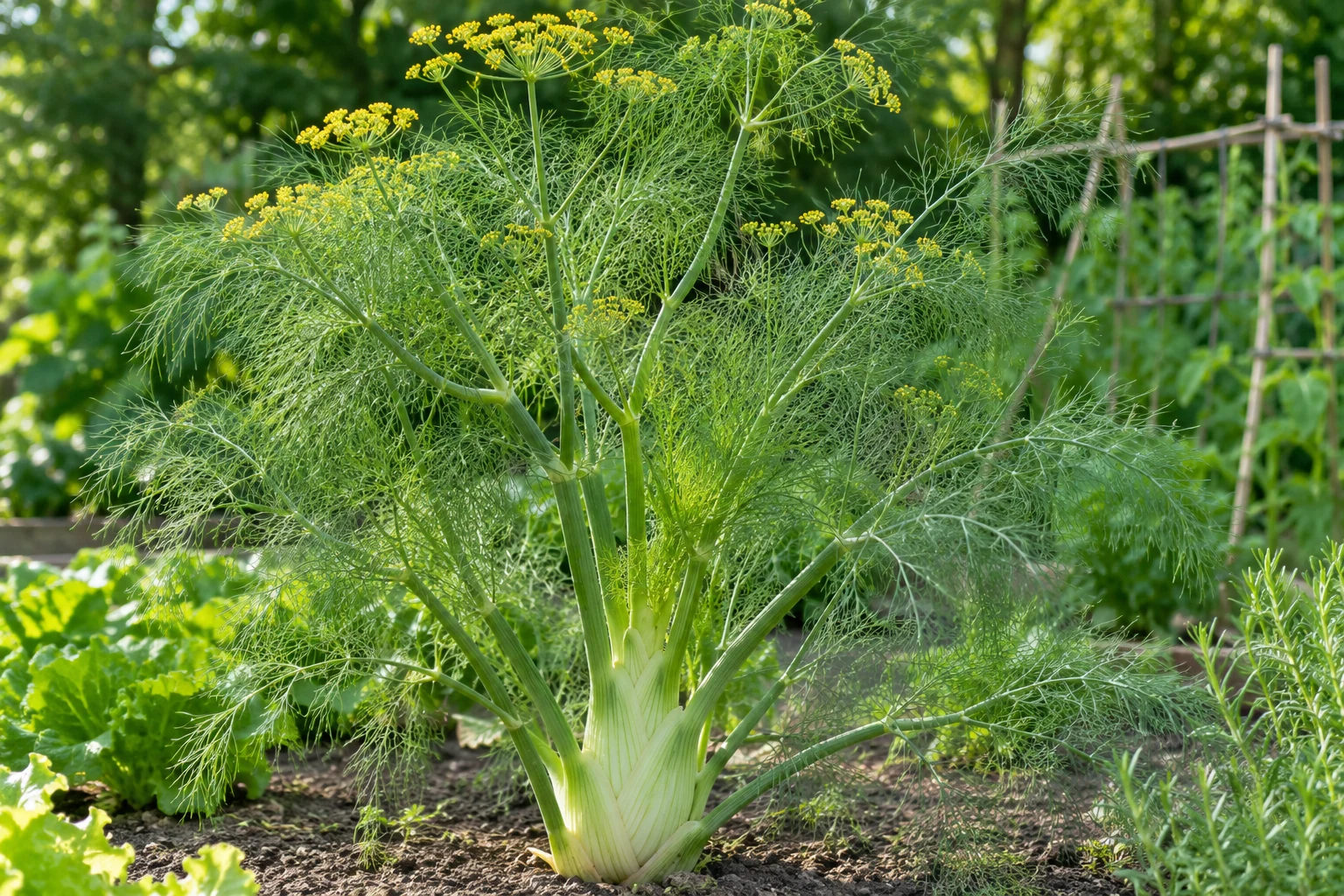
Common fennel makes an upright, branching clump with fine, feathery leaves and broad heads of small yellow flowers. It is a perennial herb in suitable climates, though cold, heat and local growing practice can make it behave as a seasonal plant. Florence fennel is a cultivated form grown chiefly for the thickened leaf bases that form a bulb-like vegetable near soil level. It is usually managed as a cool-season annual. A seed packet that only says “fennel” is not enough to assume a bulb will form: look for Florence, bulb, or azoricum on the label. Missouri Botanical Garden describes common fennel as a branching perennial for foliage and seed, while Utah State Extension separates that herb use from Florence fennel’s edible base (Missouri Botanical Garden, USU Extension).
Match the harvest to the type
Choose the outcome before deciding how to prune or feed. For common fennel, harvest tender fronds as a seasoning and allow some flower heads to mature if you want seed. The stems can become tall and woody, so this type is not a substitute for a compact bulb vegetable. For Florence fennel, aim for the swollen base while it is still firm and tender; Utah State recommends harvesting before it grows beyond about four inches across. Heat or interrupted growth can make a Florence plant bolt before a usable base develops, so stagger sowing rather than expecting one planting to produce all season. Read the Fennel pruning guide for how cutting changes a leaf crop, and the propagation guide for seed saving and sowing.
Choose a sunny, open position
Fennel performs best in a bright, open position with several hours of direct sun; full sun is the simplest target for both herb and bulb types. Shade can produce a taller, thinner plant with less robust flowering, while a hot reflected wall may dry pots too quickly. Give common fennel space because a mature plant can become a substantial, airy perennial rather than a small windowsill herb. The RHS profile describes F. vulgare as a large plant, with height varying by conditions and selection (RHS plant profile). Where summers are intense, morning sun and some late-afternoon relief can reduce container stress without placing the plant in deep shade. See the Fennel light guide for balcony and seasonal placement details.
Build fertile soil that drains freely
Use a well-drained loam or a free-draining container mix with enough organic matter to support steady growth. Fennel adapts to different soil textures, but standing water around the crown and roots is a more immediate risk than a small mismatch in pH. Missouri Botanical Garden describes moist, organically rich, well-drained soil as suitable and notes that root or stem rot can occur in poorly drained ground (Missouri Botanical Garden). Utah State’s pH range for Florence fennel reflects regional extension guidance; do not add lime or sulfur to a home bed without a soil test. The Fennel soil guide covers drainage repairs, potting mix, and when soil testing is useful.
Water differently by plant type and setting
Keep seedlings, newly planted fennel, and Florence fennel from drying hard while they are actively growing. Moist soil supports steady bulb development, while pronounced dry-to-wet swings can split stems or weaken a crop. Common fennel rooted in a garden bed is more drought tolerant once established, but a long dry spell can still reduce growth and seed production. Containers need more frequent checking because their limited mix dries faster than a bed; feel the upper few centimetres, then water deeply enough to wet the root zone and let excess drain. The Fennel watering guide explains the signs that separate a dry root ball from poor drainage. Regional weekly-water figures from Utah State should be adjusted for rainfall, soil texture, pot size, and local heat rather than copied as a fixed schedule (USU Extension).
Feed modestly and use soil tests
Start with fertile soil and compost incorporated before planting, not an automatic stream of liquid feed. The RHS says established common fennel needs little maintenance and no routine feeding; Utah State’s vegetable guidance discusses moderate nitrogen for Florence fennel and recommends using a soil test to determine need (RHS grow guide, USU Extension). Those recommendations concern different fennel uses and should not be collapsed into a universal fertilizer dose. Excess nitrogen can produce lush foliage without solving a lack of sun, root disturbance, or heat-related bolting. If growth is pale or weak, check moisture, drainage, root space, and age before feeding. The Fennel fertilizer guide explains how to choose a light, evidence-based approach.
Sow in the final growing place
Direct sowing avoids the transplant setback that comes from breaking fennel’s developing taproot. If you must start plants indoors, use individual modules and move seedlings while very young, keeping the root ball intact. Harden them to outdoor conditions gradually before planting. The RHS recommends sowing in the final location and warns against disturbing roots; Epic Gardening also treats direct sowing as a reliable option (RHS grow guide, Epic Gardening). Florence fennel can be sown in successive batches in a suitable cool season, with spacing and timing guided by the seed packet and local climate. For the full sequence, see the Fennel propagation guide.
Give the plant room and a stable container
Place common fennel where its mature height and self-seeding will not crowd smaller herbs. Flower stems can become tall and top-heavy, so shelter from strong wind or use a stake before stems lean. A container should have clear drainage holes, enough volume for a long root, and enough weight not to tip under mature growth. The hub’s container guidance is to begin with a stable pot at least 30 cm wide and deep; this is a practical minimum rather than a guarantee that every large cultivar will stay compact. Gardeners’ Path discusses larger, deeper containers for fennel and notes how the taproot affects pot choice (Gardener’s Path). Use fresh multipurpose potting compost, not dense garden soil in a pot. The Fennel repotting guide explains why a final container is preferable to repeated upgrades.
Manage heat, bolting and seasonal timing
Common fennel flowers as part of its ordinary life cycle; for Florence fennel, premature flowering is called bolting and can leave the swollen base small or coarse. Heat, long days, drying, and root damage can all make bulb growing less reliable. Utah State Extension recommends cooler-season timing and steady water for Florence fennel, with succession sowing to spread harvests rather than planting everything at once (USU Extension). These dates are not universal: in a hot region, choose the locally cooler window and follow a locally adapted seed supplier’s advice. A common fennel plant that flowers is not necessarily unhealthy, so decide whether flowers and seed are desired before cutting. Plantura’s guide also distinguishes the timing needs of bulb fennel from the herb type (Plantura).
Harvest fronds, bulbs and seed heads
Pick a few young fronds when needed, using clean scissors and leaving most of the plant intact. Florence fennel’s swollen base is harvested when firm and still tender; cut it at soil level rather than trying to pull it from a dry, compacted bed. For seed, wait until the heads turn brown and dry, then clip them into a paper bag before seeds scatter. Let them finish drying in a ventilated place and store fully dry seed in a closed container. The RHS and Utah State Extension both give practical seed-head drying advice (RHS grow guide, USU Extension). Harvest small amounts at a time from a young plant so it continues to establish. Harvest-to-Table describes separate uses for fennel foliage, stems, and seeds (Harvest to Table).
Keep household pets from grazing
Fennel is an edible herb for people, but pets should not be allowed to eat garden plants as a routine treat. The ASPCA lists fennel as non-toxic to cats, dogs, and horses; that label applies to those named animals and should not be extended to every species (ASPCA Animal Poison Control). Put pots and harvested foliage where those animals cannot chew them. If another animal has eaten fennel or shows concerning symptoms, contact a veterinarian rather than relying on a plant database entry.
Keep self-seeding under control
Fennel can readily drop seed and appear in nearby beds. Whether this becomes a problem depends on your garden and local environment: do not assume it is invasive everywhere, but do keep volunteer seedlings where you can identify and manage them. If you want seed, leave selected umbels and remove the rest before seed disperses. If you do not want new plants, cut flower heads after display and pull young volunteers while their roots are small. Missouri Botanical Garden notes that fennel freely self-seeds and can naturalize in some regions; the RHS likewise advises managing seedlings where they become a nuisance (Missouri Botanical Garden, RHS grow guide).
Respond to weak or crowded growth
When fennel looks thin, first confirm that it is the bulb type if you expected a bulb. Then check direct sun, water consistency, root crowding, and whether the plant has experienced heat or root disturbance. Yellowing in persistently wet ground calls for drainage inspection, not another watering. A crowded, tall common fennel may need support or deadheading rather than a larger fertilizer dose. Remove visibly dead growth, but leave healthy foliage if the plant is recovering from a dry spell. The watering guide and soil guide are the best next steps when the growing medium is the likely problem.
When to use this page vs other Fennel guides
Use this overview to identify the crop type and set a whole-season routine. Move to the light guide when choosing a window, patio, or garden position; use the watering guide to adjust moisture by pot and weather. The soil guide covers mix and drainage, while the fertilizer guide helps decide whether feeding is needed. For root-sensitive moves, consult repotting and propagation; for trimming flower stalks and old growth, use pruning.
Related Fennel guides
Start at the Fennel plant hub for the profile, species notes, and related topics. The light, watering, soil, and fertilizer guides address day-to-day growing conditions. The repotting and propagation guides focus on when to move or multiply a plant that resents root disturbance, and the pruning guide explains how to retain flowers or favor foliage.
Conclusion
Fennel care starts with choosing the right kind: common fennel supplies fronds and seeds, while Florence fennel is grown for its swollen base. Give either type sun, an open root zone, and soil that drains; keep young plants and bulb fennel more evenly moist than an established herb plant in the ground. Sow in the final place where possible, feed only when fertility calls for it, and manage seed heads according to whether you want volunteers. For specific changes, follow the linked topic guide instead of treating every slow or tall fennel plant as a fertilizer problem.
How to care for Fennel?
When should you water Fennel?
Keep the soil evenly moist but well-drained while young. Established common fennel tolerates dry spells, while container plants need regular checks and water when the compost begins to dry.
- Check the top few centimetres of garden soil or potting mix - Established common fennel tolerates dry spells, while container plants need regular checks and water when the compost begins to dry.
- water when it is drying - Established common fennel tolerates dry spells, while container plants need regular checks and water when the compost begins to dry.
- then allow excess water to drain freely - Established common fennel tolerates dry spells, while container plants need regular checks and water when the compost begins to dry.
- Drain excess water - Keep the soil evenly moist but well-drained while young.
What soil works best for Fennel?
Fertile, moisture-retentive soil that drains freely; fennel grows in loam, sand, chalk, or clay when drainage is good.
- Peat-free multipurpose compost for containers - Fertile, moisture-retentive soil that drains freely; fennel grows in loam, sand, chalk, or clay when drainage is good.
- Choose a heavy - Fertile, moisture-retentive soil that drains freely; fennel grows in loam, sand, chalk, or clay when drainage is good.
- stable pot with drainage holes - Fertile, moisture-retentive soil that drains freely; fennel grows in loam, sand, chalk, or clay when drainage is good.
- at least 30 cm wide and deep - Fertile, moisture-retentive soil that drains freely; fennel grows in loam, sand, chalk, or clay when drainage is good.
Grower notes for Fennel
Check which type of fennel you have
Common fennel (Foeniculum vulgare) is a tall perennial herb grown mainly for its feathery leaves and aromatic seeds. Florence fennel (Foeniculum vulgare var. azoricum) is selected for its swollen, edible base and is generally grown as an annual vegetable. Check the seed packet or plant label before choosing how to grow and harvest it.
Give the plant full sun and room to grow
Choose a warm, sunny, sheltered position with at least six hours of direct sun. Common fennel can reach roughly 1.2–1.8 m tall, and its airy yellow flower heads may need support in windy sites. A stable, heavy pot helps prevent tall container plants from tipping over.
Sow where the plant will stay
Fennel develops a long taproot and does not transplant well once established. Sow seeds directly into the final bed or a large container in spring. If starting seedlings under cover, use individual modules and move them outside while they are still very young, without teasing or breaking the roots.
Balance steady moisture with good drainage
Keep young plants and container fennel from drying out during active growth, but do not leave roots in saturated soil. Established common fennel is drought-tolerant once rooted in the ground; containers dry faster and need more frequent checks. Moist, well-drained soil supports steady growth.
Harvest the fronds and seeds in season
Pick young leaves as needed from early summer to autumn. Fennel’s leaves, flowers, and seeds have an aniseed flavour. Allow seed heads to dry on the plant, then cut them into a paper bag before they shatter and store the dry seeds in an airtight container.
Manage flowers and self-seeding
Yellow summer umbels attract pollinators, and the seeds can feed wildlife. If you want a steady supply of leaves, cut developing flower stems before seed forms. Fennel readily self-seeds in a suitable garden, so remove unwanted seed heads or young seedlings before they spread.
Is Fennel Safe for Pets?
ASPCA lists fennel as non-toxic to cats, dogs, and horses. That listing does not cover every pet species; ask a veterinarian about other animals.
ASPCA classifies fennel (Foeniculum vulgare) as non-toxic to cats, dogs, and horses. The classification is specific to those animals; seek veterinary guidance for other pets or after an ingestion that causes concern.
Watering Fennel
For Fennel, check the top few centimetres of garden soil or potting mix; water when it is drying, then allow excess water to drain freely. and water water newly planted fennel during dry spells in its first growing season. Check containers every few days in warm weather and water when the compost is beginning to dry. Reduce watering for established plants during cool or rainy weather. Water young plants during dry spells and keep container compost lightly moist through the growing season.
| Detail | Information |
|---|---|
| How often | Water newly planted fennel during dry spells in its first growing season. Check containers every few days in warm weather and water when the compost is beginning to dry. |
| How to check | Check the top few centimetres of garden soil or potting mix; water when it is drying, then allow excess water to drain freely. |
| Seasonal changes | Reduce watering for established plants during cool or rainy weather. Water young plants during dry spells and keep container compost lightly moist through the growing season. |
Signs of overwatering
- Compost or soil stays saturated between waterings
- Roots may rot in waterlogged or poorly drained soil
Signs of underwatering
- Fronds wilt when soil stays dry for a prolonged period
- Dry soil can reduce growth and seed production
Soil & potting for Fennel
Use a mix of Peat-free multipurpose compost for containers, Choose a heavy, stable pot with drainage holes, at least 30 cm wide and deep for Fennel. Use a free-draining bed or a container with clear drainage holes. Waterlogged ground can cause root rot. Target soil pH around Tolerates acidic, neutral, and alkaline soils; consistent moisture and good drainage matter more than a narrow pH target. Repot avoid routine repotting; sow into the final bed or container when possible because fennel dislikes root disturbance., ideally in spring, while seedlings are still very young and before a long taproot develops.
| Detail | Information |
|---|---|
| Recommended mix | Peat-free multipurpose compost for containers, Choose a heavy, stable pot with drainage holes, at least 30 cm wide and deep |
| Drainage | Use a free-draining bed or a container with clear drainage holes. Waterlogged ground can cause root rot. |
| Soil pH | Tolerates acidic, neutral, and alkaline soils; consistent moisture and good drainage matter more than a narrow pH target. |
| Repotting frequency | Avoid routine repotting; sow into the final bed or container when possible because fennel dislikes root disturbance. |
| Best season to repot | Spring, while seedlings are still very young and before a long taproot develops. |
Signs it needs repotting
- A seedling has outgrown its small module but is still young enough to move without disturbing a long taproot
- The final container is smaller than the recommended 30 cm width and depth