What Not to Plant With Nasturtiums: 7 Pairings to Rethink
Wondering what not to plant with nasturtiums? Learn when broccoli, kale, fennel, squash, cucumbers, rosemary, and potatoes need more space.
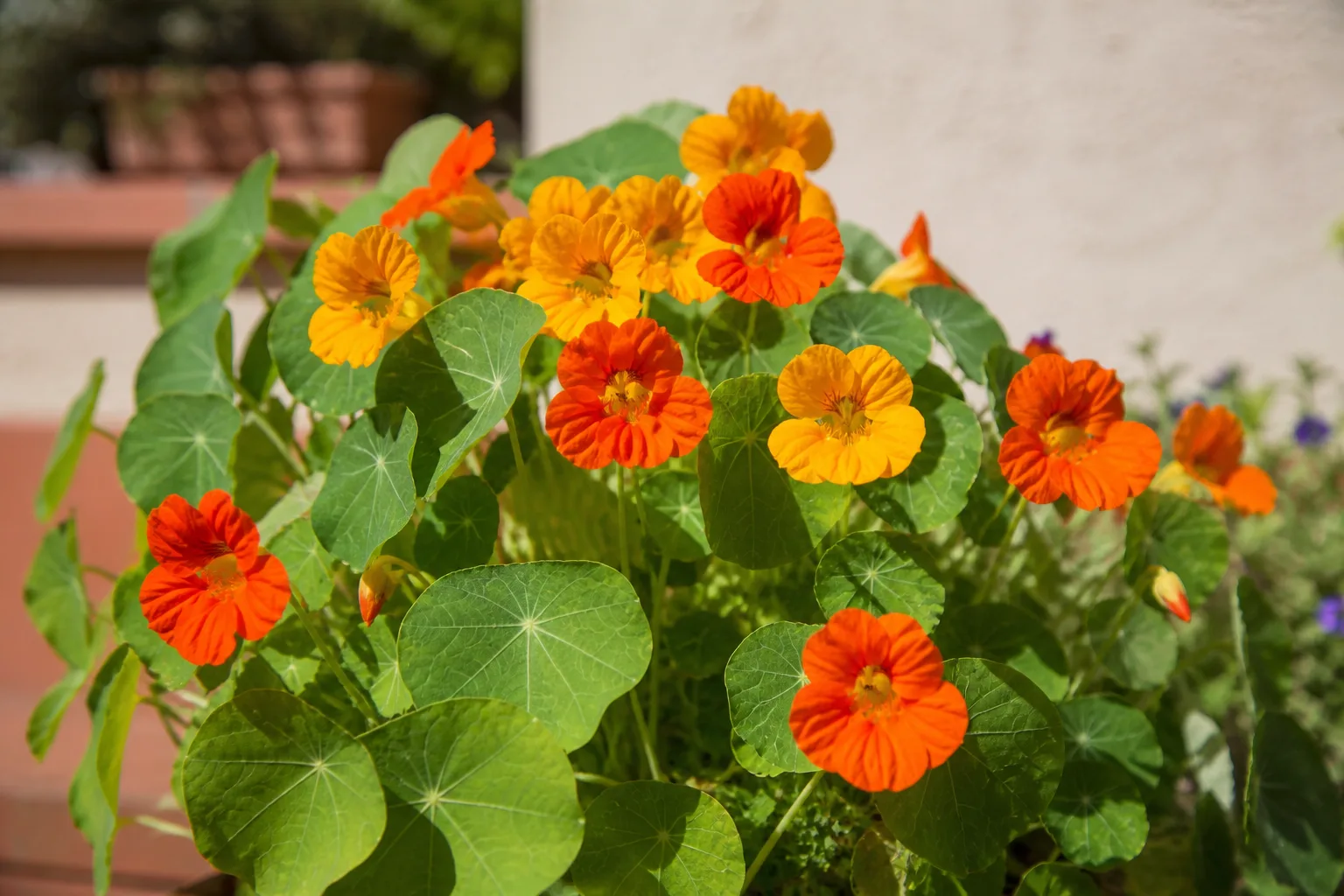
Nasturtiums are generous garden plants: they flower for months, spill over bare soil, and bring edible leaves and peppery flowers to the kitchen. They can also become too generous, spreading into a neighbor’s root zone, hiding leaves that need inspection, or pulling aphids toward a crop you hoped to protect.
The seven plants most worth keeping out of a tightly mixed nasturtium planting are broccoli, kale, fennel, squash, cucumbers, rosemary, and potatoes. That does not mean every one of these plants will fail beside every nasturtium. The better rule is to separate a pairing when the plants have conflicting water needs, competing canopies, shared pest pressure, or a layout that makes scouting and harvesting difficult.
The short answer: separate by risk, not folklore
The “never plant together” lists are more confident than the evidence usually allows. The Royal Horticultural Society’s companion-planting guidance describes plausible benefits such as space sharing, support, and insect management, but also notes that results vary by crop and situation. A companion plant is not a force field, and an incompatible-looking pair can work when it is spaced, watered, and monitored well.
Here is the practical version of the list:
| Plant | Main reason to rethink the pairing | Safer placement |
|---|---|---|
| Broccoli | Aphids and a crowded brassica canopy | Nasturtium at the bed edge, inspected often |
| Kale | The same aphid pathway, plus leaf-level crowding | A separate edge or nearby pot |
| Fennel | Tall, deep-rooted, freely self-seeding, and often treated as a poor vegetable companion | Its own sunny zone |
| Squash | Trailing growth can close airflow and swallow the bed | Outside the squash spread or on a trellis |
| Cucumbers | Vines and watering can compete; dense foliage favors disease pressure | Trellised cucumber with nasturtium below or outside the row |
| Rosemary | Rosemary prefers a drier root zone than a frequently watered flower bed | A separate dry bed or container |
| Potatoes | Nasturtium can become a pest reservoir and interfere with hilling and harvest | A managed trap plant away from the main potato row |
The word “away” does not have to mean at the opposite end of the garden. Often it means one deliberate step out of the crop’s working space: a nasturtium in a pot beside the bed, a bush variety at the path edge, or a climbing variety trained up a support instead of through a vegetable canopy. This preserves the flowers while keeping watering, inspection, and harvest from becoming a tug-of-war.
Also consider the value of the crop. A few aphids on an ornamental nasturtium may be tolerable, while the same population beside young kale or a carefully timed potato planting may not be. The closer the pairing is to a crop you depend on, the lower your tolerance should be for hidden foliage and delayed scouting.
The three tests that reveal a bad pairing
Before pulling out a healthy nasturtium, look at the way the plants interact in your actual bed. A compact bush nasturtium and a sprawling climbing cultivar create very different problems, just as a humid balcony and a dry raised bed do.
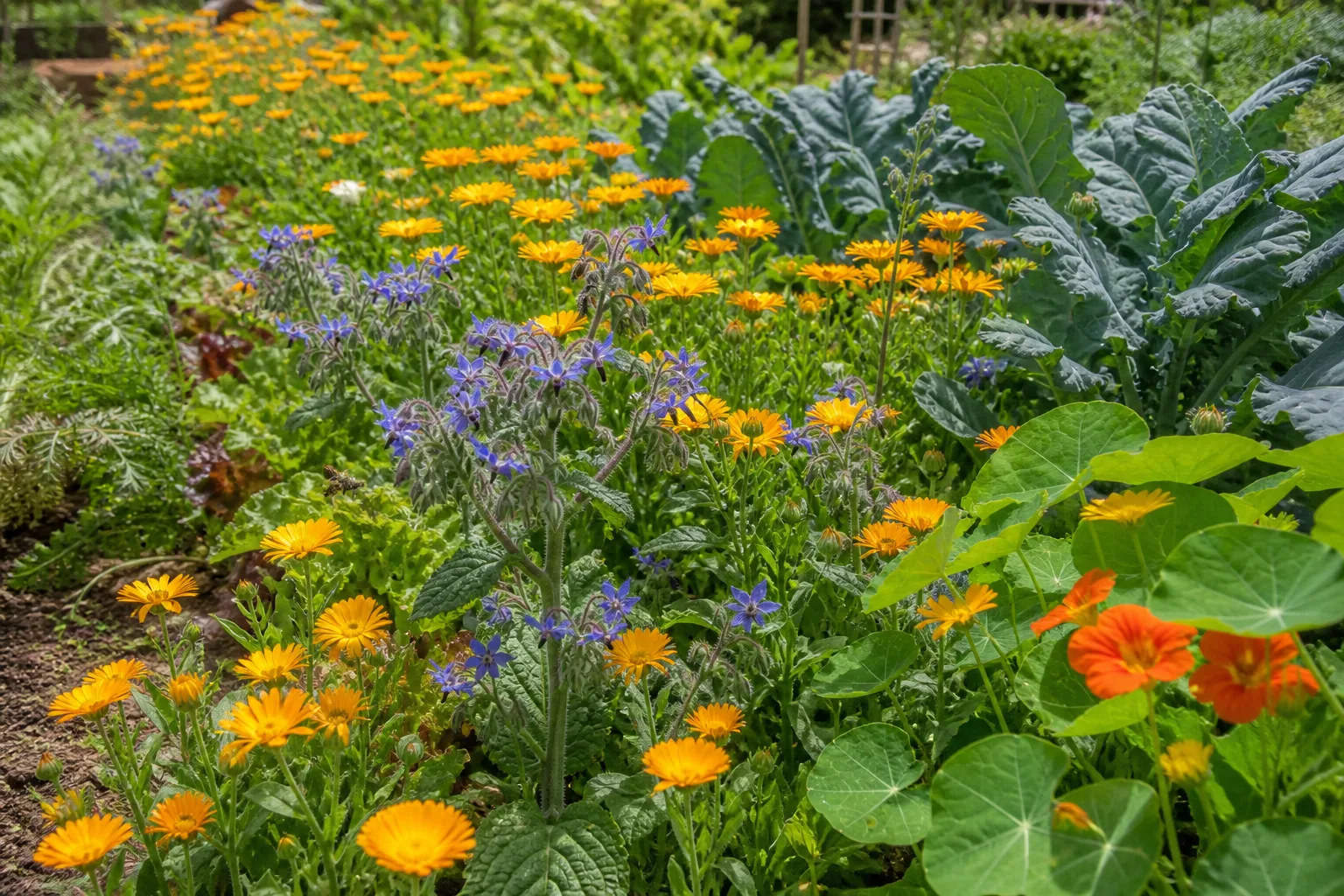
Root-zone and water needs
Nasturtiums generally grow best in full sun and poor-to-average, well-drained soil. Rich soil and heavy fertilizer often produce lush leaves at the expense of flowers; the NC State Extension nasturtium profile and Wisconsin Horticulture’s growing guide both support that lean approach.
That creates a problem when one plant needs regular moisture or fertile soil and the other declines in the same conditions. It is not the word “companion” that matters. It is whether one irrigation schedule leaves the other plant chronically thirsty or chronically wet.
Container growing can separate these needs without giving up the combination. A nasturtium in a pot can receive a lean potting mix and occasional deep watering, while a vegetable row receives the steady moisture it needs. The container also gives you a quick way to move a plant when afternoon shade, a heat wave, or an aphid outbreak changes the balance.
Canopy, airflow, and pest pathways
A nasturtium’s circular leaves make excellent ground cover until they form a continuous mat under a crop. Once leaves overlap, the soil stays damp longer, air moves less freely, and it becomes harder to spot aphids, caterpillars, or yellowing leaves early. The RHS pest and disease prevention guidance emphasizes appropriate spacing, air circulation, and avoiding overhead watering as useful precautions, while warning that they are not guarantees.
The pest question is equally important. A nasturtium may draw aphids away from another crop, but it may also hold a large aphid population beside that crop. A review of companion plants for aphid management in Insects explains that trap crops work only when the pest, timing, spacing, crop value, and follow-up management all line up.
1. Broccoli
Broccoli is a reasonable plant to separate from a large, unmanaged nasturtium, not because the two plants are automatically incompatible. The concern is that nasturtiums can attract aphids, while a dense broccoli planting gives those aphids another tender host just a few inches away.
Brassicas also benefit from enough room for leaf growth and inspection. If nasturtium stems weave through broccoli leaves, you lose access to the undersides where aphids and small caterpillars often hide. The result can be a pest problem that is discovered only after the broccoli head has been affected or the leaves are badly distorted.
Still, a small nasturtium at the outside corner of a broccoli bed can be useful as a monitored trap crop. Keep its stems out of the broccoli crown, inspect it twice a week, and remove or treat it according to your garden’s pest-management approach if aphids begin building. If you cannot commit to that inspection, grow it in a pot or on the far side of the bed instead.
The West Coast Seeds companion-planting guide lists nasturtiums among possible brassica companions, which is a useful reminder that the plant itself is not a universal “bad neighbor.” The deciding factor is whether it remains an edge plant you can manage or becomes a humid, tangled understory.
2. Kale
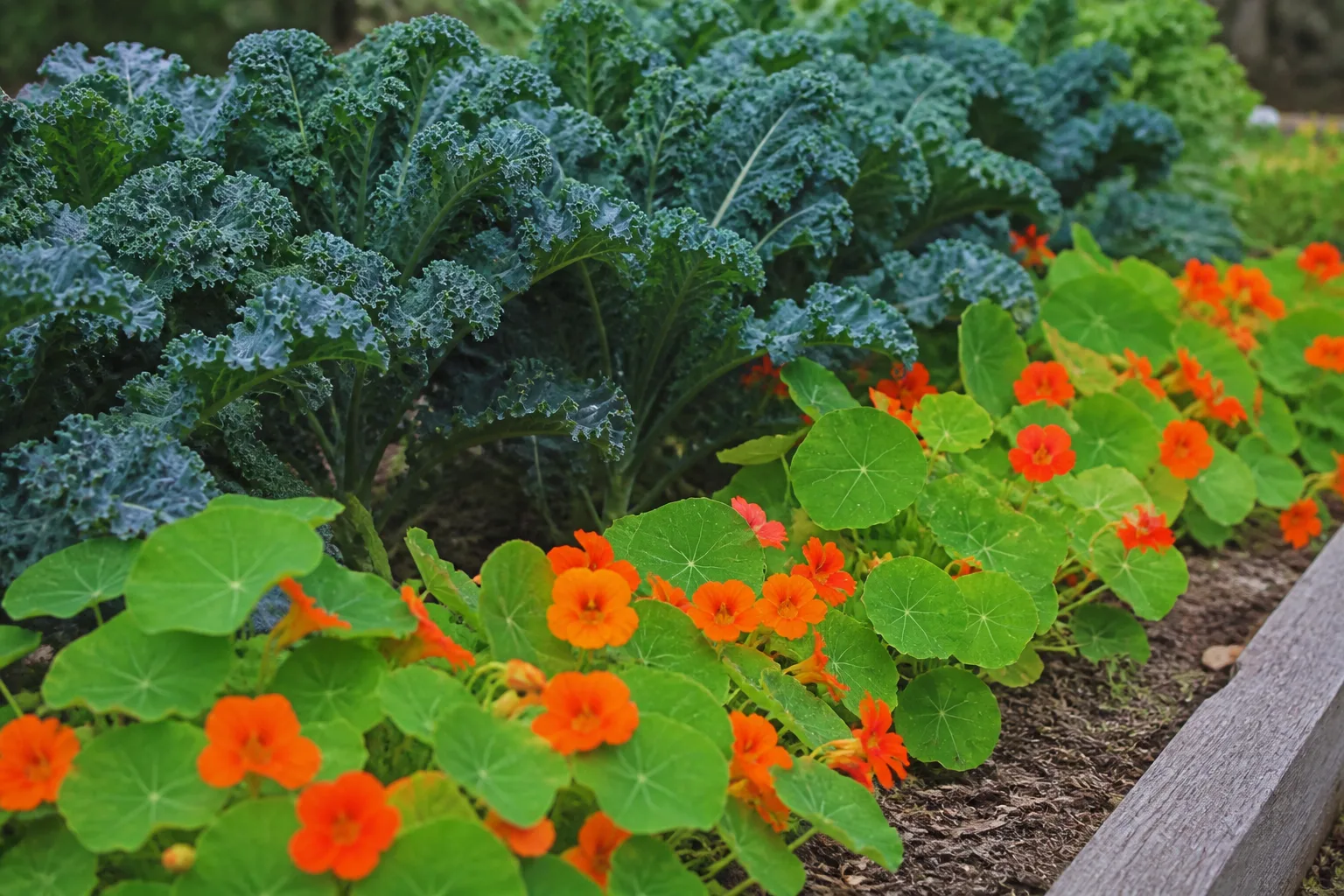
Kale has the same basic caution as broccoli, but its long harvest season makes monitoring even more important. A nasturtium can sit beside kale for weeks without trouble, then become an aphid nursery during a warm spell or after the kale canopy closes.
The plants can also compete visually even when they are not competing severely for nutrients. Nasturtium leaves may cover lower kale leaves, making it difficult to harvest cleanly and easy to miss chewing damage, aphid colonies, or signs of water stress. Fertilizing the bed to push kale growth can make the nasturtium even leafier and more difficult to contain.
Use one of two layouts: place a compact nasturtium just beyond the kale row where you can reach all sides, or put the nasturtium in a nearby container. Avoid running a climbing type through the kale. If the flowers are the priority, the separate placement also lets you keep the nasturtium in leaner soil without changing the fertility plan for the vegetable bed.
This is a conditional separation, not a botanical prohibition. Kale and nasturtiums may share a broad bed when the nasturtium is pruned back, the leaves stay dry, and aphid populations are checked before they spread.
3. Fennel
Fennel deserves the clearest “give it its own zone” recommendation. Mature fennel can become tall and broad, develops a substantial root system, and may self-seed freely if flower heads are allowed to mature. The RHS profile for Florence fennel calls for fertile, moisture-retentive soil, while other fennel guidance emphasizes a sunny, sheltered, well-drained position and room around the plant.
That is a very different management job from a small nasturtium tucked around vegetables. Fennel can shade a low-growing nasturtium, occupy the space needed for its trailing stems, and reappear in places where you did not plan to grow it. Its height also creates a wind and light pattern that changes as the season progresses.
You will often see fennel kept away from other food crops because of claims that its natural chemicals inhibit neighboring plants. There is a sensible caution behind that tradition, but a home gardener should not treat every alleged allelopathic effect as a proven blanket ban on nasturtiums. The more reliable reasons for separation are fennel’s size, deep roots, self-seeding, and distinct fertility and moisture preferences.
Grow fennel at the back of a sunny border or in a dedicated herb area. Deadhead it before seed dispersal if you do not want volunteers, and leave enough room that its roots and canopy are not forced into the nasturtium’s planting pocket.
4. Squash
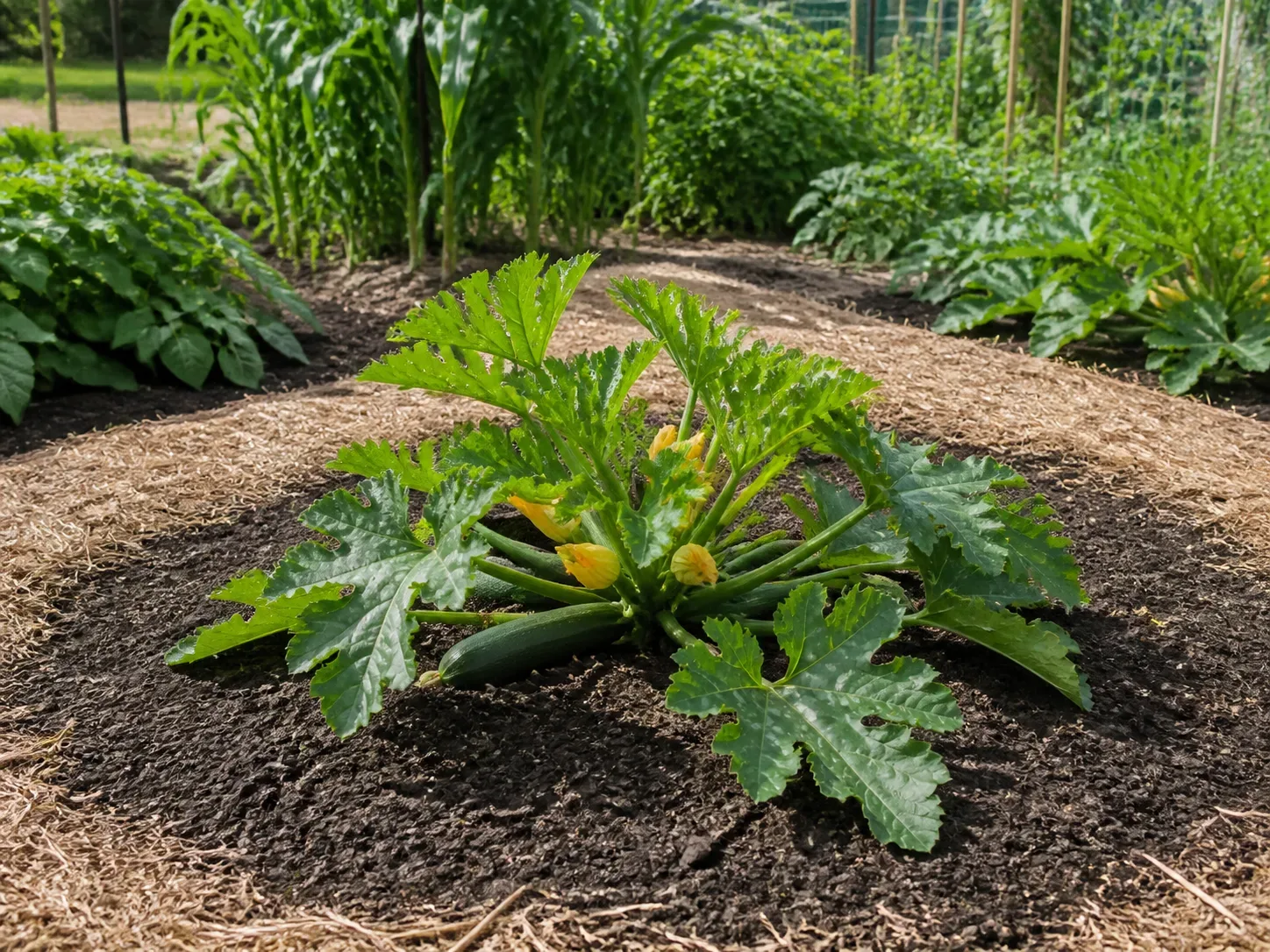
Squash is a poor neighbor for a sprawling nasturtium when both plants are allowed to run freely across the same small bed. Squash leaves already make a broad canopy; a trailing nasturtium layered beneath it can turn an accessible bed into a damp, difficult-to-scout patch.
The key concern is airflow, not a claim that nasturtiums automatically give squash a disease. The Washington State University powdery mildew factsheet for cucumber, pumpkin, and squash identifies dense plantings and poor circulation as conditions that increase risk. Crowding can also hide squash bugs, damaged stems, and fruit touching wet soil.
If you want nasturtiums near squash, place them outside the expected leaf spread, where their flowers can still draw pollinators without becoming a second layer under the squash. A trellis or a clearly marked path for the vines helps. Prune only enough to restore access and airflow; repeatedly cutting a healthy plant into the squash canopy creates more work than the pairing is worth.
5. Cucumbers
Cucumbers and nasturtiums are often described as good companions, and they can be. The problem is that both are vigorous in a way that overwhelms a tight bed: cucumbers climb or sprawl, while nasturtiums trail and fill open ground. If neither has a defined lane, flowers disappear into foliage and harvest becomes a search expedition.
Watering can be another source of friction. Cucumbers need consistent moisture while they are flowering and setting fruit; nasturtiums tolerate a leaner, well-drained setup and can make a wet bed stay leafier than you intended. In humid weather, an untrellised cucumber mixed with a thick nasturtium mat also has less airflow around the lower leaves.
The pairing works best when the cucumber is trellised and the nasturtium is planted at the sunny outside edge, not directly in the cucumber’s root crown. Give the vines one direction to travel, keep a hand-width access route for picking, and water the soil rather than the foliage. If the bed is narrow, choose one of the two plants for the ground-level space and grow the other in a container.
The Farmers’ Almanac companion-planting guide and West Coast Seeds both present nasturtium as a possible cucumber companion. Treat that as a trial-friendly combination, not proof that every cultivar, climate, and spacing plan will improve cucumber yield.
6. Rosemary
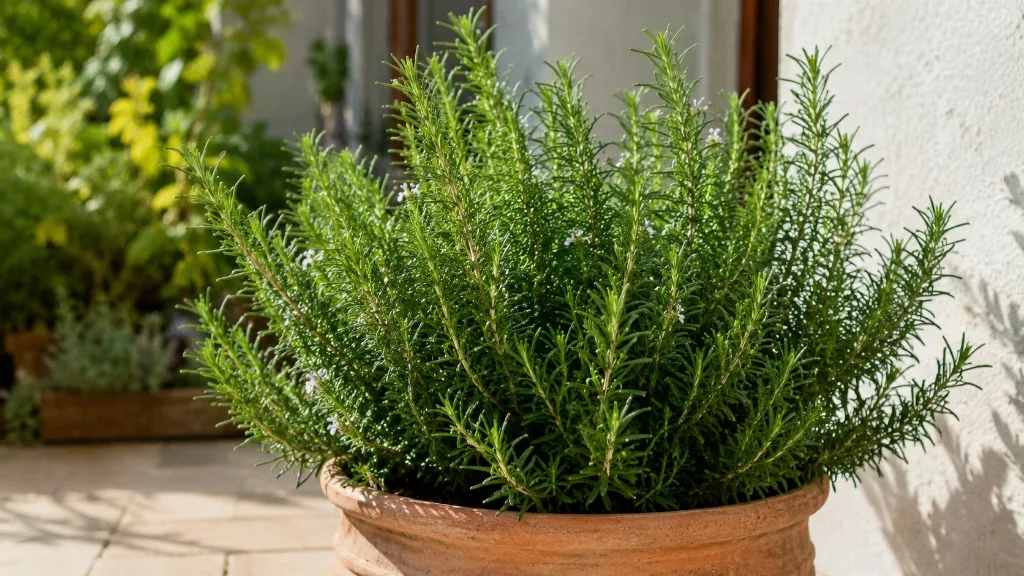
Rosemary is not a bad companion because of a known toxic interaction with nasturtiums. It is a bad shared-irrigation partner when the nasturtium is planted in a bed that receives frequent, shallow watering.
The NC State Extension rosemary profile describes rosemary as a sun-loving plant for light, slightly acidic, dry-to-medium, well-drained soil. It has low tolerance for wet or humid conditions, and poor circulation plus overwatering can lead to decline. Nasturtiums also dislike waterlogged soil, but a flower-and-vegetable bed may still be watered more often than a rosemary plant wants.
Put rosemary in a raised, gritty, or containerized spot where its roots can dry between waterings. Let the nasturtium grow in a nearby pocket only if you can direct water to each plant’s root zone. In a pot, a rosemary plant and a nasturtium can coexist temporarily when the container is large, sharply drained, and not kept constantly damp; in a small pot, the nasturtium’s trailing stems can quickly crowd the herb and make the soil harder to inspect.
This is one pairing where a simple design change solves the issue. Separate irrigation zones matter more than a companion-planting chart.
7. Potatoes
Potatoes and nasturtiums can occupy the same broad garden, but placing a sprawling nasturtium directly in the potato row creates several avoidable problems. Potato plants need room for hilling, watering at the soil line, and checking foliage. Nasturtium stems can cover the base of the plants, hide volunteer weeds, and make harvest more disruptive.
There is also a pest-management decision. Nasturtiums are sometimes used as trap plants because their flowers and foliage can attract aphids and other insects. That can be helpful when the nasturtium is planted where you can inspect it, but risky when it sits beside a high-value potato crop and is ignored. A trap crop is not a pest repellent; it is a plant that may concentrate pests for a gardener to monitor and manage.
Do not turn this into a claim that nasturtiums automatically spread potato blight. The RHS prevention guidance notes that many pests and diseases have limited host ranges, and potato and tomato blights are examples of that specificity. The practical concern here is shared space and a neglected pest reservoir, not a guaranteed disease transfer.
If you want the flowers near potatoes, place a bush type at the edge of the plot, well outside the hilling lane. Keep the stems trimmed off the potato foliage and remove the nasturtium if aphids build faster than you can manage them. Otherwise, put the nasturtium near a path or in a container where it can serve as a visible pollinator plant without complicating potato care.
The harvest calendar matters as well. Potatoes are often left in the ground while the tops mature or die back, so a groundcover that seemed harmless in early summer can become an obstacle later. Mark the potato row, leave the soil around it accessible, and decide in advance whether the nasturtium will be cut back before hilling or digging.
Better nasturtium companions
Good companions are plants that can share the same light and general soil without making the bed harder to manage. Tomatoes and beans are common choices because a nasturtium can cover exposed soil at the edge while its flowers bring pollinator activity. Radishes, peppers, parsley, basil, dill, and melons can also work when their mature sizes and water needs are planned rather than guessed.
The benefit is usually practical: use of an empty edge, visual diversity, a source of flowers, or a plant that gives you an easy place to watch for aphids. It is much harder to promise a specific yield increase or pest-free harvest. The RHS recommends viewing companion planting as one part of a broader approach that includes biodiversity, suitable growing conditions, and good soil care.
How to use a trap crop without creating a pest nursery
Choose a nasturtium location you will actually pass every day. It should be close enough to inspect the undersides of leaves, but far enough from the main crop that an aphid outbreak does not instantly become a row-wide problem.
Watch the plant for clusters of aphids, distorted new growth, sticky honeydew, ants farming the colonies, or a sudden decline in vigor. Beneficial insects may arrive, so do not remove every aphid at the first sighting automatically; instead, set a threshold based on whether the nasturtium is still healthy and whether the nearby crop is being colonized. If the trap plant is overwhelmed, remove the affected growth or the whole plant before it becomes the center of the bed’s pest population.
That approach captures the possible value of a nasturtium without treating it as an organic pesticide. The research review in Insects makes the same broader point: companion plants can influence pest behavior and natural enemies, but success depends on timing, spatial arrangement, and follow-through.
A simple planting layout
Start with the crop that has the most demanding harvest or disease-management needs, then place the nasturtium where it will not block access. For a vegetable bed, that usually means nasturtium on the sunny outer edge, cucumber on a trellis, squash outside the main path, and rosemary in a separate dry pocket. Keep fennel in its own back or side zone, where its height and self-seeding can be managed.
Draw the mature footprint before planting. A circle representing the nasturtium’s expected spread, plus the full leaf reach of a squash or cucumber, often reveals the conflict more clearly than a seedling does. Leave enough room to kneel, water the soil, check leaf undersides, and harvest without stepping into the root zone. If two circles overlap only at the edge, that is usually a pruning or trellising decision; if they overlap across the whole bed, choose a separate location.
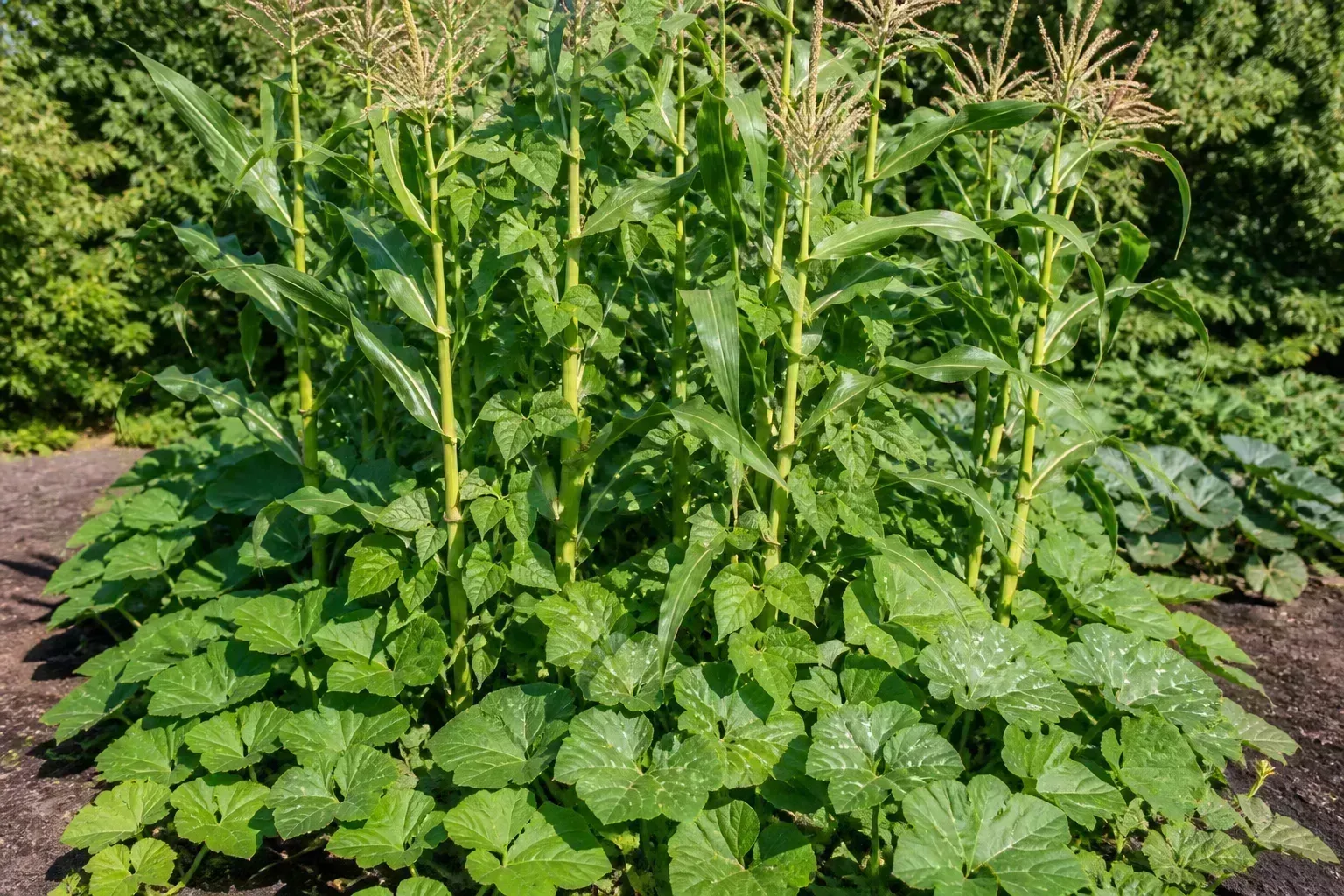
Use compact bush forms when the bed is narrow. Reserve climbing types for a fence, trellis, bank, or other space where their long stems have somewhere intentional to go; NC State notes that some climbing nasturtiums can cover supports and spread broadly. Do not solve crowding by adding more fertilizer: that tends to reward leaves rather than flowers.
Quick spacing and monitoring checklist
- Read the mature spread on the seed packet, not just the size of the first transplant.
- Leave a reachable path to the crop’s lower leaves and soil line.
- Keep trailing stems out of broccoli, kale, potato, and cucumber crowns.
- Trellis cucumbers before the vines form a ground-level tangle.
- Put rosemary where it can dry between waterings.
- Deadhead fennel if you do not want it self-seeding through the bed.
- Inspect a possible nasturtium trap crop at least twice a week during aphid season.
- Thin or relocate plants when leaves stay wet and air cannot pass through the canopy.
- Change the layout next season if harvesting requires stepping into or crushing the planting.
Conclusion
The best answer to what not to plant with nasturtiums is not a permanent blacklist. Keep broccoli, kale, fennel, squash, cucumbers, rosemary, and potatoes separate when the combination creates a real management conflict: aphids beside a valuable crop, a vine-filled canopy, a tall self-seeding neighbor, incompatible irrigation, or a planting lane you can no longer inspect.
Nasturtiums are most useful when their generosity is contained. Give them a defined edge, lean soil, room for airflow, and a location you can monitor, and they can add flowers and habitat without taking over the job of every crop around them.