Do Marigolds Really Help Tomatoes Grow Better?
Do marigolds help tomatoes? Yes—partly. Learn what French marigolds can do for whiteflies and pollinators, why nematode tricks fail beside mature cages, and how to plant both.

Yes—marigolds can help tomatoes, but not in the magic-shield way social posts suggest. Planted thoughtfully, French marigolds (Tagetes patula) may reduce whitefly landing, draw pollinators and predatory insects into the row, and—when used as a dense pre-crop in the same soil—suppress root-knot nematodes before tomatoes go in. A few orange flowers tucked beside mature cages after pests appear will not rescue a struggling plant, and interplanting alone is a weak nematode strategy according to UF/IFAS publication NG045 on marigolds for nematode management.
That honest split matters because marigolds are cheap, cheerful, and easy to overpromise. Treat them as one layer in integrated pest management—not a substitute for resistant tomato varieties, airflow, mulch, and weekly scouting covered in our tips for protecting tomatoes from pests.
The Short Answer: Partly Yes, With Clear Limits
Marigolds help tomatoes most reliably when they (1) bloom in the same sunny bed during the season tomatoes need pollinators, (2) sit close enough that French-type scent compounds may mask host-plant cues for whiteflies, and (3)—only for nematode history—grow densely in the exact planting site for at least two months before tomatoes are planted there. They help least when you expect hornworm disappearance, cure root galls on established vines, or fix a whitefly outbreak by adding marigolds mid-season.
If your only goal is prettier beds, marigolds still earn their space. If your goal is fewer tomato pests, match the marigold job to the pest: pollinator support and possible whitefly masking for border planting; nematode work requires a different calendar entirely.
What Companion Planting Means for Tomatoes and Marigolds
Companion planting means growing two or more species close enough that they interact—through pollinator traffic, root-zone chemistry, physical spacing, or scents that change how insects search for hosts. Penn State Master Gardener material on good-neighbors companion planting describes it as polyculture that increases diversity, not a guarantee that pests vanish.
Tomatoes and marigolds share the practical basics: full sun, warm soil after frost, and consistent moisture without soggy crowns. That overlap is why the pairing is popular. NC State Extension’s home tomato guide emphasizes site selection, support, and sanitation—cultural habits that make any companion planting more useful because the tomato itself is less stressed.
What marigolds can and cannot do in one tomato bed
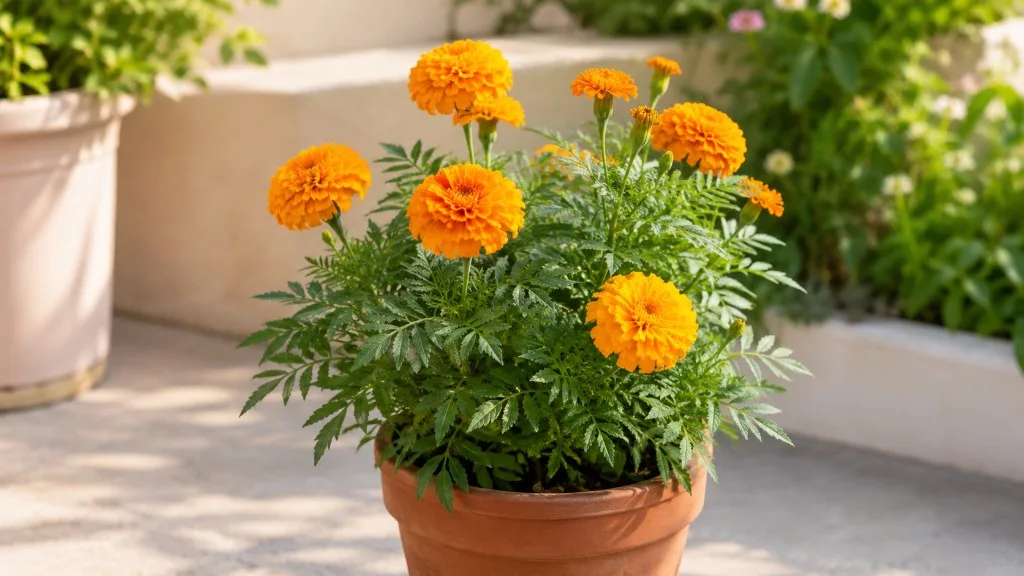
In a typical home raised bed, marigolds most often can attract bees and hoverflies while tomatoes flower, provide a sacrificial edge for slugs if you monitor both plants, and—when French types are established early—contribute limonene-rich foliage that RHS companion planting guidance notes may deter whiteflies and thrips in some settings.
They cannot replace row cover on transplants, eliminate hornworms without hand-picking, reverse virus symptoms from unchecked aphids, or suppress root-knot nematodes in the same season you interplant a handful of flowers beside established roots. Our do marigolds really deter pests guide walks through those limits pest by pest; this page focuses on the tomato pairing specifically.
How Marigolds May Help Tomato Plants
Whiteflies and sap feeders: the limonene evidence
French marigolds release limonene and other aromatic compounds from resinous foliage. Research published in PLOS ONE by Newcastle University scientists showed that limonene from marigolds deterred glasshouse whitefly (Trialeurodes vaporariorum) landing in controlled trials. Field tomatoes face related sap feeders; the mechanism—masking host-plant volatiles—is plausible for garden whiteflies when marigolds are growing beside tomatoes from the start, not added after infestation.
That timing caveat is non-negotiable. If whiteflies already coat the undersides of tomato leaves, buying marigolds the same afternoon rarely clears the colony. Combine early marigold borders with yellow sticky traps only for monitoring, reflective mulch in high-pressure years, and the scouting rhythm from our tomato protection guide. In greenhouse and high-tunnel settings where whitefly pressure is chronic, researchers intercrop marigolds at establishment for the masking effect—not as a rescue treatment mid-outbreak.
Gardeners in hot, dry summers should watch marigolds for spider mite flare-ups on both species; mites love stressed Tagetes foliage and can migrate to tomatoes if populations explode. A quick hose rinse on marigold tips early in the morning often keeps both plants cleaner than waiting for visible webbing on tomato leaves.
Pollinators and beneficial insects
Tomato flowers are buzz-pollinated; bumblebees and many native bees do the heavy lifting, though wind also moves pollen on some varieties. Marigold blooms feed those same visitors—and hoverflies whose larvae eat aphids. RHS companion planting research summaries list pollinator attraction among the most reliable companion benefits in home gardens because the effect does not depend on precise chemistry.
Lady beetles and lacewings also patrol marigold foliage. The trade-off: stressed marigolds can host aphids and spider mites themselves, acting as a trap crop only if you inspect both plants weekly and wash or remove infested marigold tips before pests spread to tomato vines.
Root-knot nematodes: where marigolds actually work
Root-knot nematodes (Meloidogyne spp.) swell tomato roots into galls, stunt plants, and open the door to wilt complexes. Marigold roots release alpha-terthienyl, a compound studied for nematicidal activity, and many French and African cultivars are non-hosts for common root-knot species. UF/IFAS NG045 documents suppression of multiple nematode genera when compatible marigolds grow as a dense cover crop in the same soil for at least two months before the vegetable crop—disked or turned under as green manure if you choose.
That is not the same as planting three marigolds between tomato cages in June. UF/IFAS explicitly states intercropping marigolds with susceptible crops probably does not reduce plant-parasitic nematodes in field settings; root-knot nematodes still find tomato roots. Some pot studies showed reduction with intercrops, but UF/IFAS notes soil dilution and artificial conditions may explain those results—not what most backyard beds experience.
If you see root galls, send a soil sample through your county extension nematode assay before buying seed. Nematode species and marigold cultivar susceptibility vary; signet marigolds (Tagetes tenuifolia), for example, are listed as susceptible to several root-knot species in UF/IFAS tables—pretty, but the wrong tool for nematode management.
What marigolds will not fix for tomatoes
Be honest about the gaps. Marigolds do not reliably repel tomato hornworms (Manduca spp.); hand-picking and supporting parasitoid wasps remain primary controls. They do not prevent early blight or Septoria leaf spot—fungal diseases driven by leaf wetness and spore splash, not missing orange flowers. They do not stop cutworms on their own, though a cardboard collar at transplant (see below) still helps regardless of companions.
Marigolds also cannot compensate for overcrowded cages, irregular watering, or planting tomatoes in the same nematode-heavy spot year after year without rotation. Companion planting rewards healthy baseline culture first. Hornworm moths do not sniff marigold borders and turn away; they oviposit on tomato foliage based on host cues and light. Parasitic braconid wasps that attack hornworm larvae respond to healthy habitat diversity—including nectar from marigold blooms—but that is indirect support, not repellency.
For fungal leaf spots, focus on mulch that blocks soil splash, bottom-leaf removal that keeps the lowest foliage off damp soil, and watering at the root zone in the morning. Orange petals will not dry wet leaves faster after an evening thunderstorm.
French, African, and Signet Marigolds: Which to Plant Beside Tomatoes
Not every Tagetes plays the same neighbor role. Our marigold companion plants guide compares thirty pairings; for tomatoes, start with type:
| Type | Species | Best tomato-bed job | Watch-outs |
|---|---|---|---|
| French | Tagetes patula | Row-edge whitefly support, tight spacing, nematode cover crops (specific cultivars) | Resinous foliage; keep 8–12 inches from tomato stems for airflow |
| African | Tagetes erecta | Back-of-bed color, pollinator blocks, nematode pre-crops in open soil | Tall types shade low neighbors; fewer plants needed on borders |
| Signet | Tagetes tenuifolia | Edible-petal rims, containers | Less nematode research; many cultivars host root-knot nematodes |
When French marigolds are the better neighbor
Choose French marigolds when you want low, bushy plants along the tomato row edge—roughly 8 to 15 inches tall depending on cultivar. Their limonene-rich foliage is the type most cited in whitefly masking work, and UF/IFAS lists numerous French cultivars (such as ‘Single Gold’ and ‘Tangerine’) as resistant to common Florida root-knot species when used as cover crops. For border planting beside cages, French types stay compact enough that you can maintain the 18–24 inches of airflow NC State recommends around staked tomatoes.
When African marigolds work as a bed border
African marigolds (Tagetes erecta) shine when you want a vivid outer ring—one to four feet tall on some cultivars—around a raised bed rather than flowers between every cage. Fewer plants cover more linear feet, which suits gardeners who want visual impact and pollinator blocks without crowding the tomato root zone. UF/IFAS includes African cultivars like ‘Crackerjack’ and ‘Toreador’ in nematode-resistant lists for pre-crop use; verify against your local nematode assay before banking on suppression.
Skip signet marigolds for nematode-troubled tomato ground unless your assay says otherwise. They are excellent in herb knots and pots, but the wrong nematode host status makes them a risky neighbor for gall-prone soils.
How to Plant Marigolds With Tomatoes
Spacing, timing, and layout rules
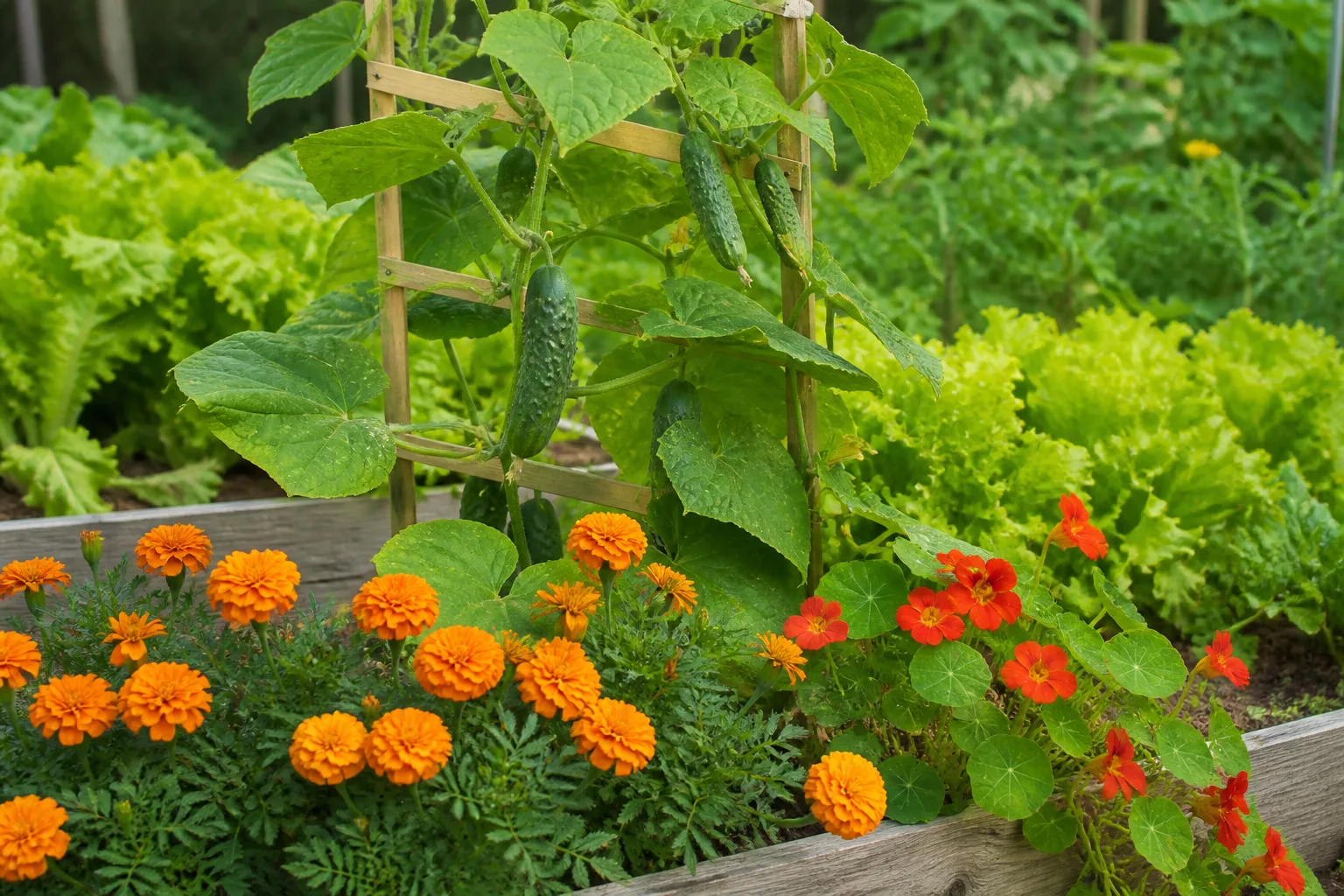
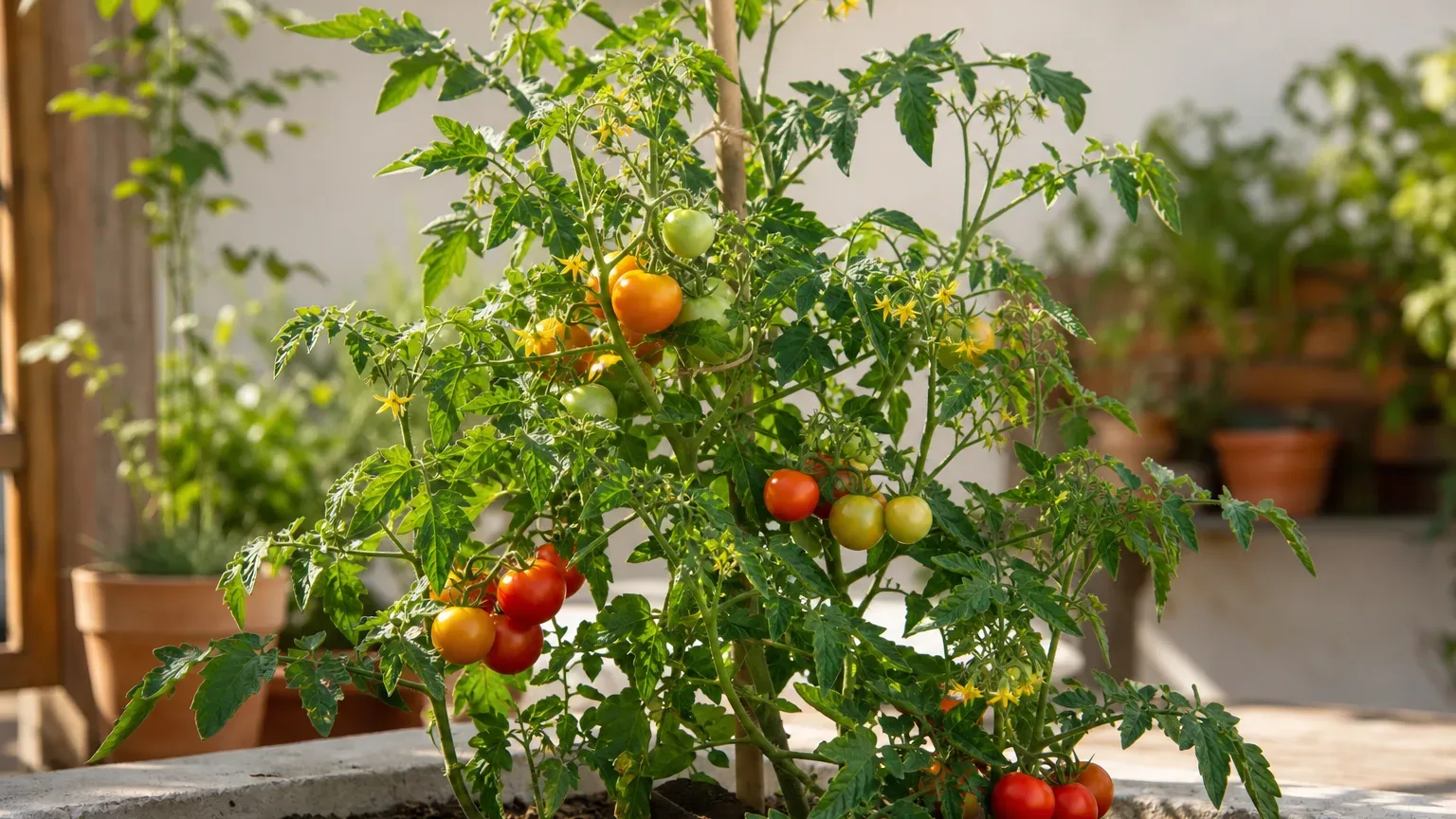
Distance: Plant marigolds 12 to 24 inches (30–60 cm) from tomato stems—close enough that border scent and pollinator traffic benefit the bed, far enough that marigold foliage does not trap humidity against tomato leaves. Along bed edges, a continuous marigold strip often beats one lonely flower per cage.
Timing: Set tomatoes and marigolds out after your last frost when soil warms, unless you are running a nematode pre-crop the season before. For whitefly masking, both species should establish together early; adding marigolds in July rarely rewinds an existing infestation.
Same-week planting: Direct-sow or transplant marigolds when you transplant tomatoes, or start marigold seed indoors three to four weeks ahead if you prefer larger transplants on day one. African types started from seed in late winter give bigger border plants by tomato planting week in many climates.
Depth and culture: Plant marigold transplants at the same depth they grew in the pack—French types can be set one node deeper for sturdiness, similar to our marigold companion guide’s depth advice. Tomatoes go deeper still; do not bury marigold crowns. Both want full sun and well-drained soil; see our marigold and tomato hubs for watering and fertility baselines.
Cutworm collar: At tomato transplant, slip a cardboard toilet-paper tube around the stem and bury the bottom inch—an old trick that blocks cutworms and slugs from girdling young stems. It complements marigolds; it does not replace them.
Fertility: Tomatoes are heavier feeders than marigolds. Side-dress tomatoes with balanced vegetable fertilizer or compost when fruit sets; marigolds rarely need more than a light feeding at transplant unless leaves pale. Over-fertilizing marigolds produces foliage at the expense of bloom—the opposite of what you want for pollinator traffic beside tomato flowers.
Rotation: Do not plant tomatoes in the same bed year after year even with a marigold border. Move the tomato row on a three- to four-year nightshade rotation when space allows. Marigolds fit anywhere in that rotation as a summer annual, but they do not erase soil-borne disease buildup from repeated tomato roots in one patch.
Containers and tight patios
No in-ground space? Grow tomatoes in a large pot (minimum five gallons for determinates; bigger for indeterminates) and place a separate marigold container flush against the tomato tub so roots do not compete for the same limited volume. One French marigold per large tomato pot is enough for pollinator support; two pots side-by-side on a patio beat cramming both into one container where tomato roots dominate.
The Nematode Strategy Most Gardeners Get Wrong
Cover crop versus interplanting
The most common mistake is treating border marigolds as a nematode cure. UF/IFAS NG045 is explicit: effective nematode suppression requires marigolds planted densely (often less than 7 inches between plants in research plots), in the same site where tomatoes will later grow, for at least two months before the tomato crop, with weeds controlled because nematodes reproduce on weed hosts too.
Interplanting a few marigolds among established tomatoes does not deliver that root-zone density or timing. Powers et al. field work cited in NG045 found intercropped marigolds did not reduce plant-parasitic nematodes in Honduras; UF/IFAS FAQ answers “probably not” for intercropping protection of susceptible crops like coleus—and the same logic applies to tomato roots already in nematode-infested soil.
What to do instead if nematodes are your main worry:
- Test soil through your extension nematode lab and identify species.
- Choose a marigold cultivar listed resistant to your nematode species (UF/IFAS tables are a starting point, not a guarantee for every local population).
- Grow marigolds as a dense stand on that bed fall through early spring, or for two warm months minimum before tomatoes.
- Turn under or remove marigold biomass, then plant nematode-resistant tomato varieties if available for your region.
- Rotate nightshades; do not expect one marigold season to erase years of gall buildup.
If you lack time for a pre-crop this year, border marigolds still help with pollinators and possible whitefly masking—just do not confuse that with nematode remediation.
Realistic Expectations When Pests Still Show Up
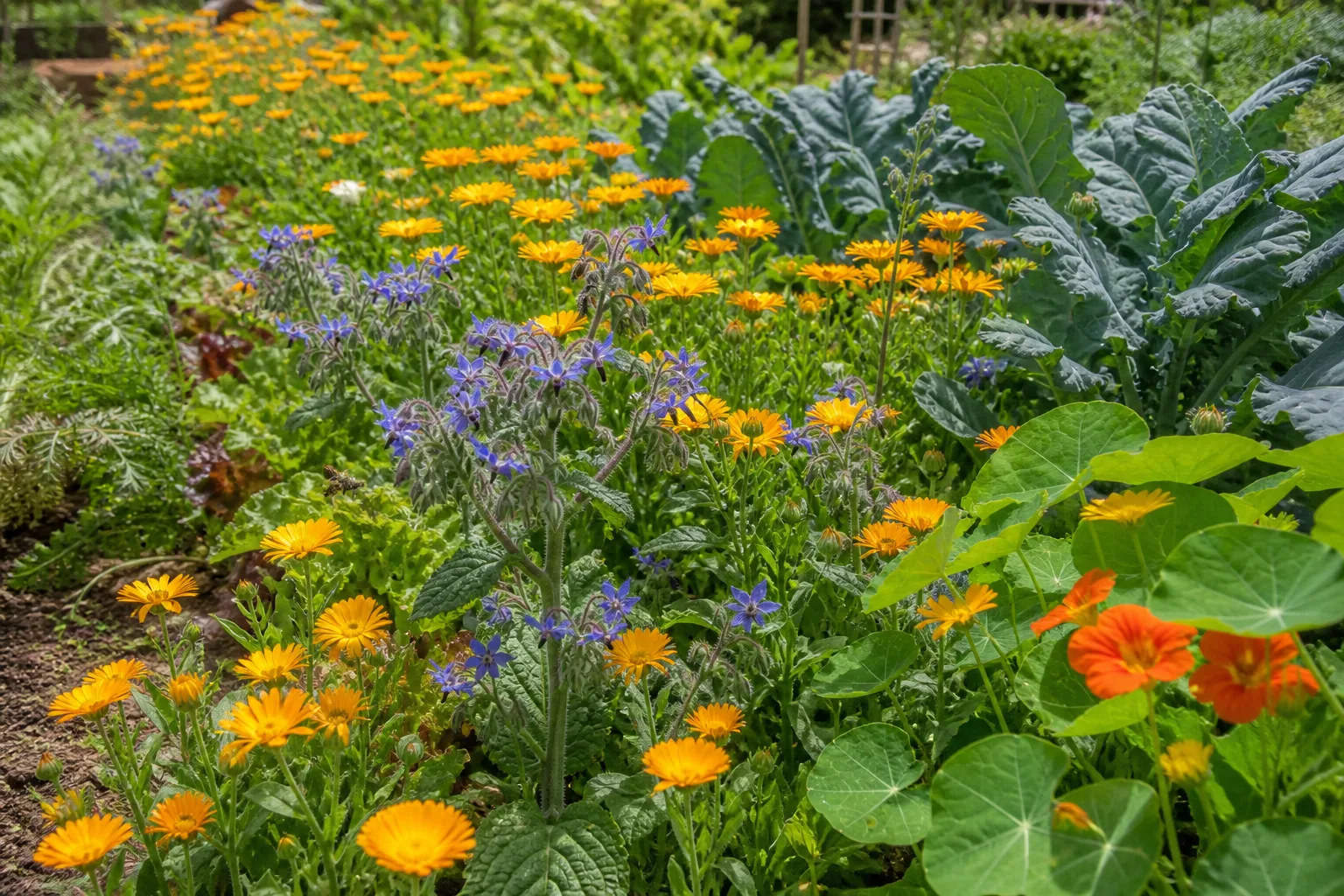
Even well-planned pairings fail gracefully sometimes. Hornworms can appear on pristine vines. Aphid colonies blow in on wind. Early blight spots show after a wet June. When that happens, companion planting has already done its partial job if you spotted damage early.
Weekly scouting beats any flower border: check leaf undersides, stem bases, and fruit clusters twice a week from flower through harvest. Hand-pick hornworms into soapy water. Blast aphids with a strong hose jet on a dry morning. Remove marigold tips if they become mite or aphid hot spots. Treat identified pests with products labeled for tomatoes only when cultural steps lag behind damage—broad preventive spraying usually kills the beneficial insects marigolds attracted.
Keep marigolds deadheaded if you want continuous bloom for pollinators; tired marigolds still feed roots but attract fewer beneficial visits. Accept that some pests are “part of gardening,” as experienced growers note—marigolds shift the odds; they do not erase biology.
Two Sample Tomato-and-Marigold Bed Plans
Plan A — 4×8-foot raised bed, nematode history unknown: Stake or cage three indeterminate tomatoes down the center line on 24-inch spacing. Plant a continuous strip of French marigolds along both long edges, 14 inches from stem bases. Add basil between one tomato and the marigold edge for extra pollinator diversity. Mulch both crops. Scout weekly; send soil for nematodes if plants stunt mysteriously by midsummer.
Plan B — nematode-positive bed, next-season remediation: This year, grow tomatoes in containers or a different bed. On the gall-prone bed, direct-seed dense French marigold (‘Single Gold’ or another cultivar matched to your assay) at 6-inch spacing for eight to ten weeks of warm growth. Turn under, then next spring plant resistant tomatoes with a marigold border—not as substitute for the pre-crop you already ran.
Plan C — patio containers: One determinate tomato (‘Celebrity’, ‘Patio’, or a bush cherry) in a 7–10 gallon pot with a 10-inch French marigold in its own 3-gallon pot touching the rim. Stake the tomato early, mulch both containers, and deadhead marigolds through July so bees keep visiting while tomato clusters set. Move pots apart if either plant shows mite webbing; cramped foliage in August heat invites shared pest problems despite the companion pairing.
Conclusion
Marigolds do help tomatoes when you match the marigold type and placement to a real job: French borders for pollinators and possible whitefly masking, thoughtful spacing for airflow, and—only when soil tests justify it—a dense same-site pre-crop for root-knot nematodes before tomatoes ever go in. They do not replace resistant varieties, rotation, mulch, support, or scouting.
Plant marigolds with your tomatoes from the start, 12 to 24 inches from stems or along bed edges, and keep expectations proportional to the evidence. If pests still arrive—and they will sometimes—treat marigolds as one helpful neighbor in a larger plan, not the entire strategy. For deeper pest-by-pest limits, read do marigolds really deter pests; for summer maintenance, pair this page with tips for protecting tomatoes from pests.



