Do Marigolds Repel Pests? What the Evidence Says
Do marigolds repel pests? Learn what they can and cannot control, how nematode suppression works, and how to use marigolds without wasting garden space.
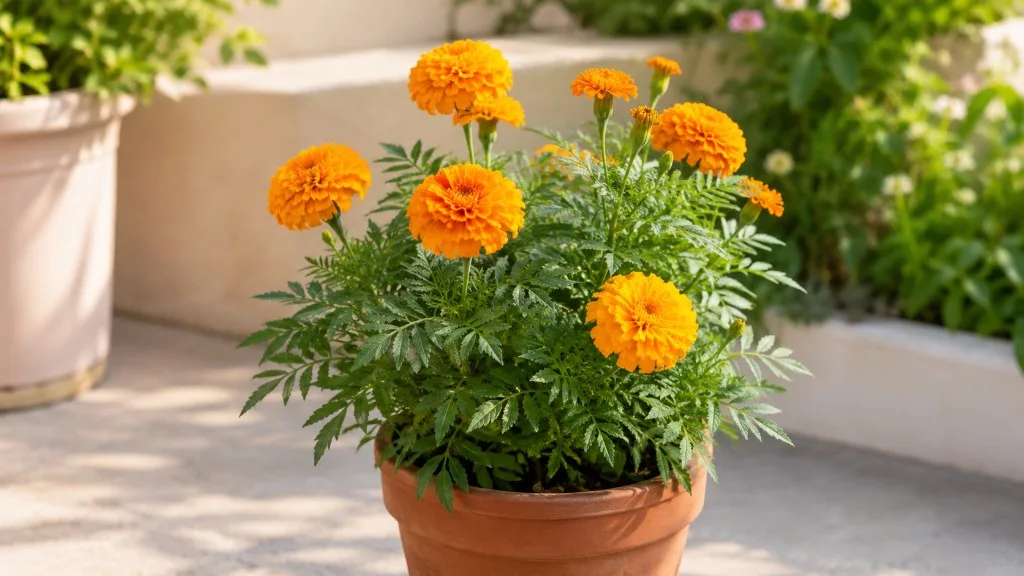
Marigolds are often sold as a natural pest-control shortcut: plant a bright ring around your vegetables and insects will supposedly stay away. The reality is more useful than that promise. Marigolds can contribute to pest management, but a living plant is not a whole-garden repellent, and the strongest evidence applies to particular soil nematodes—not every bug that lands on a leaf.
If you are deciding whether to add marigolds, ask a more specific question than “Do they repel pests?” Which pest are you trying to manage? Are you planting Tagetes as a dense pre-crop for a suspected nematode problem, or are you hoping one flowering plant will protect tomatoes from aphids, beetles, or mosquitoes? Those are different jobs with different levels of evidence.
The short answer: useful in a narrow role, not a pest-proof barrier
For most above-ground garden pests, planting marigolds beside a crop is an experiment, not a dependable control method. Their aroma may alter how some insects find or use plants, and marigolds can provide flowers for insects that prey on pests, but results vary by species, cultivar, weather, plant density, and the crop being protected.
The more defensible answer is that marigolds have a specific, conditional use against certain plant-parasitic nematodes. Some Tagetes varieties can suppress root-knot and lesion nematodes when grown densely for a full season as a cover crop in the same soil that will later hold a susceptible crop. A few marigolds dotted through an established vegetable bed are not equivalent.
That distinction also explains why gardeners report opposite results. A gardener with fewer root galls after a dense marigold rotation may be seeing a real effect, while another gardener who plants one yellow flower beside a bean row sees no reduction in aphids. Both observations can be honest; they are simply not evidence for the same mechanism.
Why the marigold reputation is partly right
“Marigold” usually means a plant in the genus Tagetes, such as French marigold (Tagetes patula), African or Aztec marigold (T. erecta), and signet marigold (T. tenuifolia). It can also be confused with calendula, sometimes called pot marigold, which is a different genus and should not be assumed to have the same pest effects.
Scent is not a force field
Strong fragrance is the explanation most often given for marigolds. It is easy to understand because crushed foliage smells pungent to us, but a human nose is not a pest-identification system. A plant’s odor can influence a particular insect under particular conditions, yet that does not mean the scent creates an invisible barrier around every nearby crop.
The practical literature reflects that uncertainty. Gardening Know How notes that many popular claims about marigolds controlling tomato hornworms, cabbageworms, thrips, squash bugs, and whiteflies remain unproven, even though marigolds are attractive flowers and may support beneficial insects (Gardening Know How). That is a better expectation than treating “pungent” as a synonym for “repellent.”
There is another problem with a scent-based promise: coverage. A small plant releases a limited amount of volatile compounds, and wind disperses them quickly. One marigold at the end of a large bed cannot alter the conditions across the entire bed. Grouping plants can make a planting more noticeable, but it still does not produce a measured dose or a guaranteed result.
Root chemistry targets a different problem
Marigolds have a more interesting story below ground. Living roots of some Tagetes varieties release compounds including alpha-terthienyl, and researchers have studied their effects on plant-parasitic nematodes and other organisms. The University of Florida IFAS explains that marigold performance depends on the nematode species, the marigold cultivar, the crop, and soil temperature—not simply on whether a plant has orange flowers (University of Florida IFAS).
This is not the same as a leaf scent repelling a flying insect. Root-knot nematodes live in soil and feed within roots; they can cause swelling, impaired water and nutrient movement, stunting, wilting, and yellowing. A root-based effect only helps where the active roots are growing and only while the cultivar and nematode combination are compatible.
The distinction matters for homemade sprays. A laboratory paper may test crushed leaves, purified fractions, or a concentrated extract, but that does not make a bucket of marigold water a tested pesticide. Concentration, exposure time, sunlight, plant sensitivity, and effects on pollinators all change outside the experiment. Do not spray an improvised extract on edible crops or beneficial insects as if it had a label, a known dose, or predictable coverage.
The marigold-pest combinations that actually matter
The phrase “marigolds repel pests” collapses several different outcomes into one sentence. Use the table below as a quick reality check before you spend bed space on them.
| Target or outcome | What the evidence supports | Best interpretation for a home garden |
|---|---|---|
| Root-knot nematodes | Certain cultivars can suppress some species when grown densely as a same-site cover crop | A specialized rotation tool, not a quick fix |
| Lesion nematodes | Some Tagetes plants can suppress particular species | Confirm the species and cultivar before relying on it |
| Aphids and whiteflies | Effects vary; marigolds can also host or attract these insects | Inspect marigolds instead of assuming they protect the crop |
| Beetles, caterpillars, and flies | Broad “repels them all” claims are not reliable | Use pest-specific monitoring and barriers |
| Mosquitoes | A living marigold does not provide measured yard-wide protection | Remove breeding water and use proven personal protection |
| Slugs and snails | Marigolds may be eaten rather than avoided | Do not use marigolds as slug control |
| Beneficial insects | Flowers can add nectar and habitat, especially in a diverse planting | A habitat benefit, not a guarantee of pest suppression |

Root-knot nematodes are the strongest use case
Root-knot nematodes are microscopic roundworms in the genus Meloidogyne. Their most recognizable sign is a firm gall or knot that is part of the root tissue. Above ground, affected plants may wilt in heat even when the soil is moist, grow slowly, yellow, or produce fewer and smaller fruits—symptoms that can also come from drought, nutrient problems, or root disease.
This is where marigolds can earn a place in a serious plan. UC Integrated Pest Management identifies certain marigolds as suppressive plants and lists French varieties such as ‘Nemagold,’ ‘Petite Blanc,’ ‘Queen Sophia,’ and ‘Tangerine’ among the more effective options for some root-knot and lesion nematodes. It also warns that signet marigolds can allow some nematodes to feed and reproduce, that results are poor against northern root-knot nematode in cooler regions, and that intercropping usually does not give strong control (UC Integrated Pest Management).
The use case is therefore not “plant marigolds near tomatoes.” It is closer to: test or identify the nematode, select a compatible cultivar, grow a dense stand in the future crop’s exact location for a full season, and then rotate into a susceptible crop. Even then, suppression is temporary and cannot be expected to eradicate the population.
Cultivar and nematode species change the result
Nematodes are not one pest. The UF/IFAS guidance lists cases where a marigold variety resistant to one root-knot species can be susceptible to another, and where marigolds may increase other nematodes such as stubby-root, sting, or awl nematodes. A seed packet that only says “marigold” does not give you enough information for a high-confidence nematode treatment.
If plants have a history of unexplained wilting and poor growth, dig up several plants and examine the roots rather than diagnosing from leaves alone. NC State Extension notes that root galls are distinctive, but other swellings can be caused by clubroot, crown gall, or normal legume nodules; laboratory soil and root analysis is the safer route when the diagnosis is uncertain (NC State Extension).
Aphids, whiteflies, beetles, and slugs need separate answers
Do marigolds repel aphids? Do not count on it. Aphids may colonize marigolds, and a yellow or orange flower can be part of the visual signal that attracts some insects. If you plant marigolds in a vegetable bed, inspect the marigolds as well as the crop; they are living plants, not sacrificial decoys with a controlled level of attractiveness.
Whiteflies illustrate why the answer cannot be reduced to “yes” or “no.” A peer-reviewed PLOS ONE study tested French marigold plants and concentrated foliar extracts against western tarnished plant bug and whitefly. Survival was reduced in the controlled assays, and extract mortality increased with concentration, but the authors presented this as a starting point for identifying compounds and developing future pest-management tools—not as proof that a backyard border will protect a crop (PLOS ONE).
That result is valuable precisely because it sets a boundary. It tells us Tagetes patula contains biologically active compounds under test conditions. It does not tell us that a specific nursery marigold, planted at an unknown spacing in a windy garden, will repel the whiteflies already feeding on a tomato.
For beetles, caterpillars, and flies, use the pest’s biology to choose the response. A row cover can block egg-laying, hand-picking can remove a small beetle population, and removing plant debris can reduce overwintering sites. A marigold border may be attractive and worthwhile, but it should not delay a control that matches the actual pest.
Slugs are an especially poor target for a “repellent plant” strategy. They may chew marigold foliage, and the presence of a marigold does not protect a nearby host plant. Use habitat reduction, hand removal at night, barriers, or a product labeled for the setting if slug damage is the problem.
Flowers may support beneficial insects or act as a trap crop
Marigolds can still help a garden without repelling a pest. Open flowers add nectar and pollen, and a diverse planting can give hoverflies, parasitoid wasps, and other beneficial insects more reason to remain in the area. The benefit depends on the flower form, local insect community, and whether the garden also offers shelter and avoids unnecessary broad-spectrum sprays.
Some marigolds can also attract a pest away from another crop, which is called trap cropping. That only works when the target insect clearly prefers the trap plant, the trap plants are monitored, and you have a plan for the insects that gather there. Otherwise, you may simply add a well-watered pest nursery beside the crop you wanted to protect. A practical review by Garden Myths makes the broader point: companion planting must be evaluated for a named plant, a named pest, and a defined mechanism rather than accepted as a universal rule (Garden Myths).
How to use marigolds when you want a real benefit
Choose the type and cultivar for the job
For color, pollinator interest, edging, or a long-blooming annual, choose a marigold that fits your light, heat, drainage, and available space. French marigolds are compact and commonly discussed in nematode work; African marigolds are taller and have larger flowers; signet marigolds are fine-textured and compact but should not be assumed to suppress every nematode.
For nematode management, start with the diagnosis and the cultivar—not the flower color. Check extension recommendations for your region, record the suspected or confirmed nematode species, and buy a named variety with evidence for that target. If you cannot match the variety to the pest, treat the marigolds as ornamental companions rather than a nematode treatment.
Also account for the crop you are giving up while the marigolds grow. A dense pre-crop takes light, water, nutrients, and several weeks of bed time; that trade is reasonable only when the nematode problem is recurrent or confirmed. In a small raised bed with one struggling tomato, testing the soil and switching to a resistant or tolerant crop may be more useful than filling the whole bed with an unverified marigold variety.
Keep a simple record of the experiment: cultivar, planting date, spacing, soil location, symptoms in the previous crop, and what follows the marigolds. If the next crop improves, you still will not know whether the result came from nematode suppression, better soil preparation, a cooler planting date, or a different crop. A record makes the next decision more reliable than a memory of how colorful the marigold bed looked.
Plant densely and early for nematode suppression
The nematode method requires more commitment than placing a few marigolds around a tomato. UF/IFAS recommends planting the marigolds at least two months before the desired vegetable crop, in the same site, as a dense stand. The goal is to fill the soil with living roots rather than create a decorative perimeter.
Keep the stand healthy and control weeds. Weeds can serve as hosts for nematodes and undermine the rotation. When using the bed for the next crop, remember that marigolds cannot make a heavily infested site permanently clean; susceptible crops can allow populations to build again.
Do not assume that drying leaves or a homemade extract will reproduce the effect. UF/IFAS notes that the nematicidal compound is released by active living roots and that exposure outside the soil can inactivate it. The practical takeaway is to grow the right marigold in the right soil long enough for the root-based mechanism to matter.
Know when a border, interplanting, or cover crop makes sense
Use a border when your main goal is beauty, a small amount of habitat, or a low-stakes trial of a companion effect. Planting several healthy marigolds near the crop makes the trial easier to observe than planting one isolated specimen, but it still does not guarantee insect control.
Use interplanting cautiously. A marigold growing beside a susceptible crop shares space with that crop’s roots; it does not automatically protect them from soil pests. UF/IFAS reports that intercropping has often failed to reduce plant-parasitic nematodes and can complicate results, while dense cover-crop plantings are the more defensible approach for some targets.
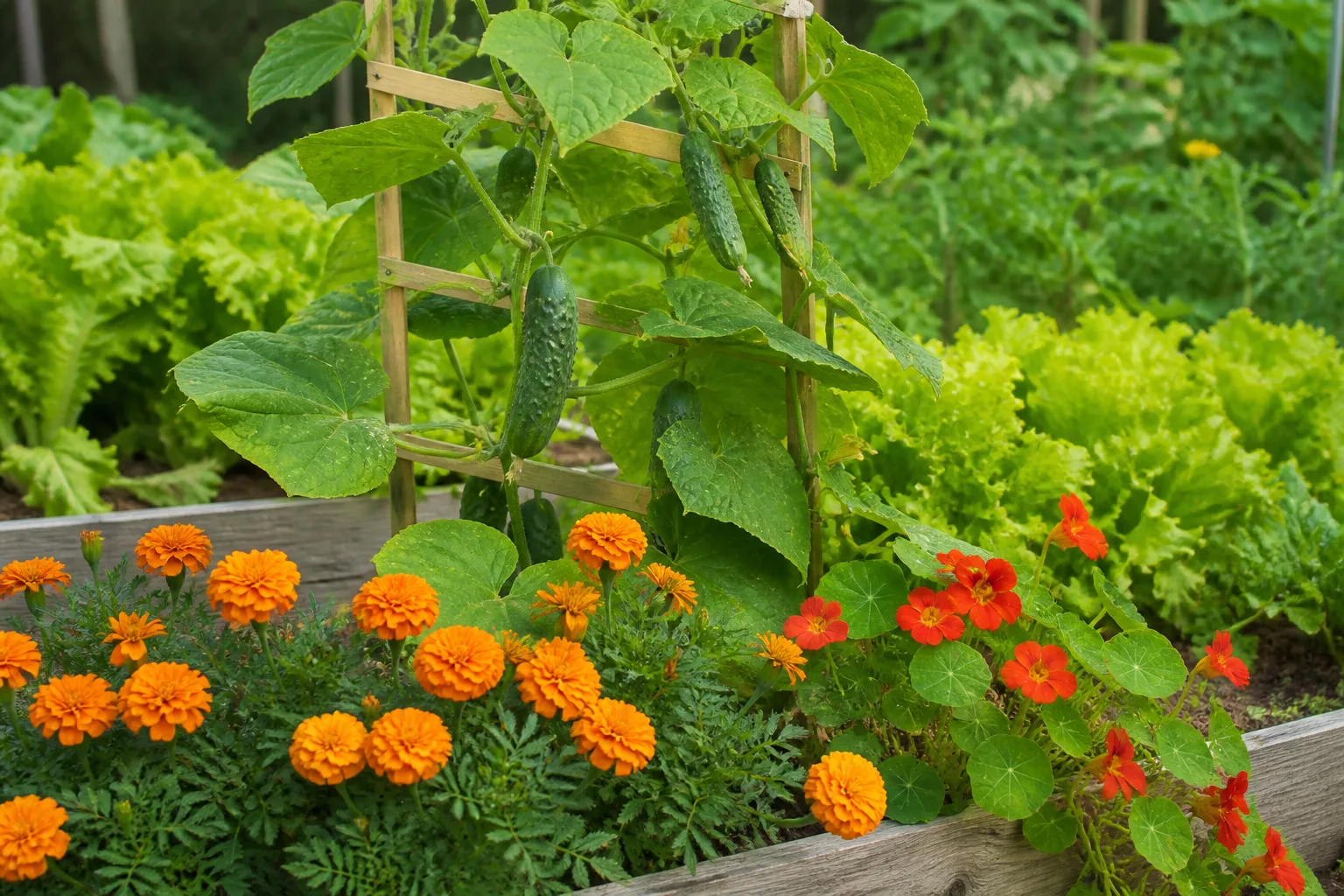
Use a cover crop only when you can give the soil a full season and have a plan for the following crop. In small gardens, that may be worthwhile if a recurring root-knot problem is confirmed. If you need to harvest tomatoes next week, marigolds are not the intervention that matches the timeline.
Timing also changes what “success” can mean. A cover crop may lower pressure enough for the next annual crop to establish, but it will not protect roots that have already been invaded, and it will not keep nematode numbers down forever once a susceptible crop returns. Extension guidance describes rotation, sanitation, resistant varieties, and, where conditions allow, solarization as additional tools because the problem belongs to the soil system rather than to one ornamental plant.
Do not move soil from a suspicious bed to a clean one on tools, boots, transplants, or muddy runoff. Nematodes are easy to miss because they are microscopic, and a beautiful marigold border cannot compensate for repeatedly spreading infested soil. Clean tools, buy healthy transplants, remove spent annual roots after harvest, and keep weeds from acting as unplanned host plants.
What marigolds cannot fix
Marigolds cannot identify a pest for you. Yellow leaves, wilting, holes, sticky residue, and stunting each have multiple causes. Planting more flowers without examining leaf undersides, stems, soil moisture, roots, and nearby weeds can turn a diagnosis problem into a space and time problem.
They cannot repair damage that has already happened. A marigold placed beside a plant covered with aphids will not remove the aphids, and a flower border will not reverse root injury from nematodes. Start with the first action that stops the current damage: rinse or hand-remove soft-bodied insects, use a physical barrier for chewing pests, prune badly infested growth when appropriate, or get a lab diagnosis for persistent root symptoms.
They cannot replace a labeled pesticide when a product is genuinely needed, and they cannot make an unlabeled homemade extract safe. If you use any pesticide, read the label for the crop, pest, application site, pollinator precautions, and harvest interval. If the problem is a serious infestation or a regulated pest, contact local extension or a qualified professional.
They also cannot make a bad site good. Waterlogged soil, drought, compacted roots, poor air movement, and overcrowding can weaken a crop and make pest damage more likely. A healthy, well-spaced garden gives any companion planting a better chance than a stressed garden with a decorative ring of flowers.
A practical pest plan with marigolds as one layer
Inspect, identify, respond, and reassess
Use this sequence when you are tempted to buy marigolds for a pest problem:
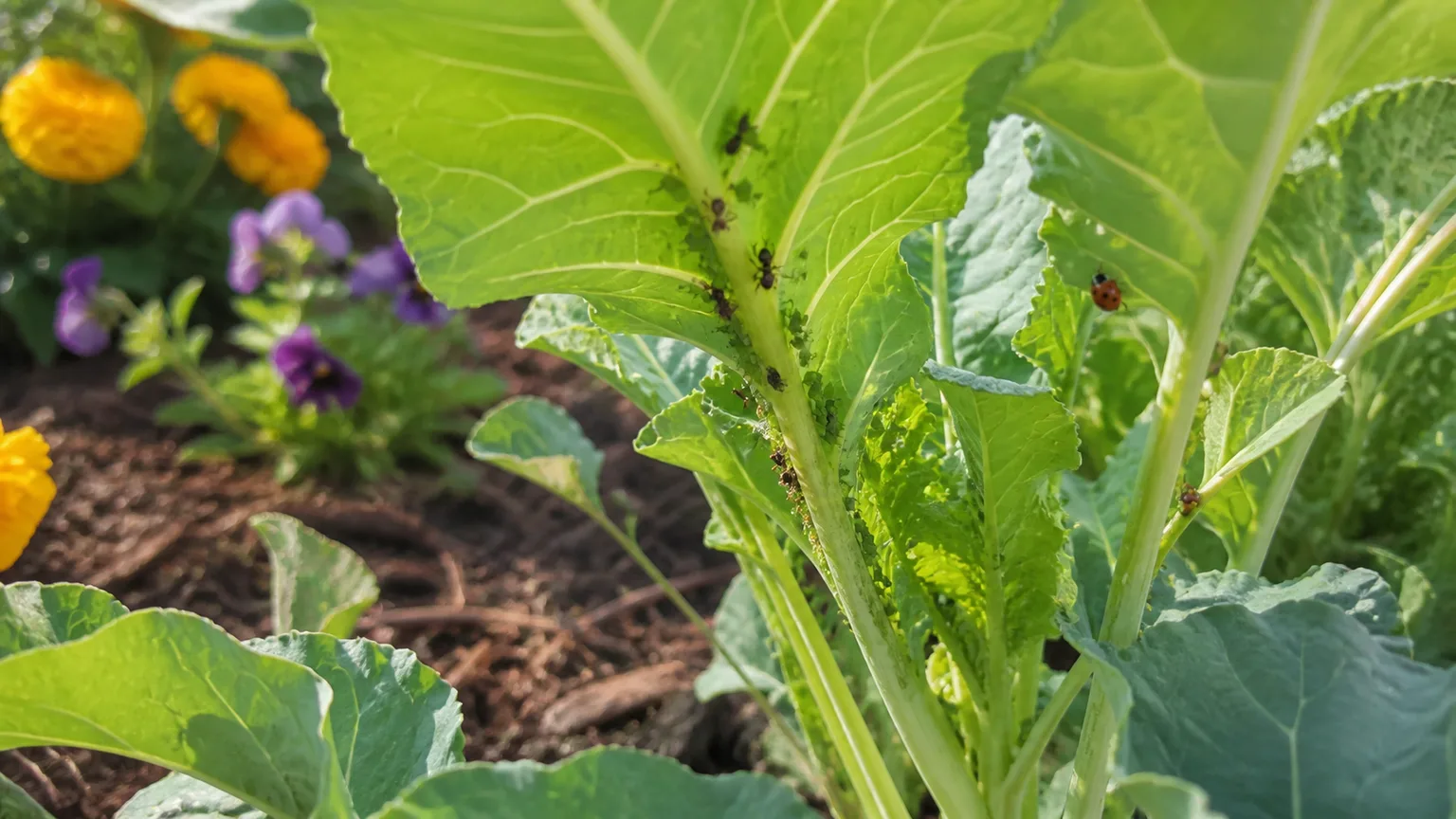
- Inspect before planting. Look under leaves, along stems, at the soil line, and—when plants are stunted or wilting—at the roots. Photograph the pest or damage and note when it appears.
- Name the target. “Bugs” is not specific enough. Decide whether you are dealing with aphids, whiteflies, a leaf-chewing larva, a beetle, a slug, a disease, drought, or a root pest.
- Match the first control to the biology. Use a barrier for an egg-laying moth, hand removal for a few beetles, sanitation for infected debris, and a nematode assay when root galls or recurring unexplained decline point below ground.
- Add marigolds for the job they can actually do. Use them as flowers and habitat in a general garden, or as a properly selected dense cover crop when extension evidence supports the nematode target.
- Monitor the marigolds too. If aphids, whiteflies, spider mites, or chewing pests appear on them, they are part of the pest population. Remove or manage them rather than assuming they are protecting the crop.
- Reassess after a defined interval. Compare the damaged crop with a nearby untreated area or record root and leaf symptoms over time. If nothing changes, stop expanding the planting and choose a more direct control.
This approach preserves the best reason to grow marigolds: they are beautiful, useful annuals that can add diversity to a garden. It also protects you from the most expensive companion-planting mistake—using a broad promise to solve a narrowly defined pest problem.
Conclusion
So, do marigolds repel pests? Sometimes, in specific circumstances—but not reliably enough to serve as a general pest barrier. The strongest home-garden case is targeted suppression of certain plant-parasitic nematodes using a compatible Tagetes cultivar, grown densely in the same soil as a pre-crop for a full season.
For aphids, whiteflies, beetles, mosquitoes, slugs, and caterpillars, treat marigolds as one possible companion or habitat plant, not the control itself. Identify the pest, use a response that fits its biology, and let marigolds earn their place through beauty, biodiversity, or a well-planned nematode rotation rather than an exaggerated promise.



