9 Plants That Don't Grow Well With Sage
Learn why cucumbers, basil, fennel, and six other plants struggle beside sage, plus the spacing, watering, and layout fixes that work in real gardens.
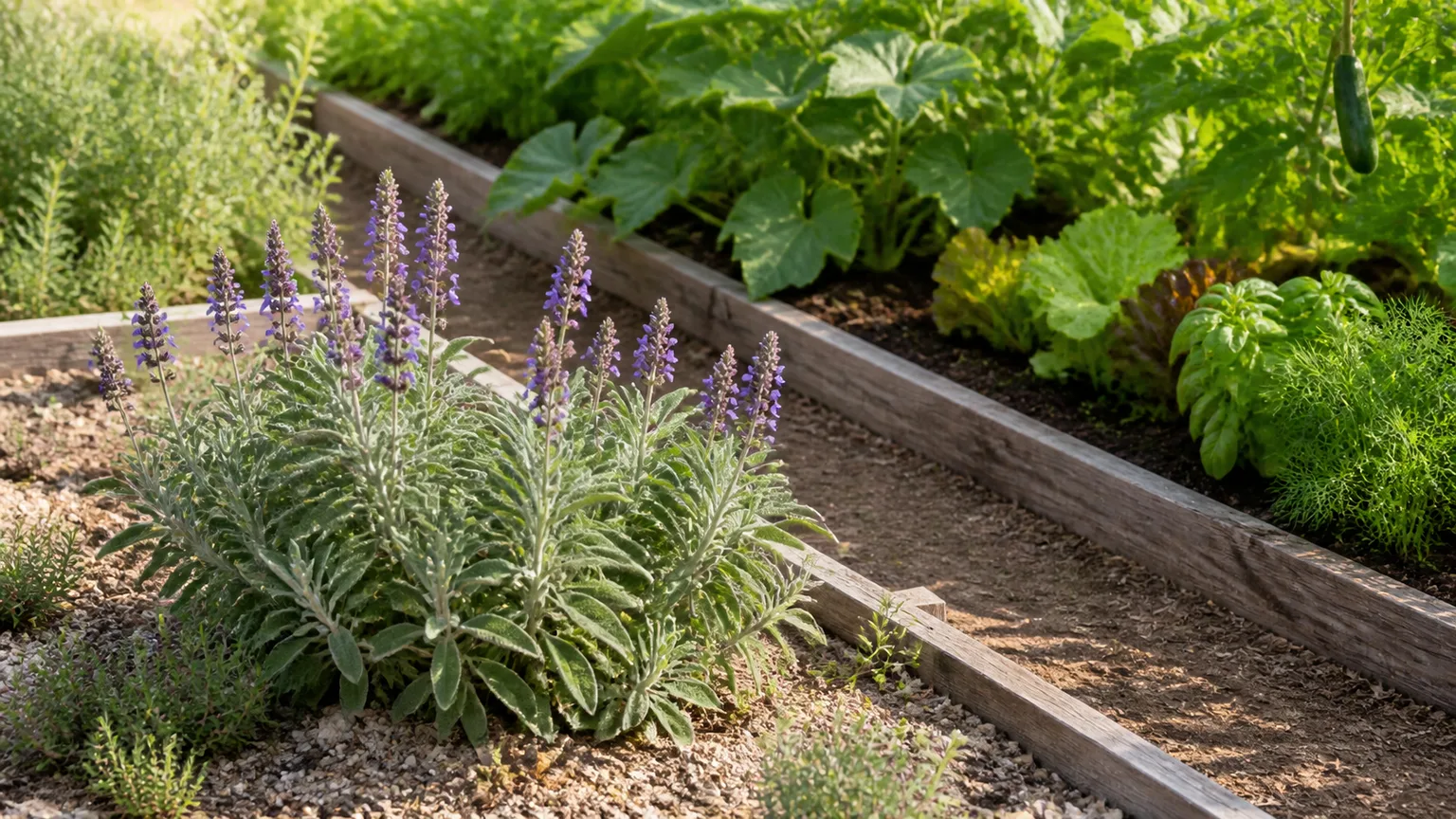
Common culinary sage (Salvia officinalis) is easy to grow when it gets full sun, loose soil, and a chance to dry slightly between waterings. The trouble starts when a nearby plant needs the opposite treatment. One crop may need frequent irrigation while sage sits in damp soil, or a bulb harvest may disturb the sage’s roots just when the perennial is settling in for another season.
That makes “bad companion plant” a useful shortcut, but not a scientific verdict. The nine plants below are poor neighbors for sage for different reasons: some create a genuine moisture mismatch, some crowd or disturb it, and a few are flagged by traditional gardening advice for possible chemical inhibition. The fix is usually a better layout, not ripping out a healthy plant.
What “doesn’t grow well with sage” really means
Sage is a Mediterranean perennial herb with aromatic, gray-green leaves and a semi-woody habit. NC State Extension describes it as drought tolerant but intolerant of wet or poorly drained soil, while the RHS recommends full sun, free drainage, and at least 30 centimeters (about 12 inches) between sage and neighboring plants. NC State Extension RHS
The neighboring plant does not have to “hate” sage for a combination to fail. If both plants share one irrigation line, one planting hole, or one narrow patch of soil, the gardener is forced to compromise. Water enough for the thirsty crop and sage may stay wet; hold back for sage and the other crop may wilt, bolt, produce small leaves, or set a disappointing harvest.
I use four questions to judge a proposed pairing:
- Do the plants want the same moisture pattern? “Well drained” is not the same as “dry,” and “needs water” is not the same as “likes soggy soil.” Look at how quickly each plant should dry after irrigation.
- Will one plant be dug, pulled, or divided while the other is still growing? Bulb crops and spreading herbs can make a quiet root zone surprisingly disruptive.
- Will either plant shade, smother, or outgrow the sage? A plant can be a poor neighbor simply because it takes the light and space the sage needs.
- Is the warning based on observation or strong evidence? Treat claims about plant chemicals as clues to test cautiously, not as proof that every backyard planting will fail.
Before you separate a plant, check the growing conditions
The fastest way to misdiagnose a companion problem is to blame the nearest plant. Sage that turns yellow beside basil may be overwatered, but it may also be in compacted soil, planted too deeply, or sitting in a saucer that never drains. A cucumber that grows slowly beside sage may be short of light, nutrients, pollinators, or root space rather than being chemically stunted.
Start with the site. Sage performs best in full sun and free-draining soil; RHS guidance notes that container-grown sage can dry quickly in summer but excess winter rain can also rot the roots. RHS Check the soil several inches below the surface, inspect the base of the stems, and look for roots or runners from the larger neighbor before moving either plant.
If the two plants have only been neighbors for a few days, do not assume the pairing caused a problem. Transplant shock, heat, inconsistent irrigation, or a pest can produce the same symptoms. Separate plants when the growing requirements clearly conflict or when the problem repeats in the same bed despite correcting the basics.
1. Cucumbers
Cucumbers are the clearest practical mismatch on this list. They grow quickly, make a large leaf canopy, and need deep, regular irrigation to keep vines productive. Utah State University Extension recommends deep and frequent irrigation for cucumbers and warns that water stress can contribute to bitter or misshapen fruit. Utah State University Extension
Sage needs a much more restrained watering pattern once established. If you irrigate a shared bed often enough for cucumbers, the sage can remain damp around its crown and roots. If you water cautiously to protect the sage, the cucumber may wilt, stall, or produce poor-quality fruit. The cucumber can also spread across the sage, shade it, and make harvesting and airflow more difficult.
The claim that sage automatically stunts cucumbers or changes their flavor is stronger than the evidence warrants. In a real garden, first suspect the shared moisture regime, shade, root competition, or poor airflow. Keep the plants in different irrigation pockets, grow the cucumber on its own trellis several feet from the sage, or use a large container for one of them.
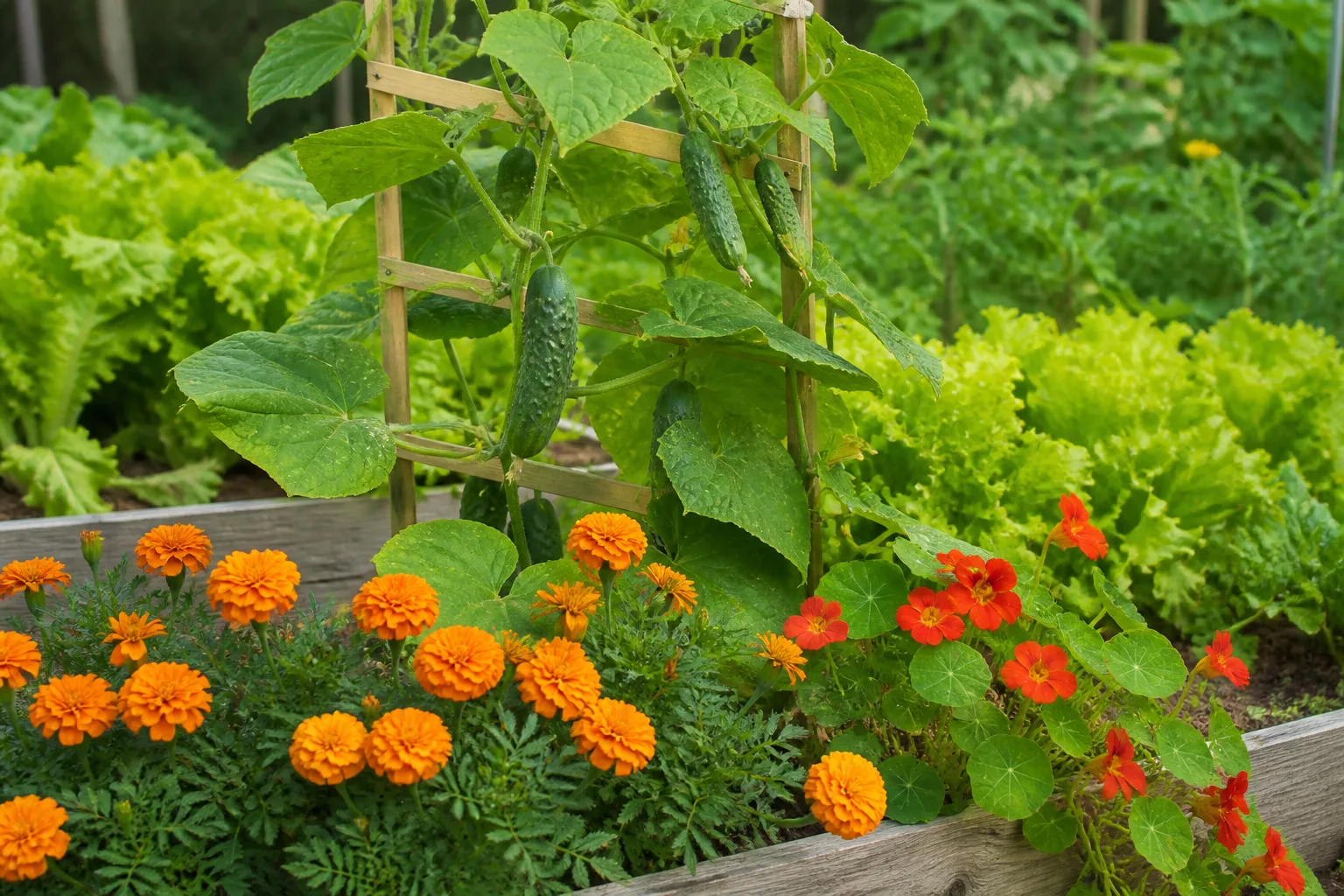
Cucumbers are easier to manage with other regularly irrigated crops than beside a dry-side herb.
For a cucumber bed, choose neighbors that can tolerate the same steady moisture and the vine’s reach. Dill, beans, peas, nasturtiums, and borage are commonly used in mixed vegetable gardens, but give the cucumber enough room that a companion does not block light or airflow. Sage can still grow elsewhere as an aromatic border plant.
2. Garlic
Garlic and sage can both enjoy sun and good drainage, so this pairing is not as impossible as a simple chart suggests. The conflict is seasonal: garlic needs reliable moisture while roots and bulbs develop, whereas established sage is happiest when the soil does not stay wet. In a small bed, one watering schedule will rarely suit both plants perfectly.
Harvesting is the second issue. When garlic is ready, you loosen soil and pull bulbs from the ground. Doing that right next to an established sage can break fine roots or destabilize its woody crown. Garlic leaves also occupy the same low planting space where a young sage plant needs room to establish.
Plant garlic in its own row or container, with a separate drip line if possible. A gap of at least 12 inches is a sensible starting point, and more room is useful if you need to fork through heavy soil at harvest. In a large raised bed with loose soil, careful hand harvesting may let the plants coexist, but the combination is still less convenient than grouping garlic with crops that share its irrigation and harvest calendar.
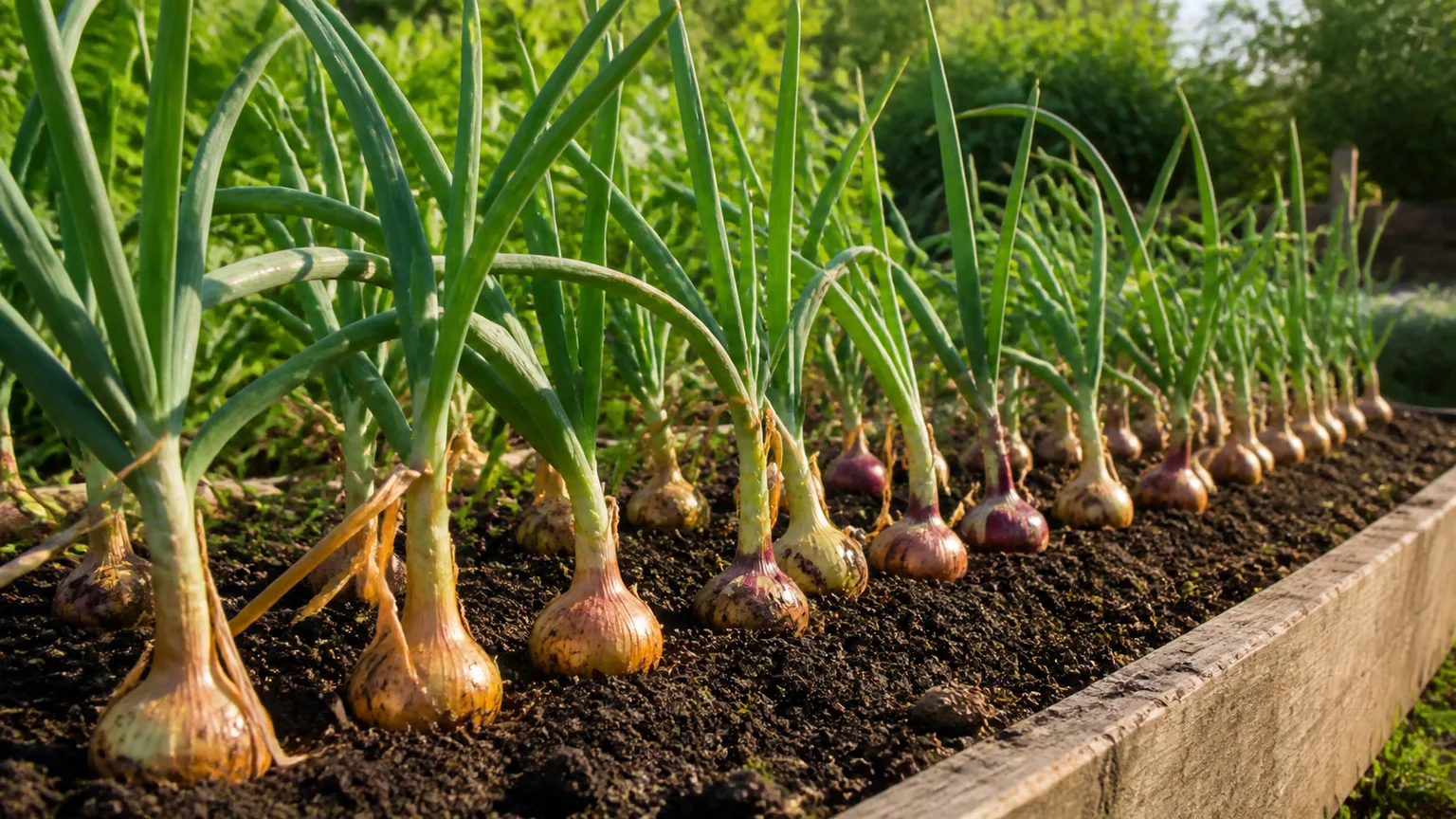
A dedicated allium bed makes bulb watering and harvest easier to manage away from perennial sage roots.
3. Rue
Rue is often listed as a plant that slows or stunts nearby sage. That advice appears in traditional companion-planting guidance, but it is not the same as a well-established rule that rue will damage every sage plant at ordinary garden spacing. The evidence for many negative companion pairings is limited, and a failed plant can have several explanations.
Still, rue is a poor choice for a crowded herb bed. It becomes a woody, branching plant, and its mature size and root competition can make a young sage look weak even if no chemical interaction is involved. If you have room, treat rue as a separate specimen with its own space rather than planting it inside the sage’s root zone.
If sage is already established and healthy, moving the rue is usually less disruptive than digging up the sage. Put rue at the back or edge of a sunny bed, keep the foliage from leaning into the sage, and observe new growth over the season. Gardening Know How includes rue among the plants said to slow sage, but also presents companion planting as a practice with a relatively small research base. Gardening Know How
4. Wormwood
Wormwood has a stronger reputation than rue for suppressing nearby plants. It is a large, aromatic perennial with silvery foliage, and traditional garden advice commonly flags it as detrimental to sage. Whether the effect comes from chemicals, shade, root competition, or all three is difficult to determine in a mixed home garden.
That uncertainty is a good reason to create distance, not a reason to promise that wormwood is a universal herbicide. Give wormwood a dedicated spot where its mature spread will not crowd culinary herbs. Keep it out of a narrow raised bed that you water and dig intensively, and remove volunteer seedlings before they turn a simple separation problem into a tangle of roots.
Do not use sickly sage beside wormwood as a test of allelopathy. Compare the site with a healthy sage in a separate bed, check drainage, and watch whether the problem appears in new growth. If the only practical location is a small herb garden, choose rosemary, thyme, or oregano for the dry side instead.
5. Onions
Onions are another plant that can share the same sunny vegetable garden but not necessarily the same watering pocket. Young onions need consistent moisture while they establish, and bulb development suffers when the soil repeatedly swings from dry to very wet. Sage, by contrast, is vulnerable to root problems if the soil stays saturated.
The difference is less dramatic for green onions harvested young. They spend less time in the bed and create less root disturbance than a full bulb crop. Even then, keep irrigation aimed at the onions rather than broadcasting water over the sage’s crown.
Separate rows make this pairing manageable. Put onions in the moisture-retaining portion of a raised bed, keep sage on a slightly elevated or gritty edge, and leave enough room to pull bulbs without stepping on the perennial. Onions also benefit from being grouped with crops that share their planting and harvest rhythm; the sage can sit nearby as a border plant without being the closest root neighbor.
6. Fennel
Fennel deserves more space than most herbs, and that alone makes it a difficult sage companion. It can become tall and broad, shade smaller herbs, and develop a substantial root system. Florence fennel and herb fennel also have different harvest goals, but both become awkward neighbors when squeezed into a compact bed.
The other concern is allelopathy: a plant releasing compounds that can inhibit the germination or growth of nearby plants. Fennel is widely described as allelopathic, and Gardening Know How recommends avoiding it near sage and most other plants. Gardening Know How In a home garden, the strength of the effect will depend on the species, plant size, soil, rainfall, residue, and distance, so do not treat the label as a precise boundary line.
The practical answer is simple: grow fennel alone in a dedicated bed or a large container. Remove flower heads before unwanted seed spreads, and do not use fennel trimmings as a thick mulch around sage. If you want an airy, licorice-scented herb near the sage, use a plant with a known compatible size and moisture requirement rather than trying to force fennel into the same pocket.
7. Basil
Basil and sage are both kitchen herbs, but they are not interchangeable in the garden. Basil grows best with regular moisture and fertile soil, especially when it is being harvested often. Common sage prefers a leaner, sharply drained setting and can decline when its roots remain wet.
This is a water-management conflict, not a reason to believe basil poisons sage. Put basil in a bed or pot where you can water the root zone regularly, and keep sage in a sunnier, faster-draining position. If both must occupy one raised bed, place them at opposite ends and water the basil slowly at its base rather than soaking the entire row.
The same arrangement helps with feeding. Basil may need more fertility to keep producing soft leafy growth, while overfeeding sage can encourage lanky growth and dilute the intense leaf flavor gardeners want. Give each plant the soil amendment and irrigation it needs instead of trying to create one compromise mix.
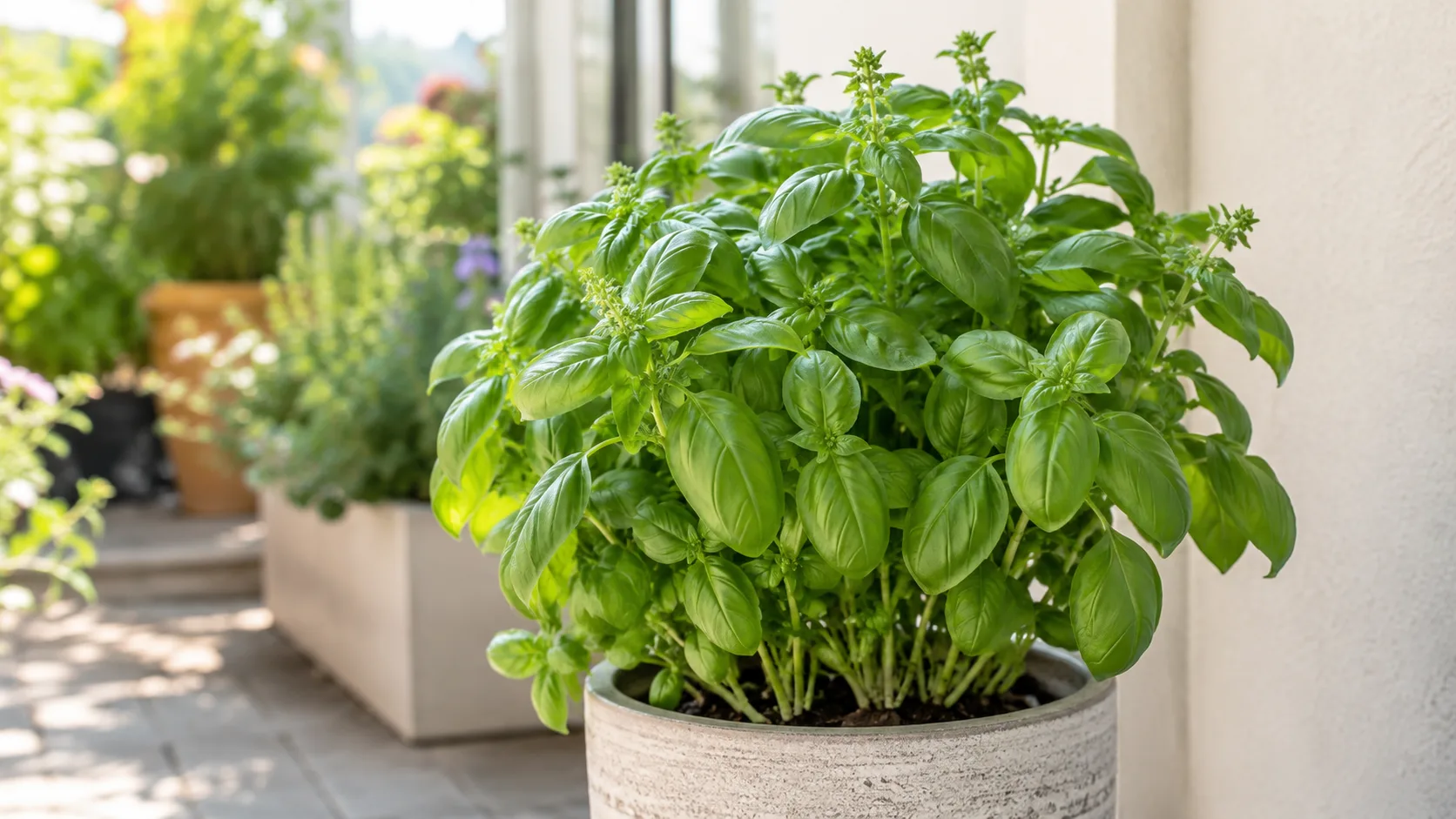
Basil is easier to keep lush when it can be watered regularly without keeping nearby sage roots wet.
Tomatoes, peppers, marigolds, parsley, and other tender herbs can be more convenient basil neighbors when their light and moisture needs line up. That does not make every suggested combination beneficial, but it removes the most obvious cultural conflict.
8. Dill
Dill is a tender-stemmed herb that prefers more regular moisture than established sage. It also grows quickly, flowers, and often finishes or bolts on a different schedule from a perennial sage. If dill is packed into the sage’s root zone, the gardener may water the whole area more often than the sage can tolerate.
The best solution is to grow dill with other moisture-tolerant annual herbs or vegetables, then keep sage in a drier pocket. Sow dill in succession if you want a constant harvest, and leave space around flowering plants so beneficial insects can reach the blooms. A separate pot works well because dill does not need to share sage’s long-term root space.
Dill is not automatically harmful to sage, and a brief period of wet weather will not doom the perennial. The warning matters when the plants are close enough to share irrigation and the soil remains damp for days. If the sage’s leaves are healthy and the soil dries normally, distance may be unnecessary; if the sage develops yellowing, soft stems, or repeated root stress, move the wetter crop first.
9. Cilantro
Cilantro has the same broad conflict as dill but adds a timing problem. It prefers evenly moist soil and cool growing conditions, while sage is a sun-loving perennial that can remain in the garden for years. Cilantro also bolts as heat and day length increase, so a planting that looks compatible in spring may become crowded and stressed by early summer.
Keep cilantro in a moisture-retaining row with lettuce, spinach, or other cool-season crops, and keep sage on the dry side of the garden. Succession-sow cilantro in small batches so you can remove finished plants without digging near the sage. If you grow both in containers, use separate saucers and check the moisture of each pot independently.
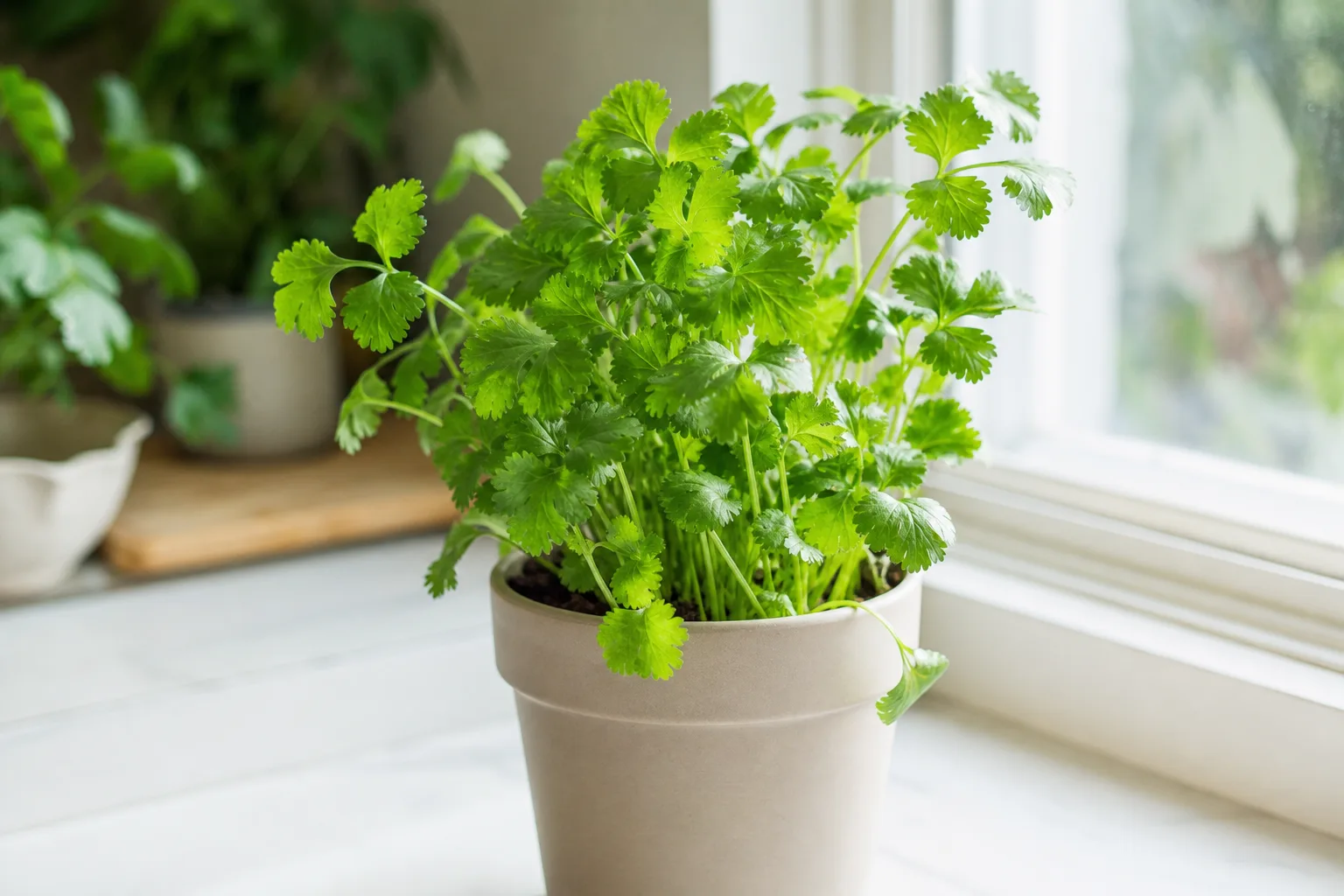
Cilantro is easier to succession-sow and water consistently when it has its own container or cool-season bed.
Cilantro and sage can be visually close without sharing soil. Place the pots along the same sunny path, for example, but water cilantro thoroughly while allowing the sage container to dry more between irrigations. Physical proximity is not the same as root-zone competition.
Build two growing zones instead of one blacklist
The most reliable sage garden has a dry-side zone and a moisture-side zone. This layout solves more problems than memorizing a list because it responds to the actual mechanism behind the conflict. The RHS recommends free-draining soil and regular checks for container sage, while GrowVeg lists full sun, well-drained soil, and roughly 12 inches of space for a single sage plant. RHS GrowVeg
Dry-side companions for sage
Place sage with plants that tolerate full sun, sharp drainage, and moderate drought once established. Rosemary, thyme, oregano, and many lavenders are sensible choices because they can be managed in a similar Mediterranean-style bed. Keep the soil loose, avoid a permanently wet mulch layer, and give each plant enough room for air to move through its foliage.
Sage can also sit at the edge of a vegetable bed rather than in the middle of the irrigation zone. A sunny border lets flowering sage attract bees and butterflies without forcing a cucumber or basil crop to live on sage’s water schedule. This is a more realistic use of companion planting than expecting one herb to provide complete pest control.
Moisture-side companions for vegetables and tender herbs
Group cucumbers, basil, dill, cilantro, leafy greens, and other plants that need regular attention where the soil can hold moisture without staying waterlogged. Add compost according to the crop’s needs, mulch the surface when appropriate, and aim irrigation at the soil rather than wetting the sage bed by accident.
This zone is also easier to replant. Annual herbs can be pulled, succession-sown, or replaced without disturbing a perennial crown. If a crop needs a trellis, row cover, or frequent fertilizing, its own bed gives you room to work without damaging sage.
Use containers when the bed cannot serve two watering schedules
A container is a practical boundary, not a last resort. Grow basil, cilantro, or dill in pots that can be watered regularly, and keep the sage in a pot with generous drainage or in the ground. Make sure every container has open drainage holes and that saucers are not left full of water.
Containers also help with fennel and wormwood because you can control their roots and move them away from the herb bed. Do not place a pot so close that its roots escape into the sage bed through a drainage hole, and do not assume a container solves crowding if the foliage still shades the perennial.
Signs a sage pairing is failing
Watch the soil and the timing of symptoms rather than looking only at leaf color. If sage wilts while the soil is wet, develops a soft crown, or remains yellow after a period of heavy irrigation, investigate drainage and root health before adding fertilizer. If a moisture-loving companion wilts while sage looks fine, the shared bed may simply be too dry for that crop.
Repeated stunting deserves a broader check. Compare light exposure, root space, pests, disease, compaction, and nutrient availability with a similar plant in a separate location. A plant that grows poorly only beside fennel, wormwood, or rue is worth moving for a season-long comparison, but one weak seedling is not enough to prove allelopathy.
The timing of the problem is useful evidence. Damage that appears immediately after pulling bulbs points to root disturbance; wilting after irrigation points to a moisture mismatch; shade that increases as a vine expands points to competition for light. These clues lead to fixes you can test, unlike the vague conclusion that two plants simply “do not get along.”
Companion-planting claims to treat cautiously
Strongly scented herbs are often said to repel pests, confuse insects, improve flavor, or make neighboring crops more productive. Some combinations make ecological or cultural sense, especially when a flowering plant adds habitat or two crops use space differently. But BBC Gardeners’ World Magazine notes that the evidence for many companion-planting benefits is largely anecdotal. BBC Gardeners’ World Magazine
That matters for sage. Its flowers can attract pollinators, and its aromatic foliage may be useful around some crops, but sage is not a substitute for row covers, crop rotation, resistant varieties, hand removal, or regular scouting. Likewise, moving basil or cucumber away from sage will not solve a problem caused by poor light, a virus, a root pest, or compacted soil.
Use a simple test when a pairing is uncertain: keep one plant in the original bed, move a similar plant to a separate but comparable site, and give both the same care except for the neighboring plant. Record growth, irrigation, flowering, pest pressure, and harvest for several weeks. That small comparison will tell you more about your garden than an absolute chart claim.
Conclusion
The nine plants that most often make poor neighbors for sage are cucumbers, garlic, rue, wormwood, onions, fennel, basil, dill, and cilantro. Cucumbers, onions, garlic, basil, dill, and cilantro mainly conflict with sage because they need a wetter or more frequently managed root zone. Fennel, wormwood, and rue deserve separation because they can crowd sage and are associated with possible growth-suppressing effects, although those claims should be treated with appropriate uncertainty.
Start with the most practical fix: put sage in full sun and free-draining soil, create a separate moisture zone for thirsty crops, and leave enough room to harvest or remove neighboring plants without digging through the sage’s roots. When a container, raised bed, or second irrigation line creates that boundary, you can grow both plants successfully without forcing either one into the wrong conditions.



