Common Sage Care Guide (Salvia officinalis)
Salvia officinalis
Learn how to grow common sage (Salvia officinalis) in full sun and well-drained soil, water it in beds or pots, prune lightly, and harvest aromatic leaves.
Common Sage Care Guide (Salvia officinalis)
Start with wateringThe most common care mistake for SageWatering guide →Sage care essentials
Light
Water
Water new plants during dry spells in their first year. Established sage in garden soil usually needs extra water only during prolonged drought. Pots dry faster, so check them through warm weather and water when the compost has begun to dry; never leave the roots waterlogged.
Soil
Average, moderately fertile soil that drains freely; sage tolerates relatively dry conditions once established.
Humidity
Temperature
Fertilizer
About Sage
Sage is native to Mediterranean region and the Middle East, typically reaches Usually about 30–90 cm tall and 50–90 cm wide; size varies by cultivar indoors, with moderate; seed-grown plants may need at least a year to reach harvest size growth. Sage has a bushy, spreading, evergreen, semi woody perennial herb and subshrub growth habit and part of the Lamiaceae family. It is also known as Common sage, Culinary sage, and Garden sage.
| Detail | Information |
|---|---|
| Also known as | Common sage, Culinary sage, Garden sage |
| Native region | Mediterranean region and the Middle East |
| Mature size | Usually about 30–90 cm tall and 50–90 cm wide; size varies by cultivar |
| Growth rate | Moderate; seed-grown plants may need at least a year to reach harvest size |
| Growth habit | Bushy, Spreading, Evergreen, Semi Woody Perennial Herb And Subshrub |
| Scientific name | Salvia officinalis |
| Family | Lamiaceae |
Common Sage Care Guide (Salvia officinalis)
Quick answer
Give common sage the brightest practical outdoor position you have, with loose, free-draining soil and enough space for air to move around its woody base. Water a new plant during establishment and check container compost as it dries; an established plant in a garden bed usually needs extra water only through a prolonged dry spell. Keep feeding modest and prune into leafy growth, not into old bare stems. Those priorities follow the Mediterranean shrubland and hillside conditions associated with this species, rather than the needs of soft, moisture-loving culinary herbs (NC State Extension; RHS growing guide).
Before changing anything, check two things: does the site get several hours of direct sun, and does water drain away after rain or irrigation? If either answer is no, fix the location or root zone first. The linked Sage light guide and Sage soil guide cover those decisions in more detail.
What common sage is—and what it is not
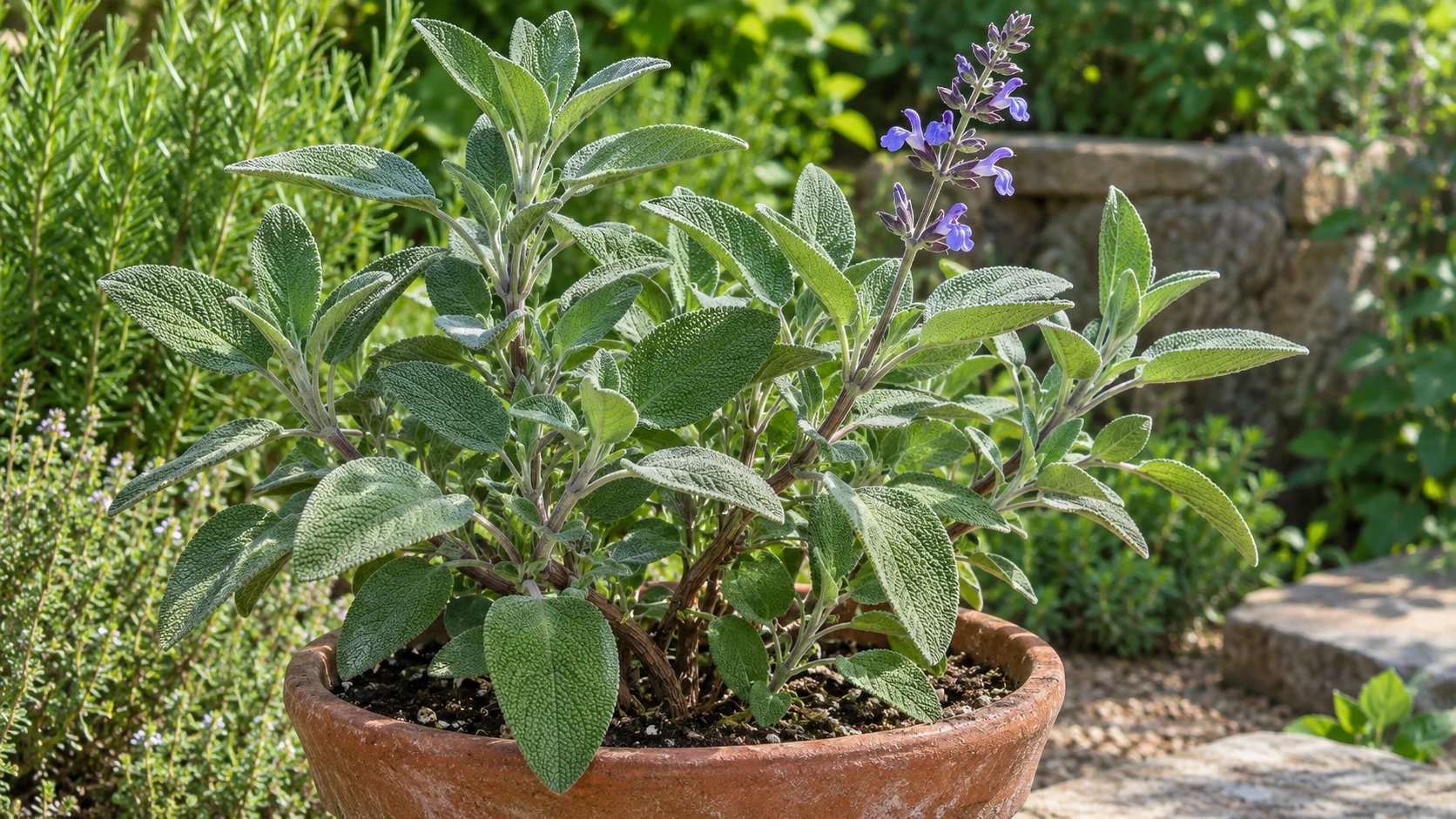
Common or culinary sage is Salvia officinalis, an aromatic, evergreen, semi-woody perennial in the mint family. It forms a branching, spreading shrub with textured grey-green leaves and summer flower spikes; mature size varies by cultivar and conditions, so leave it room instead of treating it like a small annual herb. The RHS describes it as an evergreen shrub, while NC State notes that older stems become woody and that the plant is short-lived compared with a tree or long-lived shrub (RHS plant profile; NC State Extension).
The common name “sage” is shared by many unrelated garden plants. Russian sage, pineapple sage and ornamental salvias do not all have the same growth habit or culinary use. The RHS identifies S. officinalis as the standard culinary sage, and Britannica likewise distinguishes it from other members of Salvia (RHS growing guide; Encyclopaedia Britannica).
Check the plant label
If you want leaves for cooking, confirm the botanical name and cultivar on the label. Some ornamental selections of common sage are chosen mainly for foliage or compact form; NC State cautions that ornamental cultivars may have less suitable flavor. A labeled S. officinalis is a better starting point than a plant sold only as “sage.”
Choose a bright, open growing site
Aim for full sun and an open position. NC State lists full sun as the preferred exposure, and RHS recommends a sunny, sheltered site; both connect reliable growth to strong light and good drainage. In part shade, a plant may still live, but it is more likely to stretch toward light, produce less compact growth and flower less freely (NC State Extension; RHS plant profile; Gardeners’ Path).
Allow room around the plant instead of crowding it between taller herbs. Open spacing helps leaves dry after rain and makes it easier to spot soft or blackening stems near the base. Sage can fit a balcony or small garden, but a shaded indoor windowsill is usually a poor substitute for an outdoor sunlit position; if you grow it in a pot, move it to the brightest safe outdoor spot available.
Adjust for extreme heat and humidity
In very hot climates, morning sun with light afternoon protection can be a reasonable compromise if leaves scorch or the pot becomes extremely hot, but do not respond by keeping the soil constantly wet. The plant still needs bright conditions and fast drainage. In humid monsoon weather, prioritize air movement and keep the crown clear of damp debris; S. officinalis is much less forgiving of persistently wet roots than of a short dry interval (Aussie Green Thumb; RHS plant profile).
Set up the root zone for fast drainage
Use ordinary garden soil only if it sheds excess water. Sage prefers moderately fertile soil that drains freely, but it tolerates lean or relatively dry conditions better than persistently wet roots. NC State describes common sage as intolerant of wet or poorly drained soil, and Gardener’s HQ also specifies well-drained, moderately fertile soil (NC State Extension; Gardener’s HQ).
Do not enrich a bed heavily just to make it “better.” A modest amount of compost can help very poor soil, but drainage is the main correction. On heavy ground, use a raised bed or plant on a slight mound. Avoid burying the woody crown beneath extra soil or a thick, wet mulch.
Garden bed or container?
A bed is easiest when it is sunny and drains well. Choose a container when the garden stays wet, or when you need to protect a plant from prolonged rain; use a pot with open drainage holes and a coarse, well-draining compost. RHS recommends a soil-based, free-draining mix for container sage, and Gardeners’ Path notes that containers dry faster than garden soil, so they need closer moisture checks (RHS growing guide; Gardeners’ Path).
Keep the pot elevated so its holes do not sit in a puddle. Empty the saucer after watering, and shelter the pot from sustained winter or monsoon rain if the compost remains saturated. For a full mix and pot-size discussion, see the Sage soil guide and Sage repotting guide.
Water by establishment, weather and pot size
A newly planted sage needs help while its roots spread: water during dry spells in its first growing season, then let rainfall and soil conditions take over. An established sage in a well-drained bed is drought tolerant and seldom needs routine irrigation, according to the RHS and Purdue Extension (RHS growing guide; Purdue Extension).
Pots are different. Check the compost with a finger or wooden skewer and water when it has begun to dry through the upper root zone. Water thoroughly, then allow the pot to drain. The interval changes with pot size, wind, sun, humidity and season, so do not apply an indoor-plant calendar to an outdoor sage container. The Sage watering guide gives a more detailed check-and-water routine.
When to hold water
If the compost is still damp or the bed remains wet after rain, wait. Yellow or limp leaves do not automatically mean thirst: inspect the soil first, because roots in waterlogged soil can wilt even while surrounded by moisture. If the base is soft or stems blacken, move from routine care to a drainage and root inspection rather than adding more water (NC State Extension).
Feed lightly and harvest without exhausting a young plant
Sage growing in the ground usually does not need feeding. A container plant that has been in the same compost for more than a year can benefit from a light general-purpose granular feed in late spring or early summer, according to the RHS growing guide. If growth is weak, first check light, drainage and root crowding; fertilizer will not correct those problems. The Sage fertilizer guide covers when feeding is useful and when to skip it.
Harvest a new plant lightly in its first year so it can establish. Once it is growing strongly, take small leafy shoots rather than stripping one side or cutting the whole shrub down. Purdue Extension notes that first-year harvest is small and recommends spring trimming after the second growing season; Gardeners’ Path also advises leaving enough foliage for continued growth (Purdue Extension; Gardeners’ Path).
Keep the plant leafy with small, timely cuts
As sage ages, its base becomes woody and the center can open up. Make light cuts in spring, above visible leafy shoots, and remove faded flower stems if you want to keep the plant tidy. Do not cut deep into bare old wood: NC State warns that mature woody stems seldom resprout. A plant that has become mostly bare may be better replaced with a rooted cutting than forced into a hard renovation (NC State Extension; Purdue Extension).
Harvesting and pruning are related but not identical. Picking young stems during active growth can keep the outline compact, while a structural spring trim addresses older growth. The Sage pruning guide walks through safe cuts and seasonal timing.
Renew older sage with cuttings or layering
Common sage can be raised from seed, softwood cuttings or layering. Seed is useful when you want several plants, but it takes longer to reach a useful harvest size and may not preserve the exact features of a named cultivar. Cuttings and layering copy the parent plant more reliably; the RHS lists seed and early-summer softwood cuttings, while Purdue Extension also lists division (RHS plant profile; Purdue Extension).
Starting a replacement before an old shrub declines is practical because sage can become woody with age. Keep a healthy young plant in reserve rather than trying to revive a plant with a bare center and few low shoots. See the Sage propagation guide for seed, cutting and layering steps.
Read common signs of stress
- Soft, blackening stems or a persistently soggy pot: suspect poor drainage or root decline; stop watering until you have checked the mix and root zone.
- Long, weak stems with sparse foliage: check light first, then consider whether the plant is crowded or overdue for light pruning.
- White coating or leaf spotting in still, humid weather: improve airflow, avoid wetting foliage late in the day and remove badly affected material. NC State lists powdery mildew and root rot among possible problems on common sage (NC State Extension).
- A plant that has become mostly woody: do not cut it back to the trunk; take a cutting or layer a low branch while healthy growth remains.
For diagnosis, compare visible symptoms with the site conditions before changing water, fertilizer or pesticide use. Start with the Sage watering guide if the mix stays wet, or the Sage light guide if growth is stretched and sparse.
A simple seasonal routine
In spring, check that new shoots are present before trimming, refresh the top of a container if needed, and resume modest feeding only if growth and soil conditions justify it. Through warm months, harvest small leafy shoots, water pots after checking the compost and keep the crown clear. In cool or rainy weather, reduce watering and protect containers from prolonged saturation. In climates with a wet monsoon, rain shelter and drainage may matter more than a watering schedule.
Do not carry out every task at once. A plant with wet roots needs drainage corrected before it is pruned or fed. A plant that is healthy but sparse usually needs better light and patient new growth, not a hard cut into old wood.
When to use this page vs other Sage guides
Use this page to set the overall growing conditions for Salvia officinalis. Go to the light guide for exposure and stretching, the watering guide for bed-versus-pot checks, and the soil guide for drainage and mix choices. The fertilizer guide, repotting guide, propagation guide and pruning guide cover those specific jobs.
Conclusion
Common sage is easiest to keep when the site is sunny, roots drain quickly and routine care stays restrained. Start by checking light and drainage; then adjust water to whether the plant is in a bed or pot. Harvest a young plant lightly, make only modest cuts into leafy growth and renew an older woody plant from a cutting or layer when necessary.
Related Sage guides
- Sage light guide — choose a bright position and read stretching or scorch.
- Sage watering guide — decide when to water beds and containers.
- Sage soil guide — improve drainage without making the mix too rich.
- Sage fertilizer guide — feed only when growth and soil call for it.
- Sage repotting guide — size up a container and reduce transplant stress.
- Sage propagation guide — grow replacements from seed, cuttings or layers.
- Sage pruning guide — make safe cuts and avoid old bare wood.
How to care for Sage?
When should you water Sage?
Water new plants during dry spells in their first year. Established sage in garden soil usually needs extra water only during prolonged drought. Pots dry faster, so check them through warm weather and water when the compost has begun to dry; never leave the roots waterlogged.
- Check the container compost before watering. Keep it slightly moist during active growth - Pots dry faster, so check them through warm weather and water when the compost has begun to dry; never leave the roots waterlogged.
- not saturated
- and let excess water drain freely. In the ground - Pots dry faster, so check them through warm weather and water when the compost has begun to dry; never leave the roots waterlogged.
- water only when a new plant is dry or an established one faces a prolonged dry spell - Water new plants during dry spells in their first year.
- Drain excess water - Water new plants during dry spells in their first year.
What soil works best for Sage?
Average, moderately fertile soil that drains freely; sage tolerates relatively dry conditions once established.
- Soil-based, peat-free potting compost - Average, moderately fertile soil that drains freely; sage tolerates relatively dry conditions once established.
- Add horticultural grit, up to about one quarter of the mix, for drainage - Average, moderately fertile soil that drains freely; sage tolerates relatively dry conditions once established.
- Use a container at least 30 cm wide and deep with drainage holes - Average, moderately fertile soil that drains freely; sage tolerates relatively dry conditions once established.
Grower notes for Sage
Give Common Sage a sunny, sheltered position
Common sage is an evergreen, bushy Mediterranean subshrub. It grows best in full sun, ideally with at least six hours of direct light, and forms a spreading clump roughly 30–90 cm tall and wide depending on the variety. Its gray-green leaves are aromatic, and its blue to purple summer flowers attract bees and other pollinators.
Keep the roots out of standing water
Choose moderately fertile soil that drains well; sage tolerates poor, dry soil better than waterlogged ground. If a bed stays wet, raise it or grow the plant in a container. For a pot, use soil-based compost with horticultural grit and plenty of drainage holes.
Adjust watering for the garden or a pot
Water newly planted sage during dry spells in its first year. Once it is established in the ground, it is drought-tolerant and rarely needs extra water. Check containers more often in warm weather, keep the mix slightly moist rather than saturated, and shelter pots from winter rain.
Prune lightly in spring
Trim established plants in mid- to late spring to keep them compact and encourage fresh leafy growth. Cut above new growth and avoid cutting into old, bare wood, which may not produce new shoots. Trim faded flower stems after flowering; old plants can become woody and straggly after several years.
Harvest leaves without exhausting a young plant
Pick individual leaves or young shoots as needed. Sage is evergreen, but spring and summer growth has the best flavor. Harvest lightly during the first year so a new plant can establish, then take regular small harvests to encourage bushy growth.
Renew old plants with cuttings or layers
Sage can be grown from seed, softwood cuttings, or layering. Cuttings and rooted layers preserve the traits of a named variety. Because older sage plants can become woody and bare in the center, start a replacement every few years rather than pruning hard into old stems.
Is Common Sage Safe for Pets?
ASPCA lists common sage (Salvia officinalis) as non-toxic to cats, dogs, and horses. Other plants also use the common name “sage,” so confirm the plant identity before relying on this classification.
ASPCA lists common sage (Salvia officinalis) as non-toxic to cats, dogs, and horses. This finding applies to common sage; other plants called sage may be different species.
Watering Sage
For Sage, check the container compost before watering. Keep it slightly moist during active growth, not saturated, and let excess water drain freely. In the ground, water only when a new plant is dry or an established one faces a prolonged dry spell. and water for in-ground plants, water during dry spells while they establish and only in extended drought afterward. Check pots regularly in summer and water when their compost starts drying. Reduce watering in cool or rainy weather. Shelter containers from heavy winter rain, which can keep roots too wet.
| Detail | Information |
|---|---|
| How often | For in-ground plants, water during dry spells while they establish and only in extended drought afterward. Check pots regularly in summer and water when their compost starts drying. |
| How to check | Check the container compost before watering. Keep it slightly moist during active growth, not saturated, and let excess water drain freely. In the ground, water only when a new plant is dry or an established one faces a prolonged dry spell. |
| Seasonal changes | Reduce watering in cool or rainy weather. Shelter containers from heavy winter rain, which can keep roots too wet. |
Signs of overwatering
- Compost or garden soil remains wet for long periods
- Lower stems or roots soften and decline in poorly drained soil
- A container stays saturated after watering
Signs of underwatering
- Leaves lose firmness during an extended hot, dry spell
- Container compost dries quickly during warm weather
Soil & potting for Sage
Use a mix of Soil-based, peat-free potting compost, Add horticultural grit, up to about one quarter of the mix, for drainage, Use a container at least 30 cm wide and deep with drainage holes for Sage. Excellent drainage is important. Use a raised bed or a container with drainage holes if garden soil stays wet. Target soil pH around About 5.6–8.0 across sources; neutral to mildly alkaline soil is suitable, and excellent drainage is essential. Repot repot when roots crowd the container; use a well-drained mix and a pot at least 30 cm wide and deep., ideally in spring, once growth resumes and the soil is warming.
| Detail | Information |
|---|---|
| Recommended mix | Soil-based, peat-free potting compost, Add horticultural grit, up to about one quarter of the mix, for drainage, Use a container at least 30 cm wide and deep with drainage holes |
| Drainage | Excellent drainage is important. Use a raised bed or a container with drainage holes if garden soil stays wet. |
| Soil pH | About 5.6–8.0 across sources; neutral to mildly alkaline soil is suitable, and excellent drainage is essential. |
| Repotting frequency | Repot when roots crowd the container; use a well-drained mix and a pot at least 30 cm wide and deep. |
| Best season to repot | Spring, once growth resumes and the soil is warming. |
Signs it needs repotting
- Roots crowd the pot or emerge from its drainage holes
- Compost stays wet or compacted instead of draining freely