How to Grow and Care for Pineapple Sage
Grow pineapple sage for fragrant foliage and red fall blooms. Learn where to plant it, how much water it needs, when to prune, and how to save it over winter.
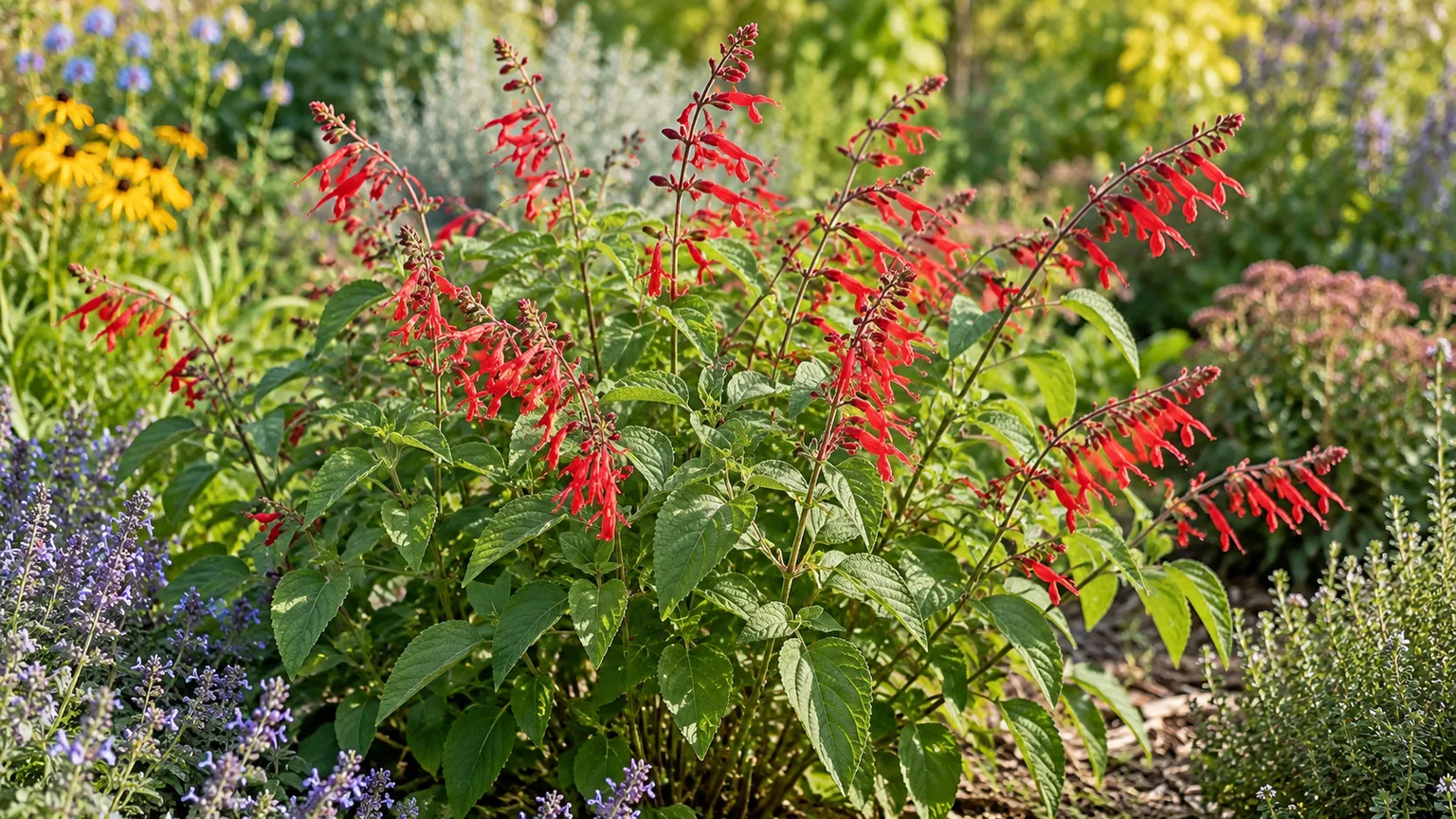
Pineapple sage (Salvia elegans) is a fast-growing, tender salvia with soft, fragrant leaves and scarlet flowers that often arrive late in the season. The plant can become a substantial, 3- to 5-foot shrub in one warm growing season, but whether it returns next year depends more on winter temperatures and drainage than on how carefully you fertilize it. Decide first whether you will treat it as a perennial, a seasonal annual, or a container plant you can move before frost.
The leaves smell fruity when brushed or crushed, but pineapple sage is not a pineapple and it is not the same plant as common culinary sage. Its foliage and flowers are edible when correctly identified and grown for food; its late flowers also bring hummingbirds and other pollinators into the garden.
What pineapple sage is—and what it is not
Pineapple sage is a member of the mint family, Lamiaceae, native to Mexico and Guatemala. It grows as a soft-stemmed, bushy perennial in warm conditions, often with a woody base as it matures. The species typically reaches about 3 to 5 feet tall and 3 to 4 feet wide, although named selections and local growing conditions can produce smaller plants. Its opposite, softly hairy leaves and loose spikes of tubular red flowers help identify it; the pineapple-like aroma is most noticeable when a leaf is rubbed.
That fragrance can help distinguish it from scarlet sage (Salvia coccinea), which may look similar in bloom but does not have the same fruity leaf scent and is not generally regarded as edible. NC State Extension’s plant profile specifically flags this look-alike. If the plant label is missing and the identification is uncertain, enjoy the flowers as ornamentals but do not taste the leaves. A familiar smell is a useful clue, not a substitute for confident identification.
It helps to think of pineapple sage as a foliage plant with a late flower bonus. In places with a short summer, frost can arrive before the buds open, so the plant can still be worthwhile for its aromatic leaves and size even when it never reaches its most dramatic display. If fall flowers are your priority, plan around the growing season and cultivar before planting rather than assuming that extra feeding will force an earlier bloom.
Will pineapple sage survive your winter?
Pineapple sage is frost tender. References place it in warm hardiness zones—Wisconsin Extension lists zones 8a through 11b—and describe it as an annual in cooler climates. The top growth may be killed back by a hard frost, and a plant that survives a mild winter can return from its roots. That range is a guide, not a promise: a sheltered wall, well-drained soil, snow cover, winter wet, and the duration of a freeze can all change what happens in a particular garden.
In a warm-winter garden, grow it as a perennial and protect its crown from prolonged cold and wet. In a climate with regular hard freezes, either grow it as an annual or keep it in a pot you can move into a protected, bright, frost-free space. A gardener near the edge of the plant’s range can experiment with a sheltered in-ground plant, but should take a cutting or keep a backup container if losing the original would be disappointing.
The University of Wisconsin–Madison Extension profile notes that the plant is commonly grown as an annual in cooler regions and may die to the ground after a hard frost. This distinction answers an important planning question: “perennial” describes how the plant grows where it is hardy; it does not mean the same plant will reliably survive every local winter. Treat protection as insurance, not a guarantee that a tender salvia can withstand any freeze.
Choose a bright site with fast-draining soil
Give pineapple sage a sunny position for dense growth and the best chance of flowering. Full sun suits a mild or cool-summer garden, while morning sun followed by light afternoon shade can help in a very hot location. Deep shade usually produces looser stems and fewer flowers. If a plant leans toward a window or stretches between neighbors, improve its access to light before responding with fertilizer.
Drainage matters as much as sun. The plant prefers moist, well-drained soil, not soil that stays saturated around its roots. NC State Extension and the RHS plant profile both describe a sunny position and free-draining soil as suitable conditions. In a bed, avoid a low pocket where rainwater collects or a spot directly under a downspout. In dense clay, use a broad raised bed or a container instead of digging a small, heavily amended hole that could hold water like a basin.
A useful site check is to observe the bed after a soaking rain. If water is still standing around the planting area after the surrounding ground has drained, choose another spot or build up the planting area. Work mature compost into poor soil to improve its structure, but do not turn a naturally lean bed into a highly enriched patch simply to make the plant grow faster. Pineapple sage needs enough fertility for steady growth, while excess nitrogen can favor soft foliage over a balanced, sturdy form.
Plant after frost in a bed or a roomy pot
Set a nursery plant outdoors after the danger of frost has passed and the soil has begun to warm. This gives tender new growth a better start and avoids exposing a recently planted root ball to a cold snap. Planting in spring also gives the shrub more time to establish before its late-season bloom window. If you are planting to see flowers in a short-season region, buy a healthy, established plant early enough to build size rather than starting a tiny seedling outdoors in cool soil.
In a garden bed, loosen the soil across an area wider than the root ball instead of digging a narrow amended pocket. Ease circling roots outward, set the top of the root ball level with the surrounding ground, backfill, and water it in. Space standard plants roughly 3 feet apart or farther if you want room for their mature spread and airflow; compact cultivars can be set closer after checking their final size. Keep mulch a few inches back from the stems so the crown does not sit under a damp collar.
A container is the practical choice if your winter is too cold for the plant or your garden soil drains poorly. Choose a stable pot with unobstructed drainage holes and enough room for the root ball to expand; a mature standard plant can become top-heavy, so a very small or lightweight pot may tip in wind. Use a quality outdoor potting mix that drains freely, not garden soil packed into a pot. Set the plant at the same depth it grew in its nursery container, then water until excess drains from the base.
Water to prevent stress without keeping roots wet
Keep the root zone evenly moist while the plant is establishing, then water according to the weather and the soil rather than a fixed weekly schedule. Water slowly and deeply so moisture reaches the root ball and surrounding soil. When the top inch or two begins to dry, check a little deeper before watering; if soil at root depth still feels cool and damp, wait. A pot will dry sooner than a bed, especially in heat and wind, so it needs more frequent checks.
Pineapple sage can tolerate brief dry spells once established, but prolonged dryness may show up as drooping, curling, or dropped leaves. The Wisconsin Extension profile describes wilting and curled leaves when the plant is too dry. These signs do not automatically mean “water now,” however. A wilted plant in dry soil likely needs a deep drink; a wilted plant in wet soil may have roots short of oxygen or beginning to rot, and adding more water can make the problem worse.
Water at the soil line when practical, especially in a humid climate where foliage stays wet for a long time. In a container, empty a saucer after watering rather than leaving the pot in standing water. During a hot spell, check daily but do not assume the plant needs daily irrigation; the goal is to respond to the mix and root ball, not to the temperature forecast alone. If leaves repeatedly curl between waterings, increase the depth or frequency slightly and reassess after a few days.
Feed lightly and mulch without burying stems
Start with reasonably fertile soil and use compost as a modest spring amendment if the bed is poor. Avoid routine heavy feeding: pineapple sage is already capable of fast, substantial growth, and a large dose of nitrogen can create tall, lush shoots that flop or delay the display. If a plant is pale or weak, first check light, drainage, root crowding, and water stress. Fertilizer will not fix roots that are too wet or a plant growing in deep shade.
For a container plant, a light application of a balanced fertilizer during active growth may be useful if it is growing in an old, depleted potting mix. Follow the product label, and do not combine multiple fertilizer products at full strength. Stop feeding as the season cools and growth slows. A plant that is about to be moved indoors for winter does not need to be pushed into tender new growth that will be difficult to support in low light.
A thin mulch layer can reduce weeds and moderate moisture swings in a garden bed. Keep it off the stems and crown, and do not use a thick, wet layer as a substitute for drainage. Coarse organic mulch is suitable where it will not keep the root zone saturated; in a wet winter climate, the best protection is a well-drained site and a breathable layer rather than a mound packed tightly against the plant.
Pinch and prune without sacrificing late flowers
Pinch the tips of a young plant during spring and early summer to encourage branching. Use your fingers or clean pruners to remove only the soft terminal tip just above a leaf pair. Each pinch can encourage side shoots, producing a fuller plant with more places for later flowers to form. Stop routine pinching by midsummer in a short-season garden; every cut delays the plant’s next growth and can push an already late display closer to frost.
Let the plant grow naturally if you want a tall, loose shrub or are growing it mainly for late flowers. If stems become lanky, pinch them while the plant is still putting on vegetative growth rather than shearing the entire shrub once buds are forming. A stake is appropriate for a very large plant in a windy site, but it should support the stems without pulling them into a tight bundle that traps moisture.
In areas where the top dies back, wait until the coldest weather has passed and new shoots are visible before cutting away old stems. That cue protects the crown and shows you where living growth begins. In a frost-free climate, remove dead or damaged branches and lightly shape the plant after its main bloom period. The RHS profile recommends cutting back spent flower spikes to prolong flowering; remove only the faded spikes if you want to keep fresh blooms coming, rather than giving the whole plant a hard haircut.
Get more flowers before frost
Pineapple sage is a short-day bloomer: it typically starts flowering as days shorten in late summer or fall, rather than as soon as warm weather arrives. This is why an established, leafy plant can look healthy yet carry no flowers in midsummer. The Wisconsin Extension explains that artificial light that lengthens the night-time day period in fall can interrupt bloom. A porch light, security lamp, or brightly lit greenhouse may therefore matter when the plant otherwise has enough warmth and sun.
To improve the odds of a display, plant early, provide strong daylight, avoid excess nitrogen, and stop pinching early enough for branches to mature. Do not expect fertilizer or severe pruning to force an early flower flush; the seasonal day-length response is part of the plant’s habit. A naturally late cultivar may bloom just as the first frost arrives in a short-summer area. If flowers are the main reason you are growing it, choose an earlier selection such as ‘Honey Melon’ and plant it in a container you can protect from frost.
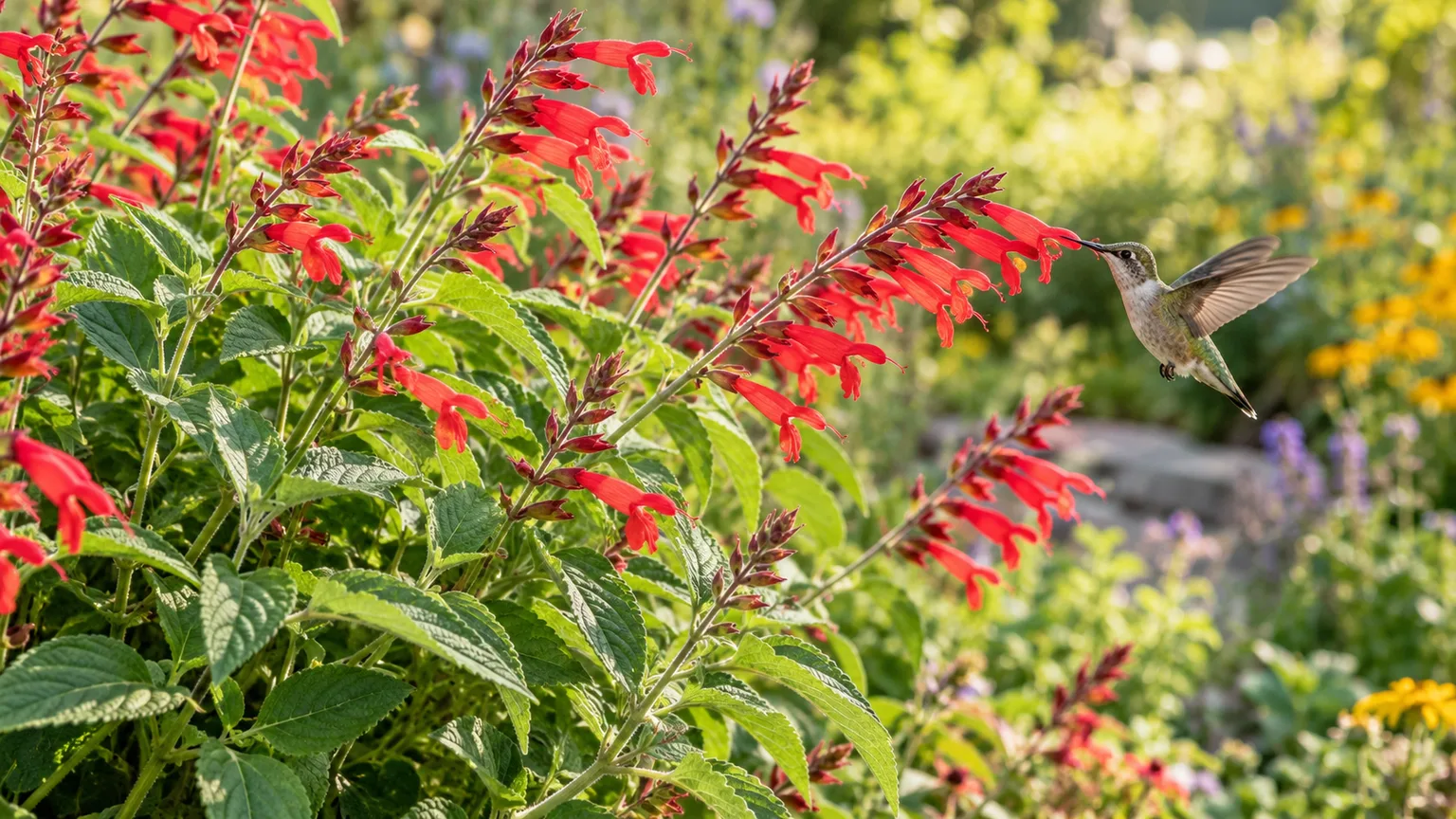
The scarlet, tubular flowers are a useful late-season nectar source when they open, and hummingbirds are especially drawn to them. That benefit is conditional on the bloom timing matching local migration and weather; in some northern gardens the birds may have left before the plant flowers. Epic Gardening’s horticulture-reviewed guide and the Wisconsin Extension profile both describe the plant’s late bloom and its value to pollinators. Keep expectations local: a warm autumn, a mature plant, and dark nights all help, but cannot eliminate the risk of an early freeze.
Overwinter pineapple sage by your climate
Before the first frost, decide whether to let an in-ground plant finish as an annual or save a container plant for next year. If you are in a warm region where the roots normally survive, leave the plant in place, pull mulch away from its crown if it becomes waterlogged, and add a modest protective layer around the root zone when cold is forecast. Do not cut it hard in fall where winter freezes are possible; the remaining stems offer some protection, and you can see which parts survive before pruning.
In colder regions, move a potted plant indoors before frost damages its leaves and stems. Inspect the foliage and stems for pests, rinse off visible insects, and place the pot in the brightest available cool room, sunroom, or frost-free greenhouse. It can continue growing slowly in good light, but do not expect the same dense growth it had outdoors. Water less often as growth slows, but do not leave the root ball bone dry for long stretches.
A cool, bright location is a better winter plan than a dark, heated room. Indoor warmth can encourage lanky growth when light is weak, while poor airflow and an overly wet pot can invite pest or root problems. Check the undersides of leaves every week or two, remove dropped foliage, and water only when the upper mix has begun to dry. If keeping a large pot indoors is impractical, take a few cuttings before frost as a compact backup; you can restart a fuller plant outdoors after spring temperatures stabilize.
Propagate pineapple sage from cuttings
Softwood tip cuttings are the most practical way to make another plant and preserve the characteristics of a named cultivar. Seed is possible, but cultivated selections may not come true from seed, and pineapple sage seed is not always easy to find. The RHS profile recommends softwood or semi-ripe cuttings, while Wisconsin Extension notes that leafy tip cuttings root readily in water or a moist medium without rooting hormone.
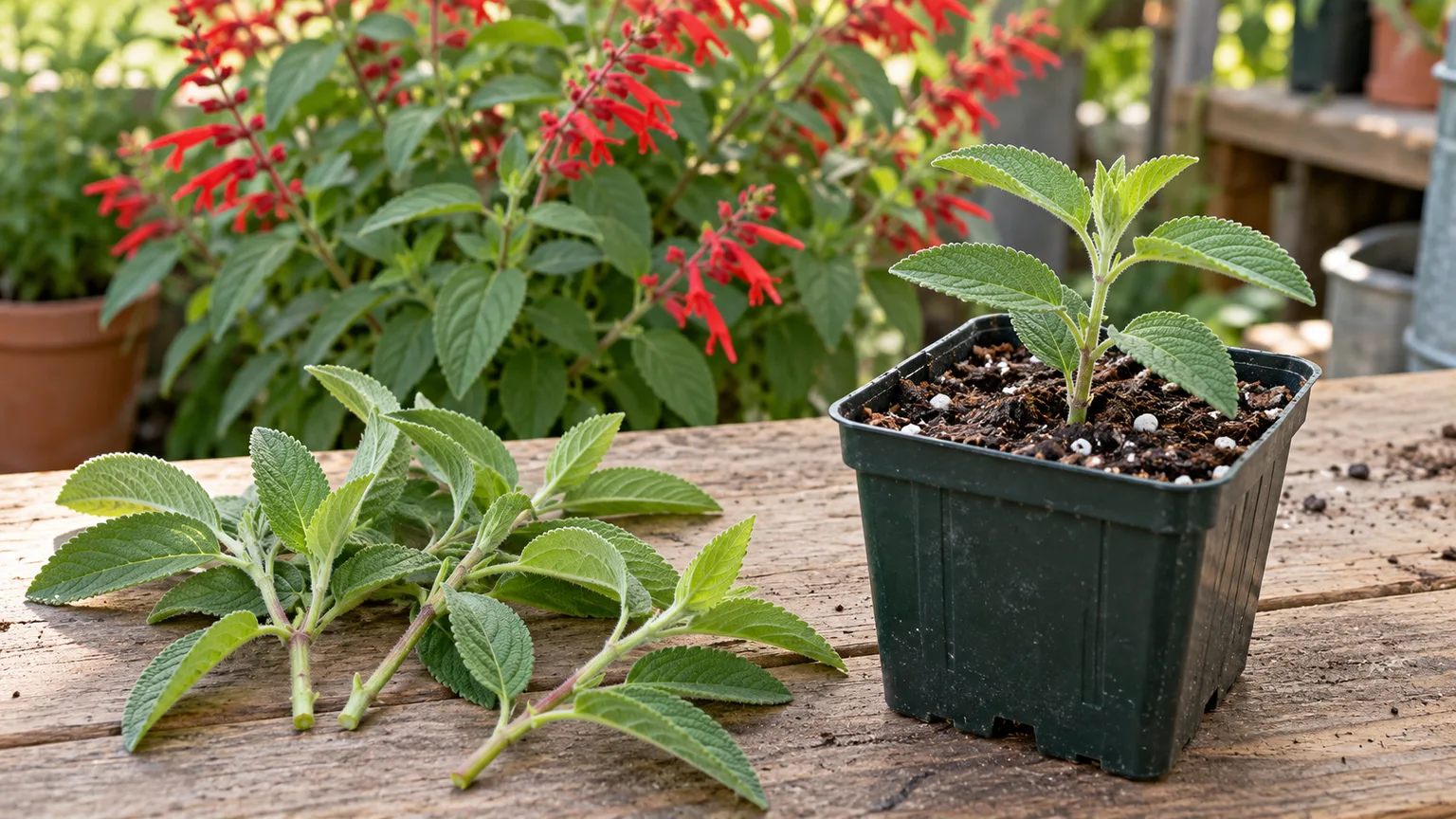
Take cuttings in spring or early summer from a healthy plant that has not begun flowering. Choose a soft, non-woody tip several inches long with multiple leaf pairs; avoid flower buds because a flowering stem is putting energy into bloom rather than roots. Use clean pruners, remove the lower leaves, and set the cut end into water or a small pot of moist, free-draining propagation mix. A rooting hormone is optional rather than essential.
Keep potted cuttings warm in bright indirect light, not strong midday sun, and maintain a lightly moist medium without leaving the base soggy. A loose clear cover can slow moisture loss, but remove it periodically for airflow and take it off once the cutting is holding its leaves and producing new growth. In water, change it when it becomes cloudy and pot the cutting when roots are visible and still short enough to adapt readily to soil. Rooting speed varies with warmth and the cutting’s maturity, so use new growth and resistance to a gentle tug as better cues than a calendar.
Once a cutting has a small, functioning root system, pot it up and acclimate it gradually to outdoor sun. Start in a protected bright spot, then increase direct light over several days. Keep the young plant in a frost-free location until nights are reliably warm; a late cold snap can set back or kill a newly rooted cutting even when the parent plant has become large and established.
Diagnose common pineapple sage problems
The fastest way to troubleshoot is to look at both the leaves and the root zone. Pineapple sage can wilt from dry soil, but wet soil can cause similar aboveground distress by limiting oxygen around roots. Before changing your watering, check the soil several inches below the surface, the drainage holes if the plant is potted, and how long water remains after rain.
Wilting, curled leaves, or leaf drop
If the root ball is dry, water slowly until the soil is moist through its depth, then reassess later in the day. A plant that perks up after deep watering was likely stressed by dryness; consider adding mulch to the bed or checking a container more often in hot, windy weather. The extension guidance notes that inadequate moisture can cause curled leaves and leaf drop, so repeated drought stress is a sign to adjust the watering routine.
If the soil is still wet, do not keep adding water. Move a container out of a water-filled saucer, clear blocked drainage holes, and let the mix begin drying; for an in-ground plant, improve surface drainage or consider moving it during a suitable planting season. Dark, soft stems at the soil line or a sour-smelling mix can point to root or crown trouble. A persistently waterlogged plant may not recover if the roots have already rotted, so correct the site before applying any fertilizer.
No flowers or late flowers
A healthy plant without flowers in midsummer may simply be following its normal short-day rhythm. If fall passes without buds, review whether it received enough sun, whether nearby artificial lighting extends the night, whether pruning continued too late, and whether frost ended the season before flowering. A late planting or a compact but slower cultivar may also need more time to mature.
For next year, use a warmer, brighter location, stop pinching earlier, and try an earlier-flowering cultivar. If the plant is in a pot, place it where it receives bright outdoor light during the growing season and move it before frost. These adjustments improve the opportunity for flowers, but day length and frost timing still set limits; no care routine can guarantee a specific bloom date.
Aphids, spider mites, and root trouble
Pests are not usually a major outdoor problem, but aphids, mealybugs, or spider mites can appear on stressed plants or on specimens brought indoors for winter. Inspect stem tips and leaf undersides. A few aphids can often be washed away with a firm stream of water; isolate an indoor plant if pests spread, and follow the label for any product used on a plant whose leaves or flowers will be eaten. Do not apply an ornamental pesticide and assume the treated foliage remains suitable for food.
Powdery mildew and root rots are more likely where air circulation is poor or soil stays wet. Space plants so leaves dry after rain, avoid wetting foliage late in the day, and correct drainage rather than masking symptoms with repeated sprays. The RHS profile lists possible pests and diseases, while Epic Gardening describes powdery mildew and spider mites as occasional problems. If symptoms keep worsening after you correct the conditions, identify the pest or disease before choosing a treatment.
Harvest leaves and flowers for the kitchen
Harvest a few leaves at a time once the plant is established, or cut a leafy tip just above a leaf pair to encourage branching. The fragrance is strongest when leaves are fresh and bruised, so use them soon after harvest in tea, fruit dishes, salads, syrups, or desserts. The flowers are edible too and can be used as a colorful garnish. Both NC State and Wisconsin Extension describe the leaves and flowers as edible.
Only harvest from a positively identified Salvia elegans plant that has not been treated with a pesticide or other chemical unless its label specifically permits use on edible herbs. Wash the leaves and flowers under clean running water and remove any insects or damaged parts. Do not assume every red-flowered salvia is interchangeable in the kitchen: scarlet sage can resemble pineapple sage, and fragrance alone should not be your only identification check.
Leave some flower spikes on the plant for pollinators, especially in a late-season garden where nectar options may be narrowing. If you want the shrub to keep producing flowers, remove only spent spikes rather than cutting all the flowering stems at once. Harvesting too heavily in late summer can reduce both the display and the plant’s ability to build a strong structure before winter.
Choose a cultivar for your growing season and space
Cultivar names can make the choice easier, but descriptions and mature dimensions differ among growers and regional references. Read the actual nursery tag, ask for the botanical name, and treat height, flower timing, and scent as approximate traits rather than guarantees. A compact plant is often a better fit for a pot or a shorter season; a standard plant needs more room and may take longer to flower.
| Cultivar | Why gardeners choose it | What to check |
|---|---|---|
| ‘Honey Melon’ | Compact growth and earlier flowers make it a useful candidate where summer is short. | Sources report different mature sizes; confirm the specific stock and expected height. |
| ‘Tangerine’ | Often selected for a citrus-like leaf fragrance and an earlier display. | The strength and character of scent can vary; crush a leaf at the nursery if possible. |
| ‘Golden Delicious’ | Chartreuse foliage stands out beside dark-leaved plants and red flowers. | It may be sold under related names, and foliage color can vary with light. |
| ‘Scarlet Pineapple’ | Chosen for abundant, showy scarlet flowers. | It can grow larger than a compact selection, so allow room or use a sturdy pot. |
The Epic Gardening guide and Savvy Gardening’s care guide describe these named selections and their practical differences. ‘Honey Melon’ is a sensible first choice when you want to improve the odds of an earlier bloom, while ‘Golden Delicious’ is primarily a foliage-color choice. Compare the tag’s mature dimensions with your bed or container; a cultivar that fits the available space is easier to keep watered, pinched, and protected than an oversized plant you must repeatedly cut back.
Conclusion
Pineapple sage is straightforward to grow once you plan for its two defining traits: frost sensitivity and late, short-day flowering. Give it sun, a root zone that stays moderately moist but drains well, and enough room for its natural size. Then decide whether your climate supports an in-ground perennial, whether a movable pot is worth the effort, or whether you will enjoy it as an annual.
For a stronger display, plant early, stop pinching before buds form, and keep bright artificial night lighting away from the plant in fall. Take cuttings before winter if you want a backup, and harvest only from a plant you have positively identified as Salvia elegans. These choices make the plant useful for its scented foliage even when frost arrives before its scarlet flowers.