How Much Sun Does Common Sage Need?
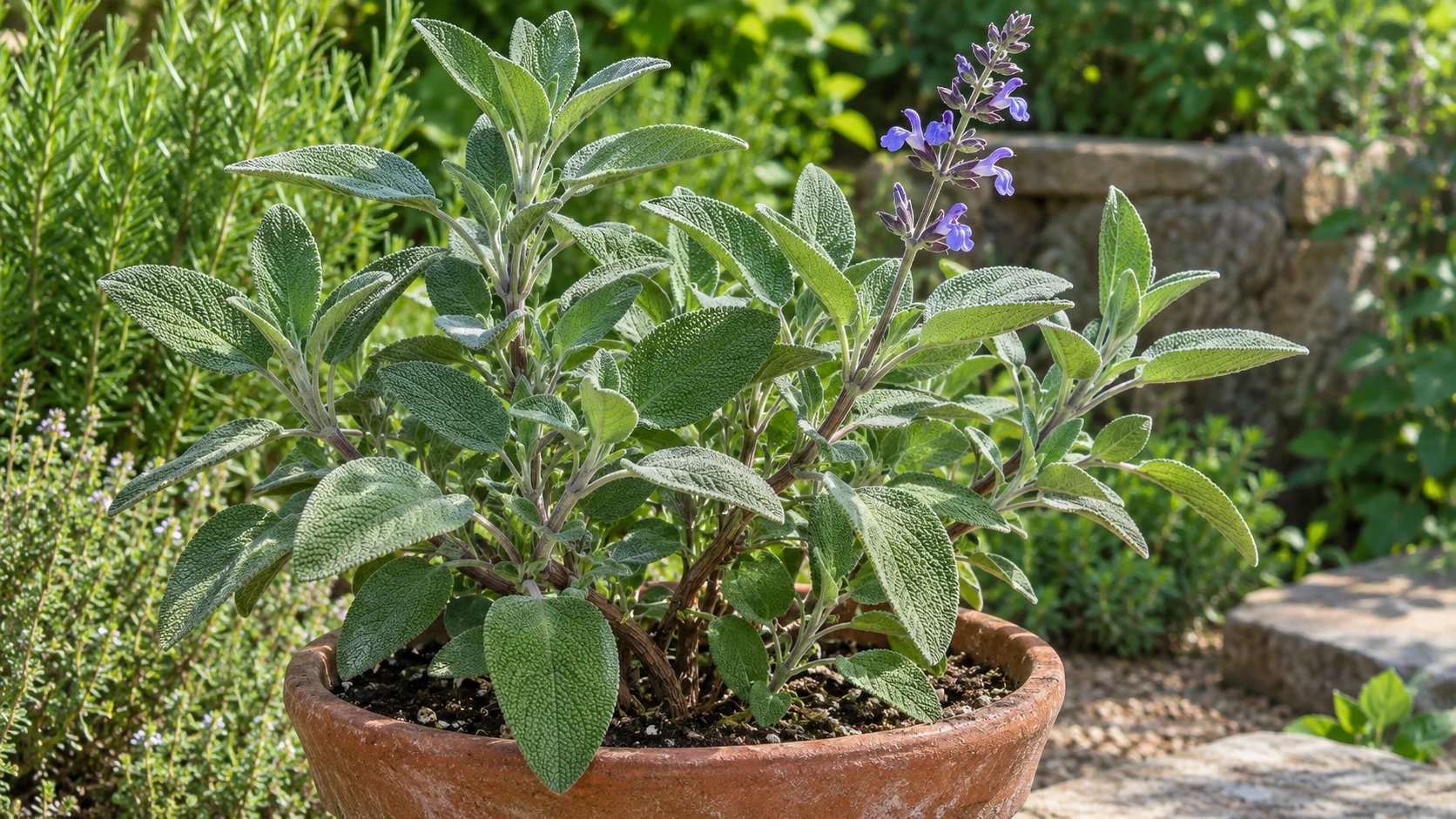
How Much Sun Does Common Sage Need?
How Much Sun Does Common Sage Need?
Quick answer
Common sage (Salvia officinalis) grows best in full sun: aim for about six or more hours of direct light on an outdoor plant, with good airflow and well-drained soil. It tolerates very light shade, but growth tends to sprawl when the site is dimmer, and flowering may be reduced. The Missouri Botanical Garden and NC State Extension both list full sun as the preferred exposure.
If your sage is in a dark corner or stretches toward one side, move it gradually to a brighter site and check the root zone before changing watering or fertilizer. Start with the Sage overview for the full growing setup; this page focuses on light.
Sage’s preferred light level
Sage is an evergreen, semi-woody Mediterranean herb rather than a shade-loving leafy houseplant. Give it a sunny, sheltered position outdoors. The RHS recommends full sun for S. officinalis, while its plant profile describes the species as a bushy evergreen sub-shrub (RHS growing guide; RHS plant profile). In an open site, the plant usually holds a more compact outline and produces more leafy shoots than it does where taller plants or walls block much of the day’s light.
Full sun and the part-shade limit
Full sun is the reliable target, not an absolute rule that a few hours of shade will kill the plant. Missouri Botanical Garden notes that common sage tolerates very light shade, but also says plants tend to sprawl when grown with less than full sun. Gardeners’ Path similarly notes that partial shade is tolerated, while plants may become leggy and flower less abundantly (Missouri Botanical Garden; Gardeners’ Path).
Treat part shade as a compromise for a difficult site, not as the best setting. If your plant is healthy but open and leaning, brighter light may improve the next flush of growth. It will not make old bare wood leafy again; use the Sage pruning guide before trimming an older plant.
Measure light at the plant, not at the window
A bright-looking balcony can still be shaded by a roof, railing, neighboring building or tree for most of the day. Check the exact spot where the leaves sit: note when direct sun reaches the plant and when it leaves. A phone photo every hour from morning to late afternoon can help you compare locations, but the practical question is whether the foliage receives several hours of direct sun rather than bright shade alone.
For a balcony, a position near an open edge usually receives more sun and moving air than a deep corner. Make sure the pot still drains freely and does not sit in runoff from another container. If the plant only gets a short sun window, place it where that window is strongest, then check for stretching over the next few weeks.
Choose a bright outdoor spot
Outdoors is usually the simplest setting for common sage because it combines stronger light with airflow. Purdue Extension lists full sun for garden sage, and the RHS describes it as suitable for containers as well as herb beds (Purdue Extension; RHS growing guide). Avoid a site where the plant is shaded by a railing all morning and receives only a brief late-afternoon beam.
If several sunny spots are available, choose the one with the best drainage as well as light. A sunny location does not compensate for roots that remain wet; see the Sage soil guide and Sage watering guide if the mix stays damp.
Can sage grow indoors?
It can be kept in a pot indoors for a time, but common sage is difficult to maintain as a long-term indoor herb in a dim room. A south- or west-facing window is not automatically enough: buildings, glazing, curtains and seasonal sun angle reduce the light that reaches leaves. Put the plant as close as practical to the brightest window, keep it away from hot, stagnant air, and rotate the pot occasionally if it leans strongly toward the glass.
Indoor growth often becomes weak when light is inadequate. Do not try to correct that by watering more often or feeding heavily. Check the Sage watering guide first, because indoor pots dry more slowly than outdoor containers.
When a grow light is useful
A grow light can help when a plant must remain indoors and the window receives little direct sun, but the fixture needs to be close enough and on long enough to deliver useful light. Follow the fixture’s instructions, keep it at a safe distance from leaves and use a timer for a consistent day length. If the sage can safely live outdoors, a brighter outdoor position is usually simpler than trying to compensate for a dark room with an undersized lamp.
Signs common sage needs more light
Look for a pattern across new growth rather than judging one old leaf. Likely shade signs include:
- Stems stretching toward a window or open side of the balcony.
- Longer gaps between leaf pairs and a loose, spreading shape.
- Fewer flower spikes than the plant produced when it received more sun.
- New shoots that remain thin even though the plant is not waterlogged or recently disturbed.
The Missouri Botanical Garden specifically notes that sage tends to sprawl in less than full sun; Gardeners’ HQ also associates reduced sunlight with an ungainly habit (Missouri Botanical Garden; Gardener’s HQ). Use these signs as a prompt to check exposure, not as proof. Crowded growth, old woody stems, waterlogged roots or a recent move can produce a similar appearance.
Separate shade stress from root stress
Before moving the plant, touch the compost and look at the stem bases. If soil remains wet, stems soften or lower leaves yellow widely, drainage or watering may be the more urgent issue. Sage prefers dry-to-medium moisture and well-drained soil; the Sage soil guide and Sage watering guide explain those checks. Fix a saturated root zone before expecting brighter light to restore growth.
Does sage ever need protection from direct sun?
Common sage is a full-sun plant, so ordinary direct sunlight is not a problem to avoid. In a heat wave, however, a small pot against a hot wall can heat and dry far faster than a garden bed. If leaves scorch or the plant repeatedly wilts while the compost is already dry, try a location that keeps morning sun but offers light afternoon protection during the hottest spell. This is a temporary adjustment to extreme local heat, not a reason to keep sage in permanent shade.
Change one factor at a time. If you add shade, watch the plant for fresh stretching; if you leave it in intense afternoon sun, make sure the pot is not baking against masonry and check moisture before watering. In warm, humid regions, good airflow and drainage matter as much as exposure; Aussie Green Thumb notes that common sage can struggle with hotter, more humid conditions (Aussie Green Thumb).
Adjust light across seasons and climates
Sun angles change with the season. A window that is bright in summer may be blocked by an awning or receive fewer direct hours in winter. Check the plant again when nearby trees leaf out, when a balcony screen is installed or after moving containers indoors. If your sage is evergreen but growth slows in cool weather, do not mistake the pause for a need to increase fertilizer; confirm that the site is still bright and the roots are not wet.
Gardeners’ HQ notes that full sun gives the best results while partial shade is tolerated, and My Mediterranean Garden lists full sun for S. officinalis (Gardener’s HQ; My Mediterranean Garden). The consistent recommendation is a sunny site. The practical adjustment is to give a container more protection from extreme reflected heat only when the plant shows stress.
Move a potted sage plant without adding stress
Move the pot during a mild part of the day and avoid combining a site change with pruning or repotting unless there is a separate urgent reason. If the plant has been in shade, expose it to stronger sun in steps over several days rather than moving it from deep shade directly to the hottest afternoon position. Keep the root ball evenly moist but never saturated during the transition.
After the move, judge the result from new shoots over the next few weeks. Existing stretched stems will not shorten; prune only where fresh leafy growth gives you a safe cutting point. If the pot is root-bound or drains poorly, handle that separately with the Sage repotting guide.
When to use this page vs other Sage guides
Use this page when you are choosing or correcting the plant’s exposure. Go to the Sage overview for its overall needs, the watering guide for moisture checks, and the soil guide for drainage. The pruning guide helps shape stems after light has been corrected; the fertilizer guide covers feeding when growth remains weak.
Conclusion
Common sage prefers full sun and can tolerate only light shade before it tends to become more open or sprawling. Check the actual sun at leaf level, improve exposure gradually and confirm that wet roots are not causing similar symptoms. In extreme heat, make a small, reversible adjustment to a container’s position while keeping strong light as the baseline.
Related Sage guides
- Sage overview — set up the whole growing environment.
- Sage watering guide — tell dry soil from roots stressed by excess moisture.
- Sage soil guide — choose a draining bed or container mix.
- Sage fertilizer guide — avoid feeding before checking light and roots.
- Sage repotting guide — move a crowded plant to a better-draining pot.
- Sage pruning guide — trim only where new growth can support recovery.