Aloe Plant Turning Brown: Causes and Fixes
Brown aloe leaves usually mean overwatering, sunburn, cold, drought, or pests—not bad luck. Learn the symptom pattern, first fixes, and when to prune.
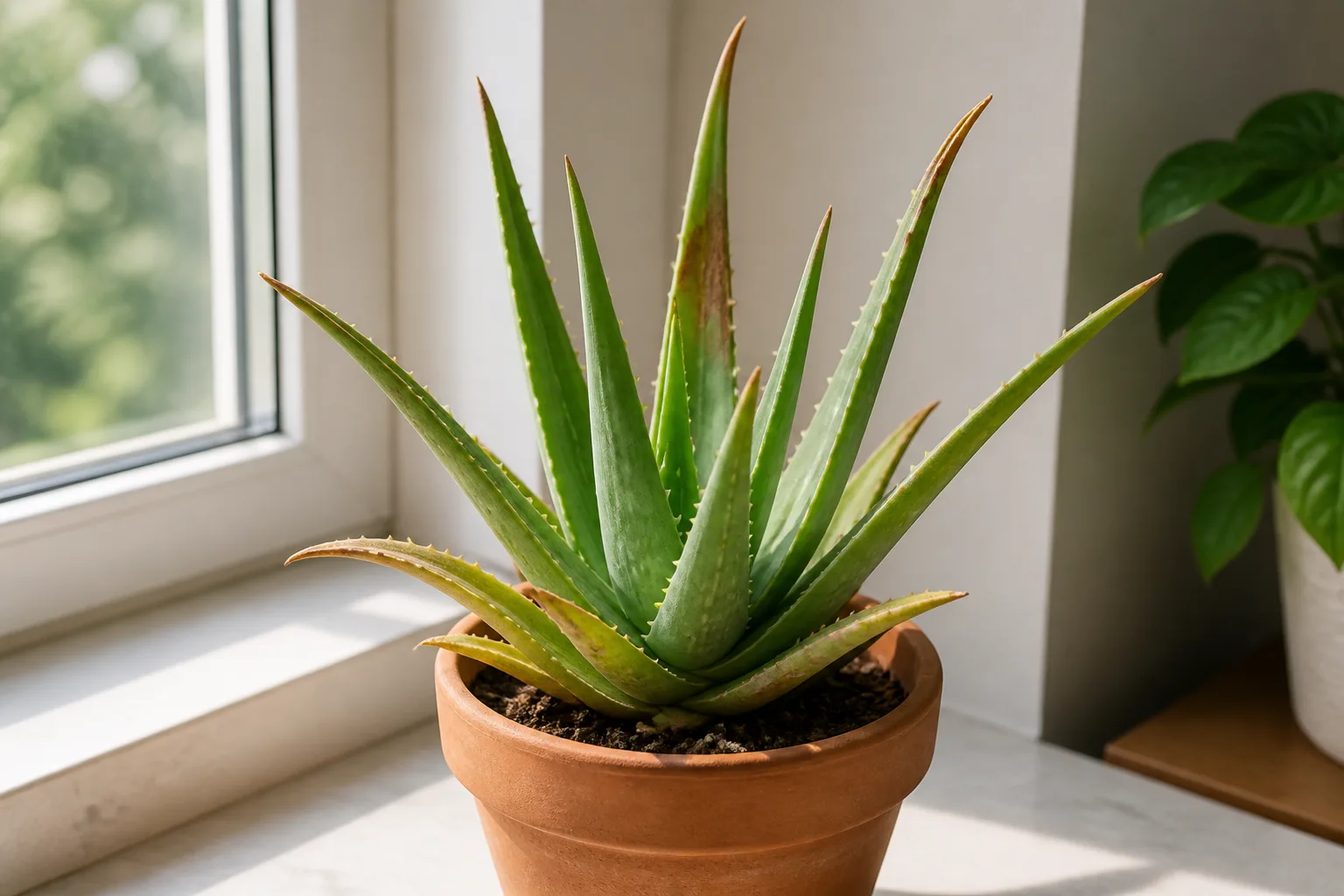
Brown leaves on Aloe vera are rarely random. The thick, water-storing leaves that make aloe so forgiving also make damage easy to read—if you know whether the tissue is mushy, crispy, or spotted. Match that texture to soil moisture, light, temperature, and leaf age, and you can usually stop further browning within a week. The five causes below cover almost every indoor and patio aloe complaint; the sections that follow tell you exactly what to do for each one.
For baseline care—light, soil, and year-round watering—see our aloe vera care guide. When you already know the problem is wet soil or thirsty leaves, jump straight to overwatering on aloe vera or underwatering.
Start With a 60-Second Symptom Check
Before you repot, prune, or buy fungicide, run this quick check. It takes less than a minute and prevents the most expensive mistake: treating drought like rot, or adding water to a plant that is already drowning.
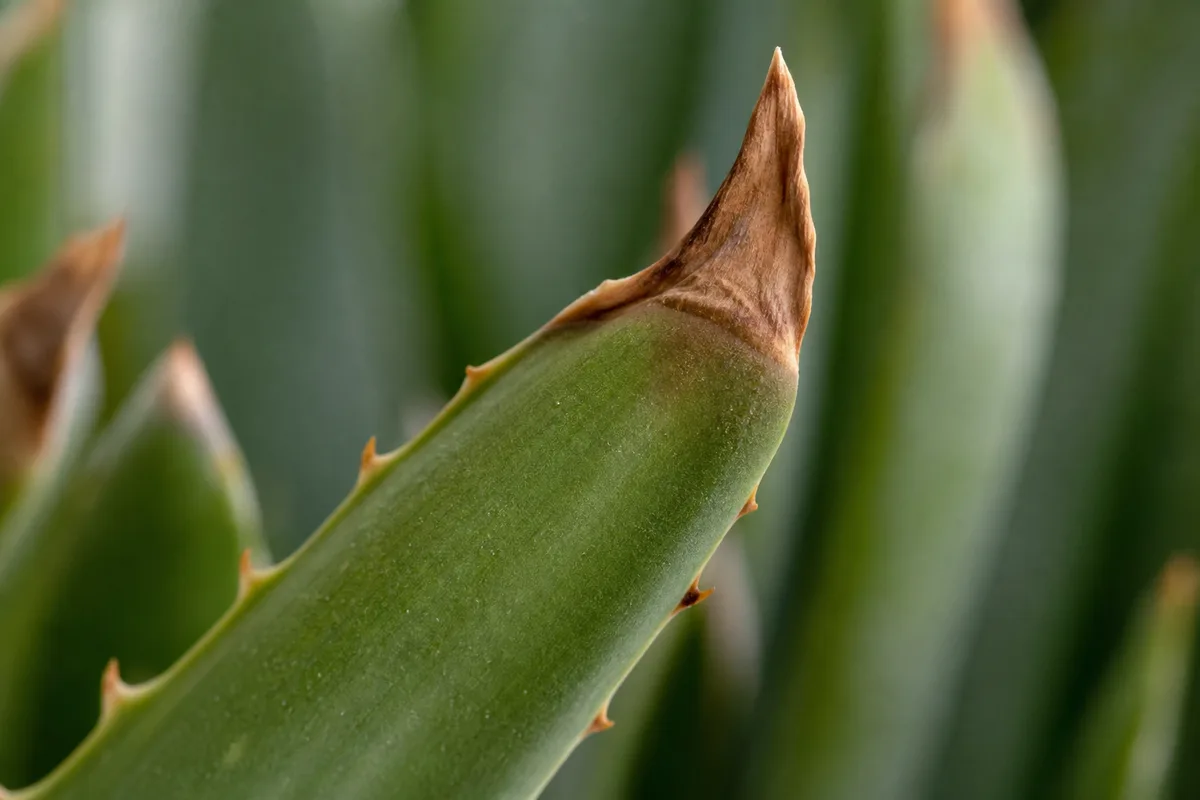
Step 1 — Squeeze a middle leaf. Firm and plump means the plant still has stored water. Spongy or translucent means cells are rupturing from excess moisture. Thin, slightly deflated, and leathery means drought stress.
Step 2 — Lift the pot. A heavy container days after watering points to saturated mix. A feather-light pot that has not been watered in weeks points the other direction.
Step 3 — Look at which leaves are brown. Lower, outer leaves only often means normal aging. New center leaves browning is urgent—especially if the base feels soft.
Step 4 — Note the brown pattern. Even tan tips on otherwise green leaves suggest underwatering or mineral buildup. Bleached or rusty patches on the sun-facing side suggest sunburn. Flat brown bumps you can flick off suggest scale. Dry, powdery orange-brown pustules on the underside suggest aloe rust.
Brown Tips vs Whole Leaves vs Spots
Brown tips on an otherwise firm aloe usually trace to underwatering, low winter humidity, or salts from tap water and fertilizer sitting at leaf margins. The plant is not rotting; it is conserving water or shedding excess minerals at the oldest tissue. See brown tips on aloe vera for the full fix path.
Whole leaves turning yellow-brown and soft almost always mean too much water—or roots that can no longer absorb because they are rotting. The lower leaves go first, but the mix stays damp and the pot feels heavy. This is the pattern that slides into root rot if you keep watering on schedule.
Brown or rusty spots on an otherwise firm leaf point to sunburn, fungal infection, or sucking insects—not a watering calendar problem. Location on the leaf matters: sunburn hits the face that faces the glass; rust often clusters on undersides; scale sits on veins and leaf bases.
When Brown Leaves Are Normal Aging
Aloe grows from the center outward. The oldest leaves at the bottom of the rosette eventually dry to tan or brown, shrivel, and die. That is senescence, not a care failure. NC State Extension notes that Aloe vera spreads by offsets and maintains a rosette of thick leaves that renew over time (NC State Extension). If only one or two bottom leaves are browning while new center growth stays firm and green, you can remove the dry leaves for aesthetics—but you do not need to change watering or light.
Worry when browning climbs into newer leaves, appears on multiple sides of the rosette at once, or comes with mushy bases, sour soil smell, or pests.
Overwatering — The Most Common Cause
Too much water is the number-one reason aloe leaves turn brown indoors. Desert succulents store moisture in their leaves; roots expect a full dry-down between deep soaks. When mix stays wet, roots suffocate, cells burst, and outer leaves turn yellow, then brown, then mushy. NC State Extension lists overwatering as a primary cause of root rot in aloe (NC State Extension).
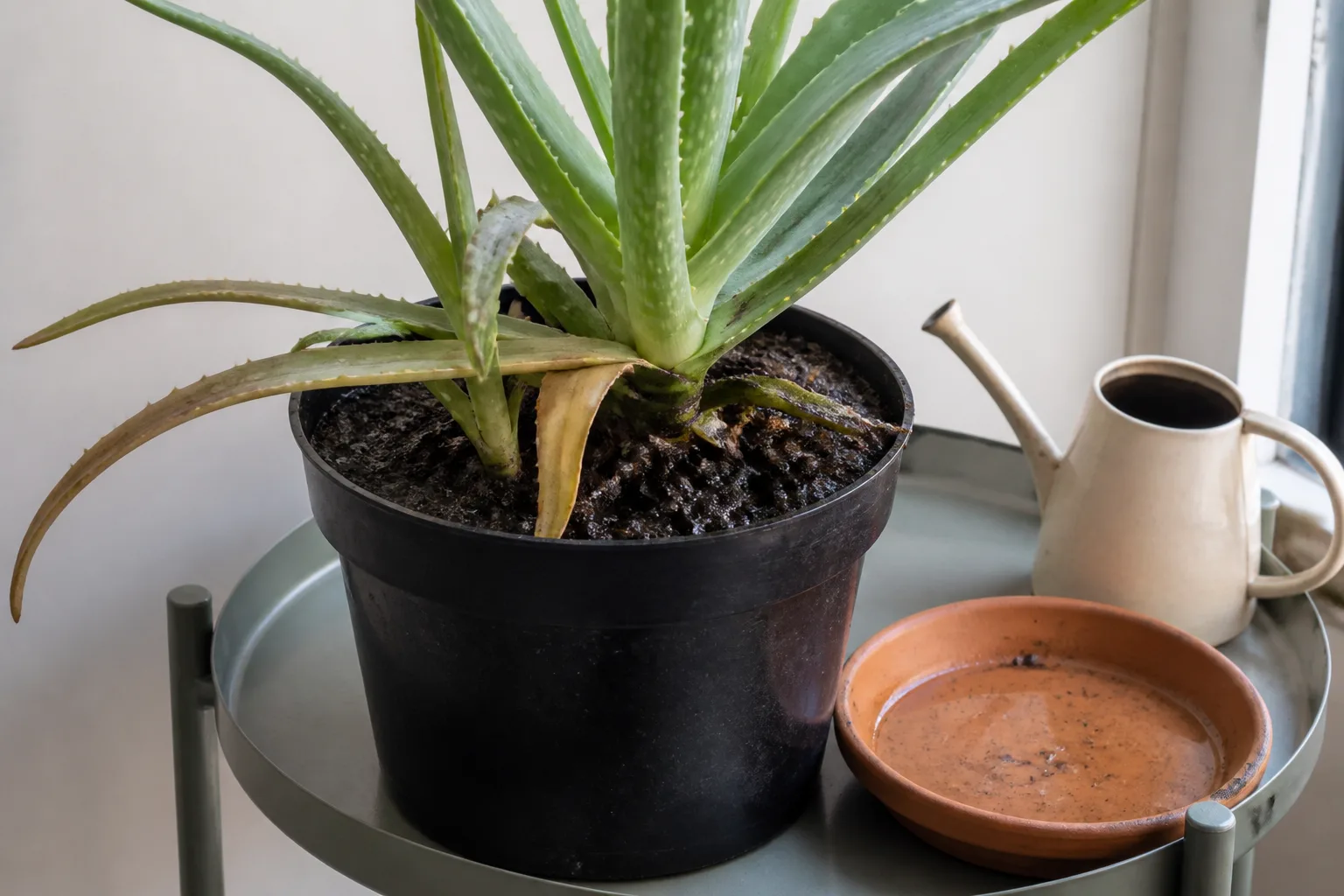
What Overwatered Aloe Looks Like
Overwatered aloe shows a specific combination: damp soil, a heavy pot, and lower leaves that feel soft or translucent when you press them. Yellow often appears before brown. The leaf may look waterlogged—almost see-through at the base—rather than dry and crispy. Fungus gnats hovering over the soil are a secondary clue that the mix never dries properly.
This is different from underwatering, where soil is bone dry, the pot is light, and leaves are thin but still firm. It is also different from sunburn, where only the sun-exposed panel discolors while the rest of the leaf stays turgid.
How to Fix an Overwatered Aloe
Stop watering immediately. Do not “give it a little drink” because the leaves look sad. Wilting on wet soil means roots are failing, not that the plant is thirsty.
Let the top two inches of mix dry completely. Lift the pot daily until it feels noticeably lighter. In winter, that dry-down can take two to three weeks; in summer, one week. Only then reassess leaf firmness at the base.
Remove leaves that are fully mushy with sterilized scissors. Cut close to the stem without gouging healthy tissue. Let any cut surfaces air-dry for a day before the plant sits near open soil.
If the base of the rosette is still firm after the soil dries, you may not need to repot. If lower leaves keep collapsing, the mix smells sour, or the stem feels soft at soil level, unpot and inspect roots. Trim black mushy roots, repot into fresh cactus mix with extra perlite, and use a pot with drainage holes. Terracotta wicks moisture faster than plastic—helpful for heavy-handed waterers. The RHS recommends allowing compost to dry out between waterings and reducing frequency in winter (RHS).
Going forward, water only when a finger or skewer two inches deep comes out dry. For a full soak-and-dry routine, see how often to water aloe vera.
Underwatering and Drought Stress
Aloe tolerates neglect better than soggy soil, but months without a real soak—especially in bright south or west windows—will show up as brown, crispy leaf tips and shriveled lower leaves. The plant is spending its internal water reserves faster than roots can replace them.
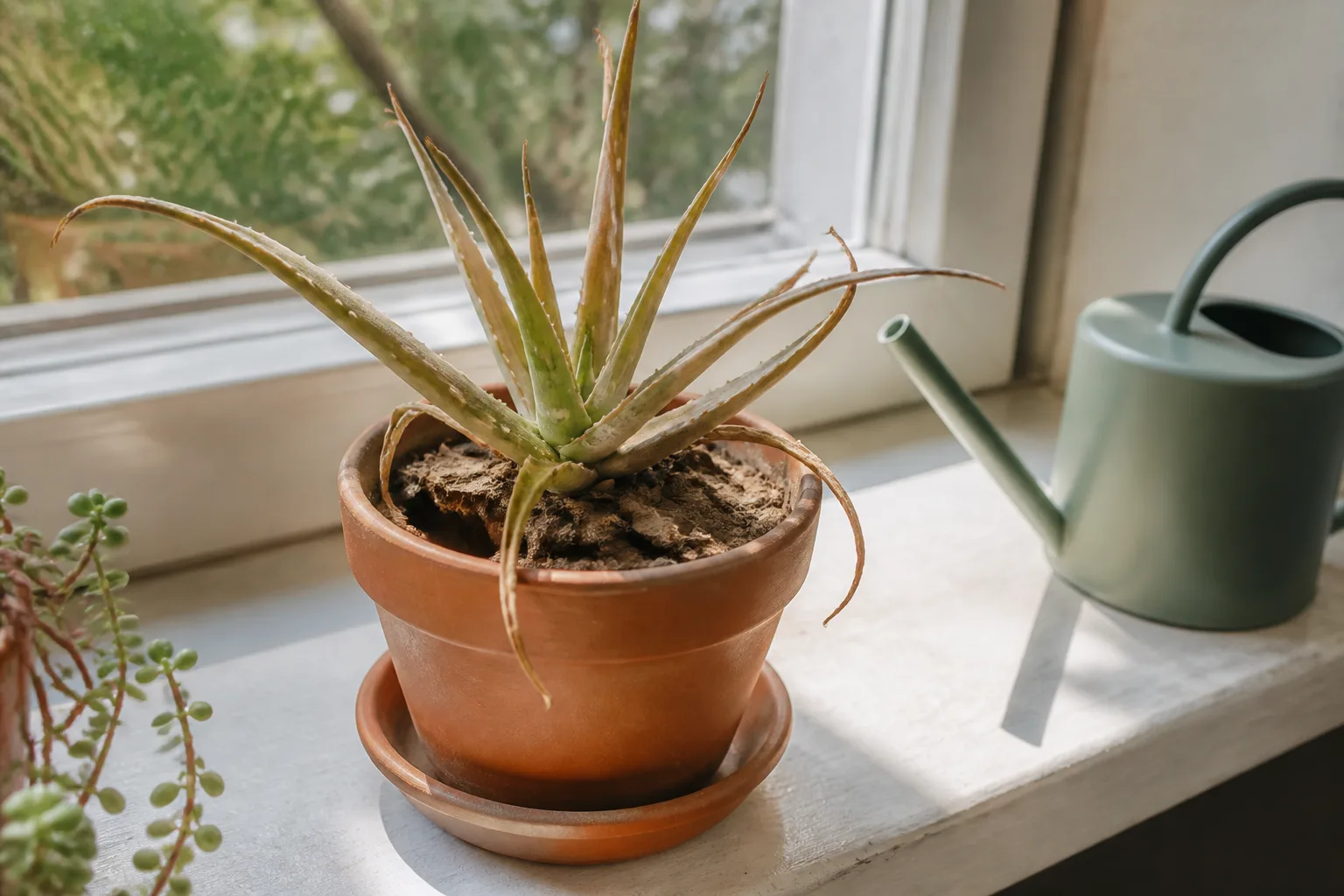
Signs Your Aloe Is Too Dry
Underwatered aloe leaves feel thin and slightly deflated but still firm—not mushy. Tips turn tan or brown and papery. Soil pulls away from the pot edge. The container is light when lifted. Unlike overwatering, there is no sour smell and no translucency.
Long drought can brown entire lower leaves, which then dry to a brittle husk. Center growth may slow or look smaller than older leaves.
How to Rehydrate Without Rotting Roots
Give one deep soak until water runs from the drainage holes. Empty the saucer within thirty minutes. Do not mist the leaves; water sitting in the rosette invites rot on a stressed plant.
If soil has become hydrophobic—water runs straight down the sides—bottom-water for twenty to thirty minutes in a basin, then let the pot drain fully. One thorough session beats daily splashes that never reach the root ball.
Wait until the top two inches dry again before the next soak. Recovery leaves will not re-plump; new growth should look fuller within two to four weeks. Trim only fully dead brown tissue with clean scissors.
Too Much Sun and Sunburn
Aloe loves bright light, but abrupt exposure to harsh direct sun—especially after a dim winter indoors—can scorch leaves. Sunburn shows as bleached, yellow, or rusty-brown patches on the side facing the window or afternoon sun. Tissue may feel slightly sunken or papery but stays firm, not mushy.
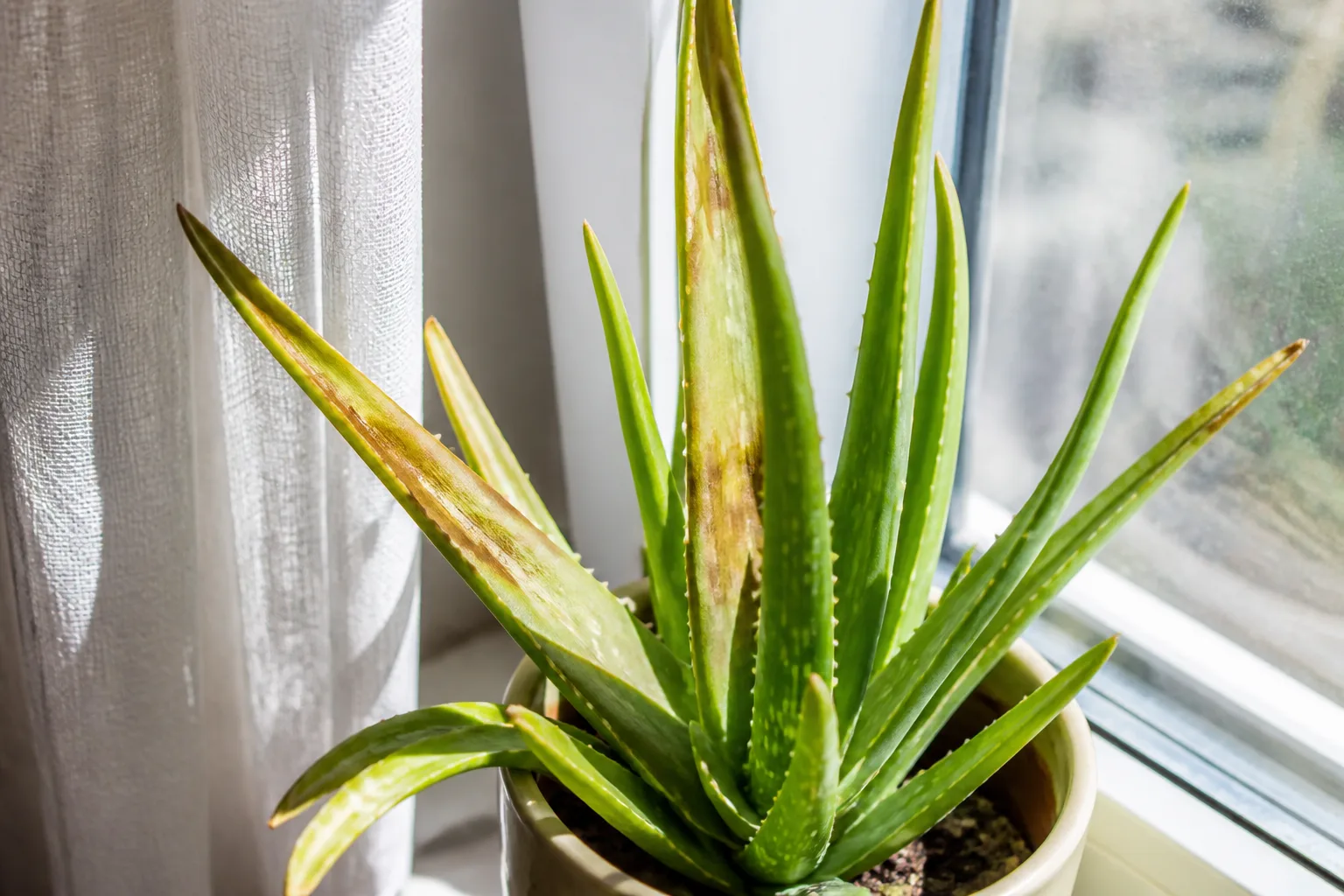
Indoor Window Burns vs Outdoor Scorch
Indoor burns often hit plants pressed against south- or west-facing glass in late spring, when sun angle and intensity jump before you adjust placement. Sheer curtains or moving the pot back one to two feet usually stops new damage within days.
Outdoor scorch happens when a houseplant aloe moves to full patio sun without acclimation. UF/IFAS notes that aloe prefers full sun to partial shade outdoors but still needs gradual hardening off (UF/IFAS Gardening Solutions). Move to bright indirect light first, then add one to two hours of morning sun per day over a week.
Remove severely scorched leaves if more than half the blade is dead. Mild sunburn on tips can stay; the plant will outgrow cosmetic damage. Do not fertilize sun-stressed aloe until new growth looks normal.
Cold Damage and Frost Shock
Aloe vera is not frost-hardy. Prolonged exposure below about 50°F (10°C) can discolor leaves to brown or black, especially on outdoor plants caught by an early frost or houseplants left on a cold windowsill behind a drafty pane (BBC Gardeners’ World).
Indoor Drafts, AC Blasts, and Outdoor Frost
Cold injury looks different from overwatering: leaves may turn dark brown or black evenly, sometimes overnight, after a cold night. Tissue feels firm but dead, not mushy—unless rot follows later. Outdoor pots left out through the first light frost often show collapsed outer leaves while the center may survive if nights warm quickly.
Move the plant to a stable 65–75°F room with bright indirect light. Remove fully blackened leaves. Hold water for three to five days, then resume the normal dry-down schedule once the pot feels appropriately light.
If you summer aloe outdoors, watch autumn forecasts and bring pots in before nights drop toward 55°F. A few hours near freezing can kill tissue that took years to grow.
Pests and Diseases That Cause Brown Patches
When browning appears as spots or bumps on otherwise firm leaves—and soil moisture and light look normal—look at insects and fungi next.
Scale, Aloe Rust, and Anthracnose
Scale looks like tiny flat brown or tan ovals glued to leaves and stems. They suck sap and leave yellow halos that brown as tissue dies. Wipe individuals with a cotton swab dipped in rubbing alcohol, then treat with insecticidal soap or horticultural oil on a test leaf first. Check offsets and pot rims—scale hides on undersides.
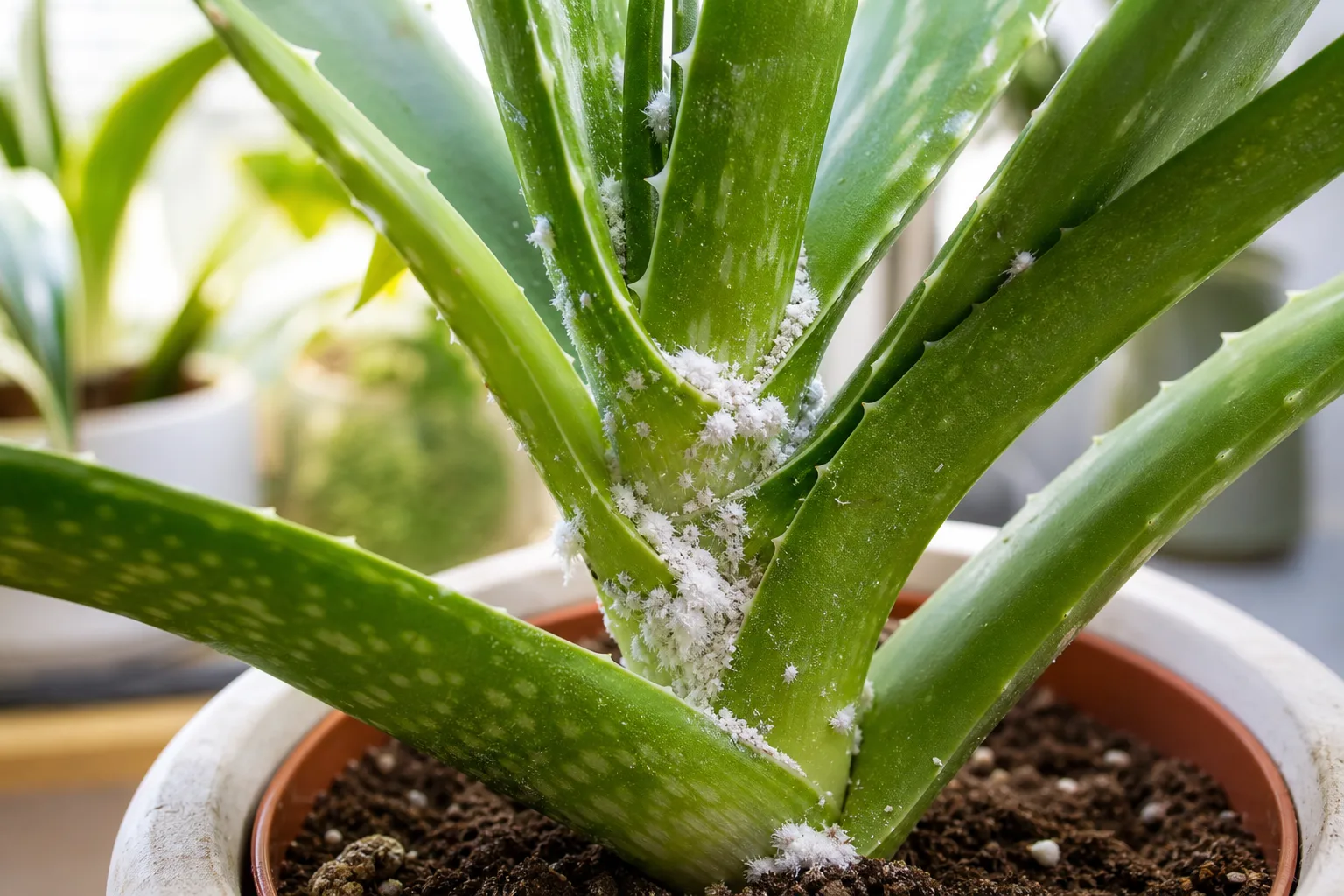
Mealybugs show as white cottony clusters in leaf axils and can cause similar browning; see mealybugs on aloe vera for a full treatment sequence.
Aloe rust (Phakopsora species) produces small, dry, orange-brown pustules, often on leaf undersides. It spreads in humid, crowded conditions. Remove affected leaves, improve airflow, and avoid overhead watering. Specialist growers note rust is cosmetic on established plants but contagious in collections (Cactus Outlet).
Anthracnose causes sunken, water-soaked spots that turn rusty brown and may pit the leaf surface. Remove infected tissue, sterilize tools, and keep leaves dry when watering. Severe infections may need a labeled fungicide for ornamentals—always test on one leaf first.
NC State Extension lists scale, leaf spot, aloe rust, and sooty mold among common aloe problems (NC State Extension). Isolate affected plants until you confirm the issue is not spreading.
Should You Cut Brown Aloe Leaves Off?
Yes—but after you address the cause, and only for tissue that will not recover.
Cut now: fully mushy leaves, black frost-killed blades, leaves more than half scorched, and pest-infested sections you have already treated. Use clean, sharp scissors or pruners. Cut close to the stem without damaging the crown.
Wait: leaves with minor tip browning while you fix underwatering or sun stress; lower leaves that are slowly drying as part of normal aging; any leaf where green tissue still feeds the plant while roots recover from mild overwatering.
Never remove so many leaves that the plant cannot photosynthesize—keep at least three to four healthy blades when possible. Dip tools in rubbing alcohol between cuts if disease is suspected.
Prevention Checklist for Healthy Green Leaves
Water on dryness, not dates. Push a finger or skewer two inches into the mix. Water deeply only when it comes out dry. Empty saucers within thirty minutes.
Match pot to plant. Use drainage holes and a gritty cactus or succulent mix. Upsize only when roots circle the pot—oversized containers stay wet too long.
Acclimate light changes. Move gradually toward brighter windows in spring; harden off before full patio sun.
Respect winter slowdown. Cut watering frequency by roughly half in low-light months. Cold, dim rooms need even longer dry periods.
Keep stable temperatures. Avoid leaving aloe on frosty porches or directly against single-pane glass on freezing nights.
Inspect monthly. Check leaf bases and undersides for scale and mealybugs before spots spread.
Conclusion
Brown aloe leaves are a message, not a death sentence. Mushy and yellow-brown on wet soil means stop watering and dry the roots out. Crispy tips on dry, light soil means a deep soak and a better schedule. Bleached patches on the sunny side mean less direct sun. Dark firm leaves after a cold night mean warmth and patience. Spots and bumps mean pests or fungus—not more fertilizer.
Run the 60-second check, apply the matching fix, and prune only dead tissue once conditions are stable. Most aloes push new center growth within a few weeks when the underlying stress stops. If the crown turns soft on still-wet soil despite dry-down, escalate to the root rot guide before the rot reaches the growing point. For everyday care that keeps leaves green in the first place, bookmark aloe vera care and treat watering as a soil test—not a calendar habit.