How Often to Water Aloe Vera Indoors and Outdoors
Aloe vera watering fails on calendars, not care. Get a soak-and-dry schedule, three moisture tests, and fixes for over- and underwatering.
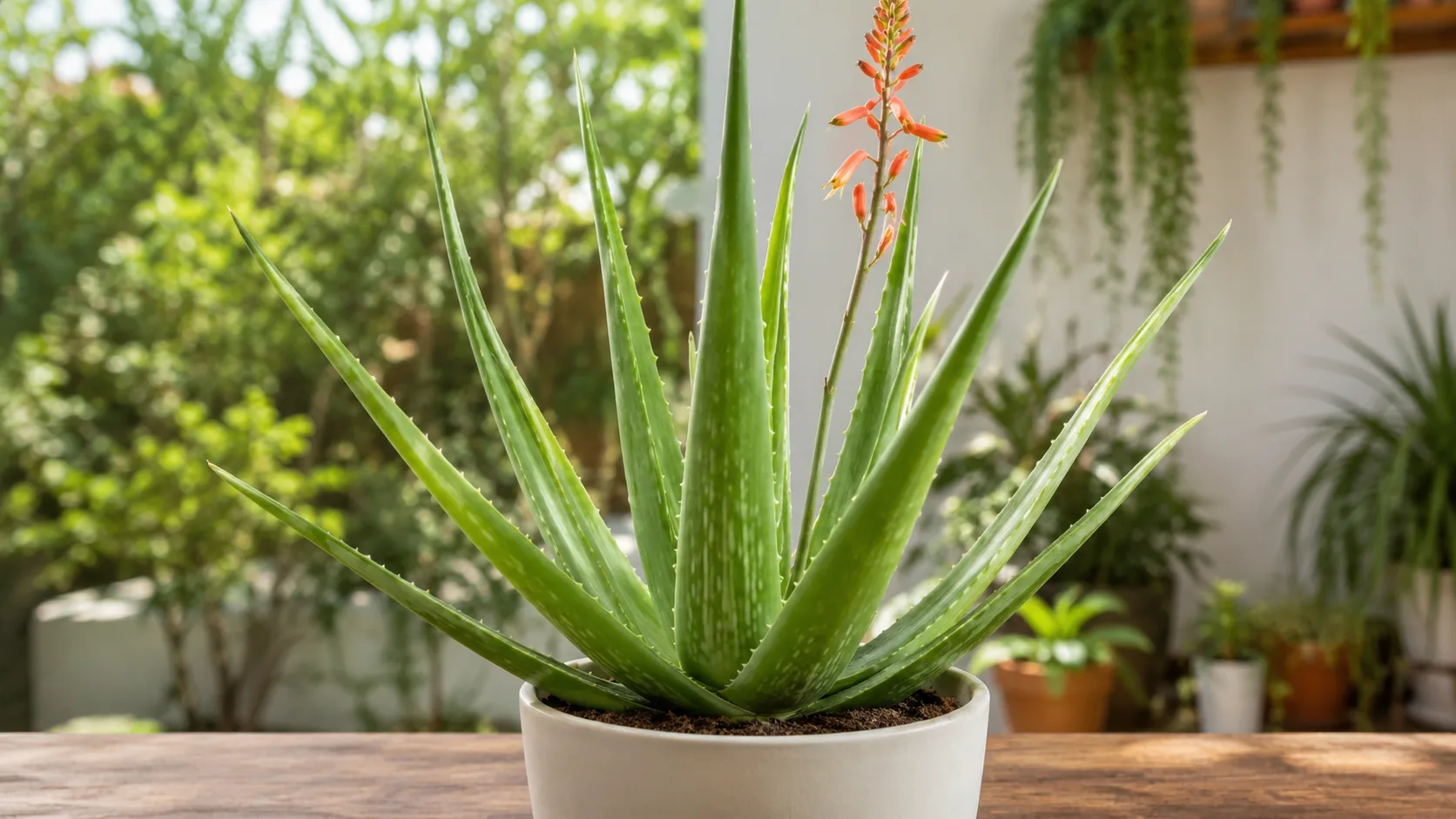
Yellow lower leaves on wet soil. Wrinkled tips on bone-dry mix. A rosette that felt fine last month and now smells sour near the base. Aloe vera looks low-maintenance until watering goes wrong—and watering is where most unhappy aloes start. The plant evolved across dry parts of the Arabian Peninsula and North Africa, storing water in thick leaves and tolerating long gaps between drinks. Indoors, that biology means one rhythm: soak deeply, drain completely, wait until the mix is dry throughout, then repeat. For full species context, see our Aloe vera hub and the dedicated Aloe vera watering guide. This page answers the frequency question directly and helps you diagnose what went wrong when the leaves stop looking firm and green.
The Short Answer: How Often to Water Aloe Vera
Most indoor aloe vera plants need water roughly every 2 to 3 weeks during spring and summer and every 4 to 6 weeks in fall and winter, sometimes longer in cool, dim rooms. Outdoor potted aloes in bright summer heat may dry out in 10 to 14 days; the same plant moved to a shaded winter windowsill might go 6 to 8 weeks between drinks. Those ranges are starting points—not rules. The NC State Extension Gardener Plant Toolbox is explicit: allow the soil to completely dry between waterings, then water well and let excess drain from the pot. Water less frequently in winter. Penn State Extension adds the same seasonal split: water thoroughly when the soil surface is dry during the growing season from early spring to early fall, then reduce watering in dormancy so the mix stays barely moist and leaves do not shrivel (Penn State Extension). If you remember only one sentence: test the soil and leaves, not the calendar.
| Situation | Typical dry-down window | What to verify before watering |
|---|---|---|
| Indoor aloe, bright window, terracotta, 4–6 in pot | 10–21 days in summer; 4–6 weeks in winter | Skewer dry at 2 in; pot feels light |
| Indoor aloe, dim room, plastic pot | 3–4 weeks in summer; 6–8 weeks in winter | Same tests—do not assume longer gaps mean “due” |
| Outdoor potted aloe, full sun, no rain cover | 7–14 days in heat | Soil dry through; shelter before storms |
| Freshly repotted or root-trimmed aloe | Wait 5–7 days after repot | Cut surfaces calloused; crown firm |
| Aloe with soft yellow base leaves | Stop watering until diagnosed | Skewer, root check—not another soak |
Why Calendar Watering Keeps Killing Healthy Aloes
The most common aloe mistake is treating “once a week” as houseplant gospel. Aloe is not a tropical foliage plant that wants evenly moist soil. It is a leaf succulent adapted to wet-dry cycles: a sudden soak after drought, then days or weeks of dry air in the root zone. Constant dampness suffocates fine roots and invites rot—the top killer Penn State and the Missouri Botanical Garden both warn against. A watering app that fired every Tuesday in July will overwater the same pot by November when growth slows and light drops. Calendar schedules ignore pot size, pot material, room temperature, and window exposure—all of which change how fast mix dries.
Aloe Stores Water in Its Leaves, Not the Soil
Those plump, lance-shaped leaves are reservoirs. When soil moisture falls, aloe draws on internal gel and stays upright. A firm mid-leaf squeeze tells you reserves are healthy; a soft, translucent leaf often means excess water or failing roots. Because the plant carries its own backup supply, missing one scheduled watering rarely kills aloe. Watering on schedule when the mix is still wet often does. The Royal Horticultural Society notes that aloe needs watering only when the compost has dried out during active growth, and far less in winter—matching how the plant uses stored leaf water between drinks.
Three Tests That Beat Any Watering Schedule
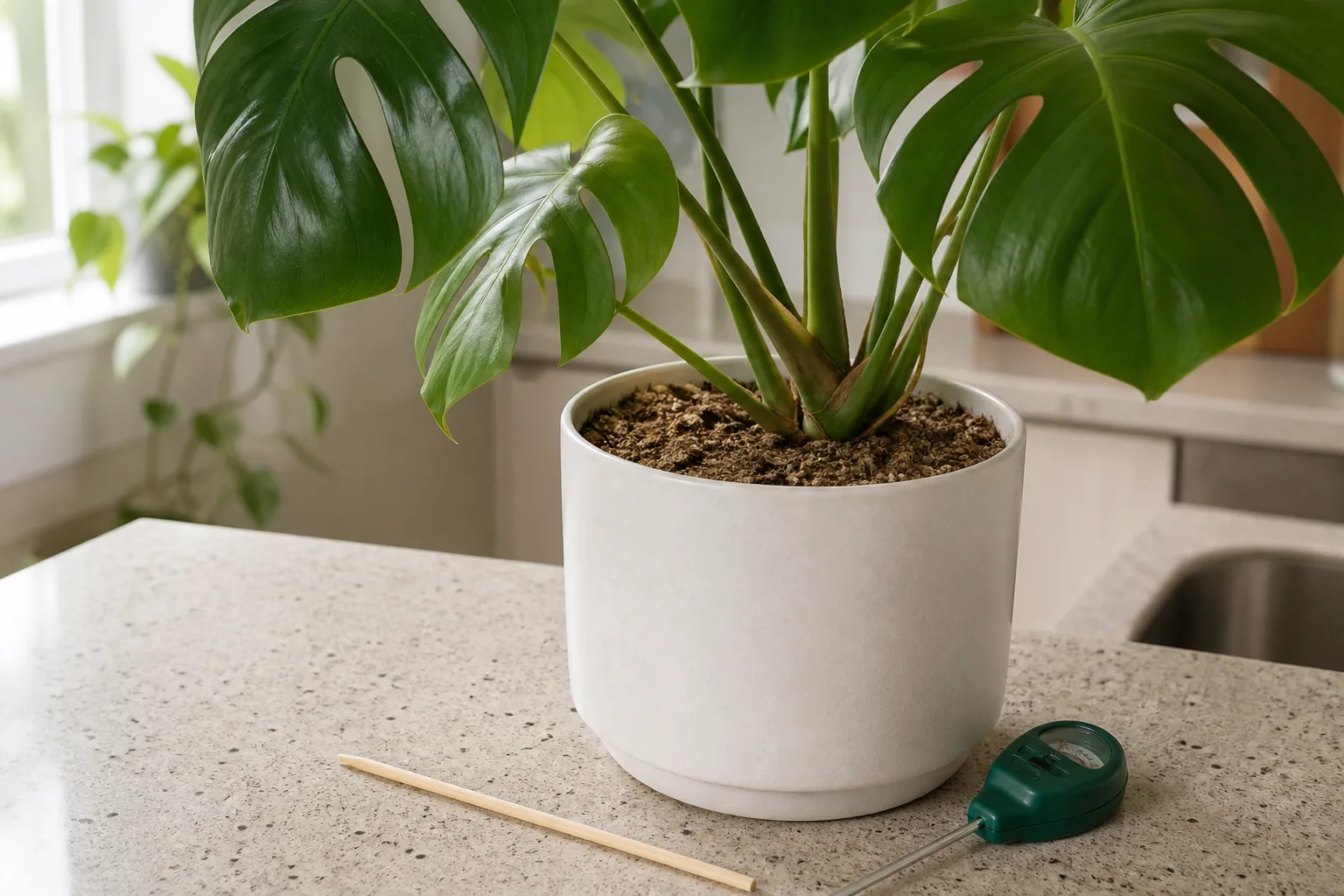
Before you pick up a can, run three quick checks. Together they beat any fixed interval and catch problems early.
Finger, Skewer, and Root-Zone Dry Checks
Push a finger or dry wooden skewer 2 inches into the mix near the pot wall—not just the surface. If it comes out with damp crumbs clinging, wait. Aloe needs water only when the probe is clean and dry at depth. Surface dustiness lies often; chunky succulent mixes can look dry on top while the center still holds moisture. NC State’s “completely dry between waterings” refers to this root zone, not the top quarter inch. In small pots under 4 inches, dry-through often means the whole volume is ready; in deep plastic pots, the center may lag—another reason calendars fail. If you are unsure, wait two more days; aloe tolerates brief drought far better than another soak on already-moist mix.
Pot Weight and the Mid-Leaf Squeeze
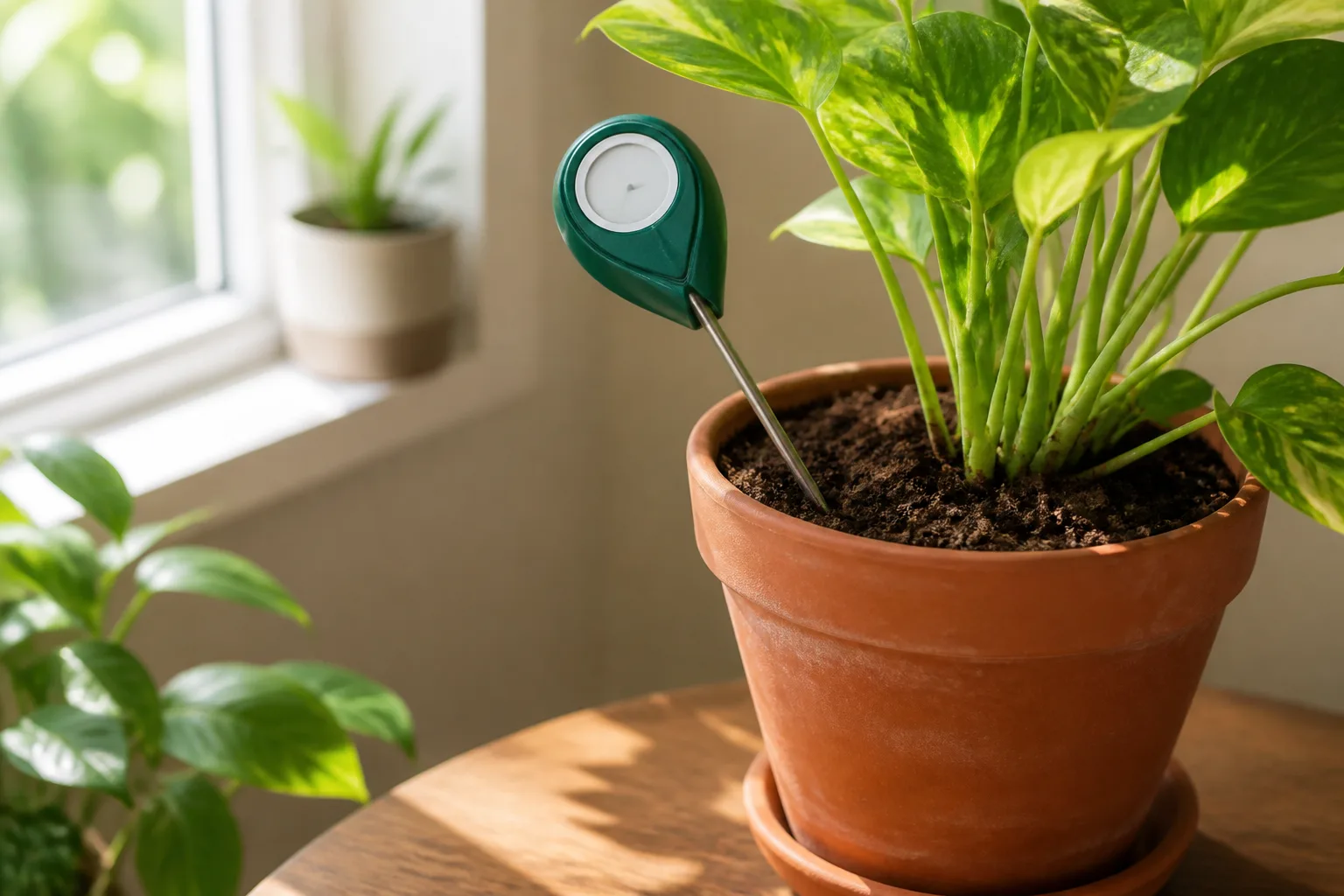
Lift the pot after a fresh watering and again a week later. You will learn the light “empty” weight versus the heavy “wet” weight. When the pot feels light and the skewer is dry, it is time to soak. Squeeze a middle leaf (wear gloves if you have latex sensitivity—aloe sap can irritate skin). Firm and thick means stored water is adequate. Slightly flexible and thinner means thirst. Soft, mushy, or translucent means too much water or rotting roots—do not water until you diagnose (overwatering on Aloe vera). Moisture meters are optional hints only; probes often read “wet” in gritty mix long after aloe could safely be watered, which pushes beginners toward rot.
Season-by-Season Watering Frequency
Season changes growth rate, transpiration, and how fast pots dry. Adjust frequency, not the soak-and-dry method itself.
Spring and Summer: Active Growth
From March through September in most Northern Hemisphere homes, aloe pushes new leaves and offsets. Bright light, warm rooms, and active growth pull water faster. Typical indoor aloes in 4- to 6-inch terracotta on a sunny sill need water about every 14 to 21 days. Large plastic pots in air-conditioned rooms may stretch to 3 weeks. Check weekly; water only when tests say dry. Newly purchased store aloes often arrive in peat-heavy mix that holds water longer—expect slower dry-down until you repot into grittier soil. The Missouri Botanical Garden recommends watering moderately in spring, summer, and fall for container plants, with plants outdoors for summer protected from rain so you control intake (MBG Plant Finder). Summer outdoor heat can shorten the cycle; summer outdoor rain can eliminate the need to hand-water for weeks—watch saturation, not the date. If offsets (pups) crowd the pot, the cluster drinks faster and dries unevenly; division or a slightly larger pot stabilizes the rhythm.
Fall and Winter: Slow Dormancy
Growth slows as light and temperatures drop. Overwatering in winter is the classic slow drowning: the mix stays wet for weeks while the plant barely uses water. From October through February, most indoor aloes need water every 4 to 6 weeks, and some in cool, low-light rooms can go 8 weeks if leaves stay firm. Penn State advises reducing watering so soil is barely moist during dormancy—enough that leaves do not shrivel, not enough to stay damp (Penn State Extension). MBG says reduce winter watering to the minimum (MBG Plant Finder). If you watered every two weeks all summer, cut frequency sharply by December even if the plant still looks fine—wet roots in a dark room rot quietly. Heating vents and fireplace proximity can paradoxically speed winter dry-down near the pot even while growth is slow; a plant on a hot sill may still need checks every two weeks even in January.
How to Water Aloe Vera the Right Way
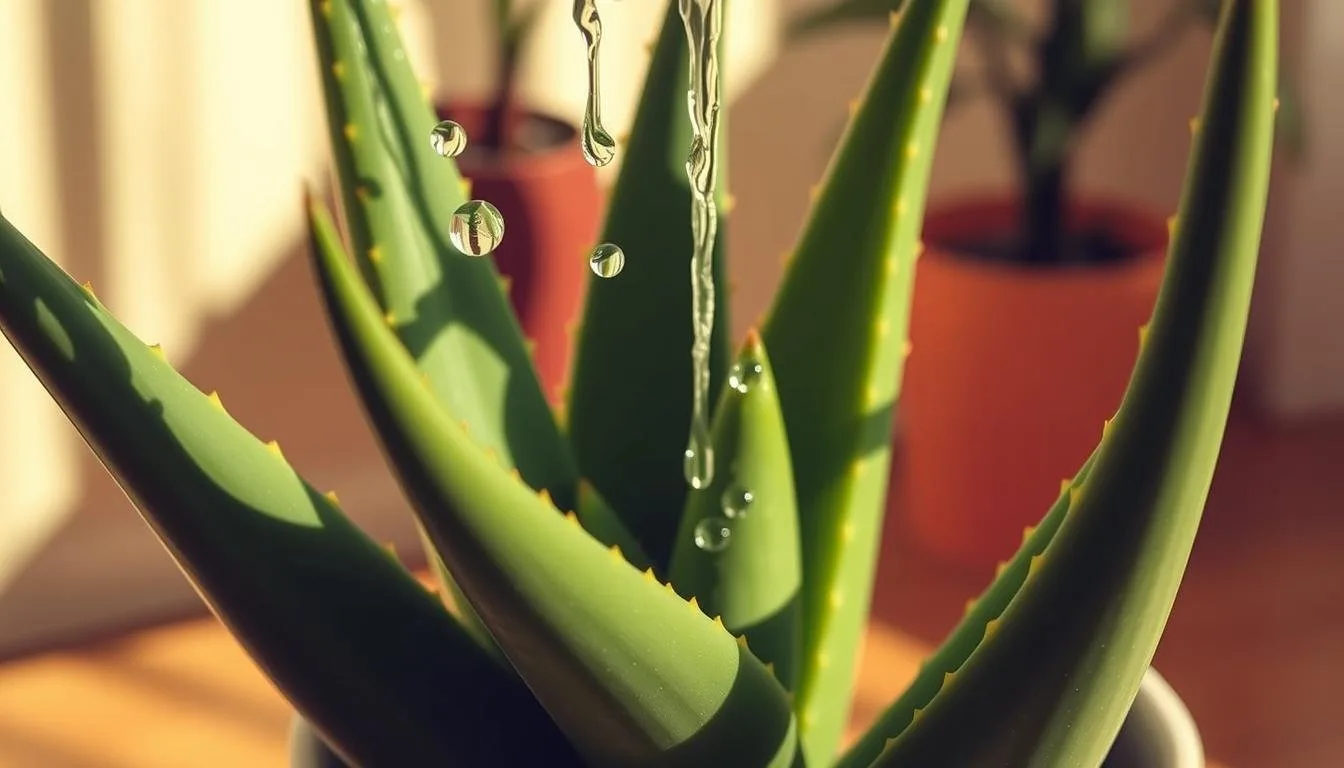
When tests say dry, water thoroughly once rather than sprinkling daily. Pour slowly at the soil surface—not into the leaf rosette—until water runs from the drainage hole. Let the pot finish draining for 10 to 15 minutes, then empty the saucer. Never leave standing water; Penn State warns aloes must never sit in water (Penn State Extension). One deep soak rewets the entire root ball; frequent sips keep the top moist and the bottom unpredictable. Use room-temperature water; cold shocks can slow root uptake in already-stressed plants. Skip fertilizer in the same session unless you are on a planned feed cycle—our Aloe vera fertilizer guide covers sparse feeding that matches low water needs. If water runs straight through without absorbing, the mix may have dried into a hydrophobic block—set the pot in a shallow tray and water twice in ten minutes, or bottom-soak once, then return to top watering next cycle.
Top Watering vs Bottom Watering for Aloe
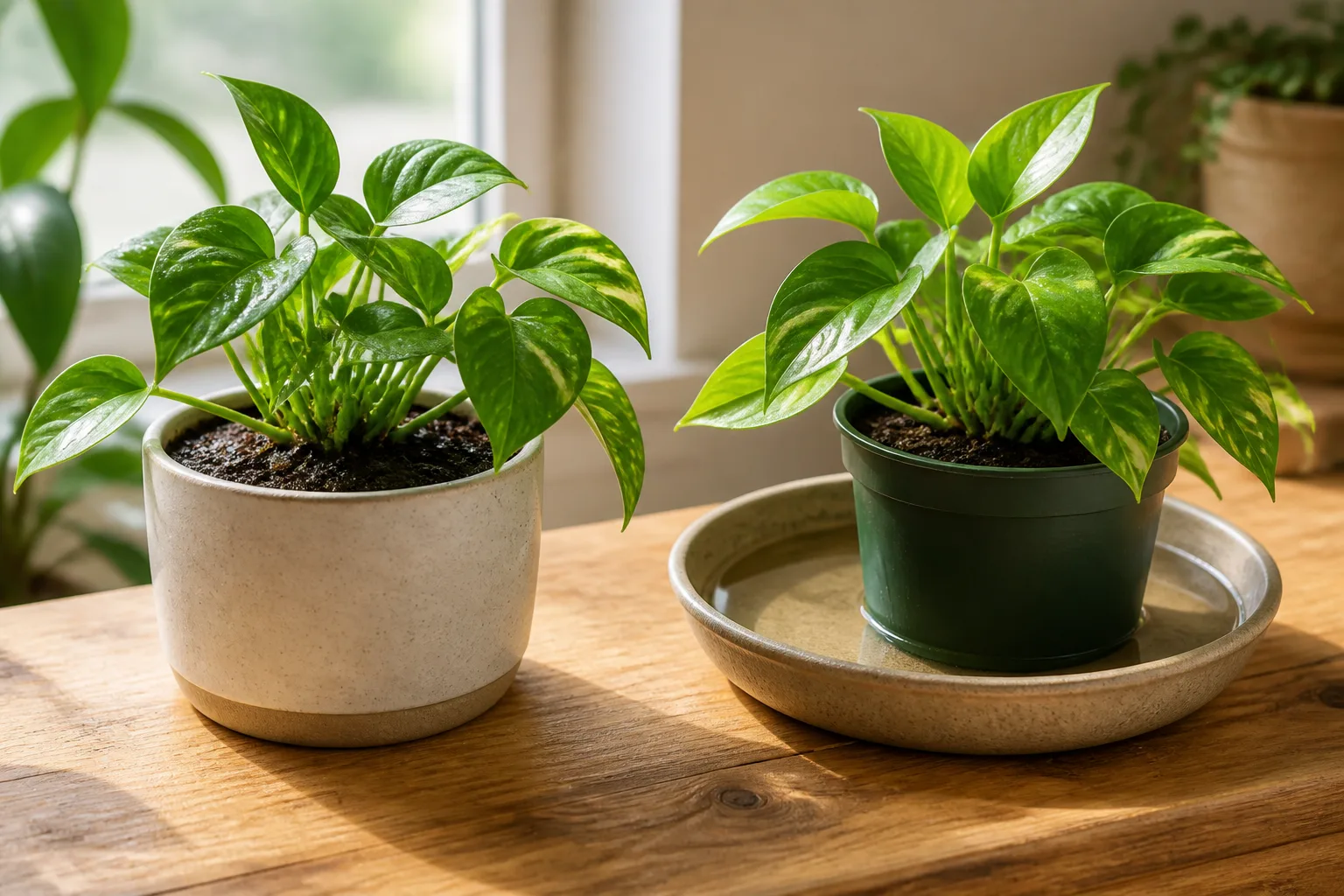
Top watering is the better default for aloe. It mimics natural rain, lets you see water absorb evenly, and flushes salts that accumulate in succulent mix. Bottom watering—setting the pot in a tray of water so mix wicks upward—can work for some foliage plants but often under-wets chunky cactus mix in tall pots, leaving dry pockets while the saucer looks full. It also keeps the bottom layer wet longer, which aloe roots dislike. If you bottom-water occasionally, still top-water every few cycles to flush minerals. Do not mist aloe leaves; humidity does not replace soil moisture, and wet rosettes encourage rot in tight centers. For broader houseplant technique comparisons, see our guides on how to water indoor plants and top watering vs bottom watering.
When Your Aloe Looks Unhappy: Too Much vs Too Little Water
Unhappy leaves usually trace to water timing, not mysterious “aloe disease.” Compare symptoms before you change anything.
Signs You’re Overwatering
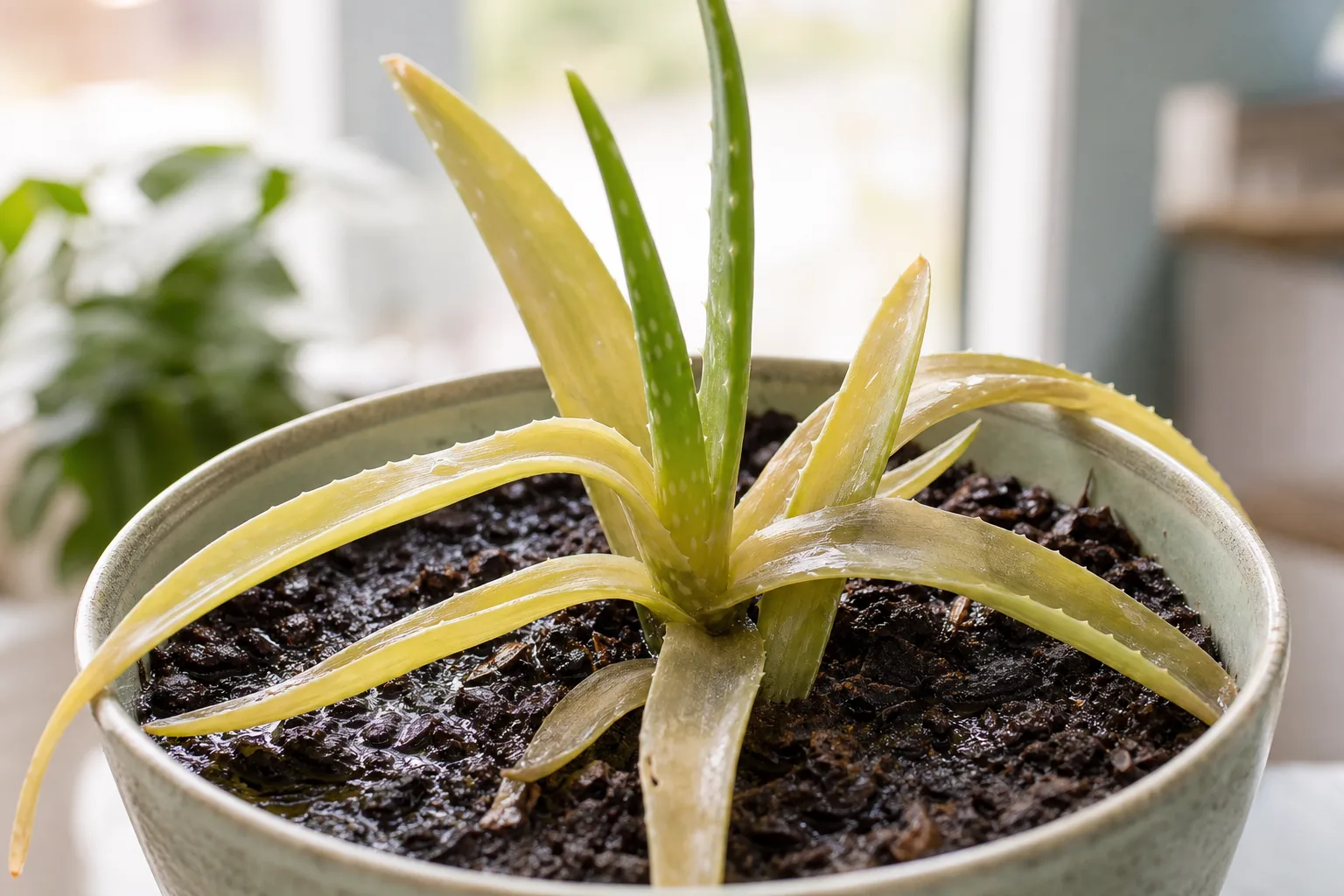
Overwatered aloe vera shows soft, yellowing leaves—often starting at the base—plus bloated or translucent tissue. Soil stays wet for days, may smell sour or grow white mold, and the pot feels heavy long after watering. Lower leaves pull off easily; the stem base may feel soft. These patterns match root rot on Aloe vera. NC State lists overwatering as a primary cause of rotting roots (NC State Extension). First fix: stop watering immediately, confirm dryness with a skewer, and inspect roots if multiple signs align. Do not “give it a little drink” to perk it up—that deepens rot. Move the pot to brighter, airy conditions so mix dries faster, but avoid blasting direct hot sun on a stressed rosette. If only one lower leaf yellows on otherwise firm tissue, you may have caught the problem early—still skip the next scheduled watering and re-test at depth.
Signs Your Aloe Is Actually Thirsty
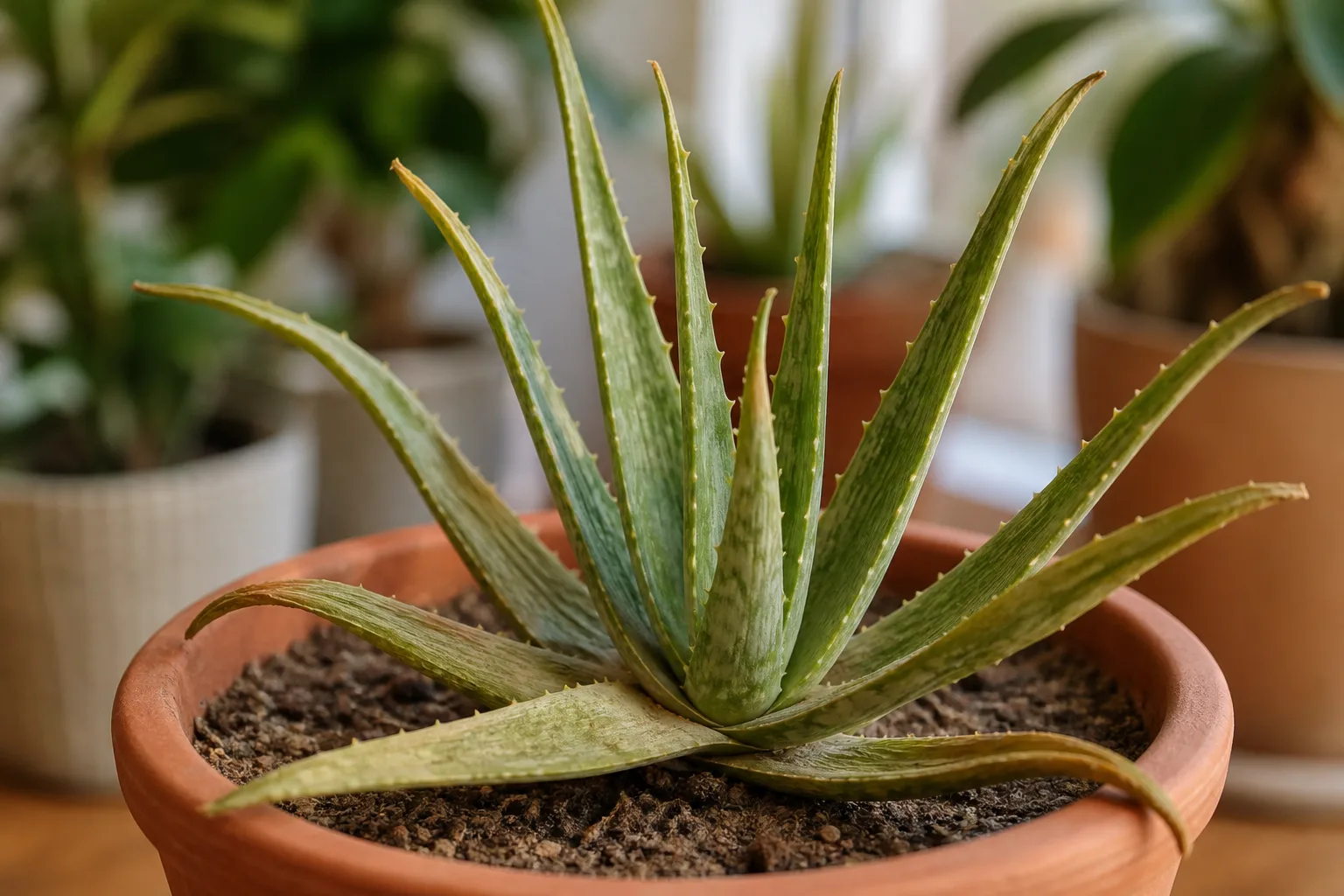
Underwatered aloe keeps upright structure longer than most plants but eventually shows thin, wrinkled, or slightly curled leaves, often with dry brown tips on the oldest foliage. Soil pulls away from the pot edge; the pot feels very light. Leaves may feel flat when squeezed instead of plump. Increase frequency slightly—not daily—and resume full soak-and-dry once. One deep watering usually plumps leaves within days because aloe refills from roots quickly when they are still healthy. See underwatering on Aloe vera for step-by-step recovery. Chronic underwatering in blazing summer windows is less common than overwatering but happens when owners fear rot and never soak deeply enough.
Pot, Soil, and Light Choices That Change Timing
Watering frequency is really a dry-down speed question. Terracotta breathes and dries faster than plastic or glazed ceramic—often shaving several days off the interval. Small pots dry faster than oversized ones where wet mix surrounds a tiny root ball. Fast-draining cactus or succulent mix—not heavy all-purpose peat—is non-negotiable; Penn State recommends coarse, well-draining mix and never allowing the plant to sit in water (Penn State Extension). Our Aloe vera soil guide covers grit ratios and repot timing. Light drives water use: the same aloe under a grow light dries faster than one in a north window. Match watering checks to Aloe vera light placement—dim rooms need longer gaps, not sympathy pours. Double pots and cachepots without drainage holes trap water even when the inner pot drains—always lift the inner container out after watering or drill outer drainage. A decorative pot with no hole is a slow rot trap no schedule can fix.
Outdoor Aloe, Summer Rain, and Winter Protection
Many growers move potted aloe outdoors for summer. Bright outdoor light often increases water need—but rain replaces hand watering on open patios. Shelter pots under eaves or move them under cover when storms arrive so you control saturation (MBG recommends protecting outdoor summer plants from rain). In USDA zones 10–12, in-ground aloe in well-drained beds rarely needs supplemental water except in extreme drought. Below zone 10, bring pots inside before nights drop below 50°F (MBG Plant Finder). Winter rain on cold, slow-drying outdoor pots is a rot risk—gravel mulch improves surface drainage but does not replace a drainage hole. For a full care overview including placement, see Aloe vera care.
Fixing a Water-Damaged Aloe Vera
If overwatering advanced to rot but the center crown is still firm, recovery is often possible. Unpot, trim dark, soft, slimy roots with a sterile blade, let cuts callous 2 to 5 days, then repot in fresh fast-draining mix in a clean pot with drainage. Wait 5 to 7 days before the first light soak. Hold fertilizer until new firm growth appears. Work on newspaper, discard infected mix—not the compost pile if mold is present—and sterilize the old pot with diluted bleach if reusing it. If the stem base is mushy or leaves detach at a wet crown, salvage healthy offsets if present and discard the rotted mother plant. Prevention beats surgery: when in doubt, wait an extra week rather than water early—Penn State’s “err on the side of underwatering” applies especially to aloes (Penn State Extension). After repotting or division, the same waiting rule applies; details live in our Aloe vera repotting guide. Expect slower new leaf production for several weeks after rescue—do not interpret slow growth as thirst and resume heavy watering.
Conclusion
How often to water aloe vera is not a number you memorize—it is a dry-down cycle you read with your finger, skewer, pot weight, and leaf squeeze. Soak deeply when the mix is dry through, drain fully, stretch intervals in winter, and shorten them in bright summer growth—always confirming with tests, not Tuesdays on a calendar. When leaves look wrong, compare overwatering and underwatering signs before you change anything, and fix pot, soil, and light if the mix never dries. Get those three variables right and aloe becomes the forgiving plant everyone promises; get watering wrong and even a tough succulent rots quietly in a wet pot. For deeper troubleshooting on rot, yellow leaves, and soak technique, keep our Aloe vera watering hub bookmarked—and water only when the plant, not the schedule, says yes.