Can You Water Plants With Tea? A 2-Month Test Shows
A plant surviving on tea water does not prove tea helped. See what brewed tea can and cannot do, safe use steps, and when to choose complete fertilizer.
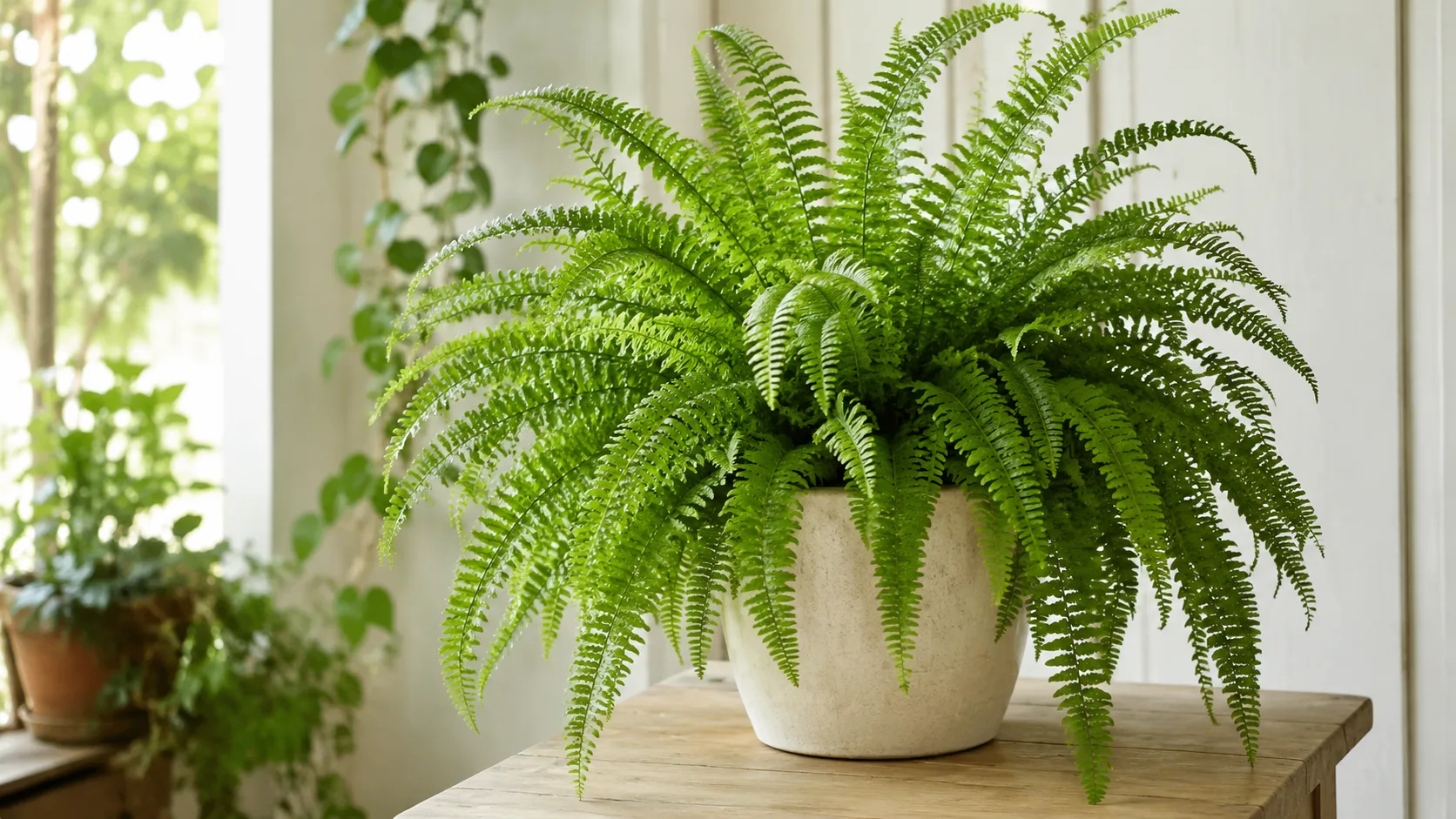
Yes, a houseplant can remain healthy when plain, cooled tea occasionally replaces a watering. That does not mean tea made it healthier. A report of two Boston ferns staying green for two months—one receiving tea, the other plain water—shows that both plants tolerated their routines; without measured growth, repeated plants, or a controlled brew, it cannot tell us whether tea helped.
That distinction matters if you are deciding whether to pour a leftover cup into a pot. Ordinary tea can supply moisture, but its dissolved compounds vary with the leaves and brewing method, so it is not a dependable fertilizer recipe. Keep normal watering decisions tied to the plant and its soil, and treat tea as an optional one-time experiment rather than a new care schedule.
What a Two-Month Trial Can—and Cannot—Prove
Two months is long enough to notice obvious decline in a sensitive plant, but it is a short window for judging steady growth, root health, or whether a mild input changed anything. “Still thriving” is a visual impression, not a measurement: a plant can look green while producing little new growth, and a fern can naturally send out longer fronds as it settles into a brighter or more humid spot.
A useful comparison needs more than one plant on each side, the same species and starting size, similar light and temperature, the same potting mix and pot size, and a defined watering rule. The tea recipe also needs to stay the same. If one plant receives a herbal blend for most of the trial and chamomile near the end, you cannot separate the effect of the plant care from the change in brew.
Without those controls, the fairest conclusion is modest: the tea-watered fern survived, and the plain-water fern survived too. The observation does not show that tea is harmful, but it also does not show that tea caused the longer fronds or improved health. For a home grower, that is enough reason not to replace a routine that is already working.
Does Tea Help a Plant, or Does It Simply Provide Water?
When you pour a mug of tea into potting mix, the clearest input is still water. The plant may absorb water through its roots and remain hydrated just as it would after plain water; any growth over the following weeks could come from adequate light, warmth, root space, existing nutrients in the mix, or the plant’s natural growth cycle. If the tea happens to contain dissolved compounds, their amount is unknown unless the brew is chemically analyzed.
That makes two claims easy to confuse: “the plant can tolerate this liquid” and “this liquid improves the plant.” The first is plausible for a small amount of plain, room-temperature tea. The second requires a fair comparison and a result that matters, such as more new growth, stronger roots, or better flowering—not simply a plant that remains green.
Extension guidance treats watering and feeding as related but separate jobs. UF/IFAS recommends watering most indoor plants thoroughly when needed, letting excess drain, and not leaving pots standing in water; it also describes houseplant fertilizer as a complete product used according to its label rather than an improvised dose (UF/IFAS Extension).
Why a healthy plant may stay healthy without a tea benefit
Potting mixes often contain some nutrients when they are fresh, and a plant may have enough stored resources to maintain leaves for months even if it is not actively growing. A Boston fern that receives suitable light, consistent moisture, and ordinary indoor warmth can look fine through a short trial because its core needs are being met—not because the water contains tea.
Growth also depends on season and conditions. Many houseplants slow down when light levels fall or temperatures change; a feed added during that pause is not automatically used, and a change in frond length may reflect light or humidity more than nutrient supply. That is why a visual comparison should record new growth and environment, not just whether the plants look alive at the end.
What Is in Brewed Tea—and Why the Dose Is Unpredictable
Tea is a plant infusion, not a standardized plant food. A strong cup made from a tablespoon of loose leaves is different from a lightly steeped bag, a second brew, black tea, green tea, or a caffeine-free herbal blend. Steeping time, water temperature, amount of leaf, and dilution all change the liquid, so “one cup of tea” does not describe a consistent nutrient concentration.
Tea also carries compounds extracted from the leaves, but their presence is not the same as a balanced supply of the nutrients a potted plant needs. A reliable fertilizer identifies its nutrient analysis and gives directions for dilution and application. A kitchen brew has no guaranteed nitrogen, phosphorus, or potassium ratio, and it should not be used to correct a diagnosed deficiency or to change potting-mix pH.
Claims that tea is naturally acidic or that certain houseplants “love tea” skip an important step: the pH of a drink does not tell you how it will change the root zone in a particular pot. Potting media, irrigation water, and fertilizer all influence that environment. If a plant needs a specific pH, measure the growing medium and use a product designed for that purpose rather than guessing with tea.
Brewed Tea Is Not Compost Tea
The phrase “tea for plants” can describe two different liquids. Tea from a mug is made by steeping tea leaves in drinking water. Compost tea or compost extract is made by steeping finished compost in water; it has a different starting material and a different purpose, and it is not interchangeable with black tea, chamomile, or leftover breakfast tea.
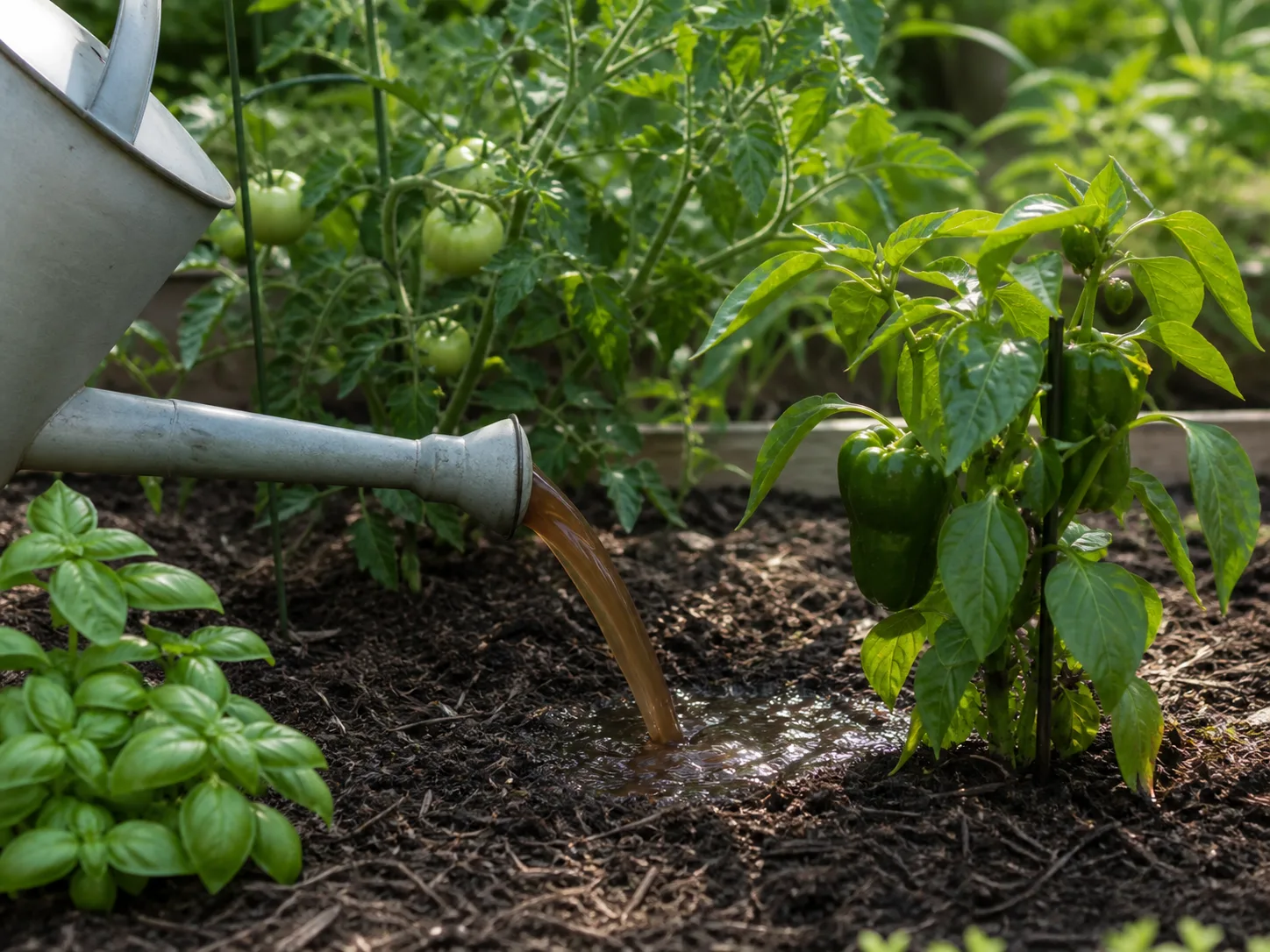
That distinction helps explain why online advice can sound contradictory. One page may discuss using tea leaves as a small compost ingredient, while another means a brewed liquid poured on a houseplant. Neither use establishes that a cup of tea is a complete fertilizer, and compost-based brews have their own preparation and safety considerations.
How a real compost extract differs
Compost extract begins with finished compost, which contains decomposed organic matter and a varied nutrient and microbial mix. Its composition depends on the compost and the way it is prepared; it should not be treated as a measured fertilizer unless a product is tested and labeled for that use. If you are curious about that separate practice, see the guide to compost tea.
For a single houseplant, you do not need to make a microbial brew to use up a teabag. Let the leaves cool, then put appropriate loose leaves into a compost system if you have one. Composting the leaves is a clearer waste-reuse choice than treating a mug of tea as an all-purpose plant tonic.
Is It Safe to Water a Houseplant With Tea?
For most established houseplants, a small amount of plain tea that has cooled to room temperature is unlikely to cause immediate damage when it replaces—not adds to—a watering the plant already needs. The bigger everyday risks are watering a pot when the soil is still wet, leaving the roots in drained water, or using a drink with extra ingredients. UF/IFAS advises watering according to the plant and container, letting water run through drainage holes, and avoiding standing water in the saucer (UF/IFAS Extension); BHG likewise recommends checking the mix before watering and emptying runoff rather than leaving a pot submerged (Better Homes & Gardens).
If your plant is already stressed, has soggy soil, or is growing in a pot without drainage, do not use tea as a rescue treatment. The first step is to identify whether the problem is dryness, excess moisture, poor light, or root damage. Changing the liquid while leaving the cause untouched can add another variable and delay a useful fix.
Tea to keep out of a pot
Skip tea that contains milk, cream, sugar, honey, syrup, or other food additions. Those ingredients are not part of a controlled plant-watering method and can leave residue in a pot; there is no reason to introduce them when plain water already does the hydration job. Avoid tea that is hot, very concentrated, oily, or blended with additives whose ingredients you cannot identify.
Do not pour a tea serving on top of a scheduled watering. First check whether the plant needs water; if the potting mix is damp, wait. A saucer full of tea is not a useful fertilizer reservoir. Let the pot drain freely and empty the cachepot or saucer after watering so the roots are not left sitting in liquid.
If You Want to Try It, Use a Low-Risk Method
Use a single small trial, not a recurring weekly treatment. Choose an established plant in active growth with healthy roots and a pot that has drainage holes. Prepare plain tea without milk, sugar, honey, lemon, oil, or added flavoring, then let it cool completely to room temperature. You do not need a special strength or an overnight steep; a normal, unsweetened cup is enough to test tolerance, though it will not give a repeatable nutrient dose.
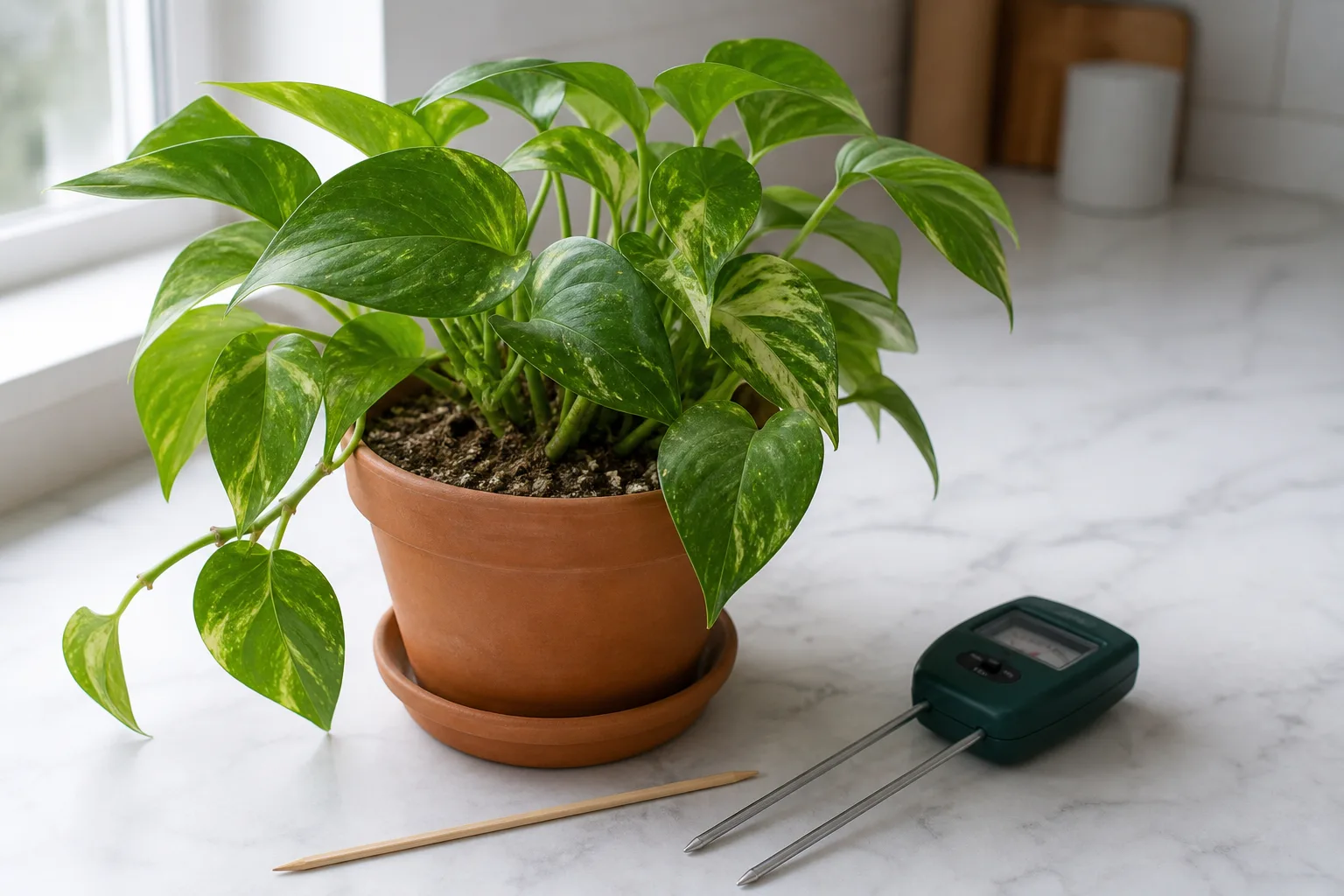
On the day the plant is due for water, check the potting mix first. If it is dry enough for that plant’s normal watering interval, pour the cooled tea slowly over the soil until a little drains from the bottom. Do not wet the leaves deliberately, do not leave runoff in the saucer, and do not add extra liquid just to make the experiment more dramatic. On the next watering, go back to plain water.
For a fern or another moisture-loving plant, “moist” still does not mean constantly waterlogged. UF/IFAS advises letting the upper inch of mix dry for many houseplants, while noting that species and containers change the routine; follow the care needs of your plant rather than applying that general rule to every pot. BHG also recommends checking the soil rather than watering by calendar alone (Better Homes & Gardens).
Make the comparison fair
If you want to know whether tea made a difference, compare two similar plants only if you can keep their conditions nearly identical. Start with plants of the same species and similar size, place them in the same light and temperature, use the same potting mix, and avoid moving or repotting either one during the test. If you have only one plant, use a before-and-after record and accept that it cannot prove cause and effect.
Keep every other part of care stable: watering trigger, fertilizer schedule, pruning, rotation, and any misting or humidity routine. Do not feed only the tea plant or spray one plant more often. Change one thing at a time so that a change in leaf count or frond length has a chance of meaning something.
Use a fixed end date and a fixed tea recipe if you are comparing liquids. Keep the tea type, amount of leaf, steep time, and temperature the same each time. A result from black tea cannot automatically be applied to chamomile, mint, or a scented blend because the brew itself changed.
What to record during the trial
Before the first watering, take a photo from the same angle and note the number of new leaves or fronds, approximate plant height, pot size, light exposure, and how long the mix typically takes to dry. Repeat the photo and notes every week. A ruler beside one new frond is more useful than relying on a memory of whether the plant looks “lusher.”
Record each watering date and what went into the pot, then note yellowing, browning, wilting, odor, visible residue, or changes in soil moisture. If both plants remain healthy and grow at roughly the same pace, the practical takeaway is that tea offered no clear advantage under your conditions. If the tea plant declines, stop the trial and return to plain water while you check drainage and roots.
Which Plants Might Tolerate Tea—and Which Should Skip It
There is no dependable universal list of plants that benefit from tea water. A plant’s response depends on its species, growing medium, how often it is watered, the brew, and whether it is actively growing. Some established plants may tolerate an occasional cup without any visible change; that is a tolerance claim, not proof that they prefer it.
If you are curious, start with a common, healthy foliage plant that already grows well in your home and is not sensitive to changes in moisture. Avoid seedlings, fresh cuttings, recently repotted plants, plants with root problems, and valuable or delicate specimens. These are poor candidates for an experiment because small disturbances can obscure what is happening or cause avoidable stress.
Plants that need specialized water or tightly managed growing conditions should stay on their established routine. Carnivorous plants, orchids in bark, propagation jars, and plants grown semi-hydroponically have different root environments; an improvised tea brew is not a substitute for their specific water and feeding requirements. For a collection, plain water matched to the plant’s needs is the simpler baseline.
Why “ferns like tea” is not a care rule
Ferns are often described as tea-friendly because some prefer consistently moist conditions and many tolerate mildly acidic growing media. Those traits do not mean a fern needs tea, that tea reliably acidifies its pot, or that every fern responds alike. A Boston fern still needs suitable light, moisture, drainage, humidity, and a sound potting mix; tea cannot compensate for a root zone that stays soggy or dries out completely.
The species also matters. “Fern” covers plants with different growing habits and tolerances, so an observation about one Boston fern does not establish a rule for maidenhair fern, bird’s-nest fern, or a staghorn mounted on a board. Keep tea out of the routine if your fern has damaged roots, has been recently divided, or is already showing stress. Fix the growing conditions first, then decide whether a low-stakes comparison is worth doing.
Signs the Tea Experiment Is Not Helping
Stop using tea if the plant develops a sour or unusual smell from the pot, the mix stays wet longer than usual, leaves yellow in combination with persistently damp soil, or new growth stalls. These signs do not diagnose tea as the cause by themselves, but they tell you to pause the experiment and check the basic conditions. Look at drainage holes, the saucer, the texture and moisture of the mix, and whether the plant is receiving enough light for active growth.
White crust on the pot or soil surface can have several causes, including minerals from water and salts from fertilizers. Do not respond by adding more tea or scraping the surface without checking the underlying issue. UF/IFAS notes that excess salts can accumulate in container media and damage roots; if the pot is draining well and the plant’s instructions allow it, an occasional thorough flush with plain water can move some salts out of the mix (UF/IFAS Extension).
What to do if you already watered with tea
If it was one small dose of plain, cooled, unsweetened tea and the pot drains normally, there is usually no reason to repot or flush immediately. Resume plain water at the next time the plant actually needs it, and watch for ordinary changes in the leaves and soil. One use is not a meaningful plant-food program, so avoid escalating the dose to try to force a result.
If you used tea with milk, sugar, honey, or syrup, remove any liquid sitting in the saucer and let the pot drain. If the mix remains wet or smells sour, do not add more water; improve airflow around the pot and check the root zone as it dries. For a larger amount of sticky drink or a pot without drainage, replacing contaminated mix may be more sensible than repeatedly flushing a container that cannot drain.
Better Ways to Reuse Tea and Feed Houseplants
If your goal is hydration, use plain water and water when the plant’s mix and species indicate it is time. The watering method matters more than the source of a leftover beverage: water thoroughly, let excess drain, and empty the saucer. Room-temperature water also avoids a sudden temperature difference around the roots; UF/IFAS recommends room-temperature water for houseplants (UF/IFAS Extension).
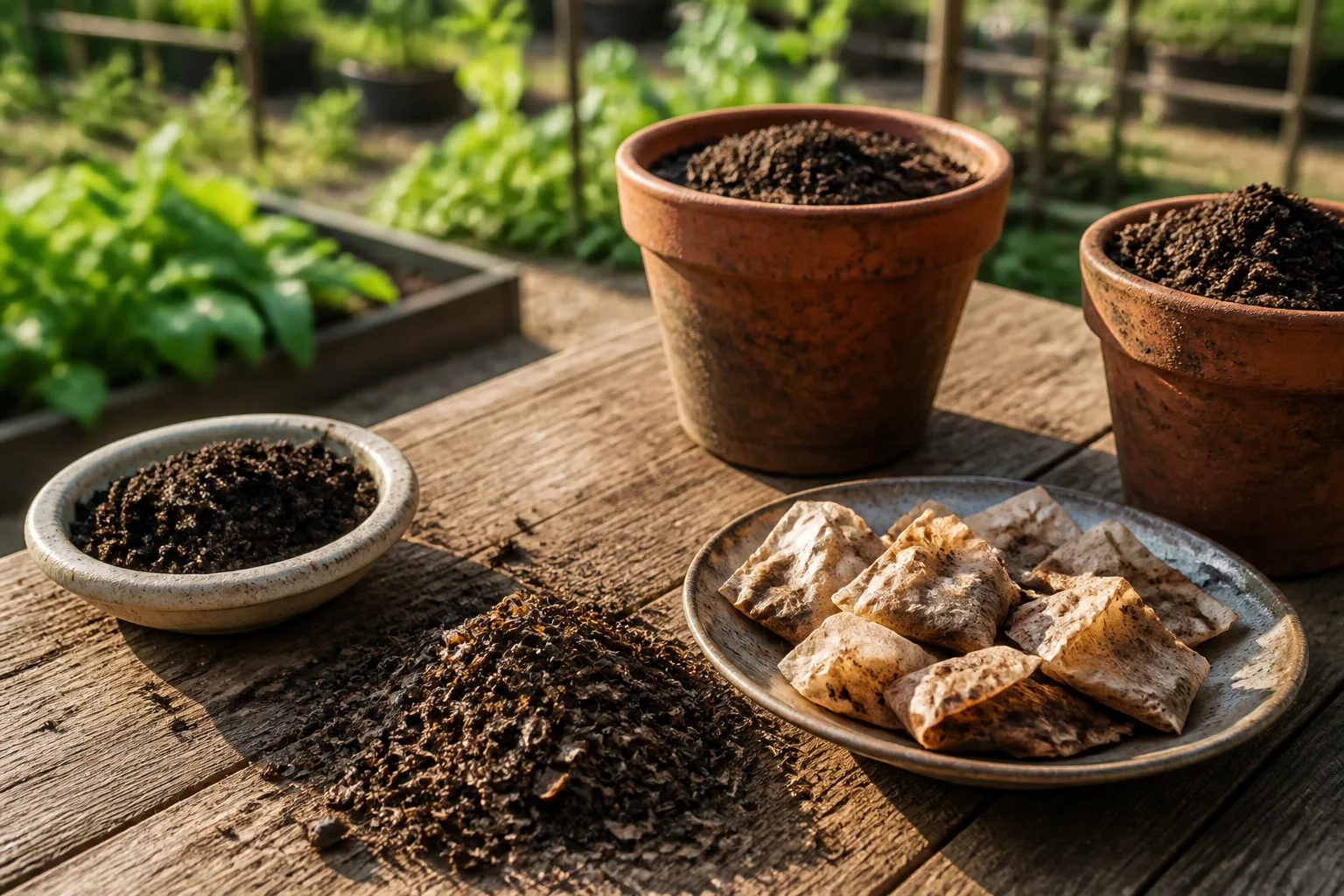
If your goal is nutrition, choose a complete houseplant fertilizer with a labeled nutrient analysis and follow its dilution and timing directions. University of New Hampshire Extension explains that houseplant fertilizers vary in nutrient ratios and that excessive application can cause soluble-salt buildup; use a product intended for houseplants and feed only when the plant is actively growing (UNH Extension). A precise label is more useful than guessing what a cup of tea delivered.
If your goal is to waste less, compost used tea leaves rather than burying a whole bag in a pot. Gardening Know How notes that tea bags can contain synthetic material and advises separating the leaves when the bag is not made from natural fibers (Gardening Know How). Keep the leaves free of dairy and sweeteners, and check your composting system’s rules for bags, staples, and strings.
Compost spent leaves instead of burying the bag
Open tea bags if you do not know what the material is made from, remove staples and tags, and add only the leaves to compost. If you do not compost, discard the bag rather than pushing it into a houseplant pot, where it can sit against the roots without providing a measured benefit. A small amount of loose leaves mixed into an outdoor compost pile is easier to manage than a thick layer left on the surface of potting mix.
That gives each use a clear job: plain water hydrates, complete fertilizer supplies a controlled nutrient dose, and compost handles the spent leaves. Brewed tea can be an occasional substitute for water when the plant is due for a drink, but a two-month survival story is not evidence that it is a superior way to grow houseplants.
Conclusion
A plant can stay green after two months of tea watering, but that result alone does not show the tea helped. One cup may hydrate a plant; it is not a predictable, complete fertilizer, reliable soil acidifier, or cure for poor care. If you try it, use plain cooled tea once on a healthy, established plant that needs water, keep the rest of its care steady, and compare measurable growth with a similar plain-water plant. For routine care, use plain water when the mix needs it, a labeled complete fertilizer when the plant is actively growing, and compost for the leaves left in your cup.