25 Types of Yucca Plants for Indoors and Outdoors: A Guide
Compare 25 types of yucca plants by size, hardiness, leaf sharpness, indoor fit, and care needs, then choose a species for your home or garden setting.
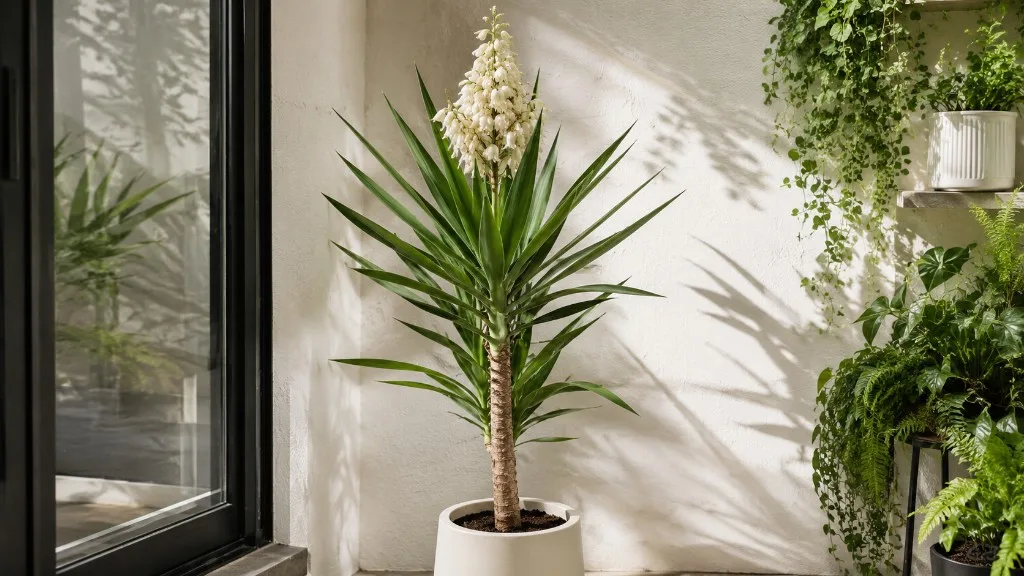
A yucca can be a compact prairie rosette, a spiky border plant, a blue-leaved desert tree, or a soft-tipped indoor cane. Those forms do not share the same winter tolerance or best use. Before choosing from the many types of yucca plants, decide where it will live, how much space it can claim at maturity, and whether the site stays dry in winter.
For most homes, the spineless yucca, Yucca gigantea (still widely sold as Y. elephantipes), is the practical indoor choice. For cold gardens, start with Y. filamentosa or Y. glauca. For a sculptural dry-landscape specimen, compare Y. rostrata, Y. elata, and Y. brevifolia—but check mature dimensions before planting near a path, pool, retaining wall, or foundation.
How to choose a yucca for your space
Yuccas are evergreen perennials, shrubs, or trees in the asparagus family. The genus includes roughly 40 to 50 American and Caribbean species, with a much wider range of size and cold tolerance than one care label suggests. One can work as a houseplant while another needs open sky, intense light, and dry outdoor soil. NC State places Y. gigantea in warm zones 10–12 and Y. filamentosa in zones 4–10; the word “yucca” alone does not predict winter survival. NC State Extension: Yucca gigantea, NC State Extension: Yucca filamentosa
Start with the botanical name, not just the nursery sign. “Spanish dagger” can refer to several species, and spineless yucca is still commonly tagged with an older name. Hesperoyucca whipplei may appear in older references as Yucca whipplei, although it is now placed in a separate genus. Keep the full label or photograph it before looking up size and hardiness.
Match the plant to its final setting. A short nursery plant may develop a flower stalk several feet high, while a trunk-forming species can keep growing for decades. Use mature height and spread as your spacing guide, including offsets. Published dimensions are ranges; climate, cultivar, water, and age change the final shape.
Form and mature spread matter as much as height
A low rosette and a tall yucca may start at the same size, but they create different space needs later. A stemless type can widen into a colony; a tree-form type needs clearance for its crown and trunk. Near a doorway or seating area, choose a compact, flexible-leaved form and confirm its mature spread.
Choose a soft-tipped cane yucca for a bright room, a cold-hardy rosette for a sunny border, or a compact species for a container. Reserve trunk-forming types for an open, sunny site with dry soil. If the ground stays wet after rain, use a raised mound or choose another plant.
25 types of yucca and where each fits
Zone ranges below are approximate screening tools, not guarantees. Sources differ on lower limits, and a dry, sheltered planting can succeed where an exposed, winter-wet site fails. Garden Design and Gardening Chores illustrate the range of forms and published hardiness estimates. Garden Design: Yucca types and growing guide, Gardening Chores: Yucca varieties
Low rosettes for cold gardens and containers
Low does not mean houseplant. Most of these yuccas want outdoor sun and fast drainage; a small rosette may fit a bright patio pot but not a dim shelf. They suit rock gardens, dry borders, prairie-style planting, and small spaces.
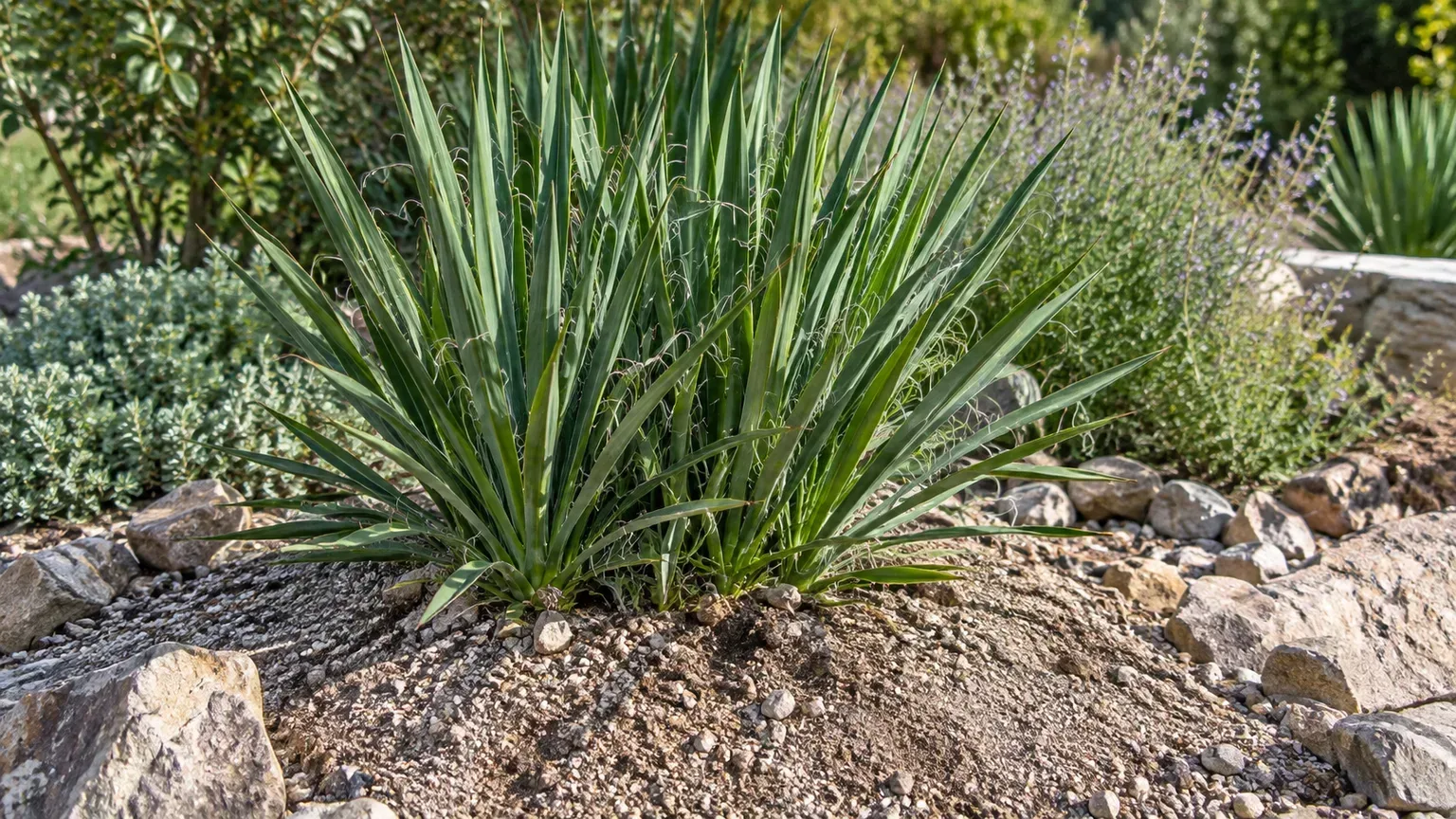
Adam’s needle (Yucca filamentosa): A dependable cold-climate choice, it forms a ground-level rosette with curly leaf-edge filaments and a tall summer flower stalk. NC State lists zones 4–10 and recommends full sun or partial shade with good drainage; allow several feet for a mature clump. It is an outdoor perennial, not a low-light houseplant. NC State Extension: Yucca filamentosa
Soapweed or plains yucca (Y. glauca): This small, cold-hardy rosette suits open sun and lean soil better than an irrigated bed. Its stiff leaves work in a dry prairie or gravel garden, but keep the pointed tips clear of paths. Once established, winter wet is a greater concern than summer drought.
Pale-leaf yucca (Y. pallida): Its compact, pale blue-green rosette makes a low accent rather than a trunked specimen. Grow it outdoors in sun and gritty soil in a mild to moderately cold climate. It can fit a container, but still needs strong light and winter drainage.
Creeping dwarf yucca (Y. endlichiana): Recurving blue-green leaves and a short flower stalk distinguish this low grower. Use it in a warm, dry rock garden or bright outdoor container, not as a general-purpose houseplant. Availability and hardiness information are less consistent than for common species, so buy from a nursery that identifies it botanically.
Buckley’s yucca (Y. constricta): Fine upright leaves make a grasslike mound, with a flower spike above the foliage. It suits sunny, well-drained borders in warm, dry regions, but not lawn edges or play areas; narrow blades can still be pointed.
Arkansas yucca (Y. arkansana): This small clumping species, with often fibrous leaf edges, suits a native-style or dry garden better than an indoor pot. Leaf texture varies, and “soft-leaf” does not mean harmless tips. Give it sun, drainage, and less frequent water after establishment.
Harriman’s yucca (Y. harrimaniae): This compact, fibrous rosette fits a trough or rock-garden pocket. Published ranges are around zones 5–9; in a container, use a frost-tolerant pot and keep winter rain from soaking the roots. It needs direct sun and is not an indoor cane yucca.
Narrowleaf yucca (Y. angustissima): Slender leaves form a narrow rosette, while the flowering stalk can rise several feet above it. Often listed for zones 6–9, it suits sunny, sandy or rocky soil. Leave clearance for both pointed leaves and the bloom spike.
Twisted-leaf or Texas yucca (Y. rupicola): Broad leaves twist and curl, giving this compact species a looser outline than rigid-bladed relatives. It works in sunny rock gardens or outdoor containers with excellent drainage and is often listed for zones 7–11. The name describes its shape, not an indoor adaptation.
Chaparral yucca, or Our Lord’s candle (Hesperoyucca whipplei; formerly Yucca whipplei): This close relative is often grouped with yuccas, but is now placed in Hesperoyucca. Its rosette can stay low for years before producing a very tall flower spike, then declines because it is monocarpic. Grow it outdoors in a sunny, dry site; one rosette will not bloom repeatedly. Garden Design
Trunk-forming species for dry outdoor sites
These types become landscape features rather than small accents. Some mature slowly, but a slow-growing tree still needs room for its trunk, crown, and eventual flower stalk. A large outdoor yucca is not a sensible indoor choice simply because it starts in a pot.
Spineless or giant yucca (Y. gigantea, commonly sold as Y. elephantipes): Its softer leaf margins make it the practical indoor choice, but it still needs bright light and a draining pot. NC State places it in zones 10–12 and gives mature outdoor dimensions of roughly 15–30 feet. Keep it frost-free in cold regions and allow for its trunk and offsets outdoors. NC State Extension: Yucca gigantea
Beaked yucca (Y. rostrata): Dense, narrow blue-gray leaves form a rounded crown on a trunk. Published ranges vary from a zone 5 to a zone 7 lower limit, so sharply draining soil matters either way. It is an outdoor specimen, not a houseplant, and its tips need clearance. Garden Design, Gardening Chores
Joshua tree (Y. brevifolia): This branching Mojave Desert tree can reach tens of feet high and wide, far beyond a residential container’s scale. Often listed around zones 6–10, it is best matched to an arid, open landscape with strong sun and fast drainage, not a humid garden or indoor room.
Mojave yucca (Y. schidigera): Its branching trunk and stiff leaves give it a rugged desert silhouette. Sources differ on its cold edge, so use it outdoors in a sunny, dry garden where it can mature without regular irrigation. Its size makes a patio pot temporary, not a permanent solution.
Soaptree yucca (Y. elata): A skirt of old leaves hangs beneath its airy crown, and the tree can outgrow a typical shrub space. It suits sunny, dry outdoor sites and is often listed across zones 6–11. Keep its eventual height and sharp foliage clear of access routes.
Mountain or Schott’s yucca (Y. schottii): This southwestern tree-form species has the scale to anchor an open landscape. “Mountain” does not mean shade or persistently moist soil; it still needs sun and drainage. Use it outdoors, and check local hardiness notes for your elevation and winter rainfall.
Thompson’s yucca (Y. thompsoniana): Similar to beaked yucca but usually smaller and more open, it may develop multiple heads with age. Grow it outdoors in full sun and gritty soil; published profiles place it around zones 5–10. It will not stay miniature in a permanent container.
Faxon yucca (Y. faxoniana): This large species has a dense crown of stiff, pointed leaves and belongs in a spacious dry landscape. Confirm the mature size on the nursery label; then plant it outdoors in sun and excellent drainage rather than trying to keep it as a room plant.
St. Peter’s palm (Y. filifera): Despite the name, this giant yucca is not a palm, and it can exceed the scale of a typical yard. Treat it as a long-term tree for a mild, dry climate, not an indoor plant; leave ample clearance from buildings and hardscape.
Blue yucca (Y. rigida): Stiff, powder-blue leaves make it a striking but hazardous choice near a walkway. Give it full sun and dry soil, with room for the mature crown. Plant in cold regions only where local growers confirm winter survival; a container will not protect a large specimen indefinitely.
Warm-climate, flowering, and color-focused choices
Some yuccas offer a softer or more colorful look, but a common name can hide a large, armed plant. Treat the scientific name as part of the purchase, especially if the plant will sit near a walkway or a place where children or animals play.
Spanish bayonet (Y. aloifolia): Its branching trunk and dense rosettes suit warm or coastal gardens, but pointed leaves can injure passersby. Guides place it around zones 7–11 or 8–11; RHS classifies it as tender in its climate. Grow it outdoors where winter and space suit it, away from paths. Garden Design, RHS Yucca growing guide
Spanish dagger (Y. gloriosa): A short trunk, stiff blue-green crown, and cream flowers make this a hardier outdoor choice than spineless yucca. It is commonly listed around zones 6–11, but has pointed tips. ‘Variegata’ has cream-edged foliage; use it in a dry border or courtyard, not as a houseplant. RHS Yucca growing guide, Garden Design
Banana yucca (Y. baccata): This low, often stemless species is known for fleshy, banana-shaped fruit rather than a tree-like trunk. Grow it outdoors in sun and dry ground; hardiness ranges differ, so ask local nurseries about colder sites. Do not confuse ornamental yucca with yuca, the cassava root crop.
Trecule’s yucca (Y. treculeana): This large, sharp-leaved species is also sold as “Spanish dagger,” a name shared with Y. aloifolia and Y. gloriosa. Ask for the botanical name before buying so you can check its size and safety needs. Grow it outdoors in a warm, sunny, well-drained spot away from traffic.
Blue Boy yucca (Y. desmetiana): Its arching foliage can shift from green to burgundy in strong sun and cool weather. This smaller species is easier to shelter in a container than a giant yucca, but still needs bright light, fast drainage, and protection from freezes.
A named cultivar can be more useful than another vague species label. For variegated cold-tolerant rosettes, consider Y. filamentosa ‘Color Guard’ or Y. flaccida ‘Golden Sword’; RHS separates hardy Y. gloriosa from tender Y. elephantipes. NC State Extension: Yucca filamentosa, RHS Yucca growing guide
Match hardiness to your real winter
A hardiness zone is a first filter, not a guarantee. NC State places Y. gigantea in zones 10–12 and Y. filamentosa in zones 4–10, while broad garden references give different limits for some species. Sources may describe different cultivars or conditions without making the distinction clear. NC State Extension: Yucca gigantea, NC State Extension: Yucca filamentosa, Garden Design
Winter wet is separate from winter cold. A plant may tolerate a low temperature in dry soil yet decline when roots stay saturated. In rainy or heavy-clay gardens, use a raised bed or sloped site before choosing a borderline-hardy species. If the site never dries, favor a locally proven plant rather than relying on a zone label.
For cold regions, start with Y. filamentosa and other locally proven hardy rosettes. In frost-prone regions, grow Y. gigantea in a movable container. The RHS likewise separates hardy Y. gloriosa and Y. filamentosa from tender Y. elephantipes. RHS Yucca growing guide
Why published zone ranges disagree
A nursery tag may combine species, cultivar, and regional observations into one range. A mature plant in dry ground can fare differently from a young plant in a wet pot. Treat the lowest listed zone as a trial edge and ask local growers what survives outdoors without winter protection.
Can a yucca grow indoors?
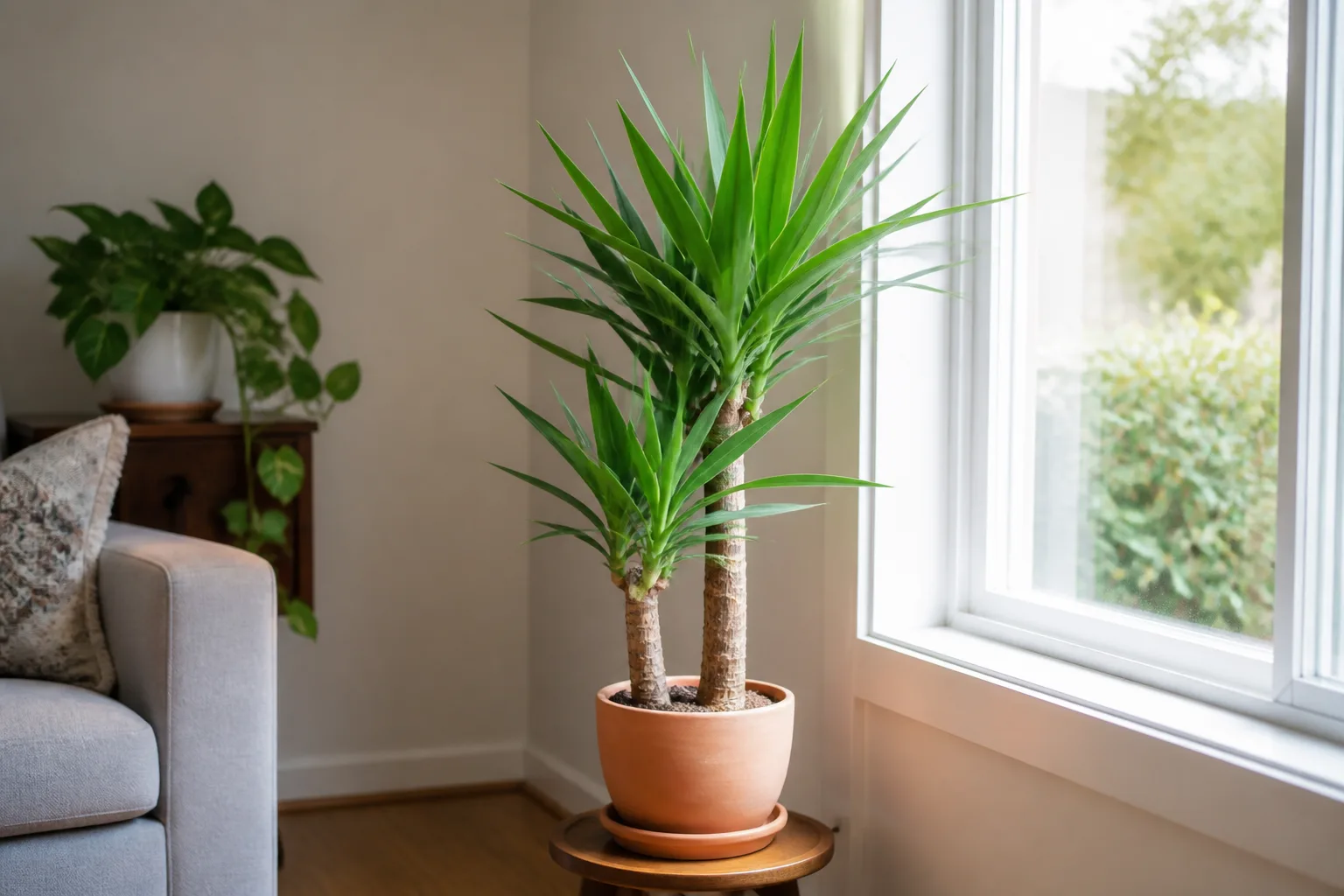
Yes, but “yucca” does not guarantee houseplant suitability. Spineless yucca, Y. gigantea, is the reliable indoor option: its leaves are less sharply tipped and its cane form fits a large pot. Give it bright light, drainage, and room for the crown. NC State lists it as a houseplant and an outdoor shrub or small tree that can reach 15–30 feet. NC State Extension: Yucca gigantea
Small desert rosettes are not automatically good indoor plants. They need more light than many rooms provide. A sunny patio container may work for Y. rupicola, Y. pallida, or a compact cultivar, but treat it as an outdoor plant needing seasonal protection.
Let indoor spineless yucca mix dry substantially before watering, and never leave its root ball sitting in water. Indoors, slower evaporation makes a weekly routine risky; a patio pot may dry faster in summer. Check the soil each time. The RHS recommends bright, filtered indoor light and bringing tender species inside before cold weather. RHS Yucca growing guide
Plant for drainage, room, and safe access
Choose sun and fast-draining soil, and plan for the mature plant rather than its nursery size. Yuccas do not need rich soil, but persistent moisture can cause root rot. In clay, raise the root zone on a mound or use a container with a drainage hole; a shallow layer of gravel beneath the root ball will not fix a wet site.
Give tree-forming yuccas generous distance from structures; slow growth can still crowd a courtyard or path over time. For low rosettes, account for clumping spread and flower stalks; for trunks, account for crown width and leaf reach. Leave access to remove spent stalks without reaching through pointed leaves.
Planting a yucca beside a walkway as a “security barrier” creates a daily injury risk. Leaf tips range from relatively soft to needle-sharp, even among plants sold under broad common names. Put armed species behind a wide bed or away from normal foot traffic.
Sharp leaf tips and pet toxicity
Punctures and ingestion are separate hazards. The ASPCA lists Yucca species as toxic to dogs, cats, and horses because of saponins, with vomiting reported for dogs and cats. Keep animals from chewing the foliage and contact a veterinarian or poison-control service after ingestion. “Spineless” describes leaf spines, not pet safety. ASPCA: Yucca toxicity listing
Keep care low by choosing the right site
A newly planted yucca needs more attention than an established one. Water thoroughly after planting, then check during the first growing season while roots spread. Once established, reduce supplemental water; rainfall may be enough outdoors. Let soil dryness, not a weekly calendar, guide watering. In a pot, water until it drains and empty the saucer.
Outdoor yuccas generally need full sun to stay compact and flower well; heavy shade can loosen the crown and reduce blooms. Indoor Y. gigantea also needs bright light. Acclimate a houseplant over several days before moving it into intense outdoor sun. The RHS advises full sun to light shade outdoors and bright, filtered light indoors. RHS Yucca growing guide
Feed lightly, if at all; ordinary garden soil rarely needs frequent fertilizer. Remove dead leaves or spent flower stalks with gloves, eye protection, and sturdy tools. Cutting back a trunk-forming yucca changes its shape, and new shoots may not emerge where you expect.
Common buying mistakes
The first mistake is buying by leaf color alone. A blue-leaved Y. rostrata may look like a compact blue-green rosette at the nursery, but one becomes a tree. Check the botanical name, mature dimensions, and whether the zone range applies to the species or a cultivar.
The second is assuming every yucca is drought-proof from planting day. A fresh transplant still needs water while roots establish; an old plant should not be watered on a fixed schedule. Let soil dry between deep waterings and reduce irrigation in cool weather.
The third is treating a small pot as permanent size control. A container can shelter tender types, but it does not make a sharp-leaved landscape yucca safe on a tabletop. Choose a compact selection or grow Y. gigantea indoors.
The fourth is relying on a shared common name. “Spanish dagger” does not identify one species, and “spineless” says nothing about toxicity. Photograph the label and confirm whether the plant is intended for indoor use, an outdoor border, or a dry landscape.
Conclusion
The best yucca is the one whose mature shape, winter tolerance, and light requirements already fit the place you have. Start with Y. gigantea for a bright indoor spot, Y. filamentosa for a cold-tolerant outdoor rosette, or a trunk-forming desert species only when you have the room and dry conditions it needs. Verify the botanical name, allow for spread, and keep sharp foliage and pet access in mind; with the right match, yucca care stays simple because the site is doing most of the work.