20 Tall Flowers for Garden Borders, Beds, and Screens
Find tall flowers for garden borders, screens, and pollinator beds. Compare annuals, perennials, bloom seasons, site needs, and important safety trade-offs.

Tall flowers make a border easier to read from across a yard: they lift the eye, break up a fence or blank wall, and create a backdrop for lower plants. Height alone does not make a good choice, though. A brittle flower spike in a windy corner can become a weekly staking job, and a vigorous self-seeder may turn a neat border into a patch you have to edit every spring.
The selections below include annuals, perennials, biennials, and tender plants. Mature height varies by species, cultivar, climate, water, and light, so treat the ranges as planning estimates and check the plant tag for the variety you are buying. The strongest combination usually mixes different shapes and bloom times rather than lining up twenty tall plants shoulder to shoulder.
A quick way to choose tall flowers
Start with the garden job. If you want color this summer, choose a warm-season annual such as Mexican sunflower, cosmos, or cleome. If you want the border to return, choose a perennial suited to your soil and winter climate. For a living screen, combine upright plants densely enough to obscure a view, but do not expect airy stems such as tall verbena to block sightlines like a hedge.
Then check three constraints: how many hours of direct sun the bed receives, whether the soil stays wet or dries quickly, and how much room the plant needs at its base. A 6-foot plant with a 3-foot spread can overwhelm a narrow bed even if the flower stems look slender. Finally, look for words such as “short-lived,” “tender,” “self-seeds,” “toxic,” or “needs staking” on the tag; those notes often matter more than a few extra inches of height.
| If your priority is… | Start with… | Plan around… |
|---|---|---|
| Quick summer color | Cosmos, Mexican sunflower, cleome | Frost-free growing time and seedling spacing |
| A tall flower spike | Delphinium, foxglove, red hot poker | Support, exposure, and toxicity |
| Late-season flowers | Joe Pye weed, sneezeweed, tall verbena | Moisture and a crowded fall border |
| A wet or rain-garden edge | Hardy hibiscus, Joe Pye weed | Mature spread and winter hardiness |
| A bold foliage screen | Castor bean | Serious toxicity, wind, reseeding, and local restrictions |
20 tall flowers for a strong border
These flowers are grouped by how gardeners commonly grow them. “Annual” means the plant completes its life cycle in one growing season; biennials typically build foliage in their first year and flower in the next. Some plants listed as perennials in mild climates are grown as annuals where winter freezes kill the crown or rhizome.
Annuals and warm-season plants for quick height
1. Floss flower (Ageratum houstonianum) — Most floss flowers stay compact, but taller cultivars can reach roughly 2 to 3 feet and add a soft blue, lavender, pink, or white haze in front of a fence. Give it evenly moist, well-drained soil; intense summer heat can pause flowering, especially when the plant dries between waterings. This is a useful choice when you want a rounded mound rather than a rigid spike, and spent blooms can be removed for tidiness even when deadheading is not required.
2. Amaranth (Amaranthus spp.) — Choose a tall form such as love-lies-bleeding for dramatic hanging tassels or an upright ornamental amaranth for dense color at the back of a sunny bed. Plants commonly reach 3 to 6 feet, but the genus includes many forms, so read the packet rather than assuming every amaranth is tall. Sow after frost in warm soil or start indoors if your season is short; rich, heavily fertilized soil can produce lush growth that is more vulnerable to wind.
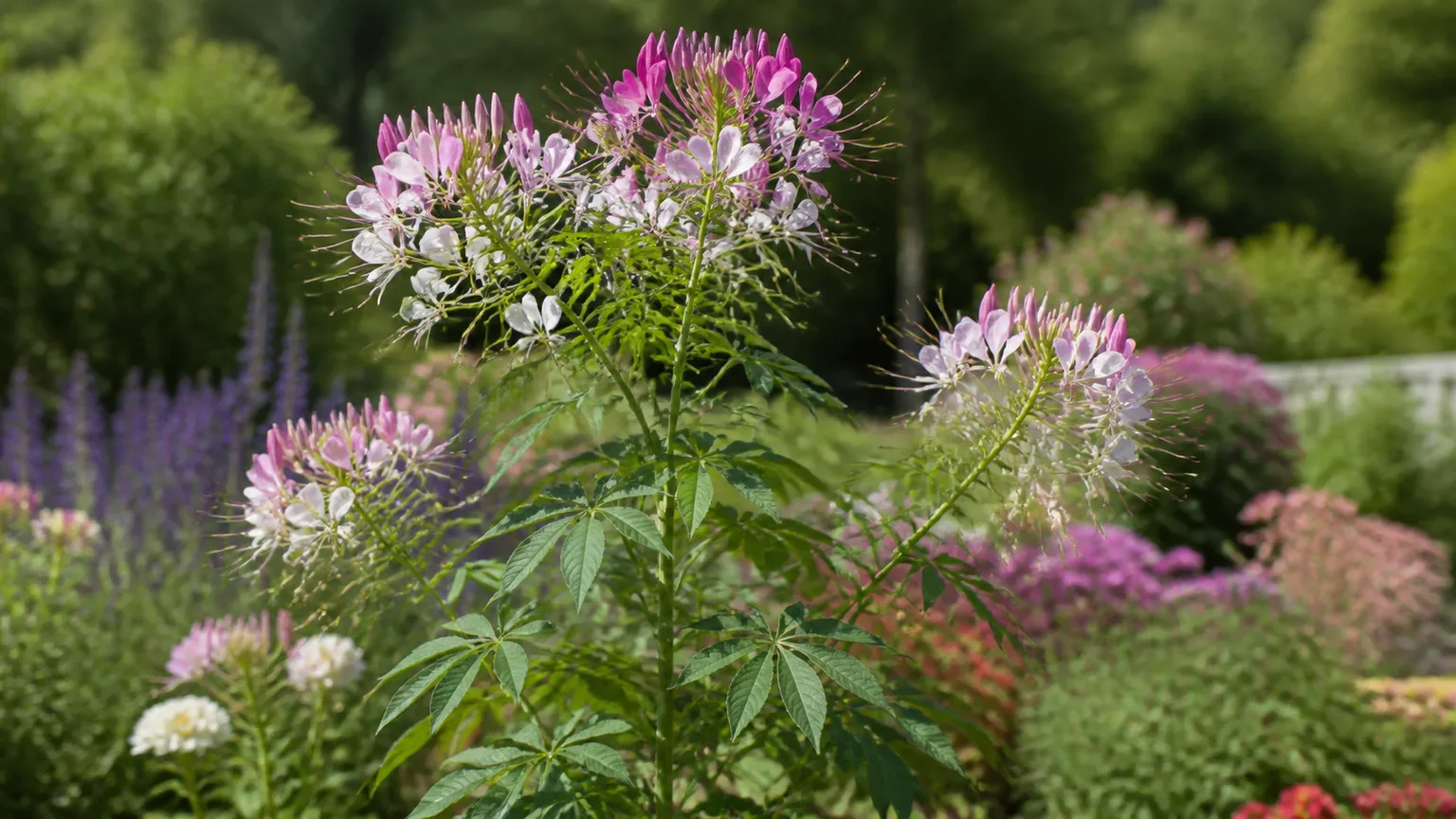
3. Spider flower (Cleome hassleriana) — Cleome sends flower clusters above an open, airy framework, often reaching 4 to 5 feet. It is particularly effective where a solid mass would feel heavy, and the flowers can draw pollinators through a long summer season. Direct-sow after the soil warms, then thin seedlings so air can move through the branches; self-sown plants may appear the following year, which is convenient in an informal garden and a nuisance in a tightly edited one.
4. Flowering tobacco (Nicotiana sylvestris) — This tall nicotiana carries long, pale, trumpet-shaped flowers that become most noticeable in the evening, making it a good choice near a patio where you sit after sunset. It prefers fertile soil that does not dry out and can lean in exposed locations, so give it shelter or add support before it gets top-heavy. Nicotiana is related to cultivated tobacco, but toxicity information is species-specific: the ASPCA lists Nicotiana glauca as toxic to dogs, cats, and horses. Do not treat flowering tobacco as edible, and verify the exact plant before placing it where pets roam.
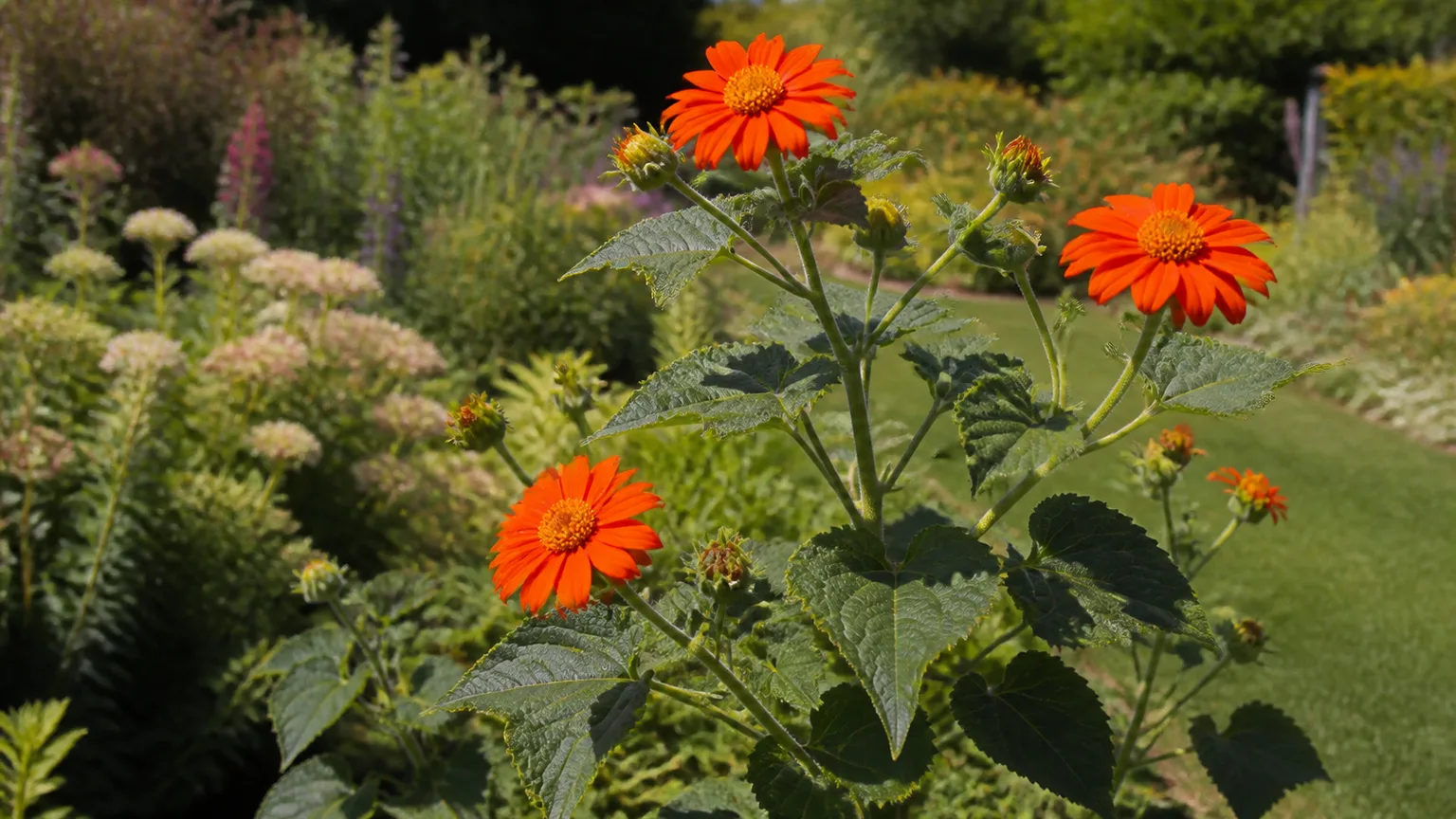
5. Mexican sunflower (Tithonia rotundifolia) — For a hot, sunny site, Mexican sunflower grows into a branching plant with orange or red-orange daisy-like flowers, often around 4 to 6 feet tall. It handles summer heat better than many cool-season perennials, but it needs a warm season to flower well; in a short-summer area, start seeds indoors several weeks before the last frost instead of waiting for direct-sown plants to catch up. Give it elbow room, since a mature plant is wider than its bare stems suggest.
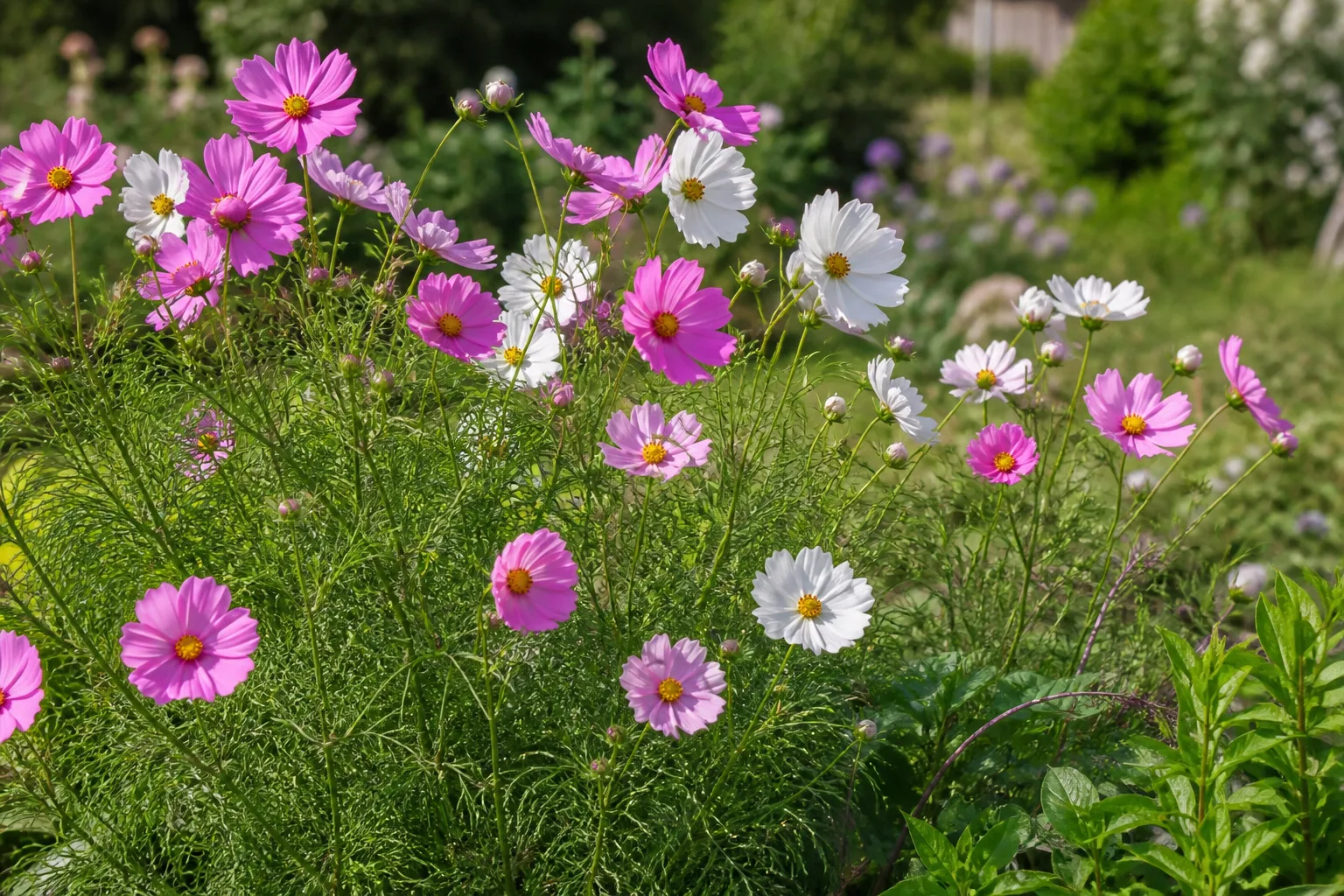
6. Cosmos (Cosmos bipinnatus and C. sulphureus) — Cosmos adds height without a dense wall of foliage: feathery leaves and single daisy-shaped blooms let you see other plants through the stems. Depending on species and cultivar, plants range from about 2 feet to more than 6 feet. Sow directly after frost in average soil and resist the urge to feed it heavily; overly rich conditions can favor leafy growth over a sturdy, flower-covered plant.
7. Kiss-me-over-the-garden-gate (Persicaria orientalis) — This fast-growing annual can reach 4 to 7 feet, with loose, pink-purple flower chains that soften a fence or the back of a cottage-style border. It fills space quickly but may need a protected position because strong wind can bend its stems. Leave it room to mature, mulch to reduce moisture swings, and remove seed heads if you do not want volunteer seedlings in the next season.
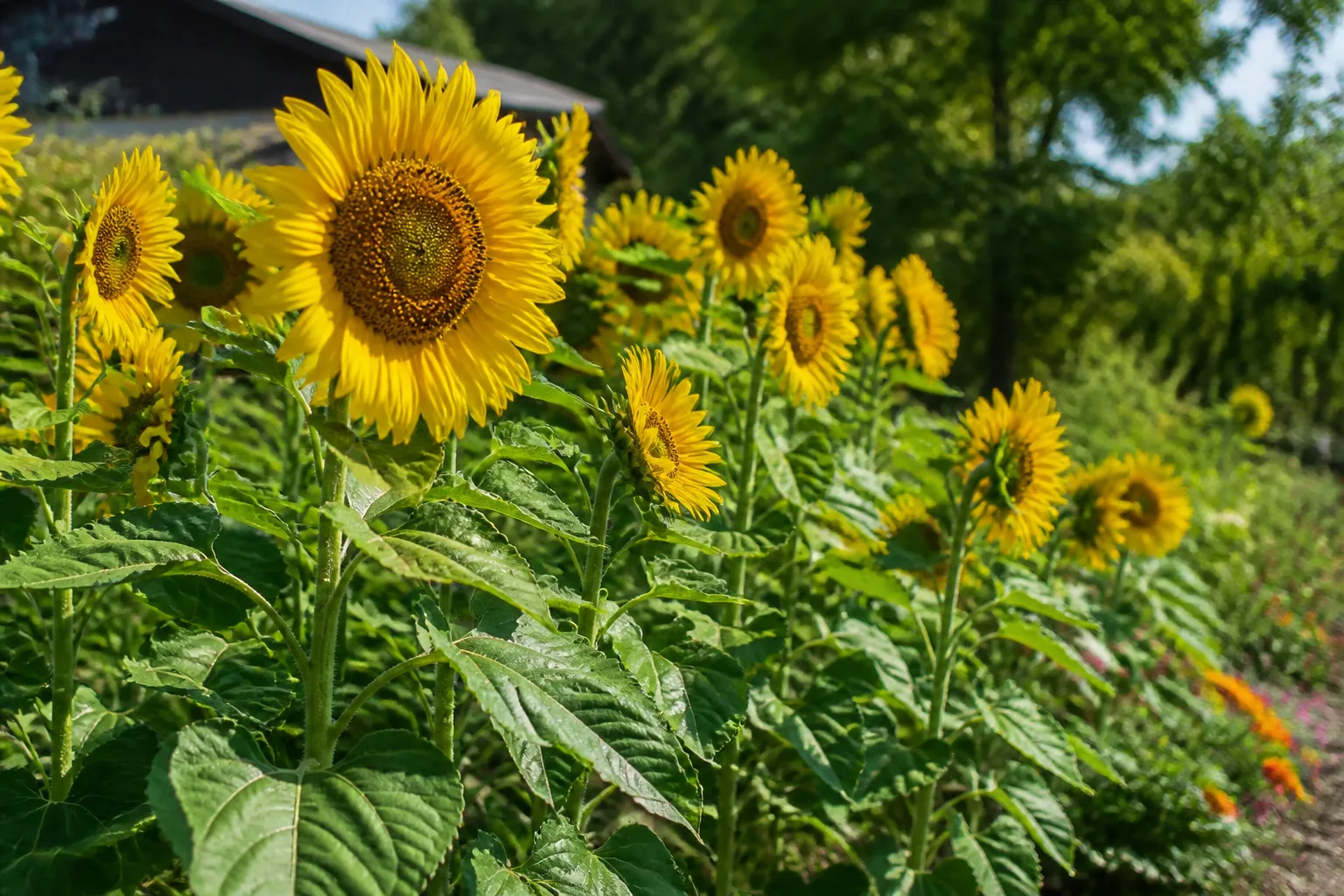
8. Sunflower (Helianthus annuus) — Sunflowers are not one height or one shape: branching cultivars can give you repeated smaller blooms, while single-stem selections make a strong vertical accent with one large head. Select a named cultivar for the space rather than relying on a packet that promises “giant” plants; height, branching, and head size vary widely. Give them direct sun, room for roots, and a location where tall stems will not shade vegetables or block a window. Leave seed heads for birds only if you are comfortable with seedlings appearing nearby.
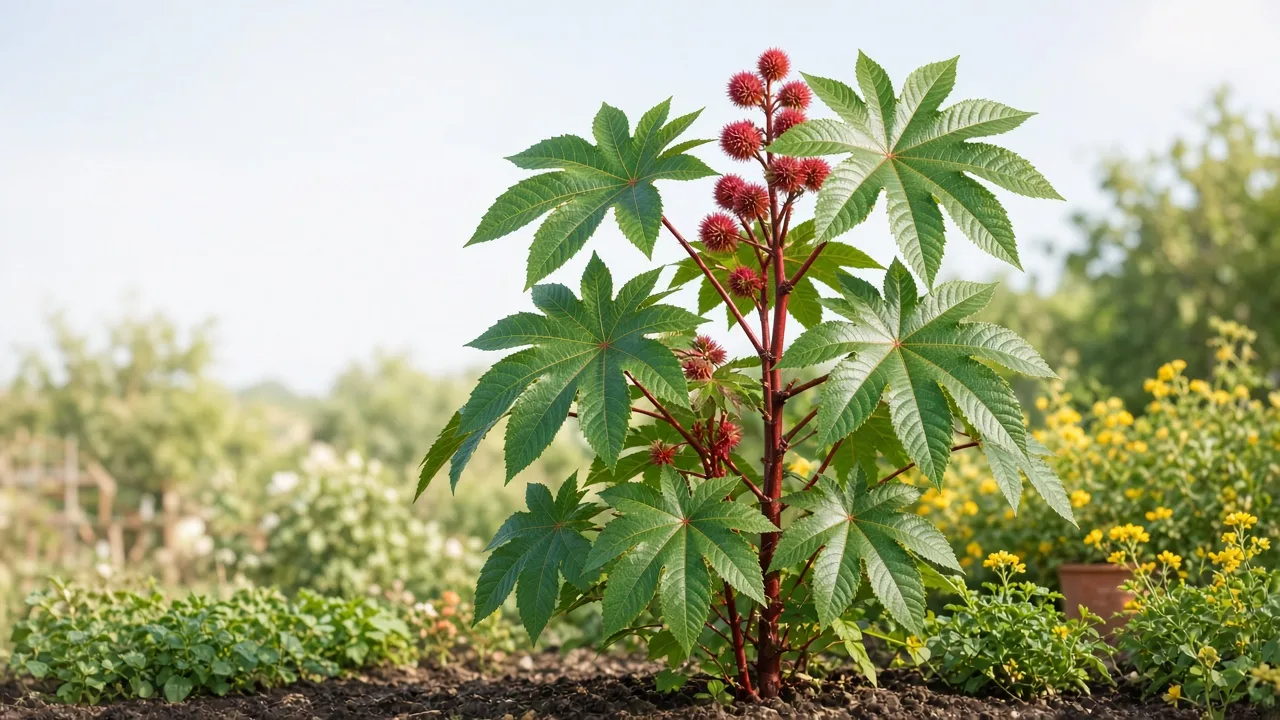
9. Castor bean (Ricinus communis) — Castor bean earns its place for enormous, palm-shaped leaves and spiny seed capsules more than for showy petals; in warm regions it can reach 6 to 10 feet. It is a striking specimen, not a carefree flower for a family play area. North Carolina State Extension describes castor bean as highly toxic, readily reseeding, and vulnerable to wind; avoid it where children or pets can reach it, and check local invasive-plant guidance before growing it.
Perennials, biennials, and plants that return
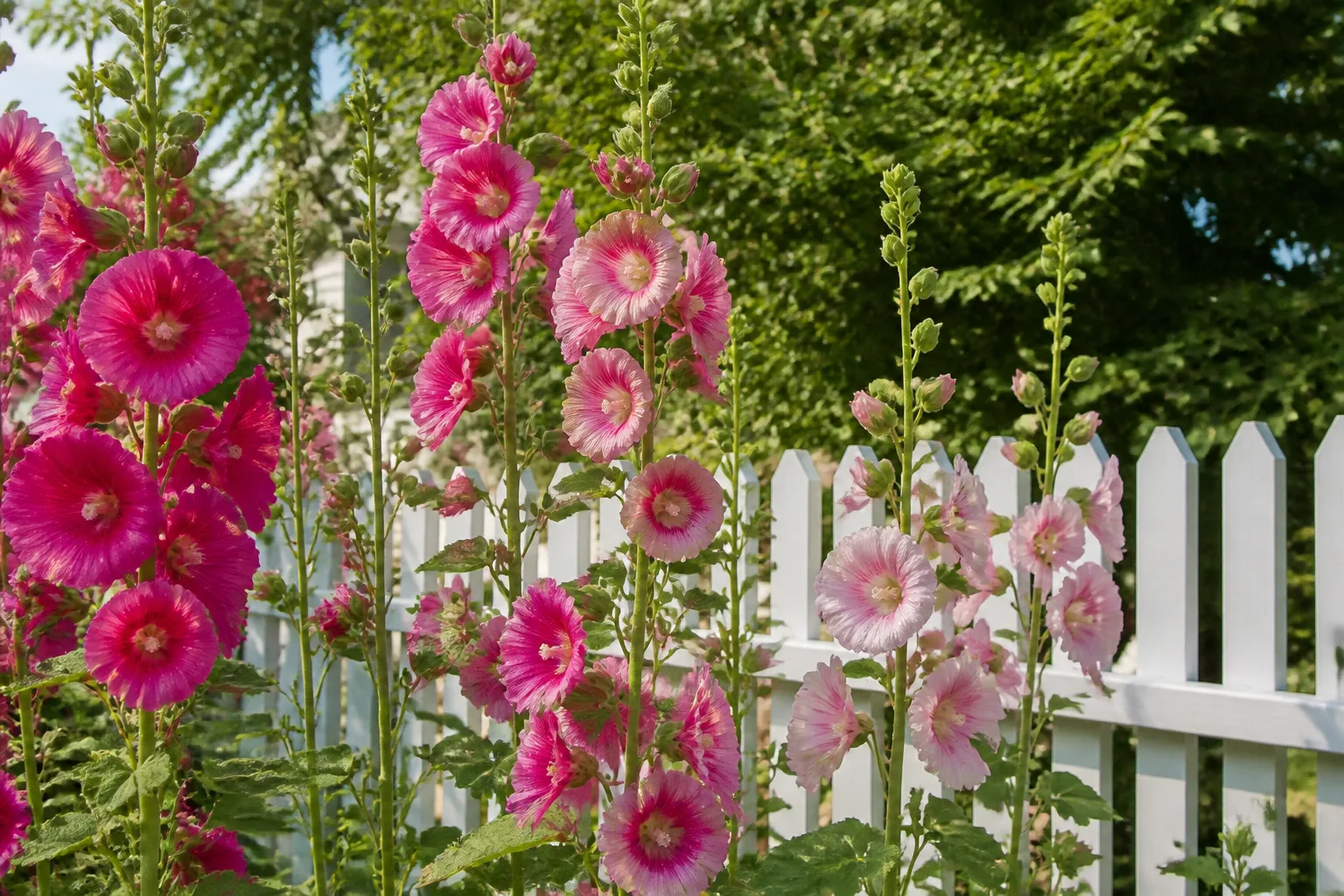
10. Hollyhock mallow (Malva alcea) — Hollyhock mallow gives a border the old-fashioned look of a hollyhock on a smaller scale, usually around 2 to 4 feet tall. Its pink flowers open over a long summer stretch, and the plant may self-sow even though individual crowns can be short-lived. Deadhead if you want to limit seedlings; leave a few seed heads if you want replacement plants without buying new starts. It is a better fit for a sunny, informal border than a formal line.
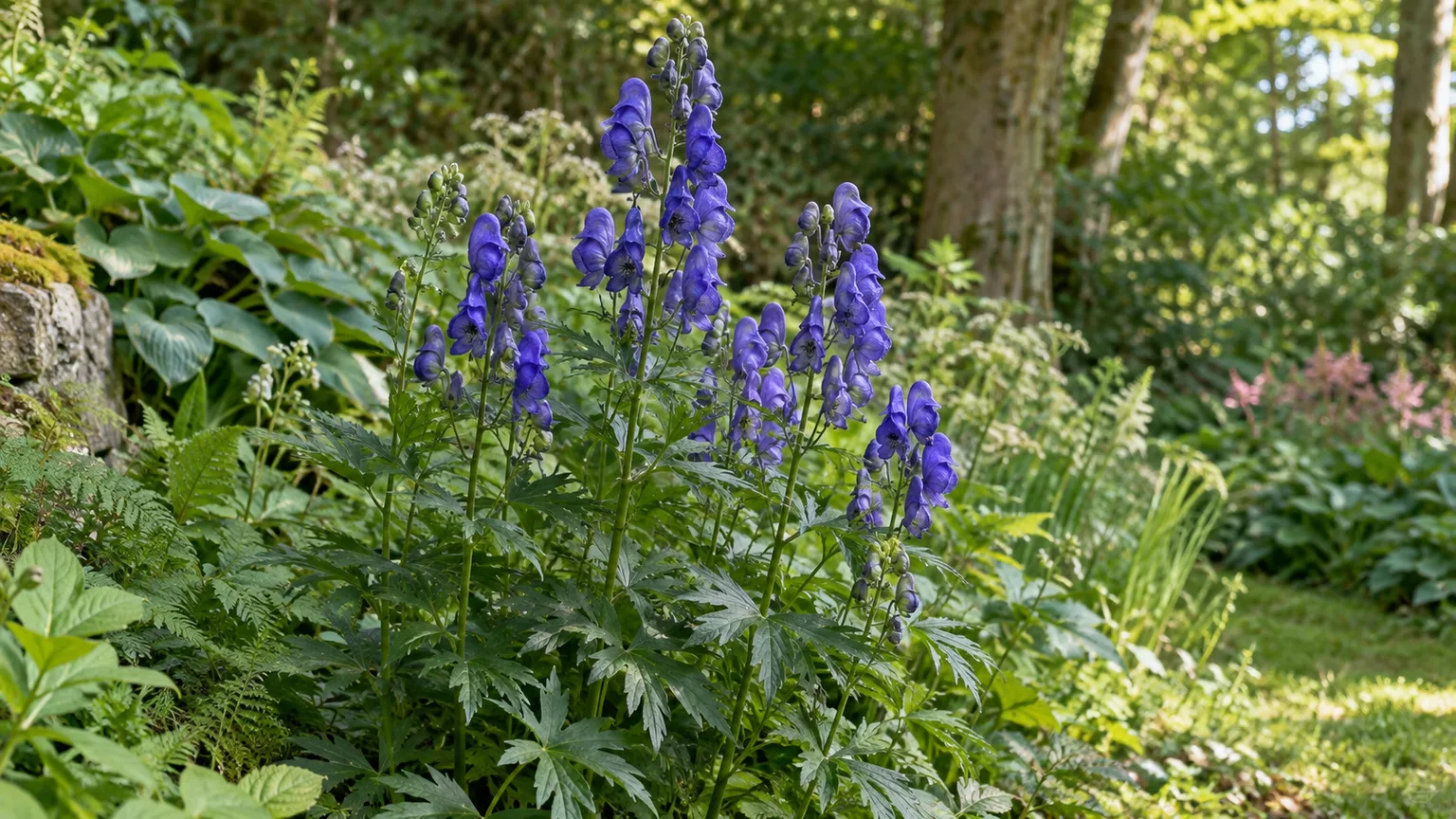
11. Monkshood (Aconitum napellus) — Monkshood produces distinctive blue-purple hooded flowers on upright stems in summer, usually about 3 to 4 feet tall. It prefers cool conditions and moist but well-drained soil, and afternoon shade helps in hotter regions. The flowers are striking in a woodland edge or shaded border, but this is not a casual “plant anywhere” choice: North Carolina State Extension describes monkshood as highly poisonous, with toxic parts throughout the plant. Do not grow it where children or animals could handle or ingest it.
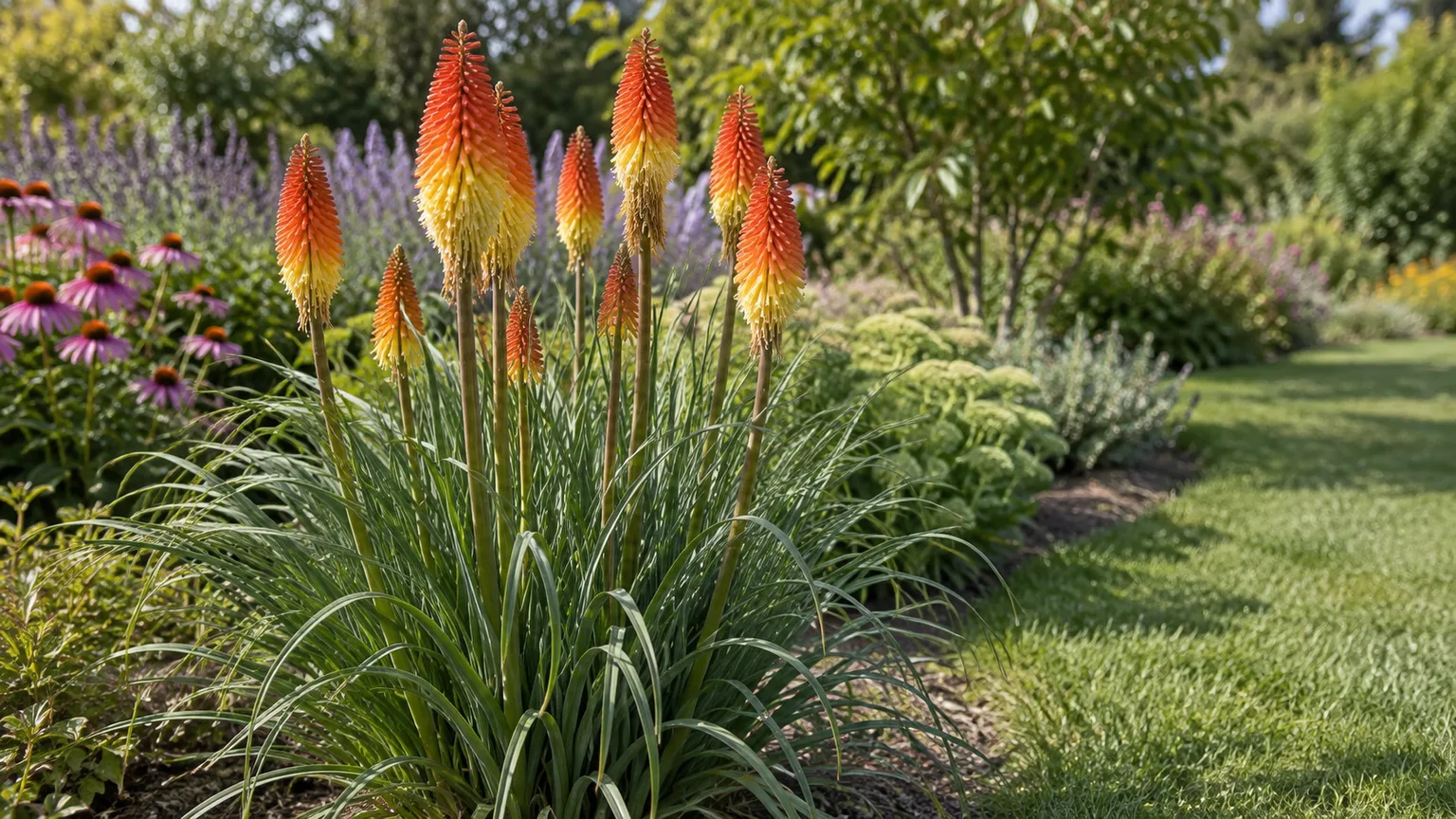
12. Red hot poker (Kniphofia uvaria) — Also called torch lily, red hot poker raises red, orange, or yellow flower spikes above a clump of grasslike foliage, commonly reaching 3 to 4 feet. It gives the border a strong vertical shape without a lot of foliage bulk and can flower in late spring or early summer. Choose a sunny spot with sharply drained soil; wet winter soil is a more serious threat than a dry summer spell, so avoid low pockets that stay saturated.
13. Tall verbena (Verbena bonariensis) — This verbena can reach 4 to 6 feet, yet its slender stems and small purple flower clusters keep it visually transparent. That makes it useful behind shorter flowers when you want height without a hard screen. It tolerates a range of soils if drainage is good and often self-sows; in colder climates it may be treated as an annual, while mild-winter gardens may keep plants for longer. Pull seedlings early if they land in paths or crowd slower neighbors.
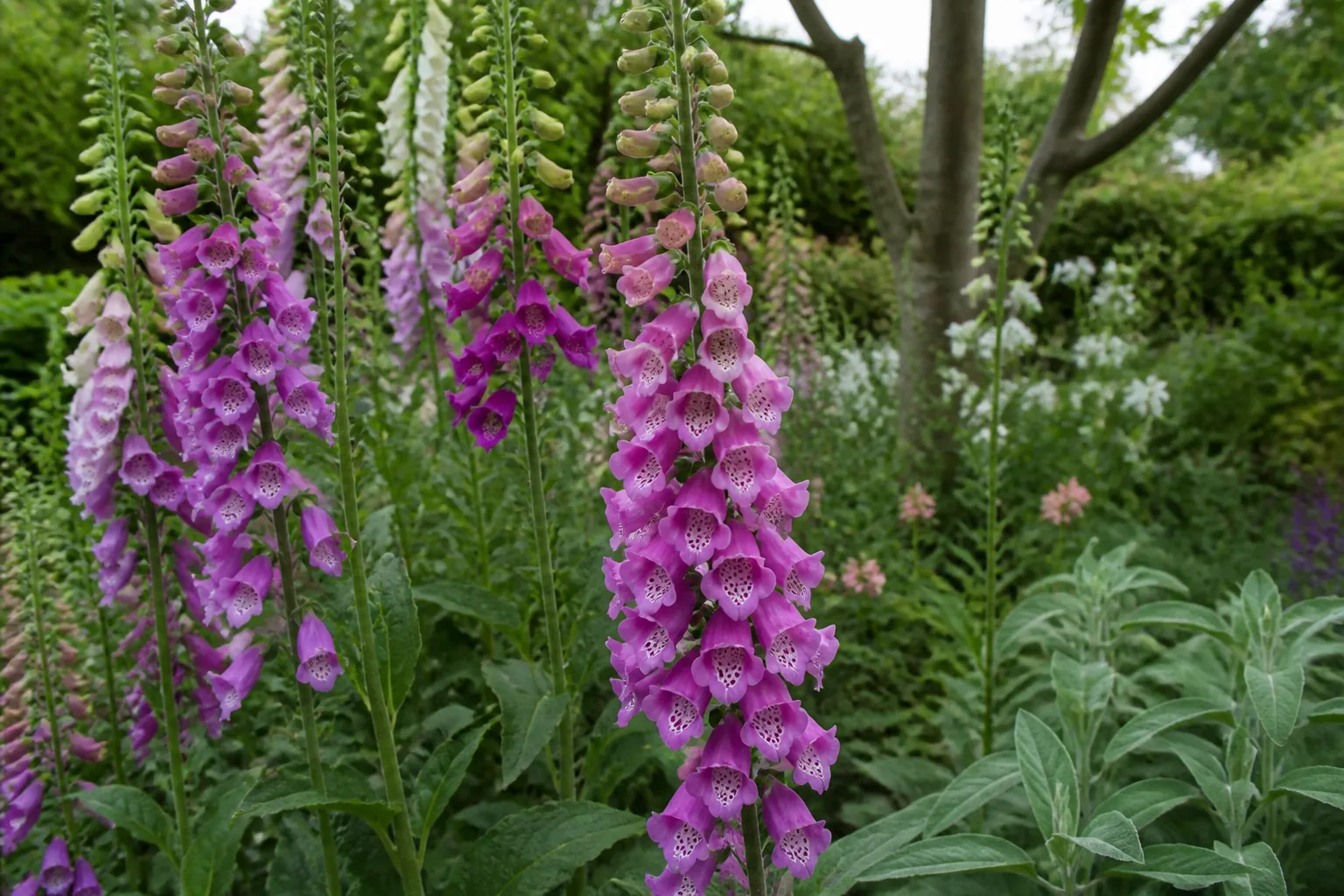
14. Foxglove (Digitalis purpurea) — Foxglove’s tubular flowers line a tall spike, often about 2 to 5 feet high, and bloom in late spring or early summer. Many common foxgloves are biennials: the first year is mostly a leafy rosette, with flowering in the second year, followed by seed and the end of that plant’s cycle. It can self-sow into a reliable patch, but all parts are poisonous if swallowed. Poison Control advises keeping foxglove away from places children and pets play; do not plant it beside edible greens where leaves could be confused.
15. Sneezeweed (Helenium autumnale) — Sneezeweed brings yellow, orange, and rust daisy-like flowers to a sunny border in late summer and fall, when many early flowers have faded. Plants commonly grow 3 to 5 feet and appreciate consistent moisture; a dry, hot bed can shorten the display. Deadhead during the season for more flowers, or leave the seed heads for birds and winter texture. If the clump flops, thin crowded stems or add a grow-through support rather than cutting it back hard after it has begun blooming.
16. Elecampane (Inula helenium) — Elecampane grows a large basal rosette before sending up tall stems with yellow flowers, often 3 to 6 feet high. It needs room, moist but well-drained soil, and patience: it may need a winter chilling period before it flowers. North Carolina State Extension warns that elecampane spreads rapidly and can become weedy, so it is best for a roomy, naturalistic garden where you can remove unwanted seedlings and root fragments. Choose a less vigorous alternative for a small, carefully maintained bed.
17. Hardy hibiscus (Hibiscus moscheutos) — Hardy hibiscus is a standout when the site is sunny and stays evenly moist, including a rain-garden edge or naturally damp border. Depending on cultivar, it can reach about 3 to 7 feet and produces very large, short-lived flowers over a summer season. It dies back in cold-winter climates and returns from the roots when conditions suit it; protect it from drying out during active growth, and give the broad clump more width than the flower stems imply.
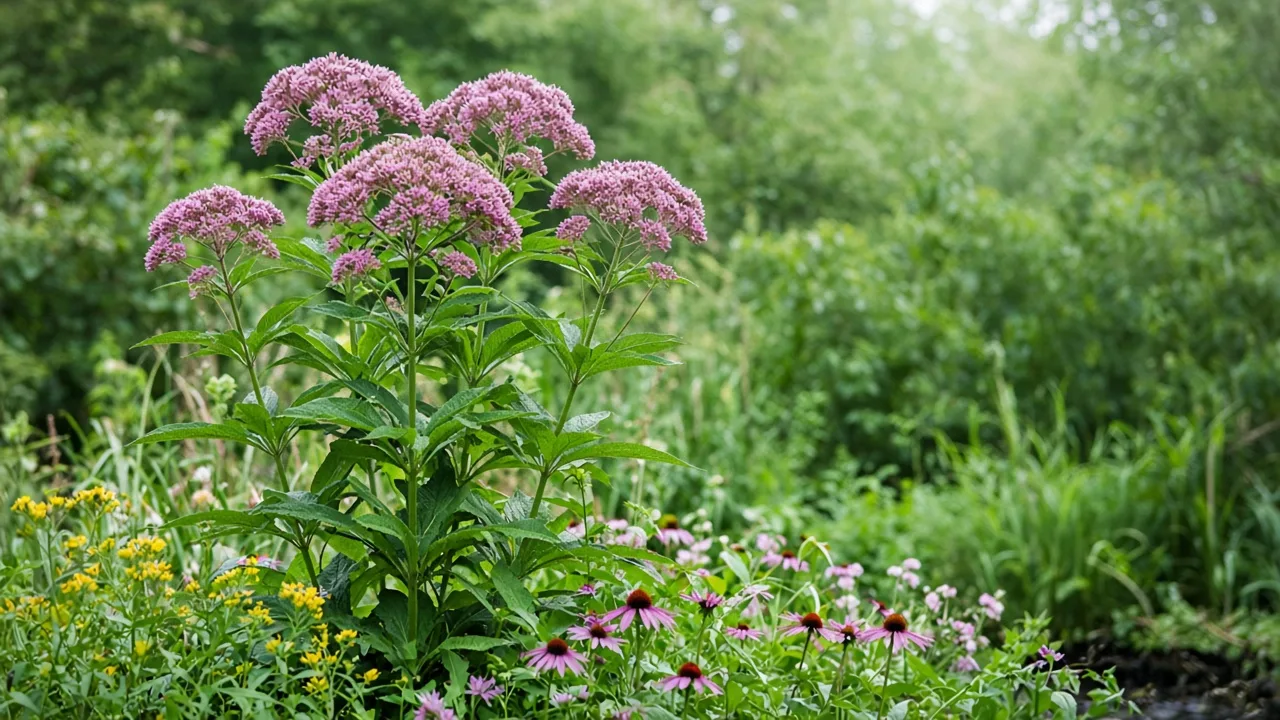
18. Joe Pye weed (Eutrochium purpureum) — Joe Pye weed makes a substantial late-summer presence with broad clusters of small pink-mauve flowers above tall stems, often 5 to 7 feet. It is valued by pollinators and tends to look most natural in a group rather than as one isolated stick. Give it sun to part shade and moisture that does not disappear in midsummer; the size is a virtue in a large border and a reason to choose a shorter cultivar or another plant in a narrow bed.
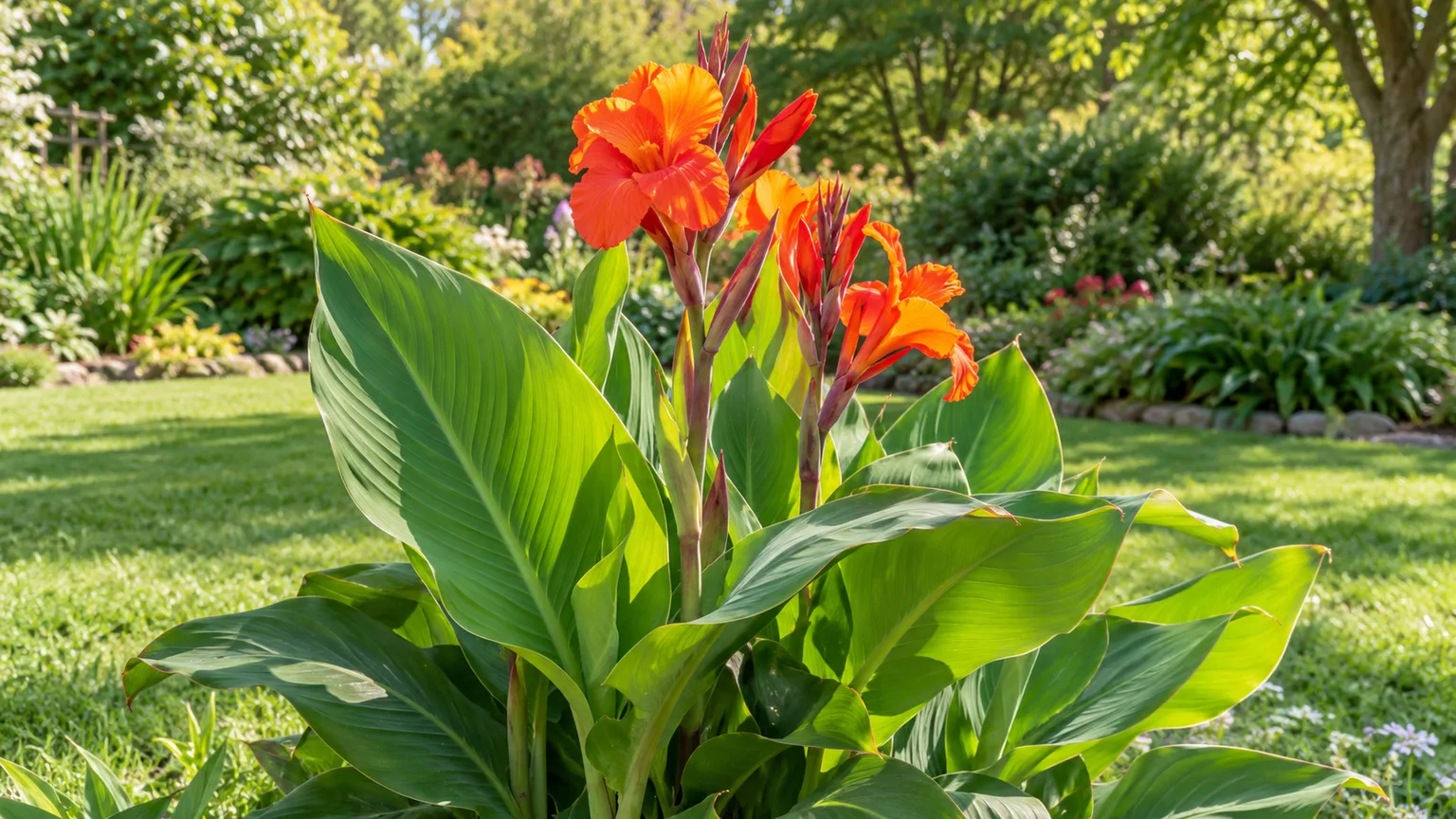
19. Canna (Canna spp.) — Cannas combine tall leaves with bright summer flowers, so they supply structure even before the blooms open. Height depends heavily on the cultivar, from compact selections to plants several feet tall. They need warmth and moisture during active growth; where winter freezes the rhizomes, lift and store them after frost or grow cannas as seasonal annuals. In a mild climate, confirm that your chosen cultivar is hardy before leaving it in the ground.
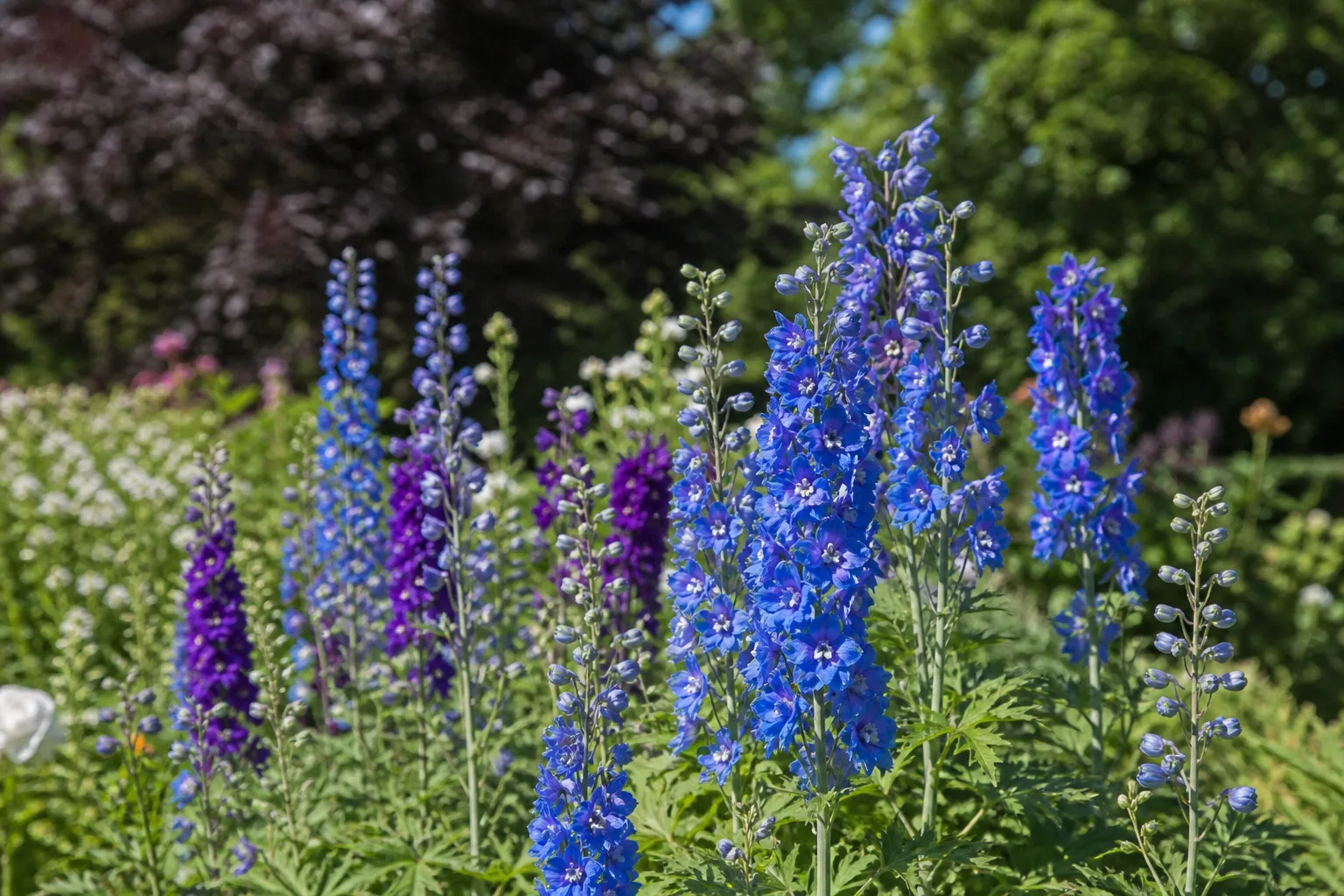
20. Delphinium (Delphinium spp.) — Tall hybrid delphiniums create the classic blue, violet, pink, or white flower spire, but the height comes with a little more work. They prefer full sun, fertile soil that drains well, and cooler summers; in hot regions, afternoon shade can help, while humid heat often makes them short-lived or unreliable. Tall hybrids need shelter from wind and rain plus staking, and all parts are poisonous if eaten. North Carolina State Extension’s delphinium profile notes that delphiniums need staking, prefer cooler summers, and are toxic to people and pets.
Choose flowers that fit your garden
Full sun, heat, and dry spells
Most tall flowers need enough light to build sturdy stems and flower well, but “full sun” does not mean every species wants a dry, scorching bed. Mexican sunflower and cosmos are better warm-season choices for open sun; red hot poker also needs a well-drained site. If your summers are hot and humid, treat delphinium as a challenging choice, not a guaranteed perennial. North Carolina State Extension notes that delphiniums favor cool summers and may struggle in humid climates.
In dry soil, distinguish plant survival from sustained flowering. Established sunflowers may ride out a dry spell, but seedlings and developing flowers still need water. Cleome and tall verbena are forgiving once rooted; keep new plants watered as they establish. Do not crowd them to save space, because root competition makes drought stress show up faster in tall stems.
Part shade, steady moisture, and cooler summers
A bed that gets morning sun and afternoon shade can suit foxglove, monkshood, or some tall verbena, depending on local heat and the cultivar. Shade that lasts most of the day is different: many sun-loving flowers stretch toward light and produce fewer blooms, so a “tall” plant can become lanky rather than impressive. Use the site’s actual light pattern, not the label’s broad “part shade” phrase, as your guide.
For reliably moist soil, consider hardy hibiscus or Joe Pye weed, and keep moisture even while plants are establishing. Moist soil still needs oxygen; if water pools for days after rain, red hot poker and delphinium are poor choices even if the bed looks sunny. Delphinium’s spring-to-mid-summer display and preference for cooler weather also make it easier to place in climates where nights cool down rather than remain hot and humid.
Place tall flowers without hiding the rest of the bed
In a bed viewed mostly from one direction, put the tallest plants at the back and step down toward the path. If the bed is viewed from all sides, use tall flowers in islands or as a broken central spine, then surround them with mid-height plants. A solid wall of stems can block light and make the rest of the planting disappear; repeating small groups of two or three is usually easier to read and maintain than planting one of everything.
Use more than height to create rhythm. Pair a narrow flower spike such as delphinium or foxglove with a cloudlike plant such as tall verbena, then place a broad-leaved form such as canna or hardy hibiscus nearby. A garden blogger’s field notes on tall perennials make a useful point: a large clump can function as vertical structure, but poorly placed mature plants can crowd each other. Before planting, mark each plant’s expected spread with a pot or hose and confirm that paths, windows, and lower flowers will stay visible.
For screening, combine foliage that fills the lower and upper parts of the bed. Tall verbena adds height but will not hide a fence by itself. Sunflowers and cannas create more bulk; castor bean does too, but brings safety concerns. For year-round privacy, use a suitable shrub or fence as the permanent layer and let flowers soften it.
Keep tall flowers upright
A flower can grow tall and still stand well if its stems are sturdy, the clump is in enough light, and the roots are anchored in soil that drains. Flopping is not always solved by adding fertilizer or water. Too much nitrogen can produce soft leafy growth, while shade can make sun-loving plants stretch; heavy flower heads, wind, and rain can then pull stems over. Check the growing conditions before treating every bent plant as a staking problem.
Support early, then adjust as stems grow
Install a grow-through grid, hoop, or discreet stakes in spring while new shoots are short. The stems can grow through the support and hide it, and you are less likely to push a stake through a mature root mass. The Royal Horticultural Society recommends early placement for tall perennials and notes that supports should match the plant’s vigor; its advice also uses a loose figure-eight tie so the stem is not pressed directly against a cane. Better Homes & Gardens similarly recommends preventive supports for plants prone to flopping and a flexible remedial support when a plant has already started leaning.
Use a ring or grid for a bushy clump such as sneezeweed, a few stakes and soft ties for a single heavy stem, or a broad cage for a large, many-stemmed plant. Put the support far enough into the ground to stay firm, and tie stems loosely so they can move in wind. If a plant has already bent, support it before the break point, not just at the tip; cut off a snapped stem cleanly rather than pulling it upright and tearing it further.
Do not stake every tall plant by default. A self-supporting sunflower, airy verbena, or flexible amaranth may look more natural without a rigid frame. Try placing tall plants in small groups where stems can visually support one another, but leave air around leaves and room for the mature clump. If the same plant flops each year, move it to more light, reduce excess feeding, choose a shorter cultivar, or replace it with a sturdier species rather than adding more hardware each season.
Manage reseeding and winter survival
Annuals give you a fresh planting decision each year, which is useful when you want to change colors or fill a new bed quickly. They also require seed or starts each season. Perennials build structure over time, but some need division, pruning, or protection in winter, and a biennial such as foxglove may not bloom until its second season. Read “annual,” “biennial,” “perennial,” and “tender perennial” as different maintenance schedules, not interchangeable labels.
Self-seeding is a feature only when the seedlings land where you want them. Cleome, tall verbena, foxglove, hollyhock mallow, and kiss-me-over-the-garden-gate can appear again from seed, but the amount varies with climate and how long you leave seed heads. To limit spread, deadhead before mature seed forms and pull unwanted seedlings while small. For a naturalistic border, leave selected seed heads and thin the volunteers in spring rather than letting every plant set seed.
Tender plants such as cannas need a winter plan in cold climates: grow them as annuals, or lift and store the rhizomes where that practice is appropriate. Castor bean can reseed readily in warm areas, so remove capsules before they mature if you have chosen to grow it and local conditions permit. For perennials, mulch only after the soil cools and follow regional advice; a thick, soggy cover around crowns can trap moisture and cause rot.
Check toxicity before planting
Some flowers on this list should be left out of a garden where children or pets can reach them. Monkshood, foxglove, delphinium, and castor bean are not safe plants to treat as harmless ornamentals. North Carolina State Extension lists monkshood, delphinium, and castor bean as highly toxic plants. Poison Control warns that all parts of foxglove can be dangerous if swallowed; do not use its leaves or flowers for food, tea, or home remedies.
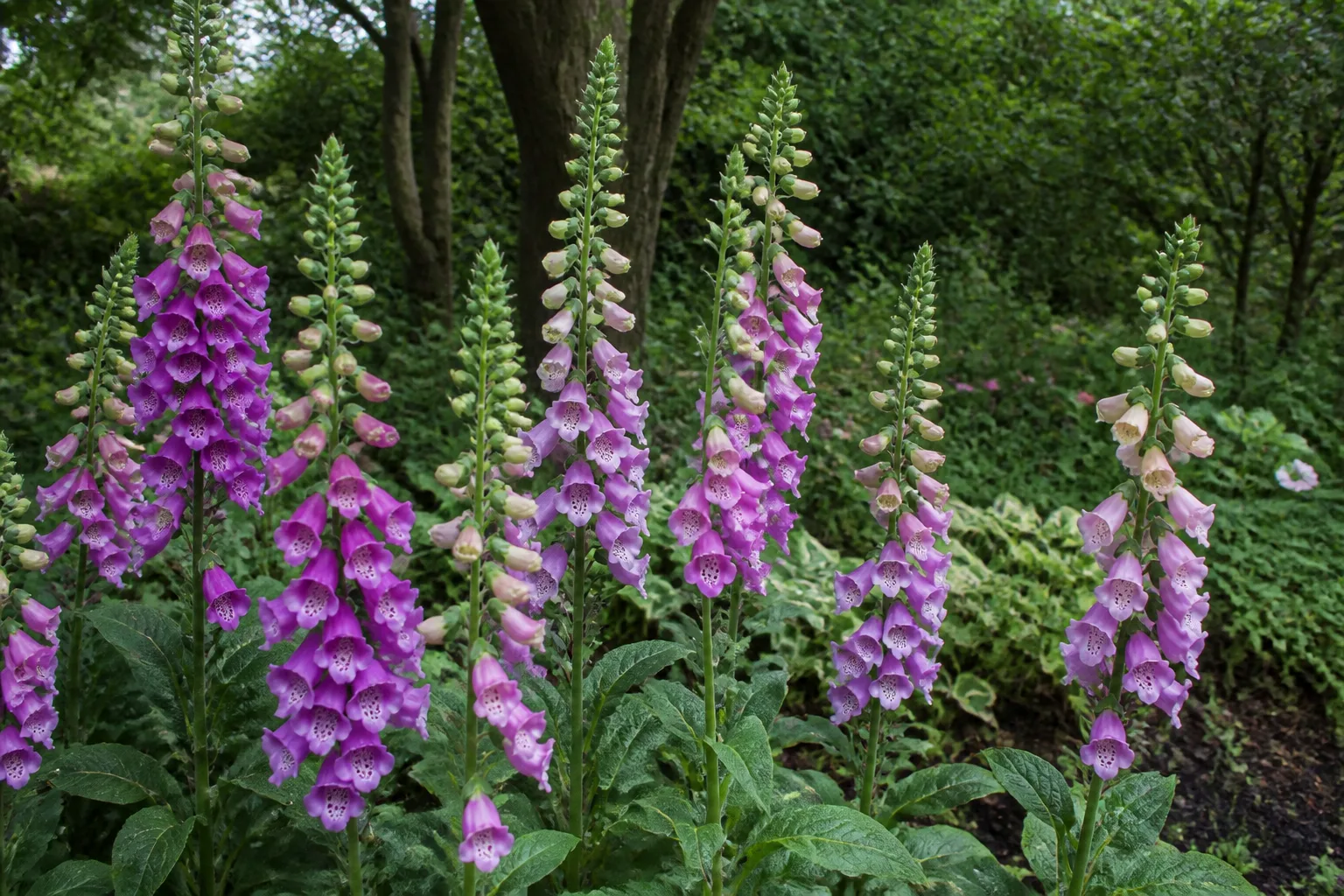
The ASPCA lists foxglove, larkspur, castor bean, and Nicotiana glauca as toxic to certain animals. The plant name matters: “larkspur” is used for different Delphinium species, and labels may not spell out the exact species. Before bringing any plant home, verify the botanical name against a current, authoritative poison-control reference and consider where a curious child or animal could reach leaves, flowers, or seeds. When ingestion is suspected, do not wait for symptoms or try a home remedy; contact a veterinarian or poison-control service promptly. Poison Control’s foxglove guidance recommends immediate professional help after suspected ingestion.
Castor bean deserves special caution because its decorative seeds are attractive and the plant can produce many of them. North Carolina State Extension notes that it can reseed and become weedy in some areas, so even gardeners without children or pets should check local invasive-species guidance and consider a safer bold-leaf alternative. A dramatic plant is not a good bargain if it adds a hazard or maintenance burden your household cannot comfortably manage.
Quick combinations by garden goal
For a sunny, low-cost annual border, combine cosmos for see-through height, Mexican sunflower for orange color, and amaranth for a strong silhouette. Sow in stages rather than planting a dense block: leave enough room for branches and airflow, then fill the front with lower flowers that will not be shaded out.
For late-summer pollinator interest, group Joe Pye weed with sneezeweed and tall verbena, provided the moisture and space needs line up. Give Joe Pye weed the largest footprint, then use the finer stems of verbena around its edges. Do not expect blooms on the same exact dates every year; weather and cultivar shift the calendar.
For a formal vertical accent, use delphinium or red hot poker in a small, repeated group, with supports installed early and enough room for each clump. If the bed is exposed to strong wind, choose a shorter or sturdier cultivar, or place a lower and more flexible flower nearby to take the force. For a wet sunny edge, hardy hibiscus and Joe Pye weed are more logical starting points than dry-soil plants, but check mature spread and winter hardiness first.
Conclusion
The best tall flowers are the ones that fit the site and the amount of care you want to give them. Choose annuals for flexible, fast color; choose perennials for returning structure; then check sun, moisture, spread, self-seeding, support, and toxicity before you buy. A few well-placed tall plants, repeated in compatible groups, will create more impact than filling the back of the bed with every variety on a list.


