Verbena Care Guide: Sun, Water and Growing Tips
Verbena × hybrida
Grow garden verbena in full sun and free-draining soil. Learn how to water containers, choose a cultivar, and distinguish Verbena × hybrida from other plants sold as verbena.
Verbena Care Guide for Garden and Bedding Hybrids
Start with wateringThe most common care mistake for VerbenaWatering guide →Verbena care essentials
Light
Full sun for the strongest flowering
Water
Water new plants while they establish, then check the top 2.5 cm (1 in) of compost or soil. Water thoroughly when that layer is dry, and let excess water drain away. Pots and hanging baskets dry faster than garden beds and may need frequent checks in hot weather; established border plants usually need extra water only during a long dry spell. Do not leave roots in saturated soil.
Soil
Use freely draining, amended garden soil or a quality container potting mix. Garden verbena tolerates some dry periods once established but can develop root problems when kept too wet.
Humidity
Temperature
Fertilizer
About Verbena
Verbena is native to Cultivated hybrid; it does not have one wild native range, typically reaches Depends on the cultivar. Garden hybrids range from compact mounds to trailing or upright bedding plants; tall Verbena bonariensis is a separate species and can reach much greater heights. indoors, with warm-season; pace varies by hybrid series and growing conditions growth. Verbena has a mounding, trailing, or upright herbaceous bedding hybrid; usually grown as an annual, though the wider verbena genus also includes perennial species. growth habit and part of the Verbenaceae family. It is also known as Garden Verbena, Bedding Verbena, and Hybrid Verbena.
| Detail | Information |
|---|---|
| Also known as | Garden Verbena, Bedding Verbena, Hybrid Verbena |
| Native region | Cultivated hybrid; it does not have one wild native range |
| Mature size | Depends on the cultivar. Garden hybrids range from compact mounds to trailing or upright bedding plants; tall Verbena bonariensis is a separate species and can reach much greater heights. |
| Growth rate | Warm-season; pace varies by hybrid series and growing conditions |
| Growth habit | Mounding, Trailing, Or Upright Herbaceous Bedding Hybrid; Usually Grown As An Annual, Though The Wider Verbena Genus Also Includes Perennial Species. |
| Scientific name | Verbena × hybrida |
| Family | Verbenaceae |
How to care for Verbena?
How much light does Verbena need?
Full sun for the strongest flowering. Partial shade with several hours of direct light. direct sun
- Full sun for the strongest flowering - Full sun for the strongest flowering.
- Partial shade with several hours of direct light - Partial shade with several hours of direct light.
- direct sun - direct sun.
When should you water Verbena?
Water new plants while they establish, then check the top 2.5 cm (1 in) of compost or soil. Water thoroughly when that layer is dry, and let excess water drain away. Pots and hanging baskets dry faster than garden beds and may need frequent checks in hot weather; established border plants usually need extra water only during a long dry spell. Do not leave roots in saturated soil.
- Feel the mix about 2.5 cm (1 in) below the surface. If it is dry - Water new plants while they establish, then check the top 2.5 cm (1 in) of compost or soil.
- water the root zone until the mix is evenly moist - Water new plants while they establish, then check the top 2.5 cm (1 in) of compost or soil.
- then allow free drainage - Water thoroughly when that layer is dry, and let excess water drain away.
- Drain excess water - Water thoroughly when that layer is dry, and let excess water drain away.
What soil works best for Verbena?
Use freely draining, amended garden soil or a quality container potting mix. Garden verbena tolerates some dry periods once established but can develop root problems when kept too wet.
- Use a quality potting mix for containers and hanging baskets. - Use freely draining, amended garden soil or a quality container potting mix.
- For beds
- improve structure while preserving drainage - Use freely draining, amended garden soil or a quality container potting mix.
- do not leave the crown in a wet pocket - Garden verbena tolerates some dry periods once established but can develop root problems when kept too wet.
Grower notes for Verbena
Check the plant label before choosing a care routine
This page focuses on garden or bedding verbena, usually sold as Verbena × hybrida. The genus also includes different plants such as the tall, perennial Verbena bonariensis. Lemon verbena is Aloysia citrodora, a different genus, and lantana may also be sold under the confusing common name shrub verbena.
Give garden hybrids plenty of sun
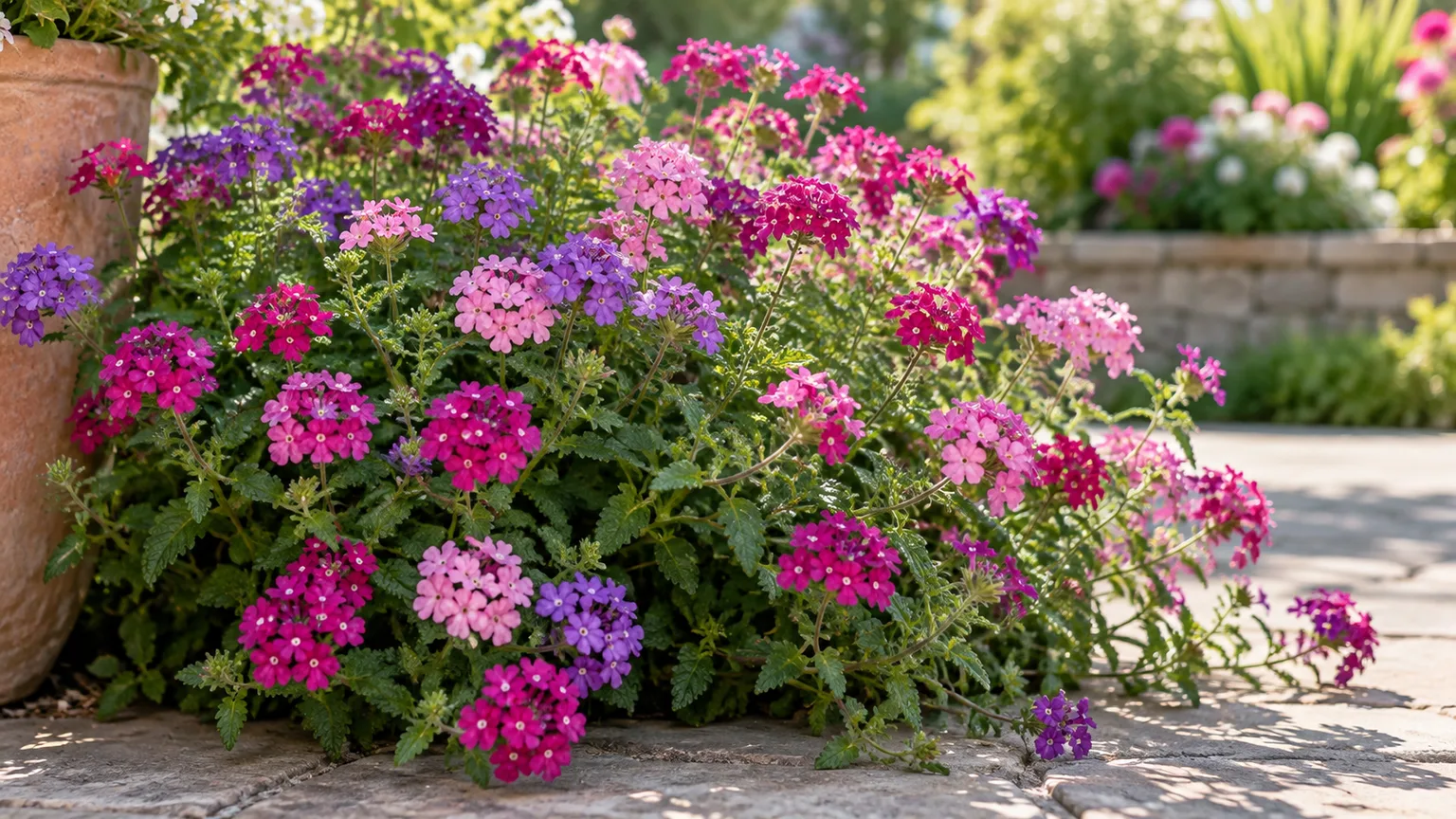
Full sun gives garden verbena its best flowering. Cultivars may mound, trail, or grow upright, so choose a form that suits a border, rock garden, window box, or hanging basket. Shadier placement can leave the plant with fewer flowers.
Keep the roots drained, not constantly wet
Garden verbena tolerates dry spells after it settles in, but excess water can lead to root rot. Use a pot with open drainage holes and let the upper layer of mix dry before watering again; do not let a saucer hold water against the pot.
Containers need more frequent checks than beds
A basket or small pot contains less mix and can dry quickly in warm, exposed weather. Check below the surface instead of relying on a weekly schedule. Established border plants are more forgiving and often need supplemental water only through a prolonged dry spell.
Deadhead for a longer display
NC State Extension notes that garden hybrids can flower through the season when spent flower heads are removed. If a cultivar is selected for wildlife or seed, leave some heads rather than deadheading every stem.
Treat perennial species as a separate choice
Some Verbena species are perennial, but their size, hardiness, and garden behavior differ from bedding hybrids. Verbena bonariensis is a tall, airy example; identify the species and cultivar on the nursery label before applying the compact-hybrid guidance on this page.
Is Verbena safe for pets?
This hub covers garden Verbena (Verbena × hybrida), and its pet-safety status is not established here. ASPCA listings for Lemon Verbena and Lantana refer to other plants; a no-toxicity report for one Verbena bonariensis cultivar does not establish safety for every verbena. Keep pets from chewing it until the exact plant is confirmed.
Do not transfer common-name toxicity records between plants: ASPCA identifies Lemon Verbena as Aloysia triphylla and Lantana as Lantana camara, while this hub covers Verbena × hybrida. Gardeners' World reports no toxic effects for Verbena bonariensis 'Lollipop' only; that cultivar report does not establish a genus-wide or hybrid-wide classification. Confirm the exact plant and ask a veterinarian about ingestion.
Watering Verbena
For Verbena, feel the mix about 2.5 cm (1 in) below the surface. If it is dry, water the root zone until the mix is evenly moist, then allow free drainage. and water follow the soil check rather than a calendar. Check containers more often in warm or windy weather; settled plants in beds need watering mainly during prolonged dry periods. Check pots more frequently during hot, sunny weather. In cool or rainy spells, reduce watering and let the mix dry more between checks.
| Detail | Information |
|---|---|
| How often | Follow the soil check rather than a calendar. Check containers more often in warm or windy weather; settled plants in beds need watering mainly during prolonged dry periods. |
| How to check | Feel the mix about 2.5 cm (1 in) below the surface. If it is dry, water the root zone until the mix is evenly moist, then allow free drainage. |
| Seasonal changes | Check pots more frequently during hot, sunny weather. In cool or rainy spells, reduce watering and let the mix dry more between checks. |
Signs of overwatering
- The mix remains wet for days or the container drains poorly.
- Leaves yellow or growth collapses while the root zone is still wet.
- Roots or the stem base soften after repeated overwatering.
Signs of underwatering
- The root zone is dry below the surface and the plant wilts.
- A container becomes unusually light and dries quickly in warm weather.
Soil & potting for Verbena
Use a mix of Use a quality potting mix for containers and hanging baskets., For beds, improve structure while preserving drainage; do not leave the crown in a wet pocket. for Verbena. Good drainage; avoid waterlogged beds and containers. Target soil pH around No single pH target is established for this cultivar group. Repot there is no fixed schedule. Garden hybrids are commonly grown as seasonal annuals; repot a plant kept through winter only when roots fill the container or the mix has broken down., ideally in start or move outdoor plants in spring after frost danger has passed. Repot overwintered containers as active growth resumes, and only move up one pot size when needed.
| Detail | Information |
|---|---|
| Recommended mix | Use a quality potting mix for containers and hanging baskets., For beds, improve structure while preserving drainage; do not leave the crown in a wet pocket. |
| Drainage | Good drainage; avoid waterlogged beds and containers |
| Soil pH | No single pH target is established for this cultivar group |
| Repotting frequency | There is no fixed schedule. Garden hybrids are commonly grown as seasonal annuals; repot a plant kept through winter only when roots fill the container or the mix has broken down. |
| Best season to repot | Start or move outdoor plants in spring after frost danger has passed. Repot overwintered containers as active growth resumes, and only move up one pot size when needed. |
Signs it needs repotting
- Roots circle the pot or emerge from its drainage holes.
- The container dries unusually fast despite thorough watering.
- The potting mix has compacted or no longer drains freely.