7 Edible Garden Plants Beyond Fruits and Veggies
Discover seven edible garden plants beyond fruits and vegetables, with growing conditions, harvest tips, culinary uses, and safety cautions.
The edible part of a garden is bigger than the vegetable bed. Fragrant grasses, ornamental flowers, silvery thistles, aquatic greens, and even a plant many gardeners pull as a weed can all contribute something to the kitchen. The useful question is not simply “Can I eat this?” but “Which part is eaten, when is it best, and was it grown in a clean, identifiable place?”
The seven plants below are a mix of herbs, flowers, greens, and stalk crops. Some are excellent beginner choices; others come with a firm boundary. Garlic mustard, for example, is edible but invasive across much of North America, so it belongs in a harvest-and-control conversation, not a shopping list for seed packets.
What makes a garden plant edible?
Botanically, “edible” is a broad word. It may refer to a tender leaf, a flower used as a garnish, a stalk that needs cooking, or a strongly flavored herb used in small quantities. It does not automatically mean the entire plant is pleasant, nutritious, or safe to eat raw.
Edible does not mean every part, every cultivar, or every growing site
Treat each plant as a separate food rather than assuming that a familiar name is enough. Cardoon is grown for young stalks and leaves, lemongrass is mainly used for its tender inner base and as a flavoring, and lemon verbena is harvested for its fragrant leaves. Hollyhock flowers and young leaves have culinary uses, but the right preparation and a clean growing history still matter.
Cultivar, age, and weather change the experience. A mature stalk can be fibrous, a heat-stressed green can become bitter, and an ornamental plant may have been treated with a pesticide that is not labeled for food crops. When a plant is new to you, start with a correctly identified specimen from a reputable nursery or seed source, use only the commonly eaten part, and sample a small amount after washing it.
How to grow and harvest unusual edible plants safely
Confirm identity and growing history before tasting
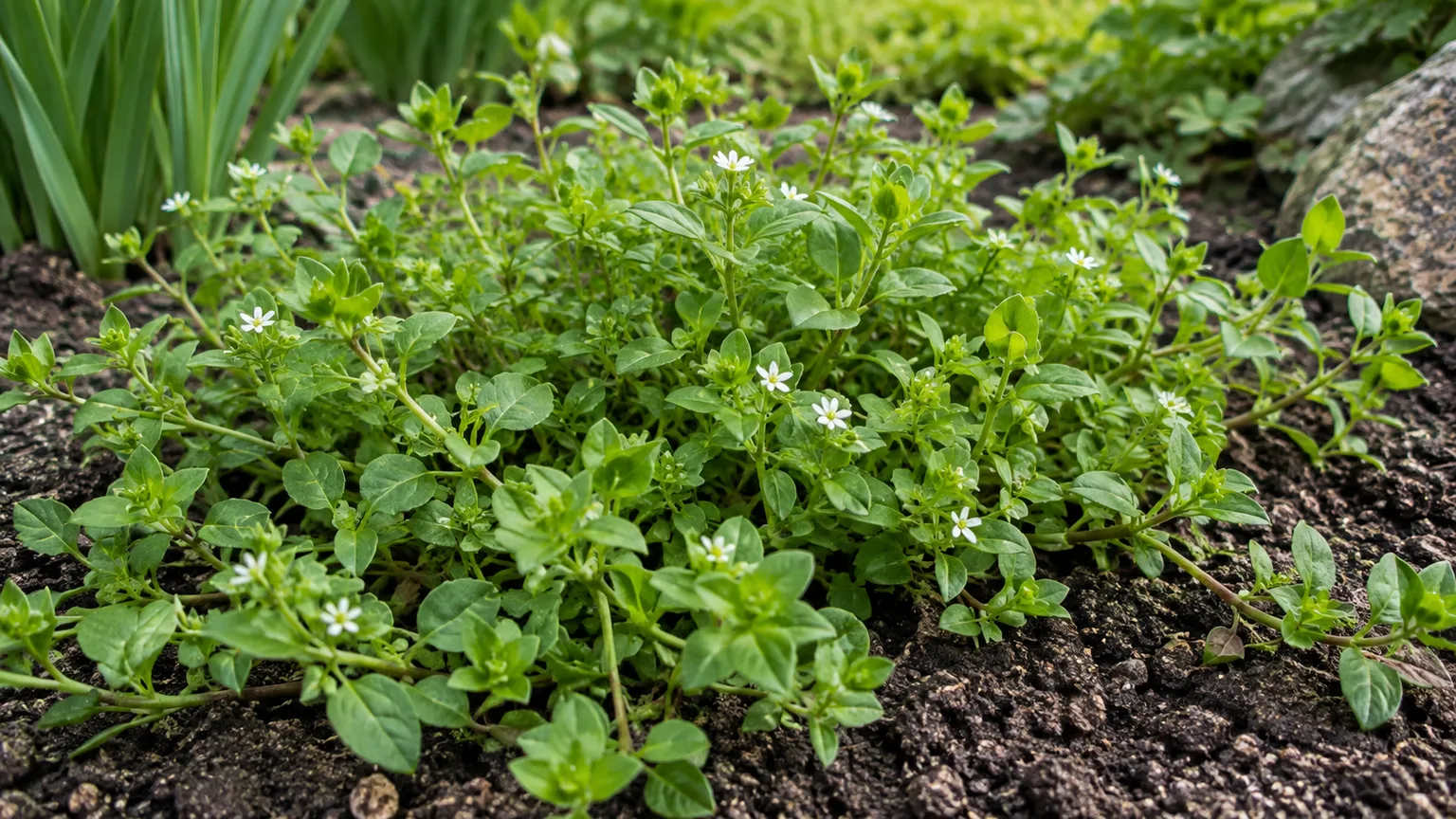
Identification is the first garden task, not a footnote. This matters most with chickweed and garlic mustard, which often appear on their own and can be confused with other low-growing or woodland plants. Iowa State Extension describes chickweed as a low plant with opposite oval leaves, succulent stems with a line of hairs, and tiny white flowers with five deeply divided petals; use those traits as a check, not as permission to eat any plant that looks vaguely similar. Iowa State Extension’s chickweed profile is a useful reference, but a local extension office is the right place to ask when identification is uncertain.
Also record what has touched the plant. Do not harvest from a bed recently treated with a product whose label excludes food crops, from soil contaminated by pet waste, or from a roadside where dust and runoff collect. “Homegrown” describes the location, not the safety of the harvest.
Match light, moisture, and winter strategy to the plant
These seven plants are not a single care category. Lemongrass and lemon verbena want warmth and sun; watercress wants dependable moisture; chickweed tolerates cool conditions; hollyhock can occupy a sunny ornamental border; and cardoon needs space as well as fertile, well-drained soil. Choose the site by the plant’s limiting factor rather than by the fact that all seven are technically edible.
Containers solve several problems. They make lemon verbena easier to move before frost, keep watercress clean and close to a water source, and give you a way to contain a vigorous plant. A pot does not fix poor drainage or inconsistent watering, though, and shallow containers heat and dry quickly.
Harvest young, clean tissue with a clear kitchen use in mind
Harvest early in the day after dew dries, using clean scissors or a knife. Young leaves and stalks are usually more tender, while flowers are best picked before they fade. Cut enough to encourage branching or regrowth, but leave the plant with enough foliage to recover; edible does not mean “strip the plant bare.”
The kitchen use should guide the harvest. Lemongrass is a simmered aromatic, cardoon is a cooked stalk, lemon verbena is a tea and dessert herb, and watercress is a fresh green. Knowing that difference prevents the common disappointment of biting into a tough stalk or expecting a delicate leaf to behave like lettuce.
1. Lemongrass
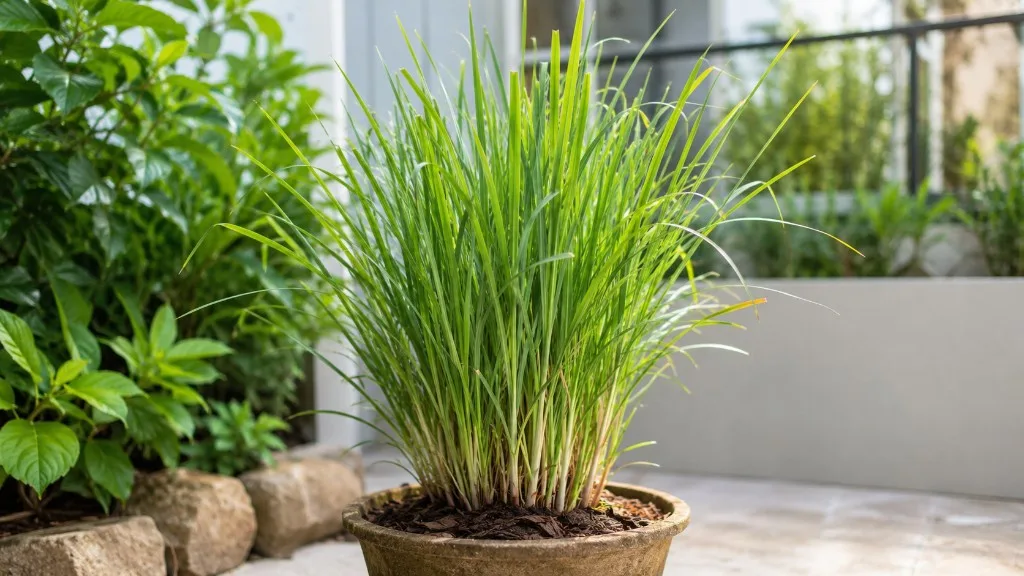
Lemongrass (Cymbopogon citratus) earns its place in a culinary garden because one clump supplies both structure and flavor. Its fountain of narrow leaves looks like an ornamental grass, but the lower stalks provide a bright lemon aroma for soups, curries, marinades, sauces, and tea. UF/IFAS notes that it can also function as a landscape border or accent in warm climates. UF/IFAS’s lemongrass guide
Give lemongrass full sun, heat, regular moisture, and soil that drains rather than staying saturated. It is perennial in frost-free conditions but often grown as an annual or container plant in colder climates. A container is particularly useful because you can move the clump indoors before a freeze, although indoor light and space may limit how much harvest you get.
Harvest the tender core, not the tough outer stalk
Cut a mature stalk near ground level, then remove the lower bulb and peel away the woody outer layers. The lower inner section is the part to bruise, mince, or slice; the whole stalk is usually too fibrous to eat as a vegetable. University of Wisconsin Horticulture recommends using the stalk as a flavoring that is simmered and removed, while the leaves can perfume tea and broths. The University of Wisconsin lemongrass profile
Harvest the oldest outside stalks first so the center can keep producing. If your recipe calls for a few stalks, take only what you need and freeze extras in a sealed bag. Lemongrass is a good first choice for a gardener who has sun, warm summers, and a habit of cooking foods that benefit from citrusy aromatics.
2. Cardoon
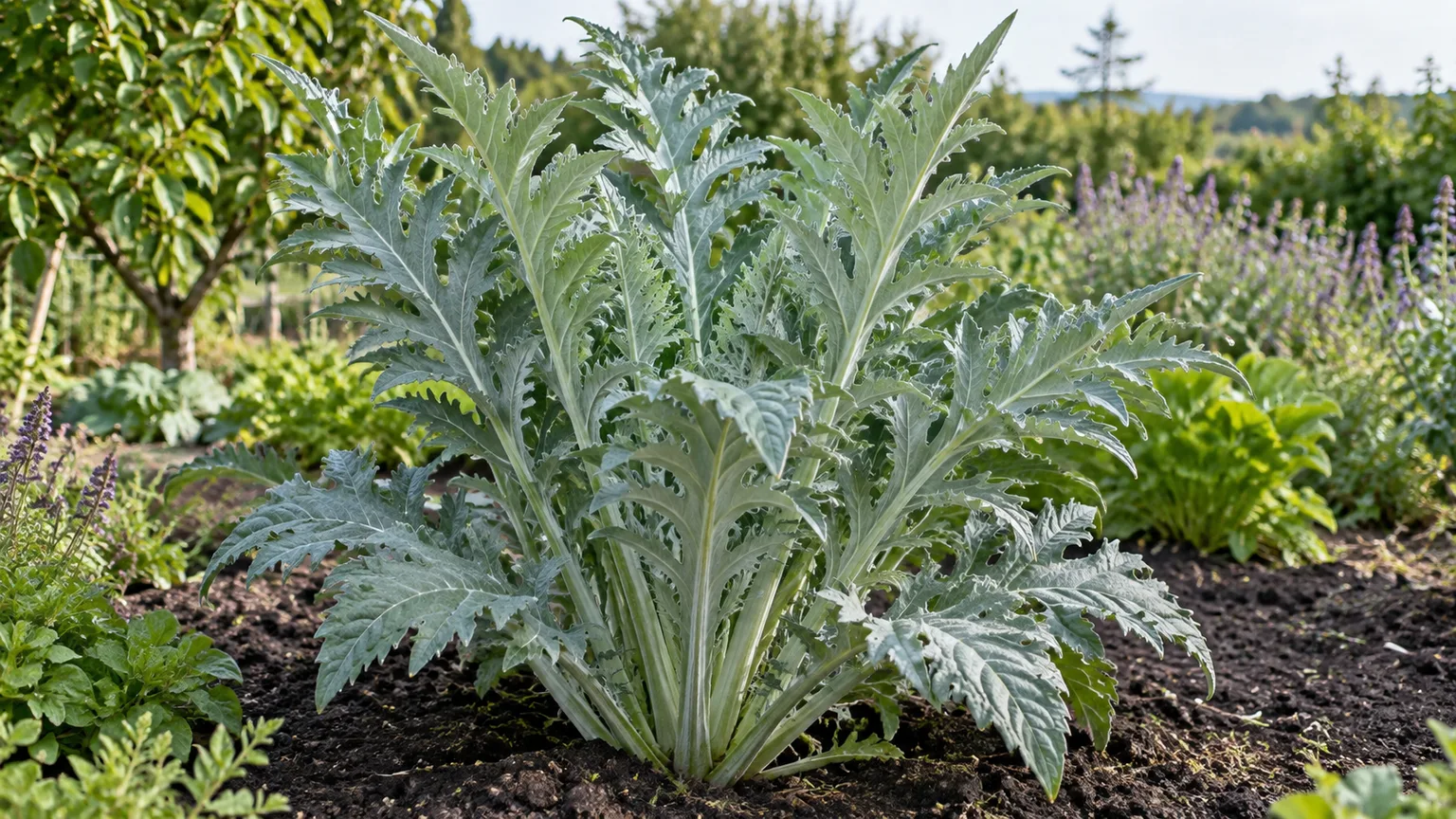
Cardoon (Cynara cardunculus) looks like a dramatic silver thistle but is grown as a vegetable-like stalk crop. It is related to the artichoke, and UF/IFAS describes it as a plant grown for edible stalks and leaves, with young harvests typically cooked. UF/IFAS’s cardoon profile
This is the choice for a gardener who wants an architectural plant and has room for it to become large. Plant it in full sun and fertile, well-drained soil, leaving enough space for a broad clump. Its height and spread can shade smaller herbs, and the foliage may flop or look ragged as it ages, so place it toward the back of a bed or where its gray leaves can be a focal point.
The edible stalks are best while young and tender. Many gardeners blanch them by shielding the lower stalks from light for a period before harvest, which reduces bitterness and produces a more delicate texture. Strip away coarse fibers, cut the stalks, and cook them rather than expecting a crisp raw snack. Cardoon is rewarding when you enjoy a project crop, but it is not the best pick for a tiny raised bed or a gardener who wants instant salads.
3. Hollyhock
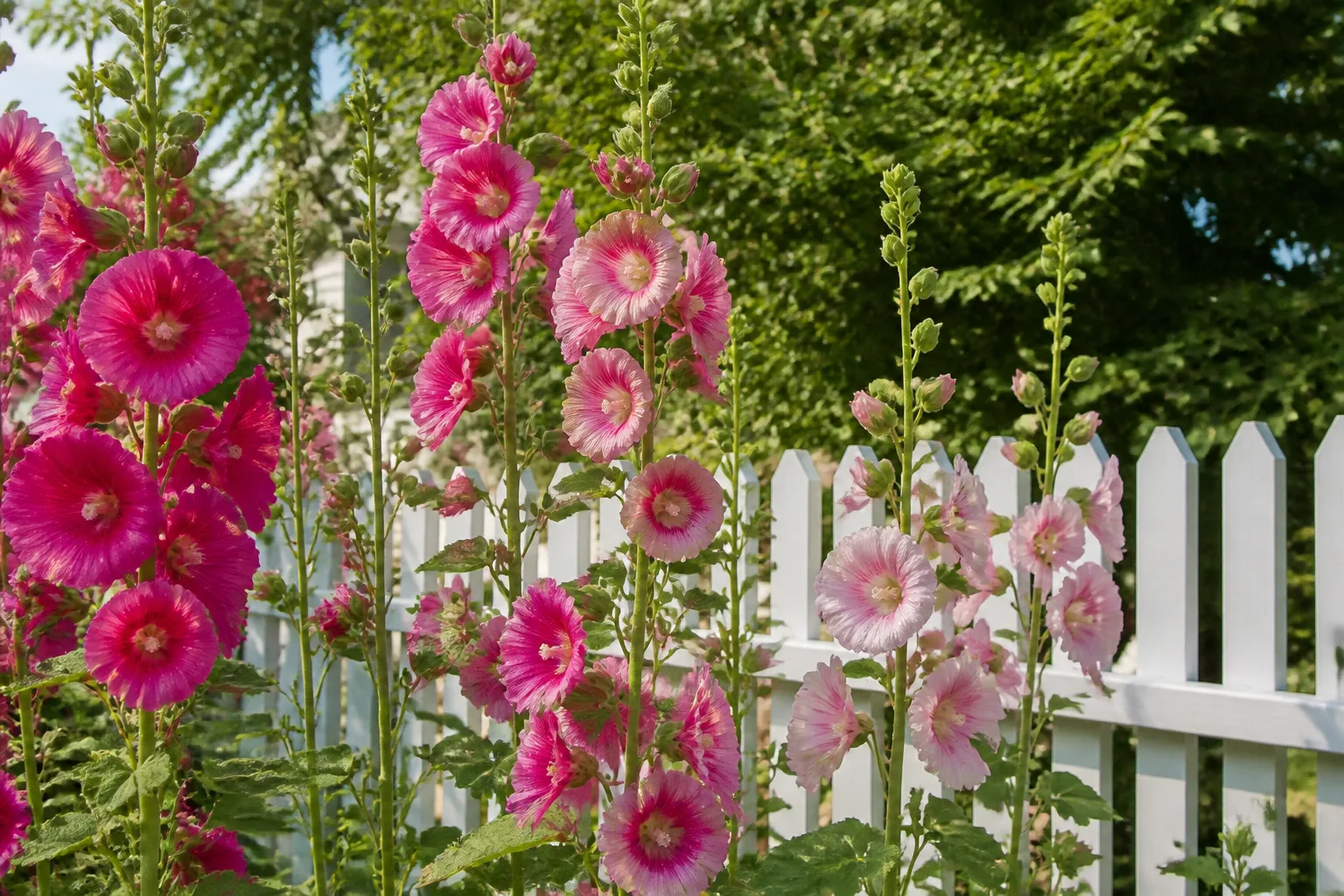
Hollyhock (Alcea rosea) is usually grown for its tall flower spires, pollinator value, and old-fashioned cottage-garden character. Its edible appeal is a bonus: the flowers can be used as a mild garnish, and young leaves are also described as edible by horticultural and extension references. Colorado State University Extension lists hollyhock among edible flowers, while a UC Agriculture and Natural Resources fact sheet notes that hollyhocks are bland but edible and can be added to salads or used as a garnish. The UC ANR hollyhock fact sheet
Grow hollyhock in full sun or light shade with well-drained soil. Tall stems may need a fence, wall, or discreet support, and crowded, damp foliage can encourage rust. If you intend to eat the flowers, grow an unsprayed plant away from ornamental pesticide treatments and remove the tough central reproductive parts before using the petals as a garnish.
Hollyhock is best thought of as an edible accent, not a major calorie crop. Use petals to finish a salad, dessert, or cool drink, and use young leaves sparingly as greens. The plant earns more garden space for its flowers and habitat value than for the amount of food it produces.
4. Lemon verbena
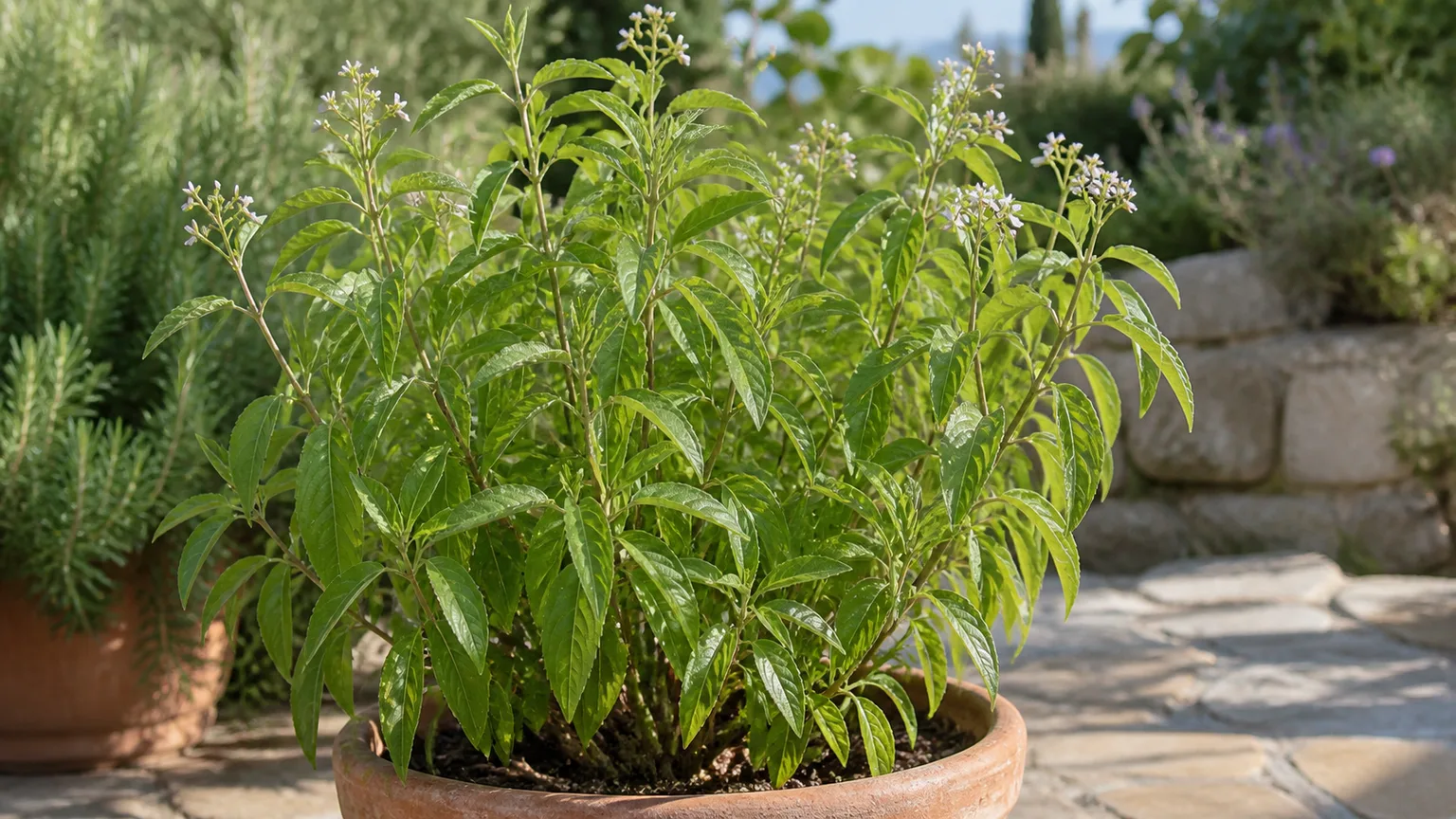
Lemon verbena (Aloysia citrodora) is a woody, strongly scented herb with narrow leaves that release their lemon fragrance when brushed. NC State Extension lists the leaves and flowers for teas, desserts, fruit salads, and jams, while Illinois Extension also recommends the leaves for beverages, salads, sauces, soups, and savory dishes. NC State Extension’s lemon verbena profile Illinois Extension’s lemon verbena guide
Give lemon verbena full sun and loose, well-drained soil. In a cold climate, grow it in a pot so it can move to a bright, sheltered location before frost. It may drop leaves in winter, but that does not necessarily mean it is dead; reduce watering while it is dormant and increase it as spring growth resumes.
Pinch or prune the tips to keep the plant bushy, and harvest leaves throughout the growing season. Fresh leaves make a vivid tea, while chopped leaves can flavor sugar for shortbread, ice cream, or fruit. Because the flavor is intense, a few leaves often do more than a large handful of a milder herb. Lemon verbena is one of the easiest ways to add an edible purpose to a sunny patio container.
5. Watercress
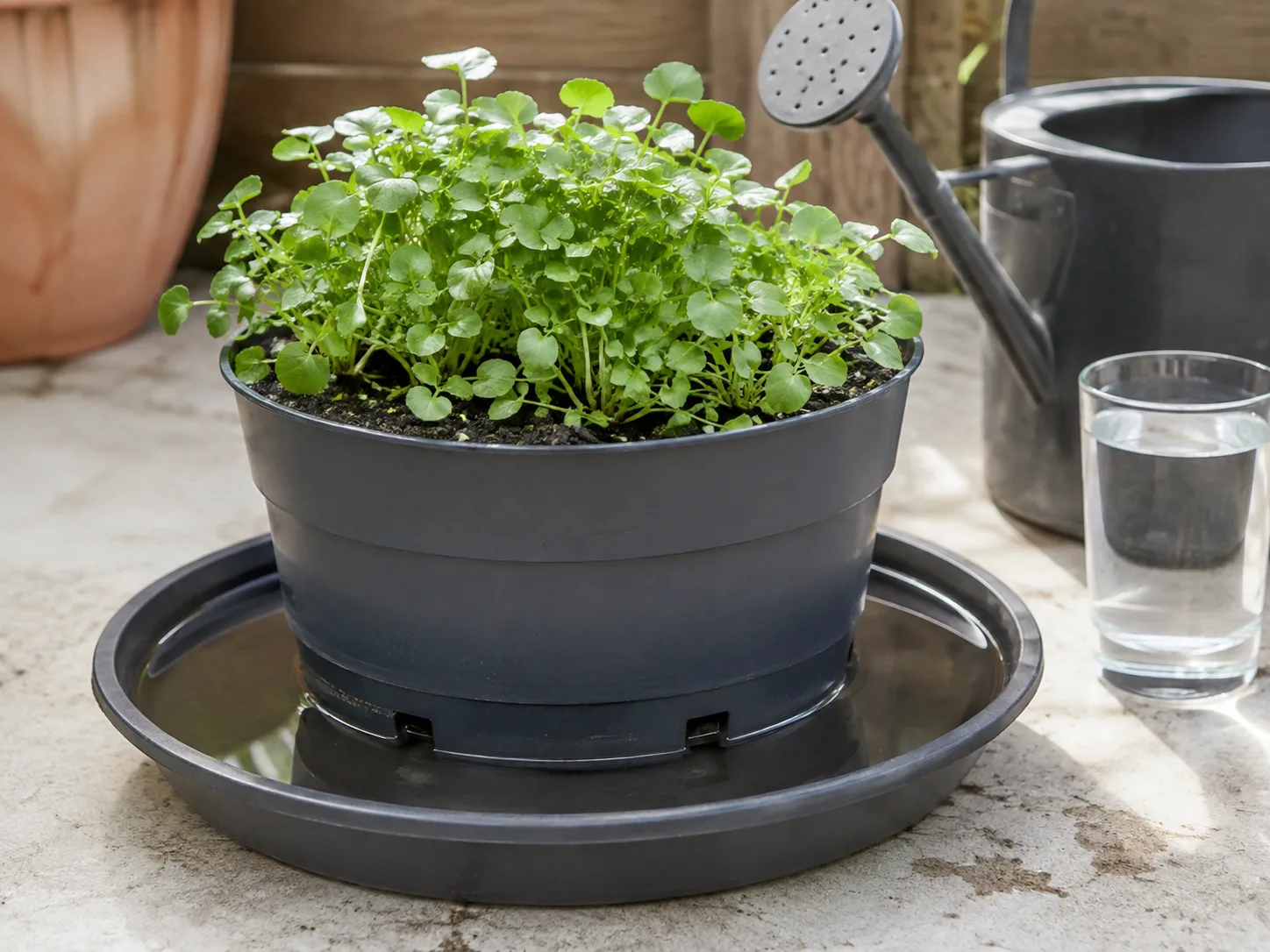
Watercress (Nasturtium officinale) is a peppery green that works in salads, sandwiches, soups, and sauces. It likes cool conditions and constant moisture, which makes it unusual in a typical garden but surprisingly manageable in a container. Utah State University Extension recommends harvesting the dark green leaves and young stems before flowering, when flavor is usually better. Utah State Extension’s watercress guide
Use a clean, wide container with drainage and rich growing media that stays evenly moist. You can sit the pot in a shallow saucer and refill it as needed, but do not allow stagnant, dirty water to become the growing system. A pot near a clean outdoor tap is easier to monitor than a makeshift stream bed.
Never assume wild watercress is safe because it is green and growing in water. Illinois Extension warns that untreated water can carry parasites such as Giardia, and Utah State Extension does not recommend harvesting from polluted or contaminated wild sites. Illinois Extension’s watercress food-safety note Wash cultivated harvest thoroughly, keep it chilled, and cut only what you can use while it is crisp.
6. Chickweed
Chickweed (Stellaria media) is a cool-season, low-growing annual that often appears in fertile garden soil without an invitation. Its leaves, stems, and flowers can be eaten raw or cooked, with a mild flavor often compared with spinach. Iowa State Extension describes it as naturalized throughout the United States and emphasizes its opposite leaves, succulent stems, hair line, and small white flowers as identification clues. Iowa State Extension’s chickweed entry
Chickweed is best for a gardener who wants a quick, cool-weather green and is willing to harvest selectively. Keep it in a clean bed or container rather than gathering from a lawn that may receive herbicide or from a path where dogs walk. Pull or cut the tender tops before the plant becomes stringy, rinse them well, and use them the same day in a salad, sandwich, pesto-style sauce, or cooked dish.
Do not let “common weed” lower your identification standard. Chickweed has look-alikes, and the fact that one patch is edible does not make every small white-flowered groundcover edible. If you cannot confirm the species, compost it and buy seed from a reputable source instead.
7. Garlic mustard
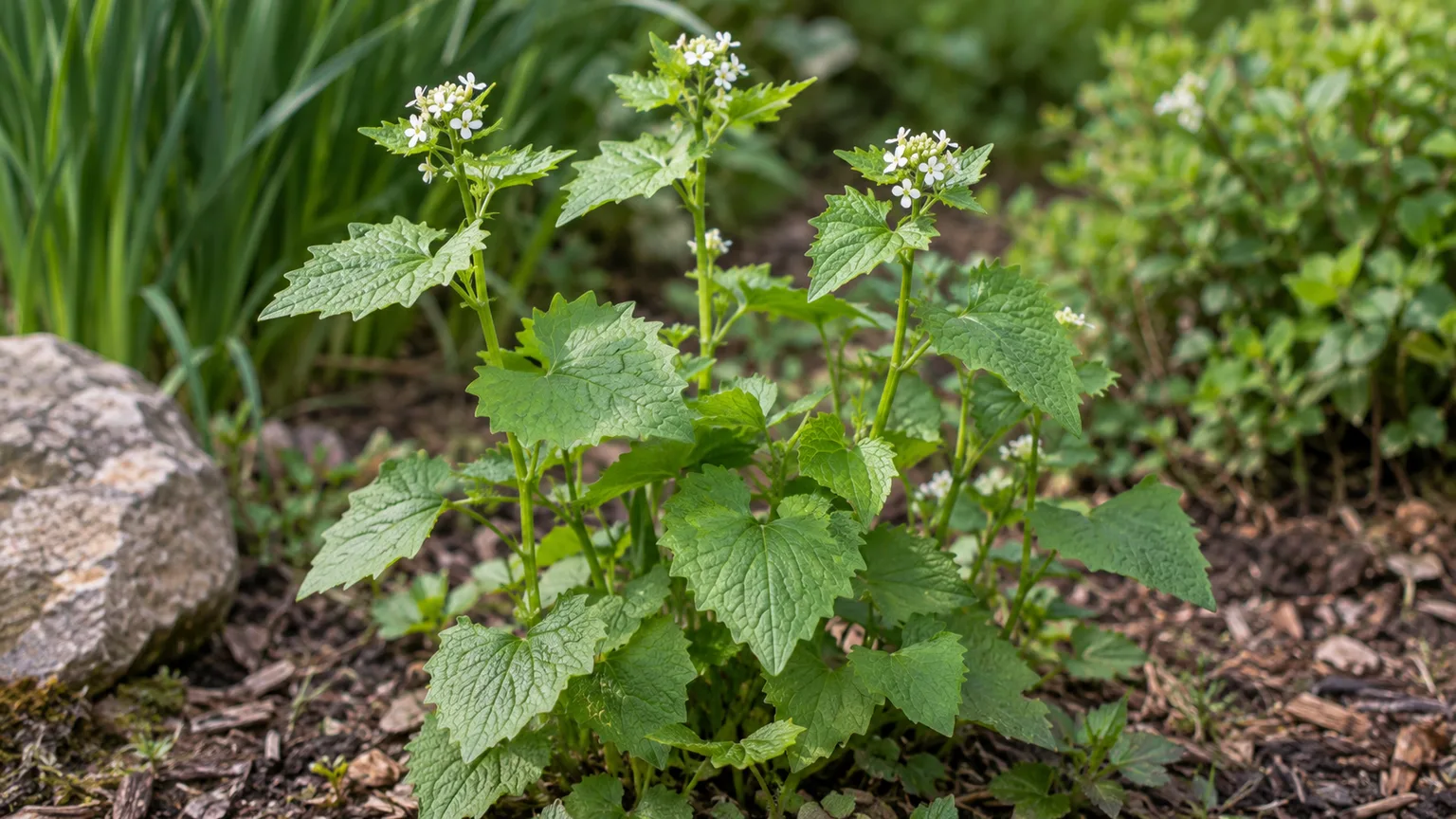
Garlic mustard (Alliaria petiolata) is the most important exception in this list. Its first-year rosette and second-year flowering stems are edible, and the leaves, stems, roots, and seeds have been used as pungent greens or seasoning. Penn State Extension describes the leaves as tenderer in the first year and more bitter or woody as the plant shifts energy toward seed production. Penn State Extension’s garlic mustard profile
It is also a non-native invasive plant that can form dense stands in woodland edges and suppress native plants. UConn Extension identifies its garlicky crushed-leaf odor, toothed leaves, white four-petaled flowers, and two-year life cycle, and explains why it spreads so effectively. UConn Extension’s garlic mustard fact sheet
That combination changes the recommendation: do not intentionally plant garlic mustard where it is invasive. If it is already present, harvest only after you are certain of the identification, pull or cut it before seed capsules mature, and bag or dispose of the plants in a way that prevents seed spread. Never leave pulled plants in a woodland edge or compost pile where viable seed can mature.
Use young leaves in a cooked green, pesto, soup, or chopped seasoning, and expect a sharp garlic-and-mustard flavor. Treat the plant as a contained removal project with a culinary byproduct, not as a desirable permanent crop. Local regulations and land-management advice take priority over any recipe.
How these seven plants compare
For the easiest start, choose lemon verbena if you have a sunny container or lemongrass if you have warmth and room for a clump. Choose watercress when you can keep a clean growing system consistently moist, and choose chickweed only if you are confident with identification and your garden has not been treated with lawn chemicals.
Cardoon takes the most space and patience, but it gives an ornamental bed a useful harvest. Hollyhock contributes flowers and pollinator value more than bulk food. Garlic mustard should be selected only as an invasive-plant management decision, never because it is an easy plant to grow.
| If you want… | Start with… | Main constraint |
|---|---|---|
| A fragrant container herb | Lemon verbena | Protect it from frost and avoid overwatering in winter |
| A warm-climate cooking aromatic | Lemongrass | Needs heat, sun, and a long season |
| A peppery salad green | Watercress | Clean water and consistently moist media |
| Edible flowers in an ornamental border | Hollyhock | Eat only unsprayed, correctly identified flowers |
| A dramatic edible stalk crop | Cardoon | Needs space and is best cooked young |
| A cool-season volunteer green | Chickweed | Identification and chemical-free harvest site |
| A harvest from an existing invasive | Garlic mustard | Prevent seed spread; do not plant it intentionally |
Common mistakes that make edible garden plants disappointing
The first mistake is choosing by novelty instead of conditions. A plant that sounds easy in a warm, humid climate may be a seasonal container project elsewhere. Before buying, check your frost pattern, summer heat, available sun, and whether you can supply the moisture the plant actually needs.
The second is harvesting the wrong tissue. Lemongrass outer leaves are tough, cardoon stalks become stringy, mature chickweed loses tenderness, and lemon verbena can overpower a dish if used like a leafy salad green. Read the plant’s growth stage as part of the recipe: young and tender is usually the goal, while tough or flowering tissue may need a different use.
The third is treating ornamental status as proof of food safety. A hollyhock from a flower bed may have been sprayed, and a volunteer green near a driveway may have absorbed contaminants. Keep edible and ornamental chemical records separate, avoid uncertain plants, and wash harvested material under clean running water.
The final mistake is ignoring the plant’s ecological behavior. Garlic mustard can be edible and still be a poor garden choice. A useful harvest never justifies allowing an invasive plant to set seed, and a recipe should not be the reason a native woodland loses groundcover.
Conclusion
Start with the plant that matches your garden’s limiting condition: lemongrass or lemon verbena for sun and warmth, watercress for clean moisture, hollyhock for an edible flower accent, cardoon for space, chickweed for cool-season harvesting, and garlic mustard only for careful control of an existing infestation. Confirm the species, grow it without food-inappropriate treatments, and harvest the part that is actually tender and traditionally used.
The best edible garden is not the one with the strangest plants. It is the one where every harvest has a clear purpose, every plant fits its site, and curiosity is balanced with identification, food safety, and respect for the surrounding ecosystem.