16 Gardenia Companion Plants for a Healthier Garden
Choose 16 gardenia companion plants by light, soil, moisture, and size. Get the best acid-loving matches plus smart placement for conditional pairings.
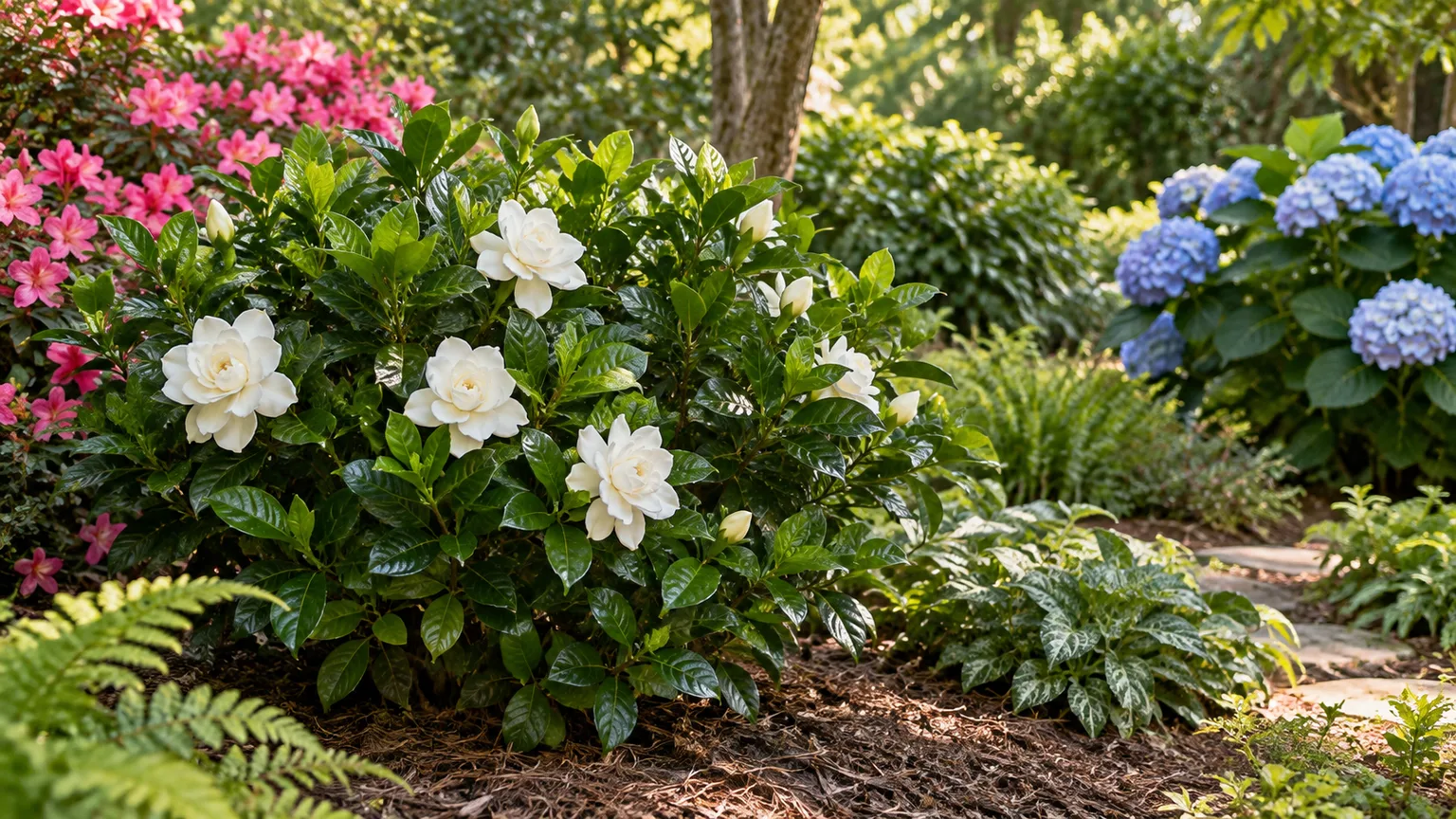
The best gardenia companion plants are not simply plants with flowers that look good beside white blooms. They are plants that can share the gardenia’s warm, sheltered setting without competing for the same root space, blocking light, or turning a carefully drained bed into a wet one.
For most outdoor gardenias, especially Gardenia jasminoides, the strongest direct matches are azaleas, camellias, rhododendrons, hydrangeas, ferns, hostas, heucheras, and moisture-tolerant begonias. Lavender, sweet marjoram, many salvias, and some annuals can still contribute color or fragrance, but they belong in a sunnier, drier pocket rather than in the gardenia’s constantly moist root zone.
That distinction is the key to making a mixed bed work. University extension guidance consistently describes gardenias as acid-loving plants that prefer rich, moist but well-drained soil and bright light or partial shade; UF/IFAS gives a typical target of about pH 5.0 to 6.5, while Clemson Cooperative Extension’s gardenia guide emphasizes morning sun, afternoon shade, and soil below pH 6.0. A practical Epic Gardening gardenia overview also highlights the importance of a moist but well-drained acidic site. The list below uses those conditions as the filter rather than treating companion planting as a magic pest shield.
Start with a gardenia’s non-negotiables
Light, warmth, and airflow
Gardenias need enough light to form buds, but hot reflected afternoon sun can scorch leaves and shorten the life of open flowers. A site with morning sun and afternoon protection is a useful starting point in hot climates; in milder climates, a gardenia may accept more sun if the soil stays evenly moist and the foliage does not overheat.
Warmth matters as much as light. Many gardenias are best suited to warm zones, and a plant that must be moved indoors or heavily protected in winter will have different companion options from a permanent shrub in a frost-free border. Check the cultivar’s mature height, width, and hardiness before copying a layout built around a smaller gardenia.
Airflow is part of the site, too. Do not pack a gardenia tightly between shrubs simply because all of them are described as shade tolerant. Leave enough room to inspect the leaves, water the soil without wetting the canopy, and prune out dead material when needed.
Acidic soil, moisture, and drainage
Gardenias are often called moisture-loving, but that does not mean they want saturated soil. Their roots need a consistent supply of water and oxygen, so rich soil that drains freely is more useful than a compact bed that stays wet after every storm. NC State Extension’s Plant Toolbox lists gardenia as preferring rich, acidic, well-drained soil and bright indirect light or partial shade.
Test the bed before adding sulfur, iron, or an acidifying fertilizer. A low-pH companion plant cannot rescue a gardenia planted in alkaline fill, and repeated amendments can create a moving target if the underlying soil or irrigation water pushes the pH upward. If the site is naturally alkaline or poorly drained, a large container or raised bed may be more reliable than forcing a whole border to behave like an acid bed.
Mulch can help buffer soil moisture and temperature, but keep it off the gardenia’s stem and the crowns of shallow-rooted underplants. Water deeply enough to moisten the root zone, then let the surface condition and weather—not a companion-plant chart—decide when the next irrigation is needed.
How to judge a companion plant
Same root zone versus nearby planting pocket
Use three questions before planting anything beside a gardenia: Does it want similar moisture? Does it tolerate the same light? Can it stay in its lane as it matures? A plant that answers “yes” to all three can share the bed. A plant that answers “no” may still be a good nearby accent in a pot, at the sunny edge, or in a separate irrigation zone.
This is why a list can include both camellias and lavender without pretending they have identical care. Camellias prefer the same kind of acidic, well-drained, moisture-retentive site as gardenias, while lavender generally wants more sun and a drier, sharply drained root zone. They can be part of the same garden design, but they should not be watered as one planting pocket.
Color, foliage, fragrance, and pollinator value are different jobs
A companion can earn its place by repeating a bloom season, adding a contrasting leaf texture, framing the shrub, or supplying flowers for pollinators. Those are real design and ecological benefits, but they are not proof that the plant repels whiteflies, scale, aphids, or caterpillars.
The same caution applies to strong-smelling herbs and flowers. Their aroma may change how insects move through a small bed, but the effect depends on wind, plant size, pest pressure, and whether the crop is actually covered by the scent. Treat fragrance as a low-cost experiment, not as a replacement for scouting or physical protection.
16 gardenia companion plants, organized by fit
Acid-loving shrubs and bloom partners
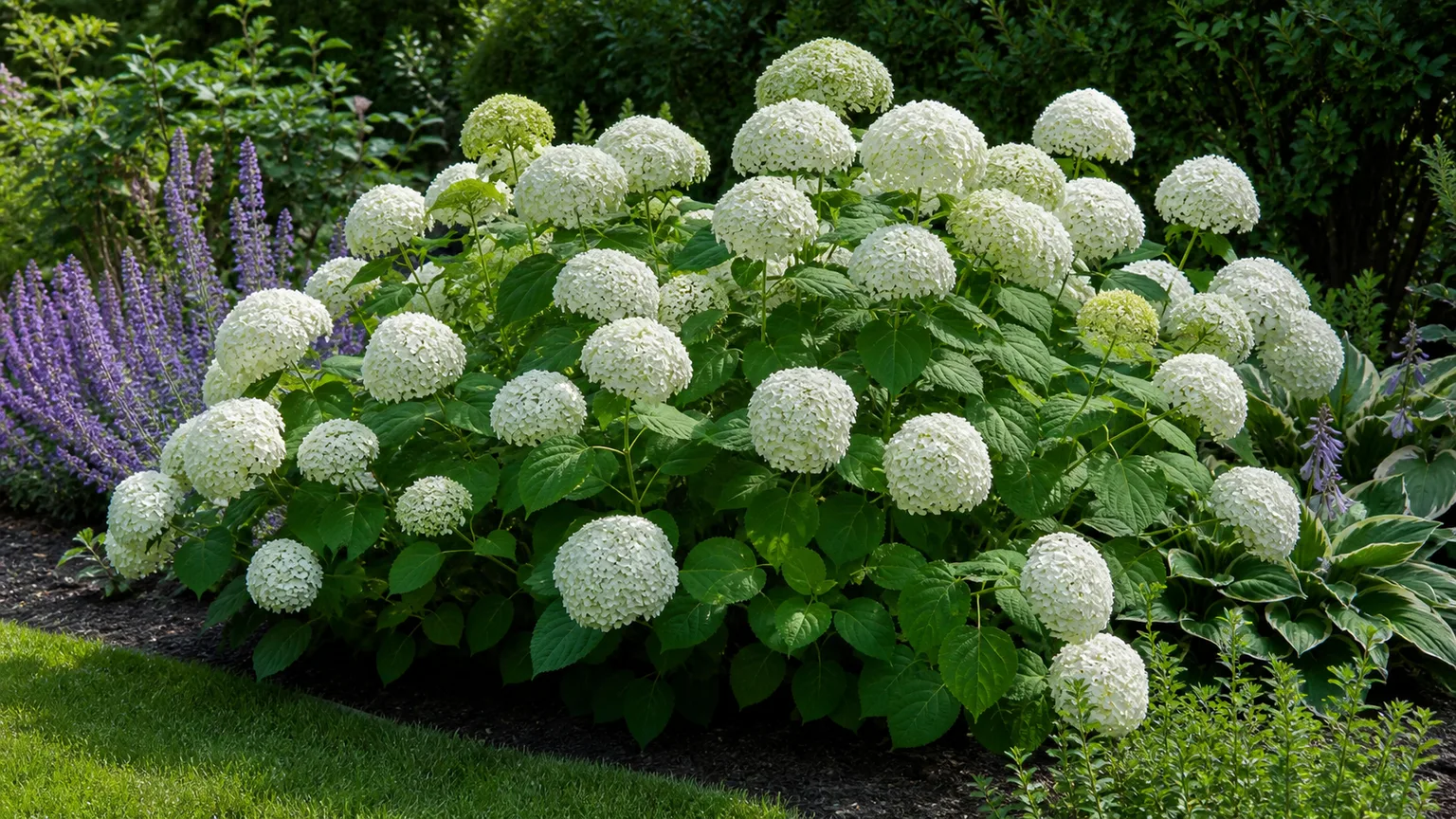
1. Hydrangeas. Hydrangeas are among the easiest visual partners for gardenias because both can look at home in a rich, evenly moist bed with protection from harsh afternoon sun. University of Maryland Extension describes hydrangeas as preferring rich, well-drained soil in full sun to partial shade, while Iowa State notes that most species perform best with afternoon protection. Give each shrub room for mature width, and remember that a large hydrangea can eventually shade the gardenia more than you intended.
2. Azaleas. Azaleas are one of the strongest direct companions because they share the basic acid-soil and partial-shade brief. University of Maryland Extension describes azaleas and rhododendrons as preferring cool, moist, well-drained acidic soil and protection from strong wind. Choose a cultivar whose mature size fits the gardenia bed, and do not plant either shrub in a low pocket where water collects.
3. Camellias. Camellias bring evergreen structure and flowers at a different time from many gardenias, so they can keep the border interesting beyond the gardenia’s main flush. They are best treated as substantial shrubs, not filler; place the camellia behind or beside the gardenia where its mature canopy will not close off airflow or steal the brightest light.
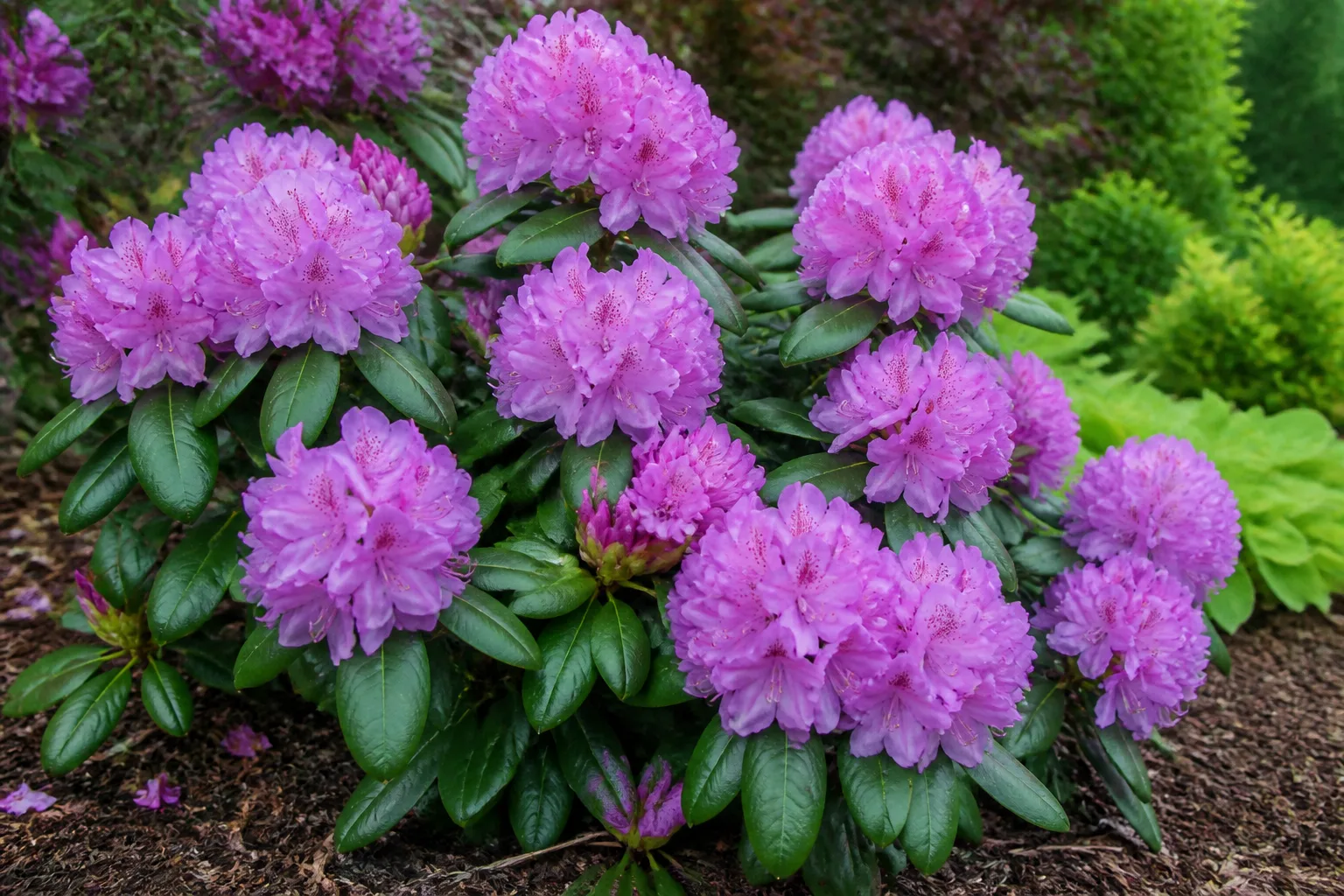
4. Rhododendrons. Rhododendrons suit a larger, cooler, more protected border where acidic soil is already established. They are good companions by habitat, but their eventual size and root competition can overwhelm a small gardenia. Use compact cultivars where available, and keep a clear service gap between the shrubs instead of planting them as a solid wall.
Shade-layer foliage companions
5. Ferns. Ferns add fine texture beneath or beside a gardenia without demanding a second showy flower color. Select a species suited to your climate and moisture level, and keep the fronds from forming a dense, permanently wet collar around the gardenia’s base. Ferns are especially useful where a gardenia receives filtered light rather than full afternoon sun.
6. Hostas. Hostas can fill the lower layer of a protected gardenia bed with broad leaves, but they need enough light for the chosen cultivar and enough moisture to avoid repeated wilting. Iowa State Extension notes that hostas prefer full to partial shade and moist, well-drained soil, with blue and variegated types generally needing more protection from bright sun. Put the hosta where it will not conceal the gardenia’s stem or make inspection difficult.
7. Heucheras, or coral bells. Heucheras are useful for a low front edge because their foliage supplies color even when the gardenia is between blooms. Leaf color changes the light requirement: darker and green forms often tolerate more shade, while some gold types hold their best color with gentle morning light. Plant them in well-drained soil and avoid burying their crowns beneath wet mulch.
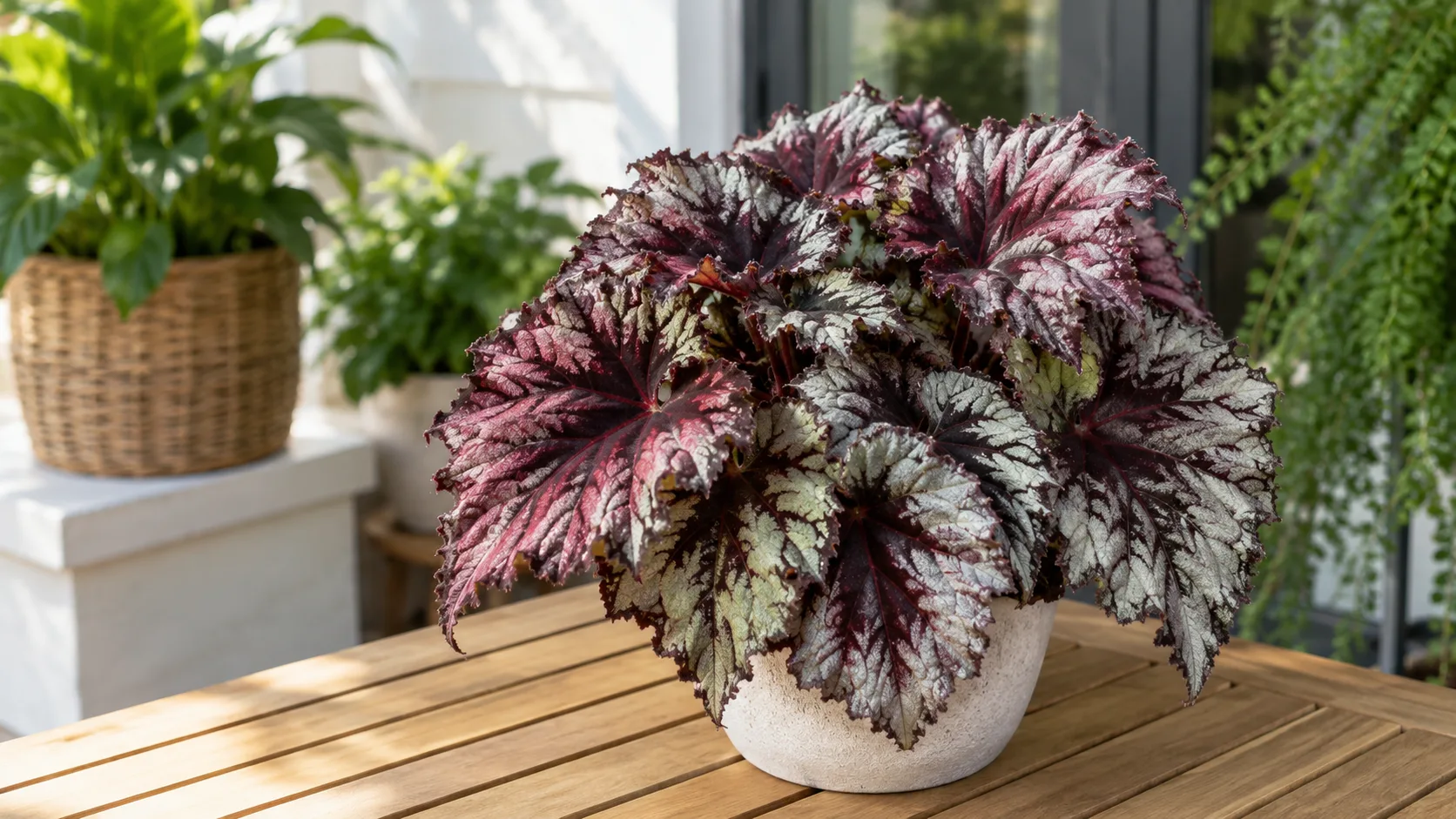
8. Begonias. Wax begonias and other bedding begonias can work as seasonal underplanting where the gardenia bed is bright but sheltered. They appreciate more moisture than lavender and can soften the base of a shrub with pink, red, or white flowers. Treat “begonia” as a broad category, though: rex begonias and other tender types may be better in containers, and no begonia should be used to justify waterlogged soil.
Sunny seasonal color and fragrant accents
9. Marigolds. Marigolds are a practical seasonal accent when the gardenia’s edge receives enough sun for them to flower. They add warm color and flower diversity, but the old claim that marigolds automatically repel every garden pest is too broad to guide a planting decision. Use them as a colorful border or container, and keep them from crowding the gardenia’s root flare.
10. Dahlias. Dahlias can share a warm garden with gardenias when they receive a brighter pocket and regular feeding, but many need more direct sun and space than a shaded shrub border provides. Plant them where their stems will not lean into the gardenia and where lifting or staking tubers will not disturb the shrub’s roots. A dwarf or container dahlia is easier to fit than a tall dinner-plate cultivar.
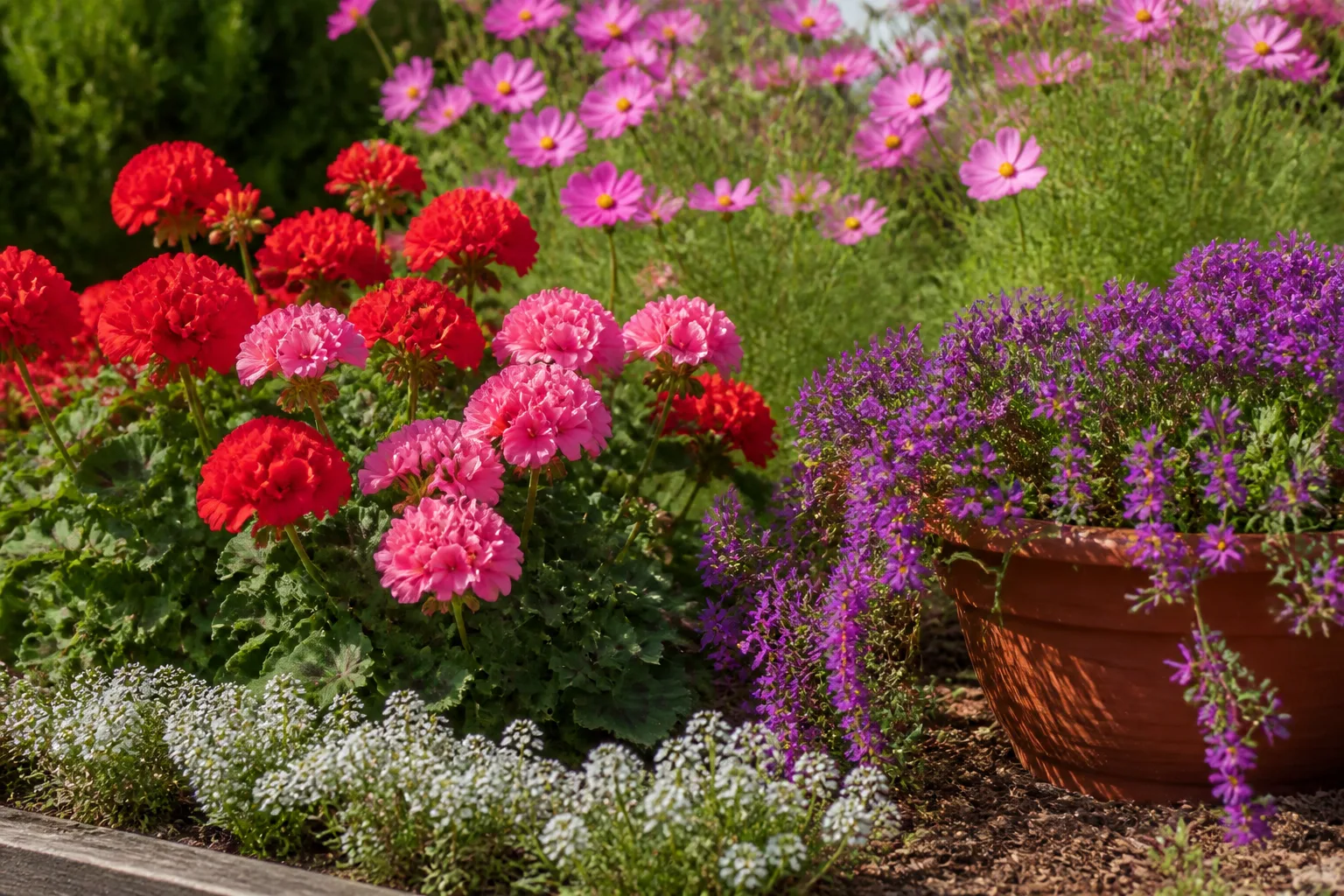
11. Geraniums. Garden geraniums usually means Pelargonium in the bedding trade, while hardy geraniums are a different group with different habits. Pelargoniums make good seasonal container accents near a gardenia because they bring color without forcing you to alter the shrub’s soil, but they are not a reliable soil-improving or pest-repelling treatment. Keep the pot in the same sheltered light and water it separately if the gardenia bed stays damp.
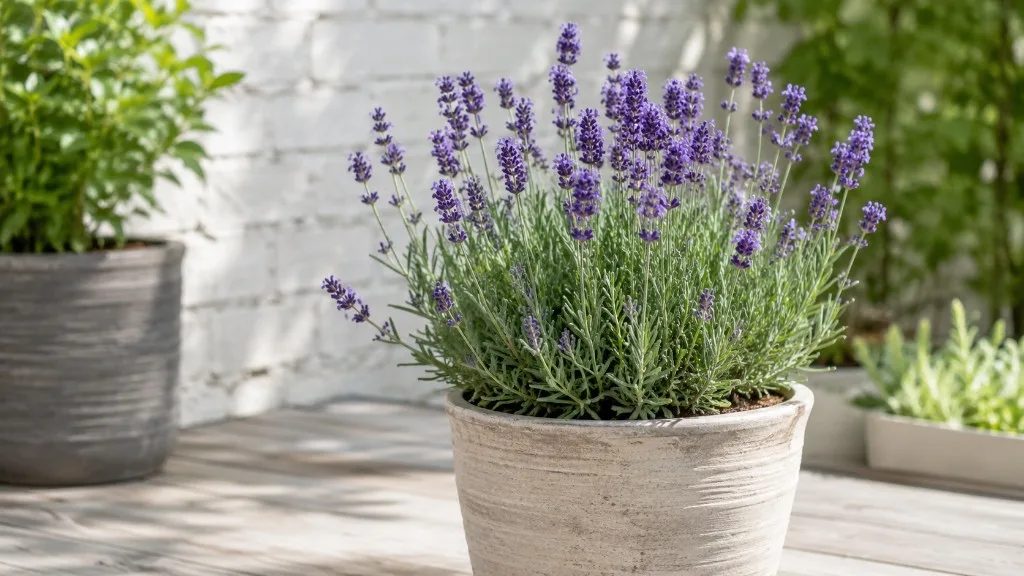
12. Lavender. Lavender is a conditional companion, not one of the best direct gardenia neighbors. It wants strong sun, excellent drainage, and a root zone that dries more between waterings, so place it in a raised, gravelly edge, a separate pot, or the dry side of a path. Its fragrance can complement gardenia’s perfume, but do not keep a gardenia bed dry just to accommodate lavender.
13. Salvias. Ornamental salvias vary widely, but many flower best in sunny, well-drained soil. The Royal Horticultural Society’s salvia guide describes most salvias as preferring a sunny position with well-drained soil and notes their value to pollinators, which makes them useful in the same overall garden even when they do not belong in the gardenia’s moist shade. Choose a compact cultivar for the sunny margin and check its mature height so it does not block morning light.
Structural and flexible border plants
14. Boxwoods. Boxwoods supply evergreen structure and can define the edge of a gardenia border, especially in a formal design. They are not a reason to plant shrubs shoulder to shoulder: leave enough space for air movement and pruning, and avoid placing a dense boxwood hedge directly in front of a small gardenia where it will trap humidity and reduce light.
15. Jasmine. Jasmine and gardenia can create a powerful fragrance garden, but jasmine is often a vigorous vine or spreading shrub rather than a quiet underplant. Give it a trellis or a separate support, keep its stems out of the gardenia’s canopy, and check the species before planting because light, hardiness, and mature size vary. Jasmine works best as an adjacent vertical layer, not as a plant woven through the gardenia.
16. Sweet marjoram. Sweet marjoram belongs with the dry-site herbs, not in the gardenia’s wettest root zone. It can be a pleasant sunny-edge plant in a warm climate, and its small flowers add another nectar source, but its best placement is a container or a separate strip where drainage is sharper and irrigation is lighter.
Build the planting layout before you dig
A small bed or container grouping
For a small bed, start with one gardenia as the anchor and place it where morning sun and afternoon protection are already available. Put one or two direct companions—such as a compact azalea, heuchera, hosta, or fern—toward the cooler side, leaving a visible gap around the gardenia’s stem. One gardenia at a bed corner often performs better than three shrubs packed into a tight triangle.
For containers, group pots by care rather than by color. A gardenia can sit beside a pot of lavender or marjoram for a fragrance display, but the pots should have separate drainage and watering routines. A shallow saucer that keeps the gardenia pot standing in water is a root-rot risk, even if the neighboring plants appear lush.
A larger shrub border
In a larger border, use layers: tall camellia or rhododendron at the back if the climate and mature sizes allow, gardenias in the middle, and low hostas, heucheras, ferns, or suitable begonias in front. Put hydrangeas where their larger leaves and watering needs make sense, and reserve lavender, salvias, marjoram, marigolds, dahlias, and pelargoniums for the brighter perimeter.
Keep irrigation zones visible in your design. Drip or soaker lines can serve the moist acid-loving shrubs, while a sunny herb edge can be watered less often. Avoid burying the entire bed beneath a single dense mulch blanket if it makes the dry pocket stay wet or hides the crowns of the low plants.
Spacing should follow mature width, not the size of the nursery pot. As a starting rule, leave at least 12 inches between a young gardenia and an annual or low perennial, then increase the gap for a shrub that will mature several feet wide. When two plants will eventually touch, allow room for air to move between them or plan to prune one without exposing the other to repeated damage.
What to do when pests still show up
Why scent is not a guarantee
Gardenia pests can include whiteflies, scale, aphids, and other insects, and companion plants can also bring their own pests or create hiding places for slugs and caterpillars. A fragrant neighbor may make the border more complex to an insect, but it cannot make a gardenia invisible or replace a healthy site.
The useful test is simple: compare what happens in your bed rather than assuming a universal result. Note the companion, the date, the damage pattern, and whether the gardenia was stressed by drought, waterlogging, crowding, or a recent transplant. That record helps you separate a real local pattern from an attractive gardening claim.
A practical scouting and protection sequence
When you see damage, identify it before reaching for a spray. Look on the undersides of leaves, inspect new growth and flower buds, and check whether the problem is chewing, sucking, discoloration, or wilt. Clemson’s gardenia pest guidance is a useful starting point for matching common pests to symptoms.
Next, correct the condition that makes the shrub vulnerable: restore consistent moisture without saturating the soil, improve airflow, move a container out of reflected heat, or remove a plant that has grown into the canopy. For chewing pests on nearby vegetables or annuals, physical barriers and hand removal are often more predictable than hoping a companion plant will solve the outbreak. Follow local extension advice and the current product label if a treatment is needed, and avoid spraying open flowers when pollinators are active.
Plants to place elsewhere
There is no universal blacklist, but the clearest poor direct neighbors are plants that keep the gardenia’s root zone too dry, too wet, too crowded, or too shaded. Lavender, sweet marjoram, and many salvias should be separated into a sunny, sharply drained pocket. Vigorous jasmine needs support and distance, while large rhododendrons, camellias, hydrangeas, and boxwoods need enough room to avoid swallowing the gardenia as they mature.
Basil, mint, and lemon balm are not automatically forbidden, but they often want a different moisture or containment plan. Mint and lemon balm are easiest to manage in pots; basil can live in the same broad garden but usually should not share a tiny, constantly wet root zone with a gardenia. Fennel is better kept apart mainly because it becomes tall and self-seeds freely, not because a simple companion chart can prove that its roots poison every neighbor.
The goal is not to find sixteen plants that all behave identically. The goal is to build a garden where each plant receives the light, water, drainage, and space it needs while the whole border still feels intentional.
Conclusion
The best gardenia companion plants are azaleas, camellias, rhododendrons, hydrangeas, ferns, hostas, heucheras, and suitable begonias when you want a shared moist, acidic, partially shaded planting zone. Marigolds, dahlias, geraniums, lavender, salvias, jasmine, boxwoods, and sweet marjoram can still make the garden more colorful, fragrant, or structured—but several need a brighter edge, a separate container, or more room than a gardenia bed usually offers.
Start with the site, not the plant list. Test the soil, protect the gardenia from harsh afternoon heat, leave room for mature spread, keep airflow open, and divide the bed into irrigation pockets. Treat companion planting as one useful layer of design and habitat, then rely on scouting and appropriate physical or label-directed controls when pests appear. That approach gives your gardenia the conditions it needs to bloom instead of asking a companion plant to do a job it cannot reliably do.



