21 Best Companion Plants for Tomatoes (and 7 to Avoid)
Find the best companion plants for tomatoes, including basil, marigolds, herbs, flowers, and root crops, with spacing, timing, and disease cautions.
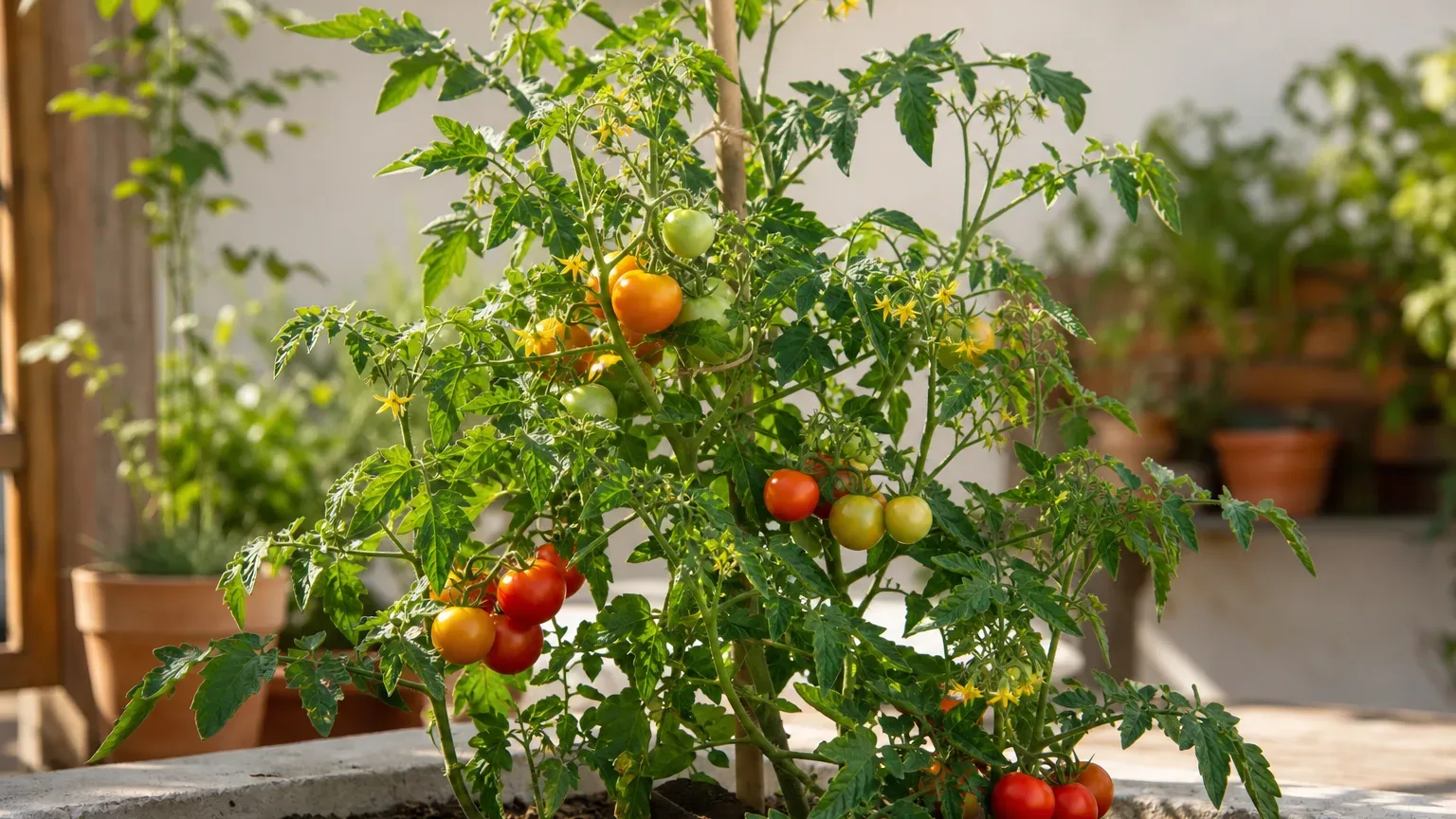
Tomatoes are generous plants, but they are not small. A single indeterminate vine can occupy several square feet, cast afternoon shade, and turn the space around it into a humid thicket by midsummer. The best companion plants for tomatoes earn their place by sharing the same warm, sunny conditions, filling a different layer of the bed, flowering for beneficial insects, or maturing before the tomato canopy closes.
The useful question is not “Which plants magically help tomatoes?” It is “What job do I need a neighbor to do, and can both plants still get the conditions they need?” Penn State Extension’s research-based companion guide describes herb partnerships as pest confusion, interference with egg-laying, and beneficial-insect support—not an invisible force field. That distinction makes the list below more reliable: choose the right plant for the right job, then keep the tomato’s light, root room, and airflow nonnegotiable.
The short answer: choose a companion by its job
If you want one easy answer, plant basil near a tomato. It likes the same warm weather, sun, and regular moisture, and Penn State research describes basil as a plant that can mask tomato odors from thrips and reduce tomato hornworm egg-laying behavior. It may improve the garden’s pest environment, but it cannot stop every hornworm or replace scouting.
For a compact edible bed, add chives, garlic, carrots, radishes, parsley, or cilantro. For flowers and beneficial insects, choose French marigolds, calendula, nasturtiums, borage, sweet alyssum, zinnias, or sunflowers. If your main problem is a cramped bed, a low-growing herb or quick root crop usually helps more than a tall plant that competes with the tomato for light.
Use the following job map when you are choosing only two or three neighbors:
| Your goal | Start with | Important limitation |
|---|---|---|
| Share warm-season space | Basil, thyme, marigold, nasturtium | They still need enough root room and water |
| Attract predators and pollinators | Calendula, alyssum, cilantro, oregano, zinnia | Flowers must be available, not clipped immediately |
| Fill the understory | Carrot, radish, chive, parsley | Harvest quick crops before the canopy closes |
| Add a living border | Thyme, chives, calendula, alyssum | Keep the tomato stem base open and dry |
| Improve disease management | Any low, non-crowding companion | The real controls are airflow, sanitation, and rotation |
What companion planting can actually do
Companion planting is functional interplanting: two or more species share a space because their timing, architecture, root depth, or relationship with insects makes the combination useful. Sometimes the benefit is direct, such as a trellised crop using vertical space. Sometimes it is indirect, such as a flowering herb supplying nectar to an insect that preys on aphids.
The strongest case for herbs is not that their smell repels every pest. Penn State Extension explains that insects use visual and chemical cues to find crops; some herbs can confuse those cues, mask volatile compounds, or interfere with egg-laying. Its tomato examples include basil for thrips and hornworms and thyme for yellow-striped armyworm egg-laying. That is meaningful evidence for a tactic, not a guarantee for every cultivar, climate, or pest population.
Flowers can perform a different job. A diverse bed gives ladybugs, lacewings, hoverflies, parasitic wasps, bees, and other insects more food and shelter than a bed made of one crop. The benefit arrives over time, so a flower that is blooming during peak tomato pest pressure is more useful than a marigold planted too late to flower.
Companions also improve space efficiency. A carrot grows down, a tomato grows up, and a thyme plant spreads low. Put those shapes together and you can harvest more from the same bed without pretending that the plants share one root system. Gardenary’s practical seasonal-combination approach starts with mature size, growth habit, and season before it considers a traditional companion chart; that is a sound rule for small gardens.
What companions do not do is prevent late blight, early blight, blossom-end rot, cracking, or drought stress. A crowded bed can make disease worse by holding leaves wet. UW–Madison plant pathologists link early blight to infected debris, dense foliage, high humidity, and longer leaf-wetness periods; their recommendations emphasize spacing, airflow, sanitation, resistant varieties, and rotation. A good companion planting plan supports those measures instead of competing with them.
Start with the tomato bed, not the chart
Before choosing a companion, identify the tomato’s mature habit. Determinate tomatoes stay more compact and often finish a main crop in a defined window. Indeterminate tomatoes keep extending and need a cage, stake, or trellis; they will eventually shade and overhang their neighbors. A plant that looks perfectly spaced in May may be buried by July.
Give the tomato the sunniest position, then place shorter companions on the east, north, or open front side. If you put a tall sunflower or trellis on the south side, it can block the tomato’s strongest light for much of the day. In hot climates, some afternoon shade can be helpful, but it should be a deliberate climate decision, not an accident caused by a companion that outgrew the bed.
Match water needs as carefully as pest claims. Basil, parsley, cilantro, chives, and tomatoes can share a regular watering rhythm. Sage, oregano, thyme, and lavender prefer sharper drainage and less constant moisture; they often work better at the edge of a bed or in their own pots. A pairing fails when the gardener keeps the whole bed wet enough for one plant and too wet for the other.
Finally, reserve an inspection lane. You need to see the underside of leaves, reach the stem, and harvest without brushing wet foliage through every plant. If a companion makes the tomato impossible to inspect, it is too close regardless of what a chart says.
The best edible companions for tomatoes
These plants give you a second harvest or a useful herb while helping with layering, timing, or insect habitat. Their shared value is practical rather than mystical.
Basil, chives, and garlic
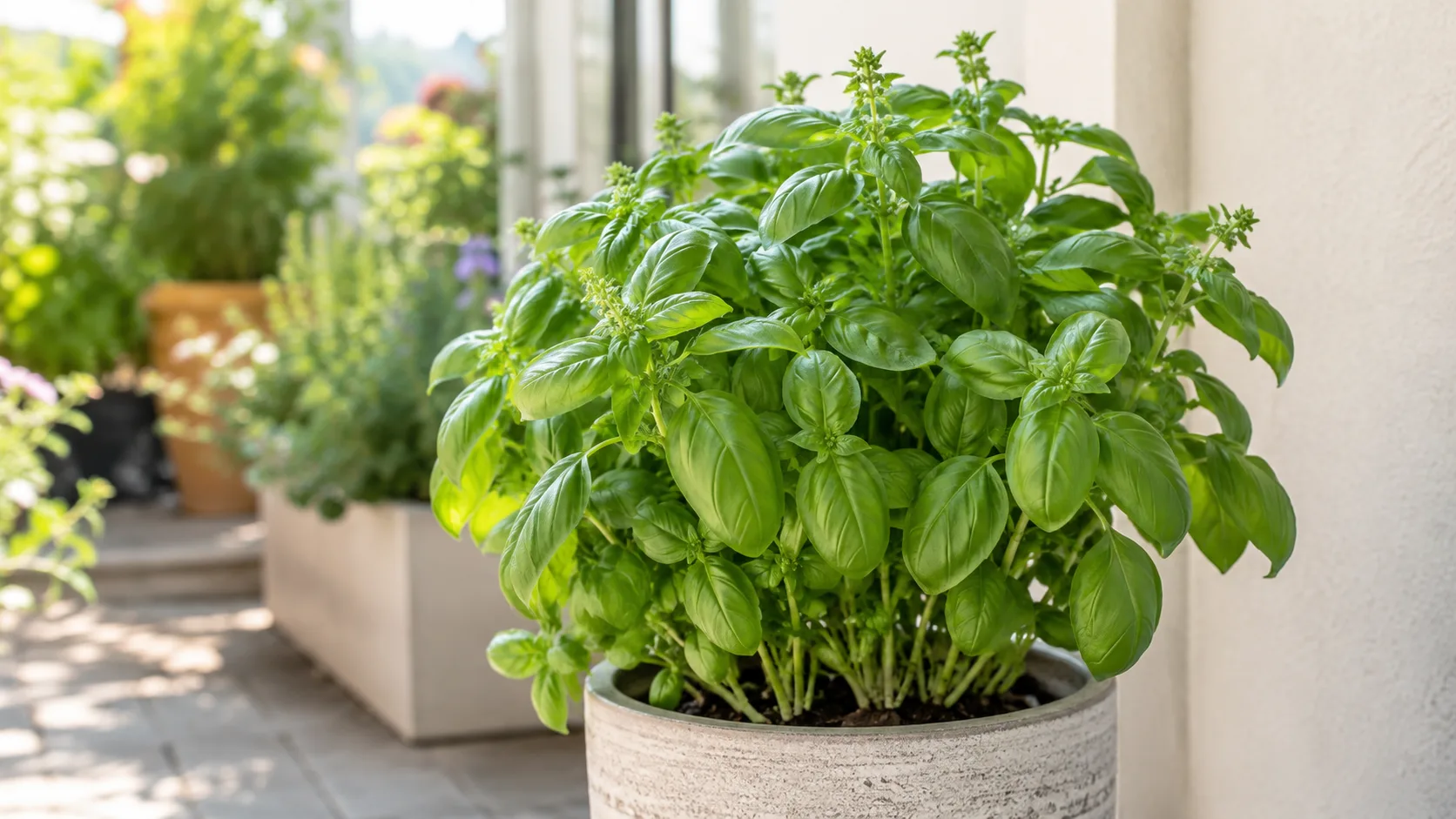
1. Basil is the most versatile tomato companion. Plant it where it receives full sun and steady moisture, about 8–12 inches from a tomato stem and farther from a sprawling indeterminate vine. Allow some plants to flower if you want their blossoms to feed small pollinators; keep a few vegetative plants pinched for kitchen harvest.
Penn State Extension reports that basil interplanted with tomatoes can mask tomato cues from thrips and reduce egg-laying by adult tomato hornworms. That makes basil a strong, evidence-backed choice for a mixed bed, but inspect plants weekly because a masked host is still a host.
2. Chives are compact, perennial, and easy to put along the sunny edge of a tomato bed. Their narrow leaves do not compete heavily with the tomato canopy, and their purple flowers attract insects when allowed to open. Cut flower stalks after bloom if you want fresh leaves, or let a few clumps flower for habitat.
3. Garlic fits between young tomatoes or along a bed margin because its vertical leaves occupy little horizontal space during the early season. It is especially useful as a timing partner: garlic is planted and grown in a cooler window while tomatoes arrive after the danger of frost. Do not treat garlic as a fungicide substitute, and avoid packing the bed so tightly that harvesting bulbs disturbs tomato roots.
Carrots, radishes, parsley, and cilantro
4. Carrots are a good understory crop because their edible root develops below the tomato’s main canopy. Mother Earth News’ companion guide includes carrots among traditional tomato pairings, but the more dependable benefit here is root-zone layering. Choose a short or medium variety if your bed is shallow, loosen the soil before planting, and avoid repeated digging once the tomato is established. Sow carrots early enough to harvest before the tomato’s roots and foliage make the row difficult to reach.
5. Radishes mature quickly and can occupy the space around a young tomato. They are useful as a temporary crop, not a permanent carpet. Harvest them before they become crowded, and do not let a radish row become so dense that it traps moisture at the tomato’s base.
6. Parsley tolerates a spot near tomatoes if it has enough moisture and light. Its flat or curly foliage is edible, while its small flowers can provide food for beneficial insects after the plant bolts. Because parsley is slower than radish, put it on the outer edge where it can remain accessible after the tomato begins to spread.
7. Cilantro is a cool-season herb that often bolts as tomatoes reach their peak. That is not automatically a failure. Letting some cilantro flower can bring small beneficial insects into the garden, then remove the spent plants when they shade the tomato or stop producing useful foliage. Sow it in succession so the bed has both harvestable leaves and flowers across the season.
Flowering companions for pests and pollinators
Flowers are valuable around tomatoes when they bring nectar, occupy a border, or serve as a monitored trap crop. They are not valuable when they crowd the stem, hide a pest outbreak, or consume water the tomato needs.
French marigolds, calendula, nasturtiums, and borage
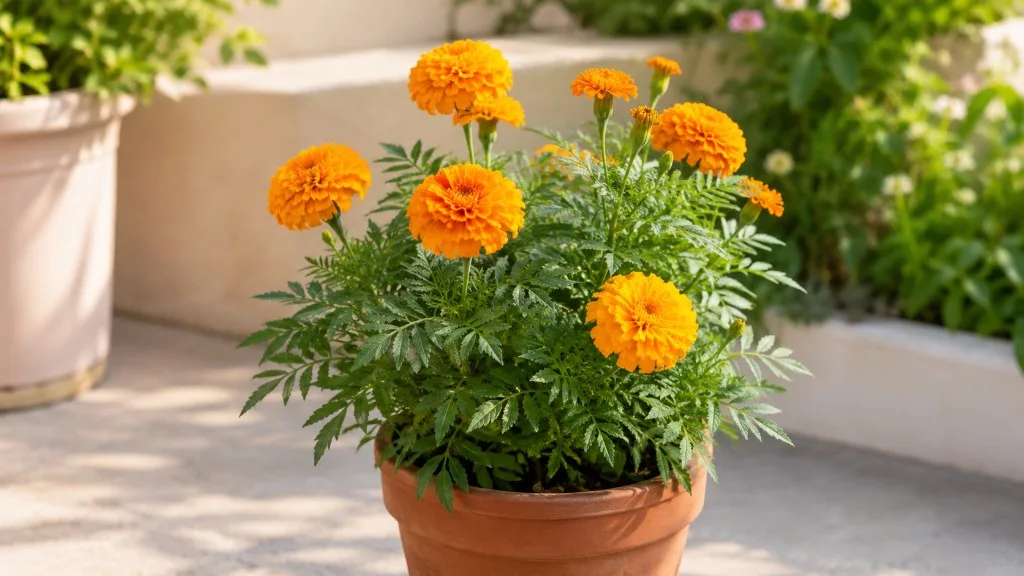
8. French marigolds (Tagetes patula) are compact enough for bed edges and containers. They are widely used in nematode-management plans, but the important nuance is timing and density: a few flowering plants beside a tomato are not the same as a deliberate marigold rotation or a cover crop. Choose French types when you want a smaller plant, and leave enough clearance to inspect the tomato.
9. Calendula brings yellow or orange flowers to a cool-to-mild season and can support beneficial insects. It is a better border plant than a plant tucked into the tomato’s center because its foliage can become broad. Deadhead only if you need to control spread; otherwise, a steady succession of blooms is part of its companion job.
10. Nasturtiums are edible, colorful, and useful as a monitored trap crop for aphids and whiteflies. Put them on the outside of the bed, not under the tomato’s wettest foliage. If aphids concentrate on the nasturtiums, decide whether you are willing to remove the infested growth; a trap crop that is never inspected simply becomes a pest nursery.
11. Borage has rough leaves and blue, star-shaped flowers that attract bees. It is vigorous and can self-sow, so place it where you can cut it back without stepping through the tomato. One plant at the corner of a large bed can be enough; several plants can become a water and space problem.
Oregano, thyme, sage, sweet alyssum, and asparagus
12. Oregano is a low, aromatic herb that earns space when its flowers are open. It prefers drier soil than tomatoes, so use it at the bed edge or in a pot beside a container tomato. Let it flower for beneficial insects, but do not force the entire tomato bed into an oregano-style watering schedule.
13. Thyme stays low and can act like a living border without blocking a tomato’s sun. Penn State Extension includes thyme in research-backed tomato partnerships involving yellow-striped armyworm egg-laying. Use it as a perimeter plant with room to spread, rather than burying the tomato stem base under a dense mat.
14. Sage is attractive to bees and useful in the kitchen, but it is a moisture-mismatch companion. Give it sharply drained soil or a container and place it nearby, not in the tomato’s irrigation basin. Its flowers are the reason to keep it in the garden; its scent is not a reliable replacement for pest scouting.
15. Sweet alyssum forms a low flowering edge that suits a tomato pot or the front of a raised bed. Its small flowers are useful for nectar-seeking insects, and its compact habit leaves the tomato’s upper canopy unobstructed. Keep it trimmed enough that it does not cover the soil surface right against the stem.
16. Asparagus can share a long-term garden with tomatoes only when the bed is designed for both crops. Tomatoes can follow the spring asparagus harvest, but established asparagus needs its ferny top growth to rebuild roots. Do not squeeze asparagus into a seasonal tomato container; give it permanent space and respect its different calendar.
Lavender, sunflowers, zinnias, crimson clover, and black-eyed peas
17. Lavender attracts bees and looks excellent near a tomato bed, but it wants leaner, drier soil. Grow it in a pot or on a separate, well-drained edge where it can receive full sun without sharing frequent tomato irrigation.
18. Sunflowers bring bees and birds into the wider garden. Choose a compact or branching type and place it on the north side so it does not cast a long shadow across the tomato. Large sunflowers can also compete for water and become a support problem, so they are a better perimeter crop than a plant at the tomato’s feet.
19. Zinnias provide a long flowering season and attract a mix of pollinators and predatory insects. Plant them where mature stems will not flop into the tomato cage, and keep enough air space for harvest. Their main benefit is habitat and garden diversity, not a promise of larger fruit.
20. Crimson clover can function as a living mulch or seasonal cover, but it requires management. Mow, cut, or terminate it before it competes with young tomatoes for light and water. It is most useful in a planned rotation or wide bed, not as an unmanaged carpet around the stem.
21. Black-eyed peas can act as a monitored trap crop for southern green stink bugs in warm regions while still producing an edible harvest. Give them their own row or a clear outer edge, and watch for the pests they may attract. Because legumes and tomatoes are both vigorous feeders in a small bed, avoid an overcrowded tangle and replenish soil based on a soil test rather than assuming the peas will fertilize the tomato immediately.
Smart layouts for raised beds and containers
The easiest layout has one tomato as the anchor, low companions at the front, and flowers at the corners. In a 4-by-8-foot bed, put the tomato on the north side if you want to preserve light for shorter crops, then run basil, parsley, chives, or thyme along the accessible edge. Sow a short row of carrots or radishes in the open soil only if you can harvest it before the canopy closes.
For two tomatoes, keep the varieties’ mature spacing and support systems in charge. Add one flowering border—calendula, alyssum, or French marigold—rather than filling every remaining inch. A diverse but walkable bed will outperform a crowded “companion” jungle because you can water at the soil line, remove diseased leaves, and find hornworms early.
Containers need an even stricter plan. A large pot can hold one tomato and one compact basil or thyme plant if both have adequate root volume and drainage. A separate pot is better for oregano, sage, and lavender because you can water them less often. Never put a fast-spreading nasturtium or borage in a small tomato pot unless you are prepared to cut it back.
Use vertical space carefully. A tomato cage is not automatically a trellis for beans, cucumbers, or a second vine; extra weight can bend supports and close the canopy. If you use a trellis, place it where the crop will not shade the tomato during the hours of strongest light, and keep a hand-width inspection path beside the support.
Seven tomato companions to keep separate
“Worst” means poor fit for the same bed or moment, not that these plants are universally bad neighbors. Some can grow in the same garden with distance, separate containers, clean crop rotation, and careful spacing.
1. Fennel is the clearest keep-apart choice. Its chemistry and large mature size make it a poor mixed-bed neighbor for many plants, and its strong growth habit is difficult to manage beside a tomato. Put fennel in its own location where it can be harvested and contained.
2. Mature dill can become tall and wide, shade the tomato, and compete for water. Young dill may be useful for beneficial insects when flowering, but the mature plant is not a good excuse to overcrowd a tomato row. Grow it at the edge and remove it when it begins to dominate.
3. Brassicas—cabbage, broccoli, kale, cauliflower, Brussels sprouts, collards, and kohlrabi—prefer a cooler season and can be heavy feeders. They are not automatically poisonous to tomatoes, but they often create a timing, space, and nutrition mismatch. Grow them in a separate seasonal block, especially in a small raised bed.
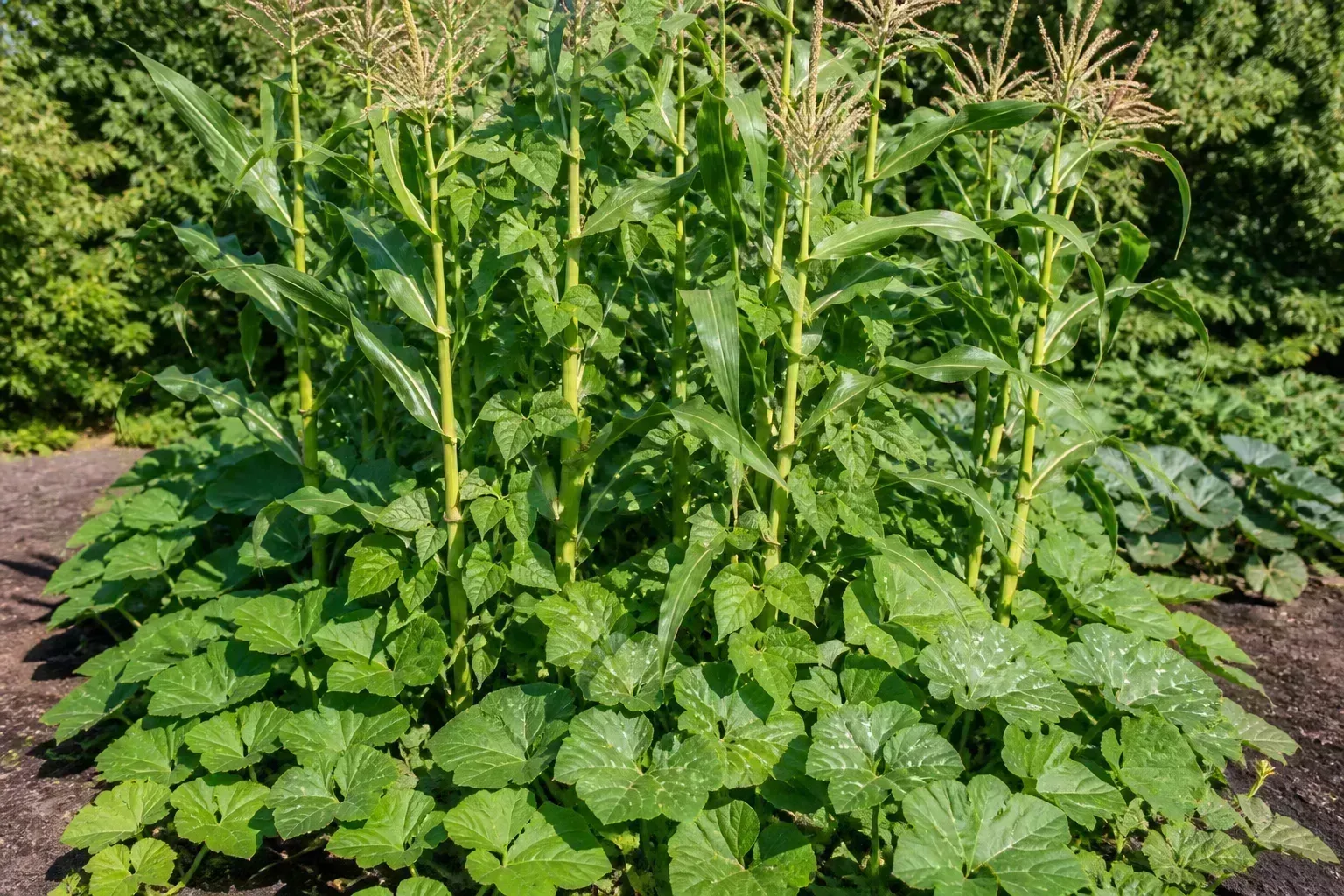
4. Corn becomes tall, hungry, and wind-prone, and tomato fruitworm and corn earworm are the same species. Mother Earth News also flags the shared pest concern. Keep corn far enough away that scouting one crop does not become a problem for the other, and do not let corn shade the tomato’s prime light.
5. Potatoes and tomatoes are both nightshades with overlapping disease concerns. UW–Madison notes that late blight affects both crops and can move into a garden on infected plant material or favorable weather. A separate block and sensible rotation give you more disease-management options than a mixed row.
6. Peppers are edible companions in many garden layouts, but they share the nightshade family and several pest and disease pressures with tomatoes. If disease has been a recurring problem, grouping them together concentrates susceptible hosts. Keep them in another bed when you have room; if you must combine them, use generous spacing and strict sanitation.
7. Eggplant has the same shared-host issue and can become a large, dense plant. It is not a guaranteed failure beside tomatoes, but it adds another nightshade to the same pest and disease neighborhood. Separate it when early blight, late blight, or hornworms are already a problem.
These cautions are about risk management, not superstition. A mixed garden can be productive, but the more susceptible hosts you group together, the more important clean transplants, airflow, crop rotation, and early removal of diseased material become. UW–Madison’s late-blight guidance explains why tomatoes and potatoes deserve special caution in cool, wet conditions.
How to plant, water, and scout the combination
Start with the tomato support and final spacing, then plant companions around the space that remains. Set a basil or marigold at least 8–12 inches from the stem, leave a clearer ring around the base for watering and inspection, and give larger flowers their own edge. For a determinate tomato, you can plant a little more densely than for a sprawling indeterminate, but use the support’s eventual width—not the transplant’s current size—as your guide.
Water deeply at the soil line and adjust frequency to weather, soil, container size, and plant stage. A companion should not force you to wet tomato foliage or keep a dry-soil herb constantly saturated. Add a thin, even mulch layer after the soil warms, keeping mulch a few inches away from the stem; mulch reduces splash and moisture swings, but an overly wet, heavy layer can increase humidity around the plant.
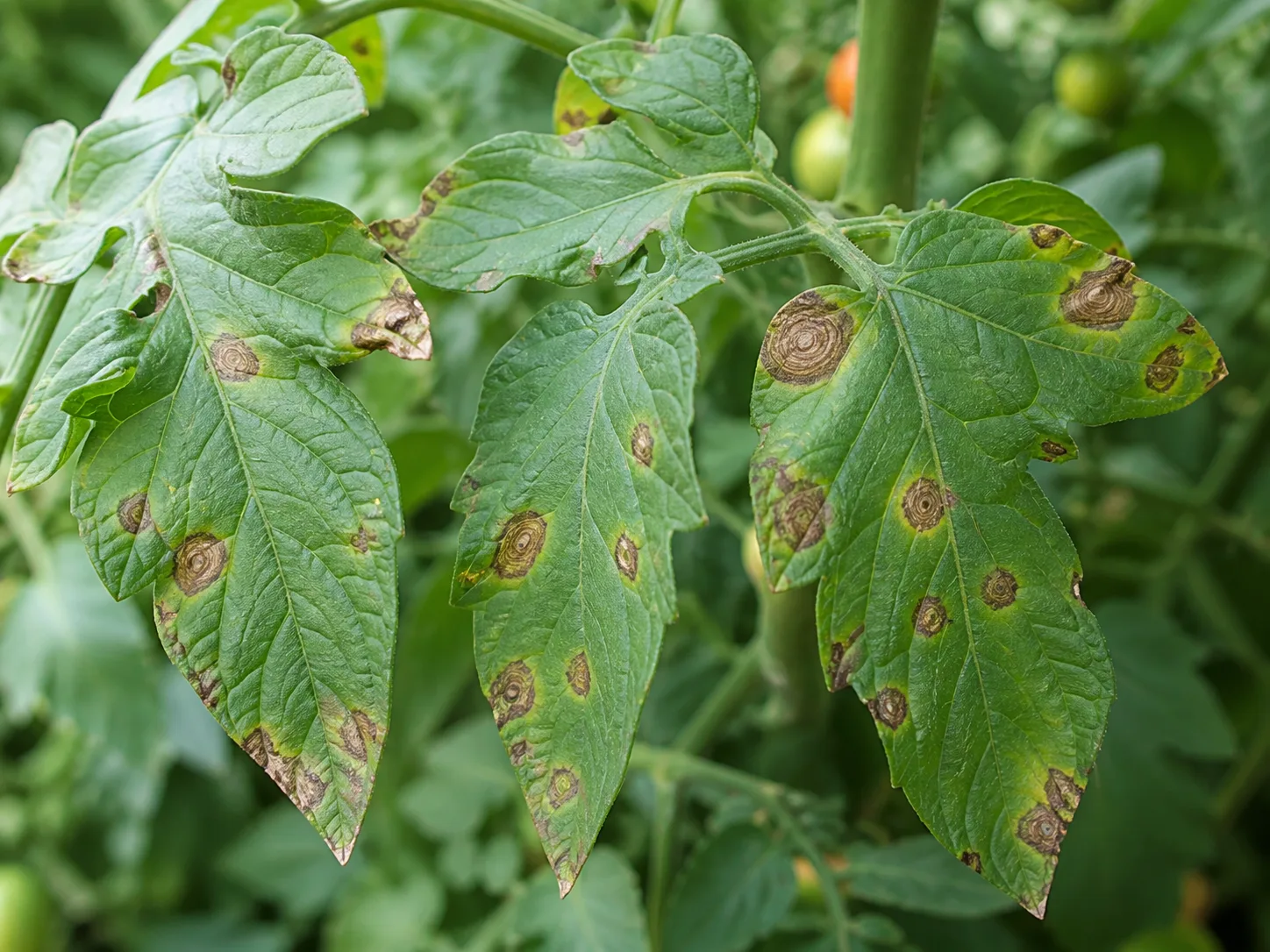
Use a weekly scouting loop. Look under young leaves for eggs, inspect stems for chewing, check the soil surface for slug damage, and scan lower leaves for spots. Early blight often begins low on the plant with brown target-like spots and yellow halos; late blight can progress rapidly in cool, wet conditions, with water-soaked brown-black areas. If the pattern is unclear, take a clean photo or contact a local extension diagnostic service rather than treating a companion plant as the diagnosis.
Remove diseased leaves with clean pruners and dispose of seriously infected material according to local guidance. UW–Madison advises that plants with late blight should not be composted and emphasizes removing infected plant material; its early-blight guidance similarly stresses debris destruction, increased spacing, and rotation. If you use a fungicide, choose one labeled for vegetables and follow the current label exactly—companions do not make off-label spraying safe.
What to do when a pairing fails
If the tomato grows vigorously but the companion wilts, check water and root competition first. A rosemary-like herb in a frequently irrigated tomato basin is a design error, not evidence that companion planting does not work. Move the herb to a pot, reduce crowding, and keep the tomato’s irrigation zone focused on the tomato roots.
If pests appear on both plants, remove the idea that a scented border should have prevented them. Confirm the insect, inspect nearby plants, and decide whether the companion is acting as a trap crop. Remove heavily infested trap-crop growth when it is no longer helping, and use physical controls such as hand-picking or row cover when those fit the crop and season.
If disease appears, do not add more plants to “balance” the bed. Open the canopy, remove affected material, stop overhead watering, check the support and spacing, and rotate tomatoes and other nightshades in the next season. UW–Madison’s disease guidance makes the important point that prevention and early action are more useful than trying to rescue a plant after a disease has spread through a dense canopy.
If harvest is poor, evaluate the basics before blaming a neighbor: insufficient sun, excessive nitrogen, irregular water, heat, poor support, or an unproductive variety can all matter more than the companion. Keep notes on the variety, planting date, spacing, weather, and pest pressure. After one season, you will have better evidence for your own garden than a universal chart can provide.
Conclusion
The best companion plants for tomatoes are the ones that solve a specific problem without creating a larger one. Start with basil, chives, carrots, parsley, thyme, French marigolds, calendula, or sweet alyssum when you want an approachable mix of shared conditions, useful harvests, and insect habitat. Add taller flowers, borage, crimson clover, or black-eyed peas only when you have the room and a plan for their mature size.
Keep fennel, mature dill, brassicas, corn, potatoes, peppers, and eggplant in separate blocks when shared pests, disease, shade, or watering needs make the combination risky. Then give every tomato the fundamentals companions cannot replace: sun, strong support, open airflow, steady root-zone moisture, clean plant material, and regular scouting. A simple bed you can reach and understand is a better companion system than a crowded one that looks clever on planting day.



