Do Rabbits Eat Tomato Plants? How to Stop Them
Do rabbits eat tomato plants? Learn how to identify clean rabbit cuts, protect seedlings with mesh, use repellents safely, and help damaged plants recover.
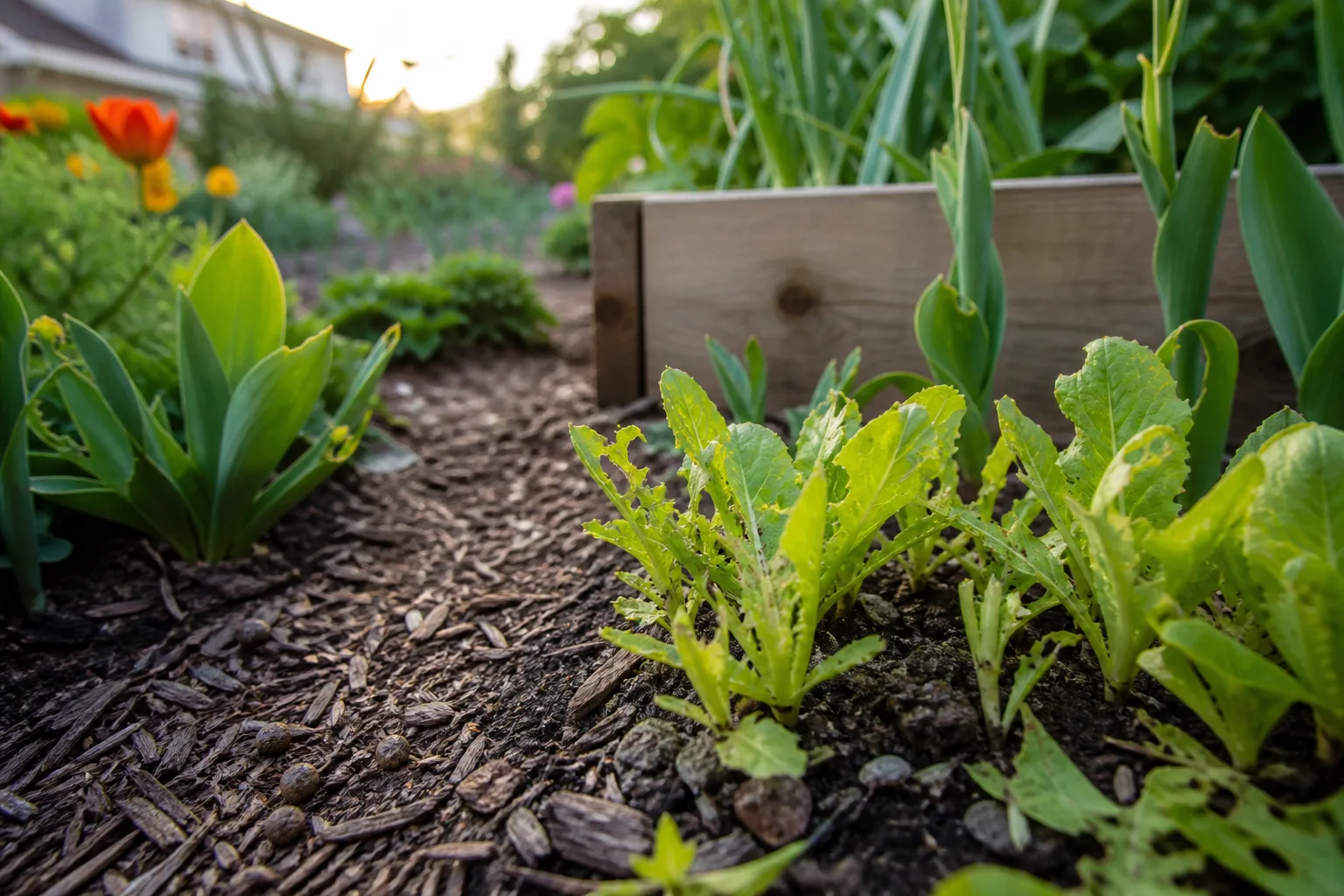
Yes, rabbits can eat tomato plants, especially young leaves, soft stems, and low-growing seedlings. Tomatoes are not always their first choice—succulent lettuce, peas, beans, and other tender greens may attract them sooner—but a hungry rabbit will not respect a “rabbit-resistant” label when a small tomato transplant is the easiest food in the bed.
The good news is that you usually do not need to remove every rabbit from the neighborhood. You need to identify the animal correctly, protect the vulnerable part of the crop, and close the small access points that let rabbits feed repeatedly. For most home gardens, physical exclusion is the dependable layer; scents and sprays are supporting tactics with shorter, less predictable lives.
The quick answer: yes, especially when tomatoes are young
Rabbits are low browsers. They feed on vegetation near the soil surface and can stand on their hind legs to reach higher shoots. The RHS describes rabbit damage across vegetables, ornamentals, and woody plants, with new plantings and soft spring growth vulnerable even when a mature plant is normally less attractive. Its rabbit guidance also notes that feeding is heaviest between dusk and dawn, although daytime browsing can happen in a quiet yard. RHS rabbit guidance
That makes a newly transplanted tomato a high-risk package: it is short, tender, watered frequently, and often surrounded by freshly disturbed soil. A rabbit can reach the entire plant without climbing, and a single night of browsing can remove the growing tip before the plant has established roots.
Why tender seedlings are easier targets than mature vines
Tomato seedlings are most exposed during the first few weeks outdoors, when their stems are still soft and their leaves are close to the ground. A mature vine has more foliage above rabbit reach, a thicker stem, and often a cage or stake that makes the plant less convenient to approach. That does not make it safe, but it changes the likely damage from “plant clipped to a stump” to occasional nibbling on low leaves or fruit.
Tomato-growing specialist Calvin Jones at Tomato Geek describes the immediate post-transplant period as the key time to protect seedlings, and Our Garden Works likewise identifies the first several weeks outdoors as the most exposed stage. The practical takeaway is simple: install the cage or cover on planting day, not after the first missing plant. Waiting for proof can cost the exact growing point that would have made the transplant recover quickly.
Do rabbits eat tomato fruit?
They can, particularly when fruit hangs low enough to reach. A rabbit may bite a ripe or partly ripe tomato, but fruit-only damage is not automatically rabbit damage. Birds, squirrels, rats, deer, and some insects can all create holes or missing bites in tomatoes, and an animal that climbs is more plausible when the damaged fruit is high in the canopy.
Look at the combination of clues rather than one missing tomato. Low fruit with tooth marks plus pellets and clipped low stems supports rabbits; several half-eaten fruits at different heights with no leaf damage points you toward a different culprit. A fence that protects only the soil-level stem may stop rabbit browsing while leaving fruit accessible to birds or squirrels, so the repair needs to match the animal you actually have.
How to identify rabbit damage on a tomato plant
Start with the cut, not the animal’s reputation. Rabbit incisors often leave a clean, slanted cut on a soft stem, as if a sharp blade clipped it. The damage is usually concentrated close to the ground or below roughly 2 feet, though a rabbit standing on its hind legs can browse higher on a small plant.
Look for small, round, fibrous droppings near the bed, a low path through grass, or repeated damage along the side closest to a hedge, brush pile, shed, or fence. Rabbits may be active all year and often feed at dawn, dusk, or overnight. Penn State Extension’s cottontail rabbit guide describes the same combination of clean angled clipping, low browsing, and round droppings as useful field evidence.
Rabbit cuts versus cutworms, slugs, deer, squirrels, and hornworms
Several tomato problems look similar when all you see is a missing leaf. Use this quick comparison before choosing a repellent:
| Clue | Rabbits | Cutworms | Slugs or snails | Deer | Squirrels or birds |
|---|---|---|---|---|---|
| Main damage | Clean angled cuts on low stems and leaves | Stem severed at or just below soil level | Irregular holes and slime | Ragged, torn foliage at several heights | Fruit bites, pecking, or damage high in the plant |
| Typical timing | Dusk, dawn, or night | Night | Damp nights and mornings | Dawn, dusk, or quiet daytime | Daytime; squirrels may climb |
| Evidence | Round pellets, tracks, low runway | Caterpillar curled in soil near stem | Shiny slime trail | Hoof prints, larger browse zone | Shells, feathers, scattered fruit pieces |
| Best first fix | Mesh barrier reaching the soil | Stem collar and soil inspection | Hand-pick and targeted slug management | Taller, stronger exclusion | Fruit protection or overhead netting |
Cutworms make a stem look neatly severed too, but the cut is usually at the soil line and the culprit may be hiding in the top layer of soil during the day. Rabbits tend to clip at a slant and may take leaves or several plants in a row. If the stem is crushed rather than cleanly cut, wind, a tool, a pet, or a falling cage may be responsible.
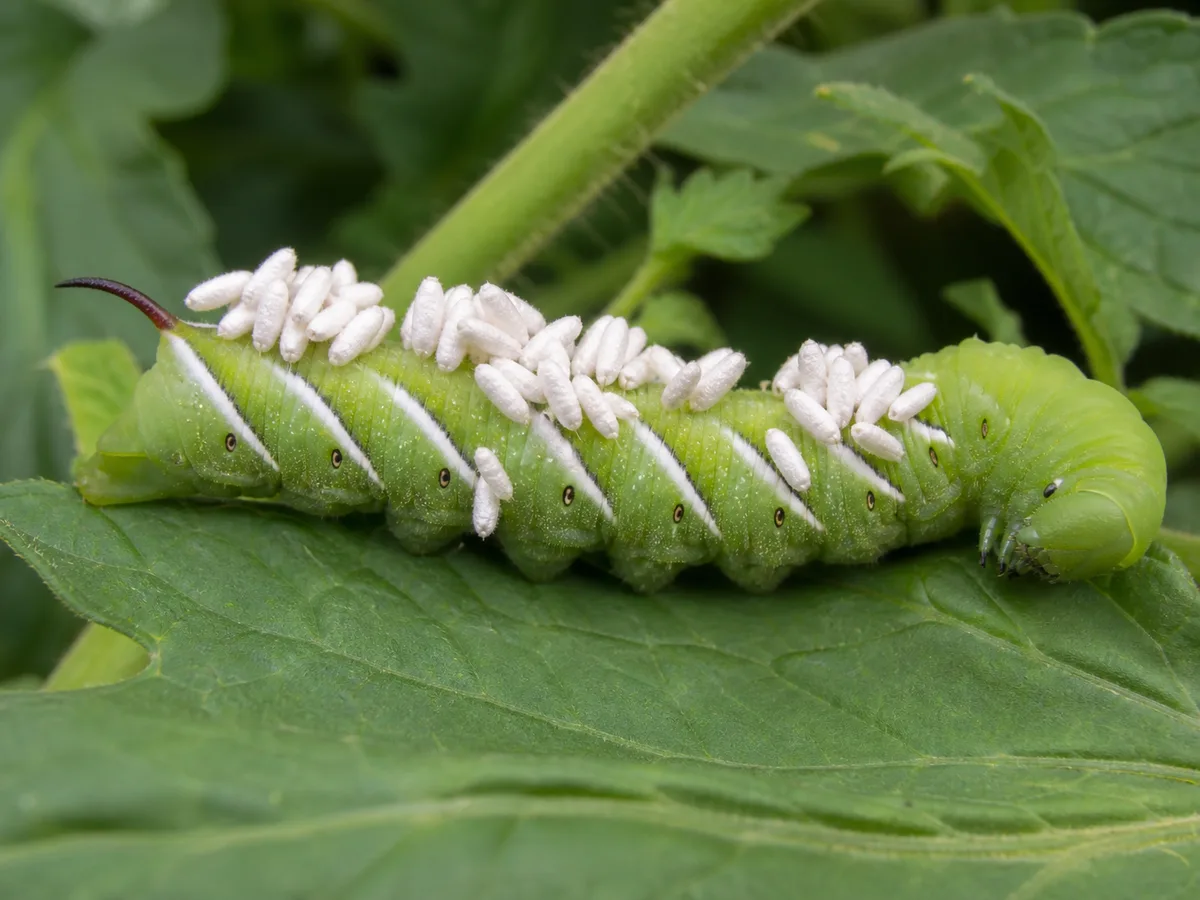
An insect problem has a different texture. Caterpillars such as tomato hornworms remove leaves and may leave dark droppings on foliage or soil; they do not usually cut an entire seedling cleanly at the base. If you see large leafless sections rather than clipped stems, inspect the undersides of leaves and the soil before blaming a mammal. A tomato hornworm is a useful comparison because chewing damage looks very different from a clipped stem, even when the plant appears suddenly ruined.
If you are unsure, place a simple camera or phone on time-lapse for one night and put a temporary mesh cage over one plant but not its neighbor. If the protected plant stays intact while the exposed plant is clipped, you have proved that access—not a soil disease—is central to the problem. Keep the test short and secure; do not leave loose netting where a rabbit, bird, or pet can become tangled.
What to do in the first 24 hours after damage
The first job is not spraying. It is stopping a second feeding period and deciding whether the plant still has a useful growing point. If a rabbit is already using the bed, any unprotected replacement seedling is likely to become the next target.
Inspect the entire stem from soil line to tip. Check whether the roots are still anchored, whether the main stem remains above the first few leaf nodes, and whether a side shoot is present. Do not keep a damaged plant exposed while you debate recovery; put a cage, crate with open sides, or taut cover around it immediately.
Triage the stem, nodes, roots, and remaining leaves
Use this decision sequence:
- If the plant is uprooted or the stem is crushed, replant only if the roots are fresh and the stem can stand without a split. Otherwise replace it; a badly damaged transplant may spend its remaining energy recovering instead of producing a timely crop.
- If the main stem is clipped above a healthy node, leave the plant in place. A tomato can often push a new shoot from a node below the cut, but recovery will take time and the final shape may differ from the original plan.
- If leaves are stripped but the stem and growing point remain, remove only tissue that is torn and hanging. Do not strip additional healthy leaves to make the plant look tidy; those leaves are now its remaining solar panels.
- Water the root zone normally, keeping the soil evenly moist but not saturated. Do not “flood” a browsed plant with fertilizer or water in an attempt to force growth.
- Protect the plant before nightfall, then check it again after two or three days for new cuts and new shoots.
Recovery is possible, not guaranteed. Tomato Geek’s tomato-specific recovery notes report that seedlings can regrow when nodes remain and the plant has not been uprooted. Treat that as a useful biological possibility rather than a promise: weather, root damage, transplant stress, variety, and how much stem remains all change the outcome.
Build physical protection that rabbits cannot easily bypass
The University of Minnesota Extension identifies physical barriers such as fencing as the most effective protection for small garden animals, and Penn State Extension calls exclusion the best long-term option where rabbit numbers are high. The reason is practical: a barrier works every night without requiring a rabbit to dislike a smell, and it keeps the animal from reaching the plant at all. University of Minnesota Extension garden-animal guidance
Fence dimensions, mesh, buried edges, and gates
For a small tomato bed, build to these minimums:
- Use metal mesh with openings of 1 inch or smaller. Smaller hardware cloth is useful where baby rabbits are present or where pressure is severe.
- Keep at least 2 feet of mesh above soil for a simple garden fence on flat ground. The RHS gives taller, more substantial whole-garden fencing dimensions—about 120–140 cm above ground with the lower section sunk—when the goal is a more complete rabbit-proof perimeter. RHS fencing guidance
- Stop tunneling with a buried edge. Bury the bottom several inches, or bend a 6- to 12-inch apron outward on the soil surface and pin it down before covering it with soil or mulch.
- Close every gate and inspect the threshold. A 2-inch gap under a gate can undo an otherwise solid fence.
- Use rigid or durable metal for the lower section. Rabbits can chew through some plastic or fabric mesh, especially when food is scarce.
Penn State Extension notes that a 2-foot fence with 1-inch-or-smaller wire mesh and a bottom tight to the ground or buried a few inches can protect a backyard garden. The RHS recommends a deeper, outward-bent bottom for a full rabbit-proof fence. These are not contradictory instructions; they represent different levels of pressure and permanence. For a high-value vegetable bed beside a field or hedgerow, use the more thorough buried-and-bent design.
The most common failure is not height. It is a gap at the bottom, a corner that does not meet the house or another fence, or a gate left open while you harvest. Walk around the outside after dark with a flashlight and look for visible light under the mesh. If light passes under it, a rabbit can test the opening.
Individual cages, raised beds, containers, and row covers
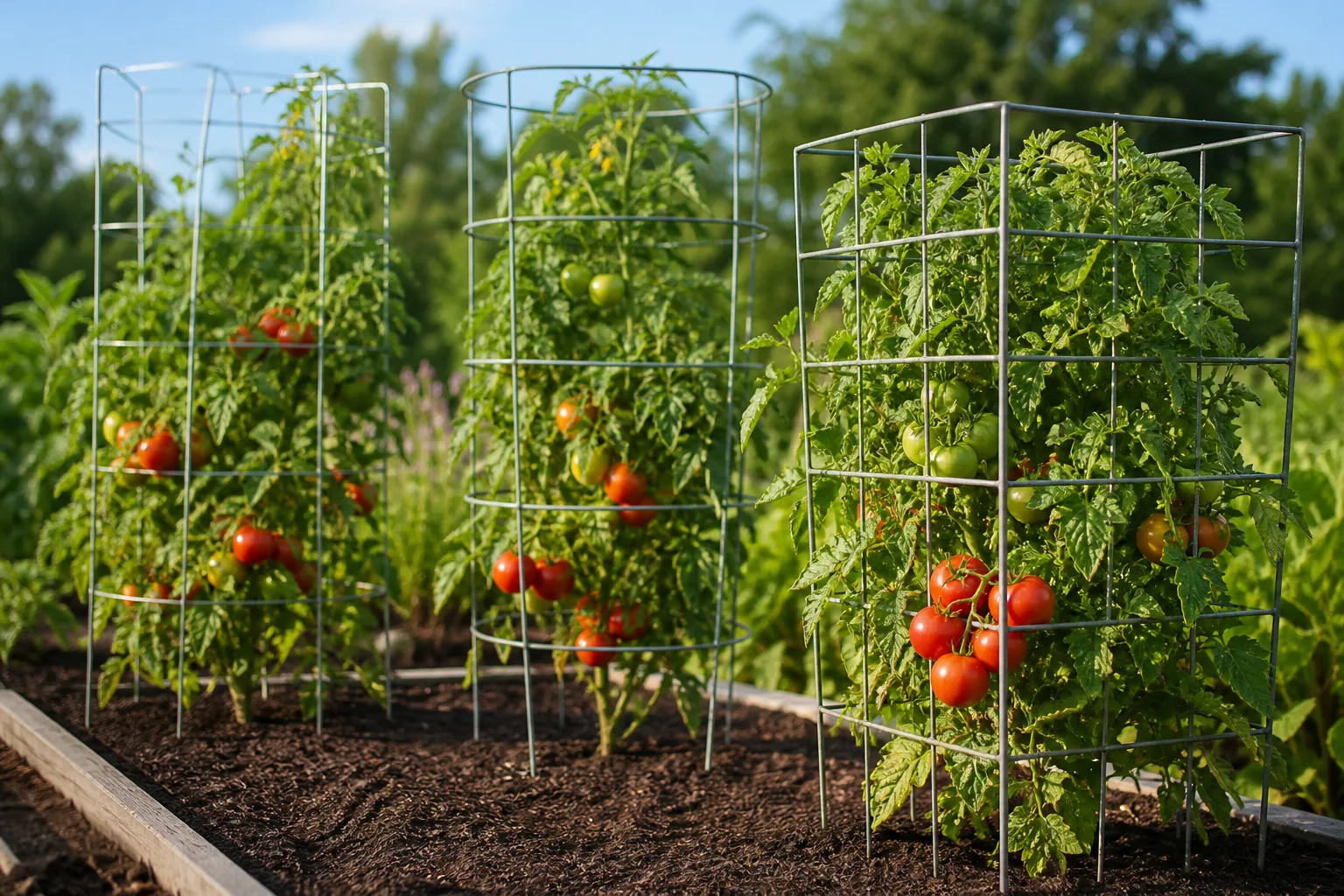
Individual cages are efficient when you have only a few plants. Use hardware cloth or a sturdy small-mesh cylinder that surrounds the plant with room for growth, anchor it firmly, and extend it down to the soil. A standard tomato cage supports a vine but may not exclude a rabbit if the openings are wide and the bottom is open; add a lower mesh sleeve when rabbit damage is the concern.
Raised beds are not automatically rabbit-proof. A 12-inch wooden wall is a step up, not a meaningful exclusion barrier for a determined rabbit. Attach a removable mesh frame to the bed, or build a perimeter fence outside the box so the animal cannot hop onto the edge and feed inward.
Ground-level grow bags and pots are just as vulnerable as in-ground plants. Move them to a raised deck or table only if the surface is stable and the pot receives enough sun; otherwise use a mesh cylinder. A container on a low patio step may still be within easy reach.
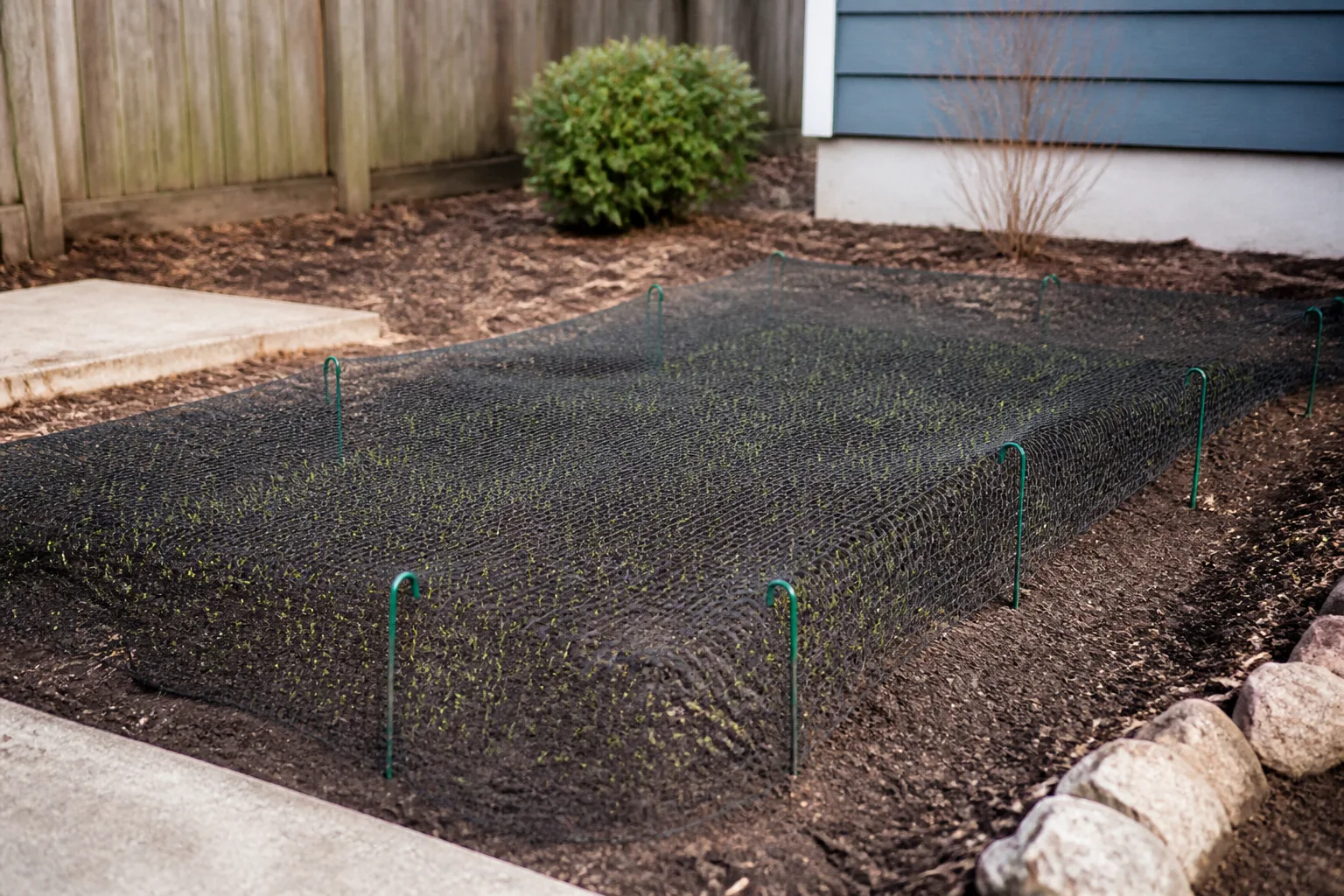
Row cover or insect netting can protect a newly transplanted bed, but it must be supported so it does not rest on tender stems and it must be anchored around every edge. Keep netting taut and inspect it regularly. The RHS warns that animals can be injured by loose or damaged netting, and that rabbits may chew through some fabric materials over time. RHS netting safety guidance
How repellents fit into a tomato protection plan
Repellents can help reduce browsing when damage is light or while you install a fence. They are not a reliable replacement for mesh when a rabbit has already learned that your tomato bed is a dependable food source. Rain, irrigation, new growth, hunger, and habituation all weaken odor and taste deterrents.
The right mental model is barrier first, repellent second. Spray can make a protected bed less interesting; it cannot close a hole in the fence or stop a rabbit already inside the garden. Use a repellent as one layer of an integrated plan, not as permission to leave seedlings exposed.
Labeled products for edible crops
Only use a product on tomatoes if the label specifically allows that crop or edible-crop use. Read the label for application rate, where it may be sprayed, how often it may be reapplied, and any harvest or washing instructions. Product registrations and formulations differ by country and can change, so an old blog recipe or a bottle intended for ornamental shrubs is not authority for a vegetable.
Penn State Extension explains that contact repellents protect only the plant surfaces they touch; new growth is unprotected, and heavy rain can require reapplication. It also distinguishes taste repellents from odor repellents and warns that some products can be poisonous or require careful storage. Penn State Extension repellent guidance
The RHS lists bitter or odor-based animal repellents but cautions that they may not provide complete protection during wet periods or active growth. It also notes that some products suitable for ornamentals are not appropriate near harvest. RHS repellent guidance
For tomatoes, avoid treating fruit that is close to harvest unless the label explicitly permits it. Do not increase the concentration because browsing continues; stronger is not automatically more effective and can injure foliage, expose pets, or violate the product label. Keep children and animals away from wet treated foliage according to the label instructions.
Homemade scents, companion plants, and why they fail
Garlic, onion, hot pepper, soap, mint, predator urine, hair, and strong essential oils are often suggested as rabbit deterrents. Some may create a short-lived novelty odor, but the evidence and consistency are weaker than for a properly built fence. Penn State Extension specifically describes hair as a reported method whose effectiveness was still being tested in its fact sheet; that is a good reminder not to confuse a garden anecdote with dependable exclusion.
Cayenne or hot pepper flakes can irritate an animal’s mouth, but they wash off and can irritate people, pets, and beneficial wildlife that contact the treated foliage. Homemade sprays also lack a tested edible-crop rate. If you use any food-based scent as a temporary experiment, keep it off fruit and eyes, wash produce before eating, and stop if it creates more risk than browsing.
Companion planting is best treated as a risk-reduction layout, not a fence. Aromatic herbs such as rosemary, chives, oregano, or mint may be passed over when other food is plentiful, but hungry rabbits can ignore resistant-plant lists. Mint can also spread aggressively, and a border of herbs does not prevent a rabbit from hopping straight into the tomato bed.
Do not use poison. Penn State Extension states that no toxicants or fumigants are registered for rabbits in its guidance and does not recommend poisoning them. Poison can also harm pets, children, scavengers, and non-target wildlife, while leaving the access problem unsolved.
Reduce the garden features that invite repeated browsing
Rabbits prefer a garden that supplies both food and cover. Tall unmowed grass, brush piles, dense weeds, debris beneath a shed, and low shrubs beside the bed give a rabbit a place to hide until evening and a short route to your plants. Removing unnecessary cover near the tomato patch can make the route less comfortable, but it is not a substitute for a barrier.
The balance matters. Brush piles and dense edges support birds, insects, and other wildlife, so do not clear habitat blindly across an entire property. Instead, create a clean working zone around the crops you need to protect and keep a deliberate wildlife area elsewhere if that fits your garden. The goal is to reduce a rabbit’s easy approach, not to sterilize the yard.
Harvest fallen tomatoes and remove overripe fruit promptly. Keep weeds from forming a low tunnel under the vines, and prune or trellis the plant according to its variety so the lower canopy stays accessible for inspection. These habits improve visibility and sanitation even when they do not stop a rabbit by themselves.
Time protection around transplanting, fruiting, and winter conditions
Protect tomatoes before transplanting, especially if the garden borders a field, woodland edge, hedge, or brushy lot. Keep a mesh cage or row-cover frame ready, and do not remove it simply because you have not seen a rabbit. Their feeding pattern makes a morning inspection an imperfect record of what happened overnight.
The highest-value protection window is the seedling stage and the first several weeks after planting. Once a vine has grown above rabbit reach and developed a strong stem, you may be able to reduce individual-plant protection, but keep the perimeter secure if other vegetables or low fruit remain attractive. Determinate plants can stay compact and vulnerable longer than a vigorously trellised indeterminate vine.
Fruiting changes the target rather than ending the risk. Low-hanging tomatoes may be sampled, and a rabbit can still chew lower leaves or tender suckers. If damage moves into the canopy, fruit protection may require a roofed cage or bird-safe netting, not merely a short soil-level fence.
Winter protection matters most for young woody plants, not usually tomato vines, which are normally removed after frost. If rabbits are also stripping bark from fruit trees, roses, or berry canes near the garden, install separate trunk guards. The RHS and Penn State Extension both describe bark gnawing and girdling as a serious rabbit problem when other food is scarce; a tomato fence alone will not protect those plants.
Can a tomato plant recover after rabbits eat it?
Sometimes. A plant with roots intact and at least one healthy node can push a new shoot, while a seedling clipped below every node has lost the tissue needed to make a new growing point. Even a plant that regrows may fruit later than an undamaged transplant, so “it survived” and “it will produce the same harvest” are different claims.
Leave a plant in place when the stem above a node is intact, the roots are firm, and the remaining tissue is green rather than crushed or blackening. Protect it immediately, water consistently, and wait about a week before judging whether a new shoot is forming. Avoid high-nitrogen fertilizer while the root system is recovering; excess soft growth can create a new, attractive target and does not repair missing roots.
Replace the plant when the stem is severed at the soil line with no node remaining, the roots were pulled out and dried, or the plant is repeatedly damaged before it can establish. If the season is still early, a healthy replacement transplant may be more productive than nursing a stump. Whichever choice you make, install the barrier first—otherwise the replacement is simply a second serving.
If a plant is only partly browsed, do not over-prune it. Remove torn tissue that could drag on the stem, tie the plant gently to its support, and let healthy leaves continue to photosynthesize. Check new growth each morning for several days; fresh cuts after protection indicate a gap, a second animal, or damage occurring from inside the enclosure.
Conclusion
Rabbits do eat tomato plants, but they are most dangerous when tomatoes are small, soft, and close to the ground. Confirm the evidence with clean angled cuts, low browsing, pellets, and the time and location of the damage before treating the bed.
Then work in order: protect the plant before nightfall, install 1-inch-or-smaller metal mesh, secure the bottom and gate, and use only labeled edible-crop repellents as a secondary layer. Companion plants and homemade scents may buy a little time, but a well-fitted barrier is what turns a rabbit problem from a nightly surprise into a manageable garden detail.