Onion Care Guide: Allium cepa for Home Growers
Allium cepa
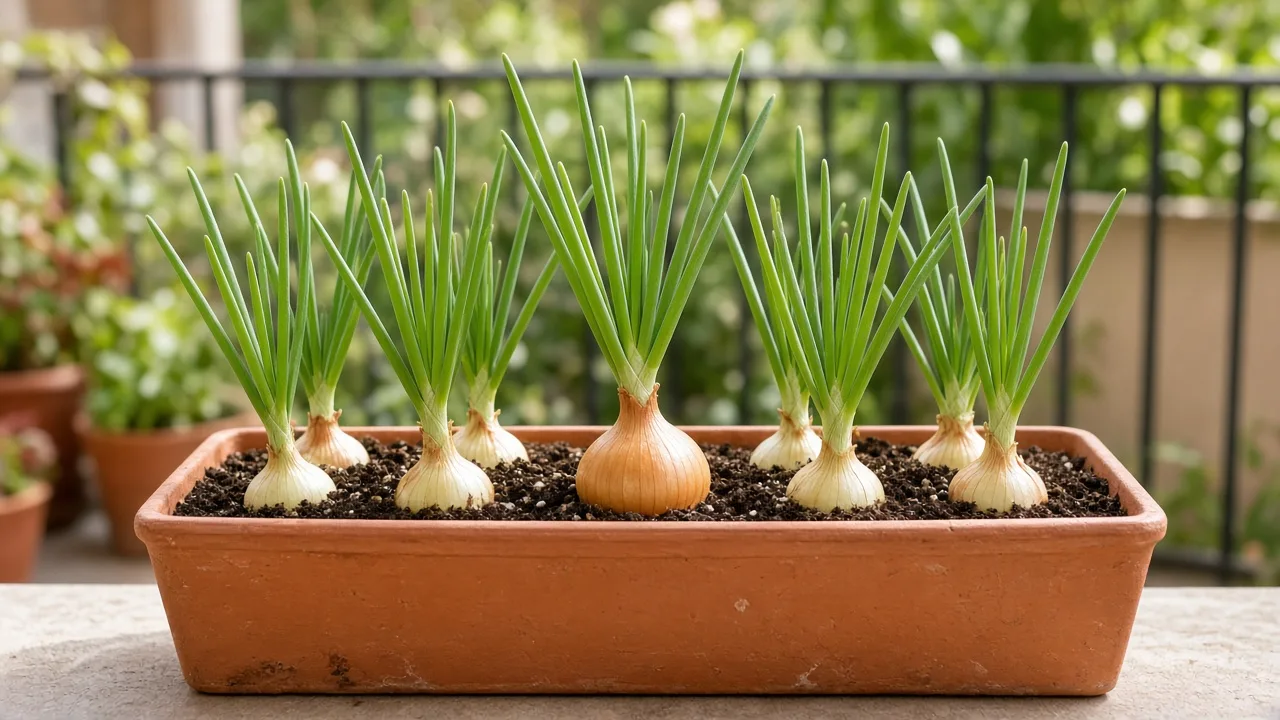
Grow onions from sets or seedlings in deep containers with full sun, loose well-drained soil, steady moisture, daylength-matched varieties, and harvest when tops yellow.
Onion Care Guide: Allium cepa for Home Growers
Start with wateringThe most common care mistake for OnionWatering guide → →Onion care essentials
Light
Water
Keep mix evenly moist, like a wrung-out sponge, without leaving bulbs sitting in saturated soil. Water when the top 2–3 cm feels dry, then soak until excess drains. Steady moisture supports bulb swelling; complete drying can trigger bolting.
Soil
Loose, fertile, well-drained loam or sandy loam with moderate compost; pH about 6.0–7.0. Avoid heavy clay and constantly waterlogged media.
Humidity
Temperature
Fertilizer
Moderate feeding after establishment can support growth, but correct light, spacing, and moisture matter more than heavy fertilizer.
About Onion
Onion is native to Central and southwestern Asia, typically reaches Hollow leaves typically 30–45 cm tall; bulb size varies by cultivar and spacing indoors, with moderate - often about 60–120 days from sets or transplants to harvest; seed-grown crops take longer growth. Onion has a biennial bulb crop usually grown as an annual vegetable growth habit and part of the Amaryllidaceae family. It is also known as Pyaz, Bulb Onion, and Common Onion.
| Detail | Information |
|---|---|
| Also known as | Pyaz, Bulb Onion, Common Onion |
| Native region | Central and southwestern Asia |
| Mature size | Hollow leaves typically 30–45 cm tall; bulb size varies by cultivar and spacing |
| Growth rate | Moderate - often about 60–120 days from sets or transplants to harvest; seed-grown crops take longer |
| Growth habit | Biennial Bulb Crop Usually Grown As An Annual Vegetable |
| Scientific name | Allium cepa |
| Family | Amaryllidaceae |
Onion Care Guide: Allium cepa for Home Growers
Onion care is less about decorative foliage and more about steering a photoperiodic bulb crop through one clean season. Allium cepa stores food underground while hollow leaves photosynthesize above the mix; interrupt that balance with the wrong daylength type, cramped spacing, or wild moisture swings and you get lush tops with disappointing bulbs—or flower stalks that steal size from the harvest. This overview maps the full path from cultivar choice to curing, with India and terrace context woven in. Start at the Onion plant hub for species traits, then use sibling guides when one variable needs a deep dive.
What Allium cepa is and how it grows
Kitchen onion is Allium cepa, a member of the Amaryllidaceae family and one of the most widely grown bulb vegetables worldwide. The USDA Agricultural Research Service groups common onion with garlic, leeks, and chives in genus Allium, all sharing the familiar allium chemistry that matters for both flavor and pet safety.
Biennial bulb crop grown as an annual
In nature, onion is biennial: it grows leaves one season, then flowers and sets seed the next. Home growers almost always treat it as an annual, sowing or planting sets in cool weather, swelling a bulb, and harvesting before the plant shifts to reproduction. Cornell’s home-gardening guide describes onions as a cool-season vegetable in the onion family that needs rich, well-drained soil and steady weed control—traits that transfer directly to pots on a sunny balcony.
Hollow leaves and shallow roots
Above ground you see tube-like, upright leaves; below, the bulb sits at or just below the soil surface while shallow roots explore only the upper profile. That anatomy explains two recurring container problems: bulbs rot when the root zone stays soggy, and plants wilt quickly when a small pot dries out on a windy terrace. Depth and drainage matter more than decorative pot height alone.
Match daylength to your latitude before you plant
Onions do not bulb on a fixed calendar date—they bulb when they sense enough daylength (hours of light) for their genetics. Utah State University Extension notes that onions form bulbs under long days and hot weather, and that planting too late can yield leaves without usable bulbs. Daylength class is the first filter when you buy seed or sets.
Short-day, long-day and day-neutral types
Short-day cultivars begin bulbing after roughly 10–12 hours of daylight and suit many warm, lower-latitude gardens. Long-day types need about 14 hours or more—Cornell’s onion guide recommends long-day varieties that need about 14 hours of light to form bulbs for northern latitudes. Day-neutral (intermediate) lines fall between and forgive a wider range. Seed-packet labels beat grocery-store onion names every time.
Why a wrong type shows up as big tops and tiny bulbs
A long-day cultivar planted where summer days stay relatively short may never receive the bulbing trigger; a short-day type in a high-latitude summer can bulb too early while still small. The visible symptom is vigorous leaf growth with a marble-sized bulb—or bolting when heat and stress pile on. Fixing the problem starts with swapping cultivar class, not with more fertilizer.
Best onion season in India and warm climates
Onion is fundamentally a cool-season crop that prefers mild temperatures while leaves expand, then warmer, longer days for bulbing—exactly the pattern USU summarizes for in-ground culture. India does not share one national sowing week: Pune terraces, Delhi raised beds, and humid coastal plains differ in night temperature and drying speed.
Use these practical rules instead of copying a US “last frost” calendar:
- North Indian winter (rabi) and cool hill districts often give the longest, most forgiving window for long-day or locally sold cultivars.
- Warm lowlands usually do better with short-day or regionally recommended types planted in the cooler stretch your seed supplier targets—often autumn through winter rather than peak summer heat.
- Peak summer on a sun-baked terrace stresses shallow roots; move pots to catch morning sun, shade roots from radiant heat, and harvest earlier if tops stall.
The Onion light guide covers sun hours, grow lights, and heat management when natural daylength is not enough.
Onion care at a glance
Healthy onion foliage looks upright and medium green; the diagnostic clues are bulb swell, neck firmness, and whether a flower stalk appears. Before you change fertilizer, confirm daylength match, spacing, and moisture—lush leaves with flat bulbs usually trace to photoperiod or drought stress, not “lack of feed.”
Light and temperature
Give onions full sun where possible. The RHS grow-your-own onion guide places them in a warm, sunny spot in well-drained soil, and notes they can also be grown in large containers. USU likewise states onions grow best in full sun and fertile, well-drained soils. On a terrace, aim for at least six hours of direct sun daily once weather allows; weak light produces thin leaves and poor bulbs.
Water and steady moisture
Onions need regular water with good drainage. USU warns that water stress will reduce yields and bulb size and recommends keeping soils moist. In containers, let only the top 2–3 cm dry between thorough irrigations so the whole root zone does not bake dry—drought encourages bolting. The Onion watering guide walks through overwatering rot versus underwatering wilt.
Soil, pH and spacing
Target loose, fertile, well-drained mix near pH 6.0–7.0. Cornell lists an optimum of 6.2 to 6.8 with plentiful, even moisture. USU suggests planting seeds, sets, or transplants about 3–4 inches apart in the row, thinning if crowded. For pots, plan roughly 8–10 cm between bulbs and a planter at least 25 cm deep; the RHS advises a container about 45 cm wide and deep for a good crop. Mix ratios and DIY blends live in the Onion soil guide.
Starting from sets, seedlings or seed
You can direct-seed, start transplants indoors, or plant sets (small dormant bulbs). Each path trades speed against control.
Sets and transplants for container growers
Sets are the straightforward terrace route: plant with the pointed end up, about 2.5 cm deep, in the final container. Choose sets under ¾ inch diameter when possible—Cornell notes large bulbs are more prone to bolting. Purchased seedlings save time but dislike root disturbance; move them gently once into a wide trough rather than repeatedly upsizing small cups. Gardening Know How’s container onion article reinforces daylength matching and deep, draining planters for balcony crops.
Direct seed timing and indoor starts
Seed is economical but slower. Cornell recommends starting transplants inside about 8 to 10 weeks before the last frost in cold climates; in warm regions, translate that to your coolest practical sowing month. Direct seed when soil is warm enough—Cornell cites germination from about 45–95°F—and keep seedbeds evenly moist. Step-by-step sowing, set planting, and division limits are in the Onion propagation guide.
Growing onions in containers and on patios
Containers excel when in-ground soil is heavy clay or waterlogged. Use a wide trough or tub with open drainage holes, a coarse bottom layer if needed, and a peat-free or quality vegetable mix amended with mature compost. The RHS grow-your-own onion guide recommends peat-free, soil-based compost in a large pot placed in full sun for container crops.
Expect to water more often than in-ground beds because mix dries faster on windy patios. Mulch lightly once plants establish to slow surface evaporation. Avoid shallow bowls that force crowding—each bulb wants elbow room underground even if tops look sparse. If you are reusing potting mix, refresh structure and fertility rather than assuming last season’s onions left a clean slate; see Onion repotting for why onions stay in one final container for the season rather than routine upsizing.
Bulbing, bolting and flower stalk removal
Bulbing is the payoff phase triggered by daylength and supported by steady moisture and sun. Bolting—a flower stalk emerging—diverts energy away from the bulb. The RHS links bolting in onions to adverse weather or changes in day length. Drought, heat spikes, and oversized sets raise the risk.
Snip or break off flower stalks as soon as you see them if you still want a kitchen bulb rather than seed. Green tops can be used lightly, but repeated leaf harvest on plants meant for bulbs will slow underground swelling. Leaf-trim timing for harvest—not hedge pruning—is covered in the Onion pruning guide.
Harvest, curing and storage basics
Green onions can be pulled much earlier—USU notes harvest as early as 50 days after seeding for green use. Bulb onions commonly need on the order of 100–120 days to mature, though sets and cultivar choice shorten that window. Harvest when most tops yellow and fall over, then lift carefully.
USU advises leaving lifted bulbs in the garden to dry for 1–2 weeks when possible, then curing until skins are papery before cool, dry storage. In humid monsoon air, move curing to a warm, airy shelf out of direct sun instead of leaving bulbs on wet soil. Moderate feeding after establishment can support growth, but correct light, spacing, and moisture matter more than heavy nitrogen; see the Onion fertilizer guide before doubling feed rates.
Common onion care mistakes
Planting the wrong daylength type is the silent failure—fix cultivar class before chasing fertilizer.
Crowding bulbs in a pretty pot yields small onions even when everything else looks fine.
Letting containers dry completely between waterings invites bolting and stalls bulb fill.
Using oversized sets trades convenience for flower stalks; choose smaller sets for bulb crops.
Ignoring flower stalks shrinks harvest quality—remove them promptly.
Growing in dim indoor corners without strong supplemental light rarely produces real bulbs; treat windowsill attempts as experimental scallion greens unless you add serious grow lighting.
Pets, kitchen trimmings and toxicity
Onion is kitchen produce, not a pet-safe ornamental. The ASPCA lists onion (Allium cepa) as toxic to cats, dogs, and horses, noting that ingestion can cause vomiting and red-blood-cell damage. Keep growing containers, peelings, and stored bulbs out of reach. Contact a veterinarian promptly if a pet eats a meaningful quantity or shows weakness, pale gums, or bloody urine. Human culinary use does not make trimmings safe for animals.
When to use this page vs other Onion guides
Use this overview to choose daylength class, season, container size, and sets-versus-seed strategy. Open Onion watering when moisture symptoms confuse you, Onion light for sun hours and supplemental lighting, and Onion soil before mixing or refreshing potting media.
Use Onion fertilizer when growth is pale after temperature and water look correct. Use Onion propagation for sowing cadence and set handling, Onion repotting for final-container planning, and Onion pruning for harvest-time top management—not ornamental shaping.
Related Onion guides
Start at the Onion plant hub for grower notes and toxicity summaries. Terrace growers should read Onion watering next because pots dry faster than raised beds. Before your first set goes in, pair Onion soil with Onion propagation—spacing and planting depth are one continuous job for straight-necked bulbs.
Conclusion
Good onion care is daylength-led, container-deep, and moisture-steady. Match cultivar class to your latitude and season, give each bulb sun and 8–10 cm of space in a draining planter at least 25 cm deep, and keep the root zone evenly moist without waterlogging. In India, success usually means planting in the coolest practical local window with short-day or locally recommended types—not forcing a northern long-day calendar through peak summer heat.
When bulbs stall or bolt, fix cultivar choice, spacing, drought stress, and flower stalks before chasing fertilizer. The cluster guides linked above carry step-by-step detail for each lever.
How to care for Onion?
When should you water Onion?
Keep mix evenly moist, like a wrung-out sponge, without leaving bulbs sitting in saturated soil. Water when the top 2–3 cm feels dry, then soak until excess drains. Steady moisture supports bulb swelling; complete drying can trigger bolting.
- Touch the top 2–3 cm of mix - Water when the top 2–3 cm feels dry, then soak until excess drains.
- water when it is dry and the container feels lighter - Water when the top 2–3 cm feels dry, then soak until excess drains.
- then irrigate until drainage runs clear - Water when the top 2–3 cm feels dry, then soak until excess drains.
- Drain excess water - Water when the top 2–3 cm feels dry, then soak until excess drains.
What soil works best for Onion?
Loose, fertile, well-drained loam or sandy loam with moderate compost; pH about 6.0–7.0. Avoid heavy clay and constantly waterlogged media.
- 40% quality vegetable potting mix or screened loam - Loose, fertile, well-drained loam or sandy loam with moderate compost; pH about 6.0–7.0.
- 30% mature compost - Loose, fertile, well-drained loam or sandy loam with moderate compost; pH about 6.0–7.0.
- 30% perlite, coarse sand, or fine grit - Loose, fertile, well-drained loam or sandy loam with moderate compost; pH about 6.0–7.0.
Grower notes for Onion
Match daylength to your latitude
Onion bulb size depends on how many hours of daylight the variety needs before it switches from leaf growth to bulbing. Short-day types suit many warm, lower-latitude gardens; long-day types suit higher latitudes with very long summer days; day-neutral types bridge the middle. Wrong timing can yield lush tops and tiny bulbs, so buy cultivars labeled for your region instead of guessing from grocery-store names alone.
Start from sets or seedlings, not rushed seed
Sets and purchased seedlings are the straightforward container route for beginners. Plant sets about 2.5 cm deep with the pointed end up, spaced roughly 8–10 cm apart. Seed is cheaper but slower—start indoors about 8–10 weeks before outdoor planting if you choose that path. Onions dislike root disturbance, so move seedlings gently into their final pot rather than repeatedly upsizing small starts.
Use a wide, deep final container
Onions have shallow roots but still need room underground. Planters at least about 25 cm deep and wide enough for several bulbs—or a long trough for a row—work better than one tiny pot per bulb. Each onion wants roughly 8–10 cm of elbow room. Drainage holes and a coarse bottom layer matter more than decorative depth alone.
Full sun drives bulb formation
Place containers where they receive at least six hours of direct sun daily once weather allows. Weak light produces thin leaves and poor bulbs. Indoor-only crops usually need strong supplemental lighting because natural windows rarely deliver the daylength and intensity bulbing onions expect.
Keep moisture steady and remove flower stalks
Let the top of the mix dry slightly between waterings, but do not let the whole root zone bake dry for long stretches—drought stress encourages bolting, which shrinks bulb quality. Snip or break off flower stalks as soon as they appear so the plant keeps feeding the bulb instead of seed.
Pet-aware note for Onion
Onion is a kitchen crop, not a pet-safe ornamental. The ASPCA lists Allium cepa as toxic to cats, dogs, and horses because allium compounds can damage red blood cells. Keep potted plants, trimmings, and stored bulbs out of reach, and contact a veterinarian promptly if a pet eats a meaningful amount.
Toxic to cats and dogs
Onion (Allium cepa) is toxic to cats and dogs per the ASPCA. Allium ingestion can cause vomiting and red-blood-cell damage. Keep plants and stored bulbs away from pets.
Culinary use does not make onion safe for pets. Allium species contain N-propyl disulfide and related compounds that can cause hemolytic anemia in cats, dogs, and horses. Prevent access to bulbs, foliage, and kitchen trimmings.
Watering Onion
For Onion, touch the top 2–3 cm of mix; water when it is dry and the container feels lighter, then irrigate until drainage runs clear and water check containers daily in warm weather; plan for about 5–8 cm of water per week, more during heat or wind. Containers dry faster than in-ground beds in summer; reduce frequency only after tops begin yellowing near harvest.
| Detail | Information |
|---|---|
| How often | Check containers daily in warm weather; plan for about 5–8 cm of water per week, more during heat or wind |
| How to check | Touch the top 2–3 cm of mix; water when it is dry and the container feels lighter, then irrigate until drainage runs clear |
| Seasonal changes | Containers dry faster than in-ground beds in summer; reduce frequency only after tops begin yellowing near harvest |
Signs of overwatering
- soft or rotting bulbs at the neck
- yellowing foliage while mix stays wet
- sour smell from saturated container mix
Signs of underwatering
- limp, folding leaves
- stalled bulb growth
- premature flower stalks from drought stress
Soil & potting for Onion
Use a mix of 40% quality vegetable potting mix or screened loam, 30% mature compost, 30% perlite, coarse sand, or fine grit for Onion. Excellent drainage is essential; onions rot quickly in soggy, poorly aerated mix. Target soil pH around 6.0–7.0. Repot no routine repotting - start seeds or sets in the final deep container or bed for the season, ideally in cool-season sowing or set planting in local spring, or fall overwintering for short-day types where winters are mild.
| Detail | Information |
|---|---|
| Recommended mix | 40% quality vegetable potting mix or screened loam, 30% mature compost, 30% perlite, coarse sand, or fine grit |
| Drainage | Excellent drainage is essential; onions rot quickly in soggy, poorly aerated mix |
| Soil pH | 6.0–7.0 |
| Repotting frequency | No routine repotting - start seeds or sets in the final deep container or bed for the season |
| Best season to repot | Cool-season sowing or set planting in local spring, or fall overwintering for short-day types where winters are mild |
Signs it needs repotting
- bulbs were crowded with less than about 8–10 cm spacing
- the planter is shallower than about 25 cm
- drainage holes are blocked or the pot sits in standing water
Humidity & temperature for Onion
Fertilizer & pruning for Onion
Use moderate feeding after establishment can support growth, but correct light, spacing, and moisture matter more than heavy fertilizer. for Onion.
| Detail | Information |
|---|---|
| Fertilizer type | Moderate feeding after establishment can support growth, but correct light, spacing, and moisture matter more than heavy fertilizer. |