Onion Light Requirements: Full Sun & Daylength Guide
Onion Light Requirements: Full Sun & Daylength Guide
Onion Light Requirements: Full Sun & Daylength Guide
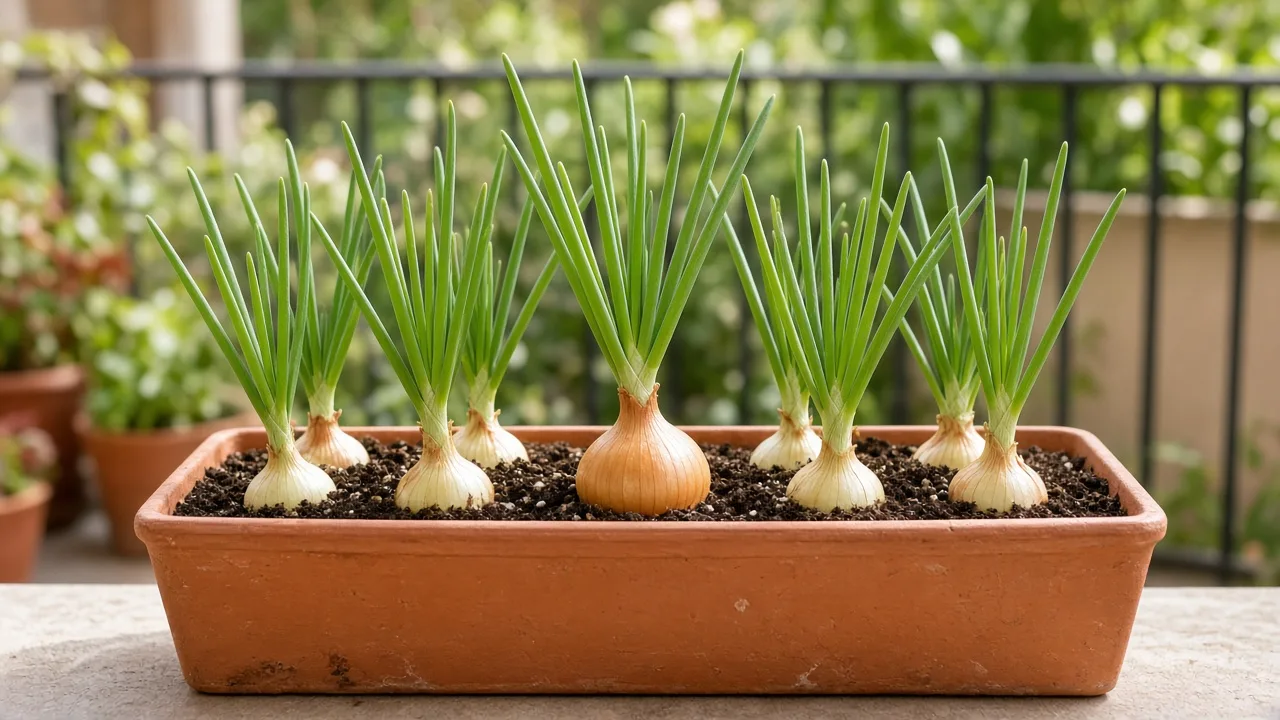
Onion (Allium cepa)—pyaz in many Indian kitchens—is a cool-season bulb crop, not a shade-tolerant houseplant. The swollen bulb forms underground, but the energy for that bulking comes from bright, direct light on the hollow leaves. Gardening Know How and container guides list at least six to eight hours of direct sun daily as the baseline for bulb development, with weaker sites producing lush green tops and disappointing bulbs. If you are placing a trough on a walled balcony, read this before you buy sets: light intensity and daylength genetics are separate levers, and both must align for a good harvest.
For cultivar choice, spacing, and moisture, start with the onion overview. This page covers how much sun onions need, how photoperiod types match your latitude, terrace placement in India, indoor limits, and the first fixes when growth looks leggy or heat-stressed.
Onion Light Needs: The Quick Answer
Plan for six to eight hours of direct sun on the leaf canopy each day as a working minimum for bulbing onions. Gardening Know How states that onions need at least 6–8 hours of sun daily for bulb development, while noting that the number of daylight hours required to trigger bulbing depends on the variety’s genetics. On an open Indian terrace, that usually means the outer railing or sunniest corner—not a courtyard that only catches a short sun shaft.
Separately, choose a daylength class matched to your latitude: short-day types begin bulbing around 10–12 hours of daylight, long-day types around 14–16 hours, and intermediate (day-neutral) types around 12–14 hours, per the same source. Wrong genetics for your season length yields vigorous tops and tiny bulbs even when sun intensity is strong. Pair full sun with a short-day or locally recommended cultivar in warm lower latitudes rather than copying northern long-day labels from grocery-store names alone.
Full Sun Baseline for Bulb Onions
“Full sun” for onions means unobstructed direct rays on the leaves for most of the day—not a bright room to your eyes. Container guides for Allium cepa describe six to eight uninterrupted hours as the non-negotiable baseline for bulb formation; shadier sites push the plant toward leaf growth at the expense of the underground bulb. That matches the onion watering cluster note that weak light produces thin leaves and poor bulbs while steady moisture supports swelling.
Green-onion or scallion harvests can tolerate slightly less total sun because you are not waiting for a storage bulb, but pyaz grown for bulbs should be treated as a high-light crop. If your only site fails a simple shadow test—faint or missing hand shadow at midday on a clear day—expect smaller bulbs unless you move the pot or add supplemental light.
Daylength vs Light Intensity: Two Different Questions
Beginners often conflate how bright the site is with how long the day is. Both matter for onions, but they control different stages. Light intensity drives photosynthesis and leaf production; photoperiod signals when the plant switches from making leaves to initiating a bulb. An onion can sit in strong sun yet fail to bulb if it is a long-day type planted where midsummer days are too short—or a short-day type that bulbs too early before enough leaves form.
Think of leaves as solar panels and daylength as the timer that redirects sugar into the bulb. You need enough panels (leaves) built under strong light before the daylength trigger fires. That is why early cool-season planting and correct cultivar choice show up in the same sentence as sun advice on the onion overview.
Why Onions Need Strong Light to Form Bulbs
Onions are long-season, cool-friendly vegetables with shallow roots and upright hollow leaves. Bulb size correlates with how many leaves the plant produces before photoperiod triggers bulbing—Gardening Know How notes that bulb size mainly depends on leaf count before daylight shortens, so weak light shrinks the harvest even when daylength is correct. Weak light slows leaf production, so the plant enters bulbing with a smaller photosynthetic factory even when daylength is correct.
In containers, the problem compounds: pots dry faster in sun (good for avoiding rot if you water well) but shaded pots stay cooler and wetter while still failing to build leaf mass. Light, onion soil drainage, and onion watering work together; fixing fertilizer while the trough sits in shade rarely rescues bulb size.
Leaf Count Before Bulbing Starts
Visually, aim for thick, upright blue-green leaves that resist folding. Each new leaf adds potential bulb layers later. If seedlings or sets stall with thin, floppy spears after transplant, suspect insufficient direct sun or overcrowding before you assume nutrient deficiency. Spacing of roughly 8–10 cm per bulb in a deep trough gives each plant light on its own leaf fan; see onion repotting for final container depth and spacing rules.
Short-Day, Long-Day, and Day-Neutral Types
Match type to your calendar, not just your fertilizer plan:
| Type | Typical daylight trigger | Where it often fits |
|---|---|---|
| Short-day | ~10–12 hours | Warm southern latitudes, many Indian lowland winter crops |
| Intermediate / day-neutral | ~12–14 hours | Flexible mid-latitude or controlled grow-light schedules |
| Long-day | ~14–16 hours | Higher latitudes with very long summer evenings |
Planting the wrong class produces tops without bulbs or premature bolting—a flower stalk that steals energy from the bulb (Gardening Know How). Light stress from drought can also push bolting; see grower notes on the hub about steady moisture. Remove flower stalks promptly if they appear.
Best Outdoor Placement for Container Onions
Place troughs where morning through early afternoon sun hits the leaves directly. East-facing outer ledges, north–south balcony rows with minimal parapet shadow, and open rooftop corners outperform recessed wells between tall buildings. Rotate the container a quarter turn weekly if leaves lean toward the brightest direction so each plant shares exposure.
Elevate pots on feet so drainage holes stay clear—wet roots in shade are a common rot pairing. The onion soil guide’s emphasis on open, well-drained mix matters most where strong sun dries the surface quickly; light placement and watering rhythm should be planned together.
Mapping Sun on Balconies and Terraces
Run a three-point check on a clear day: note shadow on the pot at 9 a.m., noon, and 3 p.m. If noon is shaded but morning is bright, you may still miss cumulative hours for bulbing. Moving the trough even one metre along a railing often adds an extra hour of direct rays—sometimes the difference between ornamental tops and a usable bulb.
In Indian apartments, west-facing afternoon sun can be intense on metal or black plastic pots. That is still “full sun” for the leaves, but root-zone heat can stall bulbing. Light placement is not only about photons; it is about where the pot sits thermally. Pair bright exposure with mulch and even moisture from the watering guide rather than sliding the crop into permanent shade.
Seasonal Light in Indian Lowlands and Cool Hills
Many growers sow or set onions in the cool Rabi window when days are shorter but sun is still strong and heat is moderate—ideal for leaf building before bulbing advances. In tropical lowlands, favor short-day or supplier-recommended cultivars and avoid treating a northern long-day spring calendar as universal.
Hill stations and temperate pockets may support intermediate or long-day types if summer daylength is long enough—read seed labels rather than guessing from bulb color. When monsoon cloud cover stretches for weeks, growth slows even if pots stay bright between showers; patience beats relocating into deep shade.
Direct Sun Tolerance and Summer Heat Limits
Onions tolerate full open sun when roots are cool enough and moisture is steady. Gardening Know How notes that in very hot climates, a bit of afternoon shade can be beneficial—interpret that as heat relief, not a license to grow bulb onions in half-day shade. The goal is to prevent leaf scorch and root overheating, not to replace six-plus hours of direct light.
Container onion guides emphasize full sun exposure as the default, with the option to slide pots into lighter afternoon shade during heat waves because containers can be moved without disturbing roots—an advantage over in-ground beds baked by surrounding pavement.
When Afternoon Shade Helps Without Shrinking Bulbs
Use temporary shade cloth or a shifted position when leaf tips bleach, fold, or wilt on dry soil despite watering. Morning-to-midday full sun plus filtered late-day sun often outperforms all-day blast on west-facing tile where reflected heat radiates into the pot wall. Do not confuse heat management with growing in a north-facing shade pocket; the latter rarely bulbs.
Black Pots, Tile Heat, and Shallow Root Stress
Dark containers absorb heat. In 32 °C+ afternoons, bulbing can stall as the plant shifts into stress response even when daylength is correct. Switch to lighter-colored pots, double-pot for insulation, or use a shallow tray of gravel to reduce contact with hot tile. Shallow planters heat and dry unevenly—another reason the hub recommends at least ~25 cm depth for bulb crops.
Growing Onions Indoors and Under Grow Lights
Indoor windows rarely deliver both enough intensity and correct daylength for storage onions. Gardening Know How states that indoor onions need bright light—ideally 6–8 hours of direct sun daily—or supplemental grow lights if natural light is limited. Scallions or young green tops are the realistic indoor win; full-sized bulbs need a large container and strong artificial lighting run long enough each day.
Realistic Expectations for Indoor Bulb Crops
Treat indoor bulb attempts as an experiment, not a default kitchen-window crop. Without a grow light, expect elongated leaves and slow bulking. With lights, day-neutral types are easier to schedule because photoperiod can be held in the 12–14 hour bulbing range under timers while intensity stays high.
Grow-Light Setups That Support Allium cepa
Use a full-spectrum LED sized for vegetables, positioned per manufacturer guidance so leaves receive even coverage. Run timers for 14–16 hours daily if you are mimicking a long-day season for leaf building, then adjust only if your cultivar’s label specifies a different photoperiod for bulbing. Keep lights 6–12 inches above the leaf tips (follow fixture specs) and raise them as leaves grow.
Pair artificial light with the same onion fertilizer discipline as outdoor crops—feeding cannot replace photons. Ventilate to prevent mildew in humid indoor air. For starting sets or seedlings before terrace placement, see onion propagation for timing that gets plants into real sun as soon as weather allows.
Warning Signs of Too Little Light
Leggy, pale, or folding leaves that lean toward the brightest window or open sky usually mean insufficient direct sun. No bulb swell by the expected week count—while tops look tall—often combines wrong daylength type with marginal light. Soil that stays wet for days in a dim corner slows roots and mimics overwatering; check light before you cut water sharply.
Slow leaf count increase after transplant is another clue: healthy sets should push new upright leaves within a week in cool, bright conditions. If growth is static, move the trough before tweaking onion fertilizer.
Warning Signs of Too Much Sun or Heat
Bleached or tan leaf tips, sudden wilting on hot afternoons, and stalling bulb size during heat waves point to excess heat load more than “too many photons.” Bolting—a stiff flower stalk—can follow drought stress as well as variety mismatch; remove stalks and stabilize moisture. Scorched leaves do not fully green up again; protect or move the pot before the next hot spell.
First Fixes When Light Looks Wrong
Step 1: Run the terrace shadow test and count direct hours. Step 2: Confirm your cultivar’s daylength class on the seed or set label against your planting month. Step 3: If hours are low, move the container to the sunniest safe spot or add a grow light—do not wait for harvest week. Step 4: If hours are high but leaves scorch, cool the root zone and use brief afternoon shade rather than relocating to deep shade. Step 5: Align watering with the new exposure using the onion watering guide so bright sites do not cycle between drought and saturation.
When to Use This Page vs Other Onion Guides
Use this light guide when you are choosing a terrace spot, judging leggy tops, matching short-day vs long-day labels, or deciding whether indoor growing is realistic. Use onion watering for moisture checks when full sun dries pots quickly. Use onion soil for mix and pH when drainage—not light—is the bottleneck. Use onion fertilizer after light and spacing look correct. Use onion propagation and onion repotting for sets, spacing, and final container depth—not for daily sun hours.
Related Onion Guides
- Onion overview — daylength match, container depth, and cool-season timing
- Onion watering — even moisture when bright sun increases transpiration
- Onion soil — loose, drained mixes that support sun-driven bulking
- Onion fertilizer — feeding after the canopy receives enough light
- Onion propagation — sets, seedlings, and moving plants into full sun
- Onion repotting — spacing and trough size for shared light access
Conclusion
Onions reward open, direct sun on the leaves—the RHS recommends a sunny site for bulb crops—and a daylength type that fits your latitude and planting month, not a permanently shaded balcony or a dim kitchen sill. Aim for six to eight hours of direct light daily for bulb crops, place troughs where parapets and walls do not steal midday rays, and treat photoperiod labels as seriously as sun hours. Cool-season sowing in Indian lowlands pairs strong winter sun with short-day or recommended cultivars; heat waves call for root cooling or brief afternoon shade, not a move to half-day shade. When new leaves stay upright and bulbs begin to shoulder above the mix, your light plan is working; when tops tower and bulbs stay marble-sized, fix sun and cultivar class before you change anything else.