Onion Watering Guide: Checks, Schedule & Signs
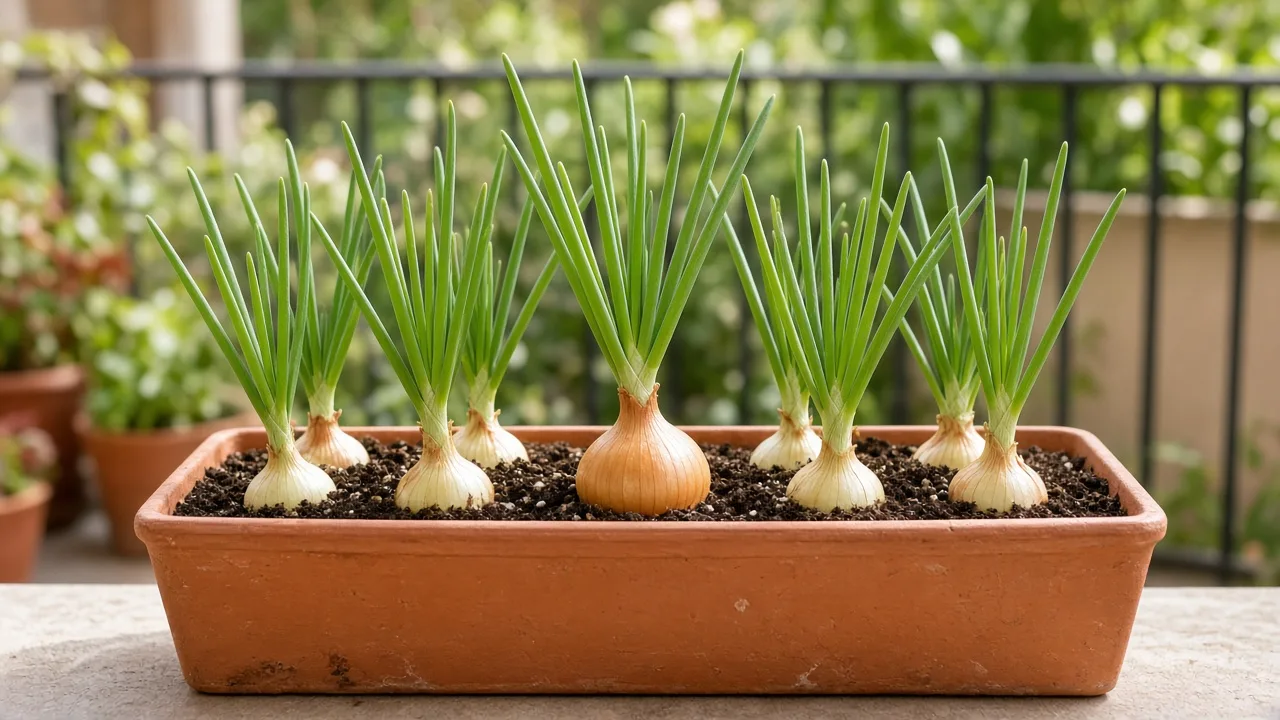
Onion Watering Guide: Checks, Schedule & Signs
Onion Watering Guide: Checks, Schedule & Signs
Onion watering: the quick answer
Onion watering for bulb crops (Allium cepa) is about steady, moderate moisture while leaves and bulbs are actively sizing—not a rigid weekday calendar and not “let it dry like a succulent.” Utah State University Extension advises regular watering and keeping soils moist, because water stress reduces yields and bulb size (Utah State University Extension). Cornell’s home-gardening guide lists plentiful, even moisture among site requirements for good yields (Cornell University — Onions).
The practical rule on this species: check the top 2–3 cm of mix, water when that layer is beginning to dry, then soak until drainage runs clear and empty saucers. Gardening Know How describes the target as consistently moist, like a wrung-out sponge, and warns that complete drying can trigger bolting, which ruins a bulb crop (Gardening Know How). For cultivar choice, spacing, and daylength fit, start with the Onion overview; return here for checks, seasonal shifts, and first aid when hollow leaves fold or the neck feels soft.
Weekly benchmark vs dryness checks
A useful in-ground benchmark during active growth is about 1 inch (2.5 cm) of water per week, applied deeply rather than as light sprinkles—more in heat and wind, less in cool cloudy weeks. Container onions on sunny terraces often need more frequent passes to hit the same root-zone moisture; Gardening Know How suggests at least 2 to 3 inches (5–8 cm) of water per week for potted bulbs when weather is dry (Gardening Know How). Treat those figures as bed benchmarks, not app reminders. Your job is even moisture in the shallow root zone, confirmed by touch and pot weight.
Why onions need steady moisture—not soggy soil
Onions build hollow leaves above ground and a swelling bulb at the neck. When the root zone swings from dust to swamp, you get stalled bulbs, bitter or harsh flavor, and split or watery tissue—not cosmetic flaws you can ignore. USU Extension notes that drought stress during growth decreases yield, reduces bulb size, and affects flavor, and that water needs are critical because onion rooting depth is shallow (Utah State University Extension).
That biology is why generic “let the top inch dry completely” houseplant advice fails here. Onions want moist, well-aerated soil through the cool window when they actually fill bulbs. They are not pond plants: saturated, airless mix invites neck rot and sour-smelling containers within days. The balance is moisture without waterlogging—especially in heavy monsoon spells when the surface looks dry but the mix below stays wet.
Shallow roots and container drying
Cornell’s growing guide stresses shallow root systems and recommends watering weekly if weather is dry, with mulch to retain moisture (Cornell University — Onions). USU Extension advises moistening soil thoroughly toward a depth of about 12 inches when you do irrigate, and using drip irrigation if possible (Utah State University Extension). In a deep trough or wide tub (the setup described on the Onion repotting guide), one deep soak wets the whole shallow feeder zone better than evening mist that only dampens the crust.
Containers dry faster than in-ground beds—especially on windy balconies—so daily checks in warm weather are normal. Pair watering with open drainage from the Onion soil guide so water soaks the root zone instead of pooling at the neck.
Cool-season biology on Indian terraces
Onions are a cool-season vegetable that sizes best in the cooler sowing window your daylength-matched cultivar expects—not in the hottest lowland months. USU Extension classifies onion as cool-season and ties yield to full sun, fertile drained soil, and consistent moisture (Utah State University Extension). On Indian terraces, short-day or locally labeled cultivars planted in autumn–winter or early spring often outperform copying a northern summer calendar. Afternoon heat on black plastic pots can force water needs up even when air feels mild; match moisture to season and pot exposure, and use the Onion light guide when thin tops persist despite faithful watering.
How to check soil moisture before you water
Surface colour lies, especially in peat-heavy potting mix on a sunny balcony. Use at least one physical check every time you reach for the can.
Finger test at 2–3 cm and pot weight
Press a finger 2–3 cm into the bed or container—the same depth the plant-detail hub uses for onions. If soil clings cool and damp, wait. If it feels only slightly moist at that depth, water. If it is dry and crumbly, water soon; shallow feeder roots should not sit in bone-dry mix for days during active bulbing. Lift containers after a thorough drain: when the pot feels noticeably lighter and the top layer matches a dry touch, soak again. Never let pots sit in full saucers of old runoff. RHS vegetable guidance recommends delivering water at the base of plants rather than repeatedly wetting foliage, which reduces disease pressure on leafy crops (RHS).
How often to water onions through the season
There is no honest single calendar. Cool weather and short days slow evaporation; heat, wind, and shallow trays accelerate it.
After sets or transplant establishment
Sets and purchased seedlings need steady moisture while roots anchor—especially the first weeks after planting. Gardening Know How’s container guide tells growers to check daily and water when the top of the soil is dry to the touch during the growing season (Gardening Know How). Give one settling soak after planting, then keep the upper root zone from baking hard. Seed-grown lines need even more attention at emergence; establishment timing overlaps Onion propagation—there is no rescue for a dried-out seed row.
Active leaf and bulb growth
Through leaf expansion and bulb swell, aim for even moisture. Cornell suggests weekly irrigation when weather is dry, adjusted upward when containers or sandy mix dry quickly (Cornell University — Onions). USU Extension’s deeper guideline—moisten thoroughly because roots are shallow—matters more than counting days (Utah State University Extension). In active growth, many terrace growers land on every two to four days in cool weather and daily to every other day in hot, windy sun—always gated by the finger test, not the clock.
Slowing water before harvest
Stop heavy irrigation as the crop matures. USU Extension is explicit: stop watering when plants start to mature (tops fall over), because excess water as the crop matures delays curing and causes storage problems (Utah State University Extension). When most leaves yellow and flop, shift from keeping mix moist to letting it dry down for a week or two before lift—unless extreme heat wilts bulbs before skins form. Harvest cues and cure steps belong with the overview; watering’s job ends when bulbing finishes.
How to water onions correctly
Use a soak-and-drain pass: apply slowly across the surface until water runs freely from drainage holes, confirming the root ball wetted throughout—not just the rim. Stop there. Partial top sips keep the upper layer damp while hiding wet pockets near the neck where rot starts.
Water in the morning when you can, so any splash on hollow leaves dries through the day. Direct the stream to the soil line, not over foliage (RHS). If mix has dried into a water-repellent crust, bottom-soak the container briefly, then return to normal top watering once the medium rewets evenly—usually a sign the soil mix needs more compost and grit, not endless light sprinkles.
Overwatering signs on Allium cepa
Chronic saturation shows up as yellowing foliage while mix stays wet, soft or rotting tissue at the neck, and sometimes a sour smell from the container. Leaves may look pale and limp even though you watered “to help.” Gardening Know How’s container article frames the tension directly: drainage is essential, but so is moisture—the failure mode on the wet side is rot, not thirst (Gardening Know How).
If several wet-soil signs appear together, stop watering, empty saucers, improve airflow, and inspect the neck before the next soak. Firm, tight bulbs may recover with drier conditions; mushy necks often mean discard and fix drainage before replanting. Overfeeding on wet mix worsens soft growth—see the Onion fertilizer guide only after moisture is stable.
Underwatering, drought stress, and bolting
Dry stress stalls bulb swell and pushes premature flower stalks. Gardening Know How warns that if onion soil dries out completely, you risk bolting, which diverts energy away from the bulb (Gardening Know How). USU Extension links drought during growth to smaller bulbs and off flavor (Utah State University Extension). Warning signs include limp, folding leaves, stalled size, and pots that feel feather-light.
If the mix is dry and leaves fold, give one thorough soak and resume even moisture—do not flood for a week to compensate. If leaves are limp and the pot stays heavy and cool, you are likely overwatered, not dry. Snip flower stalks early as described on the Onion pruning guide so the plant keeps feeding the bulb instead of seed.
First action when you are unsure
When hollow tops look unhappy and you do not know why, run this triage before changing cultivars, pots, and fertilizer all at once.
- Lift the container and feel the top 2–3 cm of mix.
- If wet and heavy with yellowing leaves, stop watering, drain saucers, and check the neck for softness.
- If light and dry with folding leaves, soak once until drainage runs, then wait for the next dry-down check.
- If moisture seems fine but growth is poor, verify daylength match and sun hours on the overview and light pages—not another blind soak.
- If a flower stalk appears, remove it promptly and review drought history for the past two weeks.
Mulch, rain, and terrace wind
Organic mulch conserves moisture and suppresses weeds; Cornell and USU both recommend mulch as part of onion culture (Cornell University — Onions; Utah State University Extension). A thin layer of dry straw or shredded leaves on in-ground or large tubs reduces midday evaporation without packing wet material against the neck.
During heavy monsoon weeks, “more rain” is not automatically better if water stands in saucers or clay-heavy mix stays saturated. Tilt pots after storms, unblock drainage holes, and skip irrigation until the finger test says the upper root zone is actually drying. Windy high-rise terraces can pull moisture from wide shallow trays faster than rainfall replaces it—check weight daily even when the forecast looks wet.
When to use this page vs other Onion guides
Use this watering guide when you need how often to irrigate, how to test dryness at 2–3 cm, soak-and-drain technique, over- vs underwatering triage, and when to taper before harvest. For mix recipes, pH, and grit ratios, see the Onion soil guide. For hours of sun and daylength cultivar fit, see Onion light. For sets vs seed timing and transplant handling, see Onion propagation. For pot depth, spacing, and final container choice, see Onion repotting. For nitrogen timing without drowning roots, see Onion fertilizer. For removing flower stalks, see Onion pruning.
Related Onion guides
- Onion overview — identity, daylength groups, mature size, and harvest cure summary.
- Onion soil — drainage, pH near 6.0–7.0, and container mix ratios that make watering work.
- Onion light — full sun needs and short-day cultivar fit for your latitude.
- Onion propagation — sets, seedlings, and seed-line moisture at emergence.
- Onion fertilizer — feeding after establishment without pushing soft growth on wet mix.
Conclusion
Onion watering is the discipline of keeping shallow feeder roots in the moist-but-aerated band they use for leaf and bulb growth—even moisture through active sizing, dryness checks at 2–3 cm instead of a rigid calendar, and a deliberate taper when tops fall over so bulbs cure and store well. Water in the morning, at the soil line, and drain containers fully. Treat dry fold as a deep soak and wet yellowing as an emergency stop. Pair steady moisture with daylength-matched cultivars, deep drained pots, and prompt stalk removal, and you give Allium cepa the stable underground environment bulb onions need.
Try the Plant Watering Calculator with your pot size and climate as a starting benchmark—then trust the finger test on your terrace.