Onion Soil Guide: Mix, pH & Drainage
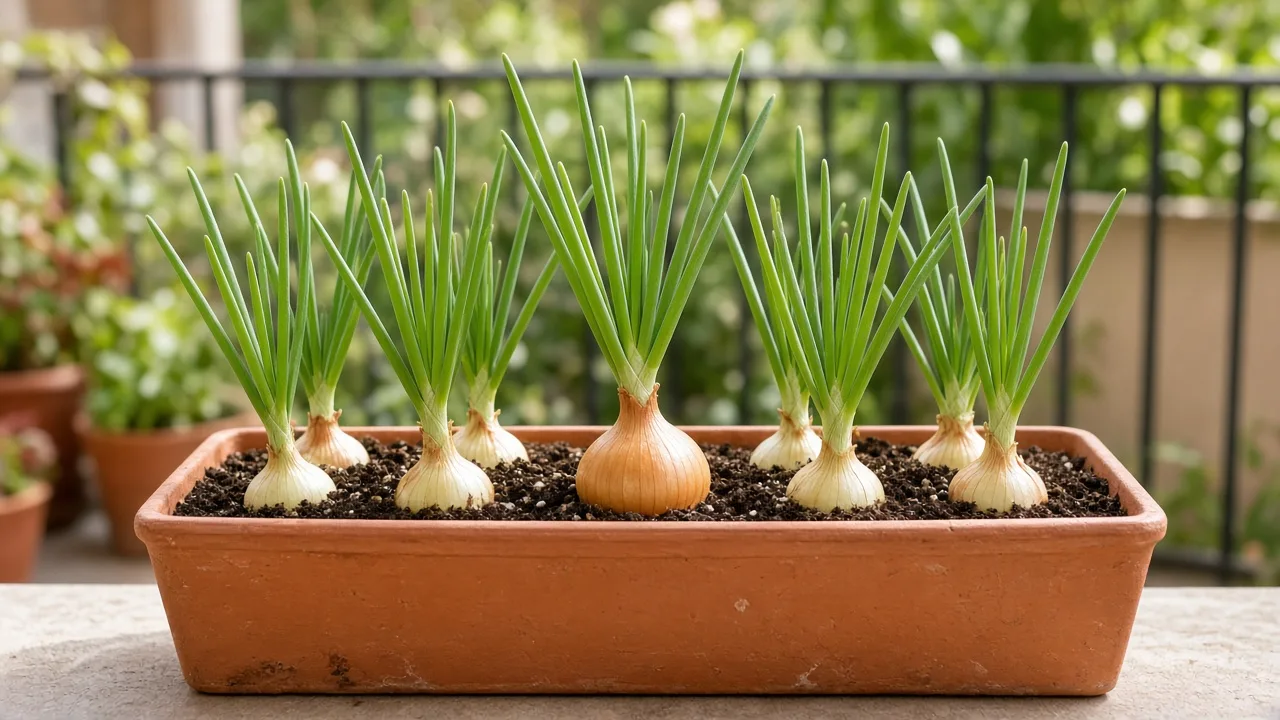
Onion Soil Guide: Mix, pH & Drainage
Onion Soil Guide: Mix, pH & Drainage
Onion (Allium cepa) is a kitchen bulb crop, not a moisture-hoarding houseplant. The swollen bulb sits at or just below the soil line while hollow leaves rise above it, and the root system stays relatively shallow. That combination means your mix must do two jobs at once: hold steady moisture in the top few centimeters so leaves keep photosynthesizing, and drain fast enough that the bulb never sits in anaerobic mud. Get the texture wrong and you will see rot within days; get moisture swings wrong and the plant may bolt—send up a flower stalk—and leave you with a pithy bulb.
This page is about building and maintaining that balance in containers, troughs, and raised beds—especially on patios and balconies in India and other warm climates where monsoon rains and fast-drying pots both show up in the same season. Pair it with the Onion overview for daylength cultivar choice, then use Onion watering and Onion light once the mix is in place.
Why onion soil is not standard houseplant mix
Bagged indoor potting soil is engineered to stay wet around fibrous roots in small decorative pots. Onions need the opposite: a loose, fertile, well-drained loam with enough organic matter to feed steady growth but enough grit or perlite that water exits freely after each soak. Clemson Cooperative Extension describes the ideal onion bed as fertile, well-drained loam with plenty of organic matter—exactly the profile you are mimicking in a planter.
Shallow roots still need a deep, airy root zone
Onions are often called shallow-rooted, which is true compared with tomatoes, but that does not mean a 10 cm saucer pot. Bulbs need room to swell sideways and downward without hitting a hard, waterlogged floor. Gardening Know How’s container onion guide suggests planters about 25 cm (10 inches) deep and wide enough to space bulbs comfortably—think long troughs rather than one tiny pot per bulb. Shallow soil plus crowded roots produce small bulbs even when tops look green.
You plant once—soil prep is the whole season
Most home growers set onion sets or transplants into their final container and leave them there until harvest. Unlike many ornamentals you can upsize and refresh, onions dislike root disturbance, so the mix you fill in week one is the mix you harvest from months later. That is why soil work belongs before planting, not as a mid-season rescue—see Onion repotting for why “moving up” usually means starting a new crop, and Onion propagation for gentle transplant timing if you start seedlings indoors.
Ideal texture and drainage for Allium cepa
Sandy loam or loamy soil is the repeated extension recommendation: enough sand for drainage, enough silt and organic matter to hold moisture and nutrients. Heavy clay stays wet too long and encourages neck rot; pure sand dries so fast that bulbs stall unless you water constantly. Clemson notes that clay soils often produce a hotter-flavored onion, while sandy soils need more fertilizer and water than loam—useful context if you are blending from local garden soil rather than bagged mix.
Sandy loam and loose structure
Aim for crumbs that break apart in your hand, not slick balls that smear when wet. Incorporate mature compost to improve texture; avoid raw or unfinished manure at planting time because excess nitrogen pushes leaves at the expense of bulbs and can invite soft rot in wet weather. Organic matter should improve both aeration and water-holding capacity, not turn the pot into a sponge.
Quick drainage tests for pots and troughs
Before you plant, run two simple checks. Hole test: fill the container, soak until water runs from drainage holes, and confirm the pot never sits in a saucer of standing water. Finger test after one hour: the top 2–3 cm should feel like a wrung-out sponge—moist but not muddy—matching the moisture band described in Gardening Know How’s container onion guide. If water pools on the surface for hours after watering, add perlite, coarse sand, or fine grit and remix before sets go in.
pH range and when to test
Onions are flexible but not indifferent to pH. 6.0–7.0 is the practical home-gardener window cited across vegetable references; Clemson narrows the ideal to about 6.2–6.5 for quality bulbs. Slightly acidic to neutral soil keeps nitrogen, phosphorus, and potassium available without locking micronutrients the way strongly alkaline mixes can.
Target 6.0–7.0 and acceptable edges
Many cultivars tolerate a bit outside that band, but extremes show up as yellowing leaves, stunted growth, or increased disease pressure long before you pull a bulb. If you are filling pots with unknown municipal compost or red lateritic garden soil—common on Indian terraces—spend a few rupees on a soil pH test instead of guessing. Adjust only with test results in hand.
Lime or sulfur only with test results
Below roughly 5.5, agricultural lime can raise pH over weeks; above 7.5, elemental sulfur or acidic organic amendments can lower it gradually. Broadcast evenly and work into the top 15–20 cm of a bed or the full volume of a container mix. Quick-fix acids or heavy lime dumps shock roots in a confined pot—slow correction beats a one-day “fix.”
DIY container mix vs bagged blends
You can succeed with either a measured DIY blend or a quality vegetable or all-purpose outdoor potting mix—if you amend for drainage.
A balanced recipe for troughs and deep tubs
The LeafyPixels hub recipe matches extension thinking: 40% quality vegetable potting mix or screened loam, 30% mature compost, 30% perlite, coarse sand, or fine grit. That ratio keeps structure open for shallow roots while compost supplies slow-release nutrition. Never fill containers with unamended garden soil alone; it compacts, sheds water when dry, and carries weed seeds and pathogens.
When store “vegetable mix” needs perlite
If a bag feels heavy, peat-rich, and stays wet for days, blend in 20–30% perlite by volume until a soak drains within minutes. Gardening Know How stresses that potted onions need extremely good drainage and can rot within days in soggy soil—perlite is cheap insurance on balconies.
Depth, spacing, and how bulbs sit in the mix
Soil volume is part of soil quality. Plan at least about 25 cm of mix depth and 8–10 cm spacing between bulbs so each onion can swell without pushing neighbors. Sets typically go about 2.5 cm deep with the pointed end up; the neck should not be buried under a heavy, crusted surface that holds moisture against tissue.
Keep the soil surface loose, not capped like concrete after watering. A light mulch of dry straw can help in arid heat but pull it back if the mix stays wet during monsoon weeks—you want air at the neck, not a humid blanket.
Compost, manure, and nitrogen traps
Well-rotted compost belongs in onion soil; fresh manure does not. High nitrogen from uncomposted organics drives lush tops while bulbs stay pencil-thin, and wet manure-heavy mix invites rot. If your compost is still heating in the pile, let it finish before mixing.
Fertility after planting is a separate decision—see Onion fertilizer once the root zone is stable. Soil prep should focus on structure and moderate baseline nutrition, not a nitrogen bomb.
Soil prep for India and warm, wet seasons
Low-latitude growers usually need short-day or locally recommended cultivars planted in the cooler window seed suppliers suggest—not a copy-paste of northern spring calendars. Soil still follows the same physics: during monsoon surges, elevate troughs on feet, confirm drainage holes are open, and avoid saucers. During dry spells between rains, containers bake faster than in-ground beds; a well-structured loam-compost-perlite mix buffers better than straight sand or heavy clay.
If your terrace mix overheats in afternoon sun, light-colored containers and grouped pots reduce root-zone temperature swings that stress bulbs. Soil cannot fix wrong daylength genetics, but it can prevent the rot and bolting that heat plus waterlogging trigger.
Wrong-soil warning signs
Catch problems early by linking symptoms to texture and moisture, not mystery “disease.”
Rot, sour mix, and mold on the surface
Soft bulbs at the neck, a sour smell, or white mold on constantly wet surface soil point to poor drainage or overwatering on an already heavy mix. First action: stop watering, move the pot to airy shade, and check whether holes are blocked. If more than one bulb is mushy, discard affected plants and remix the container before replanting—do not reuse saturated, anaerobic soil for another allium crop.
Bolting and thin bulbs from droughty or dense mix
Premature flower stalks often follow drought stress; Gardening Know How warns that if soil dries out completely, bolting can ruin the bulb. Snip stalks early and fix watering—but also ask whether sand-heavy or compacted mix dried too fast between checks. Pencil-thin bulbs with huge tops may mean excess nitrogen or crowding, but compacted clay that alternates wet and hard dry cycles produces similar disappointment.
When to use this page vs other Onion guides
Use this soil guide when you are choosing mix, testing pH, filling troughs, or diagnosing rot and bolting tied to texture. Use Onion watering for how often to soak and how to read the top 2–3 cm dryness check. Use Onion light for sun hours and daylength cultivar fit. Use Onion fertilizer after establishment when leaves look pale but drainage is already good. Use Onion propagation for sets vs seedlings, and Onion repotting for final container size rules. Onion pruning covers flower-stalk removal and top trimming, not mix recipes.
Related Onion guides
- Onion overview — cultivar daylength, spacing, and cluster map
- Onion watering — steady moisture without waterlogging
- Onion light — sun intensity and bulbing triggers
- Onion fertilizer — feeding after soil prep
- Onion propagation — sets, seedlings, and transplant handling
- Onion repotting — why final pot depth matters
Conclusion
Great onion soil is loose loam with mature compost, fast drainage, and pH near 6.0–7.0—in a deep, wide container you will not need to disturb until harvest. Skip houseplant mix and fresh manure, test pH when your ingredients are unknown, and treat soggy necks or sudden bolting as soil-and-water signals, not bad luck. Nail the mix once, keep moisture steady with the watering guide, and your bulbs have a fair shot at size before tops yellow and fall over.