How to Grow and Care for Allium (Ornamental Onion)
Grow ornamental alliums in sun and well-drained soil. Choose a variety by height and bloom time, then get clear, practical steps for bulbs, pots, and aftercare.
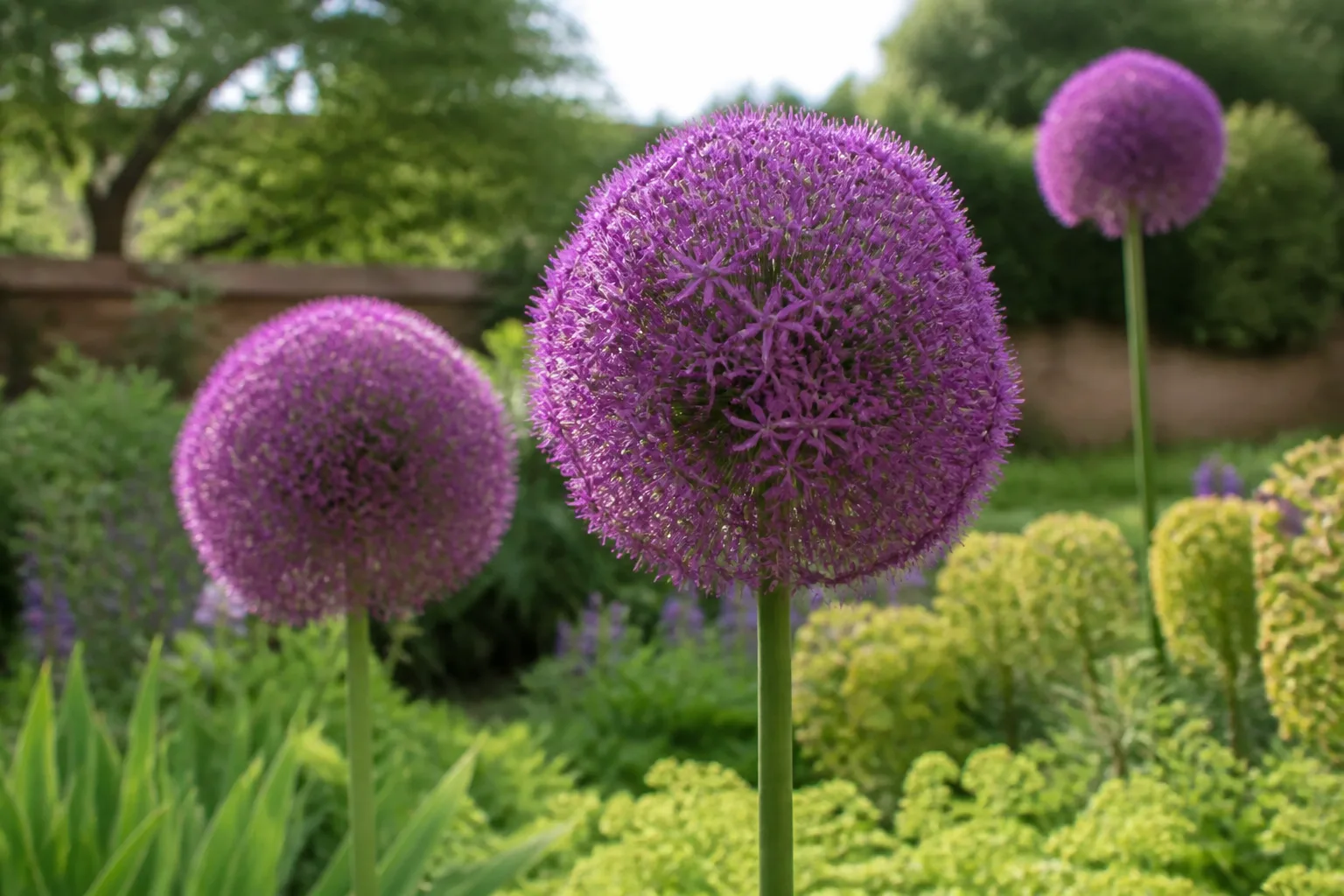
Ornamental alliums are easiest to grow when you buy for the site you have, not just for the flower head in the catalog. Some are fall-planted bulbs that send up large spring globes; others are smaller species or summer bloomers with different habits. They share the genus name Allium, but they do not all share one bloom month, height, or hardiness range.
For many border alliums, the practical formula is simple: choose a named variety, give it sun and fast-draining soil, plant the bulb at the labeled depth, and let its leaves die back naturally after flowering. That last step matters as much as the planting; green leaves refill the bulb for the next season, even when they look untidy.
Know which allium you’re planting
Allium is a genus of hundreds of species that includes culinary onions, garlic, chives, and ornamental plants. In garden guides, “ornamental allium” usually means a bulb grown for its star-shaped flowers arranged in an umbel, often a rounded globe at the top of a leafless stem. Flower heads range from a small cluster to a broad architectural sphere, and flowers may be purple, white, pink, blue, yellow, or wine red. North Carolina State Extension describes the genus as highly variable in height, leaf shape, flower form, and growing conditions (NCSU Extension Plant Toolbox: Allium).
Most showy spring border types—such as Allium hollandicum ‘Purple Sensation’, A. giganteum, and A. cristophii—are dormant bulbs sold in autumn. Their foliage often appears before the flower stalks. North Carolina State Extension’s profile of A. hollandicum describes its fall planting and late-spring to early-summer bloom; other garden alliums may flower later, grow in clumps, or have leaves that persist instead of dying down soon after bloom (NCSU Extension: Allium hollandicum). A label that says only “allium” is not enough to predict when it will flower or how large it becomes.
Bulb-forming spring alliums and other growth habits
The familiar large globes are usually bulb-forming perennials that prefer a dry resting period after growth. Many are planted in autumn for late-spring or early-summer flowers. However, the genus includes low-growing species for rock gardens, native nodding onion, late-flowering drumstick allium, and clump-forming selections such as Allium ‘Millenium’. The latter blooms in mid to late summer and grows about 1 to 1.5 feet tall, so it fills a different role than a tall May-flowering globe (NCSU Extension: Allium ‘Millenium’).
Distinguish a bulb from a rhizomatous or clump-forming plant before you decide how to plant or divide it. Bulbs are planted as individual storage organs in autumn and are divided by separating offsets after the leaves die back. Clump-forming types are usually divided as a rooted group when crowded. The packet, cultivar name, or nursery pot tag should tell you which form you bought.
Choose a variety for the space and bloom window
Choose by three features before color: mature height, flowering time, and whether the foliage will have a place to fade. A huge flower head on a tall stem can be striking in the middle of a border but may look top-heavy in a small pot. A compact allium can fit near a path or in a rock garden, but its smaller flowers may disappear if planted singly in a large bed.
| Type | Typical garden role | What to check |
|---|---|---|
| Allium hollandicum ‘Purple Sensation’ | Mid-height violet globes in late spring | Plant in groups; allow space for the fading leaves |
| A. giganteum or large hybrids | Tall focal points in a deep border | Mature height, wind exposure, and bulb depth |
| A. cristophii | Lower, starry flower heads and dried seedheads | Flower-head spread and front-of-border placement |
| A. sphaerocephalon | Smaller, egg-shaped drumstick heads later in summer | The later bloom window and tendency to self-seed |
| A. cernuum (nodding onion) | North American native with nodding pink or white flowers (NCSU Extension) | Regional suitability and its preference for well-drained soil |
| Allium ‘Millenium’ | Compact, sturdy summer-blooming clump | It is sold as an ornamental and is not for eating |
The table gives garden roles, not a guarantee of exact bloom date. Weather and region can shift flowering by weeks, and suppliers may sell different cultivars under familiar common names. The Royal Horticultural Society says most border alliums flower in May and June, while A. sphaerocephalon can extend color into July and August; use that stagger to bridge spring into summer rather than expecting one plant to bloom all season (RHS: How to grow alliums). Gardeners’ World likewise recommends checking mature height and spread before choosing named varieties, which is more useful than choosing by flower color alone (Gardeners’ World: 10 great alliums to grow).
Match mature size to the garden job
Put tall alliums where their stems can rise above lower plants without hiding smaller flowers. Give very large varieties a sheltered position because wind can catch the heavy heads and bend stems. Smaller heads can sit toward the front of a border, in a rock garden, or in a container where they are close enough to see.
For an extended display, combine early-, mid-, and late-flowering alliums rather than relying on deadheading to produce a second flush. Allium flower stalks generally give one display per season. If you want repeat color after they fade, pair them with plants that begin flowering as the allium leaves yellow, such as hardy geraniums, catmint, salvias, or ornamental grasses suited to the same sun and soil.
Site alliums for sun, shelter, and drainage
Choose the sunniest practical site with freely draining soil. Many ornamental alliums flower best in full sun, though some species tolerate light shade. Sun helps produce sturdy stems and reliable bloom; a shaded location may still keep the plant alive but can reduce flowers, particularly in a dense planting. North Carolina State Extension lists full sun to light shade for many alliums, while noting that species-specific requirements vary.
Do not choose a low pocket where water collects after rain. Bulbs can rot when soil stays saturated, especially during dormancy. The RHS and North Carolina State Extension both emphasize free-draining soil for alliums, so correct standing water and compaction before making an untested pH adjustment. If you suspect a pH problem, test the soil and follow advice for the named species rather than adding lime or sulfur by guesswork.
Fix persistently wet soil before planting
If your soil stays sticky and wet well after a rain, plant into a raised bed or broad mound, or choose a deep container with drainage holes. Improve the whole planting area rather than adding a little gravel at the bottom of each hole; a gravel pocket surrounded by compacted clay can hold water around the bulb instead of draining it away. On a slope, use a position where water moves past the planting rather than pooling above it.
A sheltered site is useful for tall varieties, but it should still receive sun and air. Avoid planting immediately beside a sprinkler that keeps the soil wet through summer, or in a border that gets regular irrigation after the bulbs go dormant. RHS guidance warns against waterlogged soil because it can rot bulbs and notes that alliums in the ground rarely need routine watering once established (RHS allium growing guide).
Plant dormant bulbs at the right depth and spacing
In the Northern Hemisphere, plant most spring-flowering allium bulbs in early to mid autumn while the soil is workable and before it freezes. That gives roots time to establish before spring. In the Southern Hemisphere, follow the corresponding autumn planting season, and in warm-winter areas choose varieties recommended for your climate rather than assuming that every large allium will flower well there. Spring-planted, actively growing alliums are a different purchase from dormant fall bulbs; keep them watered while they establish and do not expect every late-planted bulb to bloom that season.
Choose bulbs that feel firm and show no soft, wet, moldy patches. Plant them soon after purchase and keep any short delay cool, dry, and ventilated. Set each bulb with the pointed growing tip facing upward and the root plate down. Plant in groups for a stronger display, but leave space between individual bulbs so the clumps do not crowd as they mature.
Set bulbs upright and follow the cultivar label
Planting-depth advice varies enough that the cultivar label should take priority. The RHS general allium guide recommends a depth of about four times the bulb’s diameter (RHS allium growing guide), while North Carolina State Extension gives a depth of twice the bulb’s size for A. hollandicum (NCSU Extension). Utah State Extension’s general spring-bulb guideline is two to three times the bulb’s height, measured from the bulb’s base to the soil surface. Those recommendations are not interchangeable unless the measurement convention is clear, and large allium bulbs vary in shape.
If the package specifies planting depth, use it and check whether it means the depth of the hole or the amount of soil above the bulb. If you have no label, use the named species’ extension guidance where available; for a generic spring bulb, Utah State’s base-to-surface rule is a practical starting point. Do not bury a small bulb far deeper simply because a large A. giganteum needs more soil above it. In heavy or wet soil, solve drainage first rather than setting a bulb into a deep, waterlogged hole. See Utah State University Extension’s bulb-planting guide for its measurement method.
For spacing, follow the supplier’s mature-size guidance. Smaller alliums can sit roughly 3 to 4 inches apart, while larger border varieties often need about 8 inches or more between bulbs. The RHS suggests about 3 to 4 inches for smaller types and at least 8 inches for taller species (RHS allium growing guide). Measure from bulb centers, not from the outer scales, and use a loose group or drift instead of putting many bulbs into one cramped hole.
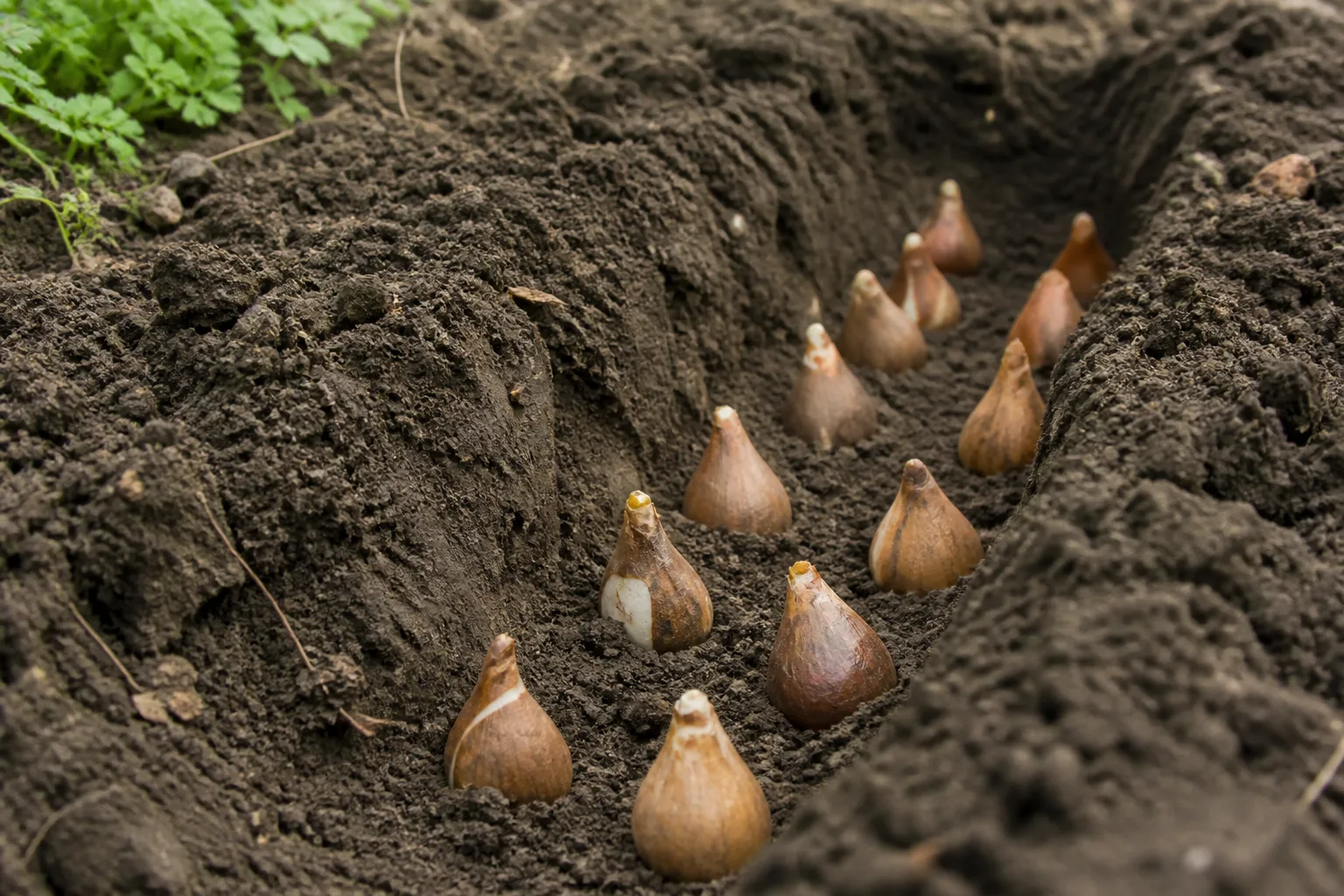
Set dormant bulbs point-up at the cultivar’s labeled depth. Bulb shape varies, so measure from the reference point named on the package.
Use containers when the bed stays wet
Alliums can grow in pots if the container is deep enough for the chosen variety and has an open drainage hole. Compact species are easier to manage than tall giants with heavy flower heads. Use fresh, free-draining potting mix rather than dense garden soil, and avoid leaving the pot standing in a saucer of water.
Water a container when its mix is drying during active growth, then let excess drain. A pot dries faster than a border in warm weather, but it can also stay cold and wet through winter. In regions with hard freezes or prolonged winter rain, move the pot to a sheltered spot and protect it from repeated soaking while keeping it outdoors if the cultivar needs winter chill. The RHS notes that container-grown alliums are more exposed to winter cold and rain than bulbs planted in the ground.
Water by growth stage, not a calendar
Newly planted bulbs need enough moisture for root establishment, but do not keep the bed constantly wet. If the soil is already damp and rain is expected, extra irrigation is unnecessary. In a dry autumn, water once after planting to settle the soil, then monitor conditions instead of watering every few days by habit.
Once established in a well-drained border, many ornamental alliums tolerate dry spells. During active spring growth, give supplemental water only when the root zone is dry and rain has not arrived; water the soil rather than repeatedly wetting foliage. When leaves yellow and the plant enters dormancy, reduce watering. The main failure to avoid is water sitting around bulbs through summer or winter. For pots, check more often because the smaller volume dries more quickly, but empty standing water after each watering.
Feed only when the soil needs it
A fertile, well-prepared bed rarely needs a routine fertilizer schedule for ornamental alliums. The RHS advises that regular feeding is not necessary. If a soil test shows a deficiency or the plant is growing in depleted mix, use a modest amount of balanced bulb fertilizer as growth begins and follow the product label; more fertilizer is not a substitute for sunlight, mature bulbs, or good drainage.
Avoid fresh manure or a heavy nitrogen feed. The goal is healthy roots and leaves that can replenish the bulb, not a large flush of soft foliage at the expense of flowering. In pots, refresh the upper mix or repot when it breaks down, but do not add fertilizer to a dormant bulb just because the flowers have finished.
Care for alliums after flowering
Allium flowers fade once their flowering period is over; deadheading does not make the same stem rebloom. After flowering, the leaves continue to gather energy that the bulb uses for the next season. Foliage may yellow while the flower head is still attractive, and that can be normal for spring-flowering types rather than a sign that the plant is dying.
Keep watering modestly while foliage is green and the weather is dry, then let the plant rest in drier soil after the leaves have fully faded. Gardening Know How’s post-bloom advice also emphasizes leaving allium foliage in place until it yellows and withers naturally (Gardening Know How: Allium after bloom).
Decide whether to remove or keep seedheads
You can cut a spent flower head close to its stem if you want a tidier bed or fewer seedlings. If the dry head adds structure to the border, leave it standing; many gardeners keep the architectural seedhead through fall and winter. Remove it before seed matures if the variety self-sows more than you want or if local guidance flags it as invasive.
Do not cut the leaves at the same time as the flower head. The head can be removed while foliage remains green, but those leaves need to finish their seasonal work. If you plan to collect seed, let the seed capsules dry and turn papery before gathering them, then sow promptly for the best chance of germination.
Leave green foliage until it yellows
Let each leaf yellow and dry naturally before removing it at ground level. Do not mow, braid, knot, or cut away green leaves to make the border look neat; doing so reduces the time available to replenish the bulb and can weaken the next display. If foliage is messy, disguise it with compatible nearby plants rather than removing it early.
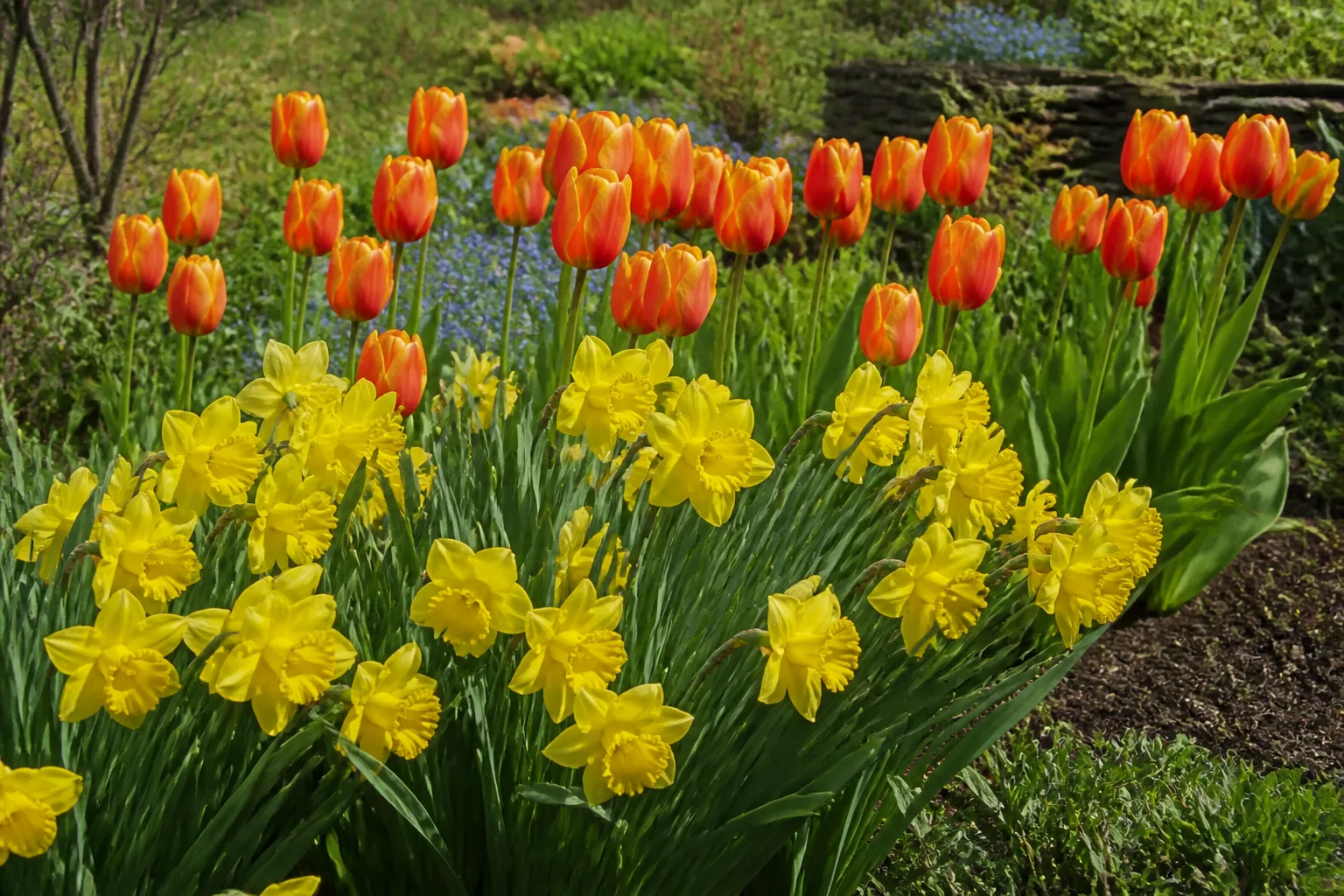
Layering bulbs with later-growing plants helps a border stay composed as early foliage fades. Use the same principle around alliums, leaving enough space for the bulbs to return.
Propagate offsets, bulbils, or seed
The quickest way to increase a bulb-forming allium is usually to separate its offsets. Wait until flowers and foliage have died down, loosen the clump carefully, and lift it with a fork so you do not spear the bulbs. Gently separate the small attached bulbs and replant them at the species’ recommended depth. Small offsets may need more than one growing season to reach flowering size, so do not judge them by their first spring.
Some species form tiny aerial bulbils in the flowerhead. If yours does, collect them when they are mature and plant them in a pot or nursery bed where you can keep track of them. Seed is possible but slower: seedlings can take several years to reach bloom, and seeds from hybrids may not resemble the parent cultivar. The RHS covers offset, bulbil, and seed propagation and notes that seed-grown hybrids may not come true (RHS allium propagation).
Clump-forming alliums can be divided when they become crowded, using the season specified for that type. Do not divide every year; unnecessary lifting disrupts roots and delays flowering. Divide when the clump has outgrown its space or has become congested, then replant divisions promptly rather than leaving roots exposed to dry out.
Troubleshoot no flowers, rot, and pests
If leaves appear but no flowers do, first check whether the variety normally blooms later than you expect. Alliums span spring into summer, and a late-flowering A. sphaerocephalon or ‘Millenium’ will not behave like a May-blooming ‘Purple Sensation’. Other common reasons include a bulb that is too small or newly divided, insufficient sun, poor drainage, or green leaves cut back too early in the previous season.
A bulb planted too shallowly may be more exposed to temperature changes; one buried too deeply may struggle to emerge. If the plant is mature and the site is sunny but the bulb is in saturated soil, rot is a more likely issue than a fertilizer shortage. Check the bulbs after the foliage dies back only when symptoms justify lifting; routine digging can damage healthy plantings.
Check the plant’s age, light, and foliage history
Use this sequence before replacing a disappointing patch:
- Confirm the cultivar and its expected flowering window.
- Check whether the site gets several hours of direct sun during its growth period.
- Look for a wet pocket, clogged container drain, or signs of soft bulb tissue.
- Ask whether leaves were cut while green last season.
- Consider whether the bulbs are young offsets that need another season or two.
Alliums are generally trouble-free in a suitable site, but wet conditions can contribute to bulb rot, rust, or mildew. Slugs and snails may damage young growth. Some regions also have allium leaf miner, which can make pale punctures or trails in foliage and lead to secondary decay. Its range and control window vary by region, so use local extension guidance rather than treating every damaged leaf as the same pest. The RHS describes leaf miner damage and identifies insect-proof mesh as a prevention option in affected areas (RHS: Allium leaf miner).
If an allium develops stunted, yellowing foliage and a soft, rotting base, remove badly affected bulbs and avoid moving contaminated soil or tools into clean beds. Onion white rot can persist in soil for many years; it is a different problem from ordinary post-flower leaf dieback. Check with a local extension service before replanting susceptible alliums in a site where a serious soil-borne disease has been confirmed (RHS: Onion white rot).
Keep alliums safely contained
Do not assume an ornamental allium is edible because onions, garlic, and chives belong to the same genus. Allium species and cultivars differ; some ornamentals are described as not edible, and plants sold for display may have been treated with products not labeled for food crops. Do not taste an unidentified bulb or use ornamental flowers in food unless you have positively identified an edible species and know it was grown for consumption.
Keep bulbs, leaves, and cut flowerheads away from pets that chew plants. The ASPCA lists common onion (Allium cepa) as toxic to dogs, cats, and horses; that listing is not a species-by-species assessment of every ornamental allium, so the prudent rule is to prevent ingestion and call a veterinarian or animal poison service if a pet eats any part (ASPCA: Onion). Also check local invasive-plant guidance before planting species that spread freely. North Carolina Extension notes that Allium neapolitanum has naturalized in parts of the southeastern United States and is considered invasive in some areas (NCSU Extension: Allium neapolitanum); that warning applies to this species and region, not every ornamental allium.
Conclusion
Choose alliums by their named variety, mature size, bloom time, and local suitability. Give bulb-forming types a sunny site with reliable drainage, follow the label for depth, and keep pots from sitting wet. After bloom, remove the flowerhead if you want, but leave green leaves until they yellow and fade.
Those few decisions prevent most common disappointments: bulbs planted too shallowly or in wet soil, foliage cut while it is still feeding the bulb, and a variety planted where its height or flowering season does not fit. If you want more plants, divide offsets after dormancy or grow seed with the understanding that seedlings take time and hybrids may vary.



