Peas Care Guide: Light, Water & Soil
Pisum sativum
Grow garden, snow, or snap peas with cool-season sowing, full sun, moist well-drained soil, trellis support, and steady picking for sweet pods.
Peas Care Guide: Light, Water & Soil
Start with wateringThe most common care mistake for PeasWatering guide → →Peas care essentials
Light
Water
Keep soil evenly moist from germination through pod fill. Water when the upper 2–3 cm begins to dry in containers; established plants need steady moisture while flowering and forming pods, but the root zone should never stay saturated.
Soil
Well-drained loam or sandy loam enriched with compost; pH 5.5–7.5. Peas tolerate cool, moist conditions but rot in waterlogged beds.
Humidity
Temperature
Fertilizer
About Peas
Peas is native to Mediterranean and western Asia (long cultivated worldwide), typically reaches Bush types 45–75 cm tall; climbing types to 1.5–2 m with support indoors, with fast - many varieties produce pods 60–70 days after sowing in cool weather growth. Peas has a herbaceous annual legume growth habit and part of the Fabaceae family. It is also known as Matar, Garden Pea, English Pea, Snow Pea, and Sugar Snap Pea.
| Detail | Information |
|---|---|
| Also known as | Matar, Garden Pea, English Pea, Snow Pea, Sugar Snap Pea |
| Native region | Mediterranean and western Asia (long cultivated worldwide) |
| Mature size | Bush types 45–75 cm tall; climbing types to 1.5–2 m with support |
| Growth rate | Fast - many varieties produce pods 60–70 days after sowing in cool weather |
| Growth habit | Herbaceous Annual Legume |
| Scientific name | Pisum sativum |
| Family | Fabaceae |
Peas Care Guide: Light, Water & Soil
Peas care starts with a simple truth: Pisum sativum is a cool-season annual legume, not a year-round houseplant. Garden peas (matar), snow peas, and sugar snap peas all share the same species but need different harvest timing. Growth and pod set fade as days heat up—Gardener’s Path notes best performance when air temperature stays below about 70°F (21°C), with production dropping sharply once heat pushes past roughly 85°F (29°C).
This overview covers identity, size, light/water/soil basics, India-friendly sowing windows, planting and trellis logic, harvest rhythm, early warning signs, and where to go next in the Peas plant hub. Use sibling guides when one variable—light, water, soil, feed, propagation, or support—needs a deeper fix.
What Is Garden Pea (Pisum sativum)?
Garden pea—matar in many Indian kitchens—is an herbaceous annual in the pea family (Fabaceae). Plants grow quickly from seed, produce tendrils that cling to supports, and finish their life cycle in one cool season. Clemson Extension describes garden peas as cool-weather crops that include shelling English types and edible-podded forms eaten whole.
Unlike slow perennials on a windowsill, peas are a short-window crop: success depends on sowing while weather is still mild, giving vines enough time to flower and fill pods before summer stress.
Shelling, snow, and snap types
Choose your pea type before you buy seed:
- Shelling (English/garden) peas: Pods are fibrous; you harvest plump seeds inside. Clemson notes wrinkled-seeded home varieties are often sweeter than smooth-seeded types.
- Snow peas: Flat, tender pods picked while seeds are tiny—classic stir-fry matar.
- Sugar snap peas: Rounded, edible pods with sweet peas inside; pick while pods are crisp, before they turn tough.
Bush (dwarf) cultivars may top out near 45–75 cm and often crop heavily over a shorter window; tall “telephone” types can exceed 1.5 m and need sturdy trellises, but many gardeners like the extended pick period on climbing lines.
Garden pea versus ornamental sweet pea
Do not confuse edible garden pea (Pisum sativum) with ornamental sweet pea (Lathyrus species). They are different plants with different poison-control listings. ASPCA poison-control pages cover ornamental sweet pea (Lathyrus), not kitchen matar. Label seed packets clearly if children or pets help in the garden.
Growth Habit and Mature Size
Peas germinate in roughly 7–10 days in cool, moist soil—sometimes slower if nights are chilly—matching the 7–10 day germination window Gardener’s Path cites for pea seed. Many varieties reach first harvest in about 55–70 days, depending on type and season; Clemson cites early shelling cultivars at 55–64 days and mid-season lines at 65–70 days.
Bush cultivars versus climbing vines
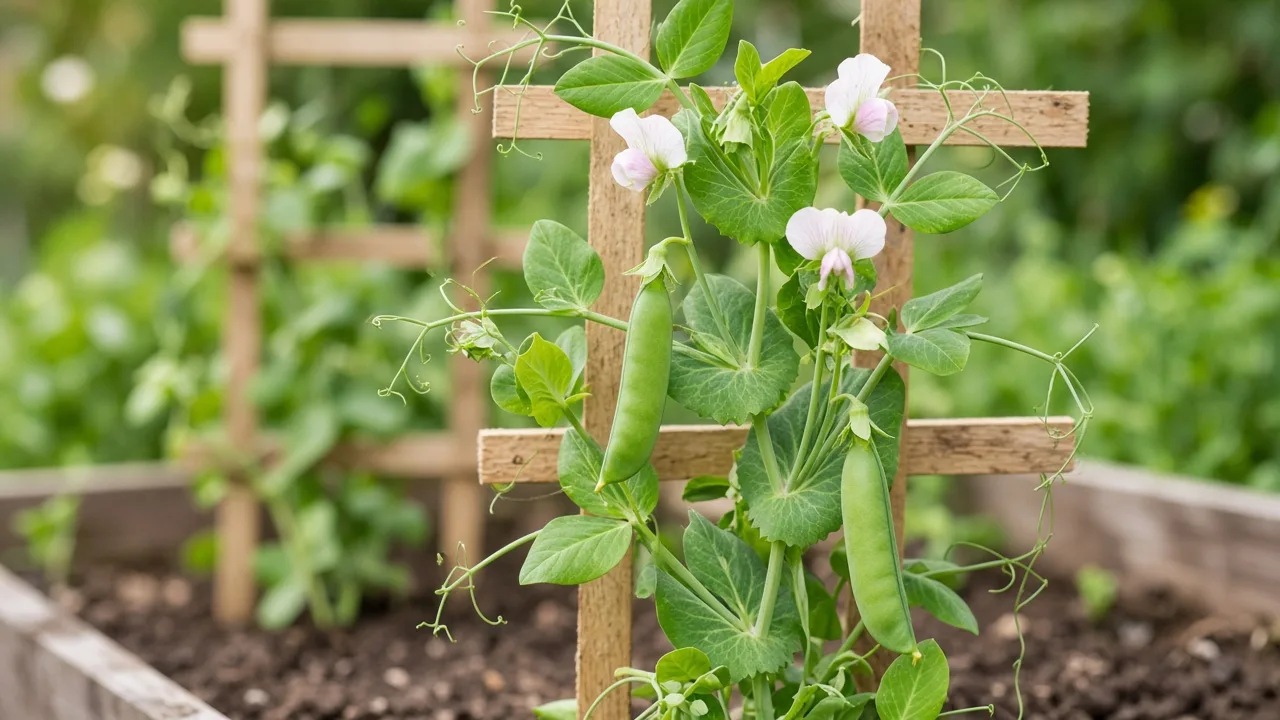
Bush peas suit wide containers and short pea brush; they may still appreciate a low frame to keep pods off wet soil. Climbing peas need netting, canes, or trellis wire at least 1.5–2 m tall on many Indian balconies—install supports at sowing so you do not disturb shallow roots later. Clemson recommends erecting supports before or right after planting.
Good airflow around vines matters in humid cool seasons when mildew pressure rises. The Peas pruning guide covers pinching tips and thinning dense growth without stripping pods.
Light, Water, and Soil at a Glance
Light: Peas want full sun for flavor and sugar content. Clemson advises planting in full sun to maximize flavor and sugar. On terraces, give peas the brightest open spot—not a shaded corridor where pods will not set. See the Peas light guide for heat-wave trade-offs and leggy growth.
Water: Keep soil evenly moist from germination through pod set and development—the critical moisture window. Clemson stresses even moisture while pods form and morning watering so foliage dries before night. In containers, check 2–3 cm below the surface and water when that layer begins to dry, letting excess drain freely. Chronic sogginess causes more trouble than a brief dry spell once vines are established. Details: Peas watering guide.
Soil: Target well-drained loam or sandy loam enriched with compost; peas tolerate cool, moist root zones but rot in waterlogged clay. Gardener’s Path recommends pH roughly 6.0–7.5 with plenty of organic matter worked in ahead of sowing. Clemson suggests maintaining pH between 6.0 and 6.5 when testing. Mix recipes and drainage fixes live in the Peas soil guide.
Full sun and cool temperature limits
Peas are frost-hardy young plants in many climates—Clemson notes vines can withstand frosts and light freezes though open blossoms cannot. That helps North Indian late-winter sowings but does not replace protecting flowers if a hard freeze is forecast. Heat is the bigger enemy on hot plains: plan so flowering finishes before relentless 24–29°C+ (75–85°F+) days arrive.
Moisture through flowering and pod fill
Uneven drought during flowering causes flower drop and poor pod set. Steady moisture through pod fill keeps peas sweet; sugar in harvested peas converts to starch quickly, so Clemson recommends eating, freezing, or canning soon after pick. Mulch lightly after seedlings are a few inches tall to cool roots—see watering guide for saucer and monsoon habits.
Drainage, compost, and pH
Work compost or well-rotted manure into beds before sowing rather than pouring nitrogen later. Raised beds help heavy clay; deep containers need drainage holes and quality potting mix blended with compost and perlite. If a soil test shows phosphorus deficiency, address it—legumes still benefit from balanced fertility even though they fix much of their own nitrogen when rhizobia are present.
Growing Peas in India and Hot Lowlands
On warm Indian lowlands, treat matar as a winter or very early spring crop—sow so vines flower and set pods before summer heat shuts production. Where winters are mild, autumn sowings may work; where frost is rare but summer is fierce, prioritize the coolest sowing window you have.
Cool-season sowing windows for matar
Match sowing to local cool months, not a fixed calendar. Practical triggers: seedbeds drain after monsoon rains, nights are cool enough for steady germination, and you can keep containers from baking on concrete twice daily. RHS notes outdoor sowing from March to June in temperate climates once soil reaches about 10°C (50°F)—translate that logic to your soil warmth: if the mix stays cold and wet, wait or pre-warm shallow trays on a bright balcony.
Repeat small sowings every few weeks during your cool window for staggered harvests, as RHS recommends picking pods regularly to encourage more.
Planting, Support, and Legume Logic
Peas are direct-sown into their final bed or deep container. Transplanting stressed seedlings often stalls growth—use biodegradable cells only if you must start indoors. The Peas propagation guide covers soak times, inoculant, and success rates; repotting explains why moving young vines is usually a last resort.
Direct sowing depth, spacing, and inoculant
Sow seed about 2–3 cm (1–1½ in) deep in moist soil. Clemson recommends 1–1½ inches deep and spacing suited to row type; Gardener’s Path suggests roughly 3 inches apart for vining types and wider for bush lines. Peas are legumes: Rhizobium bacteria in root nodules help fix nitrogen. On new beds, a pea-specific inoculant can help—Clemson describes treating seed with Rhizobium leguminosarum biovar viceae. Rotate peas with non-legume families on a three- to four-year cycle and avoid planting where alliums (garlic, onion) grew recently.
As legumes, peas need little extra nitrogen; Clemson warns excess nitrogen reduces pod production. Compost at sowing plus targeted phosphorus if tests show need is usually enough—the Peas fertilizer guide walks through dilution and warning signs.
Harvest Timing by Pea Type
Harvest rhythm defines quality:
- Shelling peas: Pick when pods are plump but peas are still sweet—before pods yellow or feel fibrous. Lower pods mature first; Clemson advises harvesting every 1–3 days at peak.
- Snap peas: Harvest plump, crisp pods before seeds dominate the pod.
- Snow peas: Pick flat pods while seeds remain tiny—Clemson notes snow peas are often ready within about seven days from flowering when pods stay flat.
Use two hands when picking so you do not yank vines out of light soil. Frequent harvest keeps many varieties flowering longer.
Common Balcony and Bed Mistakes
Most pea failures trace to season, not mystery disease:
- Sowing in peak summer heat: Vines may germinate then stall; choose a cooler window or heat-tolerant cultivar if seed is available.
- Skipping support on climbers: Pods touch wet soil and mildew spreads; install trellis at sowing.
- Overwatering seedlings: Saturated mix invites damping-off; let the upper layer breathe between drinks.
- Heavy nitrogen feeds: Lush leaves, few pods—back off and read the fertilizer guide.
- Letting pods over-mature: Starch replaces sugar within hours off the vine—pick often and cook soon.
Powdery mildew and aphids appear in crowded, humid plantings; improve spacing and morning irrigation habits before reaching for sprays.
Pets, Children, and Chemically Treated Seed
Garden pea is a human food crop, but that does not make leaves, pods, or vines safe for unsupervised pet grazing—especially where seed was fungicide-treated. Keep pets away from beds and store seed out of reach. Human food use does not verify cat- or dog-safe forage; contact a veterinarian after meaningful ingestion. Remember ornamental sweet pea (Lathyrus) is a separate species with different toxicity context on ASPCA listings.
When to use this page vs other Peas guides
Stay on this overview when you need the whole picture: pea type, season, support, moisture at pod fill, legume feeding logic, and first troubleshooting.
Open a sibling guide when one topic dominates:
- Light — sun hours, balcony orientation, heat shutdown
- Watering — finger checks, pod-fill rhythm, wilt diagnosis
- Soil — mix recipes, pH, compaction in containers
- Fertilizer — why excess nitrogen fails peas
- Propagation — seed soak, inoculant, direct sow
- Repotting — why direct-sow beats moving vines
- Pruning — tips, airflow, harvest discipline
Related Peas guides
Build the cluster as your season progresses:
- Hub: Peas
- Care: light, watering, soil, fertilizer, repotting, propagation, pruning
Start with light and watering on a new sowing; add soil and fertilizer if growth stalls despite good sun; open propagation when you plan your next cool-window tray.
Conclusion
Peas reward growers who respect cool-season legume logic: choose shelling, snow, or snap harvest first, sow into full sun and free drainage while weather is still mild, and install trellis support before roots spread. Keep moisture steady through flowering and pod fill, avoid heavy nitrogen, and pick pods often so vines keep producing. Nail those decisions here, then use the dedicated guides when light, water, soil, or feeding needs a finer adjustment.
How to care for Peas?
When should you water Peas?
Keep soil evenly moist from germination through pod fill. Water when the upper 2–3 cm begins to dry in containers; established plants need steady moisture while flowering and forming pods, but the root zone should never stay saturated.
- Feel 2–3 cm below the surface - Water when the upper 2–3 cm begins to dry in containers; established plants need steady moisture while flowering and forming pods, but the root zone should never stay saturated.
- water when that layer is beginning to dry - Water when the upper 2–3 cm begins to dry in containers; established plants need steady moisture while flowering and forming pods, but the root zone should never stay saturated.
- then let excess drain freely
- Drain excess water - Water when the upper 2–3 cm begins to dry in containers; established plants need steady moisture while flowering and forming pods, but the root zone should never stay saturated.
What soil works best for Peas?
Well-drained loam or sandy loam enriched with compost; pH 5.5–7.5. Peas tolerate cool, moist conditions but rot in waterlogged beds.
- 50% quality potting mix or screened loam - Well-drained loam or sandy loam enriched with compost; pH 5.5–7.5.
- 30% mature compost - Well-drained loam or sandy loam enriched with compost; pH 5.5–7.5.
- 20% perlite, pumice, or coarse sand - Well-drained loam or sandy loam enriched with compost; pH 5.5–7.5.
Grower notes for Peas
Pick your pea type before sowing
Garden peas (shelling), snow peas, and sugar snap peas all belong to Pisum sativum but need different harvest timing. Shelling types are picked when pods are plump and peas are sweet but still tender. Snow and snap peas are harvested while pods are flat or full but still crisp. Match the variety to your trellis height and season length.
Treat peas as a cool-season crop
Peas thrive when air temperatures stay mostly below about 21°C (70°F) and growth slows as heat builds past 24–29°C (75–85°F). In warm Indian lowlands, sow in the cooler window so vines flower and set pods before summer heat. Foliage can take light frost; protect open flowers and young pods if a hard freeze is forecast.
Give vines support early
Bush cultivars may need only a short stake or pea brush, while climbing types need a trellis, netting, or canes at least 1.5–2 m tall. Install supports at sowing so you do not damage roots later. Good airflow around vines reduces mildew pressure in damp weather.
Direct-sow and inoculate when useful
Sow seed about 2–3 cm deep in moist, well-prepared soil. Germination usually takes 7–10 days in cool conditions. On new beds, rhizobium inoculant for peas and beans can help this legume fix nitrogen. Avoid planting peas where garlic, onions, or other alliums grew recently.
Harvest on a rolling schedule
Pick shelling peas when pods feel full but before peas turn starchy. Harvest snow and snap peas while pods are still tender and bright green. Frequent picking encourages more flowers on many varieties. Use peas soon after harvest; sweetness drops quickly once pods are picked.
Do not confuse garden peas with sweet pea
Ornamental sweet pea (Lathyrus species) is a different plant from edible garden pea (Pisum sativum). ASPCA poison-control listings apply to Lathyrus, not matar. Label seed packets clearly if pets or children help in the garden.
Is Peas safe around pets?
Garden pea (Pisum sativum) is a human food crop, but that does not establish leaves, pods, or vines as safe pet forage. Do not confuse it with ornamental sweet pea (Lathyrus), which has separate poison-control listings.
ASPCA poison-control pages cover ornamental sweet pea (Lathyrus), not edible Pisum sativum. Prevent unsupervised grazing on garden plants and ask a veterinarian about any meaningful ingestion, especially if seed was treated with fungicide.
Watering Peas
For Peas, feel 2–3 cm below the surface; water when that layer is beginning to dry, then let excess drain freely and water check daily in warm, windy weather; in cool seasons water when the top 2–3 cm is dry rather than on a fixed calendar. Increase irrigation during flowering and pod development; ease off as pods finish and plants senesce in heat.
| Detail | Information |
|---|---|
| How often | Check daily in warm, windy weather; in cool seasons water when the top 2–3 cm is dry rather than on a fixed calendar |
| How to check | Feel 2–3 cm below the surface; water when that layer is beginning to dry, then let excess drain freely |
| Seasonal changes | Increase irrigation during flowering and pod development; ease off as pods finish and plants senesce in heat |
Signs of overwatering
- yellowing lower leaves with persistently wet soil
- soft or darkened stem bases near the soil line
- stalled growth despite wet mix
Signs of underwatering
- wilted vines in midday heat that do not recover overnight
- dry, pulling soil and poor pod set
- flowers dropping before pods form
Soil & potting for Peas
Use a mix of 50% quality potting mix or screened loam, 30% mature compost, 20% perlite, pumice, or coarse sand for Peas. Moist but well-drained; standing water invites root and seedling disease. Target soil pH around 5.5–7.5. Repot no routine repotting - direct-sow this annual in its final bed or deep container; transplant only young starts if you must, ideally in sow in the local cool season (often autumn–winter in hot lowlands or late winter–early spring where frost is mild).
| Detail | Information |
|---|---|
| Recommended mix | 50% quality potting mix or screened loam, 30% mature compost, 20% perlite, pumice, or coarse sand |
| Drainage | Moist but well-drained; standing water invites root and seedling disease |
| Soil pH | 5.5–7.5 |
| Repotting frequency | No routine repotting - direct-sow this annual in its final bed or deep container; transplant only young starts if you must |
| Best season to repot | Sow in the local cool season (often autumn–winter in hot lowlands or late winter–early spring where frost is mild) |
Signs it needs repotting
- seedlings are root-bound in cells before transplant
- the container is too shallow for climbing roots
- drainage has failed before the crop finishes