Peas Propagation: Sow Seed, Timing & Germination
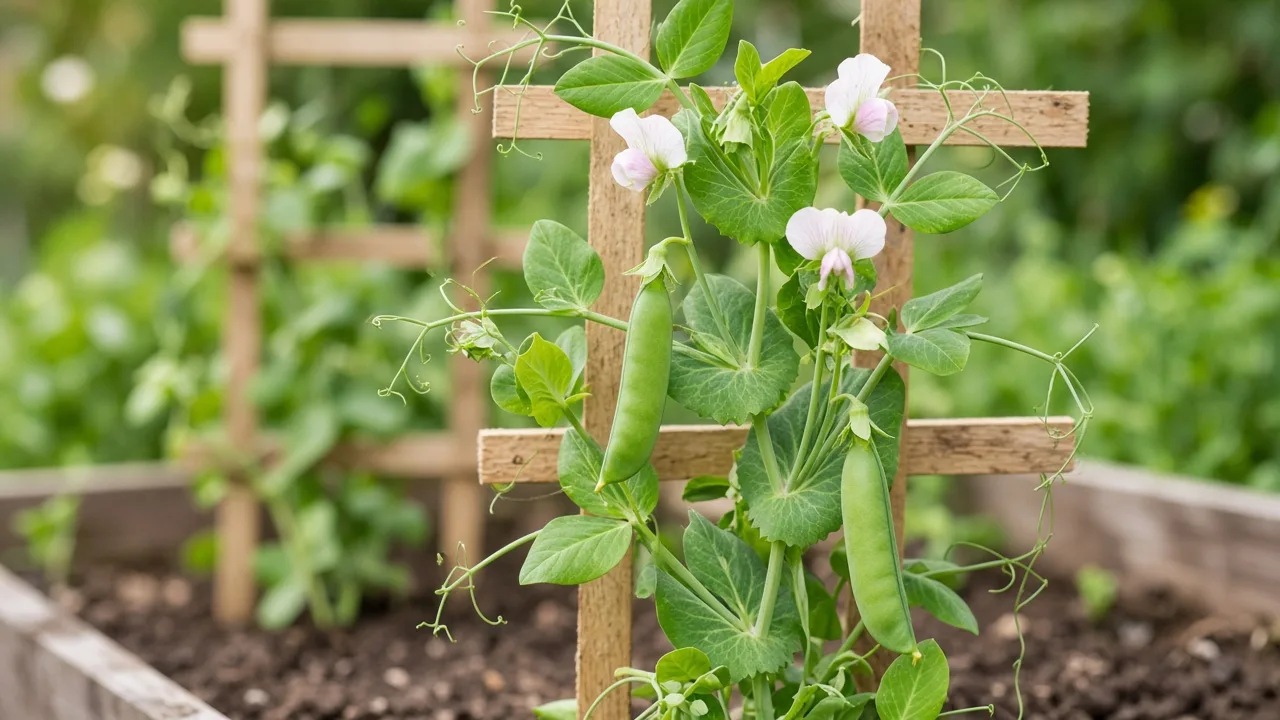
Peas Propagation: Sow Seed, Timing & Germination
Peas Propagation: Sow Seed, Timing & Germination
Garden pea (Pisum sativum)—matar on many Indian terraces—is propagated only from seed. Shelling English peas, flat snow peas, and crisp sugar snap peas all start the same way: one sound seed becomes one annual vine or bush that flowers and sets pods in a single cool season. Unlike perennial houseplants you might root from cuttings, peas do not produce new plants from stem pieces, and there is no practical way to “clone” last year’s vines for next winter’s crop.
Direct sowing into moist, well-drained soil where plants will finish their life cycle is the reliable propagation path. Penn State Extension groups cultural advice around cool soils, in-row spacing, and supports placed at planting time—because disturbing roots later costs you vigor and pods. For how peas fit your garden overall, start with the Peas overview.
Best propagation method for Pisum sativum
Treat pea propagation as seed-to-harvest establishment, not vegetative multiplication. Peas germinate in cool soil, climb or bush out quickly, fix nitrogen when compatible rhizobia are present, and finish before summer heat shuts them down. Utah State University Extension describes peas as frost-tolerant cool-weather vegetables that need soil and air temperatures below about 80°F (27°C) for best germination and growth—timing your sowing matters as much as depth and water.
Why cuttings and crown division do not work
Peas are herbaceous annual legumes. They do not root from stem cuttings the way mint or coleus might, and there is no perennial crown to divide. Any tutorial that shows “regrowing” peas from kitchen scraps is describing short-lived leaf sprouting on stored tissue—not a new cropping plant. If you want more vines, sow more seed in the next cool window instead of trying to propagate from harvested vines.
Direct sowing versus young transplant starts
Direct sowing is the default for matar in beds, raised planters, and deep containers. Seed goes into its final position at the correct depth, supports go in at the same time, and roots never get torn during a move.
You can start peas indoors or in cells for very early plantings when soil is still cold, then set out young seedlings with minimal root disturbance—Utah State University Extension notes that pre-germinating seed indoors helps very early stands establish faster once soil warms. Transplanting older, root-bound starts into heat often causes check and flower drop. The Peas repotting guide explains when a move is worth the risk versus sowing in place.
When to sow peas in cool weather and India-friendly windows
Peas thrive when days stay mostly below about 21°C (70°F) and struggle as heat pushes past 24–29°C (75–85°F). On warm Indian lowlands, sow during your coolest months—often autumn through late winter—so vines can flower and fill pods before summer stress. At elevation or in mild winters you may have a longer slot; on hot terraces, prioritize season timing over perfect soil on paper.
Soil should be workable and above roughly 40°F (4°C) for emergence; Utah State University Extension recommends planting when soils are above 40°F, with seedlings emerging in 7–10 days in 55–65°F (13–18°C) soil. Penn State Extension cites a broader germination range of 40° to 85°F for seed—use the cool end of that band for India-friendly matar sowings, not peak summer.
Succession sowing for steady pod harvests
For shelling types that mature in a burst, sow small batches every two to four weeks through your cool window so harvests do not arrive all at once. Penn State Extension suggests sowing new seed on that rhythm for a steady supply; Utah State University Extension recommends intervals of 14–21 days where climate allows. Many snap and snow cultivars produce over a longer pick window, so one well-timed sowing may be enough on a small balcony.
Match shelling, snow, or snap type before you buy seed
Propagation success starts at the seed packet: garden/shelling peas need harvest when pods are plump but seeds stay sweet; snow peas are picked flat and young; sugar snap peas are eaten pod and all while crisp. Bush types suit short trellises; tall telephone types need 1.5–2 m supports. Choose seed matched to your vertical space before you prepare soil—depth and spacing details live in the Peas soil guide.
Prepare seed, inoculant, and the sowing site
Work compost-enriched, well-drained mix or loam before sowing; peas rot in waterlogged beds. Penn State Extension targets soil pH between 5.8 and 7.0, overlapping the 5.5–7.5 range in the Peas plant hub. Full sun supports strong germination and sugar in pods—see the Peas light guide if your balcony is marginal.
Soaking, stored seed, and fungicide-treated packets
Dry pea seed can be sown as-is. Penn State Extension notes germination in 6–17 days without soaking, and that soaking overnight—but not more than 24 hours—can shorten emergence. Discard swollen seed that fails to sprout; old or poorly stored seed germinates weakly, which Utah State University Extension lists as a common reason for patchy stands.
Read the packet for fungicide-treated seed. Treated seed can reduce damping-off risk in cool, wet soil, but it is not food and must be kept away from children and pets. Do not confuse edible garden pea (Pisum sativum) with ornamental sweet pea (Lathyrus)—different species, different poison-control listings, as noted in the Peas overview.
Rhizobium inoculant on beds without recent legumes
Peas fix nitrogen when compatible rhizobia colonize roots. On new beds or soil that has not grown peas or beans for several seasons, a pea- or legume-specific inoculant dusted on damp seed or placed in the sowing row can help nodulation. Inoculant is optional on ground with a recent legume history but cheap insurance on fresh potting mix in containers. Avoid sowing where alliums dominated the previous crop; rotation logic is covered alongside feeding in the Peas fertilizer guide.
Step-by-step: direct sow peas in beds or deep containers
- Install supports first — trellis netting, canes, or pea brush for climbing types; short frames for bush lines. Penn State Extension advises placing stakes about 3 inches (7–8 cm) from the seed at planting so you do not pierce roots later.
- Moisten the bed — water before sowing so irrigation does not wash seed into deep cracks.
- Sow 2–3 cm (½–1 in) deep — Utah State University Extension recommends ½–1 inch depth; Penn State Extension allows 1–2 inches in heavier soils. In loose container mix, err shallow; in crust-prone clay, a slightly deeper row with fine cover can help.
- Space seed 2.5–5 cm (1–2 in) apart in the row, with 30–60 cm (12–24 in) between rows or troughs—follow your cultivar packet if it differs.
- Firm lightly and water gently — mist or a soft rose until the surface stays evenly damp, not flooded.
- Label cultivar and sowing date — many varieties mature in 55–70 days, but heat shifts that calendar.
Germination temperature, timing, and moisture
The critical propagation window is even moisture without baking heat. Keep the upper 2–3 cm of mix damp until seedlings appear; then shift to the deeper checks in the Peas watering guide rather than constant surface soaking. Peas emerge faster in cool, moist soil and stall when seedbeds dry out or when air temperatures sit above 80°F (27°C) during emergence—Utah State University Extension ties poor performance directly to heat beyond that point.
If germination is uneven after two weeks in cool weather, scratch the row lightly, verify depth, and resow fresh seed in the same cool window rather than waiting for summer.
Spacing, thinning, and installing supports at sowing
Dense stands are tolerable—Utah State University Extension notes thinning is not always necessary if plants are thick—but very crowded containers compete for water and airflow. If vines lean on each other in humidity, thin weakest seedlings at soil level once they have two to three true leaves, and guide tendrils to the trellis.
Never add supports by stabbing deep into the root zone mid-season; install at sowing as in the Peas pruning guide support notes. Good vertical airflow reduces mildew pressure once vines fill in.
Aftercare from emergence through flowering
Once seedlings stand, protect stems from cutworms with collars if those pests appear in your beds—Penn State Extension mentions foil or cardboard guards around young stems. Hold off on heavy nitrogen; peas that fix nitrogen can produce leafy vines with fewer pods if overfed. Steady moisture through flowering and pod set matters more than extra feed—heat and drought at bloom cause flower drop above 80°F (27°C), per Utah State University Extension.
Expect first harvest roughly 60–70 days after sowing for many cultivars, sooner on fast bush lines. Pick regularly so plants keep flowering on indeterminate types.
Saving pea seed at home (dry peas)
You can propagate next season’s crop from home-saved seed if you allow pods to mature fully on the vine. Utah State University Extension describes pulling plants when pods yellow, drying them 5–7 days, then shelling and drying seed further in a cool, airy place before storage in sealed containers.
Hybrid snap or shelling cultivars may not breed true from saved seed; open-pollinated varieties are better candidates. Isolate types if you need predictable pod shape, and never save seed from diseased plants.
Common propagation failures and first fixes
No emergence in cool soil: seed too deep, bed dried out, or seed too old. Resow at correct depth and keep the surface moist.
Seedlings collapse at the soil line: suspect damping-off in cold, wet, stagnant mix. Improve drainage and airflow; avoid saturating trays at night. Extension guidance on damping-off in vegetable seedlings describes fungal collapse when seedlings stay waterlogged.
Plants up but yellow and stunted in wet clay: root rot risk—ease watering and improve drainage per the Peas soil guide.
Flowers drop without pods: heat or drought at bloom—shade containers briefly in spikes, mulch lightly, and prioritize earlier sowings next season.
Birds or rodents dig seed: cover rows with lightweight fleece until emergence, then remove before heat builds.
When to use this page vs other Peas guides
Use this propagation guide for seed sowing, germination moisture, inoculant, spacing, succession timing, transplant trade-offs, and seed-saving basics. Use the Peas overview for identity, pea types, and seasonal expectations. After plants are established, move to watering, soil, light, and fertilizer for ongoing care.
Use repotting when you must move young starts, and pruning for vine management—not for creating new plants.
Related Peas guides
- Peas care overview — cultivar choice, cool-season habit, and matar basics
- Peas light needs — full sun for strong germination and pod set
- Peas watering — even moisture from emergence through pod fill
- Peas soil — drainage, mixes, and pH before sowing
- Peas fertilizer — legume feeding without excess nitrogen
- Peas repotting — when a young start must move versus sowing in place
Conclusion
Propagate peas by sowing fresh seed in cool weather into moist, well-drained soil, with supports in place on day one. Soaking seed overnight is optional; inoculant helps on new legume-free beds; cuttings are not a viable path. Guard germination moisture, sow shallow in containers and appropriately deep in crusting soils, and plan succession sowings if you want shelling peas over weeks rather than one burst. When emergence fails, fix depth and moisture and resow in the next cool window instead of pushing the same crop into summer heat.