Peas Soil Guide: Mix, pH & Drainage for Pods
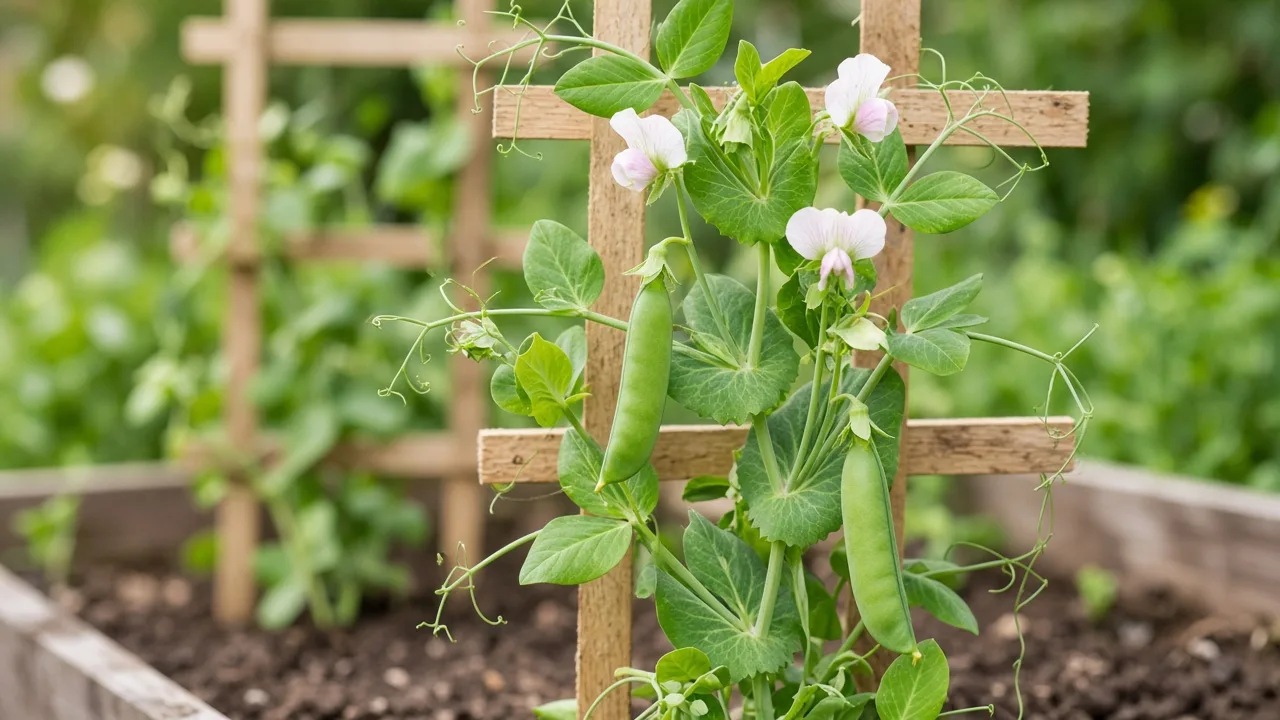
Peas Soil Guide: Mix, pH & Drainage for Pods
Peas Soil Guide: Mix, pH & Drainage for Pods
Garden pea (Pisum sativum)—matar, shelling types, snow peas, and sugar snaps—asks for soil that feels almost contradictory: cool and moist enough for germination and pod fill, yet open enough that roots never stew after rain or a heavy hand on the hose. Peas are direct-sown legumes with a short cool window; if the bed is waterlogged when seed goes in, rot beats sprouting long before summer heat becomes the limiting factor.
This page covers texture, compost, pH, containers, and drainage checks—not how often to irrigate. For finger-depth timing through flowering, use the Peas watering guide. For the full seasonal picture, start with the Peas overview.
What garden pea roots need from soil
NC State Extension describes peas as cool-season vegetables that grow best in full sun and moist, well-drained soil, tolerating a range of textures when drainage is good. Utah State University Extension notes that peas grow in all soil types that are rich in organic matter, well-drained, and fertile—the combination matters more than chasing a perfect label on a bag of potting mix.
Unlike slow houseplants, pea vines can cover a trellis in weeks when air stays cool and light is strong. Roots stay relatively shallow compared with deep taproot crops, but they still need pore space for oxygen between waterings. A crumbly loam or sandy loam amended with mature compost holds moisture in the cool season without turning to paste in a clay lane after monsoon showers.
Moist loam, not saturated clay
Peas tolerate cool, moist conditions at the root zone; they do not tolerate standing water. Chronic saturation invites seed decay, damping-off in seedlings, and stem-base rot on established vines—problems extension guides tie to cold, wet soil at planting and overwatering on poorly drained ground. If your bed gleams and smells sour after irrigation, fix structure and outlets before sowing, no matter how much compost you spread on top.
Cool-season roots and fast early growth
Peas are planted in the cool window so vines flower and set pods before heat shuts production down. In hot Indian lowlands that often means autumn–winter or very early spring sowing, not summer beds. Soil prep should match that calendar: build beds while weather is workable, let organic matter integrate, and sow into drainable mix—not into cold, wet clay the day a storm passes.
The practical pH window for Pisum sativum
LeafyPixels hub data targets roughly pH 5.5–7.5 for home matar and garden peas, which overlaps NC State’s listed range of about pH 6–8 for this crop. Epic Gardening’s container pea guidance suggests pH between about 6 and 7.5, leaning slightly alkaline—useful context for lime-heavy terrace mixes.
Treat 5.5–7.5 as a sensible home-garden default, then follow a local soil-test report instead of adding lime or sulphur by guesswork. Structure and drainage beat a decimal on paper: compacted soil at “ideal” pH still produces weak vines and poor pod set.
LeafyPixels hub range vs extension data
When sources span 5.5–8.0, you have room to focus on tilth and organic matter first. Very acidic or alkaline pockets show up on tests; peas are not as pH-fussy as blueberries, but extreme values can lock nutrients. Adjust only when a test confirms a real problem.
When to soil-test instead of guessing
If lower leaves yellow while the mix stays dark and wet, or germination is patchy on an otherwise sunny terrace, sample the root zone before dumping high-nitrogen fertiliser on top. Feeding decisions belong in the Peas fertilizer guide once texture and drainage are sound.
Prepare in-ground beds and raised rows
RHS pea preparation advice calls for a warm, sunny, sheltered site with well-drained soil, weeded thoroughly, then forked with plenty of garden compost or well-rotted manure—at least two bucketfuls per square metre/yard—ideally a few weeks before sowing so the ground can settle. That lead time lets organic matter begin improving structure without leaving a hot, unfinished layer on the seed line.
Clear old legume debris and weeds, then spread compost across the whole planting zone rather than filling only planting holes surrounded by compacted paths. Rake the top few centimetres to a fine crumb for direct sowing. Peas are usually not transplanted unless you must move young starts; see Peas propagation for depth and timing, and Peas repotting only when seedlings are stuck in shallow cells.
Compost and organic matter rates
USU Extension recommends working fertilizer into the top 6 inches when tests call for it, and if you rely on compost alone, no more than about 1 inch of well-composted organic matter per 100 square feet—a reminder that mature, earthy compost helps, while unfinished manure can heat, slump, and stay wet against stems. In very poor sand, a modest complete fertilizer at prep time can help; the seasonal feeding plan still lives in the Peas fertilizer guide.
Tilth for direct sowing at 2–3 cm depth
NC State advises planting seeds about 1 inch (roughly 2.5 cm) deep, spaced in the row, in soil that has thawed and drained in spring—in cool climates. On Indian terraces, match depth to your packet (often 2–3 cm) in moist but not muddy mix. Firm lightly so seed contacts moisture; do not compact wet clay by walking on the bed. A crust after heavy rain may need a light scratch; chronic crusting signals poor organic matter or working soil when too wet.
Container and terrace soil for matar
NC State lists a minimum container size of about two gallons and 12 inches deep for peas—enough for a trial, but a climbing cultivar on a 1.5–2 m trellis for regular harvest usually needs a deeper, wider trough or grow bag so roots and moisture buffer match the vine. Pair volume with support installed at sowing so you are not driving stakes through wet mix later.
Minimum pot depth and volume
Shallow window boxes dry fast and tip easily when a trellis catches wind. Choose depth for root room and moisture stability, not just seed depth. Bush cultivars tolerate smaller volumes than full climbing matar on a railing trellis.
Why dense garden soil fails in pots
Without enough pore space, roots cannot breathe between waterings. Mix may look dry on top while the core stays saturated, or water runs down the gap between root ball and pot wall while the centre stays dry. Both patterns stress peas quickly on sunny terraces.
A pea-friendly DIY container blend
A workable starting blend aligned with LeafyPixels hub data is about 50% quality potting mix or screened loam-based medium, 30% mature compost, and 20% perlite, pumice, or coarse sand for aeration. Moisten components before mixing; the finished medium should hold together briefly when squeezed, then fall apart when touched.
Epic Gardening notes that peas are not picky about bagged potting or raised-bed soil, but loose, well-draining mix with organic compost or manure worked in supports healthier roots, and that compacted, soggy soil invites rot and nutrient problems. Try the Soil Mix Calculator with peas pre-selected to compare proportions.
Hub 50/30/20 mix and moisture balance
Coir-heavy mixes may stay wet longer in humid monsoon weather; perlite- or sand-rich blends may need more frequent checks on a hot railing. Adjust based on how your pot behaves, then lock in a rhythm with the Peas watering guide.
Peat-free potting mix and aeration
RHS indoor sowing guidance recommends peat-free multi-purpose compost in deep modules or pots for early starts. For outdoor containers, use vegetable-grade peat-free mix or your tested 50/30/20 blend with multiple open drainage holes and pot feet so runoff leaves the saucer.
Nitrogen fixation and what not to overload
As legumes, peas fix nitrogen with compatible rhizobia in the soil. USU Extension explains that peas do not need extra nitrogen fertilizer if compost or fertilizer was applied at planting, and that adding more nitrogen overstimulates leaves, delays flowering, and reduces pod set. Rich compost is usually enough; heavy nitrogen top-dressing is a common mistake on already fertile terrace mix.
Rhizobium inoculant on new beds
On beds that have not grown peas or beans recently, a pea-specific inoculant at sowing can help nodulation. It does not replace drainage or compost; it supplements biology when rhizobia are scarce.
Why extra nitrogen-rich soil backfires
Manure or fresh kitchen compost that is still “hot” can push soft foliage at the expense of flowers—especially when combined with shade or heat stress. Match fertility to pod production needs in the Peas fertilizer guide after soil structure is right.
Soil moisture structure vs the watering guide
Peas want even moisture from germination through pod fill, but the mix must release surplus water. Large organic matter content in a well-aerated blend buffers short dry spells in cool weather; it cannot compensate for blocked holes or a bed that ponds for hours. Once texture is set, translate drainage into a check routine in the Peas watering guide—typically when the upper 2–3 cm begins to dry in containers.
Cool-season sowing and soil temperature
RHS notes that pea seeds will not germinate in very cold conditions and that outdoor sowing waits until soil reaches about 10°C (50°F). USU lists emergence in 7–10 days at soil temperatures of about 55–65°F, with poor performance when air and soil heat exceed roughly 80°F.
Germination in cool, drainable mix
NC State warns that seeds can rot or seedlings damp off if planted too early in cold, wet soil—a soil problem as much as a calendar one. Warm the sowing zone with cloches if needed, but do not confuse “warm” with “saturated.”
Heat shutdown above about 21–29°C
NC State states that peas stop growing at temperatures above about 85°F (29°C). LeafyPixels hub notes align with growth slowing past roughly 21–24°C (70–75°F). No compost depth overrides that biology; sow into cool, drainable soil early enough that pods form before heat arrives.
Raised beds, monsoon rain, and Indian terraces
In regions with intense monsoon rain, the critical question is where water exits. A raised bed without a lower outlet becomes a tank. Raise the pea root zone above surrounding paths, keep masonry beds from sealing the base, and clear channels before storms. After heavy rain, probe below the surface before irrigating again.
Humid, wet spells favour mildew on foliage, but soggy soil still starts at the roots. Morning base watering, trellis spacing from the Peas light guide, and good airflow help leaves dry; they cannot fix a mix that never drains. Cool-season sowing on Indian plains usually targets the mild window so vines pod before summer heat; chronically wet, warm soil at planting is a poor match regardless of compost depth.
Wrong soil: warning signs on peas
Seeds that swell but never break the surface on persistently wet, cold mix often point to rot—especially if the bed was worked when sodden. Seedlings collapsing at the soil line match damping-off risk on dense, wet seed-starting mix; see NC State’s damping-off resource for cultural controls.
Yellowing lower leaves with dark, wet soil suggest poor aeration or chronic overwatering, not nitrogen deficiency alone. Wilting with soggy mix is a red flag—roots may already be damaged. Stalled vine growth despite rich top dressing on compacted clay calls for tilth work on the next sowing, not deeper seed burial.
White or green mold on the surface after repeated top watering suggests the mix stays wet too long. Flowers dropping before pods ties to heat and drought stress as well as soil, but a root zone that swings from dust-dry to waterlogged makes every other problem worse.
When to use this page vs other Peas guides
Use this soil guide to choose bed versus container mix, interpret pH and organic matter, and fix drainage before sowing. Use the Peas watering guide for when and how much to irrigate, the Peas fertilizer guide for feeding once roots are healthy, and the Peas light guide for full sun placement that matches your mix’s drying rate.
For seed depth, inoculant, and direct sowing, use Peas propagation. For moving young starts from shallow cells, see Peas repotting. Training and airflow around trellised vines are covered in the Peas pruning guide.
Related Peas guides
The Peas overview ties together trellis height, variety choice (shelling, snow, snap), and cool-season timing. The Peas watering guide translates your mix’s drainage into daily checks through pod fill, while the Peas fertilizer guide covers light feeding when moisture and light are stable.
Peas propagation walks through sowing depth and germination warmth, and Peas light helps match terrace placement to how fast your container mix dries. Peas repotting applies only when seedlings outgrow trays before the final pot or bed.
Conclusion
Good pea soil is fertile, moisture-retentive in cool weather, and genuinely well drained—in ground, in raised beds, and especially in trellis pots. Aim for mature compost in a crumbly loam or container blend, keep pH roughly 5.5–7.5 unless a soil test says otherwise, and size pots so a fast cool-season vine does not rot in stagnant mix before pods form.
Before you sow matar, run one simple test: water the prepared bed or a filled empty pot and watch whether surplus water leaves within a reasonable time. If it does not, fix outlets, raise the root zone, or lighten the mix—then plant Pisum sativum into conditions that can stay moist without drowning.