Peas Fertilizer Guide: When and How to Feed
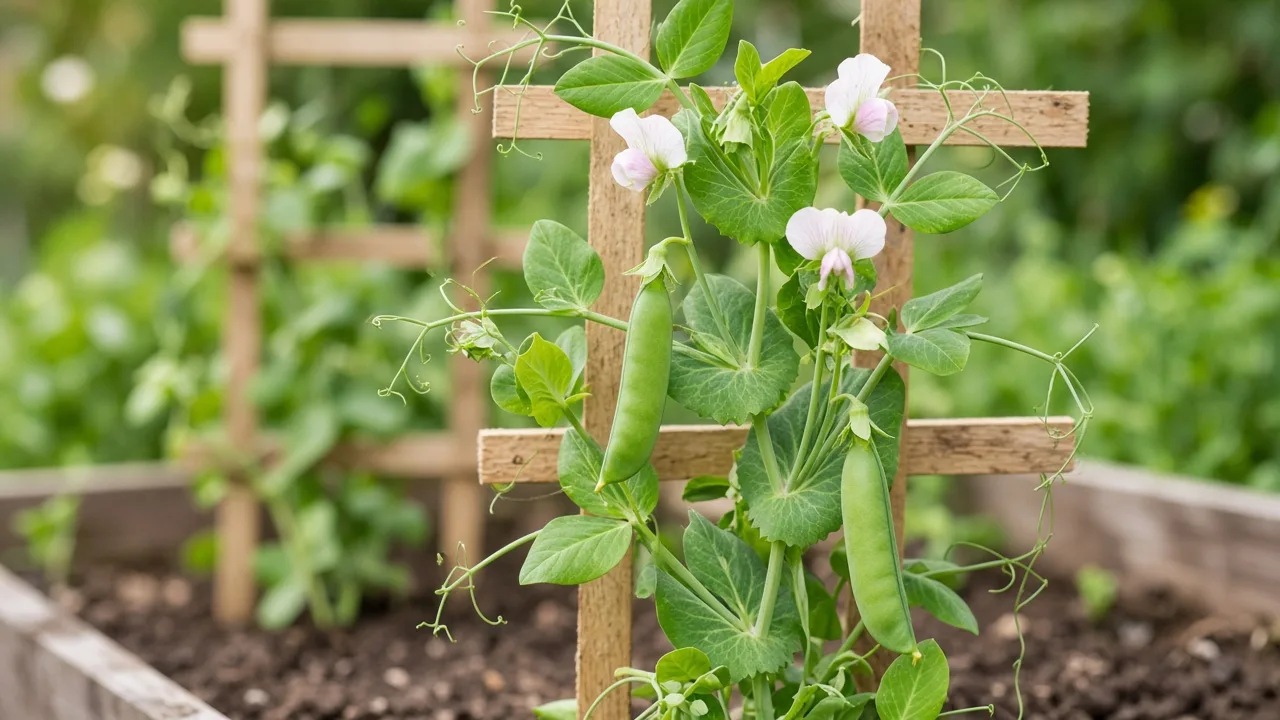
Peas Fertilizer Guide: When and How to Feed
Peas Fertilizer Guide: When and How to Feed
Garden pea (Pisum sativum) — shelling matar, flat snow peas, and sugar snap types — is a cool-season legume, not a hungry summer vine like cucumber or tomato. Its roots partner with soil bacteria to pull nitrogen from the air, so the classic kitchen-garden mistake is not starvation but too much nitrogen at the wrong time, which builds soft leaves while flowers and pods stall. If you are standing in the aisle wondering whether matar needs the same feed as spinach, start with compost and inoculant at sowing, then read the vine before you pour on more product.
This page is for anyone growing peas in raised beds, winter kitchen gardens on Indian plains, or trellised troughs on a balcony. It pairs with the Peas overview for season timing and with the Peas soil guide for mix and pH — fertility should match the root zone you already prepared.
Why garden peas are light feeders
Peas finish most of their life cycle in cool weather, often 60–70 days from sowing to first pick on many cultivars. They need steady moisture and full sun, but bottled fertilizer is a small lever compared with sowing date, trellis height, and pod harvest rhythm. Treat feeding as soil building plus a rare corrective dose, not a weekly calendar copied from leafy greens.
Nitrogen fixation in Pisum sativum
Like other legumes, peas form a symbiosis with Rhizobium bacteria that live in root nodules and convert atmospheric nitrogen into a form the plant can use (Gardening Know How on pea pods not forming). Growfully’s pea growing guide notes that garden peas fix nitrogen to the soil and recommends amending the bed with compost before planting, then not fertilizing during the growing season for most home plots. Gardener’s Path likewise advises that peas gather their own nitrogen, so they do not need nitrogen supplements unless a soil test shows a gap — while phosphorus may be added if tests warrant it.
That biology is why rich compost at prep often outperforms mid-season nitrogen for pod set. On beds that have not grown peas or beans for several years, inoculant at sowing helps the partnership start quickly; see below and the Peas propagation guide for sowing practice.
What happens when nitrogen is too high
Excess nitrogen pushes vegetative growth. Growfully warns that too much nitrogen makes pea plants lush and green but reduces pea yields, and links overfertilized vines to more powdery mildew pressure. Gardening Know How lists too much nitrogen as a top reason for peas with plenty of foliage and few blossoms or pods, recommending low-nitrogen products such as 5-10-10 only when soil tests show need, and pinching tips to encourage flowers if the season is still cool enough.
If your trellis is a wall of dark green tendrils with no white blooms, pause nitrogen before you blame pollination. Cross-check light and sowing heat in the Peas light guide — peas slow sharply once air temperatures stay mostly above about 21°C (70°F), and no fertilizer reverses a crop planted too late into summer.
Prepare the soil before you sow
Long before choosing an NPK number, improve the bed or pot mix. Peas want moist but well-drained loam with organic matter worked in ahead of sowing, in the pH range your Peas soil guide describes (about 5.5–7.5). Fertility locked into compost releases slowly across the short cool season, which suits legumes better than repeated soluble nitrogen spikes.
Compost, manure, and drainage
The RHS grow-your-own peas guidance recommends forking plenty of garden compost into a sunny, sheltered site with well-drained soil before planting, and mulching with compost after planting to hold moisture. Gardener’s Path advises lots of organic matter worked in ahead of time and mulching once seedlings are a few inches tall. On Indian terraces, blend mature compost into potting mix as in the hub soil recipe — about 30% compost with perlite or sand for drainage — rather than fresh manure pressed against seed.
Well-rotted manure can raise organic nitrogen, but hot or fresh manure can burn seedlings and skew salts in small pots. Spread and incorporate manure weeks before sowing when possible, and keep sowing depth and moisture steady per the Peas watering guide.
Phosphorus, potassium, and soil tests
Peas still use phosphorus and potassium for roots, flowers, and pod fill even when nitrogen is partly self-supplied. Growfully highlights phosphorus and potassium needs and suggests compost amendment before planting. Gardening Know How notes that phosphorus supports root and flower formation and pod development, and that broad nutrient gaps can stall growth — soil testing before blanket feeding prevents guessing.
If a test shows adequate P and K, skip bloom boosters. If phosphorus is low on a new bed, a single measured application at prep — not weekly liquids — is usually enough for this short crop.
Rhizobium inoculant on new beds
Nitrogen fixation requires the right Rhizobium strain in the root zone. Gardening Know How explains that without Rhizobium leguminosarum, peas may grow poorly with few pods even when other nutrients look fine, and recommends inoculated seed or building bacteria by composting spent pea plants in the garden. Gardener’s Path advises inoculating when containers or beds have not hosted legumes in about four years, using a product formulated for peas, not a random alfalfa inoculant.
Moisten seed, roll in inoculant powder, and sow immediately into moist soil — details belong with your sowing checklist in Peas propagation. Inoculant is not a substitute for compost; it unlocks nitrogen biology, not potassium or trace minerals.
Choosing fertilizer types and NPK labels
If compost and rotation already built a healthy bed, you may never open a fertilizer bottle for matar. When pots are shallow or last season’s greens exhausted the mix, choose products deliberately.
Low-nitrogen vegetable blends
The Old Farmer’s Almanac pea growing page states that peas do not require fertilizing, but if you feed, choose fertilizer with little or no nitrogen. That aligns with legume physiology: support flowers and pods, not endless vine extension. A lower first number on the label (less nitrogen relative to phosphorus and potassium) fits pod crops better than lawn or leafy-green formulas.
Read labels as percentages in that product, not as a promise your soil is deficient (Gardening Know How on NPK numbers). A 5-10-10 and a 10-20-20 may both be “low nitrogen” relative to turf food, but concentration and dose still matter on a 45 cm trough.
Organic options and dilution
Compost, worm castings, and mild organic liquids release nutrients slowly — useful when you want a small boost without a salt spike. Epic Gardening’s pea guide suggests working a 3-5-5 granular organic fertilizer through container soil at planting as enough for many pot-grown peas. Fish emulsion and seaweed extracts can work if heavily diluted; never pour concentrate on shallow legume roots.
Avoid high-nitrogen “growth” feeds marketed for lawns or brassica greens. Do not foliar-feed peas in full sun on hot afternoons; salts on tender leaves add stress without fixing a soil issue.
When to feed through the growing season
Peas rarely need a mid-vine feeding schedule. Align any product with cool active growth from germination through pod fill, then stop as plants senesce in heat.
Planting-time nutrition
At bed prep: Incorporate compost and, if needed, a measured low-nitrogen granular feed into the top 10–15 cm, away from where seed will sit. Epic Gardening treats container prep as the main feeding event. Check whether potting mix already includes starter fertilizer — doubling up causes rank growth in small volumes described in the Peas repotting guide.
At sowing: Inoculant on new sites; no extra nitrogen “kick” unless a soil test documented deficiency. Install trellis at sowing so you do not disturb roots later, as noted in the hub grower notes on the Peas overview.
Mid-season feeding — usually skip
Once vines climb and bloom, hold nitrogen. Growfully recommends skipping fertilizer during the growing season after compost prep. If vines are pale in cool weather, pale older leaves with steady moisture may justify a single diluted low-N feed — not repeated high-N doses. If flowers drop with wet soil, fix drainage first; fertilizer will not replace oxygen at the roots.
Shelling, snow, and snap types all respond poorly to lush-feeding; harvest timing differs, but nitrogen excess shows the same way: vines without pods.
Terrace pots and shallow troughs
Containers magnify both deficiency and excess. Roots cannot roam into neighboring soil, and daily watering on a sunny railing leaches soluble nutrients faster than in-ground beds. Epic Gardening recommends compost or manure in the mix plus one granular organic feed at planting for container peas. Use a deep enough pot and trellis matched to cultivar height — shallow trays run out of water and nutrients before pods form.
After heavy winter rain on terraces, a light balanced or low-N feed once soil drains may help if leaves yellow on older growth; skip feeds while saucers stay full. Pair any feeding with the moisture rhythm in the Peas watering guide.
Reading vine color and pod set
Possible overfeeding: deep green, thick vines; delayed flowering; powdery mildew on soft growth in humid weather (Growfully). Possible underfeeding or missing rhizobia: stunted pale plants on poor mix, especially first legume crop in a new bag of soil — consider inoculant next sowing, not nitrogen dumping now.
Not a fertilizer problem: no pods with open flowers in shade (see Peas light); vines shutting down in heat above roughly 29°C (85°F) on many cultivars; drought during bloom (water first). Troubleshoot pod failure through sowing date, light, moisture, and nitrogen balance before assuming another fertilizer dose will help.
Fertilizer mistakes on cool-season matar
Sowing matar in the hot lowland summer and feeding harder will not replace a cool window. Aim to flower and set pods while nights are mild — often autumn–winter or very early spring sowings — as summarized on the Peas overview. Other frequent errors: nitrogen-rich feed copied from corn or cabbage; fresh manure against seed; ignoring inoculant on brand-new balcony mix; feeding waterlogged roots during monsoon weeks; confusing garden pea with ornamental sweet pea (Lathyrus) when children or pets graze vines — human food use does not make vines safe pet forage, and chemically treated seed must never be handled as feed.
Rotate peas with non-legumes on a three- to four-year cycle and avoid planting where alliums grew recently, per hub rotation notes. Spent vines composted on the bed return nitrogen and bacteria for the next crop — a free fertility step better than late nitrogen spray.
When to use this page vs other Peas guides
Use this page to decide whether, what, and when to fertilize peas through sowing and pod fill. Use the Peas soil guide for mix, pH, and compost proportions before any bottle. Use Peas watering when wilting, saucer water, or pod sizing issues trace to moisture, because nutrients move with water. Use Peas light when vines stretch or bloom poorly in shade.
For sowing depth, inoculant handling, and direct sow versus transplant, see Peas propagation and Peas repotting. Canopy thinning and harvest cuts live in the Peas pruning guide. Fertilizer cannot fix heat-shifted sowing dates or a trellis that is too short for a telephone cultivar.
Related Peas guides
- Peas overview — cool-season timing, types, and trellis planning.
- Peas soil — drainage, compost, and pH before feeding.
- Peas watering — even moisture through flowering and pod fill.
- Peas light — full sun for strong vines and workable pod set.
- Peas propagation — direct sowing, inoculant, and gentle transplant limits.
Conclusion
Good pea nutrition is front-loaded and restrained. Build fertility with compost (and well-rotted organic matter) before sowing, inoculate on new legume-free beds, and treat bottled feed as optional — usually low nitrogen, often only at planting in pots. Read the vine: lush growth without pods calls for less nitrogen and better timing, not more.
Match feeding to the cool season matar actually grows in your climate, keep roots moist but aerated, and harvest pods regularly so plants keep flowering. When those pieces align, peas often need less fertilizer than almost any other vegetable on the terrace — and produce sweeter pods because of it.