Peas Watering Guide: Moisture Checks & Pod Fill
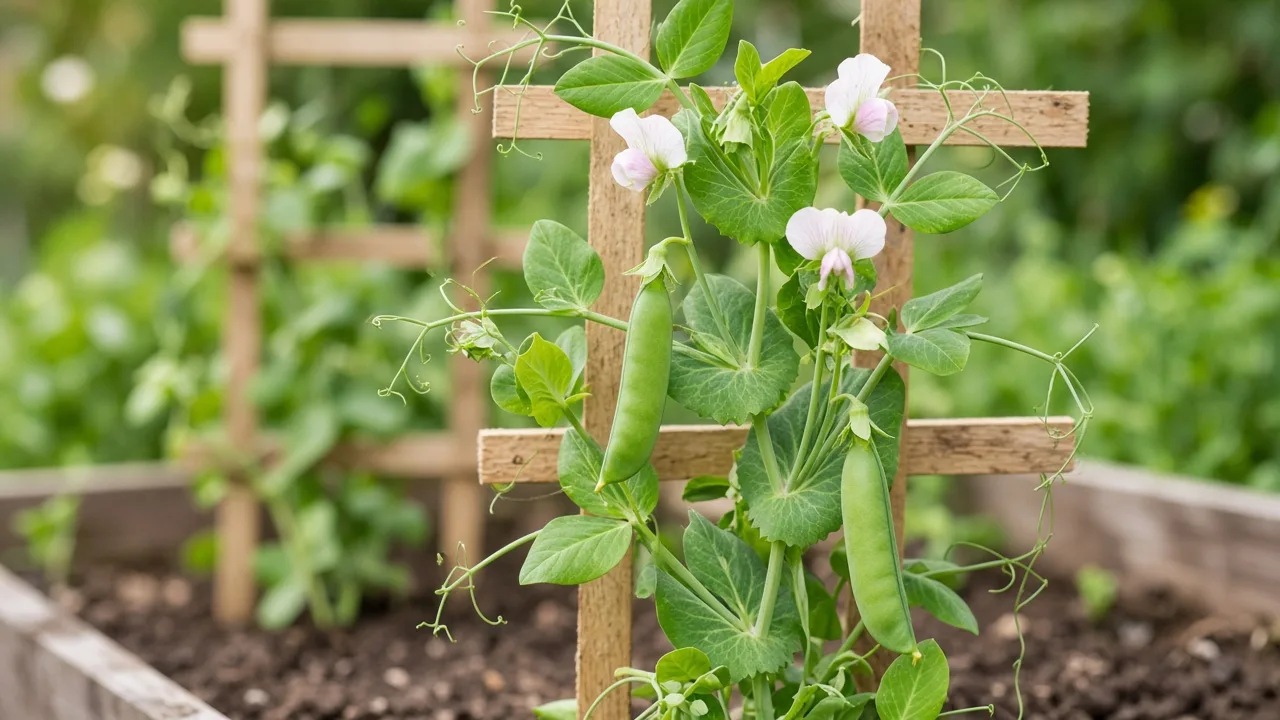
Peas Watering Guide: Moisture Checks & Pod Fill
Peas Watering Guide: Moisture Checks & Pod Fill
Peas watering: the quick answer
Garden pea (Pisum sativum)—matar on many Indian terraces—is a cool-season legume that wants evenly moist, well-drained soil from germination through pod fill, not the long dry spells drought-trained houseplants tolerate. Clemson HGIC advises watering in the absence of adequate rainfall so the crop receives an even supply of moisture, with the critical period during pod set and development (Clemson HGIC). The Royal Horticultural Society notes that established plants usually need little extra irrigation except in dry spells, but benefit from a good watering when flowering starts and again about two weeks later to help pods swell (RHS — Grow your own peas).
Your daily rule on this species: feel 2–3 cm below the surface and water when that layer is beginning to dry, then let containers drain fully. Keep the seedbed moist (not flooded) until seedlings stand up, increase steady moisture while flowers and pods form, and ease off as plants senesce in heat after the crop finishes. Gardener’s Path recommends keeping sowings moist but not wet until germination (often 7–10 days in cool soil) and supplying ample, consistent water while pods form—roughly an inch of rain per week or equivalent irrigation (Gardener’s Path — How to Grow Peas).
This page covers edible garden pea only—not ornamental sweet pea (Lathyrus), which is a different species with separate poison-control listings. For crop choice, sowing depth, and trellis height, start with the Peas overview; return here for moisture checks, seasonal shifts, and first aid when vines wilt or stems soften at the soil line.
Garden peas vs snow and snap pods
Shelling peas, snow peas, and sugar snap peas share the same water biology but differ in how long vines stay in production. All three need more moisture at flowering and pod swell than during a brief dry spell on young vines. Edible-pod types often crop faster on trellises, so containers may need daily checks in warm, windy weather even when ground beds still hold moisture. Match harvest timing to variety notes on the Peas propagation page so you are not drying plants down while flat snow pods are still sizing up.
Why peas need steady moisture—not houseplant dry cycles
Peas evolved as cool-season annuals on free-draining loam that stays damp in spring but rarely stagnates. They tolerate cool, moist air better than waterlogged roots—the plant-detail hub warns that standing water invites root and seedling disease while chronic dry soil during pod fill cuts yield. That is the opposite of “let it dry completely between waterings” advice written for succulents.
Shallow, fibrous roots pull most of their water from the upper soil profile, especially in containers. Clemson extension cautions that light sprinklings encourage shallow rooting; instead, moisten soil to about 6 inches (15 cm) when you do irrigate (Clemson HGIC). RHS adds that wet leaves encourage fungal disease, so direct water onto soil rather than over the canopy (RHS — Grow your own peas). Good drainage and compost from the Peas soil guide make that steady-moist band easier to hit than any calendar reminder.
Cool roots, warm days, and shallow feeder roots
Peas thrive when air temperatures stay mostly below about 21°C (70°F) (Gardener’s Path — How to Grow Peas) and slow as heat builds past the mid-20s °C (Peas overview). In that window, roots stay active in cool, moist mix while leaves transpire on sunny days. When a hot, dry afternoon hits cool-season vines, you may see midday wilt that recovers overnight if the root zone still holds moisture—do not reflex-soak without checking depth first.
How to check soil moisture before you water
Surface crust and pale potting mix lie often, especially on peat-heavy blends on a sunny balcony. Use at least one check every time you reach for the can.
Finger test at 2–3 cm and pot weight
Press a finger 2–3 cm into the bed or container—the same depth the hub uses for peas. If soil feels cool and clings, wait. If it feels only slightly damp, water. If it is dry and crumbly, water soon; do not let flowering vines miss pod-fill moisture repeatedly. Lift containers after a full drain: when the pot feels noticeably lighter and the top layer matches dry touch, soak again. Never let pots sit in full saucers of old runoff.
When surface color misleads
A dusty top can hide damp soil near roots in deep beds, while a dark surface on a small pot may be dry an inch down. A dry wooden skewer pushed toward the bottom of a container helps confirm full root-zone dryness before you soak climbing types in peak pod fill.
How often to water peas through the season
There is no honest universal schedule. Cool weather and short days slow evaporation; wind, porous mix, and small pots accelerate it. Read soil daily after sowing, then at least every 1–2 days for active container crops in sun during pod fill.
Germination and seedling establishment
From sowing until seedlings have true leaves, keep the upper soil consistently moist—not waterlogged. Gardener’s Path advises moist but not wet until seeds germinate, typically 7–10 days in cool conditions (Gardener’s Path — How to Grow Peas). Light passes or a fine rose beat one flood that exposes 2–3 cm deep seed. Pair moisture with enough light on a cool-season station; shaded, perpetually damp trays invite seedling collapse.
Vine growth before flowers
Once vines attach to trellis and leaf out, peas still want even moisture but forgive a short dry day more than at pod fill. RHS notes that settled, strongly growing plants often need little extra water except in dry spells (RHS — Grow your own peas). If vines look pale or slow despite wet soil, suspect nitrogen excess or poor drainage before adding more water—see Peas fertilizer.
Flowering and pod fill—the critical window
This is the phase that defines your harvest. Clemson lists pod set and development as the critical moisture period (Clemson HGIC). RHS recommends a thorough watering when flowering begins and again two weeks later (RHS — Grow your own peas). While pods are sizing, check moisture at root level and irrigate if the 2–3 cm layer dries; drought then shows as flower drop and thin or empty pods on the hub’s warning list.
Late harvest and heat shutdown
After the last pick, vines yellow and stop as temperatures climb. Reduce irrigation on senescing plants— you are no longer feeding pod swell. If you leave dry shelling peas on the vine for seed saving, allow pods to mature in fair weather with moderate moisture, not daily soaking that rots stems.
Watering peas in beds vs containers
Raised beds and in-ground rows
Ground beds hold moisture longer than shallow pots and forgive a missed half-day more often. Clemson advises moistening soil to 6 inches when rainfall is insufficient (Clemson HGIC). Wide rows with good airflow dry more evenly than packed clay; prepare texture ahead of sowing per Peas repotting (direct-sow placement, not routine repotting). Mulch with 2–3 inches of shredded leaves or straw after plants stand to cool roots, retain moisture, and suppress weeds (Clemson HGIC).
Balcony troughs and deep pots
RHS warns that container compost dries rapidly, so regular watering is essential for potted peas, with only a modest harvest from limited plant counts (RHS — Grow your own peas). Use pots at least 45 cm (18 in) wide for dwarf or mangetout types, peat-free multi-purpose mix with perlite, and trellis at sowing so you do not crush roots later. Expect daily checks on sunny February–March terraces in hot lowlands when the cool window is narrow.
Best time and method to water peas
Morning soil-level irrigation
Clemson recommends early-morning watering so foliage dries before night (Clemson HGIC). Apply water at the soil line along the row or pot rim, not over the canopy when you can avoid it. After watering, excess should drain from container holes; if it does not, fix compaction or blocked holes before blaming the plant.
Soaker hoses, drip, and avoiding wet foliage
A soaker hose or drip line along the row delivers even moisture without repeatedly wetting leaves—useful when humid cool weather favors mildew. Gardener’s Path ties consistent water to fewer root diseases when combined with rotation and weed-free beds (Gardener’s Path — How to Grow Peas). Overhead sprinklers are acceptable only early so tendrils dry before evening.
Mulch, rain, and supplemental irrigation
Track weekly rainfall against the roughly one inch (2.5 cm) per week benchmark Gardener’s Path cites for pod formation (Gardener’s Path — How to Grow Peas). Short monsoon bursts on a cool-season crop are rare in planned matar sowings, but sudden warm storms can leave clay soggy—pause irrigation until the 2–3 cm check reads dry. Organic mulch after establishment reduces splash and evaporation without keeping crowns permanently wet.
Overwatering and underwatering signs on peas
Yellow stems, rot, and wilt on wet soil
Overwatering shows as yellowing lower leaves with persistently wet soil, soft or darkened stem bases, and stalled growth despite wet mix—patterns listed on the plant-detail hub. Wilting while soil stays heavy usually means roots lack oxygen, not thirst. Stop irrigating, improve airflow around trellis, and confirm drainage in the Peas soil guide before soaking again.
Midday wilt, flower drop, and poor pod set
Underwatering shows as wilt in midday heat that fails to recover overnight, soil pulling from pot edges, and flowers dropping before pods form. Recovery is usually quick: one deep morning soak, full drain, then return to even moisture through pod fill. Repeated drought during flowering produces tough pods and early shutdown when heat arrives.
Watering peas in India and tropical lowlands
Cool-season sowing windows
In hot lowlands, treat matar as a winter or very early spring crop so vines flower before summer heat shuts production (Peas overview). Moisture management follows the season: less frequent irrigation in cool, cloudy weeks, more in dry, windy spells on exposed terraces. Sowing into already moist, prepared soil beats trying to rewet hydrophobic dry beds after seed is in the ground.
Windy terraces and sudden heat spikes
Wind desiccates tendrils and small leaves faster than calm ground beds. On open rooftops, weight pots, group containers to raise humidity slightly, and check daily during pod fill. If a heat wave hits during flowering, morning deep watering and shade cloth for a few hours may prevent blossom drop better than evening splashes that leave foliage wet overnight.
Pea type and trellis height vs water use
Tall climbing cultivars transpire more leaf area and may pull water faster than bush types, but both need the same pod-fill priority. Mangetout in large tubs often need more frequent drinks than a sparse bush row in loam because root volume per leaf is smaller. Install supports at sowing as described in Peas pruning (tendril training and airflow—not moisture replacement).
First actions when you are unsure
If vines wilt at noon, check 2–3 cm moisture tonight. If dry, soak morning; if wet, stop watering and inspect stem bases. If flowers fall with dry soil, increase even moisture for two weeks; if flowers fall with sour, wet soil, fix drainage first. When in doubt during pod swell, favor one deep soil-level soak over three light sprinkles that only dampen dust (Clemson HGIC).
When to use this page vs other Peas guides
Use this page for when and how much to irrigate, moisture checks, pod-fill timing, and over/underwatering signs. For sowing depth, spacing, and trellis setup, see Peas propagation and Peas repotting. For mix, pH, and drainage, see Peas soil. For sun exposure and heat limits, see Peas light. For nitrogen and pod set, see Peas fertilizer. For tendril training and harvest cuts, see Peas pruning.
Related Peas guides
- Peas overview — cool-season identity, varieties, and terrace fit
- Peas light — full sun needs and heat slowdown
- Peas soil — loam, compost, and drainage that make watering work
- Peas fertilizer — legume nitrogen and why excess N hurts pods
- Peas propagation — direct sow, inoculant, and spacing
- Peas repotting — containers, depth, and transplant timing
- Peas pruning — supports, airflow, and harvest rhythm
Conclusion
Peas watering is about steady, well-drained moisture keyed to life stage: moist seedbed, moderate even soil on growing vines, and reliable irrigation through flowering and pod fill, then less water as plants finish in heat. Check 2–3 cm below the surface, water in the morning at soil level, and drain containers fully. Match that rhythm to your cool-season sowing window—especially on Indian terraces—and you will harvest sweet shelling peas or crisp edible pods without confusing midday wilt with root rot on soggy soil.