Spinach Companion Plants: 15 Best Pairings
Pair spinach with strawberries, marigolds, legumes, and herbs that share cool weather and different root zones—plus spacing, timing, and five crops to avoid.
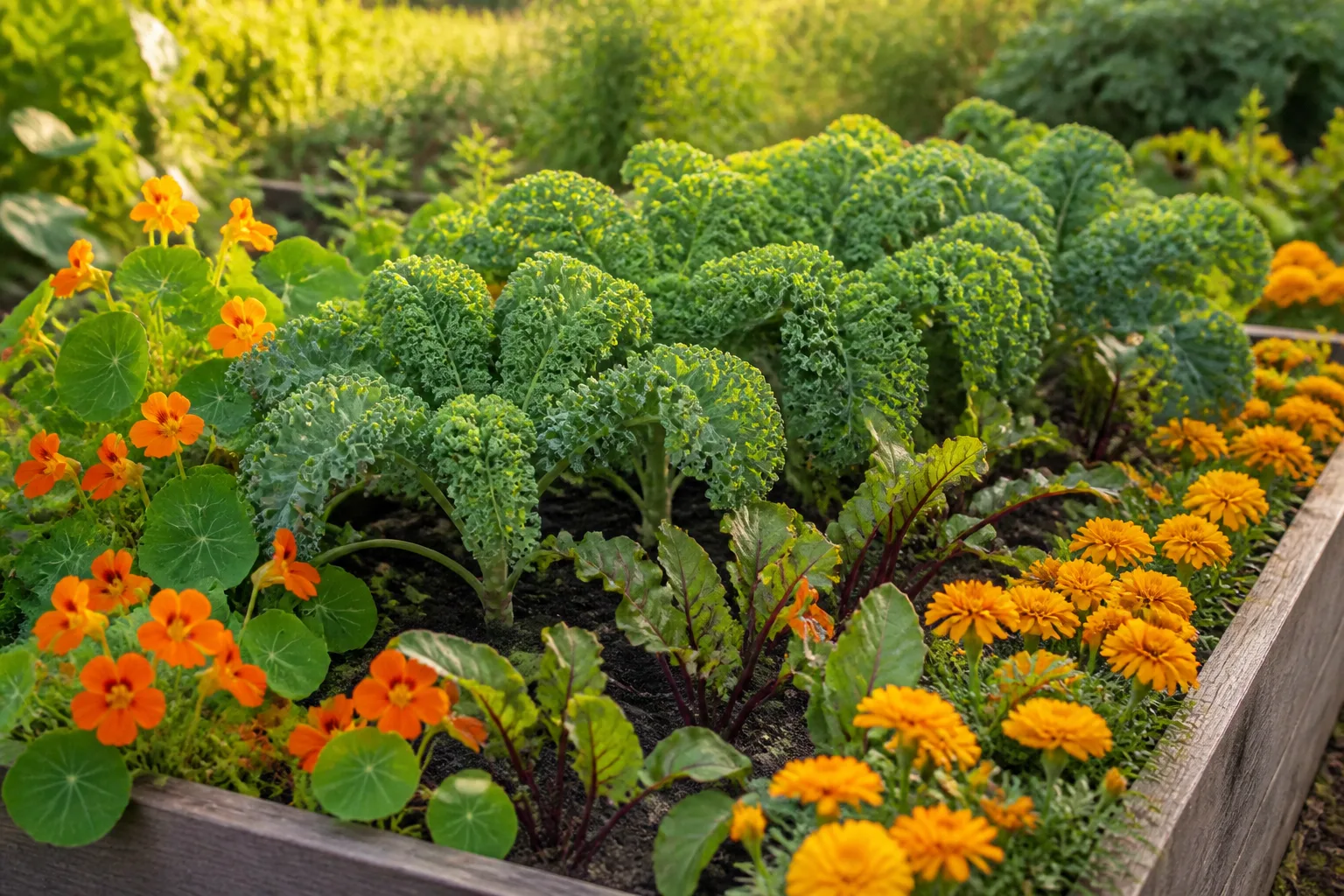
Spinach (Spinacia oleracea) is one of the first greens out of the ground in spring and one of the last standing in fall—but it bolts fast, slugs love it, and empty soil between succession sowings wastes space. Spinach companion plants solve a practical problem: they let you stack harvests, confuse pests, fix a little nitrogen, and shade tender leaves before summer heat turns them bitter.
These fifteen neighbors earn their row space because they share spinach’s cool-season culture, use a different root layer, or do a specific job (trap crop, border scent, summer umbrella). None of them replaces crop rotation, row cover, or twice-weekly scouting. Used together, they make a spinach bed more productive than a spinach-only row.
What companion planting can—and cannot—do for spinach
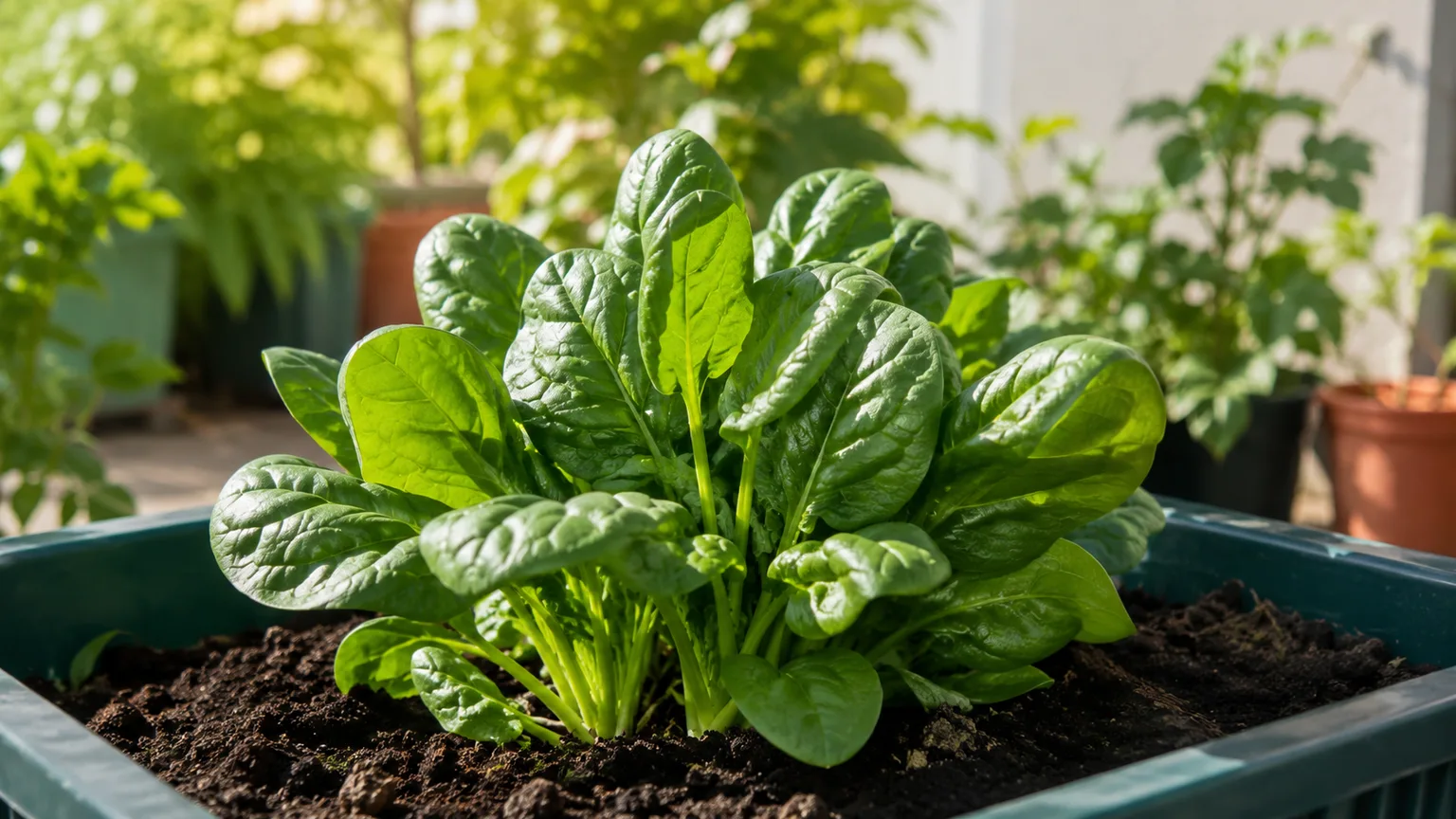
Companion planting means growing two or more species close enough that at least one benefits—through pest confusion, pollinator and predator attraction, nitrogen contribution, efficient spacing, or light shade. Penn State Extension research on herbs as vegetable partners shows herbs often mask target crops’ volatile chemicals rather than repel pests outright, which makes diverse polycultures harder for insects to navigate.
The RHS companion planting overview is equally measured: benefits are real in some pairings but not guaranteed in every garden. For spinach, companions help most when they (1) overlap in cool weather, (2) do not compete for the same shallow root zone, and (3) fill a gap—border flowers for beneficial insects, trellised legumes for light shade, or quick greens harvested before a slow crop needs the row.
What companions cannot do: stop slugs during wet springs, prevent downy mildew in crowded beds, or let spinach thrive through July without heat-tolerant varieties and afternoon shade. Treat neighbors as cultural partners first, pest shields second. For the broader evidence picture, see our guide on whether companion planting actually works.
How research explains herb and flower neighbors
Oregon State University Extension notes that flowering herbs and annuals in vegetable beds attract hoverflies, lacewings, and parasitic wasps that feed on aphids and caterpillars (Herbs and Flowers in the Vegetable Garden). Penn State lists cilantro, dill, and fennel specifically for aphid control near lettuce and other greens—spinach fits that same leaf-feeder profile.
French marigolds (Tagetes patula) are widely planted at bed edges; University of Arizona Cooperative Extension material on marigolds and nematode management discusses their role in suppressing root-knot nematodes in rotation—not a magic shield for every crop, but a reason to include them on bed margins where spinach follows heavy feeders.
Pick spinach companions by job—not alphabet
Before you scatter seeds, sort candidates by what problem you are solving:
| Job | Best spinach companions | Spacing cue |
|---|---|---|
| Cool-season overlap | Strawberries, lettuce, cilantro, brassicas | 6–10 in. between species |
| Nitrogen + light shade | Peas, bush beans on north trellis | 6–8 in. from spinach; trellis north–south |
| Pest confusion / beneficials | Oregano, dill, cilantro, marigolds, cosmos | Border or row ends; 6 in. minimum |
| Slug and aphid pressure | Garlic, chives, leeks, nasturtium (trap) | Alliums 4–8 in.; nasturtium on south margin |
| Summer bolting delay | Tomatoes, eggplant (understory) | 6–8 in. from stems; harvest spinach by July |
| Root-zone layering | Carrots, beets, radishes | Same row, 4–6 in. offset |
| Moisture mismatch (grow apart) | Rosemary | Pot beside bed, not in spinach row |
If two plants need opposite watering schedules—rosemary wants dry soil; spinach wants steady moisture—separate them even when a chart lists both as “companions.”
Match cool-season timing before you match pest charts
Spinach germinates in soil as cool as 40–45°F and peaks below 75°F. Pair it with neighbors that are active in the same window:
- Early spring (soil workable): peas, radishes, lettuce, kale transplants, strawberry crowns, garlic sprouts
- Late spring (risk of heat): harvest baby spinach; leave tomatoes/eggplant transplants for understory sowing
- Late summer (cooling nights): second spinach crop with cilantro, dill, brassicas under row cover
- Fall/winter (mild climates): spinach between leeks and overwintering garlic
Succession beats static charts. A neighbor that works in March may shade out spinach in June.
Spacing rules that keep companions from smothering greens
Spinach roots are shallow—most feeding happens in the top 6 inches. Give plants room or companions become weeds with better PR.
- Baby leaf spinach: sow thick, then thin to 2–4 in.; harvest whole patches in 30–40 days
- Full-size spinach: 8–12 in. between plants, 12–18 in. between rows
- Tall or spreading companions (nasturtium, cosmos, indeterminate tomatoes): keep on the south or west edge so they do not steal morning light
- Trellised crops: run trellises north to south so peas or beans shade spinach only in the afternoon
Crowded spinach holds moisture on leaves longer—inviting downy mildew. Airflow matters as much as companion lore.
Spring and fall succession calendar for spinach beds
Use this sequence in a single 4×8 raised bed (adjust dates by zone):
Week 0 (early spring): Work compost; plant strawberry crowns or overwintered crowns along north edge. Sow spinach + radish + carrot mix in center rows.
Week 2: Transplant kale or broccoli at 18-in. centers; sow spinach between them.
Week 4–6: Harvest radishes and first spinach cut. Direct-sow cilantro and dill at row ends.
Week 8 (after last frost): Set tomato or eggplant transplants south side; sow heat-tolerant spinach beneath while transplants are knee-high.
Week 12+: Pull spent spinach before tomatoes close the canopy. Let marigolds and cosmos on the border bloom for late-summer beneficials.
Late summer: Sow fall spinach with lettuce and garlic (if planting garlic in October, broadcast spinach first—it dies back as cloves root).
This calendar is why legumes and strawberries belong on the list: they fill the cool weeks when spinach is happiest, then vacate before heat.
Strawberries: same-season salad partners
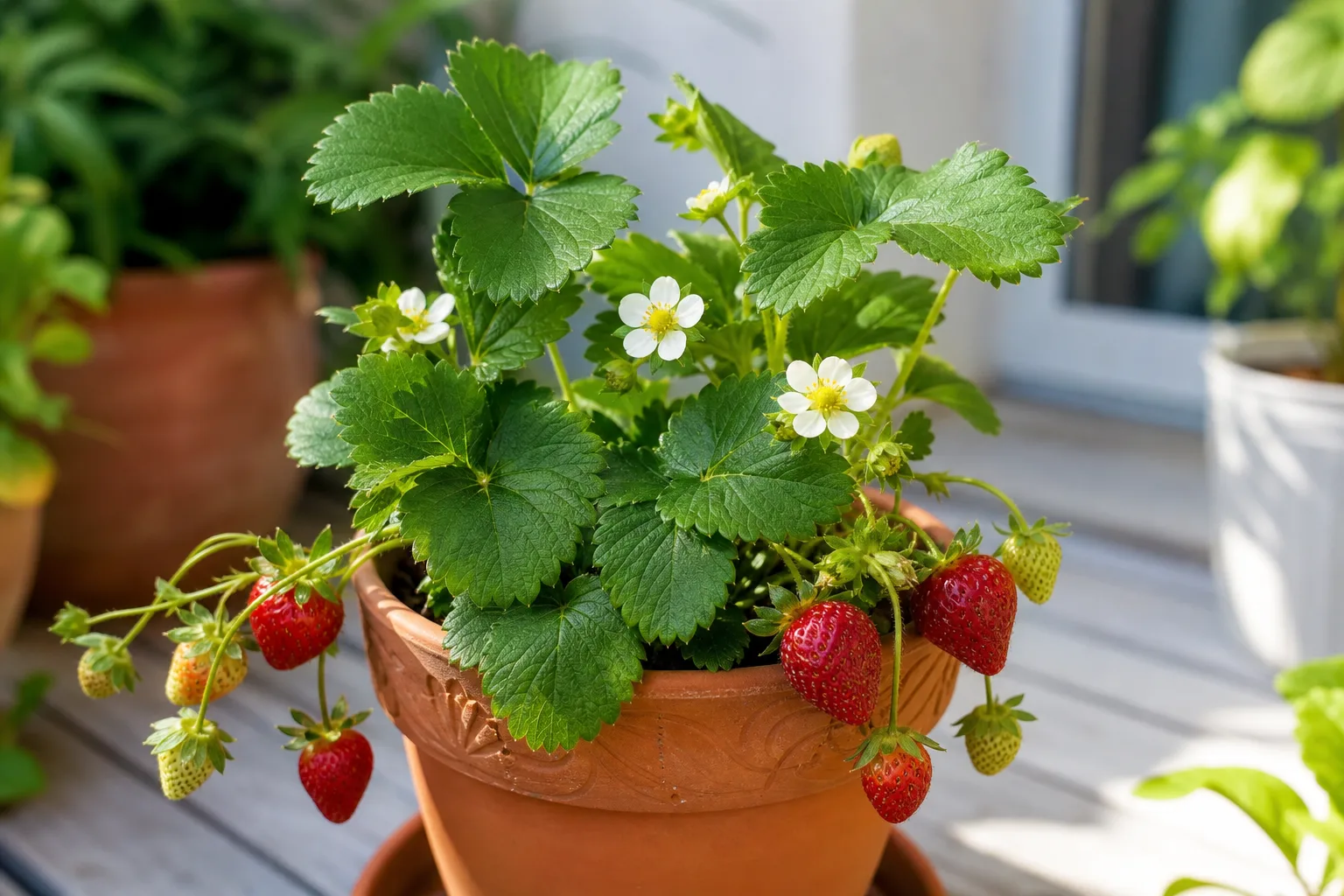
Strawberries and spinach share cool soil, similar height, and non-competing pest profiles in most gardens. Strawberry flowers attract hoverflies whose larvae eat aphids—one of the few spinach pests that builds up on tender spring leaves. Oregon State’s companion-herbs bulletin groups strawberries with flowering allies that support beneficial insects in mixed beds.
How to plant: Set crowns or plugs along the north side of a raised bed. Sow spinach 8–10 in. south of the row. Harvest spinach before runners spread in summer. Mulch strawberries after spinach finishes to keep fruit clean.
Watch for: slugs in wet springs—they hit both crops. Beer traps or evening hand-picking beat companion planting alone.
Legumes: peas and beans for nitrogen and dappled shade
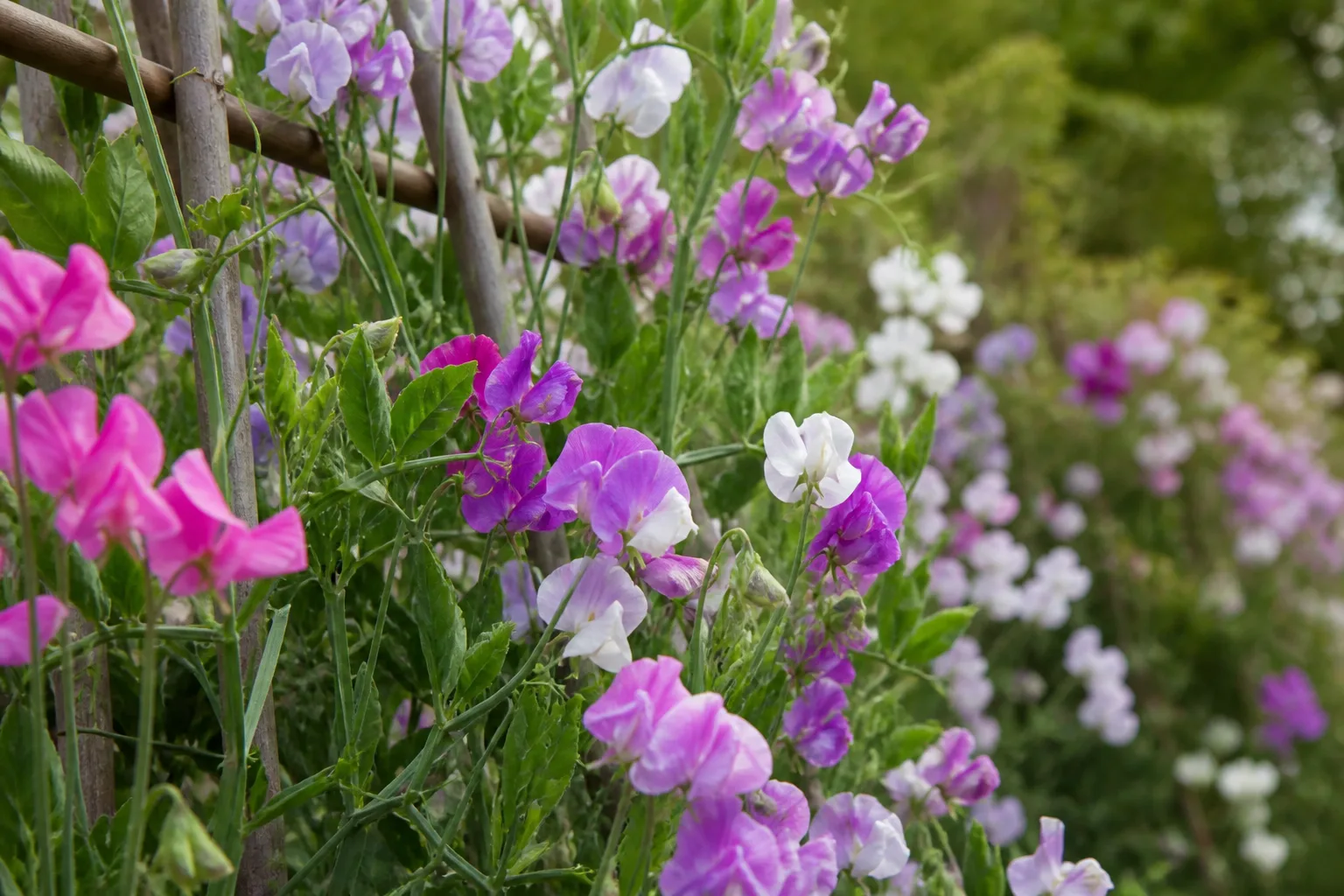
Peas and bush beans fix atmospheric nitrogen through rhizobia on their roots, leaving a modest boost for the next shallow-rooted crop in the same season. The effect is real but not a substitute for compost—think of legumes as a gentle top-up, not fertilizer.
Peas finish before summer heat; their trellis casts afternoon shade that can delay bolting on late-spring spinach. Bush beans suit inter-rows at 6–8 in. from spinach; pole beans need a north trellis so vines do not steal all-day light.
How to plant: Install trellis first; sow peas and spinach on the same day in early spring. For beans, sow spinach two weeks earlier, harvest baby leaves, then plant beans into the gaps—or run parallel rows with 8 in. between species.
Marigolds, nasturtiums, and cosmos
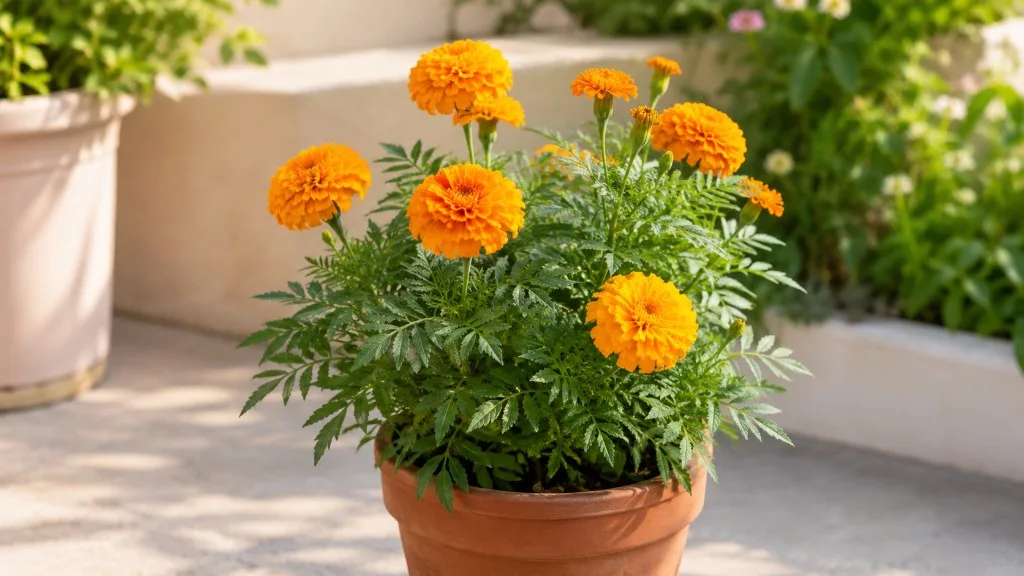
These three flowers do different jobs—do not treat them as interchangeable pest shields.
French marigolds (Tagetes patula): plant every 12–18 in. along path-side borders, not on top of spinach. Low growth, strong scent, hoverfly-friendly blooms. Arizona Extension discusses marigold rotations for root-knot nematode suppression—relevant if spinach looks stunted with swollen roots.
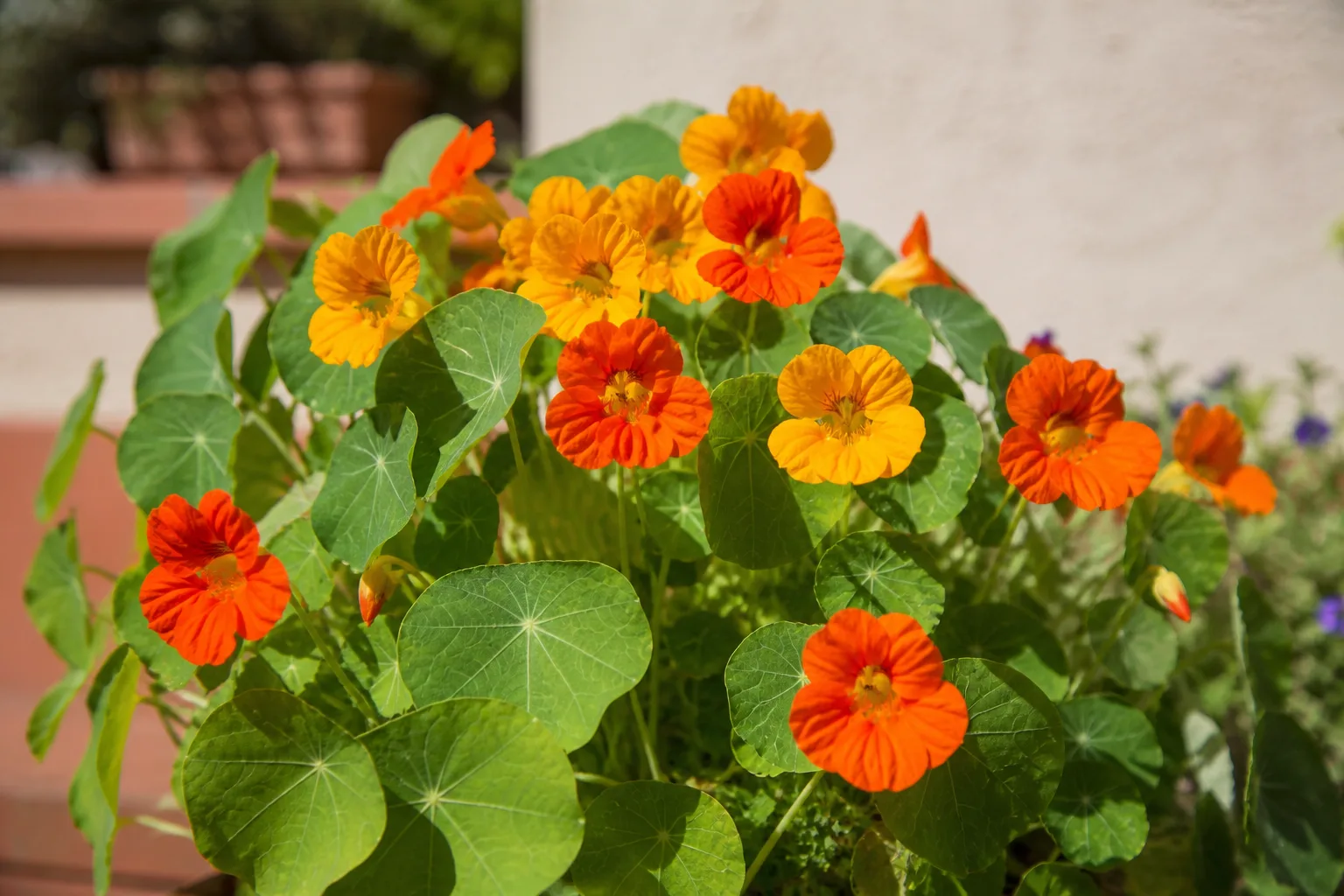
Nasturtiums: best as a trap crop on the south or west margin, not rambling through the bed. Aphids often cluster on nasturtium leaves first, buying time to remove one plant instead of every spinach leaf. Mounding varieties stay smaller than trailing types.
Cosmos: tall, airy stems attract lacewings and parasitic wasps. Keep 18–24 in. from spinach rows—they shade if planted too close. One short row at the bed’s west end is enough.
Allow all three to flower at least once; nectar feeds the insects that eat leaf miners and aphids.
Herbs: oregano, cilantro, dill, and rosemary
Oregano and dill fit the Penn State model: aromatic foliage that confuses pests searching by scent. Plant oregano at row ends or in a permanent herb pocket; it spreads slowly compared to mint. Dill goes in 2–3 weeks after spinach so young dill does not overshadow greens—harvest spinach before dill reaches full height.
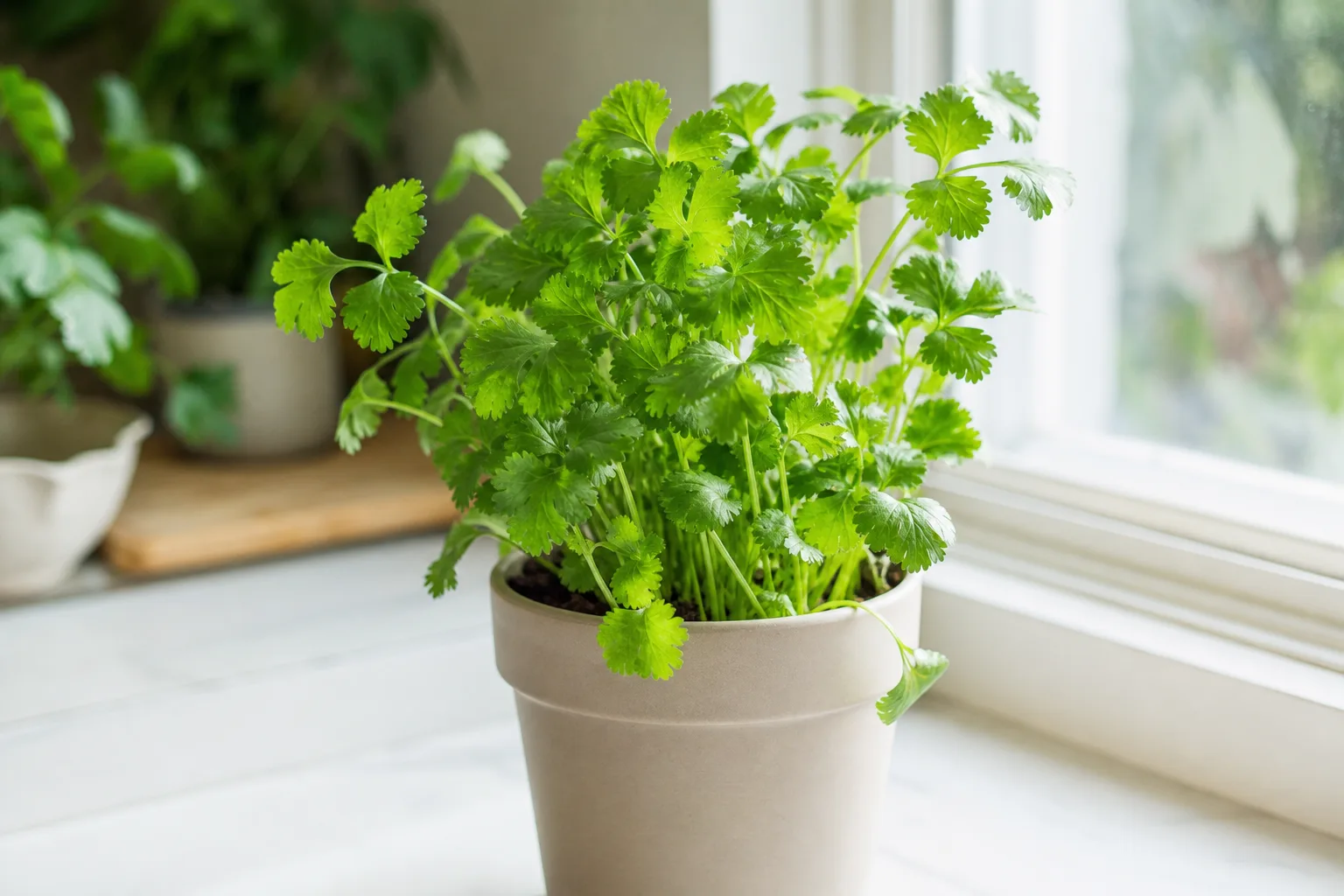
Cilantro bolts with spinach in heat, which makes it a natural spring and fall partner. Let a few plants flower; umbel blooms pull in syrphid flies and tiny wasps. Sow every 3 weeks for continuous leaves.
Rosemary repels slugs in anecdotal reports, but its dry-soil preference conflicts with spinach. Grow rosemary in a pot beside the bed, or in a raised dry corner you water separately. Do not ring spinach with rosemary and soak both on the same schedule—wet rosemary rots; dry spinach bolts.
Alliums: garlic, onions, leeks, and chives
The allium group—garlic, onions, leeks, chives, scallions—brings sulfur-scented foliage that slugs and some aphids avoid. Garlic is planted fall; broadcast spinach over the bed the same week. Spinach acts as a living mulch until garlic sprouts, then you harvest greens before scapes form.
Leeks take 90–100 days; sow spinach between young leeks twice per season. Chives and scallions tuck into 2–4 in. gaps at row ends without shading.
Spacing: keep allium stems 4–8 in. from spinach crowns. Harvest spinach aggressively so alliums get light as they thicken.
Root vegetables: carrots, beets, and radishes
Carrots, beets, and radishes develop taproots and beets below spinach’s shallow feeder roots—classic vertical layering in one row. All prefer cool spring and fall soil.
Radishes mark rows: they sprout in days and are harvested before spinach needs their space. Carrots need loose soil; thin aggressively or they fork. Beets share the Chenopodiaceae family with spinach but use different depths; still rotate beet-family crops yearly to limit soil disease buildup.
Sow mixed “understory” rows: spinach on the surface rhythm, carrots 1 in. deeper in the same furrow, or alternate 4-in. wide bands.
Lettuce and leafy salad greens
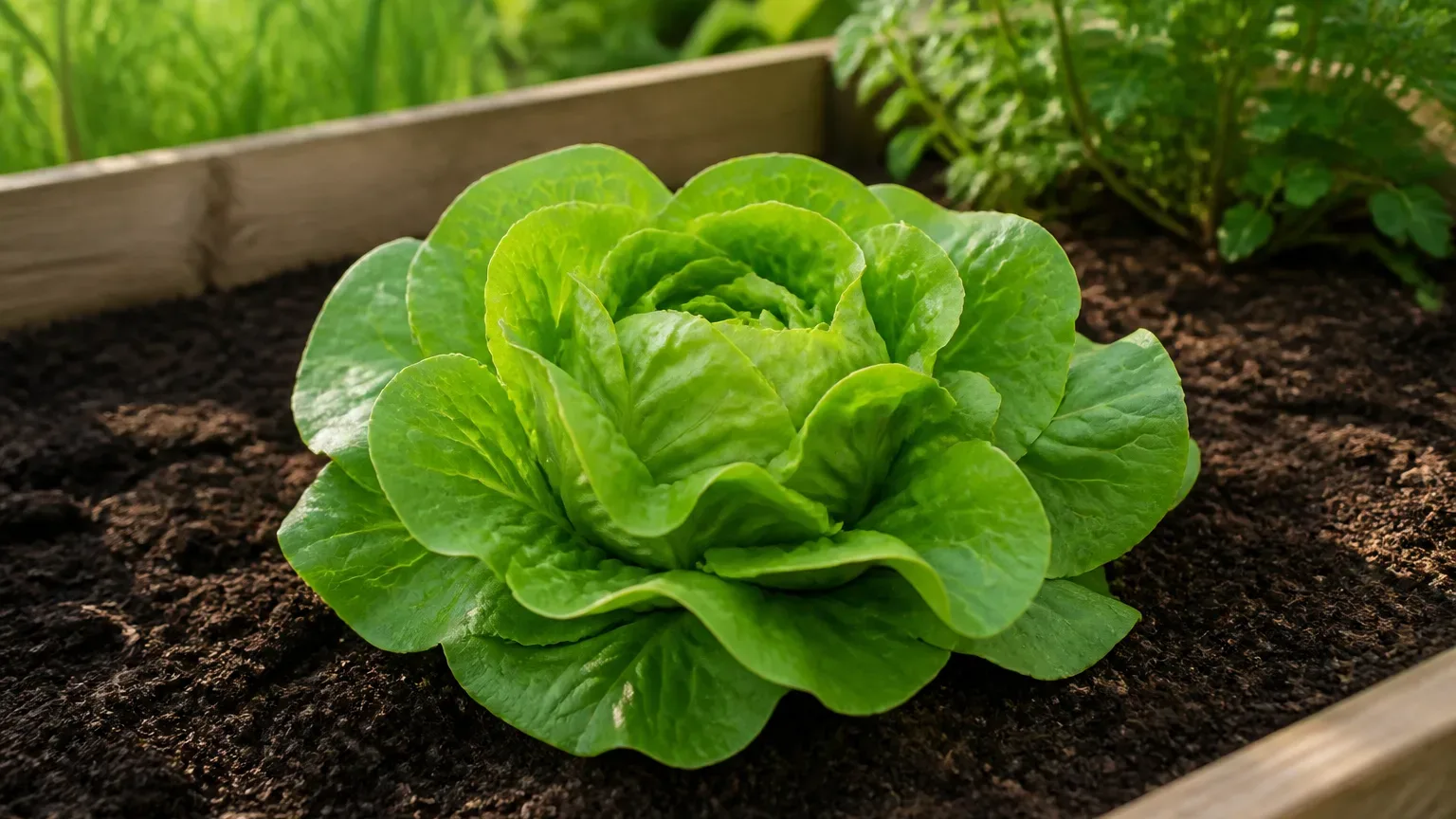
Lettuce and spinach are the easiest pairing on this list—similar water, light feed, and harvest window. Mix seeds for cut-and-come-again salads, or alternate plants at 6-in. spacing for full heads beside full spinach.
Head lettuce pairs with full-size spinach at 6-in. centers; both form rosettes about the same width. Mesclun blends add mustard and arugula for pest confusion through diversity alone.
Water at the base in the morning so overlapping leaves dry before evening—reduces slug habitat.
Brassicas: kale, broccoli, and row-cover allies
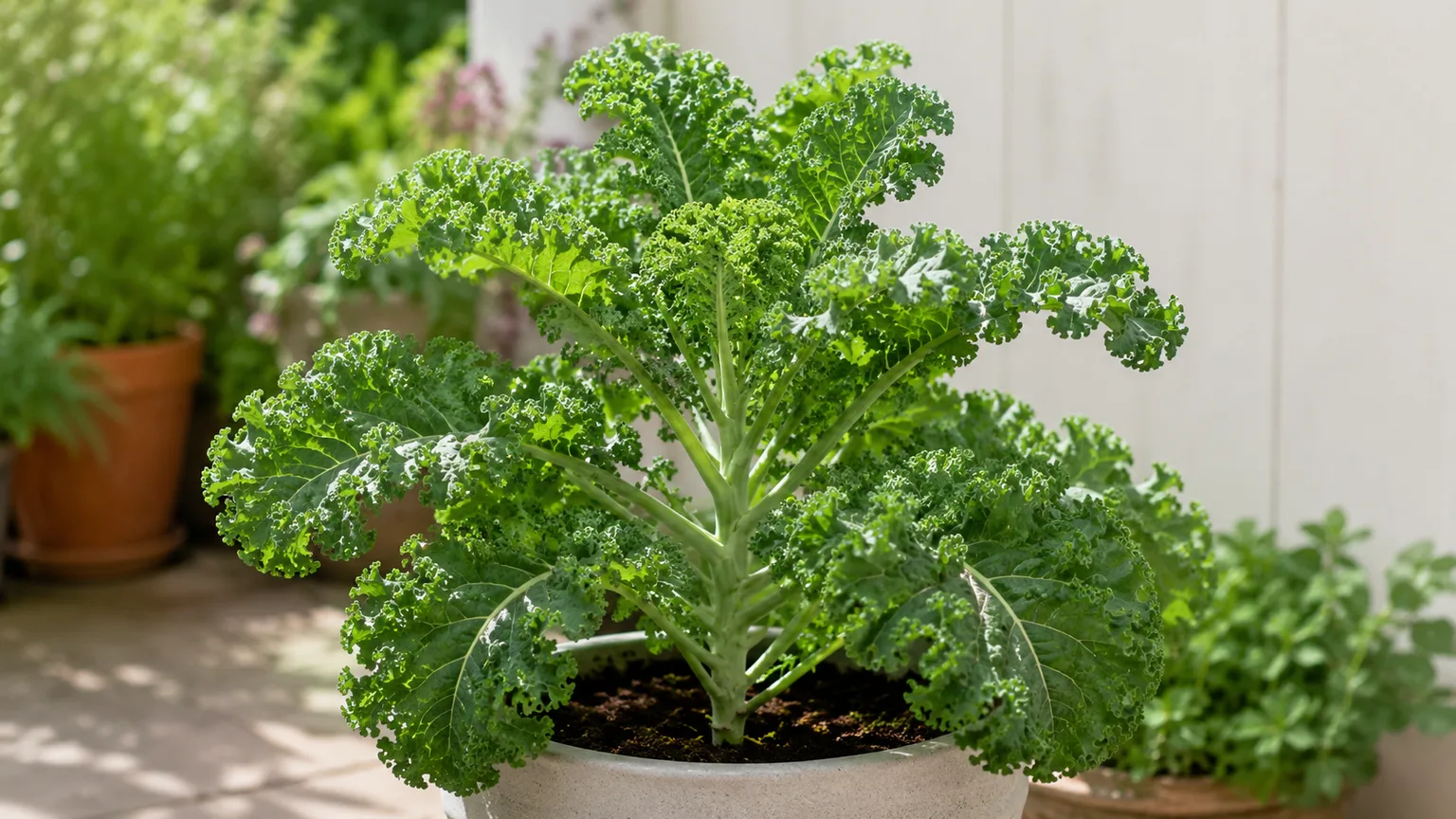
Kale, broccoli, cauliflower, Brussels sprouts, and radishes share spinach’s appetite for cool, moist, fertile soil. Transplant brassicas at 18-in. centers; sow spinach in the gaps for a double harvest before broccoli canopies close.
Trade-off: brassicas and spinach both attract flea beetles and aphids in some regions. Shared row cover over the whole bed protects both—one reason to group them under one tunnel instead of scattering spinach alone.
Do not plant spinach only because brassicas are there; plan rotation so the same bed is not brassica-heavy three years running. Our kale companion plants guide covers brassica polyculture in more depth.
Tomatoes and eggplants for summer understory shade
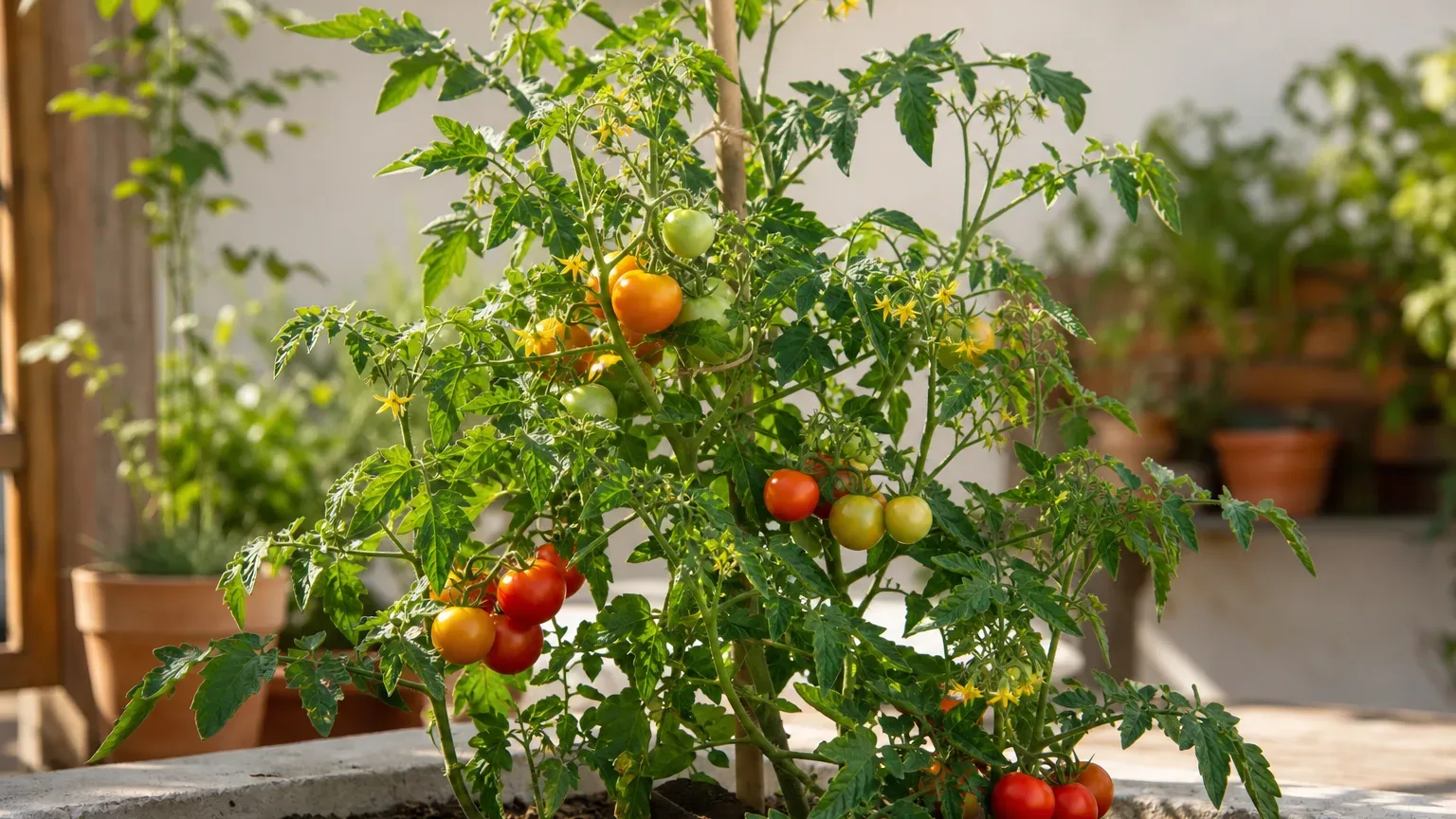
Tomatoes and eggplants are heat lovers; spinach is not. The pairing works as succession, not simultaneous peak production: sow heat-tolerant spinach (e.g., ‘Corvair’, ‘Bloomsdale Long Standing’) when transplants are 12–18 in. tall, harvest leaves before the canopy closes, and let nightshades take the row for August.
Afternoon shade from tomato foliage can extend spring spinach by one to two weeks—worth it in hot climates if you stay 6–8 in. from stems and avoid wetting foliage when watering tomatoes.
Eggplant’s broad leaves create a similar understory; keep pathways clear so you are not stepping on spinach while harvesting aubergines.
Five plants to keep away from spinach
-
Mint spreads by rhizomes and outcompetes slow spinach seedlings. Grow mint in pots—never open soil beside greens.
-
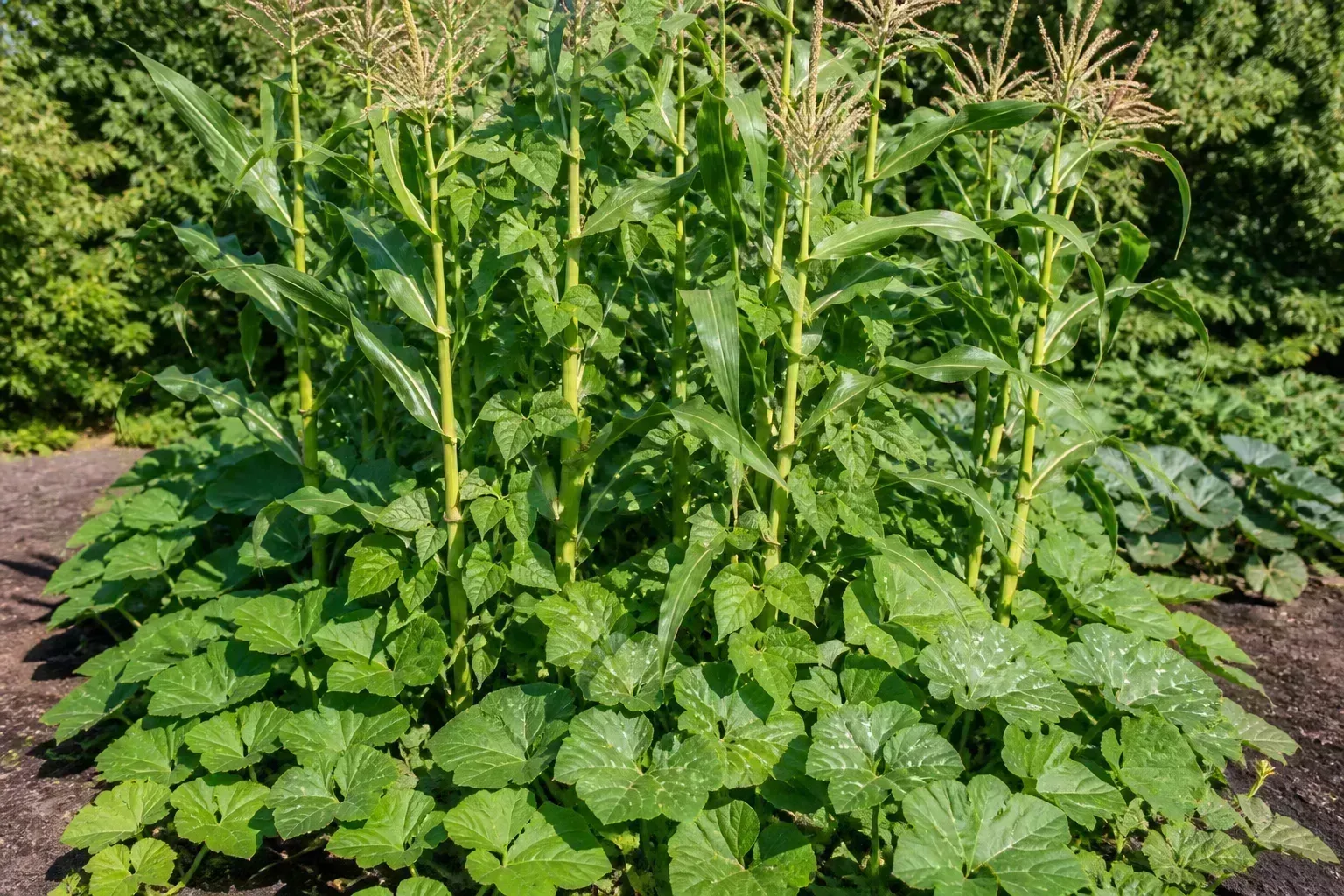
Corn demands nitrogen, sun, and vertical space spinach cannot spare. Tall stalks shade all day; roots compete in the same shallow layer.
-
Potatoes are heavy feeders and disturb soil when hilled—damaging spinach roots. They also share some blight pressure in wet years. Keep potatoes in a separate rotation block.
-
Fennel releases allelopathic compounds that inhibit many neighbors. If you grow fennel, place it at the garden edge, alone or with dill for pollination—not between spinach rows.
-
Sunflowers (except carefully managed dwarf types on the north margin) exude allelopathic residues and cast dense shade. Standard sunflowers belong away from spinach; if you experiment with dwarfs, keep them north and harvest spinach before blooms open.
Sample 4×8 spinach companion bed layout
North edge (long side): strawberry row or pea trellis.
Center: two spinach rows 10 in. apart; radish + carrot band between them; kale or broccoli at 18-in. centers staggered.
South edge: tomato or eggplant transplants after frost; early spinach understory.
Corners and path side: French marigolds every 14 in.; nasturtium mound on southwest corner; cilantro/dill at east end.
Beside bed (pot): rosemary.
Mulch paths with straw; water spinach mornings; scout underside of leaves for aphids twice weekly. For whole-garden placement, our companion planting vegetable garden layout guide helps slot this bed into a three-year rotation.
Conclusion
The best spinach companion plants are not the ones with the longest folklore list—they are the ones that match cool-season timing, respect spacing, and do a job you actually need: strawberries and legumes for spring efficiency, marigolds and herbs for beneficial insects, root crops for layered rows, and tomatoes or eggplant for a short summer understory before heat wins.
Start with three companions max in a new bed; add more after you see how shade and water move through the row. Keep mint, corn, potatoes, fennel, and sunflowers elsewhere, rotate brassica-heavy beds, and treat flowers as habitat—not pesticide. Get those basics right and spinach becomes the green that fills gaps other crops leave behind.