How to Grow & Care for Swamp Hibiscus
Grow swamp hibiscus (Hibiscus coccineus) with site selection, wet-soil planting, watering, pruning, propagation, pond placement, and fixes for leggy growth.
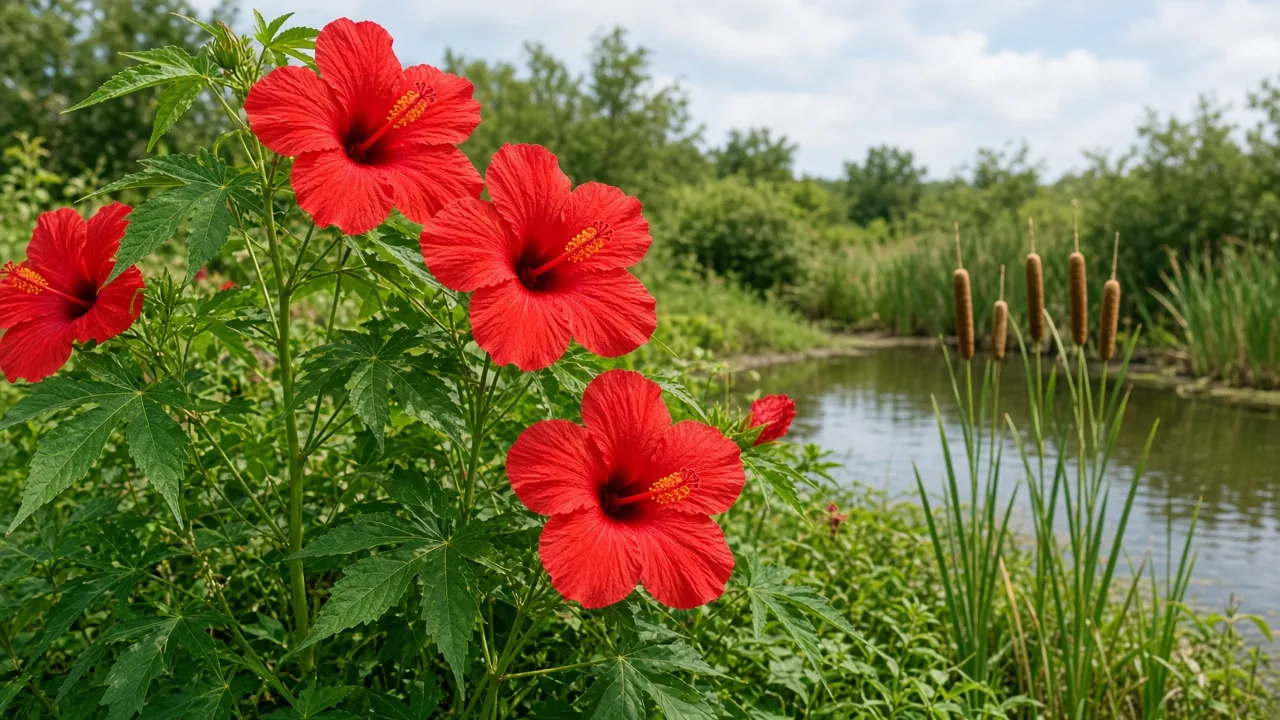
Swamp hibiscus (Hibiscus coccineus) is the perennial you plant when ordinary border flowers wilt in soggy soil. Also called scarlet rosemallow, Texas star hibiscus, and water hibiscus, it is a southeastern U.S. native that sends up woody-based stems 6 to 8 feet tall and opens vivid red, star-shaped flowers from midsummer into early fall. The show is brief per bloom—each flower often lasts only a day—but new buds keep opening for weeks when sun and moisture stay steady.
The plant earns its common names honestly. It evolved along marshes, stream banks, and pond margins in Georgia, Florida, and nearby states. Give it wet feet and full sun, and it becomes one of the most dramatic moisture-loving perennials you can grow. Treat it like a dry-border hibiscus, and you get yellow leaves, leggy stems, and a summer with almost no flowers.
What Swamp Hibiscus Is (and How to Identify It)
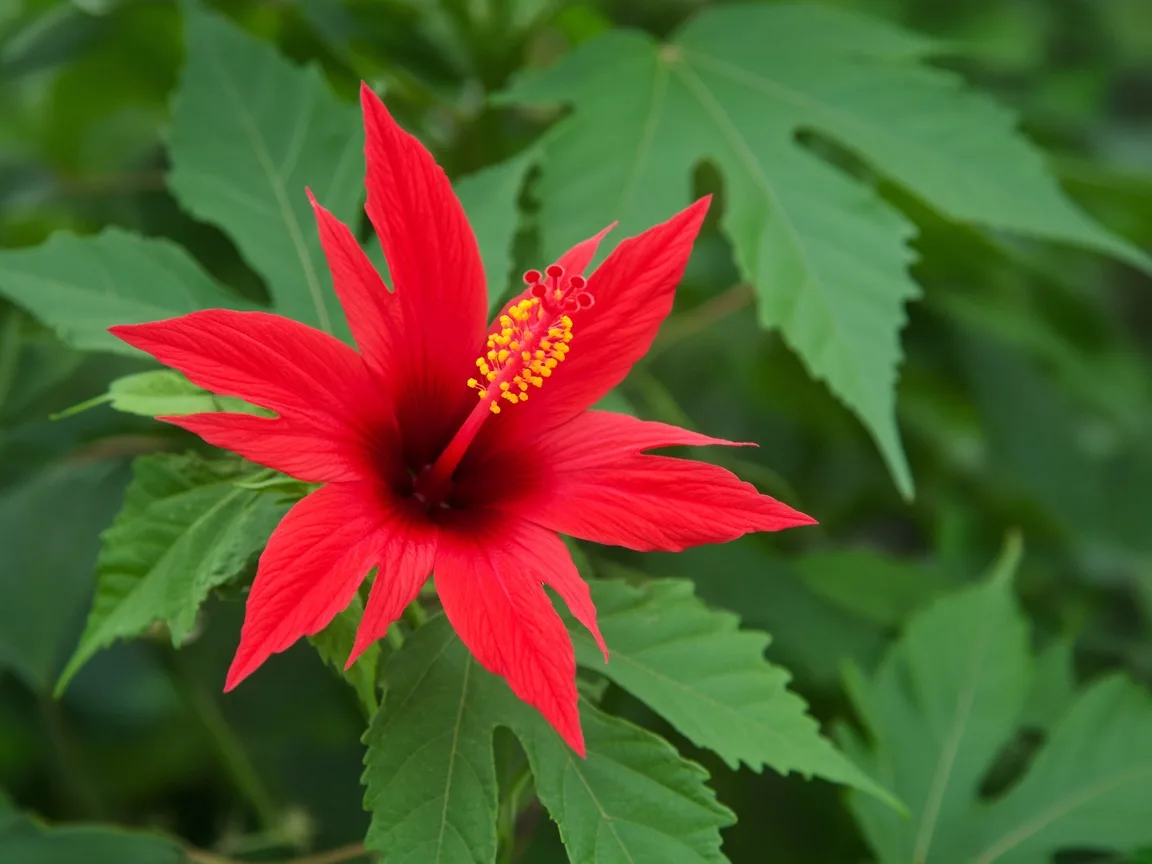
Hibiscus coccineus is an upright, herbaceous perennial in the mallow family (Malvaceae). NC State Extension describes it as a fast-growing plant with coarse texture, palmately lobed leaves, and funnel-form red flowers up to 6 inches wide on long stalks. Stems are thick and can look semi-woody by late summer, but the plant dies back to the ground in winter and resprouts from the crown each spring.
Two identification details matter in the garden. First, the five narrow petals form a pinwheel or Texas-star shape—not the wide, ruffled “dinner plate” look of hardy hibiscus (H. moscheutos). Second, the deep green, serrated leaves are deeply divided and can resemble hemp (Cannabis sativa) when the plant is not blooming. That leaf shape surprises new growers and helps separate swamp hibiscus from other tall red-flowered plants at the nursery.
Quick Facts at a Glance
| Trait | Typical range |
|---|---|
| Common names | Swamp hibiscus, scarlet rosemallow, Texas star hibiscus, water hibiscus |
| Botanical name | Hibiscus coccineus |
| Plant type | Herbaceous perennial |
| Mature size | 6–8 ft tall, 2–4 ft wide |
| Sun | Full sun to light partial shade |
| Soil | Sandy, loamy, or clay; tolerates wet and occasionally flooded soils |
| Bloom time | July through September in most regions |
| Flower color | Bright red (occasionally white forms exist) |
| Hardiness | USDA Zones 6–9 commonly cited; NC State lists 5b–9b with site protection |
| Native range | Southeastern United States |
Swamp Hibiscus vs Hardy Hibiscus and Other Look-Alikes
Swamp hibiscus is often confused with hardy hibiscus (Hibiscus moscheutos), another native mallow for wet soils. Both like moisture and both die back in winter, but they are different plants. Hardy hibiscus usually produces much larger, rounder flowers—often pink, white, or red with a darker eye—and generally stays shorter unless you grow a selected cultivar. Swamp hibiscus has narrower star-shaped petals and a more open, upright habit.
Halberd-leaf rosemallow (Hibiscus laevis) is another native wetland relative with pale flowers and differently shaped leaves. At purchase time, read the label for the botanical name, not just “hibiscus” or “rosemallow.” Tropical hibiscus (H. rosa-sinensis) and Rose of Sharon (H. syriacus) are woody shrubs with different winter needs and are poor substitutes for a native wet-garden perennial.
If you want the broader hibiscus family picture, see the types of hibiscus guide and the hardy hibiscus growing guide for H. moscheutos culture. For general hibiscus troubleshooting such as yellow leaves, the why hibiscus leaves turn yellow guide covers shared mallow-family stress signals.
Where Swamp Hibiscus Grows Best
Swamp hibiscus is not picky about soil texture and not shy about height. What it demands is steady moisture during the growing season and enough sun to build strong stems and flower buds. The best sites mimic its native habitat: low, damp ground near water, or a rain garden that holds moisture after storms without staying stagnant for weeks.
Because mature plants can exceed 6 feet, plan for the back of a perennial border, a courtyard wall, or the outer edge of a pond planting where the tall stems frame smaller foreground plants. Avoid narrow foundation beds where the plant will outgrow the space in two seasons and block windows.
Sun, Wind, and Shelter
Give swamp hibiscus at least six hours of direct sun daily for the heaviest bloom and sturdiest stems. UF/IFAS notes that flowering and overall growth are poor in shade. Light afternoon shade can help in very hot inland climates, but deep shade produces thin stems that lean toward light and set few buds.
Wind matters on a plant this tall. NC State lists windburn as a practical concern, and long stems can snap in summer storms. A fence, hedge, or wall on the prevailing-wind side reduces breakage without stealing all-day sun. If stems flop anyway, stake early in the season and tie loosely so the plant can still move slightly.
Soil, Moisture, and Drainage
This is a moist-soil and wet-soil plant, not a true submerged aquatic. UF/IFAS lists tolerances for sand, loam, clay, acidic soils, and extended flooding. That flexibility is useful in rain gardens, bioswales, and low yard areas that stay damp after rain.
Swamp hibiscus still needs oxygen at the root crown. In a rain garden, build a shallow basin that collects runoff and infiltrates within a day or two rather than a sealed bowl that stays anaerobic. In ordinary garden beds, keep the root zone consistently moist from spring through fall. A 2- to 3-inch mulch layer of shredded bark or leaf mold slows evaporation; keep mulch a few inches away from the stems.
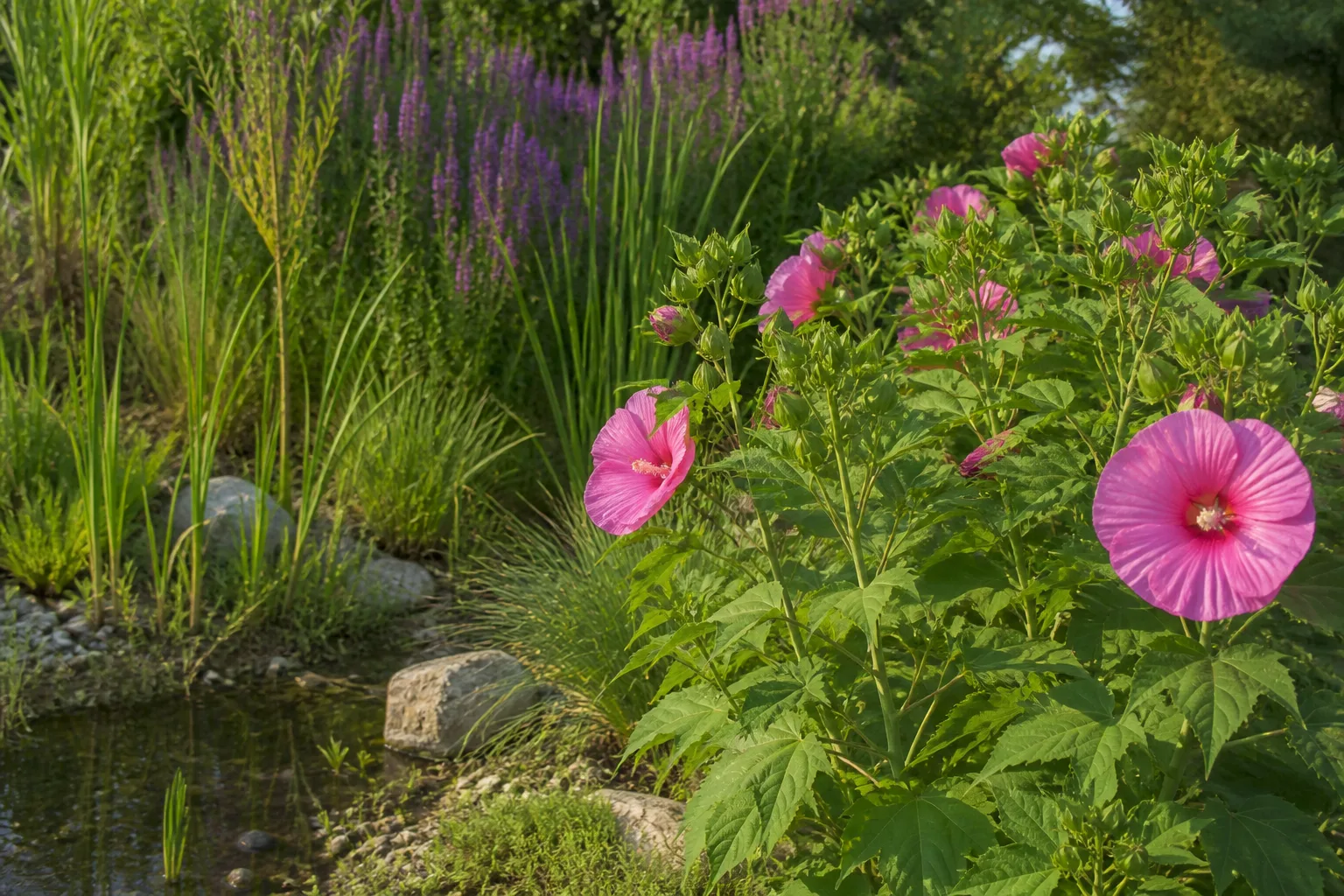
If your soil dries quickly—sandy beds on a slope, containers, or droughty summers—you will water far more often than a gardener with a naturally damp pocket. Dry soil is the fastest way to lose flowers and push the plant into leaf drop.
Planting Swamp Hibiscus
Plant swamp hibiscus in early spring after the last frost when the soil is workable. Fall planting can work in mild climates because roots keep growing while top growth slows, but spring planting is safer where winters are cold and wet. Buy container-grown plants with several healthy stems emerging from the crown rather than a single thin whip.
Space plants 2 to 3 feet apart if you want a massed clump look, or give them 3 to 4 feet if you are pairing them with other large perennials. They fill in quickly once established.
In-Ground Planting Steps
Dig a hole about twice as wide as the root ball and no deeper than the container. Set the plant so the crown sits at or slightly above the surrounding soil line. Burying the crown invites rot in wet ground. Backfill with native soil unless you are correcting a specific drainage problem; amending only the planting hole in an otherwise dry bed can create a moisture trap that drowns roots after heavy rain.
Water slowly until the soil settles and the root zone is fully wetted. For the first month, check moisture every few days and water when the top 2 inches dry out. After that, taper toward a deep soak whenever the root zone begins to dry, rather than a fixed daily schedule.
Pond Edges, Rain Gardens, and Containers
Swamp hibiscus is a standout pond-margin and rain-garden plant. UF/IFAS recommends it along pond edges and streams because those sites match its native habitat. Practical pond planting keeps the crown about 1 inch below soil grade, with total planting depth often around 3 to 5 inches including roots. In very shallow standing water, use gravel or aquatic soil to anchor roots without burying the stem.
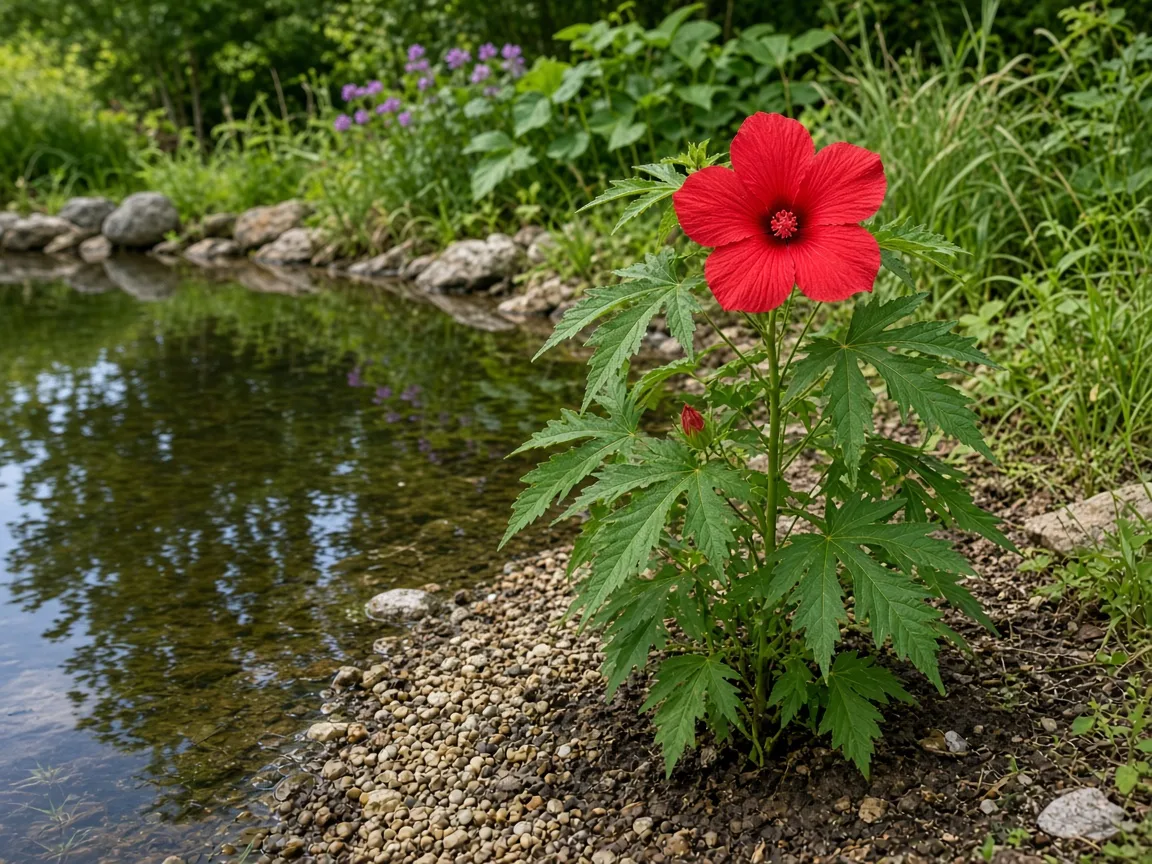
Do not plant deeper than about 4 inches of standing water over the crown. Deeper submersion can drown the plant or stall growth. In pots placed on pond shelves, use a large container with heavy loam or aquatic planting mix and check that the crown stays above permanent water if the pond level fluctuates.
Rain-garden placement works well on the lower berm or basin floor where water pools briefly after storms. Pair swamp hibiscus with other wet-tolerant natives so the bed looks intentional year-round, not like a puddle that only looks good in July.
Containers are possible but labor-intensive. Choose a pot at least 18 to 24 inches wide, use a moisture-retentive mix, and expect to water daily in hot weather. A saucer that holds water can help on a patio, but do not let the crown sit submerged for days.
Watering and Fertilizing Through the Season
From spring through fall, swamp hibiscus performs best with consistently moist soil. In an in-ground bed that never fully dries, natural rainfall may be enough except during drought. In average garden soil, plan on deep watering whenever the top 2 inches feel dry. Many growers in non-wet sites apply roughly 1 to 2 inches of water per week through heat waves, adjusting for rain, wind, and soil type.
Cut back watering as stems yellow and die back in late fall. The crown still needs damp—not sodden—soil through winter in mild climates. In cold regions, a dry frozen spell is less risky than a soggy crown under mulch that rots.
Fertilizer is secondary to water and sun. A balanced slow-release fertilizer in spring, followed by one or two light applications through midsummer, supports strong stems on depleted soils. Overfeeding in late summer can push soft growth that flops and attracts aphids. If your soil is rich and you mulch annually, skip fertilizer the first year and watch leaf color and flower count before adding more.
Pruning, Dieback, and Overwintering
Swamp hibiscus is herbaceous: stems die after frost, and new shoots emerge from the crown in spring. That cycle is normal, not a sign of failure. Do not panic when the plant disappears in winter if your climate matches its hardiness range.
In late winter or early spring before new growth starts, cut last year’s stems back to 6 to 18 inches above ground, depending on your goal. Lower cuts produce a cleaner base; taller stubs support stem-nesting native bees. NC State Extension and NC Extension pollinator guidance recommend leaving 12 to 24 inches of dead stem through the first winter and allowing them to decay naturally when possible, because native bees nest in hollow hibiscus stems.
To control height in small gardens, you can also cut stems back by one-third in late spring when they are soft. Flowers appear on new growth, so hard pruning right before bloom time reduces the summer show.
Cold-Climate Mulch and Stem Care
In USDA Zone 6 and the colder edge of Zone 7, protect the crown with 3 to 6 inches of loose mulch after the ground chills in late fall. Pull mulch back slightly in spring so emerging shoots are not smothered. Plants in containers should move to an unheated garage or sheltered cold frame if your winters drop below their comfort zone.
Swamp hibiscus is hardier than tropical hibiscus but less forgiving than some hardy hibiscus cultivars in repeated freeze-thaw cycles. If your plant fails to resprout by late spring, scrape the crown lightly—firm, pale tissue may still be alive even when upper stems are dead.
Propagation: Seeds and Cuttings
Swamp hibiscus grows easily from seed and stem cuttings, which makes it affordable to fill a rain garden or share with neighbors.
For seeds collected from your own plants, wait until pods at the flower base turn from green to brown in fall. Store dry seeds cool through winter. In early spring, scarify the hard seed coat lightly with sandpaper or a nail file, then soak seeds in warm water for at least an hour. Sow in moist potting mix, press seeds into the surface, and keep the tray warm and bright. Germination often takes about two weeks, though scarified seeds can be faster.
For cuttings, take 6-inch softwood cuttings in late spring from a plant with multiple healthy stems. Cut just below a node, remove lower leaves, dip the base in rooting hormone, and insert 3 inches into moist peat or perlite mix. Keep humidity high and light bright but not harsh until new leaves form, then pot up and harden off before planting out after frost danger passes.
Division is possible on older clumps with multiple crowns, but stem cuttings and seed are simpler for most home gardeners.
Getting Swamp Hibiscus to Bloom
Swamp hibiscus blooms from July through September in most gardens, with peak color in the hottest weeks. Each flower opens for about one day, sometimes two, then closes and drops. That daily turnover is normal. Success is measured by how many buds keep forming through the season, not by how long one bloom lasts.
More flowers come from full sun, steady moisture, and healthy new stems. If your plant is leafy but bloomless, check shade first, then dryness. Leggy plants stretching toward light need a sunnier site or hard pruning earlier in spring. Avoid drought stress during bud set in June and July; that is when next month’s flowers are decided.
Deadheading is optional. Removing spent flowers can tidy the plant but will not dramatically extend the season the way it might on some annuals. Seed pods attract birds and support next year’s seedlings if you want them.
Pests, Diseases, and Common Problems
Swamp hibiscus is generally tough, but NC State lists aphids, whiteflies, scale, Japanese beetles, deer browsing, leaf spots, canker, blight, and rust as possible problems. Most issues are manageable if you catch them early.
Aphids cluster on new growth and buds. A strong jet of water dislodges small outbreaks. Persistent infestations may need insecticidal soap applied to leaf undersides on a calm morning. Japanese beetles chew flowers and leaves; hand-pick in the evening or use row covers on small plantings during peak flights.
Rust shows as orange pustules on leaves. Remove affected leaves promptly and avoid overhead watering that keeps foliage wet overnight. If rust persists into fall, cut infected stems to the ground after frost and dispose of debris away from the garden. New growth the following spring is usually clean.
Deer can browse stems and buds. A temporary fence during early spring growth protects the season’s flower show better than sprays alone in high-pressure areas.
Yellow Leaves, Leaf Drop, and Leggy Growth
Yellow leaves usually trace back to water stress—too dry or, less often, too wet and oxygen-starved. Check moisture 2 inches down before reacting. In containers, yellow lower leaves often mean uneven watering or root crowding.
Leaf drop after a cold snap, heat spike, or transplant shock is common. Stable moisture and partial shade for a week after moving usually restore the plant if the crown is sound.
Leggy growth means not enough sun or too much nitrogen. Move or prune competing shade, reduce fertilizer, and cut stems back by one-third while they are still soft to encourage bushier growth.
Wildlife Value and Responsible Placement
Swamp hibiscus is a strong pollinator and hummingbird plant. NC State notes flowers attract hummingbirds, butterflies, and other pollinators, and that Hibiscus supports the specialized bee Ptilothrix bombiformis. Dead stems also provide nesting sites for stem-nesting native bees when you avoid mowing them to the ground every winter.
UF/IFAS lists the species as not known to be invasive, and the USDA plant profile treats it as a native southeastern species. Still, keep plants in managed gardens, ponds, and rain gardens rather than introducing them into natural preserves outside their regional context.
Because deer may browse the plant and fish generally ignore it, swamp hibiscus fits wildlife-friendly yards where you want vertical red color at the wet edge without adding toxic pond plants. It is not a substitute for professional advice on edible hibiscus species; confirm identity before harvesting any hibiscus for tea or food.
Conclusion
Swamp hibiscus rewards gardeners who have the one thing many showy perennials hate: extra moisture. Identify it by its star-shaped red flowers and deeply lobed leaves, give it full sun with shelter from strong wind, and keep the root zone consistently damp from spring through fall. Plant the crown at the right depth at pond margins, use rain-garden logic in yard depressions, and expect daily—not everlasting—blooms from midsummer onward.
Prune with pollinators in mind, propagate by seed or cuttings if you want more plants, and troubleshoot yellow leaves by checking water before reaching for fertilizer. Get those basics right and Hibiscus coccineus becomes a low-maintenance native anchor that turns the wettest corner of your garden into the brightest.



