Hibiscus Leaves Turning Yellow: 7 Causes
Hibiscus leaves turning yellow? Match the leaf pattern to the real cause—overwatering, chlorosis, frost, mites—and fix it before more foliage drops.
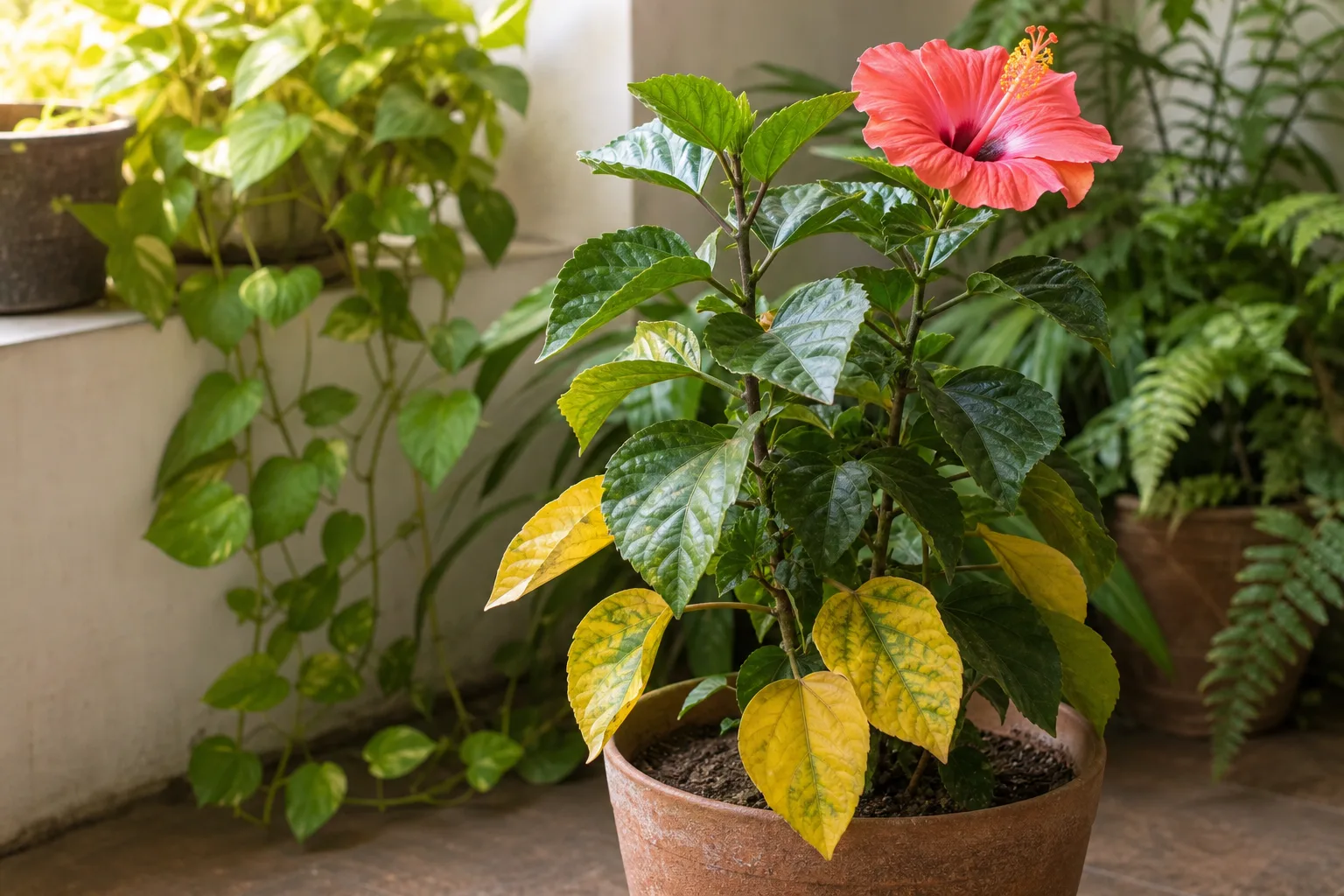
A hibiscus with yellow leaves is sending a stress signal—not a single diagnosis. The same pale green can mean soggy roots, a pot that dried out on a hot patio, iron locked up by alkaline soil, spider mites under the leaves, or simply an older leaf finishing its job before winter rest. Treat the wrong cause and you waste weeks: extra water on already drowning roots, fertilizer on a plant that needs drainage, or panic pruning when the plant only needed brighter light.
The fix starts with which leaves turned yellow, what the soil feels like, and what changed in the last seven days—move indoors, heat wave, repot, first frost. Match that snapshot to one of seven common causes below, then take the first low-risk action that fits.
Read the Pattern Before You Treat
Before you feed, spray, or strip every yellow leaf, read the plant the way an experienced grower would on a patio walk-through. Photograph one affected leaf (top and bottom), the whole plant, and the soil surface. Note whether yellowing started on the lowest leaves or jumped to new growth at the tips, whether the color is uniform or mottled, and whether veins stayed green while the tissue between them went yellow.
Tropical Hibiscus rosa-sinensis is especially reactive to environmental swings. NC State Extension notes that Chinese hibiscus is sensitive to environmental changes—moving the plant, repotting, or a sudden shift in light commonly triggers leaf and bud drop before you ever see an insect. That sensitivity is why pattern reading matters more on hibiscus than on tougher shrubs.
Four Questions That Narrow the Cause in Minutes
Ask these in order. The first strong match usually points to your next step.
1. What does the soil feel like 1–2 inches (2.5–5 cm) down? Wet soil plus yellow, limp leaves suggests overwatering or poor drainage—not thirst. Bone-dry mix with crispy edges and wilting suggests underwatering. Calendar watering is the most common mistake on container hibiscus.
2. Where did yellowing start? Bottom-up on older leaves often tracks normal shedding, nitrogen shortage, or underwatering. Yellow on new growth with green veins points to iron chlorosis. Random stippling on upper leaves raises mite or aphid concern. Sudden whole-plant yellow after a move points to shock.
3. Is there a pattern on the leaf blade? Even yellowing without spots differs from fine pale mottling (mites), sticky residue (aphids), or black sooty mold on honeydew (scale). Flip every suspect leaf.
4. What changed recently? Brought indoors for winter? Moved to full sun after overwintering? Repotted? First cold night below 45°F (7°C)? Heat wave after heavy rain? The timeline often tells the story faster than guessing.
Identify your hibiscus type before deep troubleshooting. Tropical H. rosa-sinensis has glossy leaves, stays evergreen in frost-free climates, and is hardy outdoors only in USDA Zones 9–11. Hardy H. moscheutos dies back to the ground after frost and resprouts in spring. Rose of Sharon (H. syriacus) is a woody deciduous shrub. Yellow leaves on a tropical pot brought indoors in October mean something different than yellow on a hardy perennial going dormant outdoors. If you are unsure which you have, start with the hibiscus plant care overview before changing winter care.
When Yellow Hibiscus Leaves Are Normal
Not every yellow leaf is an emergency. Hibiscus sheds older foliage throughout the growing season, and some plants drop lower leaves when dense upper growth blocks light. A few yellow leaves on an otherwise green, blooming tropical hibiscus often means routine aging—not disease.
Winter Dormancy and Seasonal Leaf Drop
Indoor tropical hibiscus commonly enters semi-dormancy in cool, low-light winter conditions. The RHS advises reducing watering as growth slows and only watering when the top layer of compost is dry, ceasing feed until spring. In that window, some leaves turn yellow and drop while the plant rests. This is expected if nights stay cool (around 45–50°F / 7–10°C), light is weaker, and the plant is not pushing new buds aggressively.
Worry when young leaves yellow, when defoliation climbs quickly, or when stems soften at the base. Those patterns point to overwatering in winter, chill damage, or pests—not routine rest. Hardy hibiscus going dormant outdoors after frost will yellow and drop all foliage—that is normal for the species, not a sign your tropical patio plant died.
Reason 1: Overwatering and Poor Drainage
Overwatering is the most common reason container hibiscus leaves turn yellow, especially indoors in winter when evaporation drops but watering habits stay on a summer schedule. Hibiscus likes moist soil, but roots still need oxygen. Saturated mix suffocates roots, blocks nutrient uptake, and invites root rot.
In-ground plants in heavy clay or low spots suffer the same way after repeated rain. Mulch helps retain moisture in summer, but it cannot fix a planting hole that never drains.
What an Overwatered Hibiscus Looks Like
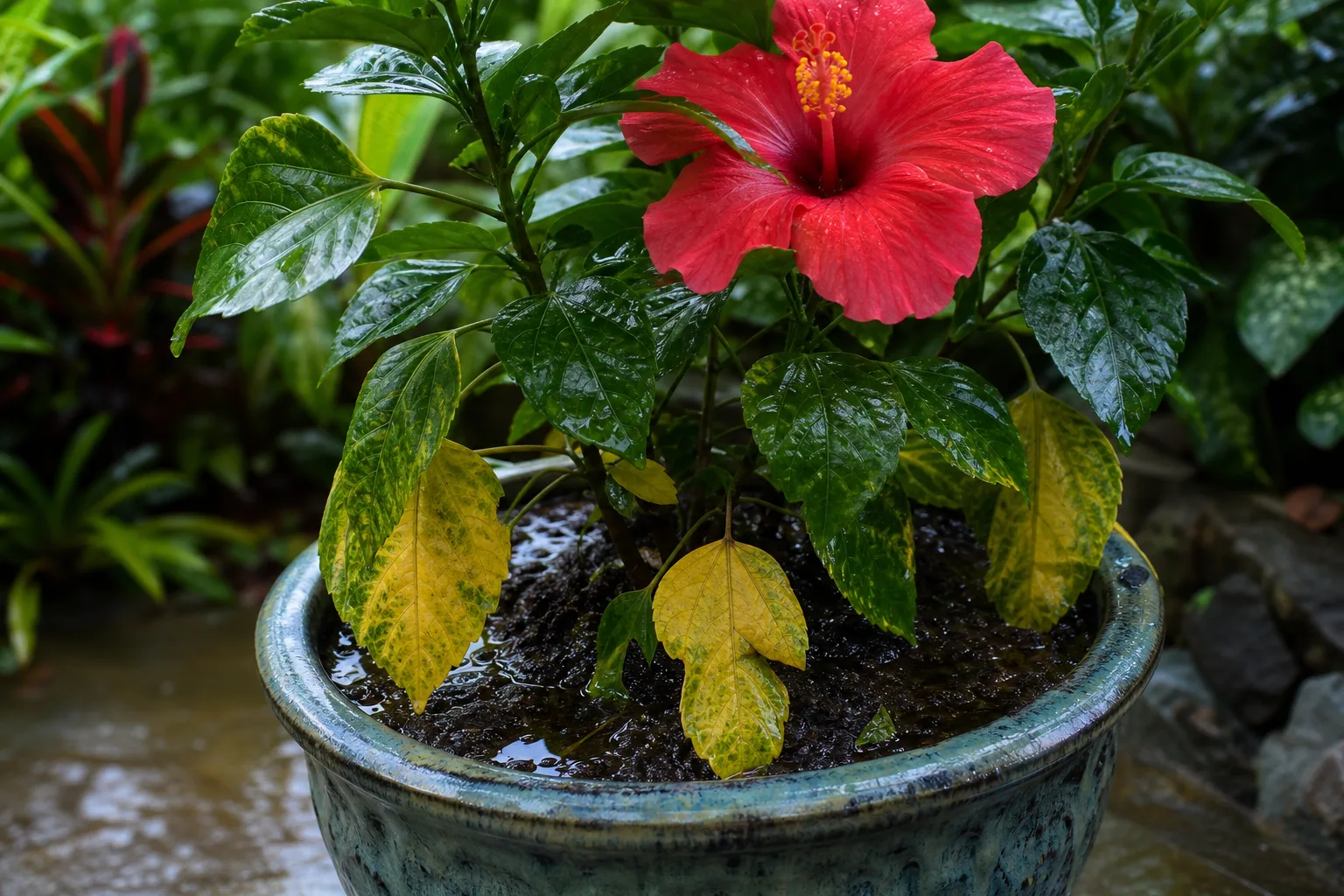
An overwatered hibiscus often wilts while the soil stays wet—a confusing combo that sends many growers to water again. Leaves turn pale yellow, feel soft, and may drop in clusters. Advanced cases bring a sour smell from the pot, brown mushy roots when you slip the plant out, and blackened lower stems. Saucers that hold standing water after every watering are a classic trigger on patio pots.
First fix: Stop watering until the top 2 inches (5 cm) of mix feel dry. Confirm drainage holes are open and elevate the pot if it sits in a full saucer. If mix stays wet for days, slip the root ball out—trim clearly brown, mushy roots, repot into fresh, porous mix, and withhold fertilizer until new growth appears. For in-ground plants, improve drainage with organic matter worked into the planting zone and reduce irrigation frequency. See the dedicated hibiscus overwatering guide if yellowing returns after you correct the schedule.
Reason 2: Underwatering and Drought Stress
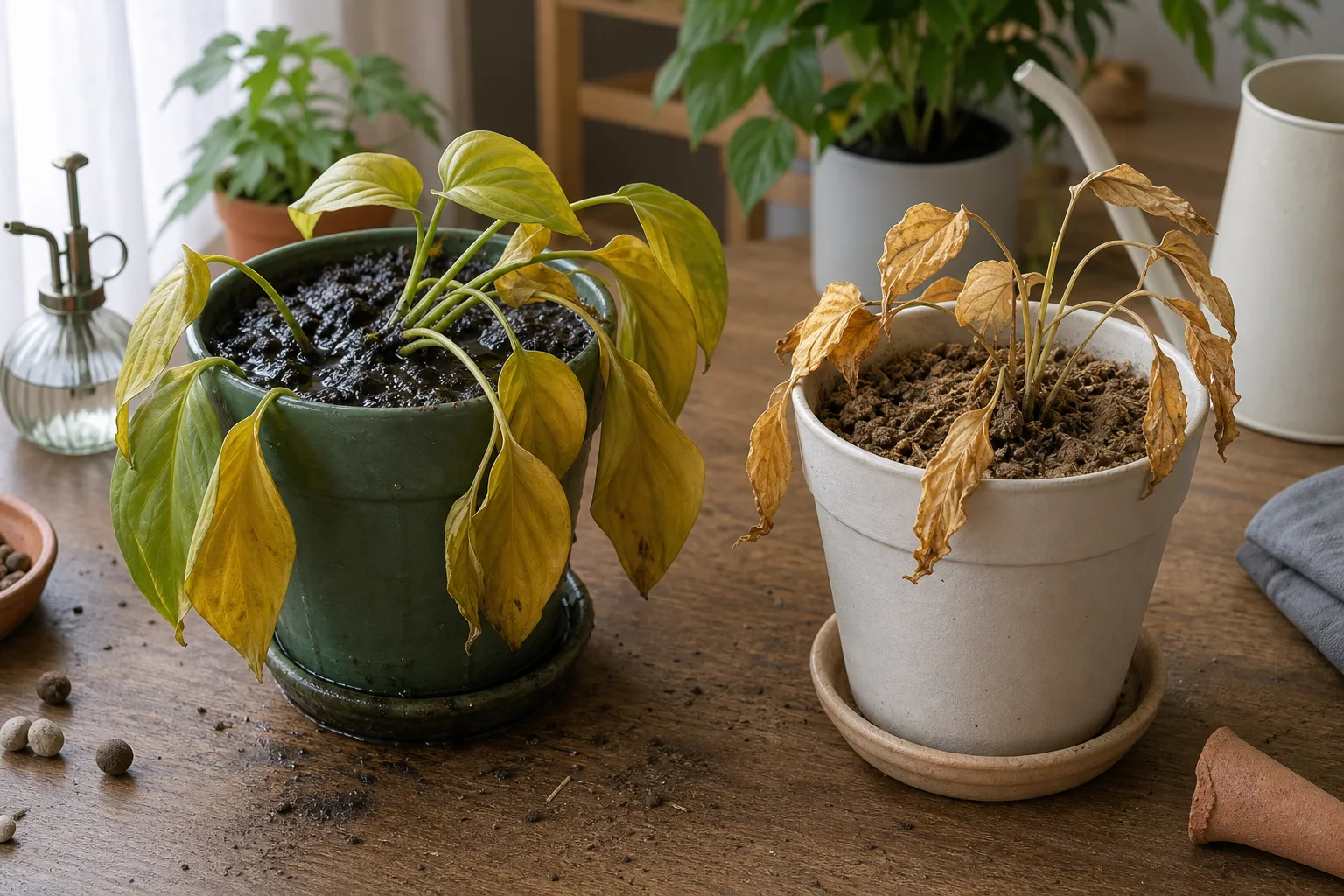
Hibiscus is a heavy drinker in heat and full sun. Tropical types in containers on sunny patios can dry out in a single hot afternoon. When roots cannot supply water fast enough, leaves yellow—often starting at edges and tips—then drop to reduce water loss.
Established in-ground hibiscus tolerates short dry spells better than pots, but prolonged drought still yellows lower leaves first. Windy, exposed sites accelerate drying even when soil moisture looks adequate at the surface.
First fix: Water slowly until excess drains from the bottom, then check again the same evening on hot days. For containers, water when the top inch (2–3 cm) feels dry, not on a rigid weekly calendar. In-ground plants benefit from deep soaking that wets the root zone 6–8 inches (15–20 cm) down, plus mulch to slow evaporation. Consistency matters: repeated wet-dry swings yellow leaves even when neither extreme lasts long.
Reason 3: Too Little Light—or Too Much, Too Fast
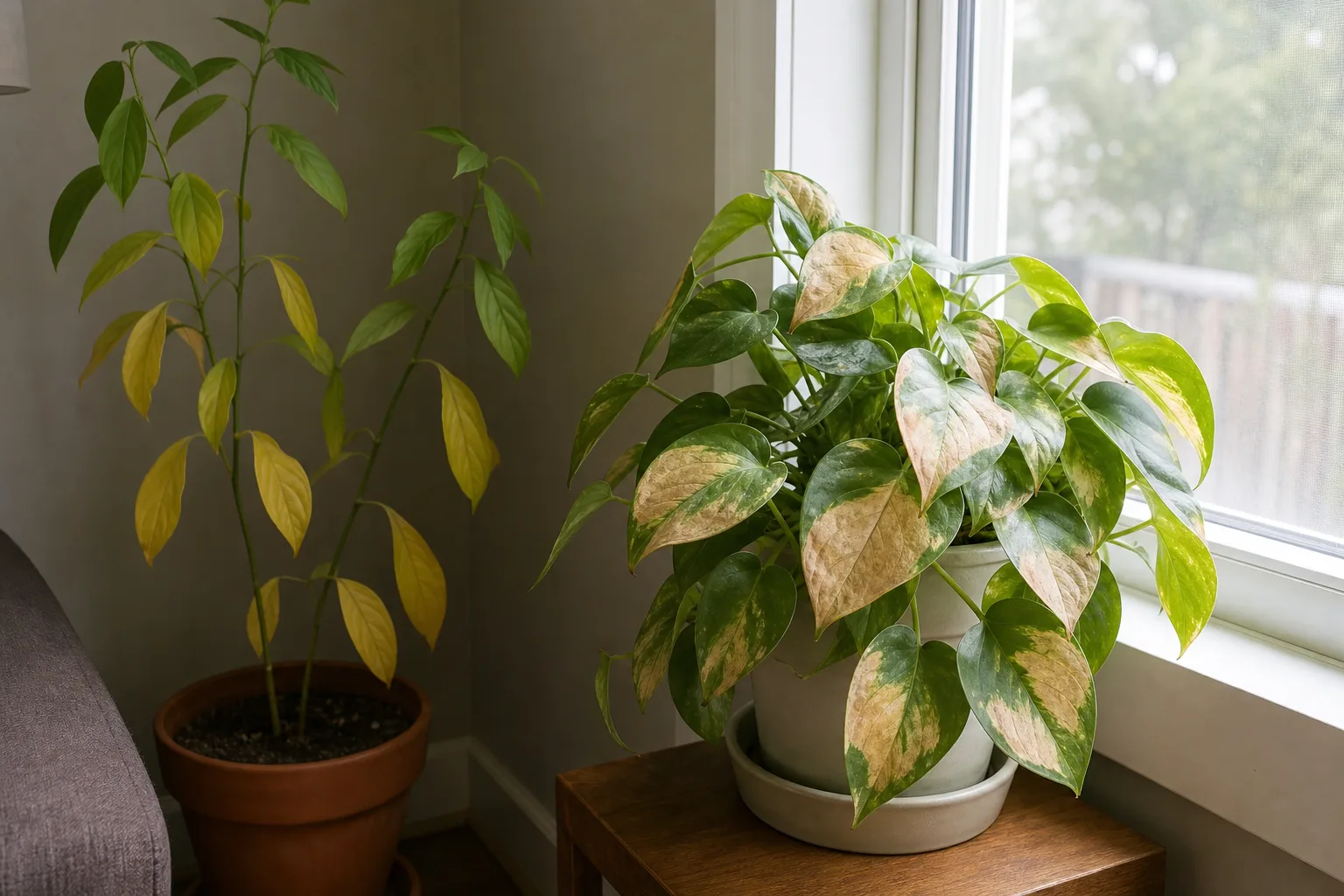
Hibiscus blooms best with strong light. NC State Extension recommends full sun to partial shade outdoors, with roots kept moist. In northern climates, full sun during the growing season supports the foliage density tropical hibiscus needs. Too little light produces pale, yellowing leaves, leggy stems, and few flowers—the plant is literally starving for photosynthesis.
Too much sun delivered too fast causes a different yellowing: bleached or scorched patches, often after a plant moves from a dim winter windowsill to a blazing patio without acclimation.
Indoor Winter Light Drop
When tropical hibiscus comes indoors for winter, available light often drops by half or more. Lower leaves yellow and drop as the plant adjusts to weaker rays. Leggy new growth reaching toward the glass is another tell. A south-facing window or supplemental grow lights on a 10–12 hour timer prevents the slow decline that looks like mysterious “winter sickness.”
The RHS recommends bright, humid conditions with good ventilation indoors, protected from direct scorching sun on glass but with enough intensity to support semi-dormant rest without total leaf loss.
Spring Sun Shock After Overwintering
Moving overwintered hibiscus outdoors into direct sun without hardening off is a top spring mistake. Leaves that were soft and shade-adapted burn and yellow within days. Acclimate over 7–10 days: start in bright shade, add one to two hours of morning sun daily, and use temporary shade cloth during heat spikes. The goal is gradual change, not an instant jump from living room to south-facing concrete.
Reason 4: Nutrient Deficiency and Iron Chlorosis
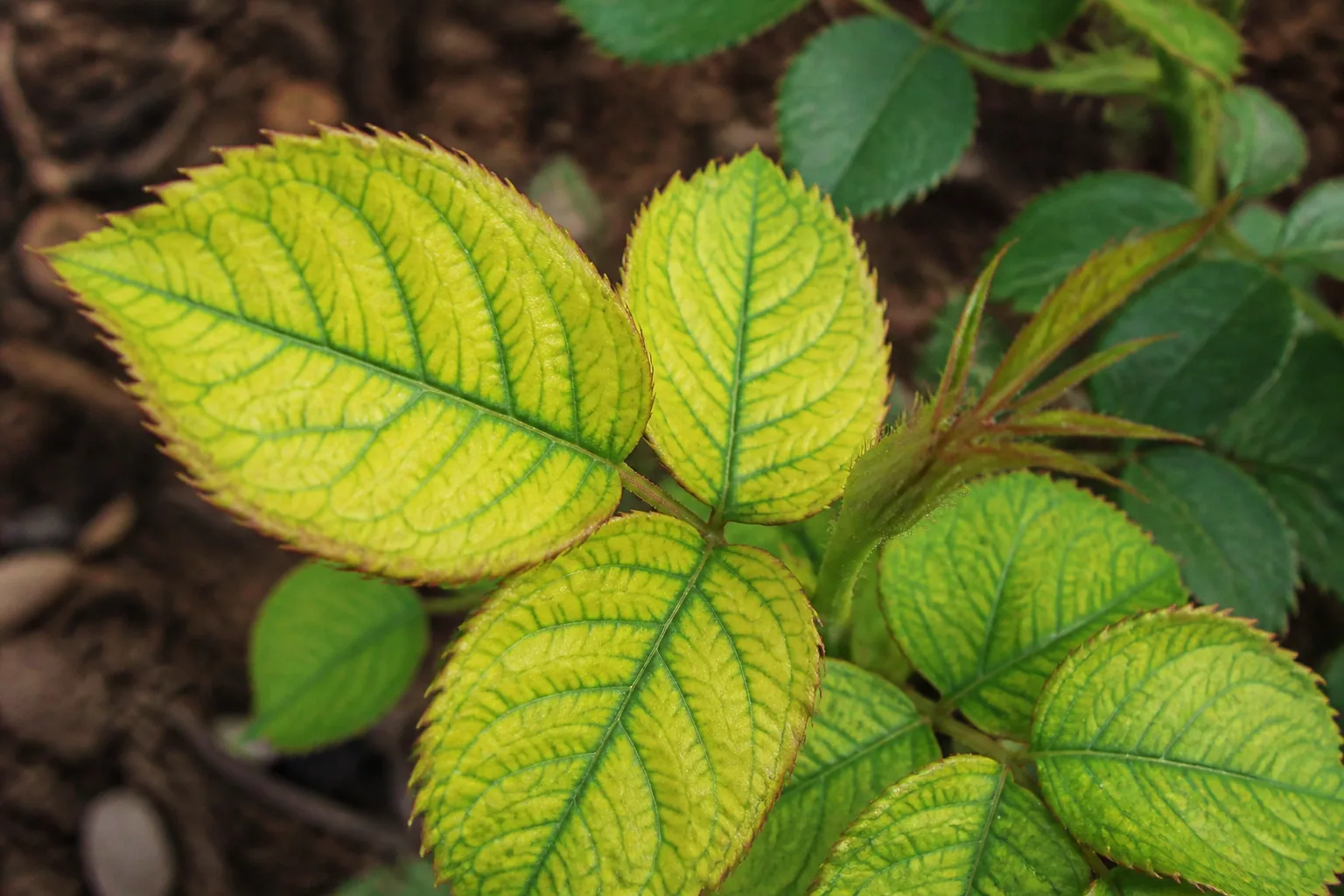
Yellow leaves from nutrient problems usually show a pattern. Uniform pale yellow on older leaves often signals nitrogen shortage—common when a heavy bloomer has not been fed all season. Interveinal yellowing on new leaves with green veins is classic iron chlorosis: iron is present in soil but unavailable, often because pH is too high.
Hibiscus prefers slightly acidic soil around pH 6.0–7.0. Alkaline soil locks up iron and manganese; the plant cannot absorb them even when fertilizer is applied. Container plants exhaust nutrients faster than in-ground shrubs because each watering leaches minerals from a small soil volume.
Soil pH, Fertilizer Timing, and Chelated Iron
During active growth, feed container hibiscus with a balanced or high-potassium fertilizer at half label strength every two to three weeks, as University of Minnesota Extension recommends chelated iron alongside regular feeding to prevent chlorosis on branch tips. In-ground plants need less frequent feeding but still benefit from spring and midsummer applications if soil tests show gaps.
For interveinal chlorosis, apply chelated iron as a foliar spray or soil drench per label rates—not Epsom salt, which supplies magnesium and will not fix iron deficiency. Address pH long term with sulfur or acidifying amendments if tests show alkaline soil. Do not fertilize a plant sitting in wet, rotting roots—fix drainage first, then feed when new growth resumes.
Gardening Know How notes that various foliar issues first appear as chlorosis; matching vein color and leaf age separates iron problems from simple underfeeding.
Reason 5: Cold, Frost, Wind, and Drafts
Tropical hibiscus is tender below about 45–50°F (7–10°C). The RHS lists a minimum night temperature of 7–10°C (45–50°F) and advises bringing plants indoors before temperatures drop below 12°C (54°F) if they summered outside. Exposure to frost yellows leaves overnight; prolonged chill causes widespread drop and stem dieback on tropical types.
Wind desiccates large hibiscus leaves quickly, especially on exposed balconies and roof decks. Hot, dry summer winds produce yellowing and crisp edges even when soil moisture seemed adequate yesterday. Indoor overwintering near heating vents, fireplaces, or leaky winter windows creates the same drying stress through drafts rather than wind.
First fix: Move tropical pots to shelter before the first fall frost in zones below USDA 9. Indoors, keep plants away from cold glass on frosty nights and away from blast heat. Outdoors, use windbreaks or move containers to a sheltered wall. Do not prune heavily right after cold damage—wait until you see where live wood resumes green under a light scratch test.
Reason 6: Pests That Yellow Hibiscus Leaves
Sap-sucking insects stress hibiscus by draining leaf cells and injecting toxins. Yellowing often appears as stippling or mottling before you notice the pest itself. Gardening Know How lists aphids and spider mites among common yellow-leaf triggers; severe infestations can defoliate a plant that looked healthy a week earlier.
Spider Mites, Aphids, and Sap-Sucking Insects
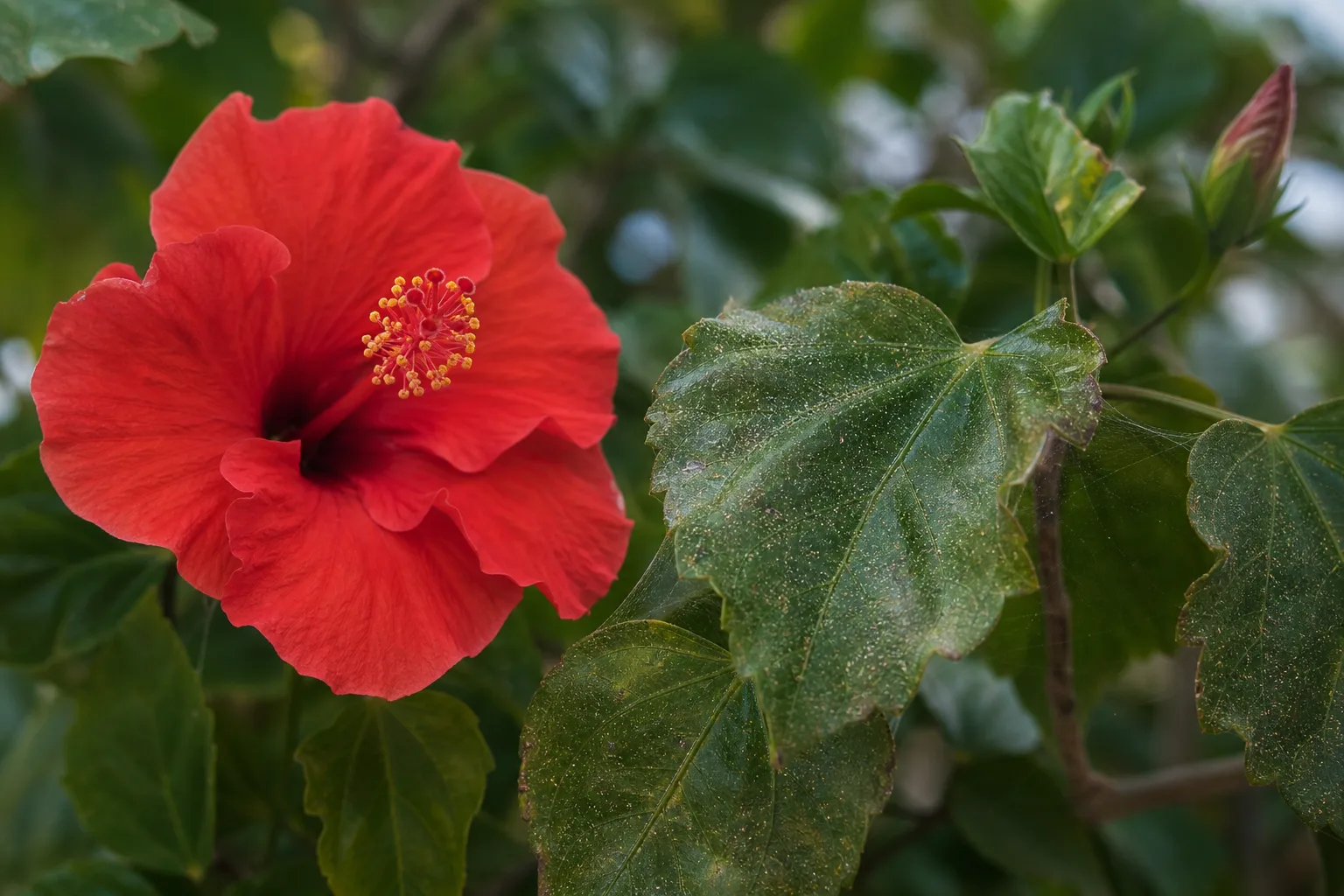
Spider mites thrive in hot, dry air—exactly the conditions around overwintered indoor hibiscus near radiators. Look for fine webbing on leaf undersides, pale stippling on upper surfaces, and leaves that feel gritty when wiped. Aphids cluster on new growth and flower buds, often with sticky honeydew below. Scale and mealybugs attach along stems and leaf axils; sooty mold on leaves may be your first visible clue.
First fix: Blast the plant with lukewarm water in the shower or with a hose nozzle, targeting leaf undersides. Repeat every few days for mites. For persistent colonies, insecticidal soap or horticultural oil applied to full leaf coverage (including undersides) on a cool, overcast morning reduces burn risk. Isolate heavily infested pots until populations drop. Pests are rarely the first suspect on a plant that was just overwatered—rule out soil moisture before spraying.
Reason 7: Transplant Shock and Environmental Change
Repotting, transplanting into the garden, or simply moving a pot from the nursery bench to your patio can yellow hibiscus leaves within days. The plant was stable in its old conditions; new light angle, root disturbance, or temperature shift triggers defensive leaf drop. NC State Extension specifically warns that moving Chinese hibiscus causes leaf and bud drop because the species is sensitive to environmental change.
This shock is usually self-limiting if the new site meets basic needs: bright light, warm temperatures, steady moisture without saturation, and protection from wind. Avoid repotting while the plant is in full bloom if you can wait until late winter pruning time. After repotting, keep the plant in bright indirect light for a few days, maintain even moisture, and skip fertilizer for two to three weeks until you see new leaves opening.
How to Fix Yellowing Hibiscus Leaves Step by Step
Once you have a likely cause, work through this sequence rather than doing everything at once.
Step 1 — Check soil moisture at root depth. Adjust watering before any other intervention. Most yellowing containers are too wet in winter or too dry in summer.
Step 2 — Review light and recent moves. Did the plant just come inside, go outside, or shift windows? Acclimate or add light before fertilizing.
Step 3 — Inspect leaf undersides for pests. Mites and aphids are small; a phone flashlight helps.
Step 4 — Match nutrient symptoms. Green veins on yellow new leaves get chelated iron and a pH check; uniform pale older leaves get balanced feed at half strength during active growth only.
Step 5 — Remove yellow leaves that are fully spent. They will not re-green. Snip with clean pruners and bag diseased or pest-infested foliage instead of composting it.
Step 6 — Wait for new growth before declaring failure. Healthy hibiscus pushes new leaves within two to three weeks after the stressor is corrected. If stems are mushy at the base or roots are all brown, propagation from healthy cuttings may be the salvage path.
Yellow leaves from nutrient chlorosis may improve on new foliage after iron treatment, but leaves that are already fully yellow rarely turn green again. Judge success by fresh growth, not by old blades recovering.
Conclusion
Yellow hibiscus leaves are a checklist, not a catastrophe. Start with soil moisture and recent environmental changes, then read the leaf pattern for light stress, iron chlorosis, chill damage, pests, or normal seasonal drop. Tropical container plants demand the most attention in winter—less water, more light, no drafty windows—and the most careful acclimation in spring sun.
Fix the cause that matches your pattern, remove spent yellow foliage, and watch for new green leaves over the next few weeks. When you want deeper care context—watering rhythm, repotting timing, or propagation—use the hibiscus care hub so the next stress signal never has to send you searching blind.



