15 Yellow Tomato Varieties to Grow in Your Garden
Compare 15 yellow tomato varieties by size, flavor, habit, and harvest time, then learn how to plant, support, water, ripen, and harvest them well.
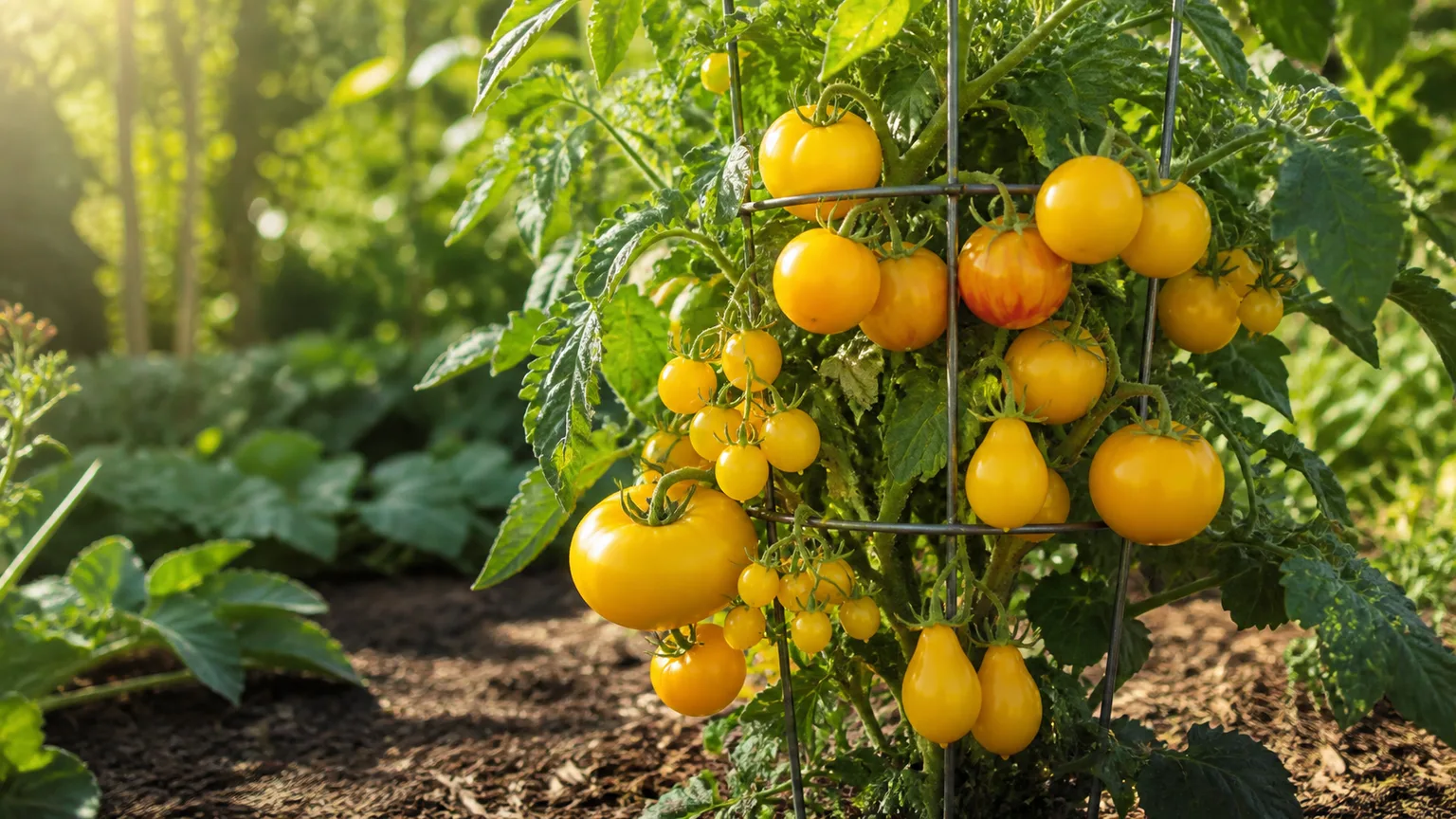
Yellow tomatoes are not red tomatoes that stopped early. Their ripe fruit can be pale cream, lemon yellow, gold, orange-yellow, or yellow with red striping, depending on the cultivar. That color adds a useful second dimension to a tomato patch: you can grow fruit for slicing, snacking, salads, sauces, or visual contrast without changing the basic care routine.
The best choice depends less on the word “yellow” than on four details on the seed packet: fruit size, days to maturity, growth habit, and disease resistance. The 15 varieties below are organized by the job they do in the garden, with enough context to help you choose a small mix rather than plant a random collection of names.
Why grow yellow tomatoes?
Many yellow tomatoes taste mild, fruity, or sweet rather than sharply tangy. That is a useful tendency, not a guarantee: flavor also changes with cultivar, ripeness, watering, heat, and how much sun the fruit receives. Gardening Know How describes yellow varieties as commonly lower in tang and highlights ‘Azoychka’ and ‘Garden Peach’ as examples, while Plantura groups yellow tomatoes from pale, nearly white fruit to deep gold and notes their often fruitier flavor.
Color also changes how you judge ripeness. A pale yellow tomato may be ripe while it still looks greenish-cream, and a golden tomato may be ready before it turns orange. Use the cultivar’s expected mature color together with gloss, slight softness, and taste. If you wait for every yellow variety to become deep gold, you may end up with overripe fruit or cracked shoulders.
Yellow tomatoes are especially useful when you want contrast in a salad or on a sandwich. Large pale varieties make attractive slices, yellow cherries are easy to eat straight from the vine, and yellow pear or plum types provide a different shape for roasting or preserving. Their care is the same as other tomatoes: warm weather, full sun, good drainage, regular moisture, and support for most vines.
Pick a variety by fruit, season, and space
Start with the meal and the garden you actually have. A plant that produces one-pound beefsteaks is a poor fit for a balcony with a small cage, while a prolific cherry tomato can be frustrating if you want a few large sandwich slices. For a short season, use at least one early variety and do not select every plant by its days-to-maturity number alone; that figure is normally counted from transplanting and assumes reasonably favorable conditions.
Ohio State University Extension recommends considering performance in your area, fruit quality, ripening season, growth habit, and disease resistance when choosing a cultivar. Its useful rule is to treat days to maturity as a comparison tool, not a promise. Heat, cool nights, transplant shock, drought, and disease can all move the harvest date.
Determinate versus indeterminate tomatoes
Determinate plants grow into a more limited bush, set much of their crop in a concentrated period, and are usually easier to cage or grow in a container. They are a practical choice when you want a large harvest for preserving, when summer heat ends early, or when your available support is short. Do not remove every sucker from a determinate plant; its branches are part of the fruiting structure.
Indeterminate plants keep making stems, flowers, and fruit through the growing season until cold, disease, or exhaustion stops them. They often give a longer harvest, but they need a tall stake, sturdy cage, or trellis and more room around the plant. Pruning can make a supported indeterminate plant easier to manage, but aggressive pruning is not a substitute for good spacing and airflow.
GrowVeg makes the practical case for using determinates more often in short, hot, or disease-prone seasons because their concentrated crop can finish before late-season problems peak. Among the 15 varieties here, most are indeterminate, so check the packet carefully if you need a compact plant.
Heirloom, hybrid, and open-pollinated choices
An heirloom is usually an older, stable, open-pollinated cultivar, although “heirloom” is not defined identically by every seed company. Heirlooms are attractive when you want unusual flavor, history, or seed-saving potential, but they may have less built-in disease resistance and less uniform fruit than newer hybrids.
A hybrid is a planned cross between selected parents. Hybrid seed can offer vigor, uniformity, or named resistance traits, but seed saved from the fruit may not produce plants that match the parent. Open-pollinated seed can usually be saved true to type if the flowers were not crossed with another variety. Ohio State Extension explains this distinction and notes that disease-resistance letters on a packet can be more useful than a variety’s reputation when a specific disease is common in your garden.
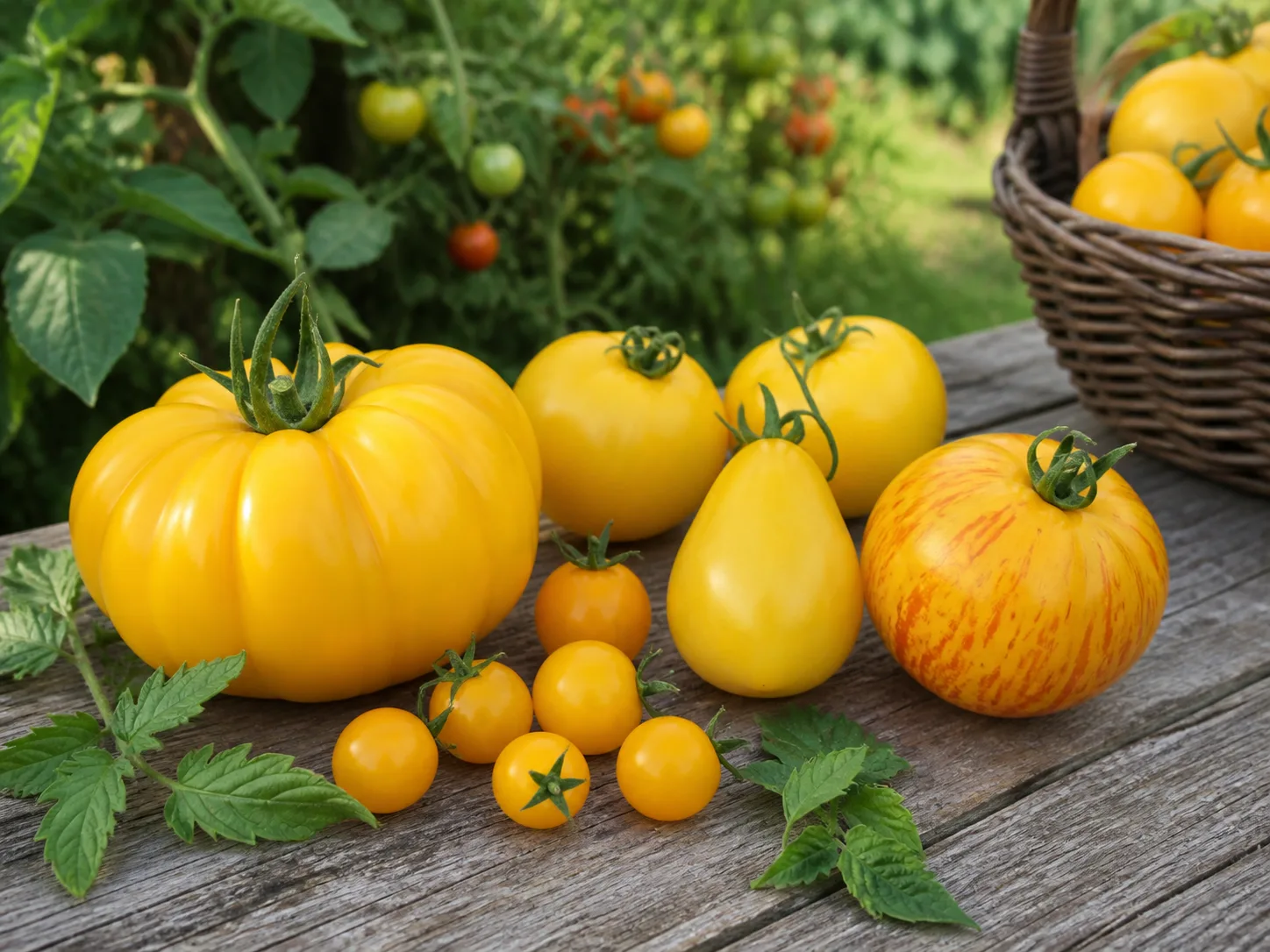
15 yellow tomato varieties to grow
The maturity numbers below are approximate comparisons, not guarantees. Suppliers may describe the same cultivar differently, and local weather changes the result. Treat the seed packet for your source as the final reference, then choose at least one variety with a different harvest window so the whole crop does not arrive at once.
Large slicers and beefsteaks
1. ‘Azoychka’ is an early Russian heirloom with bright yellow, juicy fruit often weighing about 5 to 8 ounces. Its mild, fruity flavor and relatively early 60- to 70-day range make it one of the more useful large-fruited choices for a shorter season. Plant it where you can support a vigorous vine and harvest the fruit before it becomes soft.
2. ‘Basinga’ produces pale lemon-colored, beefsteak-style fruit in the 6- to 8-ounce range. It is a good choice when you want a soft yellow slice with mild flavor rather than a deep orange-gold tomato. The fruit can be heavy on the vine, so tie or cage the plant before the first large trusses develop.
3. ‘Dixie Golden Giant’ is a large, golden heirloom that can produce one- to two-pound beefsteaks. The fruit is impressive and meaty, but the long 85- to 100-day harvest window and the weight of the tomatoes make it a better choice for a long season and strong support than for a small container.
4. ‘Dr. Wyche’s Yellow’ bears large golden fruit with dense flesh and a rich, complex flavor. It is a strong pick for slicing or eating in thick wedges, with an approximate 75- to 85-day maturity range. Give the vine consistent moisture; large fruit is less forgiving of a cycle from very dry soil to sudden heavy watering.
5. ‘Yellow Brandywine’ is a potato-leaf heirloom that often ripens more orange than lemon yellow. It is valued for large fruit and classic heirloom flavor, but it can be irregular in shape and less predictable from year to year than a uniform hybrid. Grow it for flavor and character, not for perfect produce-basket symmetry.
6. ‘Lillian’s Yellow’ produces large, pale yellow beefsteak fruit with a meaty interior and relatively few seeds. Its approximately 88-day maturity makes it a late choice, so it works best where the season is long or where you start sturdy transplants early. Stake or cage it before the fruit enlarges, and pick carefully because big fruit can pull down a branch.
Slicing globes and bi-color tomatoes
7. ‘Beauty King’ is a dramatic bi-color with yellow skin and red striping, plus red streaks through the flesh. Its very large fruit can approach a pound, so it belongs on a well-supported indeterminate vine. Choose it when appearance matters as much as flavor and you are happy to trade uniformity for a showpiece slice.
8. ‘Earl of Edgecombe’ is a New Zealand heirloom with round, firm, yellowish-orange fruit around 3 inches across. The approximately 73-day maturity range makes it a useful middle-season slicer, and its firm flesh holds up well in salads. It is a good bridge between a large beefsteak and a small snack tomato.
9. ‘Lemon Boy’ is a widely available hybrid with bright lemon-yellow globe fruit, mild sweetness, and a slight tang. Its roughly 72-day maturity is useful for an earlier slicer, and many packets list disease-resistance codes; check the exact packet because resistance claims can vary by strain and market. Use it when you want dependable-looking slices without committing to an heirloom’s variability.
10. ‘Golden Queen’ is a classic heirloom with medium-sized, round golden fruit and a mild, balanced flavor. Some fruit can develop a pink blush as it ripens, which is normal for the cultivar rather than a sign of rot. It is a strong sandwich tomato for gardeners who want an old-fashioned variety without the extreme size of a beefsteak.
Small, pear-shaped, and grape tomatoes
11. ‘Amish Gold’ makes oblong, deep-gold fruit about 1½ to 2 inches long, often with a pointed end. The sweet-tart flavor and compact fruit work well for snacking, roasting, and mixed-color salads. It is an indeterminate vine, so “small fruit” does not mean “small plant.”
12. ‘Profi-Frutti Grape Yellow’ produces large bunches of crisp, grape-sized yellow fruit. It is useful when you want to pick a cluster for lunch or a salad rather than wait for a single large tomato, and its fruit is often described as holding well after harvest. Give the vine support early because clusters become heavy quickly.
13. ‘Sun Sugar’ is a prolific yellow-orange cherry tomato with very sweet, rich flavor. It is a good choice for children, grazing, and gardeners who want a long stream of small fruit, but its vigorous indeterminate growth needs room and a tall support. Pick often once the first clusters begin to color so ripe fruit does not split or disappear to birds.
14. ‘Yellow Pear’ is an old favorite with masses of 1½- to 2-inch, pear-shaped fruit. The mild, low-tang flavor is useful fresh, and the unusual shape makes it a natural choice for salads and grazing. Plant it where the vine can spread or climb; a small fruit crop can still become a large plant.
15. ‘Yellow Plum’ produces clusters of small oval fruit, usually about 1 by 1¼ inches, with a mild, sweet flavor. The fruit can ripen at different times within a cluster, which is useful for steady picking rather than one large harvest. It is well suited to salads, roasting, and drying when you have enough sun and airflow.
Plant yellow tomatoes for a long harvest
Yellow tomatoes follow the same basic planting sequence as red tomatoes, but the variety’s maturity, vigor, and fruit weight should change how you set up the bed. A large heirloom needs more support and more time than a compact early type, even if both are labeled “yellow tomato.”
Start with sun, soil, and the right transplant date
Tomatoes are warm-season plants. Plant hardened-off transplants after your local frost danger has passed and the soil has begun to warm. In hot climates, the bigger risk may be a transplant that spends weeks setting flowers during extreme heat; local extension guidance is more useful than copying a calendar date from another region.
Choose a site with at least 6 to 8 hours of direct sun. Ohio State Extension notes that tomatoes are less productive with insufficient sunlight. Morning sun is especially helpful in humid areas because it dries foliage early, while a site with good airflow reduces the time leaves stay wet after rain or irrigation.
Use fertile, well-drained soil amended with mature organic matter, not a rich pocket of fresh manure or a heavy layer of garden soil in a container. A soil test is more useful than guessing at lime or fertilizer. Wisconsin Extension lists a slightly acidic soil range as suitable for tomatoes, while Ohio State Extension emphasizes that improving drainage and knowing the soil’s nutrient status prevents both shortage and excess.
NC State Extension also points growers toward regional production guidance because cultivar performance, disease pressure, planting dates, and harvest timing vary by climate. Use your local extension service when a packet recommendation conflicts with what reliably grows in your area.
Plant the support at transplanting. A cage is convenient for a bushier or moderately vigorous plant; a stake or trellis keeps an indeterminate vine more open and makes large fruit easier to inspect. If you wait until the vine is full of roots and fruit, pushing a stake into the bed can damage the root system.
Support, water, mulch, and feed consistently
Water deeply enough to moisten the main root zone, then allow the surface to begin drying before watering again. Wisconsin Extension advises watering to roughly 8 to 10 inches and avoiding frequent shallow watering. A soaker hose or drip line under mulch is easier on foliage than repeated overhead sprinkling.
Mulch after the soil has warmed. A 2- to 3-inch layer of straw, shredded leaves, or another suitable mulch slows evaporation, reduces soil splash, and makes the moisture supply more even. Keep the mulch slightly away from the stem. Consistency matters more than keeping the bed permanently wet: saturated soil deprives roots of air and can make disease and root problems worse.
Feed from the soil test and the label, not from the assumption that more fertilizer creates more tomatoes. Excess nitrogen often produces a large green plant with fewer flowers and fruit. If a plant is growing vigorously but not setting fruit, check light, night temperatures, heat, and nitrogen before adding another dose.
Tomato flowers can drop when nights are unusually cool or when daytime heat is paired with very warm nights. In that situation, keep the plant evenly watered and supported, but do not respond with heavy pruning or extra fertilizer. Fruit set often improves when the weather returns to a suitable range.
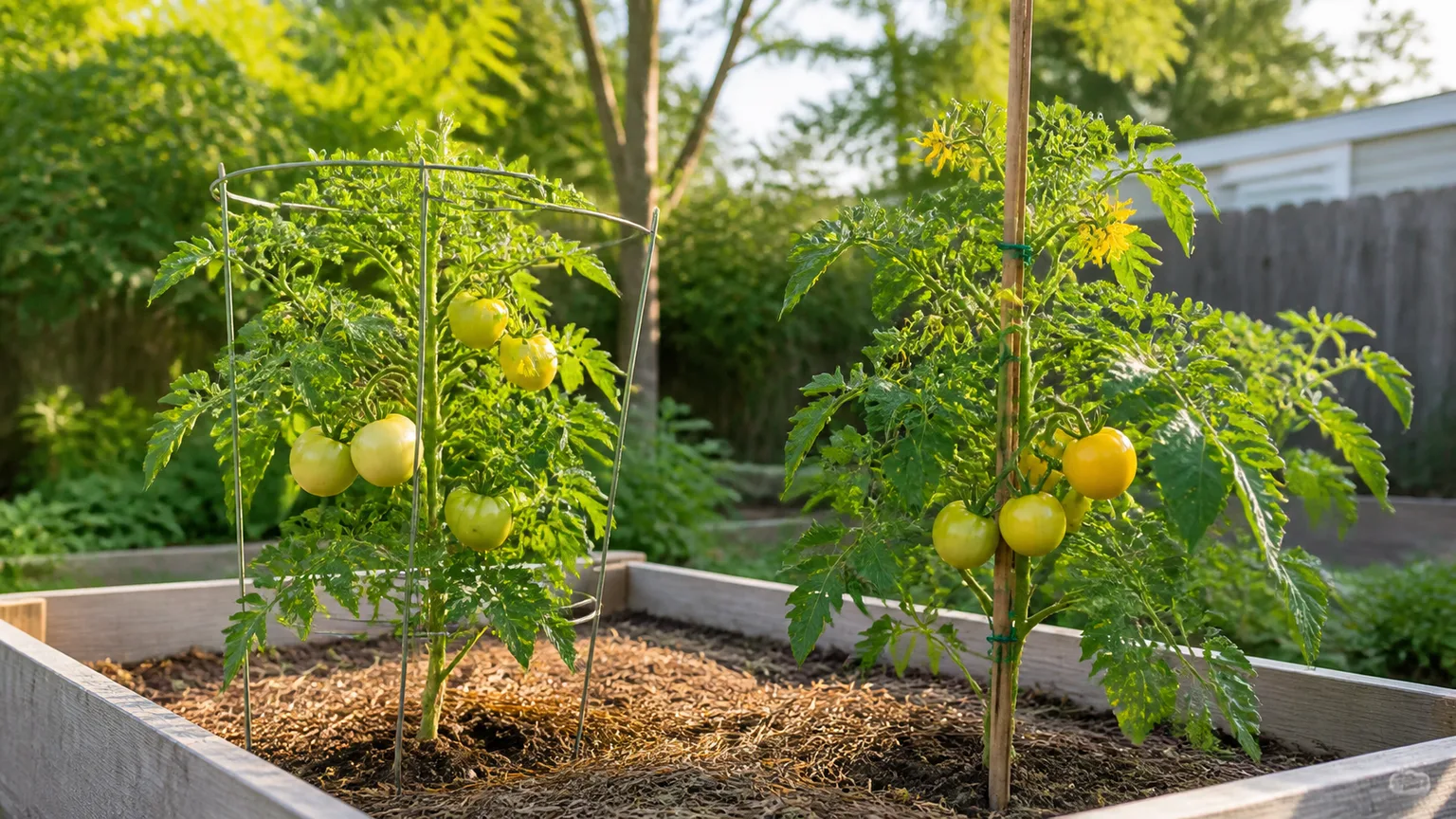
Tell when yellow tomatoes are ripe
Do not use redness as the ripeness test. First learn the mature color of the specific cultivar: ‘Yellow Brandywine’ may lean orange, ‘Lillian’s Yellow’ may stay pale, and ‘Beauty King’ should retain its striping. A green tomato can be fully grown but not ready, while a cream-colored tomato can be perfectly ripe.
Use this sequence:
- Check the color change. The fruit should have reached the seed packet’s mature yellow, gold, cream, or bi-color description, with little of the flat immature green remaining.
- Look at the sheen. Ripe fruit often changes from dull to slightly glossy as the skin finishes developing.
- Feel for a slight give. Support the fruit in your hand and press gently with one finger. It should yield a little, not feel hard as a stone or soft and collapsing. Plantura recommends this gentle squeeze as a practical ripeness check for yellow tomatoes.
- Taste one. If the flavor is flat and the texture is hard, leave the next fruit longer. If the skin is splitting or the fruit is very soft, harvest promptly.
Large fruit does not have to remain on the vine until it is fully soft. If frost, animals, or heavy rain are approaching, pick mature fruit as it begins to color and let it finish indoors at room temperature. Avoid placing unripe tomatoes in the refrigerator, which can flatten their flavor.
Prevent splitting, blossom-end rot, and disease
Yellow fruit is not exempt from the usual tomato problems. The most useful prevention is a stable root zone: good drainage, even moisture, mulch, airflow, and a variety selected with resistance traits that match local disease pressure.
Use a symptom-first response
| What you see | Check first | First response |
|---|---|---|
| Radial or concentric cracks near the stem | A dry period followed by heavy watering or rain | Mulch, water consistently, and harvest as the fruit begins to color; do not expect a cracked fruit to heal. |
| Dark, sunken patch on the blossom end | Uneven moisture, damaged roots, or rapid growth | Keep moisture even and avoid root disturbance; do not add calcium unless a soil test shows a need. |
| Lower leaves with brown spots or yellow halos | Leaf wetness, crowded foliage, and old plant debris | Improve airflow, water at the soil, remove badly affected leaves, and seek local diagnosis before spraying. |
| Flowers dropping without fruit | Cool nights, very hot days, or excessive nitrogen | Check temperatures and moisture, keep feeding modest, and wait for better fruit-setting weather. |
| Pale or green fruit that you expected to be yellow | The cultivar’s mature color and days since transplant | Read the packet or cultivar description; some yellow varieties ripen cream, orange, or striped rather than bright lemon. |
Cracking is a growth-rate problem, not a sign that the plant needs more fertilizer. Large fruit and thin-skinned varieties may crack more readily, but regular moisture reduces the swing that makes the skin split. Pick damaged fruit promptly and use it if the crack is clean and the interior is sound.
For leaf diseases such as early blight and Septoria leaf spot, remove heavily affected leaves, keep foliage as dry as practical, clean up fallen debris, and rotate tomato-family crops when possible. Wisconsin Extension notes that dense canopies and long periods of leaf wetness favor several diseases, and that resistance works best as part of prevention rather than as a guarantee. If a plant collapses quickly or the fruit develops unusual lesions, use your local extension service for identification before applying a product.
Harvest, store, and use the crop
Harvest with a shallow basket rather than dropping large fruit into a deep bucket. Pick fully colored fruit for the best fresh flavor, and harvest soft or cracking tomatoes immediately. Wisconsin Extension recommends clean picking containers and room-temperature storage for better quality. Remove the stem if it is sharp enough to puncture neighboring fruit, but handle the skin gently.
Store ripe tomatoes at room temperature away from direct sun. Wisconsin Extension recommends avoiding refrigeration to preserve flavor and gives 55 to 70°F as a useful storage range. Use large yellow tomatoes on sandwiches, toast, and salads; roast or simmer the plum types; and keep a bowl of ‘Sun Sugar’, ‘Yellow Pear’, or ‘Profi-Frutti Grape Yellow’ where it is easy to snack.
Yellow tomatoes can make a mild-looking salsa or sauce, but color does not tell you how much acid a recipe needs for safe canning. For shelf-stable preservation, use a tested recipe designed for tomatoes and follow its acidification instructions rather than improvising from taste.
Save seeds without losing the variety
Save seed only from an open-pollinated or heirloom plant if you want the next generation to resemble the parent. A hybrid seed can germinate, but the resulting plants may combine traits from the original parents and produce different fruit. Label each variety immediately; a pale yellow tomato and a cream-colored tomato can look remarkably similar once removed from the vine.
Choose fruit from a healthy plant that is fully ripe and typical for the cultivar. Scoop out the seeds with their gel into a labeled container, add a little water, and allow the gel to break down before rinsing and drying the seed thoroughly. Keep the dried seed cool and dry. If several tomato varieties grow close together, saved seed can still be crossed by pollinators, so do not promise yourself perfect purity unless you isolate flowers or start with carefully controlled seed.
Conclusion
The right yellow tomato is the one that fits your garden’s limiting factor. Choose ‘Lemon Boy’ or ‘Azoychka’ when an earlier slicer matters, ‘Sun Sugar’ for a long supply of sweet snacks, ‘Yellow Pear’ or ‘Yellow Plum’ for shape and salads, or a large heirloom such as ‘Dixie Golden Giant’ or ‘Lillian’s Yellow’ when you have a long season and strong support.
Whichever you grow, give it 6 to 8 hours of direct sun, well-drained soil, early support, deep and consistent watering, and a modest feeding plan. Read the packet for the exact habit, maturity, and resistance codes, then judge ripeness by the variety’s finished color and slight give—not by waiting for red. That small shift in selection and observation is what turns a list of attractive names into a productive yellow-tomato harvest.



