25 Alocasia Varieties to Grow Indoors
Compare 25 alocasia varieties by size, pattern, humidity needs, and difficulty—plus a quick-pick table and beginner picks so you buy the right elephant ear.
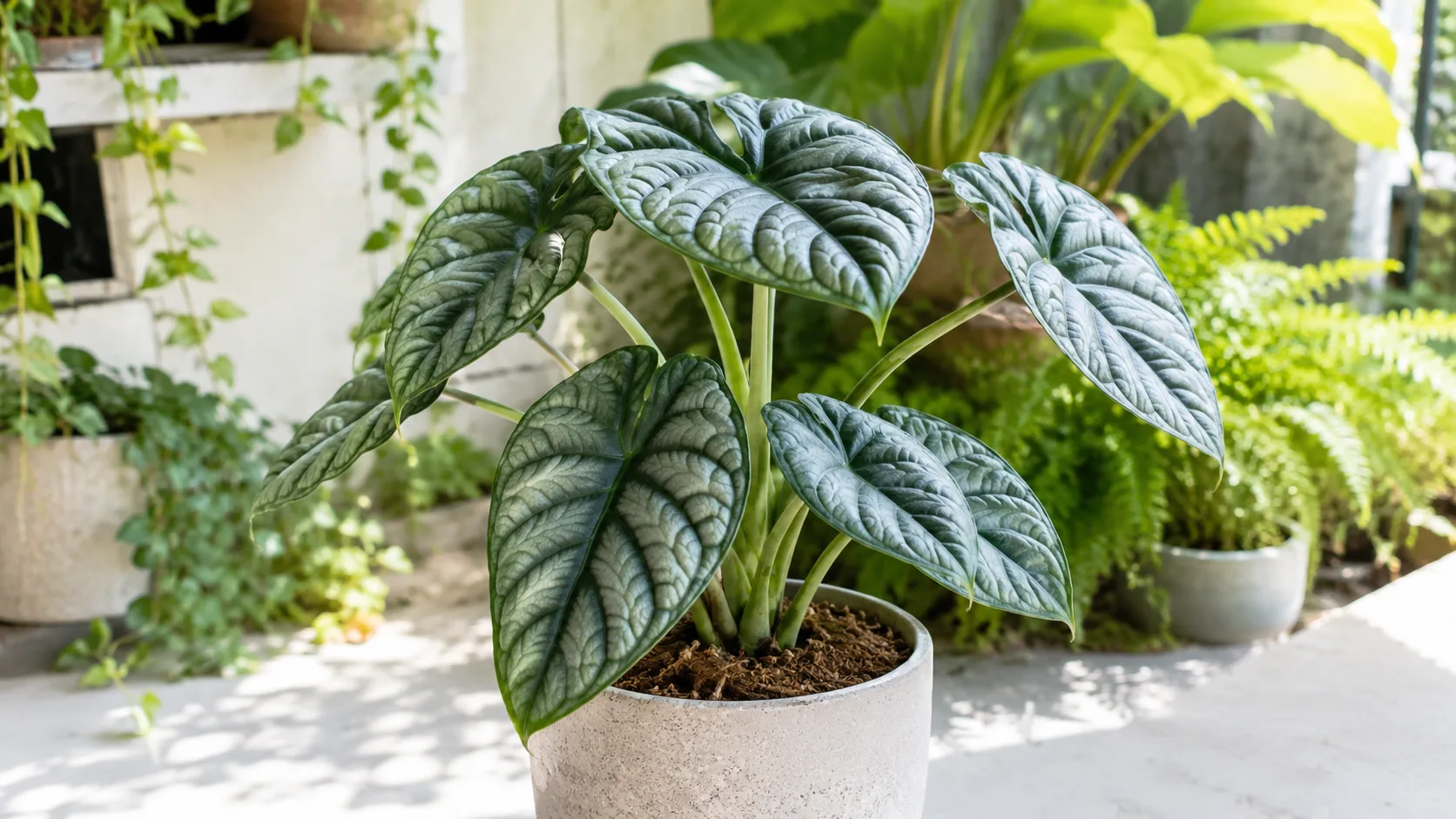
Alocasia varieties turn a plain corner into a tropical vignette—arrowhead leaves with white veins, velvety black surfaces, zebra-striped stems, and leaves shaped like stingrays. The mistake most buyers make is choosing by Instagram photo alone. A Alocasia Frydek in a dry, sunny window will yellow and stall while Alocasia Tiny Dancer on a humid shelf might look polished for years with half the drama.
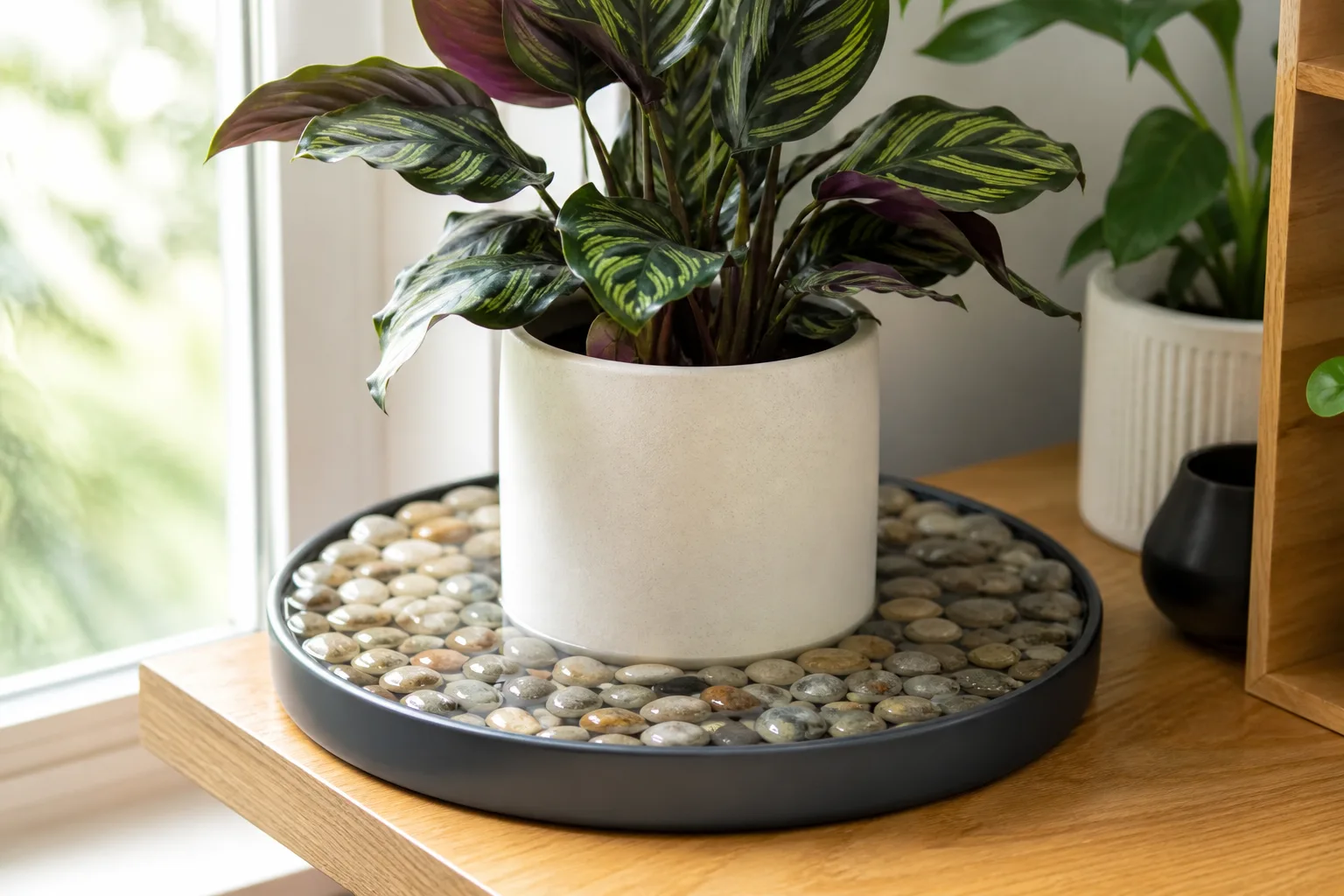
This guide covers 25 alocasia types worth knowing—species, hybrids, and trade names grouped by size and difficulty so you can shortlist before you shop. Every entry notes mature indoor size, standout features, and honest care temperament. Where LeafyPixels has a full care hub, you will find a /plants/ link for deeper light, watering, and troubleshooting pages. For humidity setup that applies to every type below, see the DIY pebble tray guide.
Botanists recognize roughly 79 to 100 Alocasia species across tropical Asia and the Pacific, with countless cultivars layered on top (Arbain et al., 2022). Nurseries sell only a fraction indoors. The 25 below are the ones you are most likely to see labeled “elephant ear,” “jewel alocasia,” or a cultivar name on a pot sticker.
Jewel Alocasias vs Elephant Ears — Know the Two Camps
Alocasias split into two practical groups for houseplant buyers—not official taxonomy, but a useful shopping filter.
Jewel Types: Compact, Textured, Humidity-Hungry
Jewel alocasias stay under about 2 feet indoors and earn the name from thick, often textured leaves—velvet black (reginula types), dragon-scale veining (baginda), or copper undersides (cuprea). They grow from corms, appreciate chunky aroid mix, and punish dry air faster than many philodendrons. Most want 50–60% relative humidity or higher and bright indirect light without direct afternoon sun.
If your winter heating holds below 40% RH and you will not add a humidifier or pebble tray, start with the most forgiving jewels—maharani or red secret—before investing in dragon scale or silver dragon.
Elephant Ears: Bold Scale and Faster Growth
Elephant ear alocasias push larger paddles on taller petioles—odora, zebrina, macrorrhizos cultivars, and hybrids like regal shield. Indoors they often reach 3–6 feet with good light and humidity; outdoors in frost-free zones they grow far larger. They still need warmth and moisture but tolerate slightly drier air better than velvet jewels. Several on this list—wentii, portei, odora—also work as seasonal patio plants or year-round landscape specimens in warm climates.
How to Pick the Right Alocasia in Three Steps
Match Humidity Before You Match the Leaf Photo
Alocasias evolved on humid forest floors. Dry air browns tips and edges before anything else fails. Epic Gardening and most aroid growers recommend keeping room humidity at 50–60% or higher for velvet types; elephant ears benefit from the same but survive brief dips better.
A bathroom with bright filtered light, a pebble tray with water below stone level, or a small humidifier beats daily misting—which wets leaves briefly without raising room RH and can invite leaf spot on fuzzy surfaces.
Read Light and Mature Size Together
Bright indirect light is the default for every entry below. East-facing windows, bright north exposures, or south/west glass behind sheer curtains work. Direct afternoon sun scorches tissue within days, especially on black velvet and variegated types.
Measure your ceiling and shelf clearance before you buy. Alocasia odora and zebrina need floor space; black velvet and melo fit bookshelves. Underestimating mature petiole length is the top reason people repot into crisis six months later.
Beginner, Intermediate, and Collector Tiers
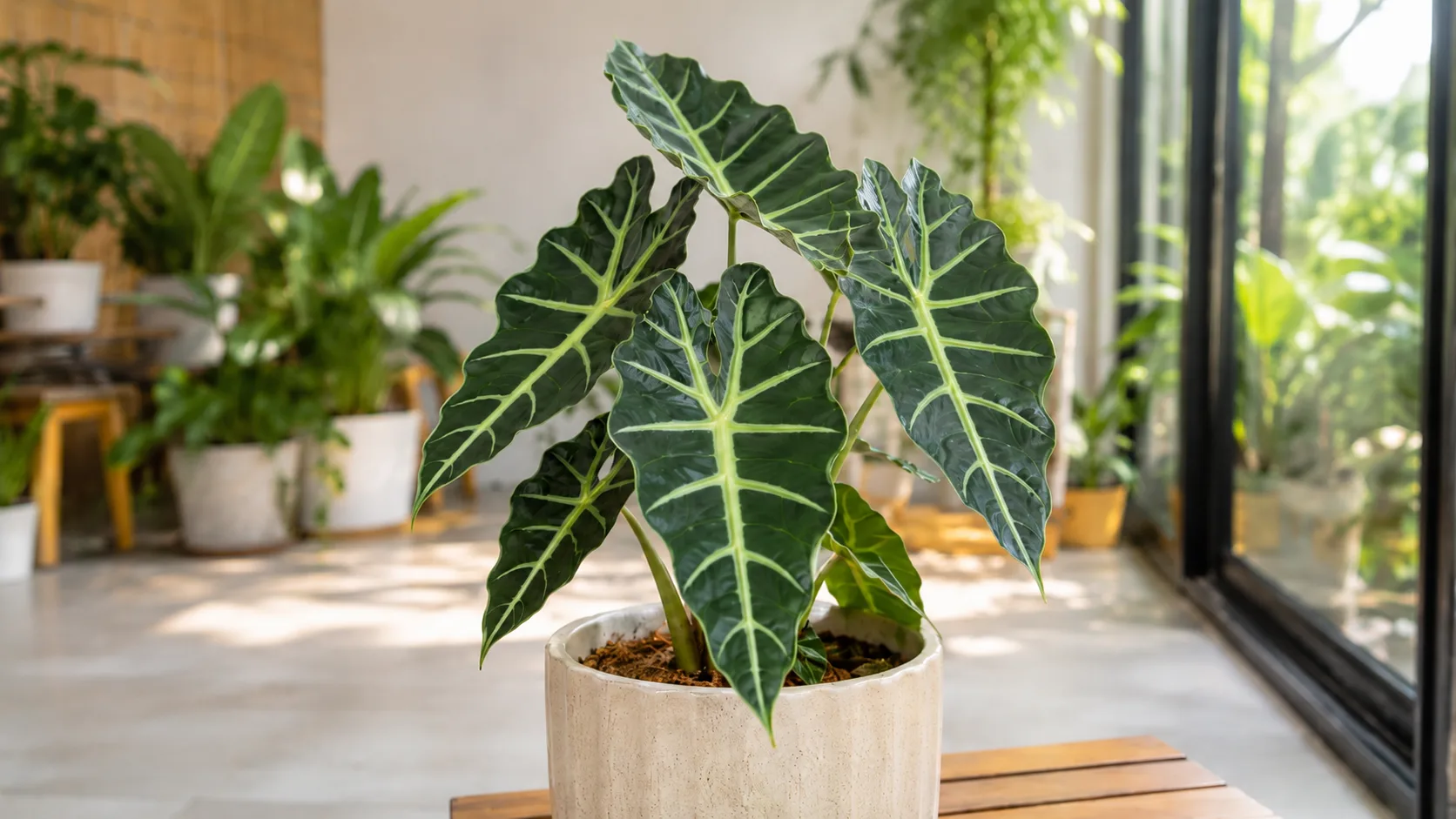
Beginner tier: Tiny Dancer, odora, kris plant (sanderiana), red secret, stingray, sarian, Malaysian monster—widely available and recover from one bad watering week if you fix drainage and humidity.
Intermediate tier: Polly, amazonica, frydek, pink dragon, maharani, dragon scale, silver dragon, zebrina, regal shield, wentii, Okinawa silver—need stable humidity, filtered or settled water, and honest light assessment.
Collector tier: Jacklyn, melo, reginae, variegated black stem, variegated elephant ear, imperialis—rare in shops, sensitive to tap-water salts, variegation instability, or priced high enough that a learning curve hurts.
25 Alocasia Varieties — Quick Comparison Table
Use this table to narrow your list. Difficulty reflects typical indoor performance in a humid, bright room—not outdoor landscape ease.
| Common name | Botanic name | Look / hook | Indoor size | Difficulty |
|---|---|---|---|---|
| Kris plant | A. sanderiana | White veins on glossy dark leaves | 1–2 ft | Beginner |
| Jacklyn | A. sp. (Sulawesi) | Deeply lobed textured green | 5–8 ft | Collector |
| Black velvet | A. reginula ‘Black Velvet’ | Fuzzy gray-black with white veins | to 1.5 ft | Intermediate |
| Maharani | A. maharani | Gray dragon texture, compact | ~14 in. | Intermediate |
| Pink dragon | A. lowii ‘Morocco’ | Rosy stems, shiny green leaves | to 4 ft | Intermediate |
| Dragon scale | A. baginda | Pale green scales, dark veins | 1–2 ft | Intermediate |
| Stingray | A. macrorrhizos ‘Stingray’ | Truncated leaf with tail point | 3–4 ft | Beginner |
| Polly | A. × amazonica ‘Polly’ | Dark glossy leaves, cream veins | 1–2 ft | Intermediate |
| Frydek | A. micholitziana ‘Frydek’ | Velvety green, white veins | 2–3 ft | Intermediate |
| Silver dragon | A. baginda ‘Silver Dragon’ | Silvery textured leaves | to 3 ft | Intermediate |
| Tiny Dancer | A. brisbanensis × A. odora | Cup-shaped leaves, upright | 14–20 in. | Beginner |
| Odora | A. odora | Giant heart-shaped paddles | 4–8 ft | Beginner |
| Zebrina | A. zebrina | Striped stems, large green ears | 4–8 ft | Intermediate |
| Regal shield | A. odora × A. reginula | Huge shield leaves | 4–5 ft | Intermediate |
| Amazonica | A. × amazonica | Ruffled glossy elephant ear | 1–2 ft | Intermediate |
| Malaysian monster | A. portei | Deeply lobed bright green | ~4 ft | Beginner |
| Red secret | A. cuprea ‘Red Secret’ | Copper-maroon undersides | 12–18 in. | Beginner |
| Var. black stem | A. macrorrhizos ‘Var. Black Stem’ | Cream-splashed leaves, dark stems | 4–5 ft | Collector |
| Melo | A. melo | Thick rounded textured leaves | 15–20 in. | Collector |
| Reginae | A. reginae | Gray-green, red leaf undersides | ~12 in. | Intermediate |
| Var. elephant ear | A. macrorrhiza ‘Variegata’ | Cream-splashed large leaves | 4–6 ft | Collector |
| Wentii | A. wentii | Bronze-tinted hardy elephant ear | ~3 ft | Beginner |
| Sarian | A. ‘Sarian’ | Bat-wing scalloped leaves | 5–6 ft | Beginner |
| Okinawa silver | A. odora ‘Okinawa Silver’ | Compact variegated odora | ~3 ft | Intermediate |
| Imperialis | A. nebula ‘Imperialis’ | Jade jewel type, smooth edges | 2–3 ft | Intermediate |
Compact Jewel Alocasias for Shelves and Desks
These stay under 20 inches and suit terrarium cabinets, plant shelves, and desk corners—if humidity is stable.
Black velvet (Alocasia reginula ‘Black Velvet’) — The poster child for jewel alocasias: fuzzy gray-green leaves with stark white veins on a plant that rarely exceeds 18 inches. It grows slowly and wants dappled bright light—too much sun bleaches the velvet. See the full black velvet care hub for watering and dormancy notes.
Maharani (Alocasia maharani) — Also sold as gray dragon; thick, wrinkled foliage on a squat frame. Easier than black velvet in slightly drier rooms but still an aroid, not a succulent. Maharani hub.
Red secret (Alocasia cuprea ‘Red Secret’) — Glossy green tops with copper-maroon undersides that deepen with age. Compact and relatively forgiving among cuprea types. Cuprea hub.
Melo (Alocasia melo, sometimes labeled A. rugosa) — Rare jewel with thick, rounded, deeply textured leaves native to Borneo. Curling often means insufficient light—move closer to the window, not into direct sun. Melo hub.
Reginae (Alocasia reginae) — Elegant gray-green leaves with reddish undersides; cultivars like ‘Silver Velvet’ and ‘Elaine’ add silvery tones. More sensitive to inconsistent watering than red secret—assign intermediate tier honestly.
Tiny Dancer (Alocasia brisbanensis × A. odora) — Hybrid with small cup-shaped leaves on upright stems; one of the best alocasias for tight spaces. Water when the top inch dries; it tolerates typical bright-indirect windows better than velvet jewels.
Velvet, Dragon-Scale, and Kris-Plant Types
Kris plant (Alocasia sanderiana) — Classic white-veined, lobed dark leaves from the Philippines; often confused with polly but species-true sanderiana stays compact. Keep soil evenly moist, not soggy—corm rot is the main killer.
Dragon scale (Alocasia baginda) — Heart-shaped leaves with pale green “scales” and dark veining; once rare, now common at specialty shops. Chunky, fast-draining mix is non-negotiable. Dragon scale hub.
Silver dragon (Alocasia baginda ‘Silver Dragon’) — Cooler silvery version of dragon scale; intermediate difficulty because it sulks when humidity or water quality swings. Silver dragon hub.
Frydek (Alocasia micholitziana ‘Frydek’, also called green velvet) — Velvety bright green leaves with painted white veins; east or north windows and steady humidity work best. Same species complex as sarian’s parent. Frydek hub.
Imperialis (Alocasia nebula ‘Imperialis’) — Smooth-edged jade-green jewel that grows larger than black velvet but smaller than odora; needy about warm roots and never waterlogged soil.
Amazonica Hybrids, Polly, and Pink-Stemmed Cultivars
The Alocasia × amazonica hybrid group—often called Amazonian elephant’s ear—shows glossy dark leaves with pale green or cream veining and ruffled edges. It is not a single species but a widely cloned hybrid line.
Polly (A. × amazonica ‘Polly’) — The compact grocery-store favorite with sharp, ruffled leaves; finickier than tags suggest but manageable with humidity and filtered water. Polly hub.
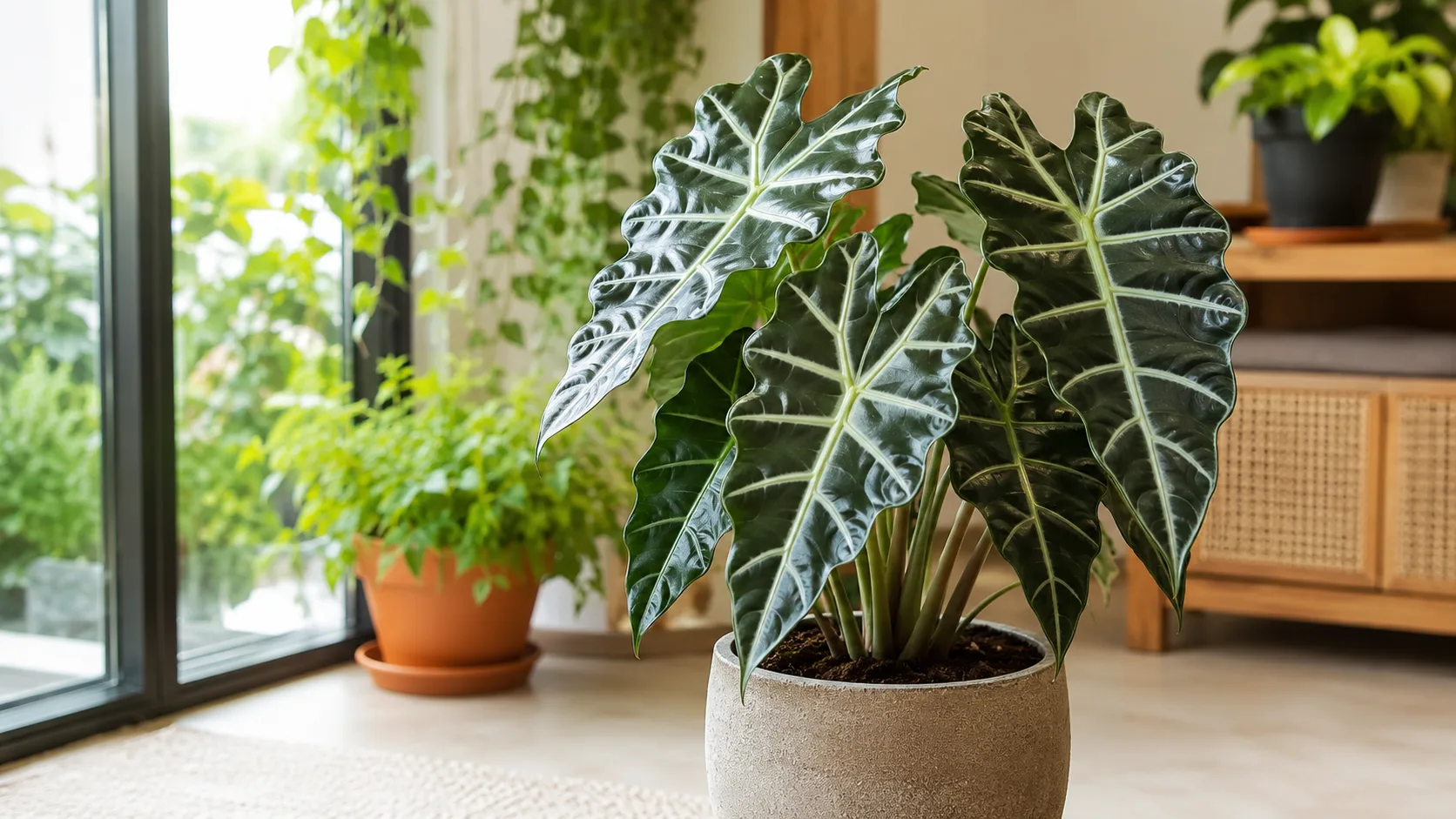
Amazonica (standard hybrid, non-‘Polly’) — Same look, similar size; often labeled generically. Care matches polly—bright indirect light, warm room, no cold drafts. Amazonica hub.
Pink dragon (Alocasia lowii ‘Morocco’) — Pinkish petioles and shiny green blades; wants 60–70% humidity and balanced fertilizer during active growth. A statement plant for humid rooms, not dry offices.
Jacklyn (Alocasia sp., Sulawesi) — Newer deeply lobed, textured green type that can reach 8 feet in ideal conditions—verify you have ceiling height before buying. Still collector-priced in many markets.
Large Elephant Ears and Statement Specimens
Odora (Alocasia odora, giant elephant ear) — Oversized heart-shaped leaves on thick stems; indoors often 4–6 feet, smaller than outdoor specimens. Fast grower when warm, bright, and fed spring through summer. Excellent first “big” alocasia if you have floor space.
Zebrina (Alocasia zebrina, zebra plant) — Striped petioles and large green ears; can hit 6–8 feet indoors with time. Not beginner-proof—spider mites love it in dry air—but stunning with a humidifier. Zebrina hub.
Stingray (Alocasia macrorrhizos ‘Stingray’) — Leaves truncated with a long tail point like a stingray; speckled stems. Unique silhouette; give it room to spread. Stingray hub.
Regal shield (Alocasia odora × A. reginula ‘Regal Shield’) — Hybrid with shield-shaped leaves to 20 inches long; lush but demands warmth, humidity, and mite vigilance. Regal shield hub.
Malaysian monster (Alocasia portei) — Deeply lobed bright green leaves and variegated stems; outdoor giants to 9 feet, about 4 feet indoors. Easier temperament than zebrina for many growers.
Sarian (Alocasia ‘Sarian’, zebrina × micholitziana) — V-shaped deep green leaves with white veins and scalloped edges; large but straightforward if humidity is adequate. Wipe dust weekly so photosynthesis keeps up.
Variegated, Rare, and Collector Alocasias
Variegated alocasias sell for premium prices—and revert or brown fastest when humidity or light is wrong. Buy these only after you have kept a plain green type happy for a season.
Variegated black stem (Alocasia macrorrhizos ‘Variegated Black Stem’) — Cream-splashed arrow leaves on near-black red stems; rare and expensive. Intermediate growers minimum.
Variegated elephant ear (Alocasia macrorrhiza ‘Variegata’) — Large cream-mottled paddles; spider mite magnet in dry rooms. Needs excellent light—not direct sun—and constant humidity.
Okinawa silver (Alocasia odora ‘Okinawa Silver’) — Compact variegated odora topping around 3 feet; easier to house than full variegated macrorrhiza but still priced as a collector plant.
Verify sellers carefully; mislabeled corms and tissue-culture swaps are common in the rare-alocasia market.
Hardy and Outdoor-Friendly Alocasias
Wentii (Alocasia wentii, Went’s hardy elephant ear) — Bronze-tinted heart-shaped leaves; among the most cold-tolerant common alocasias—USDA zone 7b and warmer for in-ground culture per regional reports. Indoors stays near 3 feet; outdoors in shade it grows larger. Bring containers inside before frost if you summer them on a patio.
Not every alocasia on this list is landscape-hardy. Most jewels and amazonica hybrids are strictly indoor except as warm-season patio plants moved in before nights drop below 55°F (13°C).
Shared Indoor Care for Every Alocasia on This List
Culture repeats across the genus even when leaf shape does not. Master these four pillars once and adjust per tier above.
Light, Water, Soil, and Feeding
Light: Bright indirect—enough to cast a soft shadow, less than two hours of direct sun daily. Scorched patches mean pull back from glass; leggy petioles mean move closer to the light source.
Water: Water when the top 1–2 inches of soil are dry; soak until drainage runs, then empty the saucer. Never let pots sit in standing water—corm rot follows quickly. Schedules like “every Tuesday” fail; touch the soil.
Soil: Chunky aroid mix—potting soil cut with perlite, bark, or coco coir so roots breathe. Standard peat-heavy bagged mix compacts and stays wet too long.
Feed: Balanced liquid fertilizer monthly spring through early fall at half label strength; pause in winter when growth slows. Overfeeding variegated types can burn leaf margins.
Humidity, Temperature, and Dormancy
Humidity: Target 50–60% RH minimum; jewels prefer higher. Humidifier beats misting for sustained results.
Temperature: 65–85°F (18–29°C) day; avoid cold drafts below 60°F. Heating vents that blast dry air cause more damage than a slightly cool room.
Dormancy: Many alocasias drop leaves in fall or winter even indoors—the corm rests while soil stays slightly dry. Do not panic unless the corm is mushy. Resume normal watering when new shoots appear in spring. Forcing water on a dormant corm causes rot.
Toxicity and Pet Safety
Every alocasia on this list is toxic to people and pets if chewed or ingested. The ASPCA lists Alocasia spp. as toxic to dogs, cats, and horses because of insoluble calcium oxalate crystals—the same compound class as dieffenbachia and philodendron. Sap can irritate skin; wear gloves if you are sensitive when pruning or repotting.
The National Capital Poison Center notes oral pain, swelling, drooling, vomiting, and difficulty swallowing after ingestion. Keep pots on high shelves or in pet-free rooms; alocasia is not a safe substitute for cat-friendly plants like calathea.
Conclusion
The best alocasia variety for your home is the one that matches your humidity, light, and space—not the one with the most likes on social media. Start with Tiny Dancer, odora, stingray, or red secret if you are new to the genus; graduate to frydek, dragon scale, or zebrina once a humidifier or pebble tray is in place; save variegated black stem and imperialis for when you have already kept a green type stable for a full year.
Use the comparison table to shortlist two or three names, then open the linked LeafyPixels /plants/ hubs for species-specific watering and problem fixes. Set up humidity before the plant arrives, choose a pot with drainage, and expect occasional dormancy leaf drop—it is normal alocasia behavior, not necessarily a death sentence. Get those three decisions right and any of these 25 types can become the tropical anchor your room was missing.