Best Yard Games: Fun Without Wrecking Your Lawn
Compare nine top yard games by space, age range, and portability—plus lawn-safe setup tips, party rotation ideas, and storage rules so gear lasts.
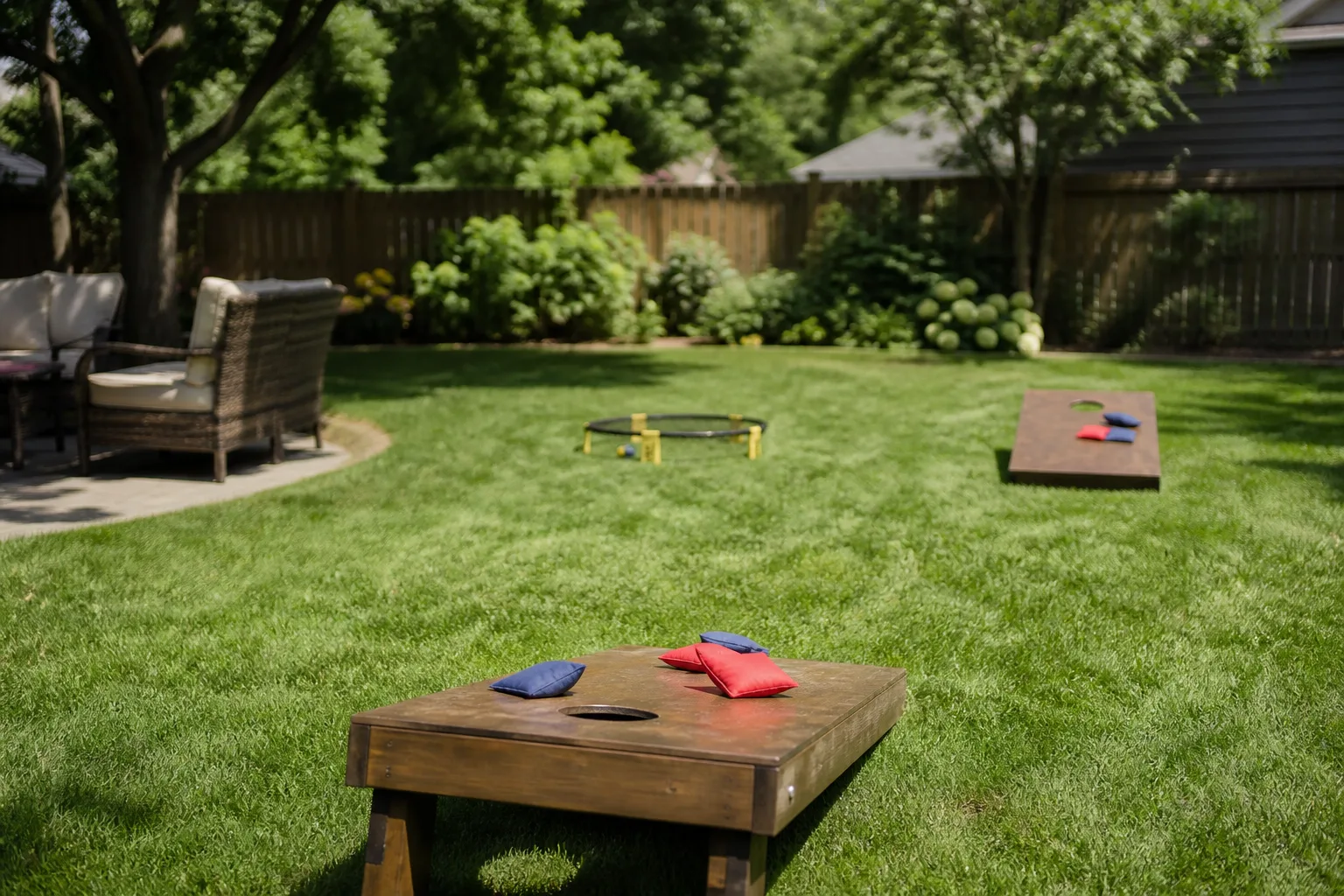
The right yard game turns a flat patch of grass into the place everyone gravitates after the burgers are gone—but the wrong pick sits in the garage because it needs forty feet of clearance, wrecks a wet lawn, or only works for four competitive teenagers. The best yard games balance three things: enough action to keep rounds moving, durability that survives sun, sand, and sloppy tosses, and a footprint that matches the yard you actually have.
This guide ranks nine standouts across party size, portability, and skill level, then goes further than a typical roundup with setup distances, a comparison table, lawn-safe play zones, and a party rotation plan so mixed-age groups stay busy without buying every game on the market.
Quick Answer: Match the Game to Your Yard and Guest List
Start with space, then guests, then storage. Under 30 feet of clear length, prioritize ladder toss, portable cornhole, or washer and ring toss—they pack small and tolerate uneven turf better than full net sports. For four active teens or adults, Spikeball or PaddleSmash pickleball deliver the highest energy in a modest footprint. Giant yard pong and giant Jenga win cookouts where people rotate in and out. Bottle Bash bridges ages when poles can be lowered for kids. Portable badminton needs the most open air but rewards you with longer play sessions.
If you host often, buy one high-energy game plus one low-skill tossing game so beginners and athletes can play simultaneously. Move setups between zones weekly if games sit on the same turf strip all summer—foot traffic compacts soil and thins grass faster than occasional mowing.
What Actually Makes a Backyard Game Worth Buying
Durability and fun factor matter, but the purchase decision usually fails on logistics: wrong surface, wrong crowd size, or gear that rusts after one rainy week. Evaluate candidates on four practical filters before price.
Replay value separates gear that survives three July afternoons from sets that feel solved after one round. Games with variable toss distance (cornhole, ladder toss) or reactive defense (Spikeball, Bottle Bash) stay interesting longer than single-mechanic toss games unless you run tournaments.
Portability means more than a carry bag—it means whether the set fits your vehicle, whether boards fold flat, and whether you can set up without staking permanent anchors into the lawn. Tailgate-friendly cornhole boards fold to roughly 2 × 3 feet; giant Jenga blocks need trunk space and two people to lift.
Weather resistance shows up late: wood ring-toss targets swell in rain; PVC ladder toss survives better; aluminum Bottle Bash poles handle salt air but still need rinsing. Plan where gear dries before you buy.
Space, Surface, and Setup Distance
Underestimating clearance is the top backyard failure mode. Use this reference when measuring your playable zone—not just the grass between the patio and fence, but swing room behind throwers and run-out space for missed tosses.
| Game | Minimum playable zone | Official / typical setup | Best surfaces |
|---|---|---|---|
| Spikeball | ~15 ft diameter circle | Net ~8 in high, 36 in wide | Grass, sand, turf |
| Giant yard pong | ~12 ft between bucket rows | ~8–12 ft toss distance | Lawn, deck, sand |
| Bottle Bash | ~20–40 ft between poles | Adjustable pole height | Grass, sand, shallow water |
| Washer / ring toss | ~10–25 ft throw | Compact stacked targets | Lawn, patio, sand |
| Ladder toss | ~15 ft between ladders | ~15 ft standard toss | Grass, concrete |
| Giant Jenga | ~3 × 3 ft stack footprint | Stacks past 5 ft tall | Any level surface |
| Portable cornhole | ~30 ft length | 27 ft board front edges (ACA) | Grass, sand, concrete |
| PaddleSmash | ~12 × 20 ft court | Foldable mini court | Grass, sand, driveway |
| Badminton | ~20 × 44 ft full court | Recreational ~17 ft net width | Grass, sand, gym |
Sloped yards favor tossing games where distance can be shortened; full-court badminton on a hillside frustrates everyone. Deck and patio players should choose rubber ladder toss bolos, bean-bag cornhole, or LED badminton birdies that forgive harder surfaces.
Age Range and Skill Level
Label age ratings on packaging are starting points, not guarantees. Ring toss and cornhole work across generations because grip strength matters less than aim. Spikeball and PaddleSmash need enough mobility to lunge and pivot—fun for mixed groups only when teams are balanced or you run casual “no spike” house rules.
Giant Jenga lists ages 12+ because toppling hardwood blocks can bruise; supervise younger kids or switch to a lighter plastic giant stacker. Giant yard pong is often marketed 13+ because buckets are commonly filled with sand or water and versions exist as drinking games—use tennis-ball rules for all-ages cookouts.
How to Play Yard Games Without Damaging Your Lawn
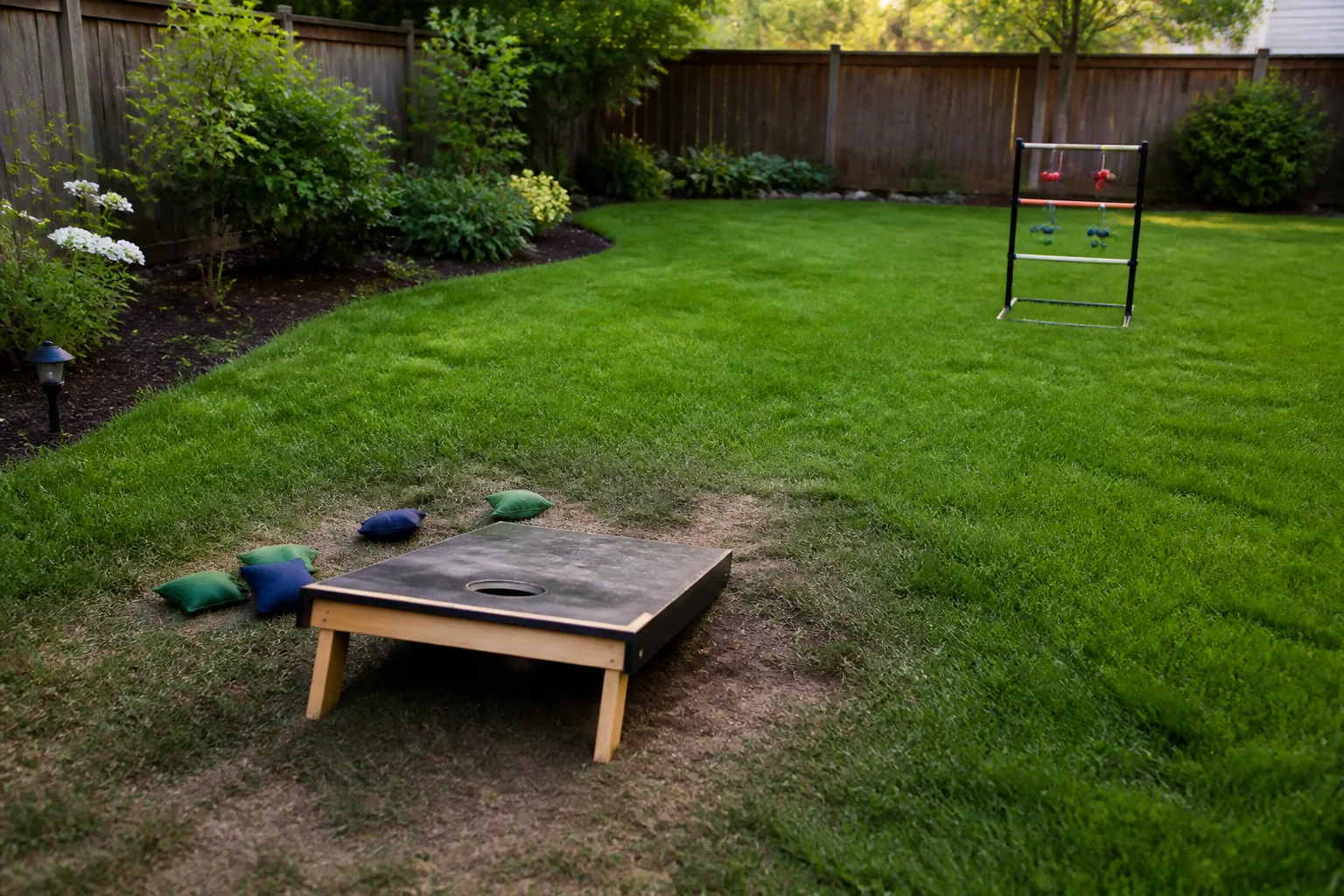
Heavy foot traffic during the same backyard party is rough on turf. Concentrated running—Spikeball dives, pickleball shuffles, kids sprinting for fallen Jenga blocks—compacts soil in the play zone. Minnesota Extension notes that recreation on lawns increases wear; recovery depends on grass type, soil moisture, and how long play continues on the same patch (University of Minnesota Extension).
Rotate play zones every few events so one strip does not become a dirt path. After a wet weekend tournament, keep traffic off saturated turf—compaction damage on soggy soil lasts into the next growing season. Lay interlocking patio tiles or a temporary mulch landing zone under high-impact nets if you host weekly.
Pick up gear nightly. Boards and weighted buckets left on grass block sunlight and hold moisture against blades. Wood targets (washer toss, some ring toss) should not sit in standing water—store dry or expect warped legs and rusted stakes.
Rake divots and redistribute spilled sand from bucket anchors before they smother grass. A quick pass with a leaf rake after yard pong beats patching bare spots in fall.
Best Overall: Spikeball Pro Kit (Tournament Edition)
Spikeball is a 360-degree volley game: two teams of two hit a small ball off a round net so the opposing team cannot return it. The Pro Kit (Tournament Edition) upgrades frame tension and ball durability over entry sets—worth the step-up if you play on abrasive sand or concrete.
Why it wins overall: Setup takes about a minute, the footprint fits most backyards, and beginners grasp the concept after one demonstration rally. The included backpack, pump, and spare ball make beach and vacation transport realistic.
Trade-offs: Strictly four players on court at once—larger parties need a queue or second net. Competitive mismatches happen when one player knows attack angles and others are learning. On soft lawns, diving is safer than on hidden roots or slopes.
Best for: Teens and adults who want movement without a full court. Terrain: grass, sand, turf. Typical price tier: ~$100–$130.
Best Party Game: Ropoda Giant Yard Pong
Giant yard pong scales beer-pong geometry to bucket rows on the lawn—teams toss balls to land in opposing buckets. Ropoda’s set includes stackable buckets, fill lines for sand or water ballast, a drawstring bag, and both a plastic sand ball and a tennis-style ball for harder surfaces.
Why parties love it: Spectators can heckle without learning complex rules. Buckets can be spaced closer for kids or farther for adults. Setup is faster than any net sport.
Trade-offs: Easy to DIY with sand pails and tennis balls if you already own them—buy the set for matched stack height and ballast lines. Buckets filled with water need draining before storage. Wind pushes lightweight buckets unless weighted.
Best for: Cookouts, beach days, tailgates. Players: 2–4 active, unlimited rotation. Typical price tier: ~$30–$40.
Best for Families: Poleish Sports Bottle Bash
Bottle Bash (often branded Poleish Sports) pits two teams trying to knock a bottle off the opponent’s pole with a flying disc, while defenders can score by catching the disc, bottle, or both. Height-adjustable aluminum poles let you lower targets for grade-schoolers and raise them for adults.
Why families stick with it: Defense keeps non-throwers engaged. Disc flight is slower than a baseball, so younger kids participate without fear of hard impacts. Gear works on sand, grass, and even shallow shoreline water.
Trade-offs: Needs 20–40 feet of open length—tight suburban side yards may not qualify. Discs and bottles still require supervision with toddlers nearby. Night play needs an LED disc upgrade.
Best for: Beach trips, vacation yards, mixed-age cookouts. Players: 4 (2v2). Typical price tier: ~$45–$55.
Best Classic Pick: Triumph Sports Washer and Ring Toss
Sometimes the yard game you want is the one every cousin already understands. Triumph Sports’ quoit set combines washer toss boxes and ring toss poles in one package—color-coded red and blue for instant team split.
Washers slide into recessed cups for scoring; rings land on pegs for a lighter toddler-friendly mode. The set arrives assembled, stacks for storage, and moves easily between patio and lawn.
Trade-offs: Solid wood construction looks classic but should not live outdoors in rain—warping and finish damage show up fast. Not as portable as PVC ladder toss. Skill ceiling is lower; serious athletes may burn through a session in thirty minutes unless you run distance challenges.
Best for: Backyard gatherings with kids and grandparents. Players: 2–4. Typical price tier: ~$30–$40.
Honorable classics to add later: Bocce rewards flat, sandy runs; horseshoes need stake clearance and safety awareness around metal pegs; kubb is a fun lawn chess vibe for patient groups.
Best Indoor and Outdoor: GoSports Ladder Toss
Ladder toss (ladder golf) throws bolos that wrap around PVC ladder rungs for tiered points. GoSports’ set uses soft rubber bolos—the main reason this pick works on patios and indoor gyms without denting floors or cracking patio stone.
Color-coded ladders and bolos simplify scoring; built-in score trackers reduce arguments. Assembly is tool-free PVC lock joints; everything fits a drawstring bag.
Trade-offs: Rounds finish quickly unless you play to a high point total or run bracket play. Wind affects lightweight bolos on open lawns. Not as thrilling for high-energy teens as Spikeball.
Best for: Tailgates, campsites, indoor rainy-day parties. Players: 2–4. Ages: 6+ with supervision. Typical price tier: ~$30–$45.
Best for Large Groups: Jenga Giant JS7
Giant Jenga scales the block-stacking tension to hardwood blocks that build past five feet before the tower collapses. The JS7 set is the sweet spot between toy-scale and commercial event blocks—large enough for drama, still movable with two adults.
Why crowds gather: Unlimited players can advise, heckle, and rotate pull turns. No one sits out unless they choose to. The crash is the main event—plan clearance so falling blocks do not hit patio glass or grill stations.
Trade-offs: Heavy in the carry bag; not a one-person haul. Hardwood bruises bare feet and small hands—clear the drop zone. Indoor winter play works on level basements but watch ceiling fans and low light fixtures.
Best for: Backyard parties, wedding lawns, corporate picnics. Players: open rotation. Typical price tier: ~$120–$140.
Best Portable Game: GoSports Classic Cornhole Set
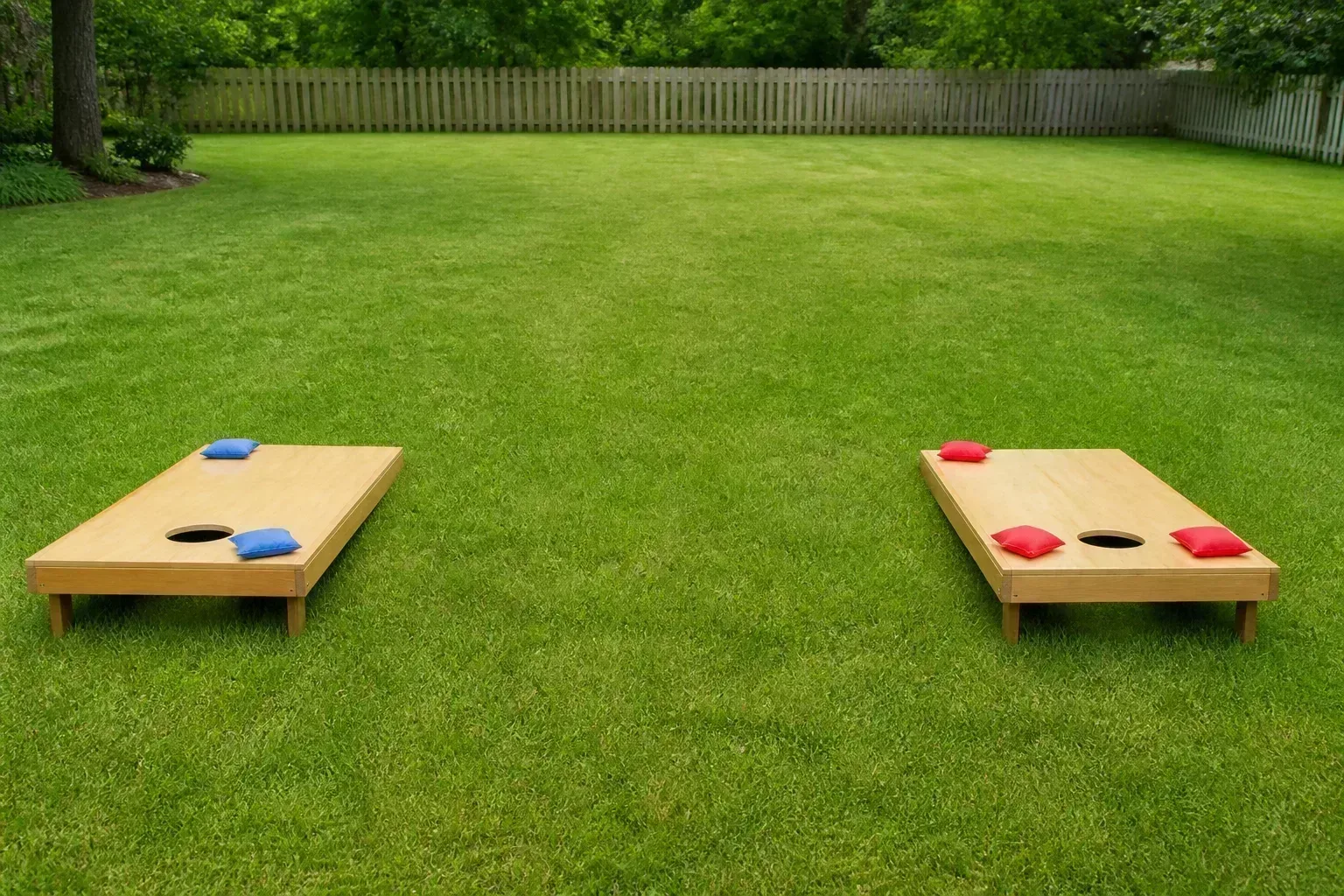
Cornhole is the backyard lingua franca: teams alternate tossing bean bags at angled boards, scoring 3 points for bags through the hole and 1 point for bags resting on the board. Official ACA play places board front edges 27 feet apart with cancellation scoring to 21 (playcornhole.org).
GoSports’ Classic 3×2 foot rustic set folds flat, fits most car trunks, and includes eight color-coded bean bags plus a zip case. The smaller board size helps tight lawns and beginner arms while still feeling like real cornhole.
Trade-offs: Smaller boards change flight geometry versus regulation 2×4 boards—tournament players may notice. Not airline luggage. On hills, level boards with shims or move to the flattest driveway section.
Setup tip: Mark a foul line so steppers do not creep forward—crossing the front edge voids a throw in official rules. For casual family play, shorten to 21 feet and nobody will complain.
Best for: Road trips, tailgates, multi-generational cookouts. Players: 2–4. Typical price tier: ~$70–$90.
Best Pickleball Setup: PaddleSmash
PaddleSmash merges compact pickleball with a Spikeball-style footprint: a foldable court base, short net, four paddles, and balls pack into a carrying case. You get pickleball volleying without dedicating a full driveway court or fighting public court queues.
Why it fits modern yards: Pickleball participation has exploded; many guests already know paddle basics. The contained court stops wild runs into flower beds— a real concern when you have invested in raised beds or perennial borders along the lawn edge.
Trade-offs: ~$200 entry cost. Mini court limits lob and sprint strategy versus full pickleball. Still needs ~12×20 feet of level ground. Paddles wear; budget for replacement balls.
Best for: Athletic mixed groups, beach houses with flat sand, travelers who want pickleball without permanent nets. Players: 4 (doubles). Typical price tier: ~$180–$200.
Best Paddle Racquet Game: Sharper Image Portable Badminton
When you want longer rallies and a true net sport, portable badminton beats every tossing game for session length. Sharper Image’s LED birdie set folds into a case, assembles in minutes, and includes four racquets plus light-up birdies for twilight play.
Why racquet games endure: Badminton slows down for kids by using shorter courts and cooperative volleys; competitive adults can burn an hour without realizing it. Sand and grass both work if wind is moderate.
Trade-offs: Needs the widest zone on this list—tight lots should default to cornhole or ladder toss. Wind ruins outdoor birdie flight; keep foam practice birdies for breezy afternoons. Net tension sags on uneven ground unless you stake guy lines.
Best for: Parks, beaches, large backyards, gym rentals. Players: 2–4 on court. Ages: 6+ with shorter court rules. Typical price tier: ~$90–$110.
Nine Yard Games Compared at a Glance
| Pick | Best label | Players | Space need | Portability | Age sweet spot | Price tier |
|---|---|---|---|---|---|---|
| Spikeball Pro Kit | Best overall | 4 | Medium circle | High | 8+ | $$ |
| Ropoda Yard Pong | Best party game | 2–4+ | Medium length | High | 8+ (13+ labeled) | $ |
| Bottle Bash | Best for families | 4 | Long length | High | 8+ | $$ |
| Triumph Washer/Ring Toss | Best classic | 2–4 | Small–medium | Medium | All ages | $ |
| GoSports Ladder Toss | Indoor/outdoor | 2–4 | Medium length | High | 6+ | $ |
| Jenga Giant JS7 | Large groups | Open | Small footprint | Low | 12+ | $$$ |
| GoSports Cornhole | Best portable | 2–4 | Long length | High | All ages | $$ |
| PaddleSmash | Best pickleball | 4 | Medium rectangle | High | 14+ | $$$ |
| Sharper Image Badminton | Best racquet | 2–4 | Large width | Medium | 6+ | $$ |
$ ≈ under $50 · $$ ≈ $50–$120 · $$$ ≈ $120+
How to Run a Backyard Game Rotation at Parties
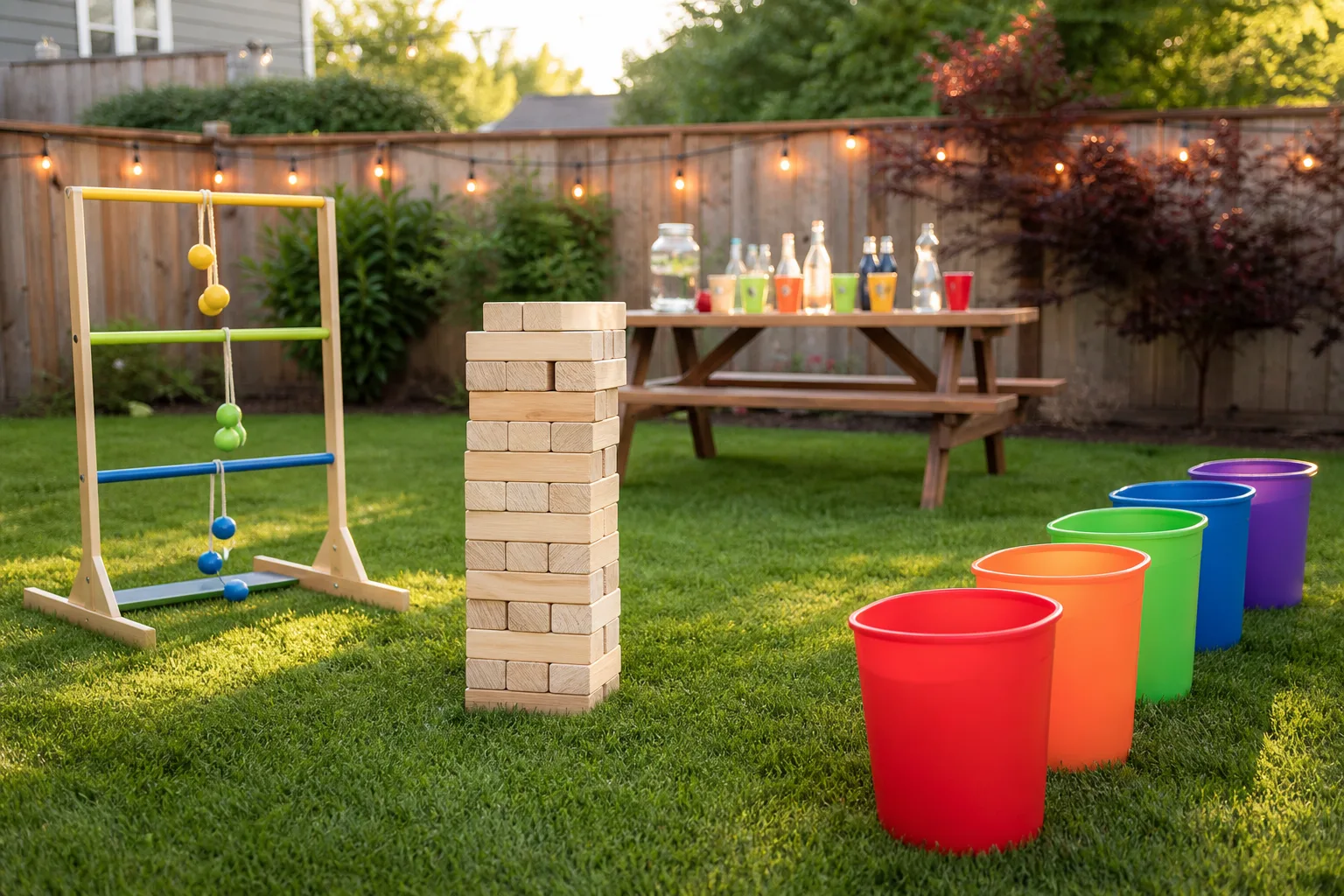
One game leaves half your guest list on lawn chairs checking phones. A rotation board—clipboard, chalkboard, or picnic-table printout—assigns match-ups every 15 minutes so Spikeball die-hards and grandparents both get turns.
Station layout: Place the highest-energy game (Spikeball, PaddleSmash) farthest from the grill and seating so runners do not cut through food lines. Put low-skill toss games (ring toss, ladder toss) near shade where elders watch. Giant Jenga belongs on a visible centerpiece patch with a cleared fall zone.
Queue rules: Cap consecutive wins at two so newcomers rotate in. For Bottle Bash and cornhole, use short games to 11 instead of 21 during parties. Gardeners’ World entertaining guides emphasize zoning the garden—games, dining, and quiet conversation should not compete for the same ten feet (Gardeners’ World).
Kid bridge: Pair a child with an adult on cornhole, lower Bottle Bash poles, and run a ring-toss-only lane so toddlers stay occupied without wandering into Spikeball space. Epic Gardening’s family outdoor project framing applies here—structured outdoor play keeps kids engaged in the yard instead of trampling planted beds (Epic Gardening).
Storage, Weather Care, and Off-Season Maintenance
Yard games fail in storage, not on the lawn. Dry completely before bags close—PVC and bag fabric mildew fast. Wood targets go indoors or under cover; a deck box works if ventilated.
Bean bags: Cornhole bags that soaked up dew should air-dry flat, not stacked, so fill does not clump. Discs and balls rinse after beach sand; salt corrodes Bottle Bash bottle caps over time.
Off-season checklist:
- Disassemble ladders and nets; loose tension wears frame joints
- Store bean bags in breathable bins, not sealed plastic
- Label bin corners with setup distances so spring setup is faster
- Inspect Jenga blocks for splinters; sand lightly before next season
- Replace worn badminton birdies in spring—stores stock out before Memorial Day
If garage space is tight, wall hooks for folded cornhole boards and ceiling slings for Spikeball frames reclaim floor space for mowers and lawn sweepers you use more often.
Conclusion
The nine yard games above cover the full backyard spectrum—from five-minute party tosses to hour-long net rallies—but the right purchase is the one that fits your measurable space, guest ages, and storage reality. Lead with Spikeball or PaddleSmash if you want movement; stock cornhole or ladder toss if you want instant inclusivity; bring giant Jenga or yard pong when the goal is spectacle.
Protect your lawn by rotating zones, picking up gear nightly, and keeping play off saturated turf. Run two stations at parties so nobody waits through a long bracket. Store dry, label distances, and your sets will be the reason guests ask what to bring next summer—instead of why your grass has a permanent bare patch by the fence.