6 Best Lawn Sweepers for Leaves and Grass Clippings
Compare six lawn sweepers by yard size, debris, hitch type, brush width, hopper capacity, and storage so you can choose push or tow-behind with confidence.
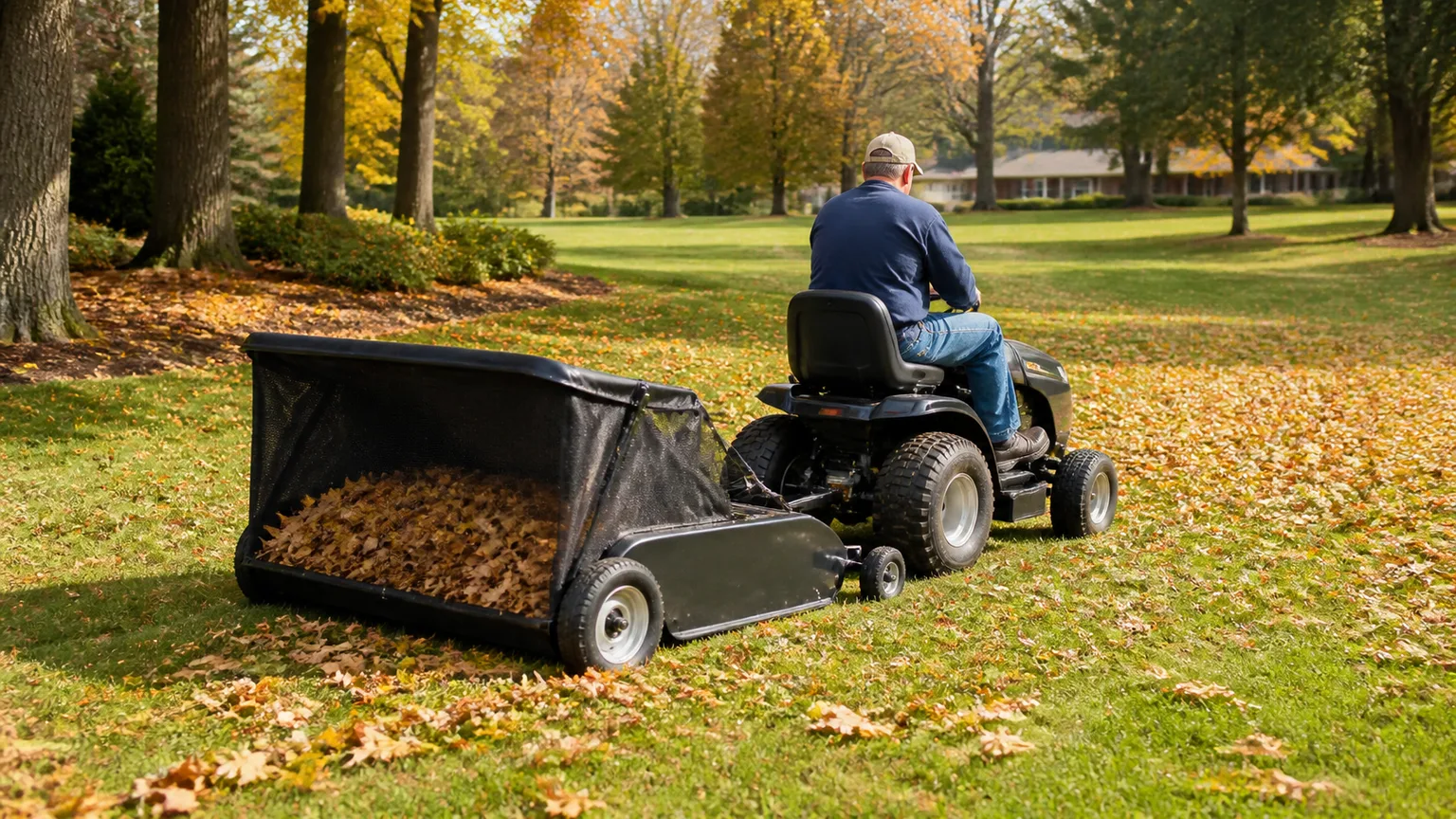
The best lawn sweeper is the one that fits your debris, yard size, terrain, and towing setup. A narrow push model can be the sensible choice for a small lawn with a gate and tight turns, while a wide tow-behind model makes more sense when leaves fall across a large, open property. Bigger is not automatically better: width can make storage and maneuvering harder, and a large hopper still has to be emptied.
This comparison covers six lawn sweepers in the push and tow-behind formats. The dimensions, sweeping paths, hopper capacities, and weights come from the supplied product listings and review material; the article does not add fresh hands-on test results. Where the supplied review reports observations, I identify them as reported observations, and where a model was not tested in that material, I keep the recommendation based on fit and published specifications.
Quick Picks by Yard and Cleanup Job
Use the table to narrow the field before comparing individual features. The “best for” label is a decision aid, not a promise that the machine will perform identically on every lawn; leaf moisture, grass height, brush adjustment, and ground conditions change the result.
| Cleanup job | Best fit | Listed size | Why it makes sense | Main compromise |
|---|---|---|---|---|
| Open lawn with a riding mower or lawn tractor | Agri-Fab 44-inch Tow-Behind | 44-inch path; 25-cu.-ft. hopper; 95 lb. | Balanced width and capacity for repeated seasonal passes | Requires a towing machine and substantial storage |
| Small yard and light debris | Earthwise 21-inch Push | 21-inch path; 3.2-cu.-ft. hopper; 14 lb. | Light, narrow, and easier to store than tow-behind equipment | More passes and limited pickup of settled or bulky debris |
| Large, tree-covered lawn | Ohio Steel 50-inch Extra-Wide | 50-inch path; 26-cu.-ft. hopper; 102 lb. | Covers broad open ground quickly and holds a large load | Wide footprint, storage demand, and a heavier emptying job |
| Lightweight push cleanup | Scotts 26-inch Push | 26-inch path; 4.48-cu.-ft. hopper; 19.34 lb. | A middle ground between narrow budget models and tow-behind sweepers | Still manual and may need several passes in heavy leaf fall |
| Large capacity without a riding mower | Agri-Fab 26-inch Push-Behind | 26-inch path; 7-cu.-ft. hopper; 25 lb. | More collection volume in a walk-behind format | Heavier to push than a smaller push model; the supplied review did not test it |
| Smaller tow-behind setup | Troy-Bilt 42-inch | 42-inch path; 22-cu.-ft. hopper; 89 lb. | Slightly narrower tow-behind format for open lawns | Still bulky to store; the supplied review did not test it |
The fastest way to make the choice is to measure the narrowest gate, identify whether you own a compatible hitch and towing machine, and estimate how much of the cleanup happens under trees. Then choose the smallest capacity and width that will finish the job without constant stops. That usually produces a more usable tool than buying the widest sweeper that fits the budget.
What a Lawn Sweeper Actually Does
A lawn sweeper uses rotating brushes to move loose debris into a collection hopper or bag. On most models, the wheels drive the brush mechanism as you push or tow, so forward motion, brush contact, and the height setting all affect pickup. It is a collection tool, not a vacuum: it does not shred material, blow piles together, or replace a mower when the lawn needs cutting.
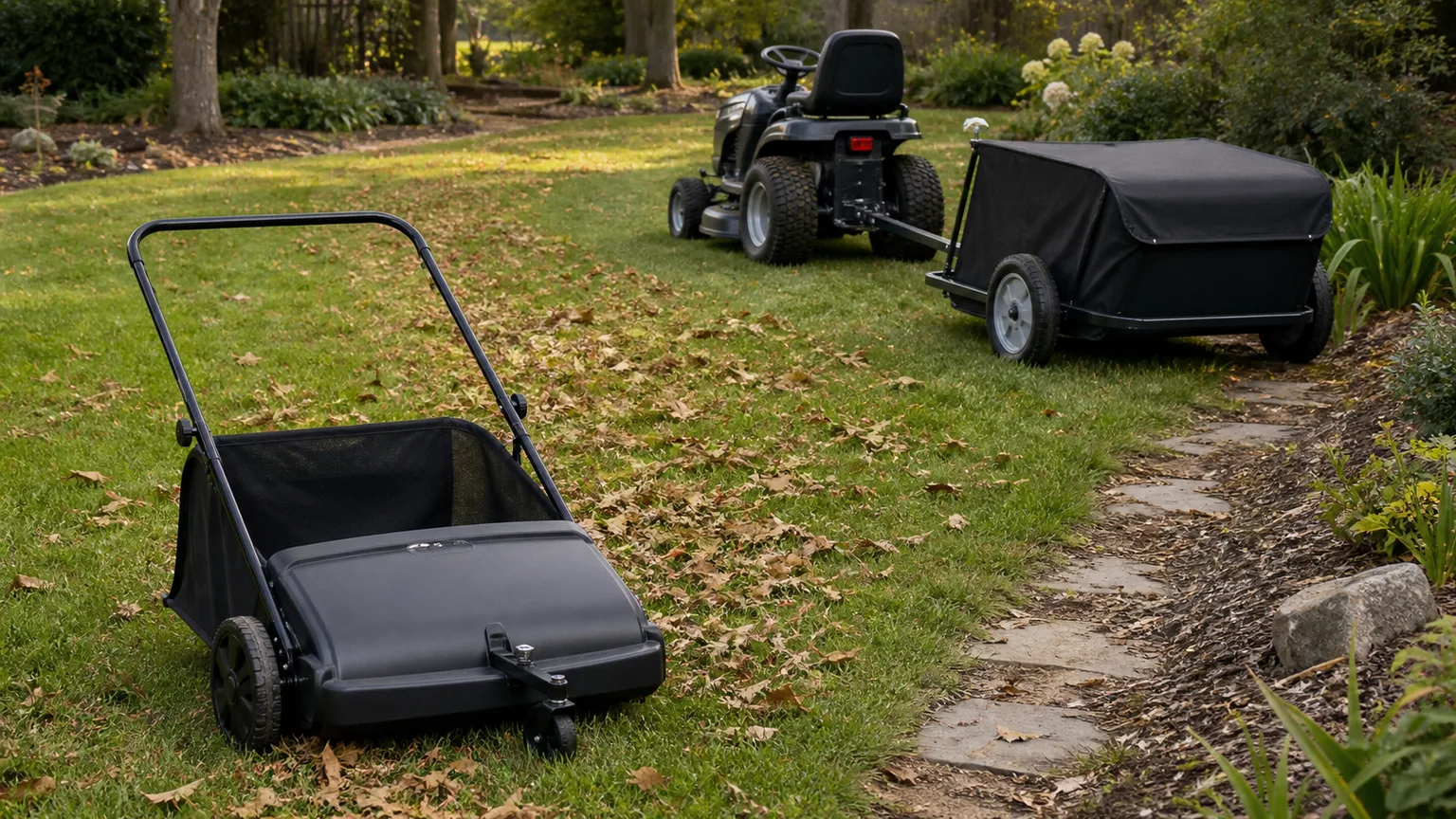
Push or Tow-Behind: Choose by the Work, Not the Label
| Choose a push sweeper when… | Choose a tow-behind sweeper when… |
|---|---|
| You do not own a riding mower or tractor | You already have a suitable towing machine |
| The lawn is small enough for repeated walking passes | The property has broad, open areas |
| Storage space is limited | Reducing walking effort matters more than compact storage |
| Gates, beds, and tight turns dominate the route | Leaves cover large areas and the hopper needs more volume |
| You want a lower-complexity seasonal tool | You can verify hitch fit, turning clearance, and safe towing speed |
Push models are not simply “small sweepers.” Their advantage is control: you can turn around beds, stop at a gate, and put the tool away without parking a tractor attachment. Their cost is human effort, especially when the hopper fills or the lawn is sloped. A narrow model may also require enough overlapping passes that a large property becomes tiring.
Tow-behind models trade storage bulk and hitch setup for coverage. They are most useful on grass rather than patios, driveways, or tight garden paths, and they need enough turning room for both the mower and the sweeper. Before buying, check the product manual and your mower’s hitch arrangement; “universal” language in a listing is not a substitute for confirming the pin, clearance, weight, and turning limits of your exact setup.
Where Lawn Sweepers Struggle
Sweepers work best on loose, relatively dry debris sitting above the turf. A thin layer of dry leaves, seed pods, and grass clippings is a different job from a wet mat pressed into the lawn. Damp material can cling to the brushes and hopper, while long grass, vines, string, and twigs can wrap around moving parts. Stones, gravel, metal, and branches can damage the sweeper or become dangerous projectiles.
They also have limits around edges and obstacles. Brushes may not reach the last strip along a wall, fence, curb, or raised bed, so keep a rake or blower for detail work. If leaves are stuck in wet thatch, the right first step may be to let the surface dry, lift the material gently with a rake, or mow and mulch a manageable layer rather than forcing a sweeper to do a job it was not designed to do.
Specs That Change the Job
Product tables tend to make width and hopper capacity look like the whole decision. In practice, three less glamorous details—turning room, emptying effort, and brush contact—often determine whether the sweeper stays useful after the first big cleanup.
Sweeping Width and Turning Room
The sweeping path is the amount of ground the brushes cover in one pass. A 50-inch path can reduce overlap across an open lawn, but it also needs more room to turn around trees, beds, fence corners, and sheds. A 21-inch push sweeper may take longer across a field-like lawn, yet its smaller footprint can make it the only practical model for a fenced yard or narrow gate.
Measure more than the gate opening. Include the width of the mower or your walking route, the storage doorway, and the space needed to turn without dragging the sweeper across a bed. For a tow-behind, imagine the rear attachment cutting a shorter inside arc than the mower; tight turns can make the sweeper cut across places you intended to avoid.
Hopper Capacity and Emptying Weight
Capacity tells you how much loose material a hopper is designed to hold, not how much you should let it reach before emptying. Leaves are light when dry but surprisingly awkward when wet, and a bag that fills unevenly can shift the machine’s balance. A smaller load may mean more trips to the compost pile, but it can also prevent a difficult lift and reduce the chance that debris packs against the brushes.
Compare capacity with your disposal route. If the hopper must be carried around a house, down steps, or into a paper yard-waste bag, prioritize manageable emptying over the largest number. If you can tow to a nearby compost or leaf pile and use a dump rope, capacity becomes more valuable—but only if the rope, support bar, and bag are easy to control on your terrain.
Brush Height, Wheels, and Terrain
Brush height is the setup that most directly changes pickup. Too high and the bristles skim over leaves; too low and they scrape soil, catch in thick grass, or drag the sweeper. Start with the manufacturer’s recommended setting, make a short pass, and adjust in small increments until the brushes contact the debris without gouging the lawn.
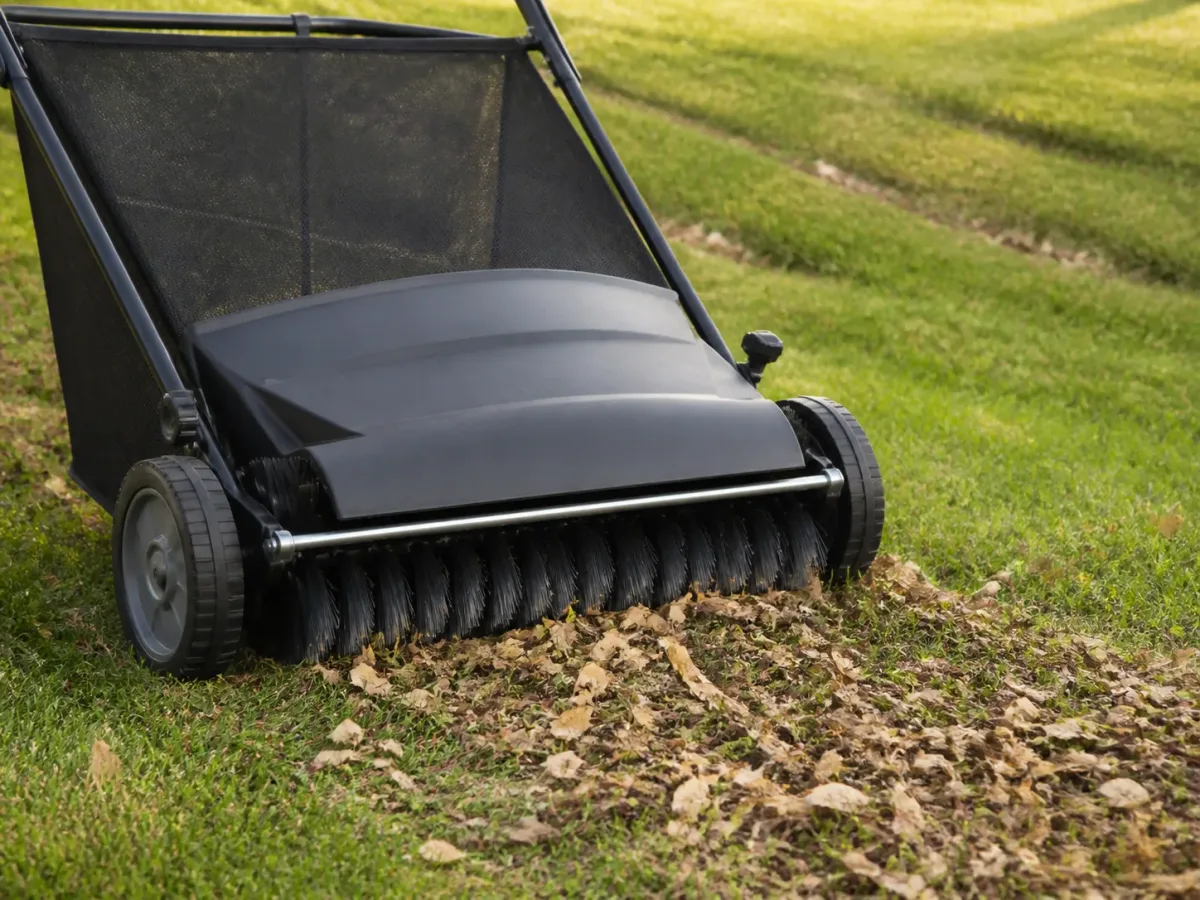
Wheel design matters because the wheels drive the brushes. A sweeper can feel fine on a flat lawn and lose contact across ruts, soft soil, or a steep slope. If the yard is uneven, slow down, keep the hopper lighter, and treat the advertised width as a coverage number rather than a guarantee that every wheel will remain planted. A push sweeper also becomes harder to control when the hopper is full, especially downhill.
Six Lawn Sweepers Matched to Real Use Cases
These picks preserve the product-review intent while keeping the evidence boundaries visible. The first four have reported use observations in the supplied material; the Agri-Fab push and Troy-Bilt recommendations were specifically presented there as not yet tested, so their sections focus on specifications, format, and who should consider them.
Best Overall: Agri-Fab 44-Inch Tow-Behind
The Agri-Fab 44-inch Tow-Behind Lawn Sweeper is the most balanced choice for an open residential property when you already own a riding mower or lawn tractor. Its listed 44-inch sweeping path and 25-cubic-foot hopper sit between the very wide Ohio Steel model and the smaller push options, while the listed 95-pound weight is substantial but not the highest in this group. (Agri-Fab 44-inch Tow-Behind Lawn Sweeper listing)
The supplied review reports that this model attached easily to a standard hitch, collected small debris such as grass clippings and seed pods, filled its hopper evenly, turned without undue difficulty, and was straightforward to empty. Those observations make the model attractive for a first-time tow-behind owner, but they do not remove the need to set the brush height for your lawn or to inspect the hitch before every session.
Its biggest advantage is balance rather than a single record-setting number. The width covers open grass efficiently, the hopper reduces constant stops, and the format lets the mower do the walking. The main reasons to choose something else are a small or gated yard, inadequate storage, no compatible towing machine, or cleanup that happens mostly in tight beds where a push tool has better control.
Choose it if: you want one tow-behind sweeper for routine leaves, clippings, and seed pods across a medium-to-large open lawn.
Think twice if: you cannot store a roughly five-foot-wide attachment or you would need to buy a mower just to pull it.
Best Budget for Small Yards: Earthwise 21-Inch Push
The Earthwise 21-Inch Push Lawn Sweeper is the sensible fit for a small lawn, patio-edge strip, or compact property where narrow dimensions and low weight matter more than speed. Its listed 21-inch path, 3.2-cubic-foot hopper, and 14-pound weight make it the lightest and narrowest option in this comparison. (Earthwise 21-Inch Push Lawn Sweeper listing)
The supplied review reports good results with light leaves and small debris on a smaller yard with slight inclines, while also noting that larger or settled items were a weakness. It also reports that setup was more difficult than expected and that the sweeper required more manual tilting and handling than the Scotts push model. That is useful context: a low purchase burden does not always mean the lowest effort over a season.
The Earthwise makes the most sense when the route is short and storage is tight. Its narrow path is a real advantage around trees and beds, but it becomes a liability on a broad lawn because every pass covers less ground. Empty the hopper before the load becomes awkward, and do not expect it to pick up plastic bags, stones, or debris pressed into the soil.
Choose it if: you have a small, mostly open lawn and want a light sweeper for dry leaves and light debris.
Think twice if: your property is large, your leaves arrive wet and matted, or you want a tool that glides over bulky debris without extra passes.
Best for Broad, Tree-Covered Lawns: Ohio Steel 50-Inch Extra-Wide
The Ohio Steel Professional Grade 50-inch Extra-Wide Lawn Sweeper is the coverage choice for a broad lawn with heavy seasonal leaf fall. Its listed 50-inch path is the widest here, and its 26-cubic-foot hopper is the largest by a small margin; the listed weight is 102 pounds. (Ohio Steel 50-inch Lawn Sweeper listing)
The supplied review reports that this tow-behind model gathered debris below the grass line in relatively few passes and was gentle enough around yellow dandelions in the reviewer’s yard. It also reports two practical drawbacks: emptying was harder than on some smaller models, and a support bar could loosen over bumpy terrain. Those are not minor details for a wide attachment; they affect how often you stop and how slowly you may need to travel.
The Ohio Steel earns its place when coverage is the bottleneck and you have the storage room to keep a large attachment ready. Its width is less helpful in a fragmented yard with narrow paths, ornamental beds, or many trees close together. A smaller tow-behind model can finish more neatly if the extra width forces constant three-point turns.
Choose it if: a riding mower can move through wide, tree-covered sections and you value fewer overlapping passes.
Think twice if: you have a tight storage shed, uneven ground, or a disposal route where a full 26-cubic-foot load would be difficult to manage.
Best Lightweight Push Model: Scotts 26-Inch
The Scotts Outdoor Power 26-Inch Push Lawn Sweeper is the middle-ground push choice. Its listed 26-inch path is five inches wider than the Earthwise, its listed hopper is 4.48 cubic feet, and its listed weight is 19.34 pounds. (Scotts 26-Inch Push Lawn Sweeper listing)
The supplied review reports that the model remained lightweight and comfortable to use, filled its collection bag evenly, and was easy to empty. It also reports that setup took longer than expected because the instructions left out steps and that work gloves were useful during assembly because of sharp plastic edges. Keep that setup caveat in the purchase decision; assembly is part of the ownership experience even if you only do it once.
Compared with the Earthwise, the Scotts asks for a little more lifting but gives you a wider working path and a design the supplied review found easier to use without the same tilting motion. It is still a walk-behind tool, so it is best for small-to-medium spaces and light, loose debris rather than a large wet leaf fall.
Choose it if: you want a manageable push model with a bit more coverage than a narrow budget sweeper.
Think twice if: your cleanup area is large enough that walking repeated 26-inch passes will be the main chore.
Best High-Capacity Push Option: Agri-Fab 26-Inch
The Agri-Fab 26-Inch Push-Behind Lawn Sweeper is the specification-based option for homeowners who want push operation but need more collection volume than the other 26-inch model. Its listed 26-inch path matches the Scotts, while the listed hopper capacity is 7 cubic feet and the listed weight is 25 pounds. (Agri-Fab 26-inch Push-Behind Lawn Sweeper listing)
The extra hopper volume could reduce stops on a property with many trees, but it does not make the sweeper self-propelled. A 25-pound empty tool becomes a more demanding push as leaves accumulate, and a full hopper can be harder to empty safely than a smaller one. The supplied review explicitly did not test this model, so treat it as a capacity-versus-effort choice rather than a verified performance winner.
This model fits a homeowner who has no riding mower, enough flat lawn to push a 26-inch tool, and a nearby place to dump manageable loads. If you have a small yard and only light leaf fall, the extra capacity may add weight without saving meaningful time. If you have a large property, compare the total walking distance before assuming a bigger push hopper solves the problem.
Choose it if: you need more push-sweeper capacity and can tolerate the extra empty weight.
Think twice if: the route is hilly, the disposal point is far away, or you expect the model to handle branches and stones.
Best Compact Tow-Behind: Troy-Bilt 42-Inch
The Troy-Bilt 42-Inch Lawn Sweeper is the compact tow-behind choice for someone who wants mower-assisted collection without stepping up to the largest attachments. Its listed 42-inch path, 22-cubic-foot hopper, and 89-pound weight are all slightly lower than the Agri-Fab 44-inch figures. (Troy-Bilt 42-Inch Lawn Sweeper listing)
The supplied review did not test this model, so the recommendation rests on its smaller tow-behind footprint and listed specifications. The source material also calls out its spiral brush design as a manufacturer claim intended to improve brush life; that claim should be treated as a product claim, not as an independently established durability result.
The Troy-Bilt is a reasonable format choice when your lawn is large enough to justify towing but your storage space and turning lanes make a 50-inch sweeper excessive. It still needs a compatible hitch, room to swing behind the mower, and a place to park an attachment that is much bulkier than a push sweeper. The lower capacity also means more stops in a heavy leaf season, which may erase the benefit of the slightly smaller footprint.
Choose it if: you want a mid-size tow-behind for an open lawn and need to save a little space compared with extra-wide models.
Think twice if: you need independently observed performance or your lawn has many tight obstacles rather than broad passes.
How to Use, Maintain, and Store a Lawn Sweeper
The first session should be treated as a setup test, not a race to clear the whole property. Walk the route, remove objects the brushes should not encounter, confirm the hopper and hitch are secure, and use a short pass to learn how the brush setting behaves on your turf.
First Pass and Clog Prevention
Use this sequence for a cleaner and safer first pass:
- Clear the route. Pick up wire, stones, toys, branches, plastic, and anything that could wrap around the brushes or become a projectile.
- Wait for workable conditions. Dry or lightly damp loose debris is easier to sweep than a saturated mat. If the lawn is soft enough to rut under a mower, postpone towing and heavy traffic.
- Set the brush height conservatively. Start above the lowest setting, make a short test pass, and lower it only until the bristles contact debris without scraping soil.
- Move at a steady, moderate pace. Going too fast can leave debris behind; going too slowly with an overfull hopper can make the brushes drag and the bag pack.
- Overlap passes modestly. A small overlap is more efficient than repeatedly crossing the same strip, especially with a wide tow-behind model.
- Stop when pickup changes. If the hopper is full, the brushes stop turning, the attachment bounces, or the machine begins leaving a trail, stop and inspect rather than adding speed.
Long grass and windrows of fresh clippings deserve extra caution. Colorado State University Extension recommends removing no more than one-third of the grass height at a mowing and explains that suitable clippings can be left on the lawn to recycle nutrients; a sweeper is not automatically the better destination for every clipping. (Colorado State University Extension lawn-care basics) If clippings are wet, clumped, or mixed with soil, let them dry or spread them before sweeping instead of forcing a dense rope of material into the brushes.
If a clog occurs, stop the mower or pushing motion, disconnect the tow setup or power source as applicable, and wait for every moving part to stop. Keep hands out of the brush housing; use the procedure in the model’s manual and a suitable tool to remove wrapped grass or string. Restart with the brush height checked and a thinner layer of debris.
Safety, Emptying, and Storage
Do not treat a hopper as a trash can. Separate leaves and grass from stones, branches, wire, and plastic before they reach the brushes, and wear eye protection when debris is dry or the lawn contains hidden objects. When towing, verify the hitch pin, retaining clip, support hardware, bag connection, and turning clearance before moving; drive slowly enough to keep the attachment stable and never carry a passenger on the sweeper.
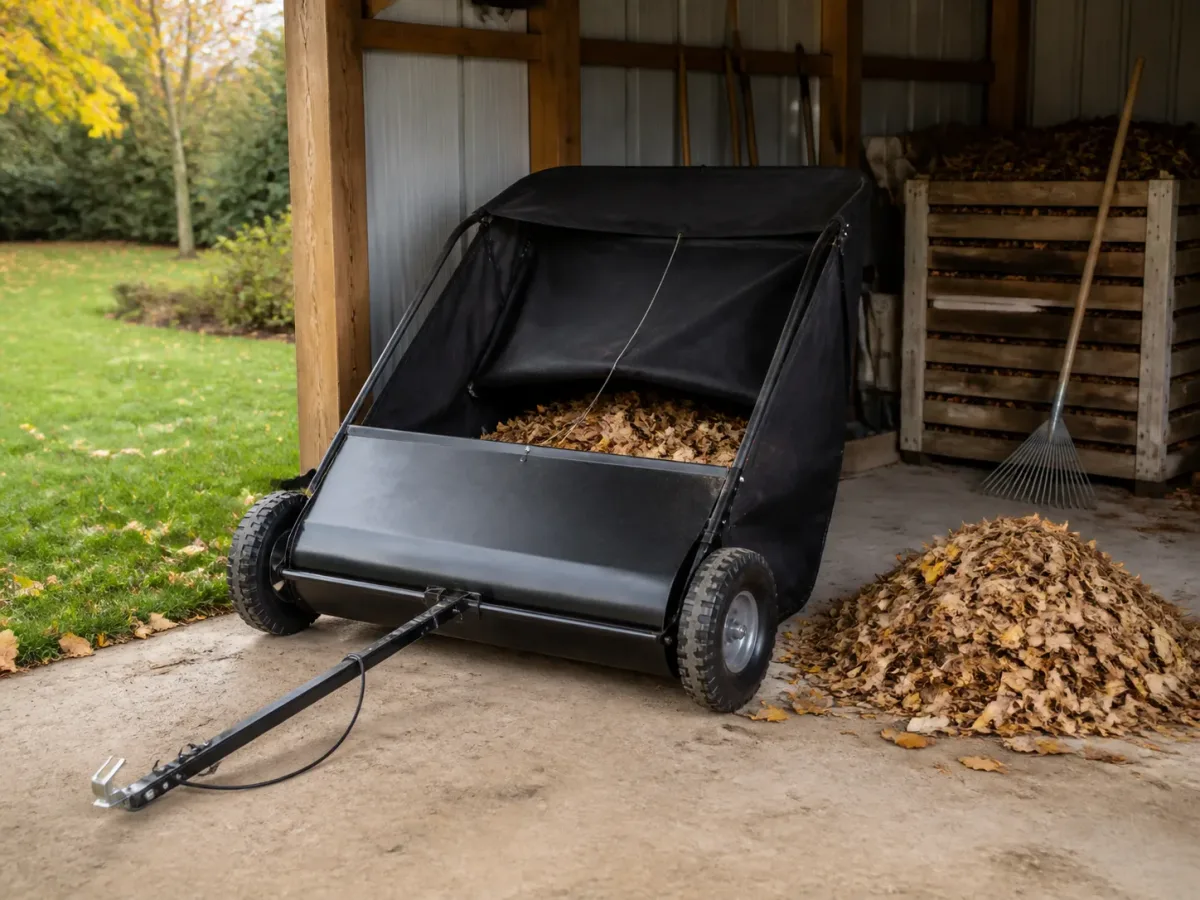
Empty before the load becomes difficult to lift or the bag begins dragging. If the model uses a dump rope, keep the rope clear of wheels and moving parts, stop on stable ground, and confirm that the hopper has returned to its secured position before traveling again. For push models, park on level ground before removing a bag. Wet leaves are heavier and can compact quickly, so reduce the load sooner than you would with crisp dry leaves.
Decide where the material will go before the first pass. A thin layer of shredded leaves can be useful on a lawn when grass remains visible, while a thick layer of whole leaves can block light and hold moisture against the turf. BobVila’s locally cached leaf-mulching guidance recommends shredding leaves into small pieces, using repeated passes when needed, and moving excess material to beds or compost rather than leaving a suffocating blanket on the lawn. (BobVila leaf-mulching guidance) Follow local yard-waste rules if the material leaves your property, and do not put herbicide-treated clippings into food-garden compost unless the product label and local guidance allow it.
At the end of the season, brush off mud and plant residue, let the hopper dry completely, and inspect brush bristles, wheel hardware, hitch points, the dump rope, and the bag seams. Store the attachment under cover, supported so the bag is not crushed, and keep it where rodents cannot easily nest in dry leaves left inside. A few minutes of cleaning prevents a damp, compacted load from becoming next season’s first clog.
Conclusion
For most homeowners with an open lawn and a compatible riding mower, the Agri-Fab 44-inch Tow-Behind is the best all-around starting point because its width and hopper capacity are substantial without being the extremes in this group. The Earthwise 21-inch and Scotts 26-inch make more sense when you need a push tool for a smaller property, while the Ohio Steel 50-inch is for wide, tree-covered ground where storage and emptying bulk are acceptable.
Choose the Agri-Fab 26-inch Push-Behind when capacity matters but you do not own a riding mower, and consider the Troy-Bilt 42-inch when you want a slightly smaller tow-behind footprint. Before ordering, measure the gate and storage space, verify the hitch or route, identify the debris you actually collect, and decide where the load will be emptied. Those checks matter more than a single width or capacity number—and they are what turn a lawn sweeper from an interesting attachment into a tool you will use every season.