How to Get Rid of Pantry Gnats Overnight
Tiny flies in your pantry? Learn which gnat you have, what to do in the next hour, which traps work tonight, and what still needs a week of follow-up.
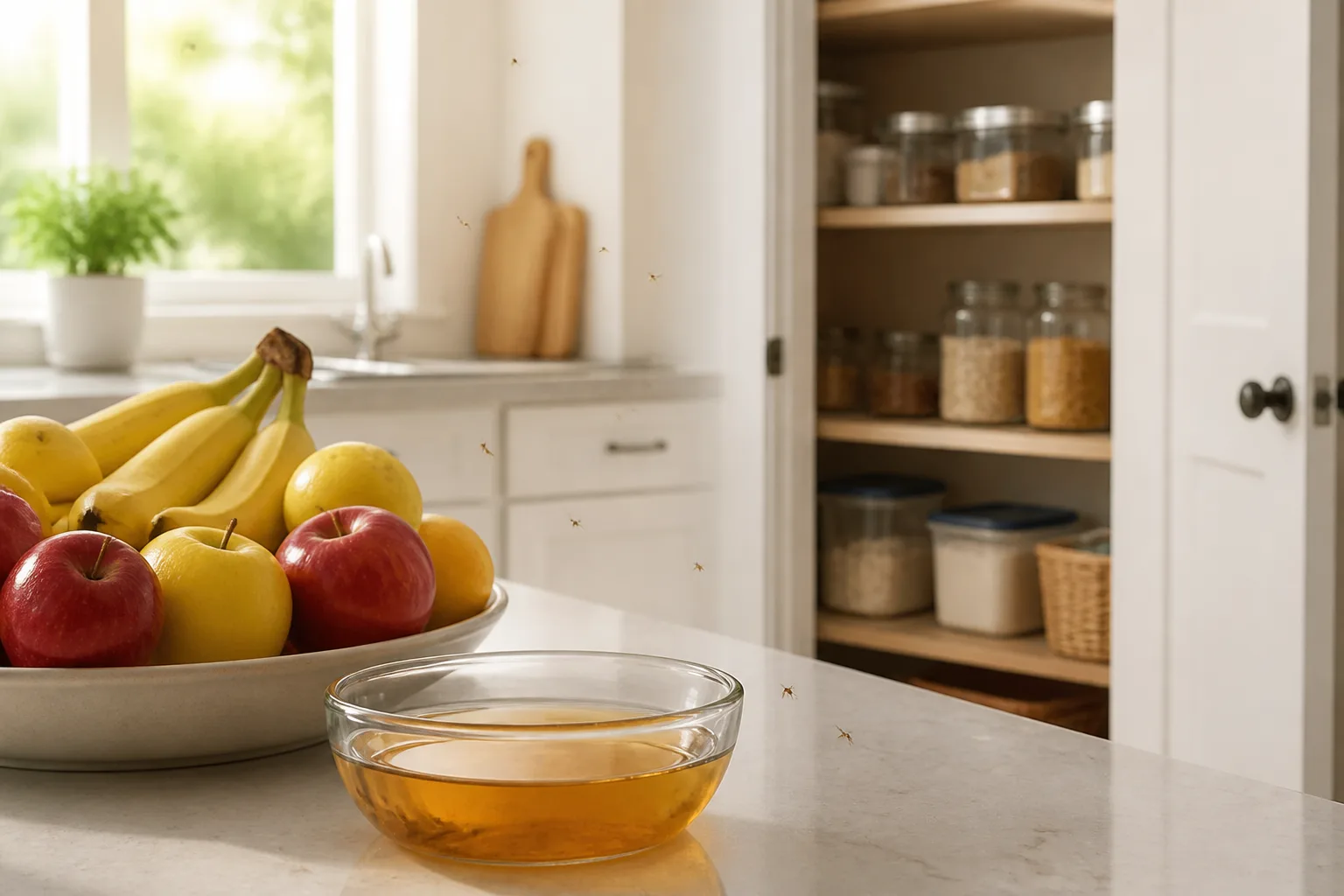
You open the pantry door and a dozen tiny flies scatter toward the light. Maybe they were resting on a banana. Maybe they lifted off a bag of potatoes. Maybe they were not in the pantry at all — just passing through from a damp houseplant on the windowsill or a sink drain down the hall. Pantry gnats is what most people call them. Pest specialists call them by species, and that distinction is the difference between a frustrating week and a quiet kitchen by tomorrow morning.
Overnight success is realistic for adult knockdown and source removal. It is not realistic for wiping out every egg and larva in one sleep cycle. Fruit flies can complete a generation in about eight to ten days indoors (University of Wisconsin–Madison Extension). Fungus gnats overlap generations in potting mix, so adults keep emerging for weeks if larvae stay fed (Wisconsin Horticulture). Treat tonight as triage: stop new eggs, trap the adults in the room, and schedule the deeper work for the next seven to fourteen days.
Why “Pantry Gnats” Usually Means Three Different Flies
People say gnats in the pantry when they mean any small flying insect near food. Extension offices see three repeat offenders in kitchens. They look similar at a glance. They breed in completely different places. One vinegar trap cannot fix all three.
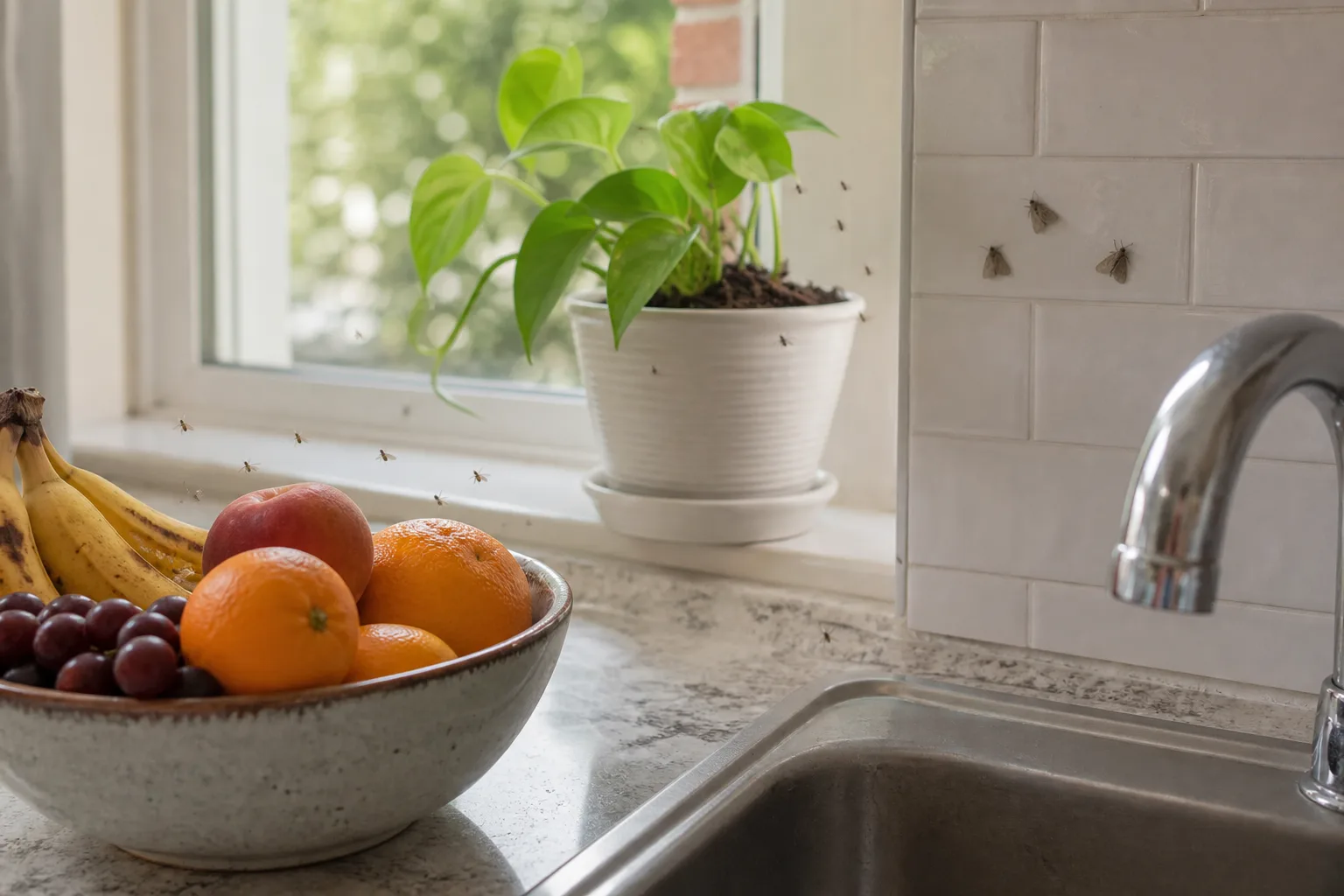
Fruit flies (Drosophila) are tan to brown, often with red eyes, and hover around ripe or fermenting produce, open drink containers, recycling, trash, and sticky residue on counters or in disposals (University of Minnesota Extension). They are the classic pantry pest. If flies appear when you touch a fruit bowl or lift a compost lid, start here.
Fungus gnats are darker, more mosquito-like, with long legs and weak flight. Adults rise from damp potting mix when you water or bump a pot. They rest on soil, pot rims, and nearby windows — not inside your cereal box (Colorado State University Extension). A kitchen herb garden, winter plant shelf, or tropical collection near the pantry often explains “pantry gnats” that never land on food.
Drain flies (moth flies) are gray, fuzzy, and weak fliers that rest on walls and tiles near sinks, showers, and floor drains. They develop in the organic slime inside pipes, not in stored rice (Virginia Tech Cooperative Extension). If the flies look like tiny moths and stay bathroom-adjacent, vinegar in the pantry will not help.
| What you notice | Likely pest | Breeds in | Best first move tonight |
|---|---|---|---|
| Tan flies on fruit, trash, or recycling | Fruit flies | Fermenting produce and food residue | Remove sources + vinegar trap |
| Dark flies rising from plant soil | Fungus gnats | Moist potting mix | Yellow sticky card + dry soil surface |
| Fuzzy flies on walls near a drain | Drain flies | Drain slime film | Drain test + mechanical cleaning |
For a deeper trap-by-trap breakdown, see our homemade gnat trap guide. For houseplant-focused fungus gnat control, see houseplant fungus gnats: causes and fixes.
Your Overnight Action Checklist
Set a sixty-minute timer and work in this order. Skipping straight to traps is why people wake up to a full bowl of dead flies — and a kitchen that still buzzes.
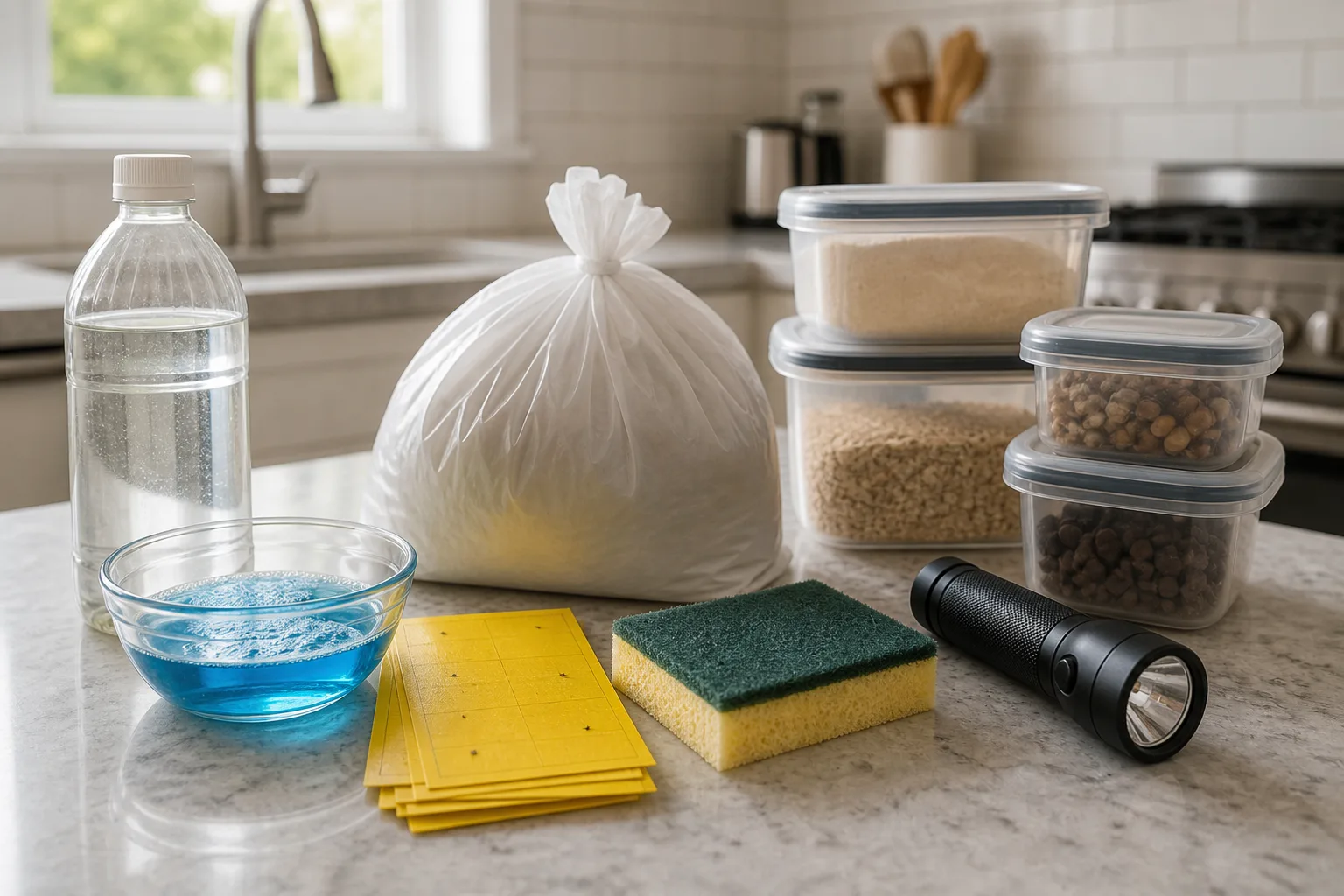
Minutes 0–15: Watch and ID. Note where flies take off, what they land on, and whether any potting mix is involved. Write it down. Guessing wrong wastes the whole night.
Minutes 15–35: Remove breeding material. Refrigerate ripe produce. Bag and remove trash, recycling, and compost. Rinse bottles and cans bound for recycling. Wipe sticky counters and cabinet shelves. Pull the fridge drip pan if your model has one.
Minutes 35–45: Set traps matched to the pest. Vinegar and dish soap for fruit flies. Yellow sticky cards at houseplant soil lines for fungus gnats. A taped drain opening or inverted cup test for drain flies.
Minutes 45–60: Fix moisture. Empty plant saucers and cachepots. Run the disposal with cold water and brush splash zones. Line fresh trash bags and leave lids tight.
Check traps in the morning. A full vinegar bowl with fewer live flies in the room means the bait worked. Live flies still hovering over untouched produce means you missed a source.
Step 1: Remove and Seal Fermenting Food Tonight
Traps catch adults. Breeding-site removal stops tomorrow’s hatch. The University of Wisconsin–Madison Extension is blunt: the only way to completely stop fruit fly problems is to find and eliminate where they lay eggs — fermenting and rotting organic matter near the surface.
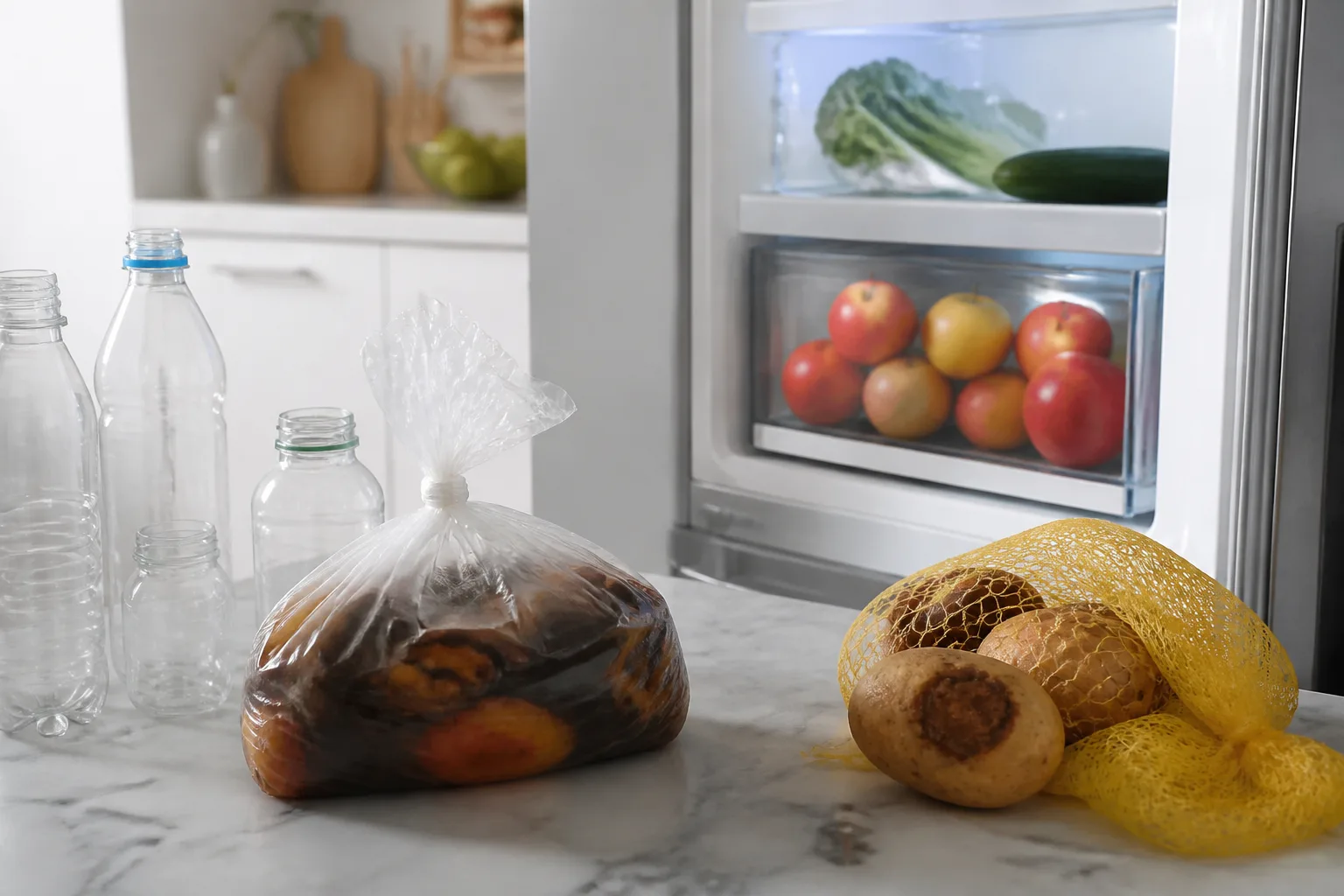
Tonight, move every ripe or bruised fruit into the refrigerator or a sealed container. Do not leave a decorative bowl on the counter while you “finish it tomorrow.” One forgotten peach can support hundreds of flies in a week. Toss soft produce with active larvae or puncture wounds you are not willing to cut away. Wash firm items under running water and dry them before storage.
Empty kitchen trash and recycling even if the bag looks half full. Fruit flies breed in the bottom crust of cans and bottles, not just in obvious fruit. Rinse beer, wine, soda, and sauce containers before they sit in a bin overnight. Wipe the inside rim of the garbage can and the lid gasket — those seams hold syrup and pulp.
Check less obvious pantry food. Onions and potatoes stored in mesh bags or dark corners ferment from the inside out. Squash with soft spots, aging garlic, and bread in paper bags all qualify. If you find a breeding pocket, discard the affected food in an outdoor bin or sealed bag, then wash the shelf with hot soapy water and dry it completely.
Step 2: Set the Right Trap Before Bed
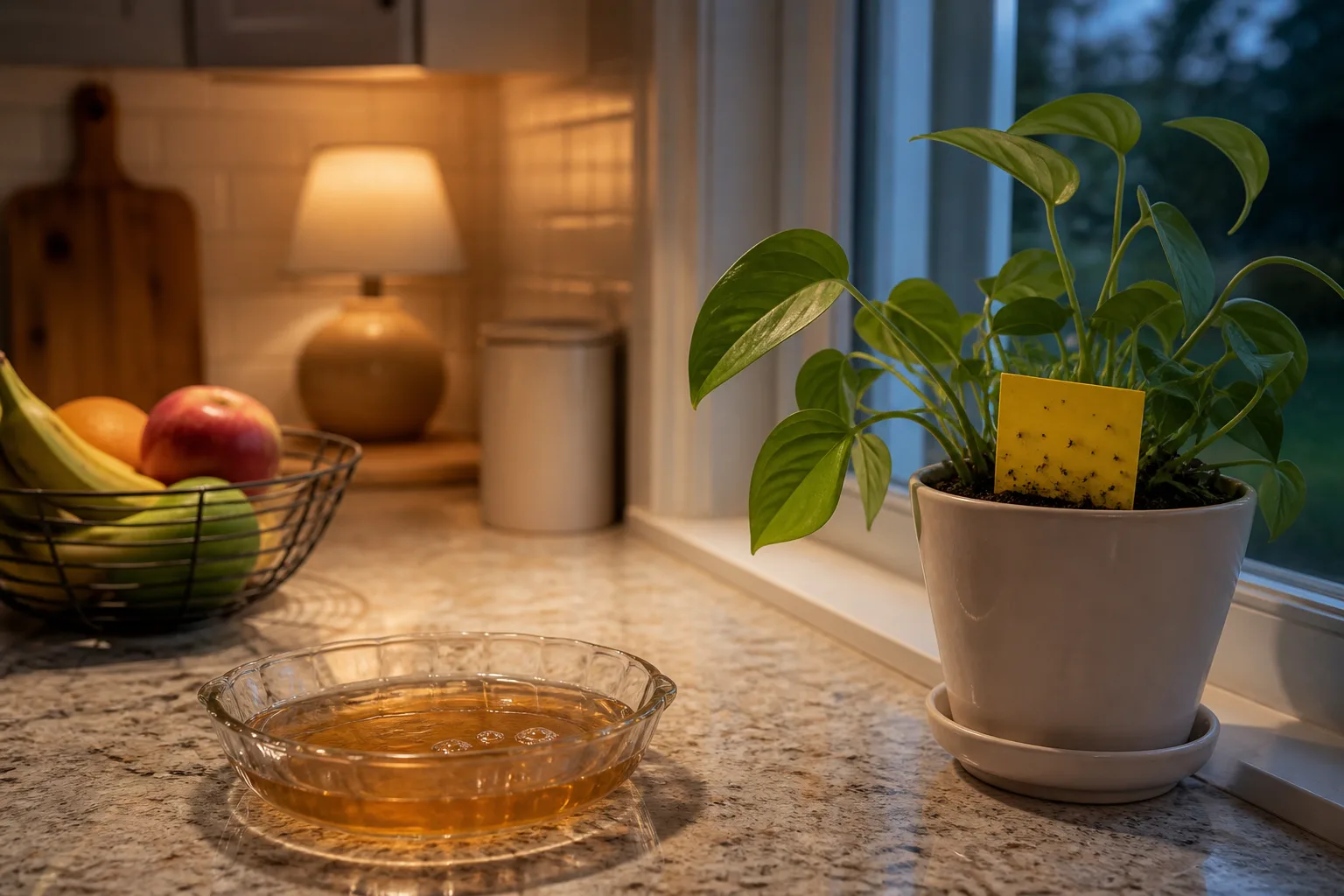
Apple cider vinegar and dish soap for fruit flies
For fruit flies, a shallow vinegar trap is the fastest overnight tool. Pour about half an inch of apple cider vinegar or red wine vinegar into a small bowl. Add two or three drops of dish soap to break surface tension so flies sink instead of skating across the top. Optionally cover the bowl with plastic wrap and poke a few small holes to reduce spills if the trap sits on a pantry shelf.
Place the bowl near the highest fly activity — on the counter where the fruit bowl sat, beside the trash zone, or on the shelf where you saw clustering. Leave it undisturbed until morning. Refresh the liquid daily while catches remain high. For more trap variations and funnel-jar setups, see how to make gnat traps and our best fruit fly traps roundup.
Yellow sticky cards when flies hover near houseplants
Vinegar traps do not reliably catch fungus gnats. Wisconsin Horticulture notes that monitoring methods used for fruit flies fail for fungus gnats because the pests are not attracted to fermentation baits (Wisconsin Horticulture). Instead, set a small yellow sticky card just above the soil line of any suspect pot. The card catches adults, reduces egg laying, and tells you whether the plant is still producing flies tomorrow.
If you water tonight, let the top inch of mix dry before the next watering when the plant can tolerate it. Empty saucers and outer cachepots so water is not re-wicked into the root zone. Heavy fungus gnat infestations still need larval treatment such as Bacillus thuringiensis israelensis (BTI) on later days — not a single dry-down — but drying the surface tonight removes the most attractive egg-laying sites (Colorado State University Extension; UC IPM).
Step 3: Run a Hidden Pantry Breeding-Site Audit
Pantry gnat explosions feel sudden because the flies were breeding out of sight for days. The University of Wisconsin–Madison Extension lists detective work as essential: banana peels swept under appliances, caked vegetable matter in trash bottoms, sour mops, recycling bottles, fridge drip pans, and rotting bulbs or wet plant debris.
Walk the room with a flashlight at counter height. Pull the toaster, stand mixer, and fruit bowl stand forward. Look for sticky rings and forgotten peel fragments. Open the cabinet under the sink and sniff — fermenting residue on a damp sponge or drip tray counts. Check the recycling bin in the pantry, not just the kitchen island bin.
In the refrigerator, inspect the crisper drawers. Liquid pooling under loose lettuce or a cracked tomato breeds flies even behind a closed door. Wipe drawers dry before restocking. If you store onions or potatoes in the pantry, cut one open when flies persist with no fruit on the counter — internal rot is a common miss.
Sealed packages are not automatic safe zones. Pinholes, torn corners, and damp cardboard can harbor larvae in grains, pet food, or bulk snacks. Discard anything with live maggots inside the packaging. Transfer dry goods you are keeping into airtight jars after you wipe the shelf.
Step 4: Check Houseplants in the Same Room
A pantry can look infested when the real source is a wet houseplant three feet away. Fungus gnat females lay eggs in cracks on moist soil surfaces. Larvae feed on fungi and organic matter in the top few inches of mix (RHS). Adults are weak fliers but still drift toward windows and kitchen light.
Water a suspect plant and watch. If a small cloud lifts off the soil, you have fungus gnats regardless of what is in the fruit bowl.
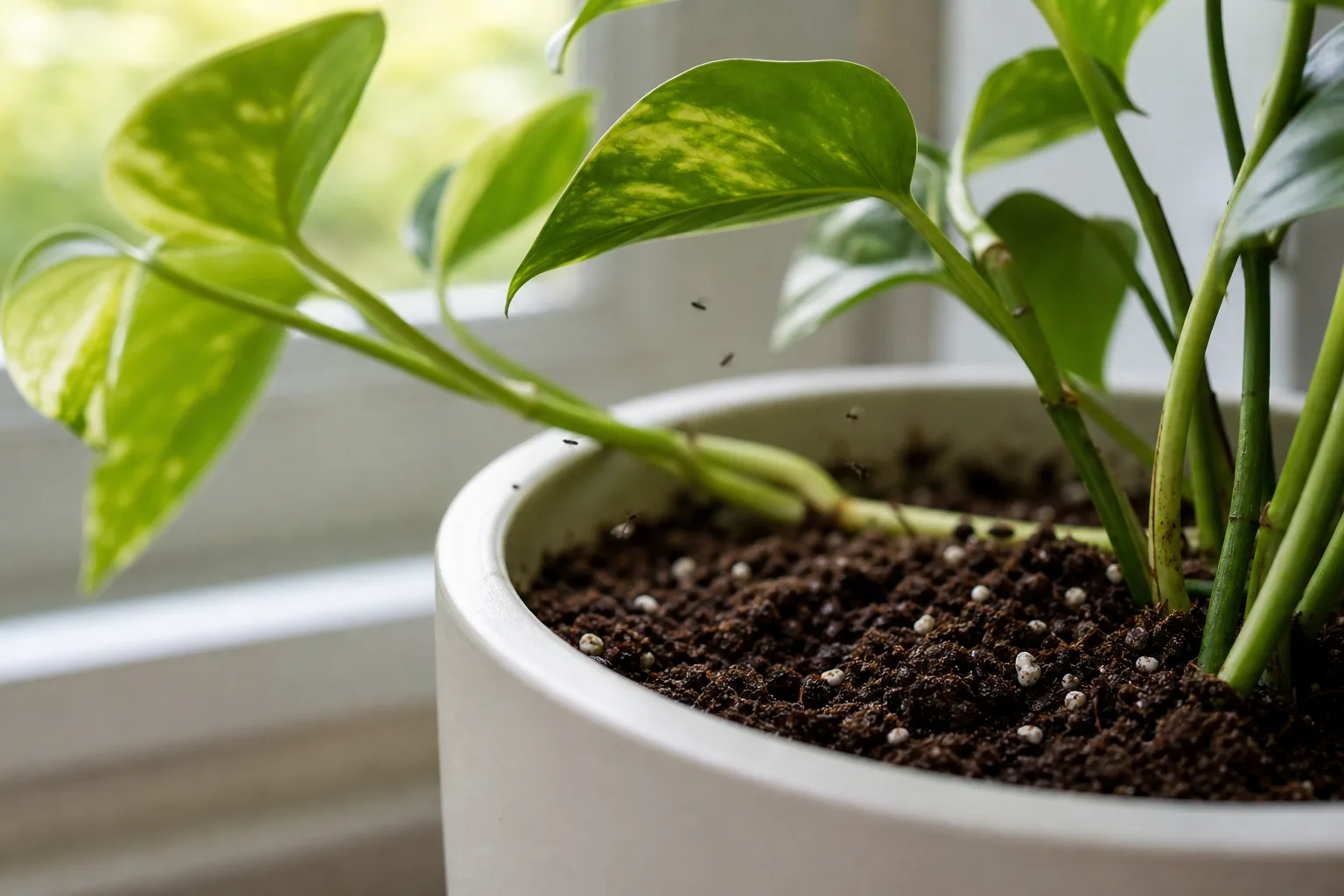 Place sticky cards on every pot in the room tonight. Skip watering until the surface dries for plants that tolerate it. Review mold on houseplant soil if you also see white fuzz — both problems love chronic moisture.
Do not desert-dry the entire root ball on moisture-loving plants in one night. The goal is a dry upper inch while deeper roots stay appropriately hydrated — the same principle as how to water indoor plants the right way. Fungus gnat cleanup often takes three to four weeks of adjusted watering plus larval treatment; tonight’s job is to stop making the soil irresistible.
Step 5: Test Drains If Flies Cluster Near the Sink
When flies hug the wall above the kitchen sink and rarely touch produce, suspect drain flies, not pantry fruit flies. Cover part of the drain opening with clear tape sticky-side down, leaving a small air gap, or invert a clear cup coated with a thin film of petroleum jelly over the opening overnight. Flies stuck to the tape or cup implicate that drain.
Mechanical scrubbing of the organic film inside the pipe matters more than pouring bleach or vinegar down the drain. Bleach may kill some adults on contact but does not reliably remove the gelatinous breeding layer larvae need (Penn State Extension). For a full drain-fly protocol, see how to get rid of drain flies and fruit flies in kitchen drains.
What Actually Works Overnight vs What Needs a Week
Overnight wins: removing fermenting food, setting correctly matched traps, refrigerating produce, rinsing recycling, drying fridge drip zones, placing sticky cards on plants, and confirming which pest you have.
Not finished by morning: eliminating every larva in potting mix, clearing established drain slime without repeated scrubbing, and fully breaking overlapping fungus gnat generations. Colorado State Extension notes fungus gnat control may require three to four weeks of modified watering plus repeated BTI applications spaced five to seven days apart (Wisconsin Horticulture).
Fruit flies can look gone after one clean night because traps catch adults fast — but eggs already laid in a missed recycling bottle will hatch in days. Keep traps up and repeat the pantry audit until you have three to five consecutive low-catch mornings.
Aerosol pyrethrin sprays kill adults present at the moment of spraying but provide no residual control (University of Wisconsin–Madison Extension). Spraying the pantry air while leaving a fermenting onion in the cabinet is theater. Fix the source first.
When Your Trap Catches Nothing: Wrong Fly, Wrong Bait
An empty vinegar bowl is useful data. If flies ignore vinegar but hover over soil, you likely have fungus gnats — switch to yellow sticky cards and soil-surface drying. If flies rest on bathroom tiles and ignore both vinegar and plants, run a drain test instead.
If vinegar catches nothing and flies avoid plants and drains, expand the search radius. Check the laundry room for damp lint, the compost caddy on the counter, pet food bowls with wet kibble, and beer or wine bottles in a different cabinet. Fruit flies breed wherever fermentation happens, not only in the literal pantry.
When multiple pest types overlap — common in winter when houseplants move indoors and holiday cooking spikes compost volume — run parallel fixes. Trap fruit flies at the counter, sticky-card the plants, and test the sink. One species does not exclude another.
Week-Two Follow-Up for Fruit Flies, Fungus Gnats, and Drain Flies
Fruit flies: Keep vinegar traps refreshed until morning catches drop near zero. Maintain refrigerated produce habits. Re-rinse recycling. If flies persist with a clean pantry, the source is still hidden — repeat the flashlight audit.
Fungus gnats: Continue sticky-card monitoring. Let the top inch of mix dry between waterings. Apply BTI products labeled for fungus gnat larvae according to package directions, with repeats every five to seven days until potato-slice tests and trap counts fall (Wisconsin Horticulture). Push a raw potato wedge cut-side down into moist soil and check for translucent larvae with black heads after three to four days — that confirms larvae are still active.
Drain flies: Scrub the drain throat and overflow channels with a stiff brush after your overnight test identifies the pipe. Enzyme gels can help break down organic film when used as directed. Fix slow drains and leaks that keep slime wet. See getting rid of drain flies for the full cleaning sequence.
Call a plumber if multiple drains fail testing, sewage odor appears, or slime returns within days of thorough cleaning. Call a pest professional if you cannot locate any breeding site after two diligent audits, or if flies persist in a commercial food-prep setting where health codes apply.
Prevention Habits That Stop the Next Pantry Invasion
Prevention is boring and effective. Store ripe fruit in the refrigerator or a sealed container. Take kitchen trash out before it ferments at room temperature. Rinse recyclables the same day you empty bottles and cans. Wipe counters and cabinet shelves weekly, not only after a visible spill.
In the plant zone, water on need rather than calendar autopilot — especially in winter when evaporation slows. Empty saucers within thirty minutes of watering. Top-dressing very wet pots with a thin layer of coarse sand can keep the surface drier and less attractive to egg-laying females (Wisconsin Horticulture).
Keep compost caddies lidded and line them with bags you change before they sour. Inspect onions and potatoes monthly. When you bring outdoor plants inside in fall, isolate and sticky-trap them for two weeks before they sit next to the pantry — that seasonal move is a major fungus gnat entry point (Colorado State University Extension).
Conclusion
Pantry gnats overnight is a solvable emergency when you treat it as a source-and-species problem, not a spray-and-hope problem. Identify whether you are fighting fruit flies on fermenting food, fungus gnats from damp houseplant soil, or drain flies from pipe slime — then remove tonight’s breeding material, set the trap that matches the pest, and plan a week of follow-up for anything still hatching in mix or drains.
You should see fewer live flies by morning if the source was food-related and you cleaned thoroughly. Sticky cards and dry soil surfaces should show declining fungus gnat catches within days. If numbers stay high after an honest audit, you have not found the breeding site yet — not that traps failed. Keep searching, keep trapping, and adjust watering and drain maintenance until the kitchen stays quiet without daily body counts in a vinegar bowl.



