How to Grow and Care for Chinese Lantern
Learn how to grow Chinese lantern in beds or containers, manage rhizomes and seedlings, water and prune it, dry the pods, and avoid toxic-plant mistakes.
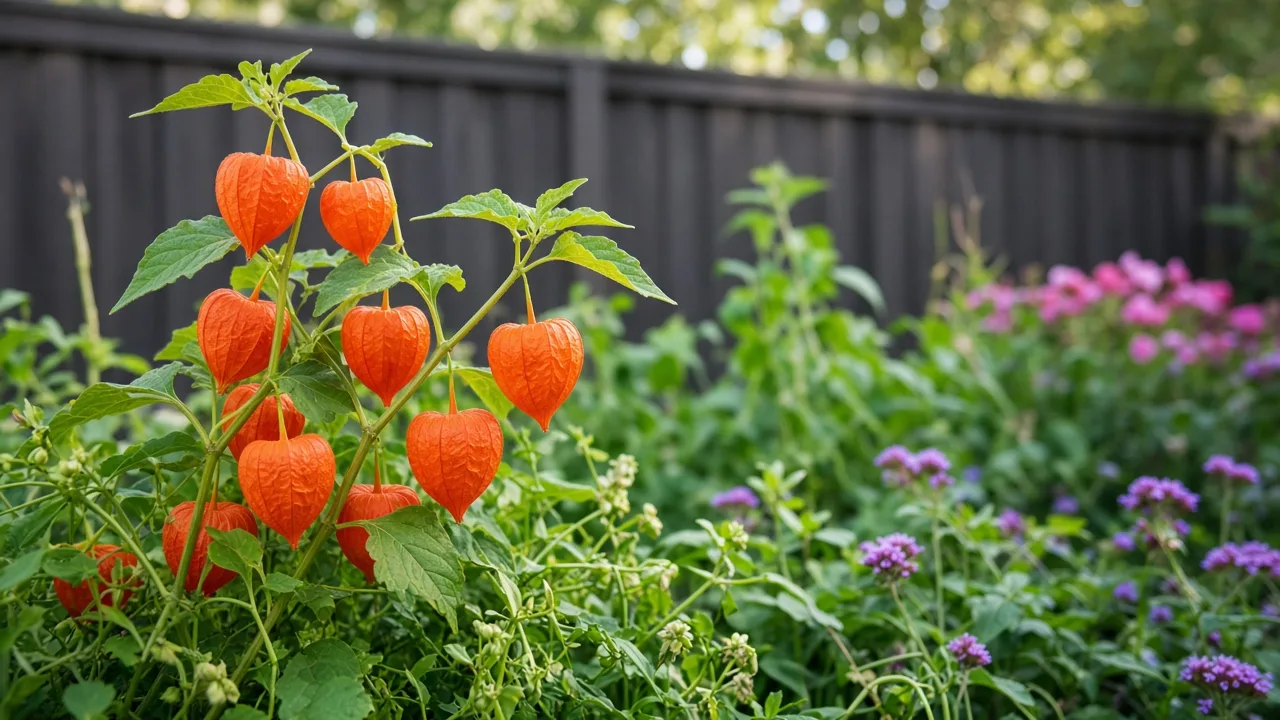
Chinese lantern (Physalis alkekengi) is a hardy-looking perennial grown for the orange-red, papery husks that appear after its small summer flowers. Those “lanterns” are inflated calyces—the protective flower parts around the developing berry—not the flowers themselves. The plant is attractive, useful for autumn arrangements, and easy to establish. Its less charming feature is a vigorous underground rhizome system that can turn one planting into a wide patch.
The best care plan starts with a location decision, not fertilizer. Put Chinese lantern in full sun or partial shade, give it soil that stays evenly moist but drains freely, and decide how you will intercept rhizomes and seed before you plant. The RHS plant profile describes it as a vigorous herbaceous perennial with summer bell-shaped flowers and deep-orange calyces, while NC State Extension’s Physalis profile confirms the genus’s spreading habit, full-sun preference, and need for caution around unripe fruit and other plant parts.
| Need | Practical starting point |
|---|---|
| Light | Full sun for the strongest stems and brightest pods; partial shade in hot climates |
| Soil | Moist, fertile enough for steady growth, and well drained |
| Water | Soak deeply when the surface begins to dry; do not keep roots soggy |
| Habit | Herbaceous perennial that dies back in cold weather and returns from the crown |
| Containment | A large monitored container is safer than an open bed, but it is not escape-proof |
| Safety | Treat the plant as ornamental; do not eat leaves, flowers, berries, or pods |
Identify Chinese Lantern Before You Plant
Look for upright, branching stems, ovate leaves with slightly toothed or wavy edges, and small nodding flowers in summer. After pollination, the calyx enlarges around the berry and changes from green to orange or red. The RHS lists typical plants reaching about 60 centimeters tall and wide, although garden conditions and named selections can produce larger or denser clumps.
The name “Chinese lantern” causes avoidable mistakes. Physalis alkekengi may also be sold under names such as winter cherry, bladder cherry, Japanese lantern, or Alkekengi officinarum. It is related to tomatillos and ground cherries, but a papery husk is not proof that a fruit is an edible crop. A plant sold as “Chinese lantern tree” is a different woody tree, and the flowering houseplant commonly called lantern flower may be Abutilon. Check the botanical name on the label before copying care or food advice from another plant.
The colored structure is a fruiting calyx. Research on a related Physalis species found that the green calyx can photosynthesize, buffer the developing berry’s microclimate, and help with fruit and seed development; that is useful context for understanding the structure, but it is not a reason to remove healthy lanterns early. The peer-reviewed study in Scientific Reports examined Physalis floridana, so apply its biological findings to the genus carefully rather than treating them as a cultivar-specific care instruction.
Safety deserves a firm, simple rule. NC State records high-severity poison characteristics for the genus and distinguishes ripe fruit from poisonous immature fruit and other parts. The Kansas Poison Center profile takes a more conservative approach, listing all parts and warning that large ingestions can cause serious effects. For a home ornamental, do not taste-test berries, leaves, flowers, or husks; keep fallen material away from children and pets, wear gloves while handling a large amount, and call a poison center or veterinarian after a suspected ingestion.
Decide Whether It Belongs in Your Garden
Chinese lantern is a good choice when you want a seasonal display and can inspect the planting at least a few times each year. It is a poor choice for a narrow border beside lawn, a neighbor’s property, a natural area, or any place where you cannot remove seedlings and rhizomes. The plant does not need a trellis, but it does need a boundary plan.
An open bed can work if the soil is easy to dig and you are willing to patrol the perimeter. A container is the better default when you are renting, gardening in a small yard, growing near children or pets, or trying the plant for one season of pods. Container growing also makes it easier to remove the whole plant if you change your mind.
Do not confuse “contained” with “contained forever.” Rhizomes can reach drainage holes, and ripe berries can drop seed outside the pot. Choose the container when it is still manageable, inspect the underside and surrounding ground during the growing season, and remove spent pods before their husks split or decay. If those checks sound like too much work, choose a less persistent plant instead.
Start With the Right Light and Site
Give Chinese lantern a site with several hours of direct sun and good air movement. Full sun generally produces sturdier growth and a stronger autumn display. Partial shade is useful in regions with intense afternoon heat, but deep shade can leave stems loose and reduce the number or intensity of lanterns.
Watch the site for a full day before planting. A bed that receives morning sun and bright afternoon shade is often a sensible compromise in hot climates. Avoid a low pocket that stays wet after rain, and avoid a crowded corner where foliage dries slowly. The RHS growing guidance accepts full sun or partial shade and lists both exposed and sheltered positions, so adjust the choice to wind, heat, and winter wetness rather than treating a zone label as a guarantee.
Build Moist, Well-Drained Soil
The target is soil that holds usable moisture around the roots without becoming a saturated plug. A loam-based bed with compost worked into the planting area is usually enough. Sandy soil may need organic matter to slow drying; heavy clay needs improved structure and a planting position that does not collect runoff. Do not create a rich, soft mound that stays wet around the crown.
The RHS lists chalk, loam, and sand as suitable soil types when drainage is right and accepts acidic, neutral, or alkaline conditions. That broad range is more useful than chasing a perfect pH number. Test only if the bed has a known problem, and fix drainage and texture before reaching for a fertilizer.
Use mulch to moderate temperature and evaporation, especially during the first summer. Spread a thin, even layer over the root zone, keeping it away from the crown and emerging shoots. Excessively rich soil can push fast leafy growth and make a persistent plant harder to manage, so aim for steady growth rather than maximum size.
Plant Chinese Lantern Safely
Plant a nursery specimen in spring after the local danger of hard frost has passed, when the soil is workable and new roots can establish. Set it at the same depth it occupied in its pot. Burying the crown or packing wet soil around the stem base makes recovery slower and increases the chance of rot.
Before you dig, mark the boundary you intend to maintain. Leave enough space for a clump to widen without immediately touching the lawn or neighboring perennials; roughly 60 centimeters between centers is a useful starting point for a normal garden selection, with more room if the plant is unusually vigorous. In a bed, place a durable root barrier only if you can install it deeply and still inspect the perimeter. A barrier is a management aid, not permission to ignore the plant.
Use this planting sequence:
- Water the nursery plant so the root ball holds together.
- Dig a hole about as deep as the root ball and wider than its current roots.
- Set the plant level with the surrounding soil, then backfill without burying the crown.
- Water slowly until the entire root zone is moist and excess water can drain away.
- Add mulch, label the plant, and record the edge of the planting area.
- Check for new shoots outside that edge every few weeks during active growth.
Water to Keep Roots Evenly Moist
Water new plants when the top inch of soil begins to dry, then soak deeply rather than sprinkling the surface. After establishment, the exact interval depends on sun, wind, temperature, soil, and container size. In a bed, push a finger into the soil near—not directly against—the crown. In a pot, lift it when dry and again after watering so you learn its weight.
Letting the plant wilt repeatedly can reduce flowering and pod production, but permanently wet soil is just as damaging. Yellow leaves plus wet soil, a sour smell, or a soft stem base point toward root stress rather than thirst. Allow the bed or pot to drain, reduce the next watering, and check the roots before adding anything else.
The Gardening Know How care guide recommends consistent moisture and mulch, while the practical Weekand care instructions use the top inch of soil as a dry-down cue. These are starting rules, not a demand to water on a fixed weekday. During a rainy spell, do less; during hot, windy weather, check more often.
Fertilize Sparingly for Pods, Not Just Leaves
Start with reasonable soil and do not automatically feed a vigorous plant. If growth is weak in a poor bed, apply a light, balanced, slow-release fertilizer in spring according to the product label. A modest compost mulch is often enough for an established clump.
Avoid high-nitrogen feeding intended to create enormous foliage. It can make stems soft and leafy while doing little to improve the orange display, and it adds fuel to a plant you may already be trying to contain. Never scatter granular fertilizer against the crown or into the foliage. If yellowing is accompanied by wet roots, low light, or pests, fertilizer is not the first correction.
Support Flowering and Lantern Formation
The flowers are small and easy to overlook. They appear in summer, followed by green, inflated calyces that enlarge and color as the season moves toward late summer and autumn. The pods are the ornamental event, so success is better measured by healthy stems and well-formed husks than by a long season of showy flowers.
Keep moisture reasonably even while the plant is flowering and setting fruit. Give it enough light to avoid floppy growth, and do not remove green calyces simply because they are not orange yet. A pale or delayed display is more often a site, moisture, crowding, or seasonal issue than a sign that the plant needs repeated feeding.
Deadheading is optional. Remove damaged flowers or diseased tissue, but there is no benefit in stripping every spent bloom when the calyx is developing around the fruit. Wait for the husks to reach the color and texture you want before deciding whether to harvest them or leave them for autumn interest.
Control Rhizomes and Self-Seeding
Containment is the central care task. Chinese lantern can spread through underground rhizomes and through seedlings from berries that fall or are moved by wildlife. The NC State profile describes the genus as capable of aggressive rhizomatous spread and self-seeding, and the Gardening Know How container guide warns that roots can escape through drainage holes and that a pot does not eliminate seed escape.
Walk the planting edge in spring when new shoots are easy to see. Pull or dig out young shoots outside the boundary while the rhizome is still small. Dig carefully enough to remove the connected piece; chopping a root system into many pieces with a rototiller is a poor control strategy because small viable fragments can become new shoots. Do not put seedy roots, berries, or mature pods into ordinary home compost unless the pile reaches conditions that reliably destroy seed.
Late summer is the second inspection window. If you are not harvesting the lanterns, remove the pods before they dry, split, and release seed. Bag or otherwise contain the material rather than leaving it in a windrow. If you are drying pods, place a tray or paper beneath them and dispose of dropped berries and seeds deliberately.
If the perimeter keeps expanding despite repeated digging, remove the whole clump while the soil is workable instead of waiting for it to become a large eradication project.
Grow Chinese Lantern in a Container
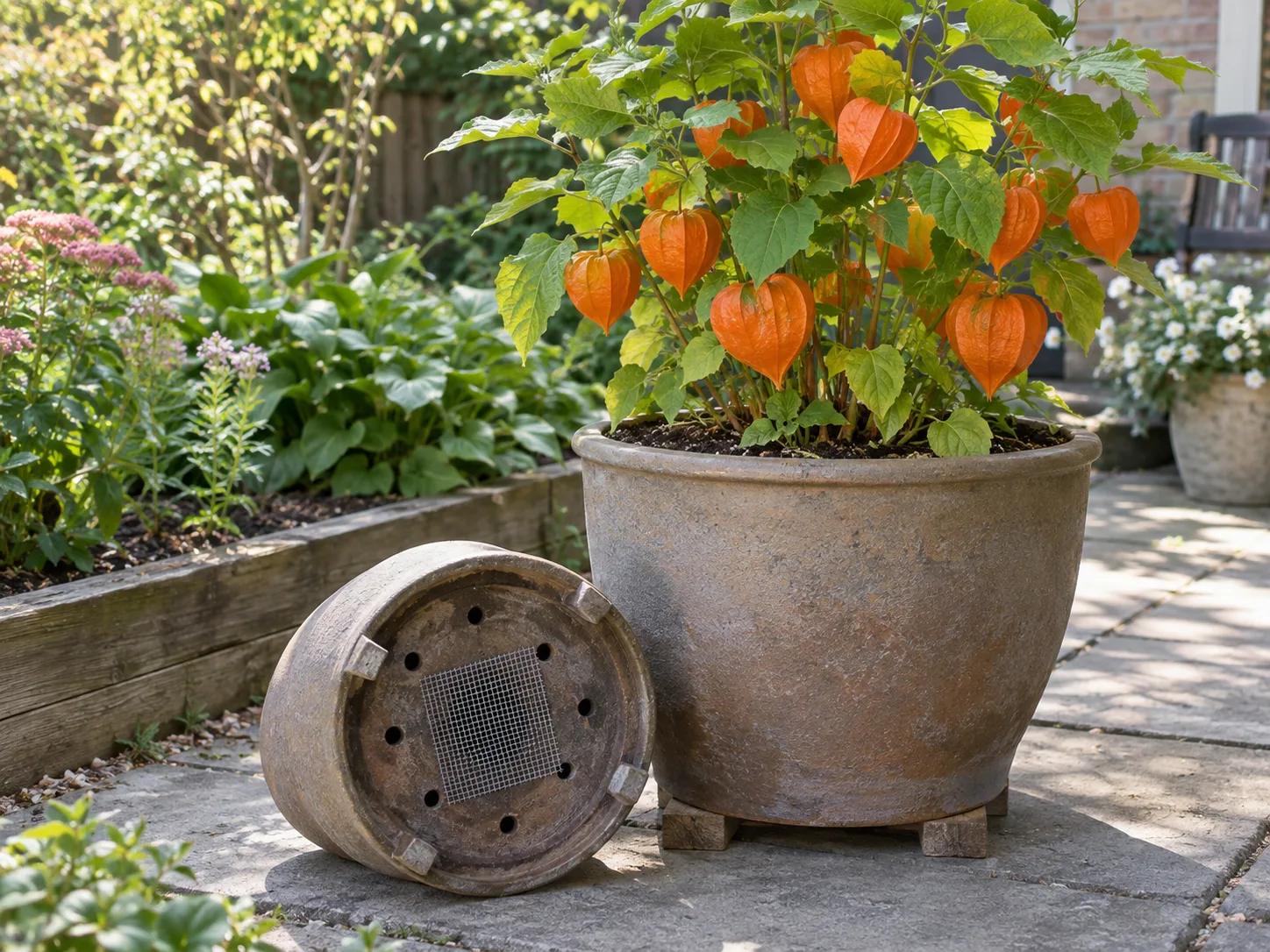
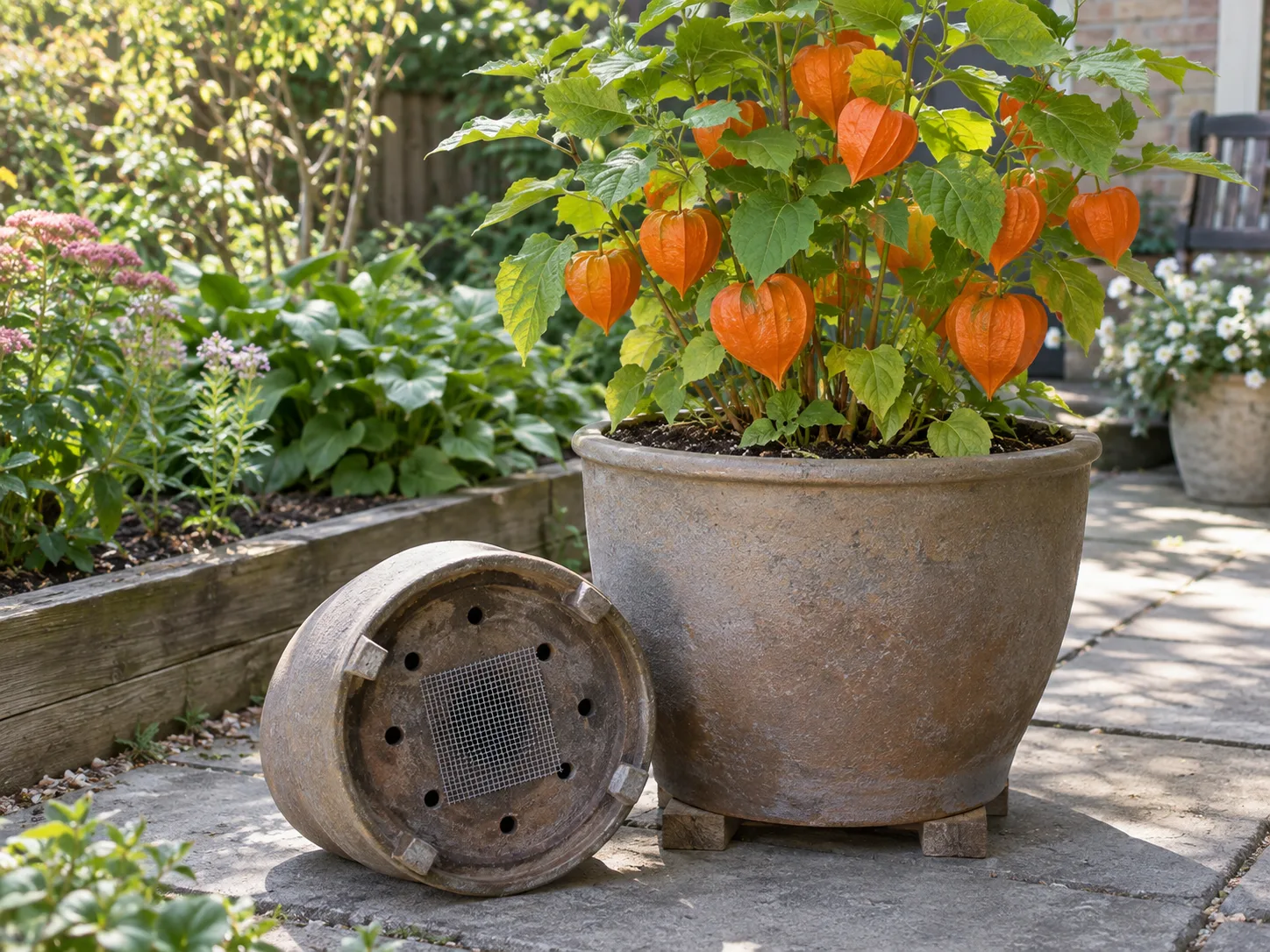
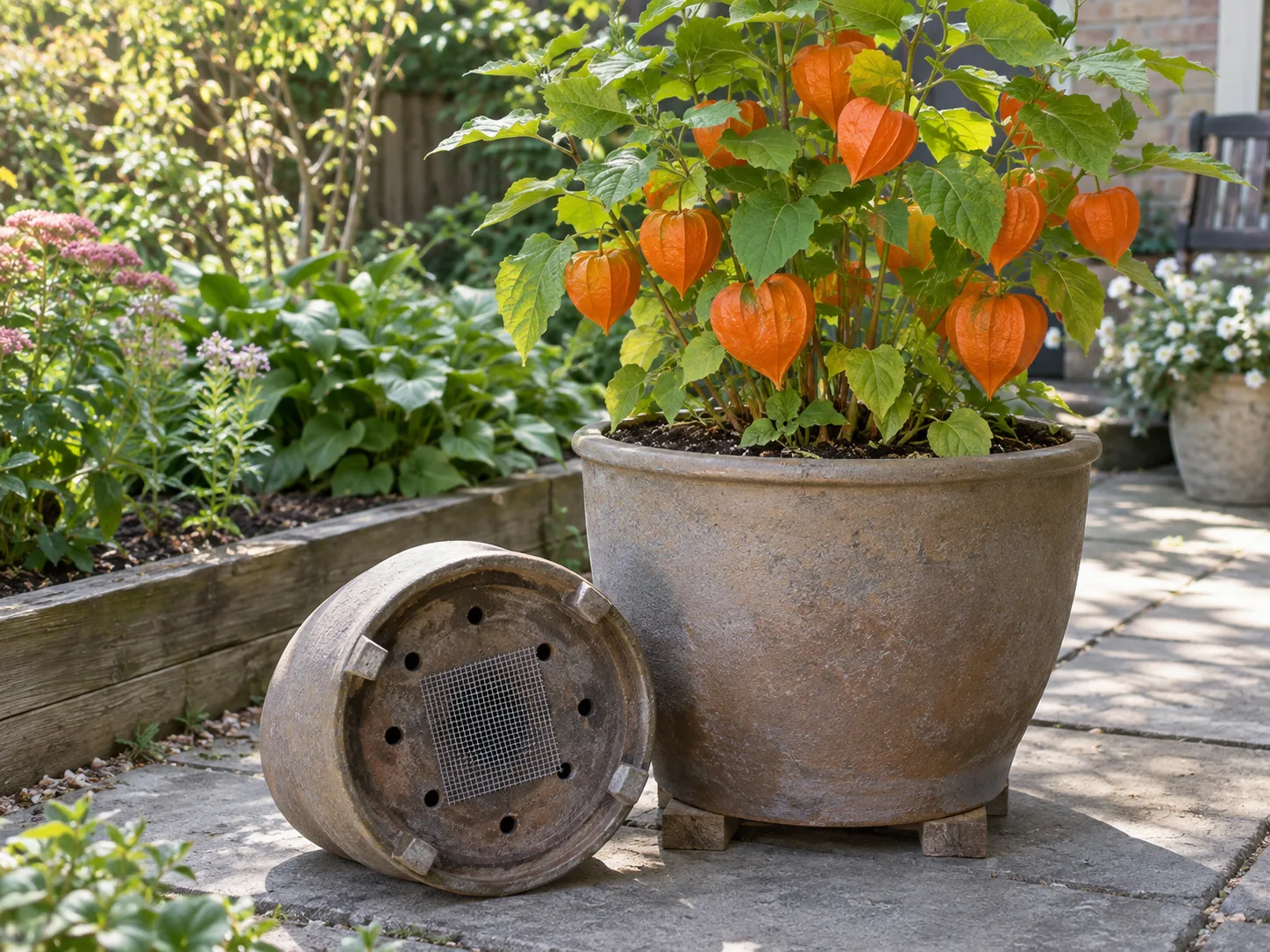
Use the largest practical container you can move or inspect, ideally a broad pot about 45 to 60 centimeters wide for a clump, with several open drainage holes. Fill it with a quality potting mix that drains after a thorough watering. A decorative cachepot can hide the growing pot, but it must be emptied after watering so the roots do not sit in runoff.
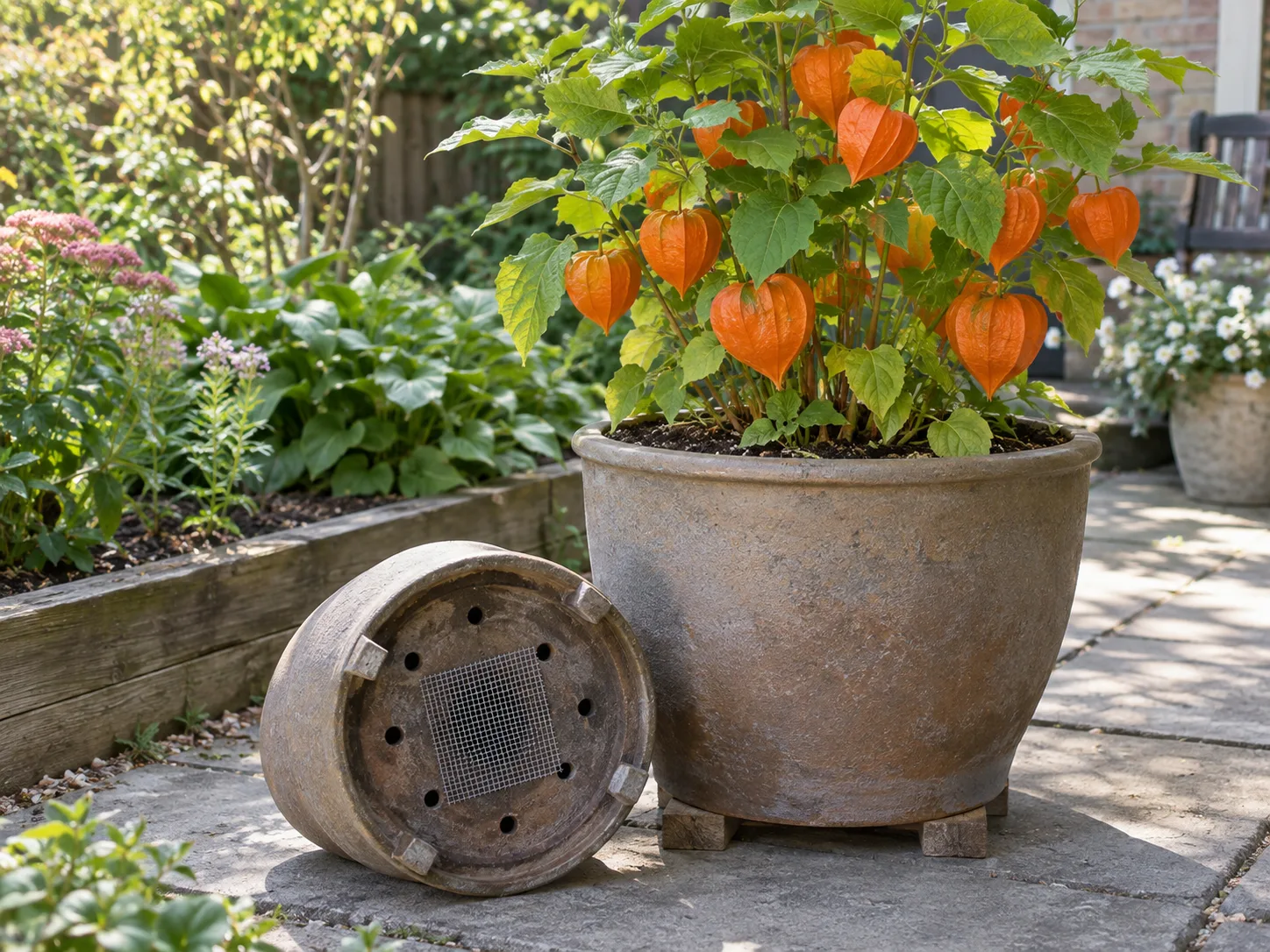
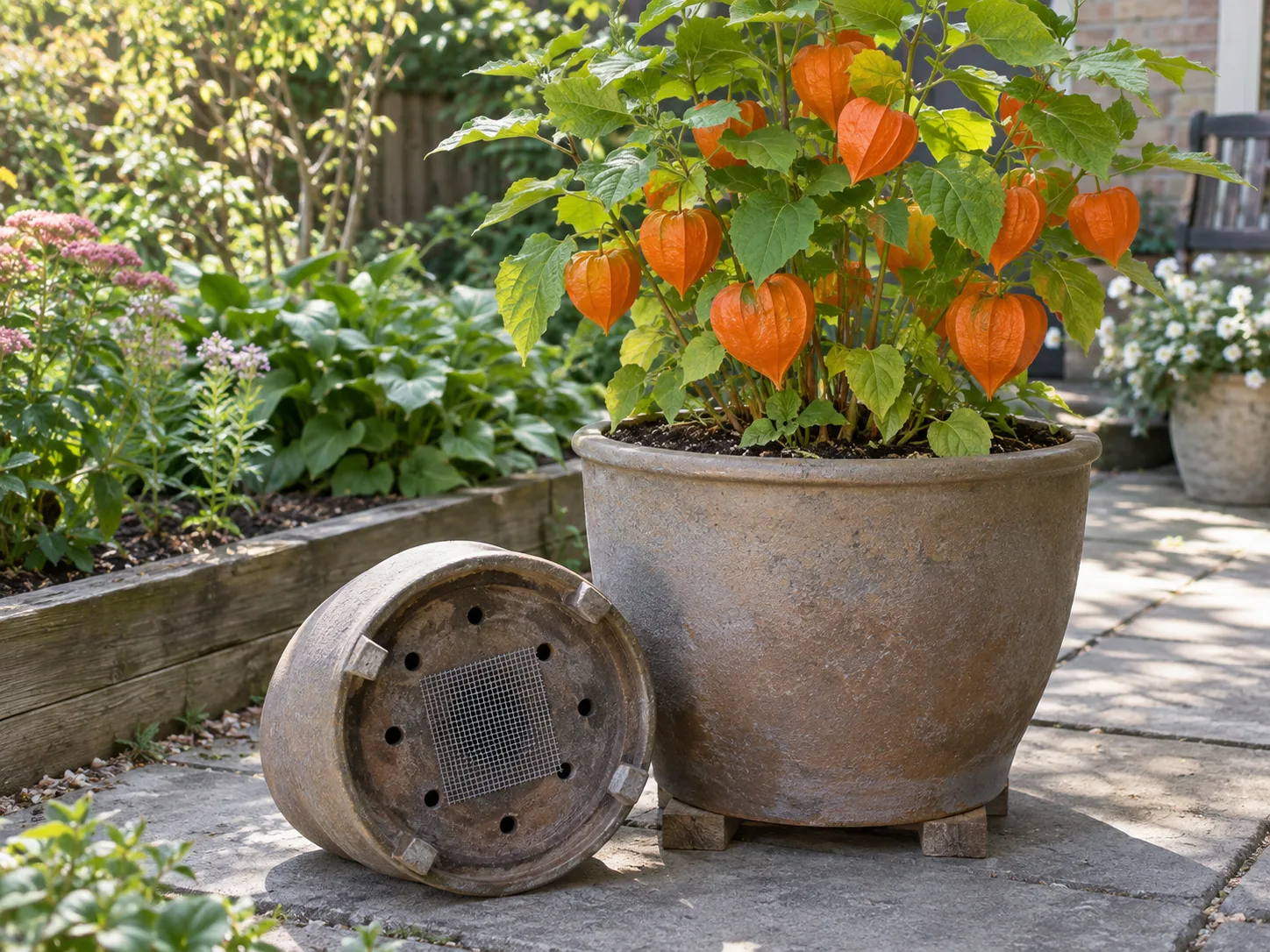
Cover the drainage holes with a fine, durable mesh that lets water out but makes it harder for rhizomes to escape. Do not seal the holes, line the entire pot with impermeable plastic, or place the pot in a saucer that stays full. The goal is a root barrier with functioning drainage.
Place the pot where it receives strong light and where fallen pods can be collected. Check the rim, drainage holes, and ground beneath the pot several times during active growth. If roots reach the holes, move the plant in spring, trim only obviously escaping roots with clean shears, and refresh the mix or divide the clump. The Gardening Know How container article recommends starting with a large pot and acknowledges that occasional root pruning may still be necessary.
Container plants dry faster than plants in the ground, especially in sun and wind. Use the same soil-readiness test, but check more often. In late autumn, decide whether to keep the dormant pot in a protected outdoor place, move it to an unheated sheltered location, or treat it as a seasonal display. The right option depends on local winter temperatures and the pot’s exposure; cold, saturated mix is a greater threat than a dry dormant stem.
Propagate by Seed or Division
Division is the quickest way to make a plant that matches the parent. Do it in spring as new shoots are emerging, or at another mild period recommended for your climate. Lift a clump with a spade, tease or cut it into sections, and make sure each section has healthy roots and at least one or two strong shoots. Replant immediately, water thoroughly, and keep the divisions evenly moist while they establish.
Division is also the easiest way to multiply a problem. Divide only when you have a destination and a containment plan, and do not share rooted pieces casually with a gardener who has not heard about the plant’s persistence. Clean tools between cuts; the Weekand guide gives sanitation as a sensible precaution when dividing or pruning.
Seeds need more patience. For an early start, sow indoors about six to eight weeks before the last expected spring frost. Use a clean seed-starting mix, press the seeds onto the surface or cover them only very lightly, and keep the medium evenly moist. Gardening Know How’s seed guidance notes that light helps germination, a warm range around 70–75°F (21–24°C) is useful, and emergence may take as long as a month.
Place the tray in bright light, but do not let a sunny window cook the surface or dry it into crust. Once seedlings emerge, give them stronger light and gentle air movement. Harden them off gradually after frost danger passes: set them outdoors in bright shade for a short time, increase exposure over about a week, and transplant only after they tolerate outdoor conditions.
Direct sowing after the soil warms can work, but it gives you less control over where seedlings appear. If you collect seed from dried pods, wear gloves, label the packet with the botanical name and year, and store it away from food and children. Never use a berry’s color alone as permission to eat it; growing seed and eating fruit are separate decisions.
Prune, Harvest, and Dry the Lanterns
Chinese lantern needs no routine shaping. Let the stems support the developing pods, then remove dead, damaged, or diseased material. Frost usually kills the top growth, after which you can cut the dry stems to the ground in late autumn or wait until early spring. Leaving some stems through winter can provide structure, but remove them before new shoots crowd the old material.
For arrangements, harvest stems when the calyces are fully colored and firm, before they become so brittle that they crumble. Cut the stem near ground level, strip away leaves, and hang small bundles upside down in a dark, dry, well-ventilated place. The Gardening Know How pod instructions and Weekand both recommend airy drying and retaining the husks on the stems.
Put paper under the bundles. As the fruit and husk dry, seeds may drop; collect and discard them if the plant is not meant to spread. Store the finished stems where children and pets cannot chew them. Dried does not mean edible, and a craft display should not be placed where falling berries become a snack for an animal.
Diagnose Yellow Leaves, Holes, and Mildew
Start by looking at the roots and the soil, not by treating the leaf color in isolation. A few older leaves yellowing as the plant prepares for dormancy can be normal, but rapid, widespread yellowing needs a check of moisture, light, roots, and pests.
Yellow leaves with dry soil and crisp edges suggest drought stress or roots that are not taking up water. Water the root zone slowly and deeply, then check again rather than giving several small surface sprinkles. Yellow leaves with wet soil, a soft base, a sour smell, or dark mushy roots suggest overwatering or root rot; let the mix drain, remove damaged roots with clean shears, and repot into a draining medium only if the root system still has firm tissue.
Yellowing in a container can also mean the plant has filled the pot. If water runs through the mix while the plant wilts, slide the root ball out and inspect it. A dense coil of roots or roots circling the pot wall may need division or a slightly larger container. Do not jump straight to fertilizer: adding salts to damaged roots can intensify stress.
Holes and ragged edges point toward chewing pests, especially beetles or caterpillars. Check the undersides of leaves and the newest growth in the morning, look for insects and droppings, and remove the most affected leaves if the damage is limited. White or gray powder on the leaf surface is more consistent with powdery mildew than chewing. Improve spacing and airflow, water at the soil surface, and remove heavily affected tissue before it shades healthy growth.
If the first correction does not work, reset the diagnosis. Measure moisture at more than one spot, inspect the crown and roots, look for pests with a flashlight, and consider whether a sudden move into intense sun caused scorch. A symptom is evidence, not a complete diagnosis.
Manage Pests Without Making the Problem Worse
Chinese lantern shares the nightshade family’s vulnerability to several common garden pests and diseases. NC State notes that Physalis species can be affected by many of the same problems as tomatoes. The main advantage is that an early inspection usually gives you time to use a small, targeted response instead of treating the whole plant.
For a few beetles or caterpillars, hand-pick them into soapy water and remove badly damaged leaves. Rinse aphids from tender growth with a firm stream of water if the plant can tolerate it. Keep weeds and fallen diseased foliage from forming a dense, humid mat around the crown, and space containers so air can move around every side.
If you decide a pesticide is necessary, identify the pest first and use only a product labeled for that plant and situation. Follow the label for concentration, protective equipment, pollinator precautions, re-entry, and disposal. “Natural” does not mean harmless, and spraying a broad insecticide when the problem is mildew or drought can kill helpful insects without solving the cause.
Do not use a homemade spray as a default treatment for white leaf coating or holes. Remove the affected material, correct the environment, and ask a local extension service or garden professional for a diagnosis when the damage is spreading quickly. The RHS lists the plant as generally disease-free but notes possible caterpillar damage; that is a useful reminder to investigate rather than assume every damaged leaf has the same cause.
Protect the Plant Through Winter
Expect the stems to die back after frost in cold regions. That is not automatically a sign the crown has failed. Cut back only after the foliage has collapsed, mark the planting location, and keep the dormant crown from sitting in winter water. A modest mulch layer can buffer temperature swings, but do not pile wet mulch against the crown.
Hardiness information is not perfectly uniform. The RHS lists P. alkekengi as H7 and describes it as a hardy herbaceous perennial, while the NC State profile gives a broad zone range for the Physalis genus. Treat those labels as guidance, not a guarantee for every cultivar, pot, exposure, or wet winter. A container’s roots are more exposed to freezing than roots in the ground, so move the pot to shelter when local conditions make that necessary.
In spring, wait for the crown to show new shoots before assuming the plant is dead. Remove old stems, inspect the perimeter for escaped shoots, and resume watering only as growth begins. If no shoots appear after the soil warms, check for winter rot, animal disturbance, or a pot that froze solid before replacing the plant.
Chinese Lantern vs. Tomatillo and Chinese Lantern Tree
These plants share a common visual idea—a fruit or seed structure enclosed by a husk—but they are not interchangeable.
| Plant | What you see | Main use and decision |
|---|---|---|
| Physalis alkekengi | Orange-red inflated calyces around a berry; perennial and rhizomatous | Ornamental pods; contain the plant and treat it as unsafe to eat |
| Tomatillo | A different Physalis crop grown for edible fruits inside husks | Vegetable garden plant; follow crop-specific identification and harvest guidance |
| Chinese lantern tree | A woody tree with lantern-like seed capsules | Tree landscaping subject, not the low perennial described here |
The safe identification rule is to read the botanical name and the plant’s growth habit together. A low, herbaceous clump with orange papery calyces is different from a tomato-like annual crop, and neither is the same as a woody tree. If a label is vague or a child or pet has access to the fruit, do not taste it to settle the question. Photograph the plant, save the label, and contact a poison center or veterinarian after suspected ingestion.
Conclusion
Chinese lantern earns its place in a garden when its beauty and persistence are planned together. Give it sun or bright partial shade, soil that drains after deep watering, and enough moisture to avoid repeated drought without keeping the crown wet. Feed lightly, let the calyces color naturally, and cut back the frost-killed stems when the season is finished.
The most important choice is containment. A monitored pot with mesh over its drainage holes is usually the safest starting point, but even a container needs pod cleanup and periodic root checks. If you plant it in the ground, mark the boundary, patrol for runners, remove seed heads before they disintegrate, and never treat a beautiful orange husk as proof that the fruit is safe to eat. With those habits, you can enjoy the autumn lantern display without handing next year’s garden to the plant.