Ashwagandha Care Guide: Light, Water & Growing Tips
Withania somnifera
Ashwagandha needs full sun, sandy well-draining soil, and watering only when the top 3–4 cm dries out. A drought-tolerant Ayurvedic shrub grown for its roots; protect from frost and overwatering.
Ashwagandha Care Guide: Light, Water & Growing Tips
Start with wateringThe most common care mistake for AshwagandhaWatering guide →Ashwagandha care essentials
Light
Water
Water only when the top 3–4 cm of soil is dry. Ashwagandha tolerates drought better than wet feet; let the mix dry between drinks and never leave the pot sitting in water.
Soil
Sandy, well-draining mix with compost. Slightly alkaline loam suits outdoor beds; containers need extra perlite or coarse sand. pH 6.5–8.0.
Humidity
Low to moderate (30–50%)
Temperature
20°C to 35°C (68–95°F)
Fertilizer
About Ashwagandha
Ashwagandha is native to Dry regions of India, Sri Lanka, and South Asia; also naturalized across Africa and the Mediterranean, typically reaches 60–100 cm tall; 30–60 cm spread indoors, with rapid in warm, sunny conditions growth. Ashwagandha has a shrub growth habit and part of the Solanaceae family. It is also known as Indian Ginseng, Winter Cherry, Asgandh, Poison Gooseberry, and Indian Winter Cherry.
| Detail | Information |
|---|---|
| Also known as | Indian Ginseng, Winter Cherry, Asgandh, Poison Gooseberry, Indian Winter Cherry |
| Native region | Dry regions of India, Sri Lanka, and South Asia; also naturalized across Africa and the Mediterranean |
| Mature size | 60–100 cm tall; 30–60 cm spread |
| Growth rate | Rapid in warm, sunny conditions |
| Growth habit | Shrub |
| Scientific name | Withania somnifera |
| Family | Solanaceae |
Ashwagandha Care Guide: Light, Water & Growing Tips
Ashwagandha care starts with an honest framing: Withania somnifera is a sun-driven, drought-smart nightshade shrub grown for a deep, healthy root system—not a lush foliage houseplant for a dim living room. Get placement right—full sun, sandy drainage, and watering only after the upper mix dries—and stems stay firm while roots develop. Treat it like a thirsty tropical foliage plant that wants constant moisture in weak light, and you will see yellowing lower leaves, soft stem bases, and stem or root rot long before fertilizer helps.
This overview covers identity, mature size, light, water, soil, temperature, feeding, propagation basics, common mistakes, and toxicity cautions. Use it as the hub, then open the sibling guides when you need depth on one topic. If you are deciding whether the Ashwagandha plant hub fits your home, match the plant to a sunny balcony, terrace, or dry herb bed first.
What Is Ashwagandha?
Ashwagandha is a short erect shrub in the nightshade family, long grown across dry subtropical regions and widely cultivated in India as an Ayurvedic medicinal root crop. Kew’s Plants of the World Online accepts Withania somnifera (L.) Dunal as a subshrub or shrub of the subtropical biome, with a native range spanning southern Europe to Central China and Africa to Myanmar—including India and Sri Lanka. NC State Extension describes it as a small shrub or herb that behaves as a ground-covering perennial in its native habitat and is often grown as an annual in zones colder than 8.
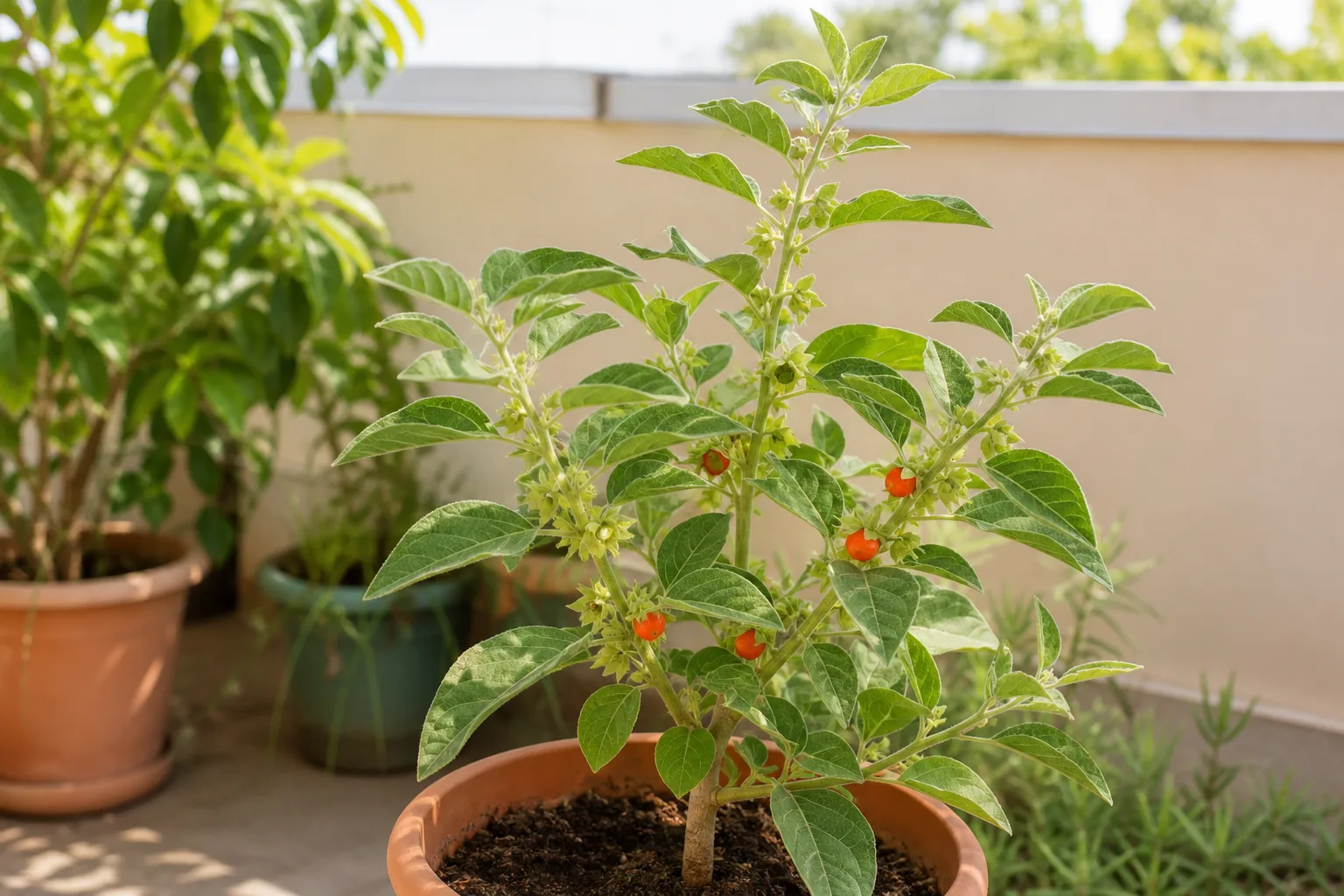
Field marks help you confirm you bought the right plant: silvery-gray branched hairs on stems, dull green ovate leaves with a gray sheen, inconspicuous pale green flowers at the leaf nodes, and showy orange-red berries inside a papery lantern calyx. The leaves can smell faintly of horse sweat; the roots are often compared to green tomatoes. Those traits are normal—soft, mushy tissue at the crown is not.
Botanical Identity and Common Names
The accepted botanical name is Withania somnifera in the family Solanaceae. Common names include Ashwagandha, Indian Ginseng, Winter Cherry, Indian Winter Cherry, Asgandh, and Poison Gooseberry. NC State lists the same trade names and notes the plant’s ethnobotanical use as an Ayurvedic adaptogen and nerve tonic—this page is about horticultural care, not medical use. Confirm the botanical tag when buying: ASPCA’s “Winter Cherry” listing refers to Solanum pseudocapsicum, a different nightshade, not Withania.
Mature Size in the Ground vs in Containers
In open ground under full sun, expect a compact shrub roughly 60–100 cm tall with a 30–60 cm spread—NC State’s planting-space guidance of about 12 inches to 3 feet matches that home-garden scale. Growth is rapid in warm, sunny weather. In containers on a balcony or terrace, plants often stay toward the lower end of that range if the pot is modest and watering is conservative.
Growers harvesting roots typically dig when flowers and fruits form and leaves start to dry out. From seed, NC State notes the plant will flower and fruit in its first year, so you can plan a single warm-season crop in cool climates even if you treat it as an annual.
Best Growing Conditions for Ashwagandha
Four variables decide almost every outcome: light, temperature, soil drainage, and watering rhythm. Align those four and feeding, repotting, and propagation become routine. Misalign any one—especially shade or wet feet—and the plant stalls, yellows, or rots no matter how much compost you add.
Light and Placement
Ashwagandha needs full sun—aim for 6 or more hours of direct light daily on a terrace, roof, south-facing balcony, or open garden bed. NC State is explicit: it cannot grow in the shade. Weak indoor light produces pale growth and soil that stays wet too long, which invites overwatering mistakes.
Indoors, only a very bright sunroom or greenhouse-level exposure works long term. A dim living-room corner will stretch growth and hide moisture problems. For window choice, seasonal intensity, and warning signs of too little sun, use the dedicated Ashwagandha light guide.
Temperature, Frost, and Seasonal Slowdown
NC State places outdoor hardiness roughly in USDA zones 8a–12b. In cooler climates the plant is grown as an annual or brought indoors before frost. A practical comfort band for active growth is about 20–35°C (68–95°F) with low to moderate humidity (30–50%)—warm and dryish rather than steamy.
In North India and other cool-winter regions, reduce watering and expect slower or dormant growth until warmth returns. Move containers under cover or indoors to bright light before nights near freezing. Wet soil plus cold is especially damaging. Soft stems also suffer in stagnant, humid corners with poor airflow.
Soil, Drainage, and pH
Ashwagandha prefers sandy, well-draining, slightly alkaline soil. NC State recommends full sun with good-draining, slightly alkaline sandy soil and notes the plant does well in pots. For containers, a practical mix is about 50% sandy loam or potting mix, 30% coarse sand or perlite, and 20% compost or vermicompost, targeting roughly pH 6.5–8.0. Outdoor beds can use slightly alkaline loam if drainage is free.
Sharp drainage is non-negotiable. If the pot stays heavy for days, smells sour, or sheds leaves after watering, fix the root environment before changing fertilizer. Full recipes and drainage troubleshooting live in the Ashwagandha soil guide.
How to Water Ashwagandha Without Wet Feet
Water only when the top 3–4 cm of soil is dry, then let excess drain freely. NC State’s rule is simple: water only when the soil dries out because the plant does not like wet feet. As a practical reference in warm Indian summers, that often means every 4–7 days for containers in heat; every 10–14 days in cooler months when growth slows. Always finger-test before watering—never obey a reminder app alone.
Ashwagandha tolerates drought better than soggy roots. Overwatering signs include yellowing lower leaves, soft stems at the base, mushy roots, and stem or root rot—NC State lists stem and root rot among the main plant problems. Underwatering shows as midday wilt in heat, leaf drop during dry spells, and stalled growth despite warm weather.
When unsure, wait one more day and check depth rather than adding a “little sip.” Empty saucers after watering. Step-by-step checks and seasonal cadence are in the Ashwagandha watering guide.
Feeding, Roots, and Container Basics
Ashwagandha naturally favors lean, dryish soils, so light feeding is usually enough once light and drainage are right. During the warm growing season (roughly spring through early autumn), feed every 4–6 weeks with compost, vermicompost, or a diluted balanced liquid fertiliser. Stop if the plant is stressed, newly repotted, or not actively growing. Heavy feeding in a wet mix pushes soft growth and raises rot risk. Fertilizer can support growth, but it cannot compensate for bad light or damaged roots—details belong in the Ashwagandha fertilizer guide.
In containers, repot every 1–2 years, or when roots circle the pot, soil stays wet for days, or the plant tips easily. Early spring before active growth resumes is the best window. Do not repot on day one unless the mix is failing. Post-repot and pot-size guidance live in the Ashwagandha repotting guide. Keep pots on the sunniest ledge you have; a crowded, shaded corner defeats the species’ biology.
Propagation Snapshot: Seeds and Cuttings
NC State lists seed and stem cuttings as the recommended strategies. Sow seed about 2 cm deep once air temperatures stay above 21°C (70°F); germination is usually fast within about two weeks in warm sandy mix. Stem cuttings root in warm, free-draining mix and copy a strong parent. Seed is the usual method for a single-season root crop; cuttings help when you want to preserve a vigorous plant.
Aftercare for new plants—strong sun, moisture without sogginess, and delayed fertilizer—matters more than the exact sowing date. Full methods and failure modes are covered in the Ashwagandha propagation guide. Light shaping cuts, if needed, belong in the Ashwagandha pruning guide rather than stripping foliage mid-stress.
Common Mistakes That Stress Ashwagandha
The most expensive mistakes are placement and moisture, not missing a fertilizer week.
Keeping ashwagandha in weak indoor light slows drying and produces pale, stalled plants. Move to the sunniest outdoor or sunroom spot available before diagnosing “nutrient deficiency.”
Watering on a tropical-herb calendar while the mix is still wet—especially in cool weather—invites stem and root rot. Finger-check 3–4 cm deep; do not obey a reminder app.
Using dense, peat-heavy mix without grit holds water against a species built for sandy drainage. Rebuild the mix when pots stay heavy for days.
Exposing containers to frost or sustained near-freezing nights in cool-winter regions. Cover or move pots before cold snaps; wet soil plus cold is especially damaging.
Judging success by soft, lush foliage instead of firm stems and a healthy root system. This plant is grown for roots; soft top growth in wet shade is a warning, not a win.
Changing water, pot size, and placement all at once after a stress event. Stabilize light and drainage first, then adjust one variable at a time.
Pet Safety and Toxicity
Ashwagandha is not a plant to keep within easy reach of pets or children. NC State Extension rates it as medium-severity poison to humans if eaten, with toxic flowers, fruits, leaves, and roots. The orange-red winter-cherry berries inside the papery calyx are especially risky. There is no species-specific ASPCA listing for Withania somnifera; ASPCA’s “Winter Cherry” page covers Solanum pseudocapsicum. Still treat this nightshade as unsafe around chewing pets—keep pots high, remove fallen fruit, and contact a veterinarian if ingestion is suspected. This is plant-safety guidance, not medical or veterinary advice.
When to Use This Page vs Other Ashwagandha Guides
Use this overview to confirm you bought the right plant, choose a sunny placement, set a dry-between-drinks watering rhythm, and decide whether a balcony pot or garden bed fits your climate.
Open sibling guides when you need depth:
- Ashwagandha light — terrace vs indoor limits, sun-stress signs
- Ashwagandha watering — dryness checks, seasonal cadence, over- and underwatering
- Ashwagandha soil — mix recipes, drainage failures, pH notes
- Ashwagandha fertilizer — when to feed, dilution, lean-soil feeding
- Ashwagandha repotting — timing, pot size, post-repot care
- Ashwagandha propagation — seed depth, cuttings, aftercare
- Ashwagandha pruning — light shaping without stressing roots
Related Ashwagandha Guides
Build out the full cluster as you grow:
- Hub: Ashwagandha
- Care: light, watering, soil, fertilizer, repotting, propagation, pruning
Start with light and watering if the plant is new; add soil and repotting when the pot stays wet or roots circle the drainage holes; open propagation when you want a second plant from seed or cuttings.
Conclusion
Ashwagandha rewards growers who respect its dry-subtropical origins: bright full sun, sandy drainage, and water only after the upper soil dries. Keep containers above frost, judge success by firm stems and roots rather than soft foliage, sow seed once nights stay warm, and keep toxic berries away from pets and children. Master those basics on this page, then use the sibling guides when one variable—light, water, soil, feed, pot size, or propagation—needs a deeper fix.
How to care for Ashwagandha?
When should you water Ashwagandha?
Water only when the top 3–4 cm of soil is dry. Ashwagandha tolerates drought better than wet feet; let the mix dry between drinks and never leave the pot sitting in water.
- Finger test at 3–4 cm; water only when dry; never keep the pot soggy - Water only when the top 3–4 cm of soil is dry.
- Drain excess water - Water only when the top 3–4 cm of soil is dry.
What soil works best for Ashwagandha?
Sandy, well-draining mix with compost. Slightly alkaline loam suits outdoor beds; containers need extra perlite or coarse sand. pH 6.5–8.0.
- 50% sandy loam or potting mix - Sandy, well-draining mix with compost.
- 30% coarse sand or perlite - Slightly alkaline loam suits outdoor beds; containers need extra perlite or coarse sand.
- 20% compost or vermicompost - Sandy, well-draining mix with compost.
Grower notes for Ashwagandha
What matters most with Ashwagandha
Ashwagandha is grown for a deep, healthy root system—not lush, soft foliage. Full sun (6+ hours of direct light daily) and a sandy, fast-draining mix decide whether roots thrive or rot. NC State Extension notes it cannot grow in shade and dislikes wet feet. Keep water, pot size, and placement steady while it settles; change one variable at a time.
Best placement in a real home
Put Ashwagandha on the sunniest balcony, terrace, or south-facing ledge you have—not in a dim living room. Water only when the top 3–4 cm is dry; if the pot stays wet longer than expected, improve light or drainage before watering again. Humidity target: Low to moderate (30–50%). Temperature comfort zone: 20°C to 35°C (68–95°F). It is frost tender (roughly USDA zones 8–12 outdoors); bring pots indoors before cool-season frost.
Before you buy this plant
Choose Ashwagandha with firm erect stems, silvery-green hairy foliage, and mix that drains quickly when watered. Be cautious if you see mushy stems at the crown, sour-smelling soil, or a pot that stays wet in poor light. Older leaf drop is less worrying than soft roots or active stem rot. Expect a short shrub that may be grown as an annual in cool climates.
First month after bringing it home
Do not repot Ashwagandha on day one unless the mix is failing or pests are obvious. Quarantine it, learn how fast the pot dries, and keep care boring while it adjusts. Watch especially for overwatering, yellowing lower leaves, and soft stems. If problems appear, fix light and drainage first rather than stacking fertilizer, repotting, and pruning together.
Safety note for Ashwagandha
Ashwagandha is not a plant to keep within reach of pets or children. NC State Extension lists all parts as poisonous to humans if eaten (medium severity), and the orange winter-cherry berries in their papery calyx are especially risky. ASPCA’s “Winter Cherry” listing refers to Solanum pseudocapsicum, not Withania—still treat this nightshade as unsafe around chewing pets.
How to tell Ashwagandha is settling in
Also sold as Indian Ginseng, Winter Cherry, and Asgandh, this plant should be judged by stable new growth and firm stems rather than label names alone. Sow seed 2 cm deep once air temperatures stay above 21°C (70°F); stem cuttings root in warm sandy mix. From seed it can flower and fruit in the first year. Repot only when roots circle the pot or soil stays wet for days. If yellowing shows up early, inspect light, watering, and roots before assuming the plant is permanently weak.
Is ashwagandha safe for pets?
Ashwagandha (Withania somnifera) has no species-specific ASPCA listing. NC State Extension classifies all parts as poisonous to humans if eaten. Treat leaves, roots, and berries as unsafe for pets.
Withania somnifera (ashwagandha) is in the nightshade family and NC State Extension rates it as medium-severity poison to humans, with toxic flowers, fruits, leaves, and roots. The orange winter-cherry berries are especially hazardous. ASPCA’s “Winter Cherry” page covers Solanum pseudocapsicum, not Withania—keep plants out of reach of pets that chew foliage.
Watering Ashwagandha
For Ashwagandha, finger test at 3–4 cm; water only when dry; never keep the pot soggy and water every 4–7 days in summer heat; every 10–14 days in cooler months. Cut watering sharply in winter or cool dormancy; increase only when new growth resumes in warm weather.
| Detail | Information |
|---|---|
| How often | Every 4–7 days in summer heat; every 10–14 days in cooler months |
| How to check | Finger test at 3–4 cm; water only when dry; never keep the pot soggy |
| Seasonal changes | Cut watering sharply in winter or cool dormancy; increase only when new growth resumes in warm weather |
Signs of overwatering
- yellowing lower leaves
- soft stems at the base
- mushy roots and stem rot
Signs of underwatering
- wilting in midday heat
- leaf drop during dry spells
- stalled growth despite warm weather
Soil & potting for Ashwagandha
Use a mix of 50% sandy loam or potting mix, 30% coarse sand or perlite, 20% compost or vermicompost for Ashwagandha. Excellent drainage is essential; avoid heavy, water-retentive mixes. Target soil pH around 6.5–8.0. Repot every 1–2 years in containers, or when the plant outgrows its pot, ideally in early spring before active growth resumes.
| Detail | Information |
|---|---|
| Recommended mix | 50% sandy loam or potting mix, 30% coarse sand or perlite, 20% compost or vermicompost |
| Drainage | Excellent drainage is essential; avoid heavy, water-retentive mixes |
| Soil pH | 6.5–8.0 |
| Repotting frequency | Every 1–2 years in containers, or when the plant outgrows its pot |
| Best season to repot | Early spring before active growth resumes |
Signs it needs repotting
- roots circling the pot
- soil staying wet for days after watering
- top-heavy plant tipping easily
Humidity & temperature for Ashwagandha
Ashwagandha prefers low to moderate (30–50%), though normal home humidity is usually fine. Keep temperatures around 20°C to 35°C (68–95°F).
| Detail | Information |
|---|---|
| Humidity | Low to moderate (30–50%) - normal home humidity is fine. |
| Ideal temperature | 20°C to 35°C (68–95°F) |
Fertilizer & pruning for Ashwagandha
Common problems on Ashwagandha
Yellow Leaves
MediumLikely cause: Common on this plant type; confirm with recent watering, light, and root checks.
Quick fix: Inspect the plant and correct the most likely care stressor before stacking treatments.
Full fix guide →Brown Tips
MediumLikely cause: Common on this plant type; confirm with recent watering, light, and root checks.
Quick fix: Inspect the plant and correct the most likely care stressor before stacking treatments.
Full fix guide →Root Rot
MediumLikely cause: Common on this plant type; confirm with recent watering, light, and root checks.
Quick fix: Inspect the plant and correct the most likely care stressor before stacking treatments.
Full fix guide →Overwatering
MediumLikely cause: Common on this plant type; confirm with recent watering, light, and root checks.
Quick fix: Inspect the plant and correct the most likely care stressor before stacking treatments.
Full fix guide →Underwatering
MediumLikely cause: Common on this plant type; confirm with recent watering, light, and root checks.
Quick fix: Inspect the plant and correct the most likely care stressor before stacking treatments.
Full fix guide →Spider Mites
MediumLikely cause: Common on this plant type; confirm with recent watering, light, and root checks.
Quick fix: Inspect the plant and correct the most likely care stressor before stacking treatments.
Full fix guide →Mealybugs
MediumLikely cause: Common on this plant type; confirm with recent watering, light, and root checks.
Quick fix: Inspect the plant and correct the most likely care stressor before stacking treatments.
Full fix guide →Aphids
MediumLikely cause: Common on this plant type; confirm with recent watering, light, and root checks.
Quick fix: Inspect the plant and correct the most likely care stressor before stacking treatments.
Full fix guide →Leggy Growth
MediumLikely cause: Common on this plant type; confirm with recent watering, light, and root checks.
Quick fix: Inspect the plant and correct the most likely care stressor before stacking treatments.
Full fix guide →Slow Growth
MediumLikely cause: Common on this plant type; confirm with recent watering, light, and root checks.
Quick fix: Inspect the plant and correct the most likely care stressor before stacking treatments.
Full fix guide →Wilting
MediumLikely cause: Common on this plant type; confirm with recent watering, light, and root checks.
Quick fix: Inspect the plant and correct the most likely care stressor before stacking treatments.
Full fix guide →Drooping Leaves
MediumLikely cause: Common on this plant type; confirm with recent watering, light, and root checks.
Quick fix: Inspect the plant and correct the most likely care stressor before stacking treatments.
Full fix guide →Low Humidity
MediumLikely cause: Common on this plant type; confirm with recent watering, light, and root checks.
Quick fix: Inspect the plant and correct the most likely care stressor before stacking treatments.
Full fix guide →Not Enough Light
MediumLikely cause: Common on this plant type; confirm with recent watering, light, and root checks.
Quick fix: Inspect the plant and correct the most likely care stressor before stacking treatments.
Full fix guide →Fungus Gnats
MediumLikely cause: Common on this plant type; confirm with recent watering, light, and root checks.
Quick fix: Inspect the plant and correct the most likely care stressor before stacking treatments.
Full fix guide →Mold on Soil
MediumLikely cause: Common on this plant type; confirm with recent watering, light, and root checks.
Quick fix: Inspect the plant and correct the most likely care stressor before stacking treatments.
Full fix guide →Curling Leaves
MediumLikely cause: Common curling leaves pattern on Ashwagandha under indoor care stress.
Quick fix: Inspect roots, watering, light, and pests; adjust one variable and monitor new growth.
Full fix guide →Brown Leaves
MediumLikely cause: Common brown leaves pattern on Ashwagandha under indoor care stress.
Quick fix: Inspect roots, watering, light, and pests; adjust one variable and monitor new growth.
Full fix guide →Black Spots
MediumLikely cause: Common black spots pattern on Ashwagandha under indoor care stress.
Quick fix: Inspect roots, watering, light, and pests; adjust one variable and monitor new growth.
Full fix guide →Holes in Leaves
MediumLikely cause: Common holes in leaves pattern on Ashwagandha under indoor care stress.
Quick fix: Inspect roots, watering, light, and pests; adjust one variable and monitor new growth.
Full fix guide →Pale Leaves
MediumLikely cause: Common pale leaves pattern on Ashwagandha under indoor care stress.
Quick fix: Inspect roots, watering, light, and pests; adjust one variable and monitor new growth.
Full fix guide →Distorted Leaves
MediumLikely cause: Common distorted leaves pattern on Ashwagandha under indoor care stress.
Quick fix: Inspect roots, watering, light, and pests; adjust one variable and monitor new growth.
Full fix guide →Scale Insects
MediumLikely cause: Common scale insects pattern on Ashwagandha under indoor care stress.
Quick fix: Inspect roots, watering, light, and pests; adjust one variable and monitor new growth.
Full fix guide →Thrips
MediumLikely cause: Common thrips pattern on Ashwagandha under indoor care stress.
Quick fix: Inspect roots, watering, light, and pests; adjust one variable and monitor new growth.
Full fix guide →Whiteflies
MediumLikely cause: Common whiteflies pattern on Ashwagandha under indoor care stress.
Quick fix: Inspect roots, watering, light, and pests; adjust one variable and monitor new growth.
Full fix guide →Leaf Miners
MediumLikely cause: Common leaf miners pattern on Ashwagandha under indoor care stress.
Quick fix: Inspect roots, watering, light, and pests; adjust one variable and monitor new growth.
Full fix guide →Caterpillars
MediumLikely cause: Common caterpillars pattern on Ashwagandha under indoor care stress.
Quick fix: Inspect roots, watering, light, and pests; adjust one variable and monitor new growth.
Full fix guide →Nitrogen Deficiency
MediumLikely cause: Common nitrogen deficiency pattern on Ashwagandha under indoor care stress.
Quick fix: Inspect roots, watering, light, and pests; adjust one variable and monitor new growth.
Full fix guide →Iron Deficiency
MediumLikely cause: Common iron deficiency pattern on Ashwagandha under indoor care stress.
Quick fix: Inspect roots, watering, light, and pests; adjust one variable and monitor new growth.
Full fix guide →Magnesium Deficiency
MediumLikely cause: Common magnesium deficiency pattern on Ashwagandha under indoor care stress.
Quick fix: Inspect roots, watering, light, and pests; adjust one variable and monitor new growth.
Full fix guide →Potassium Deficiency
MediumLikely cause: Common potassium deficiency pattern on Ashwagandha under indoor care stress.
Quick fix: Inspect roots, watering, light, and pests; adjust one variable and monitor new growth.
Full fix guide →Calcium Deficiency
MediumLikely cause: Common calcium deficiency pattern on Ashwagandha under indoor care stress.
Quick fix: Inspect roots, watering, light, and pests; adjust one variable and monitor new growth.
Full fix guide →