Brown Leaves on Ashwagandha: Stem Base & Soil Checks
Quick answer
Brown leaves on Ashwagandha are dead tissue that will not re-green. First step: pinch the brown area, press the stem base just above the soil line, and probe whether the top 3–4 cm of mix is dry. Crispy brown with a firm stem and light pot points to underwatering or sun scorch; soft brown on heavy wet mix with a spongy base points to overwatering or root rot.
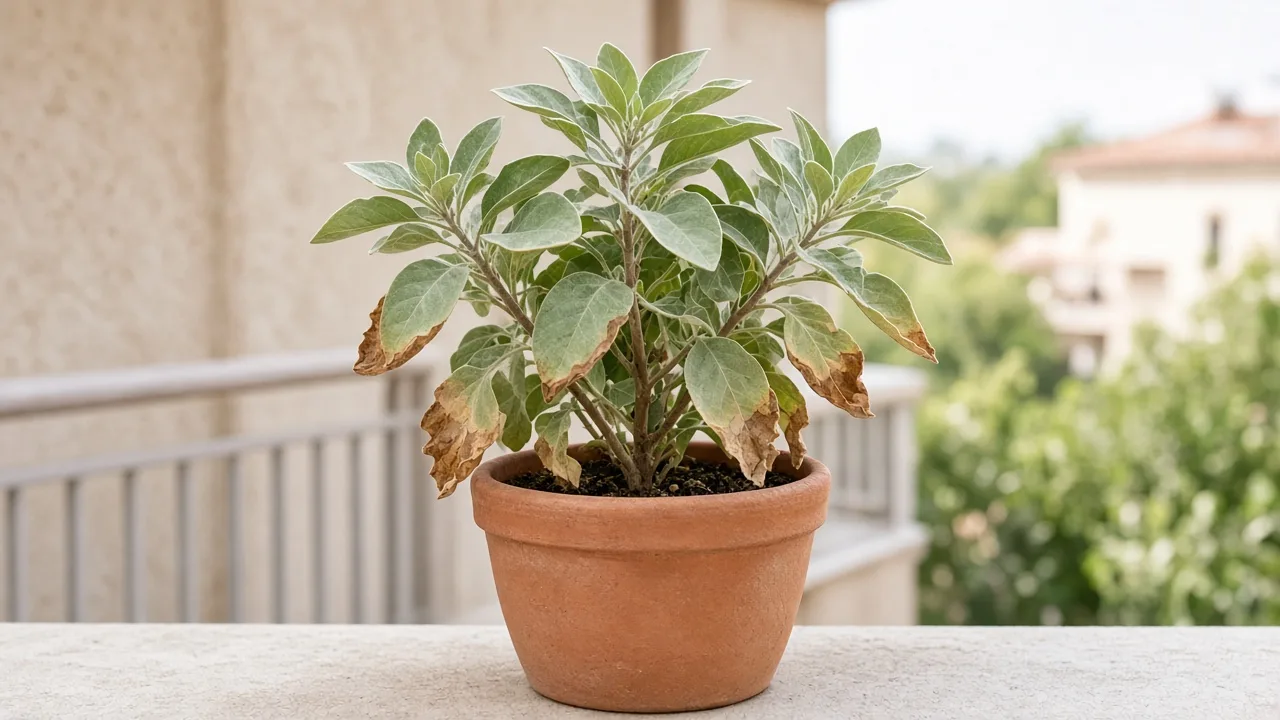
Brown Leaves on Ashwagandha: Causes, Checks & Fixes
This guide covers brown leaves on Ashwagandha. See also the general Brown Leaves guide, watering, and light pages for this plant.
Brown Leaves on Ashwagandha: Causes, Checks & Fixes
Quick answer
Brown leaves on Withania somnifera (Ashwagandha, Indian Ginseng, Winter Cherry) mean tissue has died—whether from drought, rot, sun, cold, harvest-time aging, or pest stress. For how whole-leaf browning works in general, see our brown leaves guide. On Ashwagandha, the stem base just above the soil line tells the story faster than the foliage: a firm erect crown with crispy brown leaves differs completely from a soft base on wet mix.
First step: pinch the brown tissue, press the stem base with clean fingers, and probe whether the top 3–4 cm of mix is dry. Crispy, papery brown with a light pot and firm stem points to underwatering or direct sun scorch after a sudden move. Soft dark brown on cool wet mix with a spongy stem base points to overwatering or advancing root rot.
When to use this page vs other Ashwagandha guides
| What you see | Read next |
|---|---|
| Wet mix + soft stem base | Overwatering |
| Dry mix + midday wilting, firm stems | Underwatering |
| Tan patches on sun-facing leaves only | Not enough light — or sun shock after a move |
| Yellow lower leaves before brown | Yellow leaves |
| Brown tips only, rest green | Brown tips |
| Fine webbing, stippling | Spider mites |
| Lower leaves drying when berries ripen | This page — harvest senescence section |
What brown leaves look like on Ashwagandha
Healthy Ashwagandha holds silvery-green, softly hairy leaves on stiff erect stems above a firm woody base. Browning breaks that pattern in distinct ways:
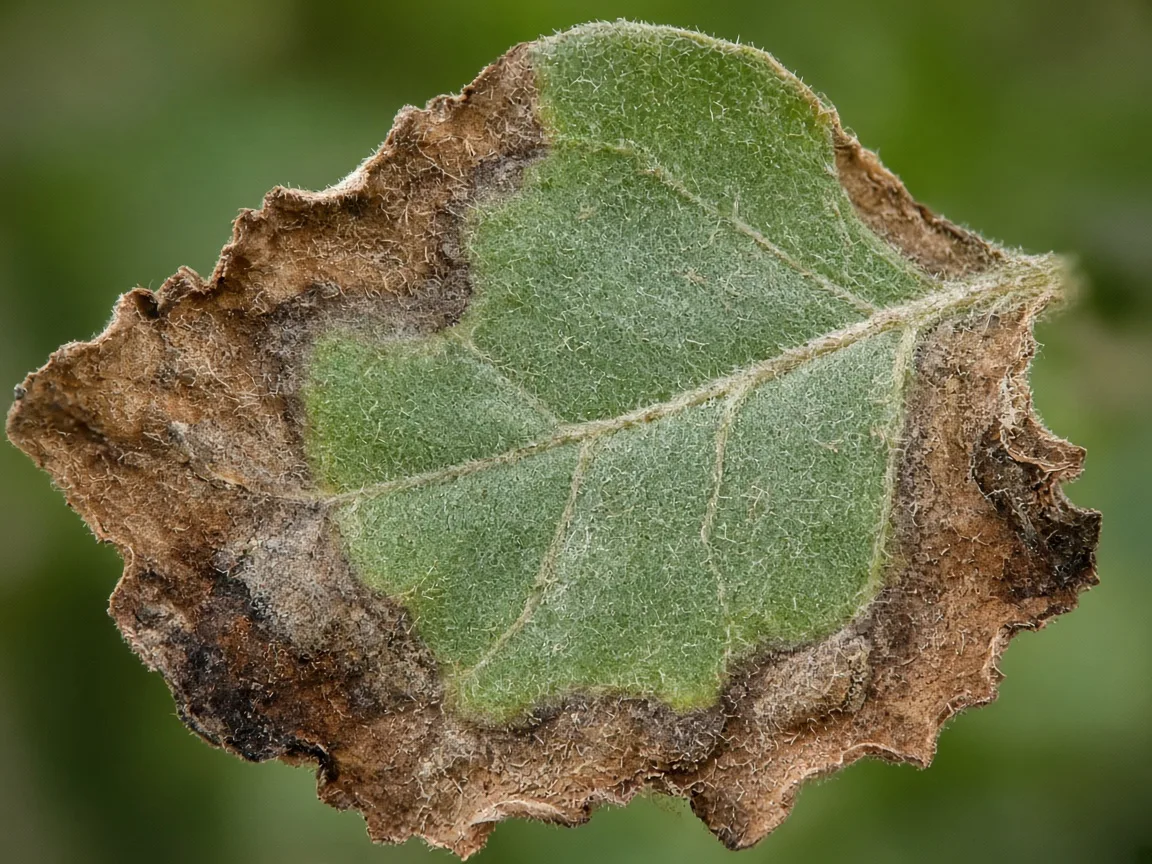
Brown necrotic tissue on silvery-green Ashwagandha foliage—crispy margins suggest drought or sun; soft brown on wet mix suggests stem or root stress.
- Crispy brown tips or whole dry blades, light pot — Margins desiccate first; tissue feels like paper. Severe thirst on a full-sun shrub that dislikes wet feet in peak terrace heat.
- Soft dark brown lower leaves, wet heavy soil — Limp petioles; often yellowing below the brown. Root oxygen loss from chronic wet mix around the crown.
- Tan or bleached patches on the afternoon-sun side only — Papery areas where harsh rays hit leaves that were recently moved from shade. Ashwagandha cannot grow in the shade long term, but sudden exposure without acclimation still scalds soft tissue.
- Brown-then-drop on oldest lower leaves when berries ripen — Natural aging before root harvest—not always a disease if stems stay firm and mix dries predictably.
- Brown with fine stippling or webbing — Route to spider mites before assuming watering error.
Always check newest leaves at stem tips. Brown on fresh growth is more urgent than one aging lower leaf fading out.
Reading the stem crown before you water again
This is the plant-only check that does not apply to leafy ferns or succulents with a swollen caudex. Ashwagandha is a short woody Solanaceae shrub grown for deep roots, not soft houseplant foliage. Press the stem base just above the soil line:
- Firm like a young tree branch — Roots are likely functional. Match brown texture to dry stress, sun, harvest aging, or pests—not automatic repotting.
- Spongy or denting at the crown — Stop all water even if leaves look dry. NC State Extension lists stem and root rot as a known problem when drainage fails. See overwatering before adding moisture.
- Slight stem flex on fully dry sandy mix — Acceptable in summer active growth; water deeply only when the top 3–4 cm is dry per your dry-down rhythm.
Pair stem feel with pot weight. A heavy, cool pot days after you thought you watered lightly means wet mix at depth even when the surface looks pale and dry—a common pattern when the plant sits in weak indoor or shaded light.
Harvest-season lower-leaf browning
Ashwagandha growers often watch foliage as a root-readiness signal, not just a decoration problem. When a warm season finishes and orange winter-cherry berries mature inside their papery calyx, lower leaves commonly yellow, dry, and turn brown before roots are dug.
That pattern is different from rot:
- Stems stay erect and firm at the base
- Newest tips may still look green or only lightly faded
- Mix dries on schedule after watering; no sour smell
- Damage climbs slowly from the oldest nodes upward, not a sudden collapse of several leaves overnight
If you are growing for roots, brown lower leaves near harvest can be normal senescence. If you are mid-season on a young patio plant with soft stems and wet mix, treat it as pathology—not harvest timing.
Terrace sun-shrub scorch vs shade weakness
Ashwagandha is marketed as an easy medicinal herb, but botany is strict: full sun with good-draining sandy soil, and it cannot grow in the shade. Plants For A Future adds a preference for dry stony ground in open habitats—not dim living rooms.
Two opposite mistakes both end in brown leaves:
Shade + wet mix. Weak light slows transpiration; peaty mix stays damp near the crown. Lower leaves yellow, then brown, while the pot feels heavy. Fix light first, then watering—not fertilizer.
Sudden harsh sun on soft leaves. A plant moved from a bright room to a blazing west terrace in one afternoon can show tan crispy patches on the sun-facing side while stems remain firm. Acclimate over a week of longer sun exposure; do not flood the pot to “revive” scorched tissue.
Why Ashwagandha gets brown leaves
Withania somnifera evolved in open and disturbed dry regions across South Asia and beyond. Brief dry spells are safer than repeated soaking.
Severe dehydration. Extended dryness on a root-bound terrace pot in summer sun can crisp several hairy leaves at once. Ashwagandha tolerates drought better than wet feet, but prolonged thirst still kills leaf margins.
Root injury from overwatering. Roots in waterlogged soil die from lack of oxygen, decay, and fail to supply water evenly. When soil stays wet and lower leaves turn soft dark brown, root stress is the driver—not thirst.
Sun scorch after acclimation failure. Full sun is required for vigor, but unfiltered afternoon rays on recently shaded tissue bake the gray-sheen leaves.
Frost or cold snap. Ashwagandha is frost tender in containers. Brown-black patches after an unexpected cool night often appear on outer leaves first.
Pest stippling advancing to necrosis. Nightshade relatives outdoors attract flea beetles; dry indoor air favors spider mites. Untreated feeding can brown patches before you notice webbing.
How to confirm the cause
- Texture — Crispy = dry stress, sun, or salts. Soft = rot, disease, or wet-root failure.
- Soil moisture at 3–4 cm — Dry throughout with light pot = thirst. Wet and heavy = pause watering.
- Stem base firmness — Soft on wet mix = escalate to rot guides.
- Leaf location — Afternoon-facing patches = sun. Lowest nodes only, slowly = senescence or harvest timing.
- Season and berries — Ripe orange fruit + drying lower leaves = possible normal end-of-cycle browning.
- New growth — Green tips = lower urgency. New leaves opening brown = escalate.
First fix for Ashwagandha
Pinch the brown tissue, press the stem base, and probe the top 3–4 cm of mix—then match one correction to crispy-dry versus soft-wet, not panic over one browned leaf.
- Crispy brown + dry mix + firm stem — Water deeply until it runs from drainage holes, then withhold until dry 3–4 cm down. See underwatering.
- Soft brown + wet mix + spongy stem base — Stop watering immediately. Improve light and sandy drainage. See overwatering.
- Tan sun-facing patches only — Filter harsh afternoon sun for a week while acclimating; do not compensate with extra water.
- Harvest senescence with firm stems — Let lower leaves finish drying if roots are the goal; do not soak a plant that is naturally shutting down foliage.
Do not fertilize stressed Ashwagandha. Do not repot on day one unless rot is confirmed.
Recovery timeline
Brown leaf tissue does not re-green. Judge recovery by firm stems, stable dry-down at 3–4 cm, and clean new silvery leaves at branch tips. Mild drought stress often stabilizes within one to two watering cycles in warm weather. Rot recovery takes weeks depending on how much crown tissue was lost.
Mistakes to avoid
- Watering a soft stem base because leaves look dry
- Keeping Ashwagandha in a dim room while watering on a calendar schedule
- Soaking scorched leaves instead of adjusting sun exposure
- Removing every leaf before fixing moisture or light
- Fertilizing to “green up” necrotic tissue
How to prevent brown leaves next time
Use sandy well-draining mix, give full sun on the sunniest terrace you have, match water to the 3–4 cm dry-down test, and respond to crispy margins before whole blades necrose. See the Ashwagandha overview and problems hub for sibling guides.
Related Ashwagandha guides
Conclusion
Brown leaves on Ashwagandha will not turn green again—focus on stopping spread and growing clean new foliage. Press the stem base, probe soil at 3–4 cm, note sun exposure and berry stage, then fix the matching cause. Prevention comes from full sun, fast-draining mix, and respecting this shrub’s drought tolerance over constant moisture.
Related tool
Use the Plant Problem Diagnosis Tool to narrow causes for brown leaves on this plant before changing multiple variables at once.