Yellow Leaves on Ashwagandha: Stem-Base Checks
Quick answer
Yellow leaves on Ashwagandha usually start on the oldest lower opposite silvery-hairy pairs along erect woody stems—not on every blade at once. Wet mix with a soft stem base means overwatering; uniform pale lowers on firm dry stems in full sun point to nitrogen hunger or normal senescence. First step: press the woody crown just above the soil line and probe the top 3–4 cm before you add water or fertilizer.
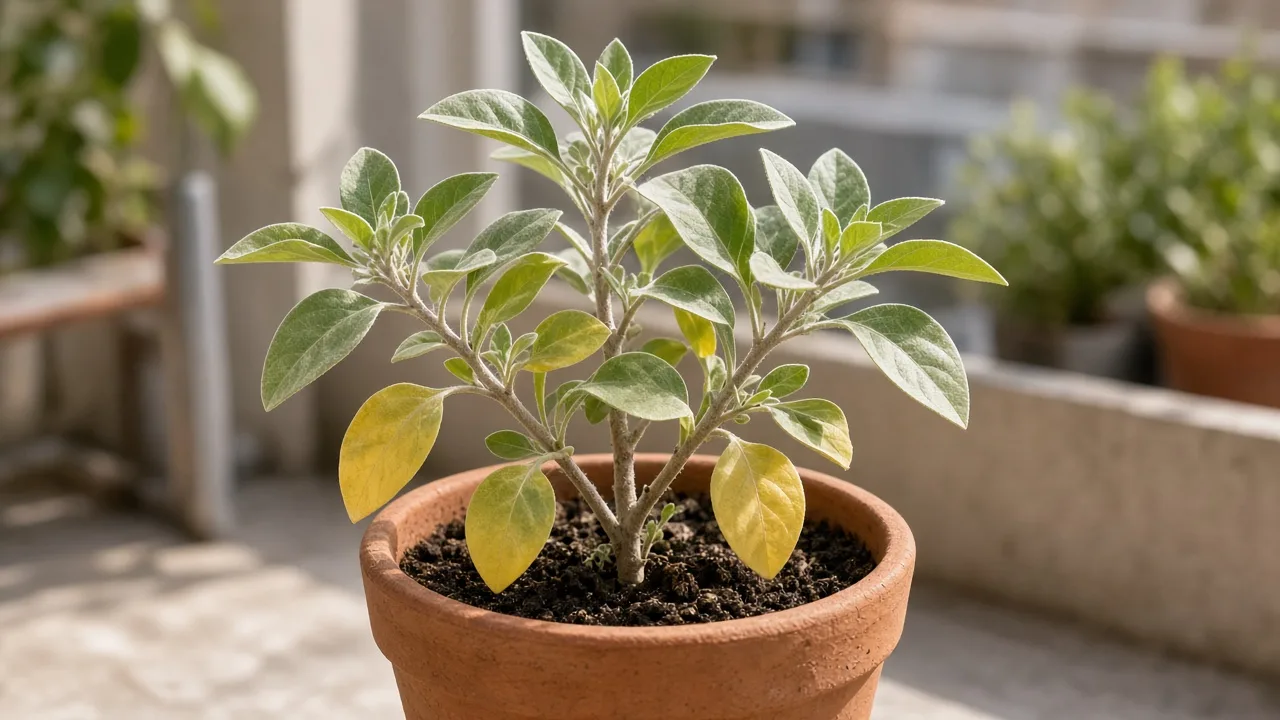
Yellow Leaves on Ashwagandha: Causes, Checks & Fixes
This guide covers yellow leaves on Ashwagandha. See also the general Yellow Leaves guide, watering, and light pages for this plant.
Yellow Leaves on Ashwagandha: Causes, Checks & Fixes
Quick answer
Yellow leaves on Withania somnifera (Ashwagandha, Indian Ginseng, Winter Cherry) usually begin on the oldest lower opposite silvery-hairy leaf pairs along erect woody stems—not as a uniform wash across every blade overnight. This rapid-growing sun shrub evolved in open dry habitats and cannot grow in the shade. When mix stays wet in dim rooms, stunted slow growth with yellowing leaves is the most common mistake—not a mysterious disease.
For how chlorophyll loss and mobile nutrients behave in general, see our yellow leaves guide. On Ashwagandha, read yellowing from the woody crown upward: wet mix plus a soft stem base means overwatering; uniform pale oldest lowers on firm dry stems in full terrace sun may be nitrogen deficiency or normal senescence; one bottom pair fading while green shoot tips keep opening is often harmless aging.
First step: press the woody stem crown just above the soil line, then probe mix at 3–4 cm depth. Do not water, fertilize, or repot until you know whether the base is firm and whether the pot is heavy from chronic wetness.
When to use this page vs other Ashwagandha guides
| Pattern | Read next |
|---|---|
| Yellow lowers + heavy wet pot + soft spongy stem base | Overwatering or root rot |
| Uniform pale oldest lower opposite leaves, smaller new shoot-tip pairs | Nitrogen deficiency |
| Yellow between veins on oldest leaves | Magnesium deficiency |
| Yellow new shoot-tip leaves with green veins | Iron deficiency |
| Washed-out green across whole shrub in dim balcony | Pale leaves or not enough light |
| Midday wilting on light dry pot, firm stems | Underwatering |
| Yellow lowers during berry ripening, firm dry stems | Stay here — harvest-timing section below |
| Stippling + fine webbing on undersides | Spider mites or aphids |
What yellow leaves look like on Ashwagandha
Healthy Ashwagandha holds silvery-gray hairy leaves in opposite pairs on stiff erect woody stems above a firm crown. Yellowing on this species is easiest to read on mature foliage at the lowest nodes, not on the newest silvery shoot-tip pair still unfurling.
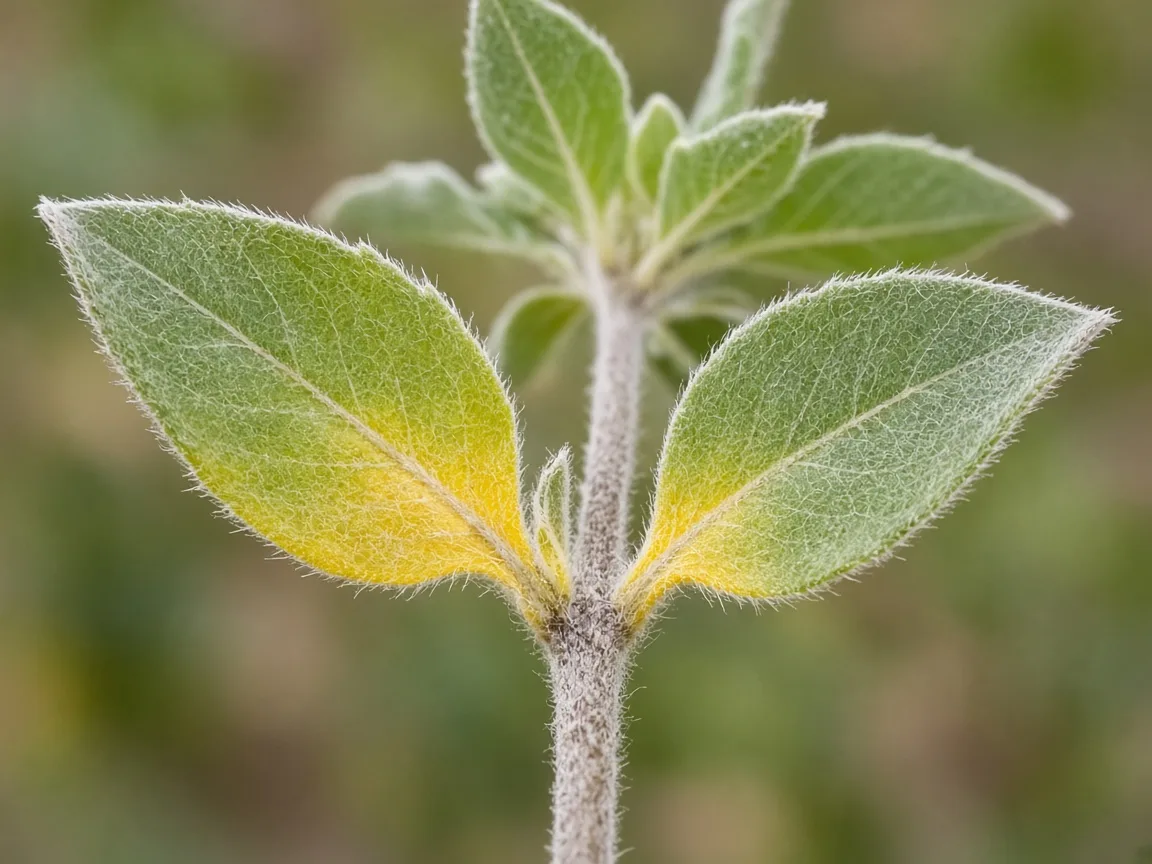
Oldest lower opposite silvery-hairy leaf fading yellow-green at the base of an erect woody stem—branch tips may still hold greener tissue when the cause is aging or early moisture stress.
Early signs
- One or two oldest lower opposite pairs turning yellow-green while branch tips still push greener silvery blades
- Limp yellow lowers on mix that stays damp for days—the overwatering overlap; see drooping leaves if several stems sag
- Pale uniform wash on multiple lower pairs during warm active growth on leached sandy terrace mix—often nitrogen deficiency
- Stalled new opposite pairs at shoot tips while lowers yellow—shade weakness or root stress, not always hunger
- Fungus gnats or white mold on the surface when yellowing follows chronic wet mix—see mold on soil
Advanced signs
- Progressive climb of yellowing up each woody stem on unchanged soggy soil—stem and root rot risk when the crown softens
- Sudden collapse of multiple lower pairs overnight on a heavy pot—escalate to root rot same day if the base dents
- Yellow new shoot-tip leaves with dark green veins—iron deficiency, not this page alone
- Crispy brown margins after yellowing on dry mix in harsh afternoon sun—shift toward brown leaves and light guide
A single yellow lower leaf on firm stems in full sun is not automatically pathology—this shrub naturally sheds older foliage, especially near harvest.
Reading the woody stem crown with pot weight
This plant-only check separates thirst from rot on a woody Solanaceae shrub grown for roots, not soft houseplant foliage.
Press the stem base just above the soil line:
- Firm like a young tree branch — Roots are likely still functional. Match yellow leaves to shade weakness, seasonal slowdown, nutrient washout, or one bottom leaf aging—not automatic repotting.
- Spongy or denting at the crown on wet mix — Stop all water even if leaves look dry. Stem and root rot can affect this plant when drainage fails. See overwatering and root rot before the next drink.
- Firm base on light dry pot with midday wilting — Yellow may be absent; limp silvery blades point to underwatering or heat wilt instead.
Pair stem feel with pot weight. A heavy, cool pot days after you watered lightly means wet mix at depth even when the surface looks pale—a common pattern when the plant sits in weak indoor or shaded light despite full sun being required.
Harvest-season yellowing vs true stress
Ashwagandha growers often watch foliage as a root-readiness signal, not just a decoration problem. NC State Extension notes harvesting roots when flowers and fruits form and leaves start to dry out. When orange winter-cherry berries mature inside their papery calyx, lower leaves commonly yellow and dry before roots are dug.
That pattern differs from rot or chronic overwatering:
- Stems stay erect and firm at the base
- Mix dries on schedule after watering; no sour smell
- Damage climbs slowly from the oldest nodes upward, not a sudden collapse on unchanged soggy soil
- Newest tips may still look green or only lightly faded
If you are mid-season on a young patio plant with soft stems and wet mix, treat it as pathology—not harvest timing.
The shade-and-wet-mix trap on a full-sun shrub
Ashwagandha is often sold as an easy Ayurvedic herb, but botany is strict: full sun with good-draining sandy soil, and it cannot grow in the shade. Plants For A Future adds a preference for dry stony ground in open habitats—not dim living rooms with peaty mix.
The most common yellow-leaf setup is calendar watering in a bright room that is still too dim for this species. Weak light slows transpiration; water you add on Tuesday is still sitting near the crown on Friday. Lower opposite pairs yellow, petioles soften slightly, and owners interpret the limp look as thirst—so they water again.
Fix light first, then match water to the 3–4 cm dry-down test. Moving the pot to a sunnier terrace without changing chronically wet mix can still stall recovery until the root zone dries. Do not compensate with fertilizer on a spongy base.
Why Ashwagandha gets yellow leaves
Chronic wet mix and weak light. Water only when soil dries out; it does not like wet feet. Dim rooms plus moisture-retentive mix produce yellowing from oxygen-starved roots faster than brief drought on this species.
Normal lower-leaf senescence. Opposite silvery pairs at the lowest nodes age out as the woody frame extends—especially in warm active growth or pre-harvest decline. One or two fading lowers on firm stems with green shoot tips is low urgency.
Nitrogen washout in fast-draining pots. Nitrogen is mobile; deficiency shows on older lower leaves first. Terrace specimens watered until runoff in sandy alkaline mix can lose nitrogen through drainage holes—see nitrogen deficiency when pale lowers are uniform, not limp on wet soil.
Cool-season dormancy. Short days and cooler nights slow growth; older leaves yellow and drop while the plant rests. Firm dry stems and predictable dry-down at 3–4 cm mean seasonal turnover—not emergency repotting.
Pests on stressed growth. Aphids and spider mites can stipple or yellow isolated leaves; check undersides of newest opposite pairs before assuming a root-zone failure. See aphids and spider mites when damage is patchy with visible insects or webbing.
How to confirm the cause
- Stem base firmness — Soft on wet mix = moisture stress path; firm on dry mix = look to light, nutrients, or aging.
- Soil at 3–4 cm — Wet and cool throughout with heavy pot = pause water. Crumbly and light = thirst or heat wilt.
- Which leaves yellow first — Oldest lowers only = aging or nitrogen; new tips yellow = iron; all lowers limp on damp mix = overwatering.
- Light hours — Less than roughly six hours of direct sun plus wet mix is a combined diagnosis; see light guide.
- Season and berries — Ripening winter cherries with firm stems and drying lowers may match harvest timing.
- Leaf undersides — Webbing, aphids, or stippling = pest path before fertilizer.
- New growth — Green silvery tips = lower urgency. New leaves opening yellow on wet mix = escalate.
First fix for Ashwagandha
Press the woody crown and probe mix at 3–4 cm before you change anything else. That single diagnostic pause—not repotting, pruning, and fertilizer on the same afternoon—tells you which branch to follow.
After you read stem base and pot weight:
- Spongy base + heavy wet pot + yellow limp lowers — Stop all watering until the top 3–4 cm is dry. Move to the sunniest placement you have. Escalate to root rot if the base is mushy or mix smells sour.
- Firm base + one or two yellow lowest pairs + green shoot tips — Usually aging or seasonal drop. Hold the current watering rhythm; snip fully dry blades if they look messy.
- Firm base + uniform pale lowers climbing slowly in full sun — Confirm nitrogen deficiency pattern, then one measured half-strength complete feed during active growth—not on dormant or wet-stressed plants.
- Firm base + dim room + heavy pot — Improve light and sandy drainage before the next drink.
Do not fertilize stressed Ashwagandha on wet mix. Do not repot on day one unless rot is confirmed.
Step-by-step recovery
Once you match the cause:
- Correct the primary stressor — Dry-down pause for wet roots, deeper drinks for thirst, more sun for shade weakness, or one measured feed for confirmed nitrogen lack.
- Remove necrotic tissue — Yellow blades will not re-green; snip fully brown or papery lowers once stems firm up. Wear gloves—all parts are poisonous if eaten.
- Probe daily at 3–4 cm — Resume water only when crumbly dry, then soak until runoff exits drainage holes and discard saucer water.
- Watch opposite shoot-tip pairs — New silvery leaves mean roots are working again even if lowers stay yellow.
- Repot only if mix stays wet 10+ days on a sunny terrace — Shift to grittier soil with a clean pot one size up, not two sizes up.
Recovery timeline
Yellow lower silvery leaves do not re-green. Judge recovery by firm stems, predictable dry-down at 3–4 cm, and clean new opposite pairs at branch tips. Mild moisture-related yellowing on a still-firm crown often stabilizes within one to two watering cycles in warm weather after light improves. Nutrient recovery may take four to eight weeks for visibly larger new leaves. Crown rot recovery takes weeks and may require cuttings if the base is lost.
Mistakes to avoid
- Watering because lower leaves look limp without checking stem base firmness
- Keeping Ashwagandha in a dim room while watering on a calendar schedule
- Fertilizing to “green up” yellow leaves on wet soil
- Confusing harvest-time lower-leaf yellowing with rot when mix is sour and stems dent
- Treating one normal bottom leaf as an emergency
- Repotting into fresh wet mix without inspecting roots
How to prevent yellow leaves next time
Use sandy well-draining mix, give full sun on the sunniest terrace you have, match water to the 3–4 cm dry-down test, and feed lightly during warm active growth per the fertilizer guide. Cut watering sharply in cool dormancy. See the Ashwagandha overview and problems hub for sibling guides.
Related Ashwagandha guides
- Ashwagandha overview
- Watering guide
- Light guide
- Soil guide
- Overwatering
- Nitrogen deficiency
- Root rot
- Not enough light
- Problems hub
Conclusion
Yellow leaves on Ashwagandha are a pattern problem, not a single disease. Read the oldest lower opposite silvery pairs together with woody crown firmness, pot weight, and sun exposure. Wet mix with a soft base needs a dry-down pause—not another drink. Firm stems with pale lowers in full sun may need light confirmation, one measured feed, or simply patience through normal aging. Prevention comes from treating this sun shrub like a dry-habitat medicinal plant—not a moisture-loving foliage houseplant.
Related tool
Use the Yellow Leaves Diagnosis Tool to narrow causes for yellow leaves on this plant before changing multiple variables at once.