Ashwagandha Fertilizer Guide: When & How to Feed
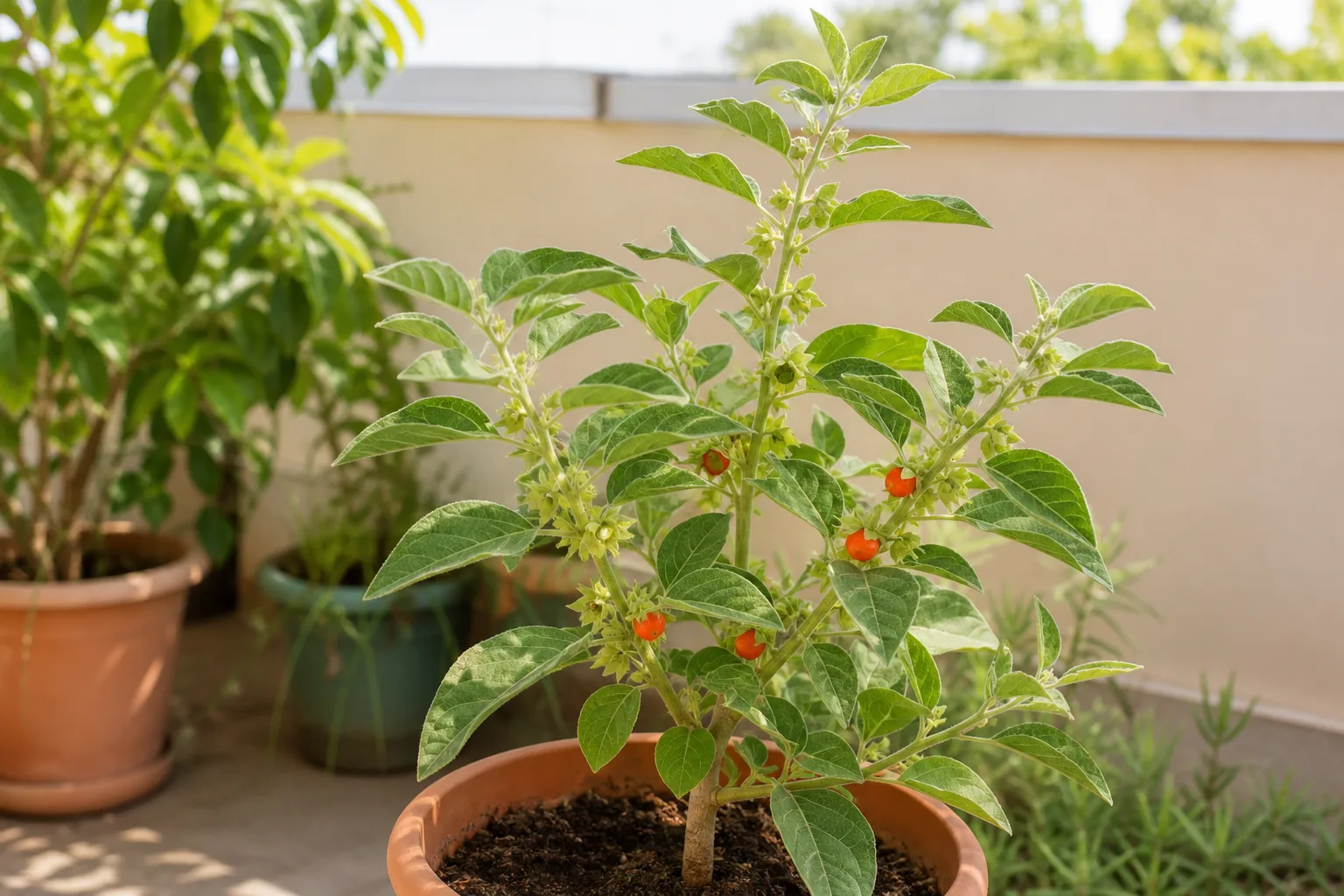
Ashwagandha Fertilizer Guide: When & How to Feed
Ashwagandha Fertilizer Guide: When & How to Feed
Ashwagandha (Withania somnifera) is grown for a deep, firm root system—not lush, soft foliage. That changes how you fertilize. This nightshade shrub prefers full sun, sandy well-draining soil that is slightly alkaline, and a watering rhythm that lets the mix dry between drinks; it does not like wet feet (NC State Extension Gardener Plant Toolbox). Fertilizer can support steady growth once light and drainage are right. It cannot rescue a shaded, soggy pot.
This guide is for home growers in India and similar warm climates: balcony pots, terrace beds, and medicinal herb patches. Field rates appear only as context so you do not pour farm doses into a 20 cm container.
What Ashwagandha Actually Needs From Fertilizer
Ashwagandha builds woody stems and silvery-hairy leaves while the root zone stays oxygenated. Nutrients matter because container mixes leach with repeated watering, and because active warm-season growth uses nitrogen, phosphorus, and potassium. The goal is firm structure and usable roots—not forced soft shoots that collapse after a wet week.
Confirm you are feeding Withania somnifera (also sold as Indian Ginseng, Winter Cherry, or Asgandh), not a lookalike nightshade. NC State notes it does well in pots from seed once air temperatures stay above about 21°C (70°F), flowers and fruits in the first year, and must come indoors in cooler climates (NC State Extension Gardener Plant Toolbox).
Roots First, Soft Leaves Last
Nitrogen pushes leafy top growth. Too much in a wet mix often means soft stems and higher rot risk. Phosphorus supports root development and energy use—Indian pot trials on sandy soils found root dry weight and alkaloid yield responded to phosphorus alongside farmyard manure (African Journal of Biotechnology — FYM and phosphorus). Potassium helps with water regulation and heat stress on sunny balconies.
For most home plants, a balanced dilute liquid (for example 10-10-10 or 20-20-20 at half strength) or modest organic matter is enough. You do not need a high-nitrogen “leafy greens” schedule. Plants For A Future places the species in well-drained soils across a mild acid to mildly alkaline range and notes it cannot grow in shade (Plants For A Future).
Sun, Drainage, and Dry-Down Before Nutrients
Extension profiles are blunt: Ashwagandha needs full sun (6+ hours of direct light), good drainage, and watering only when the soil dries; stem and root rot are listed problems, and shade is a non-starter (NC State Extension Gardener Plant Toolbox). That biology sets the feeding rule: stabilize light, pot mix, and watering before you fertilize.
Clemson Extension’s nutrient stewardship guidance says not to fertilize during drought—plants need water for uptake and to support growth the fertilizer triggers (Clemson HGIC — Fertilizers and the Environment). On Ashwagandha, wilted midday leaves and stalled growth after a dry spell need a careful rewater and a watering check first. Pale growth in a dark corner needs the light guide, not a stronger bottle.
Best Fertilizer Types for Ashwagandha
The best fertilizer for Ashwagandha in a home pot is one you can dilute precisely and apply to moist—not bone-dry, not swampy—mix during active growth. Prefer products that list all three macronutrients cleanly, or well-finished organics that do not force a “heavy feeder” calendar.
Compost, Vermicompost, and Mild Organics
Organic programs map well to this plant’s preference for lean, living soil rather than constant salt hits. A thin compost or vermicompost top-dress once or twice in the warm season can replace or reduce liquid feeds in balcony pots. Field work at Kerala Agricultural University found vermicompost at 5 t/ha improved height, branching, and biomass, while vermicompost plus seaweed fertilizer improved root traits (fresh root yield about 614 kg/ha in that trial); farmyard manure at 10 t/ha with seaweed gave comparable root yield and higher alkaloid content (Journal of Tropical Agriculture — KAU).
Those hectare rates are agricultural context, not a scoop recipe for a terrace pot. For home beds, work a modest amount of finished compost or vermicompost into the planting hole and use thin top-dresses later. Fresh, hot manure is a poor choice in containers—it can burn roots and keep the crown too wet.
Dilute Balanced Liquids
A complete water-soluble fertilizer at half the label strength every 4–6 weeks during active growth is the practical default for pots. Apply enough solution to wet the root zone, then empty the saucer so salts do not reconcentrate as water evaporates. UF/IFAS notes that excess fertilizer in containers builds salts in the media and can cause stunted growth, leaf browning, or plant death (UF/IFAS Gardening Solutions — The Basics of Fertilizer).
If your mix already contains slow-release granules, wait several weeks after planting or repotting before adding liquid feed. Double feeding is a common cause of tip burn on a drought-tolerant shrub that already sits in a small volume of sandy mix.
When to Fertilize Ashwagandha in India
Feed only when Ashwagandha is actively growing in warm weather and the pot dries on a predictable cycle. In much of India that window runs from late spring through the monsoon shoulder into early autumn—roughly March through October—when full sun and heat keep growth moving. Match placement to the Ashwagandha light guide so you are not fertilizing a thin, shaded plant.
Active Warm-Season Window
During peak heat, pots may dry every few days. That leaching is why a dilute feed every 4–6 weeks (or a modest organic top-dress) helps even though Ashwagandha is not a classic hungry houseplant. Watch new tip color and stem firmness more than the calendar. Pale growth with bright light and correct dry-downs is a fair cue to feed; pale growth in shade or chronic wet mix is not.
In cooler North India winters or air-conditioned indoor rooms, stretch the interval or stop when growth stalls. Fertilizer sitting unused in a cool, slow-drying pot still contributes to salt stress.
When to Pause Feeding
Stop fertilizing when any of these are true:
- The plant is drought-stressed, wilted, or showing crispy tips from dry mix
- You just repotted into fresh fertilized mix (wait 2–3 weeks for new growth)
- Stems feel soft at the crown or soil smells sour—fix drainage and watering first (NC State Extension Gardener Plant Toolbox)
- Growth has stalled in cool weather below the plant’s comfort range
- You see white salt crust on the surface or brown margins after a recent feed
Clemson’s framing still applies: right product, right rate, right time, right place in the root zone (Clemson HGIC — Fertilizers and the Environment). For Ashwagandha, “right time” means warm-season growth with a root zone that is moist after watering and then allowed to dry—not a permanent wet sponge.
How Much Fertilizer to Use in Pots and Beds
Pots and balcony containers: half-strength balanced liquid every 4–6 weeks in the active season, or a thin compost/vermicompost top-dress every 6–8 weeks instead of liquid. Small pots leach faster; do not compensate by doubling concentration—shorten the interval slightly only if growth stays pale under strong sun and correct watering.
Terrace beds and raised rows: field programs often rely on farmyard manure or vermicompost plus modest phosphorus rather than weekly urea. A Hisar sandy-soil pot study found FYM at 12.5 t/ha combined with phosphorus improved vegetative traits and root dry weight; the highest total alkaloid yield in that trial came from FYM plus 25 mg P₂O₅ kg⁻¹ soil (African Journal of Biotechnology — FYM and phosphorus). Translate that to home beds as “build organic matter and avoid starving roots of phosphorus,” not as a precision lab dose for a courtyard plot.
In-ground farm references: some cultivation guides cite roughly 10–12 tonnes FYM per hectare (or about 1–1.5 tonnes vermicompost) plus modest N and P on average soils. Treat those as farm planning numbers. For a balcony pot, stick to dilute liquids and thin organics.
How to Apply Fertilizer Safely
Water with plain water first if the top few centimeters are dry—Ashwagandha should dry between drinks, but applying salts to a severely wilted plant invites burn (Clemson HGIC — Fertilizers and the Environment). Mix the dilute solution thoroughly. Apply at the soil line, not as a routine foliar spray of strong synthetic concentrate on hairy leaves.
Let a little excess drain, then empty saucers. If crust appears, flush the pot thoroughly with plain water until runoff runs clearer, then pause feeding for about four weeks. UF/IFAS warns that container salt buildup from overfeeding leads to browning and stunting (UF/IFAS Gardening Solutions — The Basics of Fertilizer).
Pair feeding with the right mix. Sandy, fast-draining blends with compost suit this species; heavy, water-retentive mixes fight the plant’s drought-tolerant habit. Details live in the Ashwagandha soil guide. Fertilizer does not fix a peat-heavy pot that stays wet for days.
Signs of Underfeeding vs Overfeeding
Possible underfeeding in an old, leached pot: slower growth despite full sun and correct dry-downs, smaller pale new leaves, and a plant that looks tired between feeds. Rule out low light and chronic wet or dry extremes first using the overview and watering pages.
Possible overfeeding: brown leaf tips after a feed, white crust on the mix, soft overly dark growth that collapses after rain or overwatering, or stalled roots in a salt-loaded pot. Flush, pause, and resume later at a weaker dilution.
| Symptom | Likely cause | First action |
|---|---|---|
| Wilted tips, pot bone-dry | Drought stress | Rehydrate carefully; delay feed |
| Pale growth, bright sun, mix dries on schedule | Possible nutrient lag | Half-strength feed every 4–6 weeks |
| Brown tips after fertilizing | Too strong or applied dry | Flush; pause 4 weeks |
| White crust on surface | Salt buildup | Flush; cut rate/frequency |
| Soft crown, sour smell | Wet feet / rot risk | Improve drainage; stop feed |
Common Ashwagandha Fertilizer Mistakes
Feeding a drought-stressed plant is the fastest way to burn roots. Clemson advises against fertilizing during drought because uptake and growth both fail (Clemson HGIC — Fertilizers and the Environment). Fix water first.
Copying field FYM or NPK rates into a tiny pot overloads a small root ball. Scale down to dilute liquids and thin organics.
Pushing high nitrogen for “bigger leaves” fights the root-crop goal and can soften tissue in humid weather. Favor balanced or modest phosphorus-aware organics when you feed.
Stacking fertilizer with hard pruning and repotting on day one multiplies stress. Stabilize sun and dry-downs, then feed only after new growth appears.
Chasing yellow leaves with fertilizer while the pot stays wet worsens stem and root rot risk. NC State lists stem and root rot among problems for this species (NC State Extension Gardener Plant Toolbox). Fix drainage and the watering rhythm before adding salts.
When to use this page vs other Ashwagandha guides
Use this fertilizer page when sun and watering are already stable and you need a dilution, schedule, and product type for active growth. Use the Ashwagandha watering guide when leaves yellow from wet feet, stems soften, or the pot never dries. Use the Ashwagandha light guide when growth is thin or stalls in shade—this plant cannot grow in shade. Use the Ashwagandha soil guide when the mix stays soggy or lacks sand and drainage. Use repotting when roots circle the pot or soil stays wet for days. Use propagation when you want seed or cuttings from a healthy parent, not when you are troubleshooting pale leaves. The Ashwagandha overview remains the identity and full-care map.
Related Ashwagandha guides
- Ashwagandha overview — identity, habitat, and care map
- Ashwagandha watering — dry-between-drinks rhythm and wet-feet risks
- Ashwagandha light — full-sun placement requirements
- Ashwagandha soil — sandy, well-draining, slightly alkaline mixes
- Ashwagandha repotting — when the plant outgrows its pot
- Ashwagandha propagation — seed and cuttings after feeding basics are right
Conclusion
Feed Ashwagandha lightly and only while it is actively growing in warm months. Keep it in full sun with sandy, fast-draining mix, water only when the top soil dries, then use a half-strength balanced liquid every 4–6 weeks or a thin compost/vermicompost top-dress. Pause for drought stress, new transplants, soft crowns, salt crust, and cool-season stall. Indian field and pot trials support modest organics and thoughtful phosphorus more than heavy nitrogen, and container extension guidance warns that excess fertilizer burns pots quickly. Get light and dry-downs right first—then fertilizer becomes a simple seasonal habit instead of a rescue mission.