Overwatering on Ashwagandha: Stem-Base Checks
Quick answer
Overwatering on Ashwagandha shows up as a heavy wet pot, yellowing lower leaves, and a soft spongy stem base on damp sandy mix—not midday wilting on a light dry pot. First step: stop all watering immediately and press the woody stem crown just above the soil line with clean fingers.
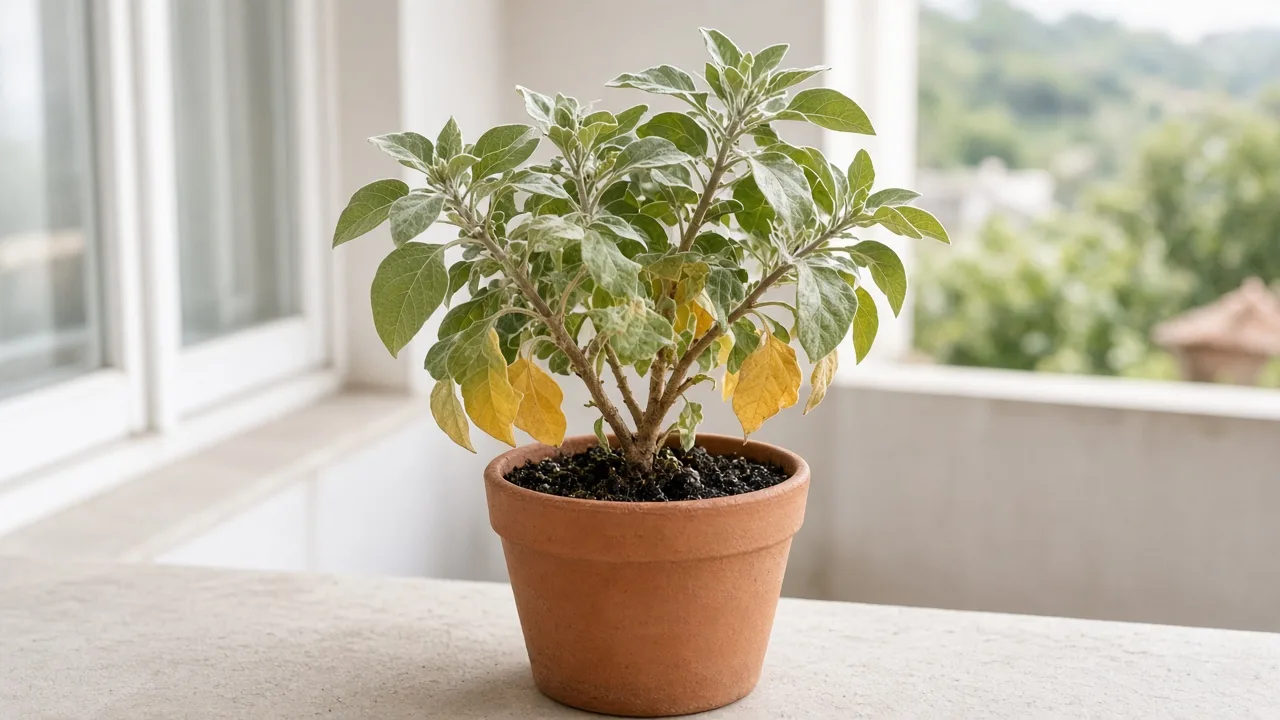
Overwatering on Ashwagandha: Causes, Checks & Fixes
This guide covers overwatering on Ashwagandha. See also the general Overwatering guide, watering, and light pages for this plant.
Overwatering on Ashwagandha: Causes, Checks & Fixes
Quick answer
Overwatering on Withania somnifera (Ashwagandha, Indian Ginseng, Winter Cherry) is the classic medicinal-shrub trap: silvery-green hairy leaves still look partly healthy while the woody crown and roots sit in oxygen-starved wet mix. Ashwagandha evolved in open and disturbed dry habitats and stony open ground—brief drought is safer than repeated soaking. NC State Extension notes it does not like wet feet and that stem and root rot can affect this plant when drainage fails.
For how chronic wet soil damages roots in general, see our overwatering guide. On Ashwagandha, the pattern is a heavy pot long after watering, yellowing lower leaves, limp petioles, and—most importantly—a soft or spongy stem base while mix is still damp—not midday wilting on a light dry pot in full terrace sun.
First step: stop all watering immediately. Then press the woody stem crown just above the soil line with clean fingers before you add water, fertilizer, or repot. If the base is already mushy, escalate to the root rot protocol the same day.
When to use this page vs other Ashwagandha guides
| Pattern | Read next |
|---|---|
| Light dry pot, firm stems, midday wilting | Underwatering |
| Soft base + wet soil (this page) | Stay here; escalate to root rot if base is mushy |
| Yellow lower leaves only, mix still drying normally | Yellow leaves |
| Brown soft tissue on wet mix | Brown leaves |
| Whole plant limp on wet soil | Wilting |
| Pale stretched stems in dim room | Not enough light |
| White mold or gnats on damp surface | Mold on soil or fungus gnats |
What overwatering looks like on Ashwagandha
Healthy Ashwagandha holds silvery-green, softly hairy leaves on stiff erect woody stems above a firm base. Overwatering breaks that pattern from the roots upward:
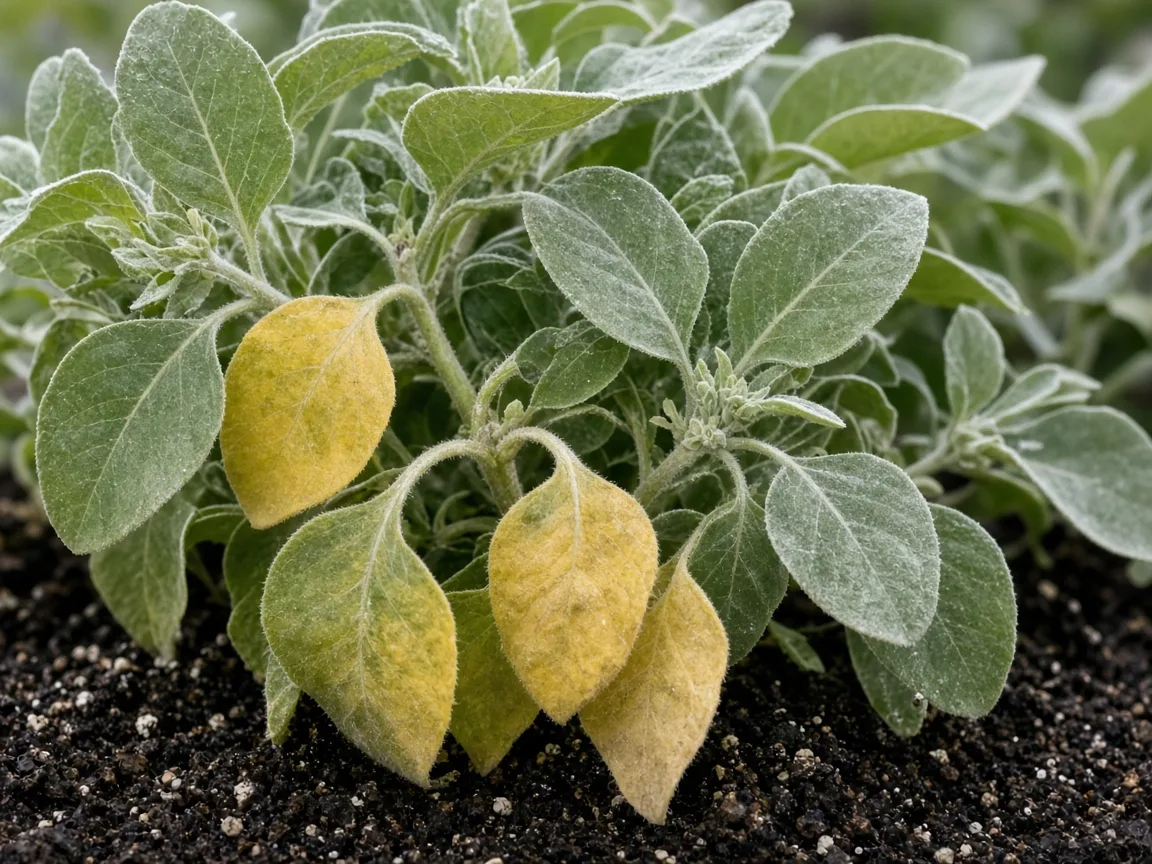
Early overwatering—yellowing lower leaves on silvery-green foliage with visibly damp mix; the stem crown may still feel partly firm until rot advances.
Early signs
- Heavy pot days after the last watering, especially in a dim room or cool season
- Yellowing lower leaves that stay limp rather than crispy; often overlaps with the yellow leaves guide
- Soft or slightly spongy stem at the soil line while upper stems still look erect
- No new silvery tips for weeks while mix stays damp near the crown
- Fungus gnats or surface mold—chronically wet mix is their habitat; see mold on soil if white patches spread
- Slower dry-down than your watering guide expects at 3–4 cm depth
Advanced signs
- Mushy, blackening, or hollow stem base on wet mix—rot climbing the woody crown
- Sour or rotten smell from the pot; waterlogged soil often smells sour when oxygen has been cut off too long
- Wilt paradox—limp drooping leaves despite wet soil because damaged roots cannot move water; see drooping leaves if several stems sag at once
- Sudden collapse of multiple lower leaves overnight on unchanged wet mix
- Stalled growth in warm weather while mix never dries—pair with slow growth only after you rule out shade and rot
A single yellow lower leaf on firm stems is not automatically overwatering—this shrub naturally sheds older foliage, especially near harvest. Overwatering adds wet mix + soft base + progressive yellowing to that picture.
Reading the woody stem crown before you water again
This plant-only check does not apply to leafy ferns or columnar succulents. Ashwagandha is a short woody Solanaceae shrub grown for deep roots, not soft houseplant foliage. Press the stem base just above the soil line:
- Firm like a young tree branch — Roots are likely still functional. Match yellow leaves to shade weakness, seasonal drop, or brief thirst—not automatic repotting.
- Spongy or denting at the crown — Stop all water even if leaves look dry. Stem and root rot is a listed problem when drainage fails. See root rot before adding moisture.
- Slight flex on fully dry sandy mix — Acceptable in summer active growth; water deeply only when the top 3–4 cm is dry per your dry-down rhythm.
Pair stem feel with pot weight. A heavy, cool pot days after you thought you watered lightly means wet mix at depth even when the surface looks pale and dry—a common pattern when the plant sits in weak indoor or shaded light.
The shade-and-wet-mix trap on a full-sun shrub
Ashwagandha is often sold as an easy Ayurvedic herb, but botany is strict: full sun with good-draining sandy soil, and it cannot grow in the shade. Plants For A Future adds a preference for dry stony ground in open habitats—not dim living rooms with peaty mix.
The most common overwatering setup is calendar watering in a bright room that is still too dim for this species. Weak light slows transpiration; water you add on Tuesday is still sitting near the crown on Friday. Lower leaves yellow, stems soften slightly, and owners interpret the limp look as thirst—so they water again.
Fix light first, then pause watering. Moving the pot to a sunnier terrace without changing the wet mix can still stall recovery until the root zone dries. Do not compensate with fertilizer on a spongy base.
Harvest-season yellowing vs true overwatering
Ashwagandha growers often watch foliage as a root-readiness signal, not just a decoration problem. When orange winter-cherry berries mature inside their papery calyx, lower leaves commonly yellow and dry before roots are dug—similar to how NC State describes harvesting roots when flowers and fruits form and leaves start to dry.
That pattern is different from rot:
- Stems stay erect and firm at the base
- Mix dries on schedule after watering; no sour smell
- Damage climbs slowly from the oldest nodes upward, not a sudden collapse on unchanged soggy soil
- Newest tips may still look green or only lightly faded
If you are mid-season on a young patio plant with soft stems and wet mix, treat it as pathology—not harvest timing.
Why Ashwagandha gets overwatering
Withania somnifera is a rapid-growing sun shrub that still punishes wet crowns harder than brief drought. Common drivers:
Calendar watering without a probe. Watering every few days because the label said “keep moist” ignores the 3–4 cm dry-down rule. Sandy mix in full sun may need a deep drink weekly in summer; the same schedule drowns a shaded pot.
Heavy, water-retentive mix in containers. Outdoor beds tolerate loam better than peat-heavy indoor pots. Without extra perlite or coarse sand, roots in waterlogged soil die from lack of oxygen and fail to supply the shrub evenly.
Oversized cachepots and standing water. Nursery pots sitting in sealed decorative sleeves hold runoff at the crown—deadly on a species that dislikes wet feet.
Cool dormancy with summer watering habits. Ashwagandha slows in cool weather. Mix that would dry in two days on a July terrace may take two weeks indoors in winter—yet many owners keep the same pour volume.
Repotting into wet mix on a stressed plant. Fresh soggy medium around already-damaged roots accelerates crown rot. Match soil texture to terrace drainage, not moisture retention.
How to confirm the cause
- Stem base firmness — Soft on wet mix = overwatering path; firm on dry mix = look elsewhere.
- Soil at 3–4 cm — Wet and cool throughout with heavy pot = pause water. Crumbly and light = thirst or heat wilt.
- Pot weight — Lift after you think it should have dried; persistent heaviness confirms depth wetness.
- Leaf texture — Limp yellow lower leaves on damp mix, not crispy margins on dry mix.
- Smell — Sour odor from drainage holes = oxygen-starved mix.
- Light level — Less than roughly six hours of direct sun plus wet mix is a combined diagnosis; see light guide.
- New growth — Green silvery tips = lower urgency. New leaves opening yellow on wet mix = escalate.
First fix for Ashwagandha
Stop all watering immediately. That single pause is the first fix—not repotting, pruning, and fertilizer on the same afternoon.
After 24–48 hours with no added moisture:
- Firm base + heavy wet pot + yellow lowers — Keep withholding water until the top 3–4 cm is dry. Move to the sunniest placement you have so the plant can use moisture faster. Empty any standing water in saucers or cachepots.
- Spongy base + sour smell — Same-day escalation to root rot triage; do not wait for “one more dry week.”
- Wet mix but firm base + dim room — Improve light and sandy drainage before the next drink; the dry-down test only works if the plant can transpire.
Do not fertilize stressed Ashwagandha. Do not repot on day one unless rot is confirmed and you need to inspect roots.
Step-by-step recovery
Once watering is paused and light is adequate:
- Probe daily at 3–4 cm — Resume water only when crumbly dry, then soak until runoff exits drainage holes and discard the saucer water.
- Remove mushy leaves — Yellow or brown lower tissue will not re-green; snip necrotic blades once stems firm up. Wear gloves—all parts are poisonous if eaten.
- Improve airflow — Space pots so leaves dry after rain or misting; nightshade relatives in stagnant damp corners rot faster.
- Repot only if mix stays wet for 10+ days on a sunny terrace — Shift to grittier soil with a clean pot one size up, not two sizes up.
- Watch branch tips — New silvery leaves mean roots are working again even if lowers stay yellow.
Recovery timeline
Yellow lower leaves do not re-green. Judge recovery by firm stems, predictable dry-down at 3–4 cm, and clean new foliage at branch tips. Mild cases on a still-firm crown often stabilize within one to two watering cycles in warm weather after light improves. Crown rot recovery takes weeks and may require cuttings if the base is lost.
Mistakes to avoid
- Watering a soft stem base because leaves look dry
- Keeping Ashwagandha in a dim room while watering on a calendar schedule
- Using moisture-retentive peaty mix without perlite or sand
- Fertilizing to “green up” yellow leaves on wet soil
- Confusing harvest-time lower-leaf yellowing with rot when mix is sour and stems dent
- Repotting into fresh wet mix without inspecting roots
How to prevent overwatering next time
Use sandy well-draining mix, give full sun on the sunniest terrace you have, match water to the 3–4 cm dry-down test, and learn your pot’s dry weight. Cut watering sharply in cool dormancy. See the Ashwagandha overview and problems hub for sibling guides.
Related Ashwagandha guides
- Ashwagandha overview
- Watering guide
- Light guide
- Soil guide
- Root rot
- Underwatering
- Yellow leaves
- Problems hub
Conclusion
Overwatering on Ashwagandha is a root-zone and crown problem that shows up as yellow limp lower leaves long before the whole shrub collapses. Press the woody stem base, probe mix at 3–4 cm, lift the pot, and fix sun and drainage before you add another drink. Prevention comes from treating this sun shrub like a dry-habitat medicinal plant—not a moisture-loving foliage houseplant.
Related tool
Use the Root Rot Risk Checker to narrow causes for overwatering on this plant before changing multiple variables at once.