Wilting on Ashwagandha: Crown & Pot Checks
Quick answer
Wilting on Ashwagandha means the whole short woody shrub has lost structural rigidity—not just a few hanging leaves on firm stems. First step: press the stem crown just above the soil line and lift the pot before you add water, repot, or prune.
Wilting on Ashwagandha: Causes, Checks & Fixes
This guide covers wilting on Ashwagandha. See also the general Wilting guide, watering, and light pages for this plant.
Wilting on Ashwagandha: Causes, Checks & Fixes
Quick answer
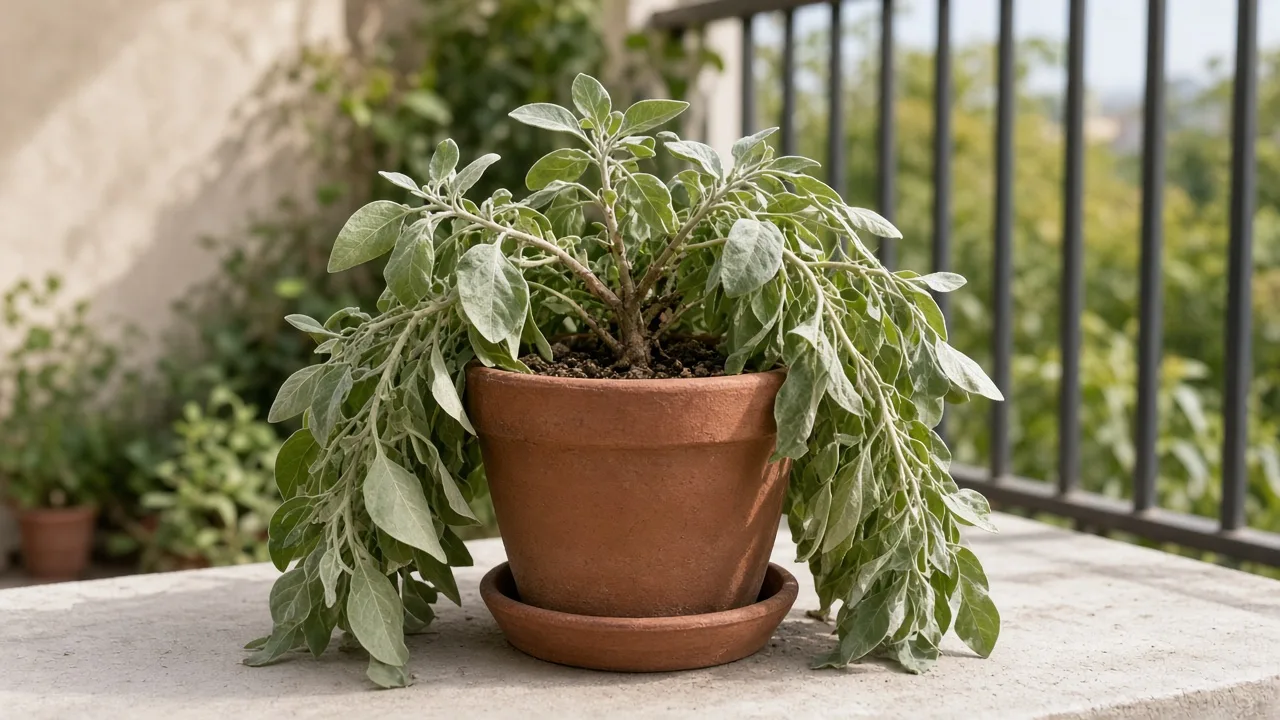
Wilting on Withania somnifera (Ashwagandha, Indian Ginseng, Winter Cherry) is whole-shrub structural failure—not the mild afternoon slump where a few silvery-green leaves hang while woody stems stay erect. Picture a short branching shrub that was stiff yesterday and now folds at the crown, drapes sideways under its own weight, or looks collapsed across multiple stems at once. That is wilting on Ashwagandha, and it is more urgent than drooping leaves on a firm base.
For how turgor loss works in general, see our wilting guide. On this sun shrub from dry South Asian habitats, the split is simple: heavy wet pot plus soft crown equals uptake failure; light dry pot plus wrinkled firm tissue equals drought collapse. Both look like “the plant needs water,” but only one side wants a drink.
First step: press the woody stem crown just above the soil line and lift the pot. Do not water, repot, prune, or feed until you know whether tissue is firm, spongy, or hollow—and whether the container is heavy on wet mix or feather-light on dry sand.
When to use this page vs other Ashwagandha guides
This page is the whole-shrub collapse workflow—when multiple stems lose rigidity or the crown fails, not just leaf posture.
| What you see | Read next |
|---|---|
| Limp leaves, stems still upright and firm | Drooping leaves |
| Wet mix + soft spongy crown + sour smell | Overwatering |
| Black mushy roots, crown rotting upward | Root rot |
| Very light dry pot, firm stems, heat spell | Underwatering |
| Pale stretched stems in a dim room | Not enough light |
| Yellow lower leaves before total collapse | Yellow leaves |
| Afternoon limp only, firm by morning on dry mix | Drooping leaves — heat droop section |
What wilting looks like on Ashwagandha
Healthy Ashwagandha holds silvery-green, softly hairy ovate leaves on stiff erect woody stems—a short shrub grown for deep taproots, not soft houseplant foliage. Wilting changes the whole posture:
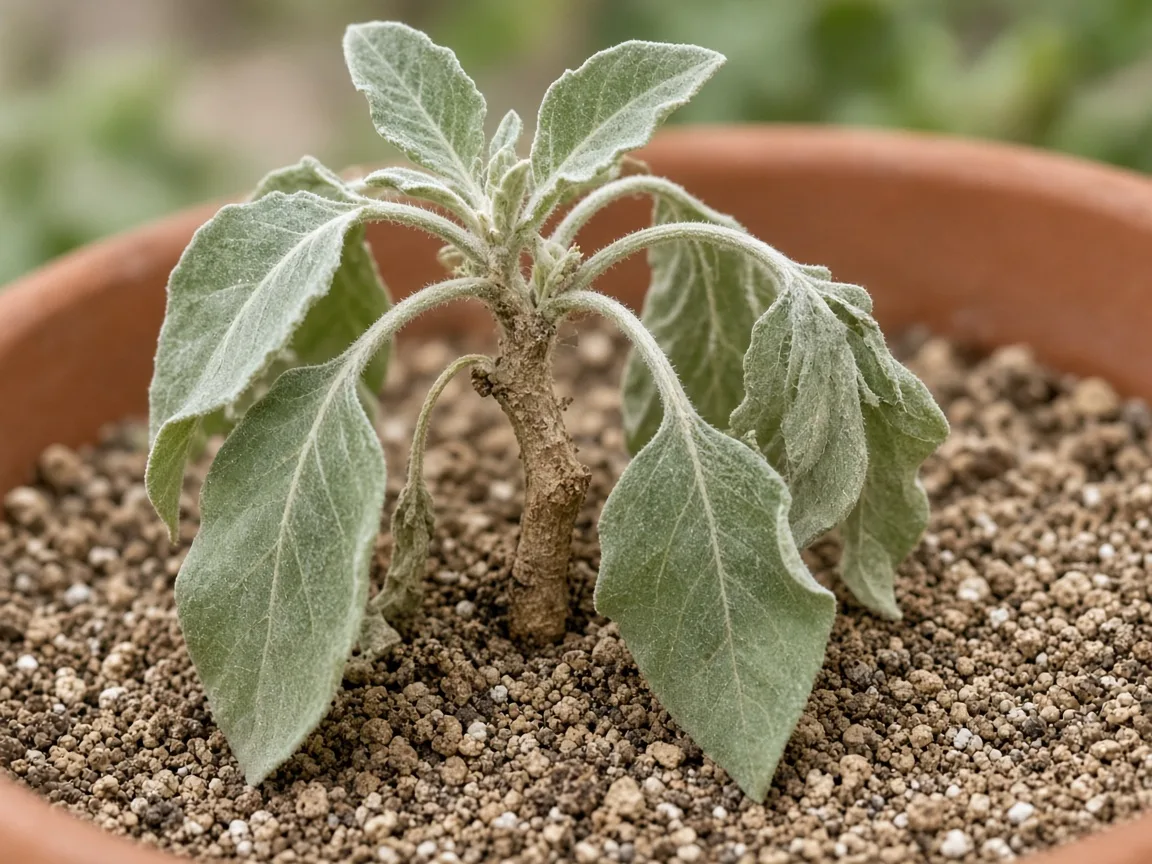
Soft stem crown with limp petioles—the woody base has lost turgor; check whether tissue is firm above dry mix or spongy on wet soil.
- Multiple stems fold at once near the soil line, not only at leaf tips
- Petioles and blades hang limp along full branch lengths while the crown loses stiffness
- The shrub leans or collapses sideways in its pot even without wind damage
- Lower leaves yellow and drop as collapse spreads on a heavy wet pot—classic uptake failure
- Silvery foliage dulls to gray-green before total collapse on a light dry pot in peak heat
Early wilting can look like a slight lean that does not correct after you rotate the pot. Advanced wilting is a shrub lying horizontal with a mushy crown and sour-smelling mix. The stem base tells the story faster than the leaves.
Whole-shrub collapse vs leaf droop
Searchers often use “wilting” and “drooping” interchangeably. On Ashwagandha they point to different severity levels.
Leaf droop = silvery blades hang while the woody crown stays upright and firm. Causes are usually water balance, heat, or weak light—but the shrub structure still stands. Start on the drooping leaves page.
Whole-shrub wilting = the crown and multiple stems lose rigidity. The plant folds, drapes, or collapses. Causes include advanced root failure, severe drought that depleted stem reserves, chronic shade with waterlogged mix, or physical breakage at the base. Urgency is higher because structural tissue—not just foliage—is failing.
If one branch wilts while neighbors stay rigid, inspect that branch’s base for mechanical damage or localized pest stress. If every stem collapses together on wet soil, treat as a root-zone emergency the same day.
The crown squeeze and pot-weight triage
Ashwagandha is a woody Solanaceae shrub from open and disturbed dry habitats. It stores less water in stems than a succulent column, so a shrub can look green while roots are already dying. The fastest plant-specific triage is crown firmness plus pot weight:
Press the stem base just above the soil line:
- Firm like a young tree branch on a light warm pot — Roots are likely still functional. Match wilt timing to dry mix, heat, or light—not automatic repotting.
- Spongy or denting under gentle pressure on a heavy cool pot — Stop all water even if leaves look desperately dry. Stem and root rot can affect this plant when wet feet persist. Open the overwatering guide before the next drink.
- Slight flex on fully dry sandy mix in summer — Acceptable during active growth on a terrace; water deeply only when the top 3–4 cm is dry.
Pair crown feel with pot weight. A heavy, cool pot days after a light watering means wet mix at depth even when the surface looks pale—a frequent pattern when the plant sits in weak indoor light rather than the full sun this species requires.
Wet-soil wilt vs drought collapse on terrace shrubs
The two failure modes look alike at a glance. Chronic wet soil suffocates roots and produces wilt even when soil is saturated—because damaged roots cannot move water. Ashwagandha evolved on dry stony ground in arid and semi-arid regions and tolerates brief drought better than constant moisture.
Wet-soil uptake failure
- Pot stays heavy and cool for days
- Crown feels spongy or dents when pressed
- Lower leaves yellow before total collapse
- Sour or musty odor when you probe the surface
- Mix at 3–4 cm depth stays damp while leaves look thirsty
First fix: stop watering. Move to full sun if possible, improve airflow, and read overwatering before repotting. Escalate to root rot if tissue keeps softening.
Severe drought or heat collapse
- Pot feels feather-light and warm
- Crown is firm or only slightly flexible, not mushy
- Top 3–4 cm of sandy mix is crumbly dry
- Wilt often follows a hot terrace spell or a missed watering during active growth
- No sour smell, no yellow flood on lower leaves
First fix: wait until morning on a heat-wilted plant, confirm dryness at depth, then soak once until water runs from drainage holes. Do not repeat afternoon drinks on a plant that only needed overnight recovery—that is how wet feet and crown rot start on a species that does not like wet feet.
Shade-grown chronic wilt in dim rooms
A second Ashwagandha-only pattern is repeated whole-shrub limpness without a dry pot. Growers who keep this medicinal shrub in a living room often see pale, soft foliage that collapses between waterings because the plant is not using moisture quickly enough.
NC State Extension is clear: it cannot grow in the shade. Without six or more hours of direct sun, stems elongate, leaves lose silvery stiffness, and mix that should dry in four days stays wet for ten. The shrub wilts chronically—not from one missed drink but from roots sitting in damp mix while top growth is weak. The fix is more light per the Ashwagandha light guide, paired with sandy fast-draining soil so roots breathe between drinks. Adding more water to a shade-grown wilted shrub usually deepens the collapse.
Confirm the cause: morning snapshot, depth, and new growth
Work through checks in order so you do not soak a rotting crown or withhold water from a heat-stressed terrace plant:
- Morning vs afternoon snapshot — Photograph the plant at dawn and again at 3 p.m. Heat wilt that resolves overnight on firm stems is not the same as all-day collapse on wet mix.
- Finger test at 3–4 cm — Dry here on a light pot with firm crown means thirst. Damp here on a heavy pot means hold water.
- Pot lift — Terracotta should feel noticeably lighter when dry. Glazed pots hide moisture; probe depth, not just surface color.
- New growth color — Silvery-green firm tips suggest the plant can recover. Pale floppy tips in shade need light first.
- Underside scan — Sticky tips with firm stems route to aphids before the watering can.
Symptom lookalike comparison
| What you see | Likely cause | Key check |
|---|---|---|
| Whole plant limp on bone-dry sandy mix | Underwatering | Light pot, firm crown, dry at 3–4 cm |
| Collapse on heavy wet mix | Overwatering | Spongy crown, sour smell |
| Blackening crown climbing upward | Root rot | Mushy roots when unpotting |
| Chronic limp in dim room | Not enough light | Wet mix, pale stretched stems |
| Midday limp, firm by morning | Heat wilt | Dry schedule, no sour odor |
| Yellow lower leaves then collapse | Wet feet | Heavy pot, soft base |
Step-by-step recovery
After crown squeeze and pot-weight triage, take one corrective path:
If the crown is firm and the pot is light on dry mix
- Water deeply once until drainage runs free, then empty the saucer.
- Move to the sunniest spot available per light guidance.
- Wait 24 hours and re-check crown firmness before a second drink.
- Judge recovery by new silvery tips, not old blades re-erecting perfectly.
If the crown is spongy on wet mix
- Stop all watering immediately.
- Move to full sun and improve airflow around the pot.
- If the crown keeps softening after 48 hours of dry-down, unpot and inspect roots per root rot.
- Trim only mushy tissue after the plant stabilizes—never prune and soak on the same day.
If shade and chronic damp mix are the pattern
- Relocate to direct sun before increasing water.
- Refresh sandy well-draining mix only if the current potting medium stays wet for more than a week in good light.
- Cut winter watering sharply when growth slows.
Recovery timeline and when to worry
Mild heat wilt on firm stems often shows visible perk within hours to one day after a single deep soak on dry mix. Crown rot on wet soil may worsen over 48–72 hours even if you stop watering—blackening tissue does not wait for your schedule.
Treat wilting as urgent if:
- The crown softens and does not firm after the mix dries appropriately
- Collapse spreads to new tips over 48 hours despite corrected watering
- Several leaves yellow and drop while the pot stays heavy
- Sour or musty odor rises when you probe the soil surface
Ashwagandha rarely dies from one missed watering on a firm crown, but stem and root rot from wet feet can kill a mature terrace plant within weeks if ignored. If the crown is mushy and roots are black, prioritize saving firm upper stem sections as cuttings in warm sandy mix rather than forcing the original root ball.
How to prevent wilting next time
Prevention on Ashwagandha is about matching a dry-habitat medicinal shrub to terrace sun and sandy mix:
- Grow in full direct sun—not a dim living room
- Use sandy fast-draining mix with extra perlite or coarse sand in containers
- Water only when the top 3–4 cm dries out per the watering guide
- Learn your pot’s dry weight and empty saucers after every soak
- Cut watering sharply in cool dormancy
- Scout weekly so a soft crown is caught before the whole shrub folds