Brown Tips on Ashwagandha: Sun & Dry-Down Checks
Quick answer
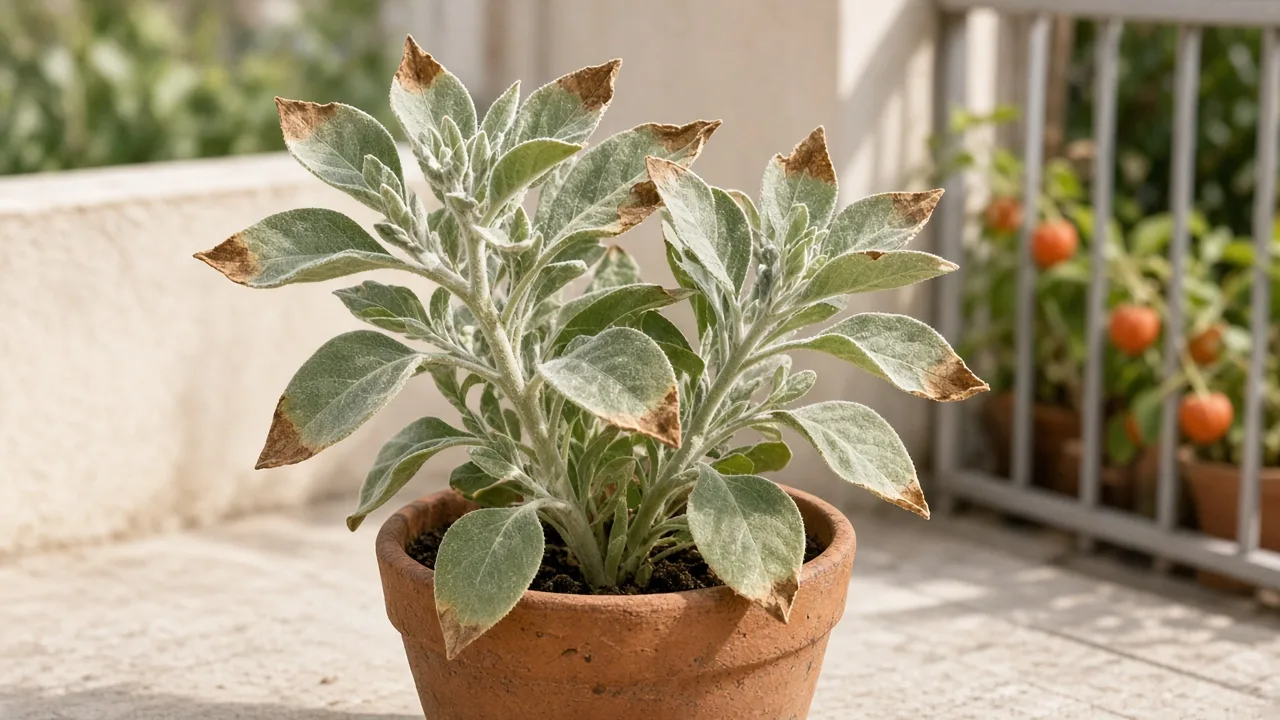
Brown tips on Ashwagandha are dry tan ends on silvery ovate leaves while stems stay erect—not whole-leaf collapse. First step: probe moisture at 3–4 cm depth on a sunny pot; if dry and the pot feels light, water thoroughly once, then confirm the plant gets six or more hours of direct sun.
Brown Tips on Ashwagandha: Causes, Checks & Fixes
This guide covers brown tips on Ashwagandha. See also the general Brown Tips guide, watering, and light pages for this plant.
Brown Tips on Ashwagandha: Causes, Checks & Fixes
Quick answer
Brown tips on Ashwagandha (Withania somnifera) mean the distal edge of a silvery ovate leaf has turned dry and tan while woody stems stay erect—not a collapsed shrub. For how tip burn works on leafy plants in general, see our brown tips hub. On Ashwagandha, full sun and fast dry-down on a balcony mean tips crisp from drought long before the plant looks wilted, because this nightshade tolerates dry spells better than wet feet.
First step: probe the top 3–4 cm of mix on your sunniest pot. Dry crumbly soil plus a light pot = thorough soak once, then empty the saucer. Moist heavy soil plus spreading browning = stop watering and read the overwatering guide before you add more.
When to use this page vs other Ashwagandha guides
| Pattern | Read next |
|---|---|
| Whole leaf brown, not just the tip | Brown leaves |
| Light pot, midday wilt on dry soil | Underwatering |
| Soft stems at crown, sour soil smell | Overwatering or root rot |
| Tips plus stippling on hairy undersides | Spider mites |
| Pale stretched stems, dim room | Not enough light |
| Winter crisping near a heat vent indoors | Low humidity |
| Lower yellowing before tips brown | Yellow leaves |
What brown tips look like on Ashwagandha
Ashwagandha carries short, fine silver-gray hairs on ovate alternate leaves along erect woody stems. Brown tips show on those velvety leaves first:
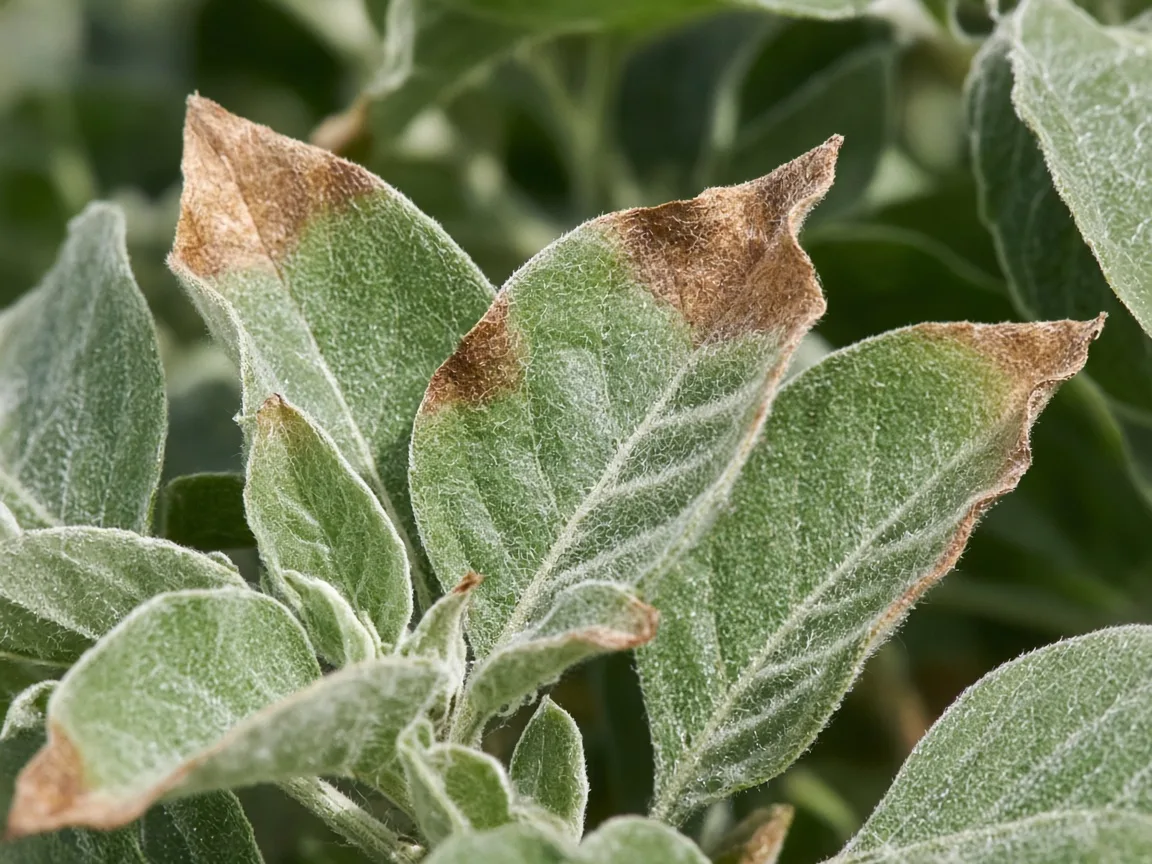
Dry tan tips on silvery ovate leaves—the dead tip tissue will not re-green; watch for clean new leaves on firm stems.
- Tan crispy tip only, green leaf base, firm stem — Drought on a sunny balcony, normal aging on lower leaves, or salt edge burn.
- Tips on uppermost leaves after a harsh sun move — Heat scorch on tender new growth in peak summer.
- Tips brown with white crust on soil surface — Salt or fertilizer residue in a container; see the fertilizer guide.
- Tips plus pale stippling and fine webbing on hairy undersides — Spider mites before blaming dryness alone.
- Tips on lowest leaves as orange winter-cherry fruit forms — Often natural senescence as the plant shifts energy toward roots and berries.
A firm erect stem with a few tan-tipped lower leaves is common on mature shrubs and not automatically a crisis if new growth at branch tips stays clean.
Velvety leaf anatomy: why tips go first on Ashwagandha
This section is Ashwagandha-specific and does not apply to broad tropical foliage plants.
- Leaves are alternate, ovate, and densely covered in silver-gray hairs—the farthest point from the stem loses water first in full sun.
- The plant is grown for woody stems and thick roots, not soft lush foliage. Tip damage is often cosmetic if stems stay hard and the soil guide mix drains fast.
- Leaves have a distinct odor sometimes compared to horse sweat—that is normal. A sour rotting smell at the crown means stem rot, not simple tip burn.
- Ashwagandha cannot grow in the shade. Weak light produces pale stretched growth where tips brown easily from stress even when soil moisture looks fine.
Why Ashwagandha gets brown tips
Underwatering on a full-sun balcony
Ashwagandha is extremely drought tolerant once established, but it still transpires heavily in full sun with six or more hours of direct light daily. A small terracotta pot on a hot terrace can go from moist at 3–4 cm to dangerously dry in 48 hours while stems stay upright. Tips die first because they are farthest from the root zone.
Repeated boom-and-bust dry-downs produce crispy margins on leaf edges even when the shrub survives. That pattern overlaps with underwatering on Ashwagandha when the whole pot is light and dry top-to-bottom.
Overwatering and root stress
NC State Extension warns that stem and root rot can affect this plant and that you should water only when the soil dries out because it does not like wet feet. Chronic soggy mix damages roots first; tips brown second as the plant cannot move water to leaf edges. If soil stays wet for days after one drink, switch to overwatering triage—not more tip-trimming.
Washington College notes leaf and stem rot can occur when drainage fails in otherwise warm conditions.
Salt and fertilizer buildup in containers
Ashwagandha naturally favors lean, sandy, slightly alkaline soil. Heavy feeding in a small pot without flushing leaves soluble salts that damage sensitive leaf margins on container plants. White residue on the soil surface or pot rim supports salt toxicity over simple drought.
Weak light and indoor stress
Growers sometimes move pots indoors for frost protection and lose sun hours. It cannot grow in the shade, so dim winter windows produce weak leaves where tips brown from chronic stress. Pair pale stretched stems with the not enough light guide before you increase watering.
Spider mites on hairy leaf undersides
Washington College lists spider mites as a potential attacker. Fine stippling on silvery undersides plus occasional webbing can look like edge burn. Confirm with a lens before you soak a plant that is already on wet mix.
Heat scorch on sun-facing tips
Ashwagandha prefers warm environments between roughly 70°F and 95°F. Sudden exposure to blazing afternoon glass or reflected heat after a cloudy week can scorch the uppermost leaf tips while lower leaves stay greener. Sun-facing tips only, right after a move, support heat shock over root failure.
How to confirm the cause
Run this checklist before you stack fixes:
- Probe moisture at 3–4 cm — Crumbly and light confirms drought; wet and heavy points to overwatering or root rot.
- Lift the pot — Light weight plus dry probe supports underwatering; heavy pot with crispy tips supports humidity, salt, or root stress.
- Count direct sun hours — Fewer than six hours on a balcony or windowsill explains weak pale growth with tip burn.
- Smell the crown — Normal leaf odor vs sour rot at the soil line.
- Check for white crust — Salt or mineral buildup on soil surface or pot rim.
- Inspect hairy undersides — Stippling or webbing suggests spider mites, not uniform tip crispness alone.
- Note seasonal stage — Lower leaf tip browning as flowers and orange berries form may be normal senescence if new tips stay clean.
Confirmation decision table
| If you find… | Likely cause | First action |
|---|---|---|
| Dry 3–4 cm, light pot, tan tips on many leaves | Underwatering / drought | Deep soak; see underwatering |
| Moist 3–4 cm, firm stems, crispy tips near heat vent | Low humidity / heat draft | Relocate; low humidity |
| White crust, browning after feed on dry soil | Salt / fertilizer burn | Leach soil; hold fertilizer |
| Sun-facing tips only, recent move to harsh sun | Heat / light shock | Shade briefly; rehydrate if dry |
| Stippling + webbing on undersides | Spider mites | Rinse; isolate; spider mites |
| Tips on lowest leaves during fruiting | Natural senescence | Trim if needed; maintain watering rhythm |
The first fix to try
Probe the top 3–4 cm. If dry, water thoroughly until a little drains, then empty the saucer.
That single step addresses the most common balcony failure—surface-dry pots in full sun—without drowning a plant that only needs humidity correction or better light. If the probe reads moist and the pot still feels heavy, do not add more water. Move the pot to full sun if it has been in shade, or away from heating vents if tips crisp indoors on moist soil.
If white crust suggests salts, leach the mix by watering slowly until excess drains freely two or three times with plain water before resuming the fertilizer guide schedule. Trim only fully dead tip tissue for appearance; dead brown tips will not re-green.
Step-by-step recovery by cause
Drought tip burn
Water when the top 3–4 cm dries per the watering guide. In peak summer heat, check every two days on small pots. After one thorough soak, wait for new leaves at stem tips to open without fresh crisping before you change anything else.
Root-stress tip burn
Stop watering until the top 3–4 cm dries. Confirm drainage holes are open and the mix matches the soil guide—sandy with perlite, not heavy peat. If stems soften at the base, escalate to root rot salvage.
Salt edge burn
Flush the container two or three times with clear water. Resume diluted feeding only after new growth looks clean for two weeks. Ashwagandha needs less fertilizer than lush foliage houseplants.
Light-stress tip burn
Move to the sunniest spot available—six or more hours of direct sun daily. Indoors after frost, place at the brightest south-facing glass you have. Pair with the light guide for seasonal adjustments.
Mite-related edge damage
Isolate, rinse hairy leaf undersides, and confirm active pests before any spray. Wet roots plus pesticide on the same day stresses this nightshade unnecessarily.
Recovery timeline
Judge progress by firm erect stems and clean new leaves at branch tips, not by old tan tips re-greening. Mild drought tip burn on a sunny pot often stabilizes within one to two watering cycles after you correct dry-down timing. Root-stress cases need longer—sometimes several weeks—as damaged roots regrow in fast-draining mix.
Lower leaves that browned during fruiting may drop naturally; that is not failure if upper growth stays healthy.
Mistakes to avoid
- Soaking a plant already on wet mix because tips look dry—damaged roots cannot supply leaf edges.
- Keeping Ashwagandha in a dim room and watering more—shade stress plus wet feet invites stem rot.
- Feeding heavily on stressed plants before confirming light, drainage, and root firmness.
- Stacking repotting, pruning, and pesticide on the same day—change one variable at a time.
- Expecting dead tips to recover—trim for appearance only after the cause is fixed.
How to prevent brown tips next time
Align care with this shrub’s native rhythm: full sun, sandy well-draining soil, and water only when the mix dries. Use the finger test at 3–4 cm before every major watering. Flush container salts seasonally if you feed during warm growth. Cut watering sharply in cool dormancy. Inspect hairy undersides weekly in dry indoor air where spider mites thrive.
Related Ashwagandha guides
Conclusion
Brown tips on Ashwagandha are edge stress on silvery leaves, not automatic shrub failure—firm stems first, tips second. Match soak timing, full sun, or salt flush to what the pot weight, sun hours, and leaf position tell you. Dead tan tips will not recover; watch for clean new leaves on erect stems as your success marker.