Underwatering on Ashwagandha: Pot-Weight Checks
Quick answer
Underwatering on Ashwagandha shows up as a light warm pot, bone-dry sandy mix at 3–4 cm depth, and firm erect stems with limp silvery-green leaves—not a heavy wet pot with a spongy crown. First step: finger-test the top 3–4 cm of mix and lift the pot; if it is light and dry with firm stems, give one deep soak until water runs from drainage holes.
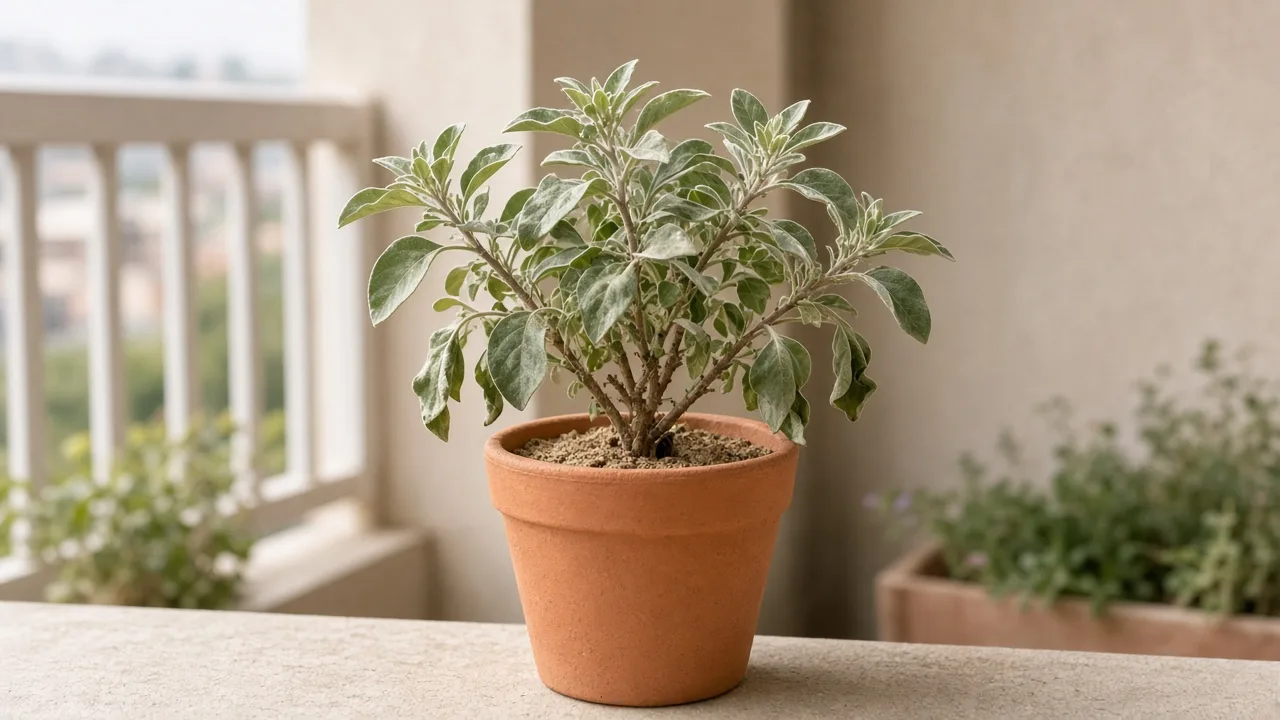
Underwatering on Ashwagandha: Causes, Checks & Fixes
This guide covers underwatering on Ashwagandha. See also the general Underwatering guide, watering, and light pages for this plant.
Underwatering on Ashwagandha: Causes, Checks & Fixes
Quick answer
Underwatering on Withania somnifera (Ashwagandha, Indian Ginseng, Winter Cherry) is the dry-side stress this sun shrub handles better than wet feet—but prolonged drought still stalls root growth and strips turgor from silvery-green foliage. Ashwagandha evolved in open and disturbed dry habitats and prefers dry stony ground in full sun, so brief dry spells are survivable. NC State Extension still directs growers to water when the soil dries out—not to ignore the pot for weeks in peak terrace heat.
For how drought stress shows up on container plants in general, see our underwatering guide. On Ashwagandha, the pattern is a light warm pot, bone-dry sandy mix at 3–4 cm depth, firm erect woody stems, and limp or cupped leaves—not a heavy wet pot with a spongy crown.
First step: finger-test whether the top 3–4 cm of mix is dry, then lift the pot. Light and warm with firm stems means give one deep soak until water runs from drainage holes and the saucer is emptied within 15–30 minutes. Heavy wet mix with a denting stem base means overwatering or root rot—do not add more water until you rule those out.
When to use this page vs other Ashwagandha guides
| Pattern | Read next |
|---|---|
| Light dry pot, firm stems, midday wilting | Stay here |
| Heavy wet pot + soft stem base + sour smell | Overwatering |
| Mushy roots, blackening crown | Root rot |
| Whole plant limp but mix stays wet for days | Wilting or drooping leaves |
| Crispy tan tips only, otherwise firm | Brown tips |
| Pale stretched stems in a dim room | Not enough light |
| Cupped dull leaves on dry mix | Curling leaves |
| Stalled size despite warm sun | Slow growth |
What underwatering looks like on Ashwagandha
Healthy Ashwagandha holds silvery-green, softly hairy ovate leaves on stiff erect woody stems above a firm crown. Underwatering breaks that posture when the root ball cannot supply water fast enough:
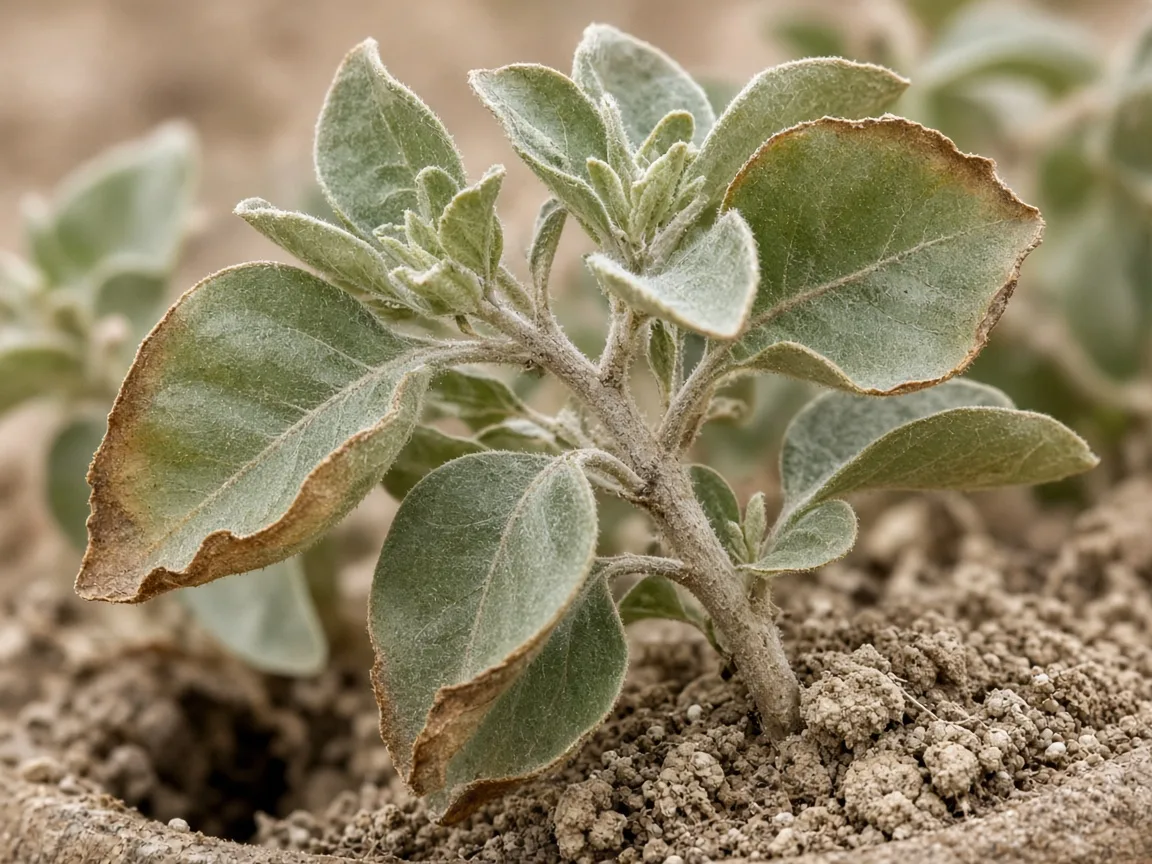
Thirsty Ashwagandha—dull cupped silvery leaves on firm stems with visibly dry sandy mix pulling slightly from the terracotta rim.
Early signs
- Light pot that lifts easily compared to its weight after a full watering
- Bone-dry mix at 3–4 cm depth—crumbly, warm, and pale; soil may pull slightly away from pot edges on prolonged drought
- Midday limp leaves on otherwise firm erect stems—classic on terrace plants in full sun when the sandy mix dries faster than roots pull moisture at peak heat
- Dull, slightly cupped silvery foliage rather than the crisp shine of well-hydrated blades
- Slowed new tip growth despite warm weather—pairs with slow growth only after you confirm dry mix, not wet feet
Advanced signs
- Crispy brown margins on lower or outer leaves—yellowing with brown edges is a drought pattern when mix is dry top-to-bottom
- Leaf drop during a dry spell—Ashwagandha may shed older foliage to reduce transpiration when water is scarce
- Persistent morning wilt that does not perk after overnight recovery—past reversible heat droop
- Stalled flowering or berry set on a shrub that should be active in warm sun
- Brittle lower petioles on leaves that crumble when touched—tissue is dead and will not re-green
A single limp leaf on one branch after a hot afternoon is not automatically underwatering. The combination of dry 3–4 cm probe + light pot + firm crown is what confirms thirst on this species.
Reading the woody stem crown before you soak
Ashwagandha is a short woody Solanaceae shrub grown for deep taproots, not soft houseplant foliage. The crown check separates thirst from rot:
Press the stem base just above the soil line:
- Firm like a young tree branch on dry mix — Roots are still functional. Match limp foliage to dry soil, heat wilt, or a missed watering—not repotting or fertilizer.
- Spongy or denting on wet mix — Stop. That is overwatering or advancing rot, even if leaves look desperately dry. NC State lists stem and root rot when drainage fails.
- Firm on dry mix but leaves stay limp through cool mornings — Escalate to a deep soak or bottom-watering session; the root ball may have dried at depth while the surface looked acceptable.
Pair stem feel with pot weight. A light, warm terracotta pot on a July terrace is the classic Ashwagandha underwatering picture. A heavy cool pot with limp leaves means damaged roots cannot move water—route to overwatering before you soak again.
Midday heat wilt vs true drought on terrace sun shrubs
Ashwagandha is cultivated across tropical and subtropical arid regions and tolerates brief heat when sandy soil drains sharply. On a hot balcony, leaves may soften through the afternoon even when care is mostly correct.
Heat wilt looks like this:
- Stems stay firm at the base through the limp spell
- Droop eases by the next morning before direct sun hits
- Top 3–4 cm of mix is dry or drying on schedule per the watering guide
- No progressive crispy browning climbing up the plant over several days
True underwatering adds multi-day dry mix, a clearly light pot, and dull foliage that stays limp into cool morning hours. If those checks fail, one deep soak is the first fix—not repeated afternoon sprinkles that keep the crown damp on a species that does not like wet feet.
Sandy mix, small pots, and the dry-down trap
Ashwagandha containers should use sandy well-draining mix with extra perlite or coarse sand—matching the dry stony ground this undershrub prefers. That texture drains fast, which protects roots from rot but punishes missed waterings in peak sun.
Common underwatering setups:
Small terracotta on a blazing terrace. Unglazed clay breathes; a young Ashwagandha in a 15–20 cm pot can go from adequately moist to bone dry in two hot days. Calendar reminders based on winter intervals will miss summer thirst.
Hydrophobic dry pockets. If you only ever sprinkle the surface, lower sandy mix can stay dry while the rim looks pale. Epic Gardening notes that severely dried mix may need more water than you expect to rehydrate the full root ball—one slow deep soak beats five shallow cups.
Root-bound plant in unchanged mix. A dense root mat in year-old sandy blend can dry the whole column quickly in full sun the plant requires. Wilting on schedule dry-downs may mean repot timing, not laziness—see soil and overview guidance before upsizing.
Travel or monsoon gaps. A week without checks during a dry spell between rains can stall the shrub. Empty saucers after storms, then resume the 3–4 cm probe rather than assuming rain rewetted the root zone.
Why Ashwagandha gets underwatering
Withania somnifera tolerates drought better than wet feet, but it is not a cactus. Common drivers:
Treating drought tolerance as “never water.” NC State says water only when the soil dries out—that is a cue to soak, not to skip irrigation for weeks in active summer growth.
Fear of overwatering after a rot scare. Owners who lost a plant to wet mix sometimes under-water the replacement. Firm stems on dry mix need one deep drink, not indefinite drought.
Weak light indoors with summer dry-down habits. A dim room slows water use until winter, then the same sparse watering in a moved-to-sun terrace pot starves roots. Fix light and relearn dry-down speed after every placement change.
Seedling vs mature shrub confusion. Young starts need steadier moisture while roots establish; mature shrubs tolerate longer dry windows. Applying seedling caution to a root-bound terrace plant causes chronic thirst.
Harvest-season leaf drop misread as thirst. Lower leaves yellow and dry when orange winter-cherry berries mature—similar to harvest timing NC State describes when leaves start to dry as roots are dug. Firm crown + dry mix + no sour smell = underwatering; firm crown + normal dry-down + seasonal pattern = harvest, not emergency soaking.
How to confirm the cause
- Finger or skewer at 3–4 cm — Crumbly dry confirms thirst; cool clinging soil means wait.
- Pot weight — Light and warm vs heavy and cool.
- Stem crown firmness — Firm on dry mix = underwatering path; spongy on wet mix = overwatering.
- Leaf texture — Crispy margins and dull cupped blades on dry mix, not limp yellow lowers on damp mix.
- Time of day — Afternoon-only limp that perks overnight may be heat wilt; morning limp on dry mix needs water.
- New growth — Stalled silvery tips in warm sun with dry soil supports drought over nutrient deficiency.
- Pest check — Sticky curled tips on firm stems point to aphids or spider mites before soaking.
First fix for Ashwagandha
Give one deep soak until water runs freely from drainage holes, then empty the saucer within 15–30 minutes. That single thorough drink is the first fix—not repotting, pruning, and fertilizer on the same afternoon.
After the soak:
- Firm stems + light dry pot — Wait for the top 3–4 cm to dry again before the next watering. Track two full dry-down cycles to learn your terrace rhythm.
- Water sheets off dry mix without soaking in — Bottom-water 10–20 minutes in a tray, drain fully, then return to normal top watering per the watering guide.
- Spongy base on wet mix — Do not keep soaking. Open overwatering immediately.
- Several collapsed stems on week-old dry mix — Soak once, move to morning shade for 24 hours if sun is extreme, then confirm light is adequate for recovery.
Do not fertilize stressed Ashwagandha. Do not switch to daily light sprinkles—that trains shallow roots and invites crown rot on wet-feet-intolerant crowns.
Step-by-step recovery
Once the first deep soak is done and the crown is firm:
- Probe daily at 3–4 cm — Resume the normal soak-and-dry rhythm; typical summer intervals are every 4–7 days in full sun, longer in cool months.
- Trim only fully crispy leaves — Brown margins will not re-green; snip necrotic blades once turgor returns. Wear gloves—all parts are poisonous if eaten.
- Mulch the surface lightly — Clean straw or compost top-dress slows evaporation on terrace pots without sealing the crown in damp peaty mix.
- Repot only if the root ball never re-wets — Shift to fresh gritty soil one size up if hydrophobic old mix repels water after two soak attempts.
- Watch branch tips — New silvery-green leaves mean roots are moving water again even if older blades stay dull.
Recovery timeline
Crispy brown leaf edges do not re-green. Judge recovery by perked foliage within hours to a day, firm stems, predictable dry-down at 3–4 cm, and clean new tips within one to two weeks in warm weather. Mild missed-watering cases on a firm crown often stabilize after a single deep soak. Chronic drought that stalled a root crop may need the rest of the growing season to rebuild canopy before harvest-minded growers assess root size.
Mistakes to avoid
- Daily light sprinkles instead of one deep soak when the pot is light and dry
- Soaking a spongy stem base because leaves look wilted on wet mix
- Keeping Ashwagandha in dim light while blaming “underwatering” for pale limp stretch
- Fertilizing to green up crispy leaves on dry soil
- Confusing harvest-time lower-leaf yellowing with emergency thirst when mix is already moist
- Waiting for leaves to crumble before watering in peak summer on small terracotta
How to prevent underwatering next time
Use sandy well-draining mix, give full sun on the sunniest terrace you have, probe the top 3–4 cm before every major watering, and learn your pot’s dry weight. Upsize or repot when roots circle and the column dries in hours. See the Ashwagandha overview and problems hub for sibling guides.
Related Ashwagandha guides
- Ashwagandha overview
- Watering guide
- Light guide
- Soil guide
- Overwatering
- Drooping leaves
- Wilting
- Brown tips
- Problems hub
Conclusion
Underwatering on Ashwagandha is a dry root-zone problem that shows up as a light pot, crumbly sandy mix, and limp silvery foliage on firm woody stems—not a heavy wet pot with a spongy crown. Probe at 3–4 cm, lift the container, press the stem base, and give one deep soak when dryness confirms thirst. Prevention comes from matching water to terrace evaporation in full sun—not from treating this medicinal shrub like it never needs a drink.
Related tool
Use the Plant Watering Calculator to narrow causes for underwatering on this plant before changing multiple variables at once.