Not Enough Light on Ashwagandha: Sun & Stretch Checks
Quick answer
Not enough light on Ashwagandha shows as pale soft new leaves, long gaps between leaves on erect stems, leaning toward the brightest wall, and soil that stays wet for days. First step: move the pot to the sunniest open terrace or south-facing balcony you have and count direct sun hours on the leaves—not room brightness.
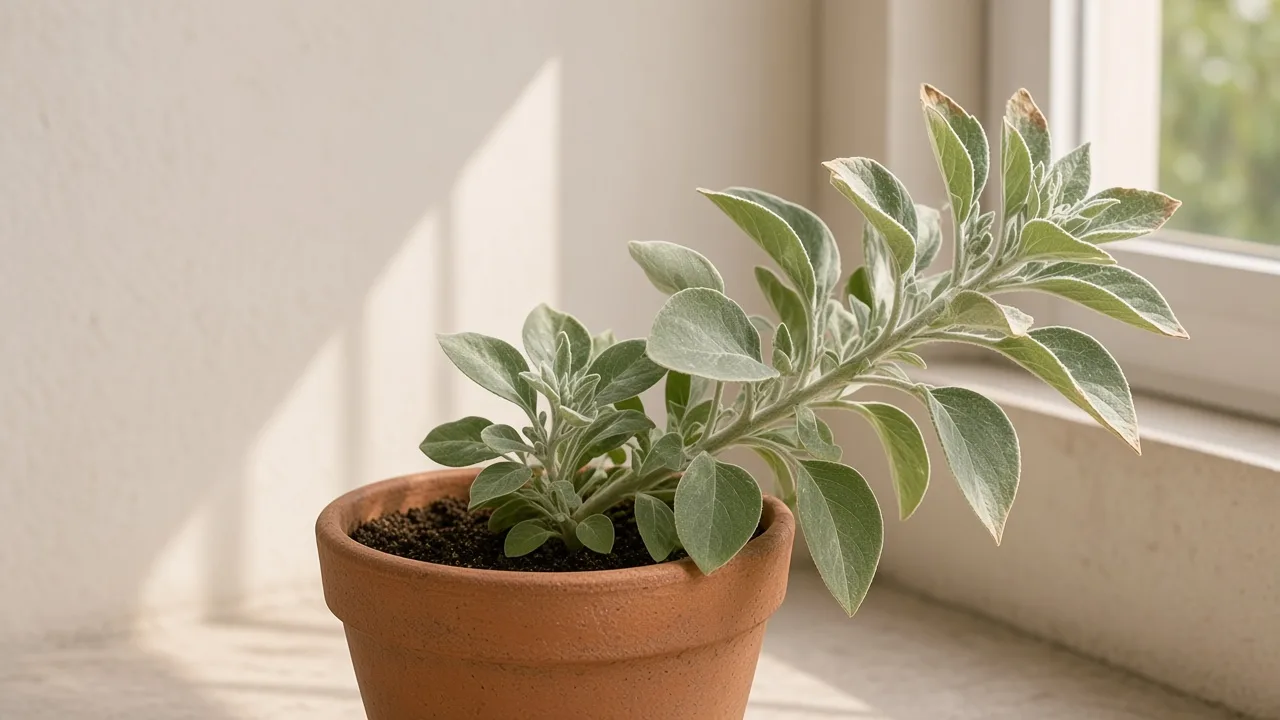
Not Enough Light on Ashwagandha: Causes, Checks & Fixes
This guide covers not enough light on Ashwagandha. See also the general Not Enough Light guide, watering, and light pages for this plant.
Not Enough Light on Ashwagandha: Causes, Checks & Fixes
Quick answer
Not enough light on Ashwagandha (Withania somnifera, Indian Ginseng, Winter Cherry) shows up as pale soft new leaves, long gaps between leaves on erect woody stems, and a pot that leans hard toward the brightest wall—often while the mix stays damp for days. For how etiolation works on plants in general, see our not enough light guide. On Ashwagandha, NC State Extension is blunt: give full sun and expect failure in shade—this open-ground Solanaceae shrub is grown for roots, not soft houseplant foliage.
First step: move the container to the sunniest open terrace, roof edge, or south-facing balcony you have and count direct sun hours on the leaves. Do not repot, fertilize, or prune on the same day you change placement. If stems are firm but soil stays wet, read overwatering before you add water to “help” pale shoots.
When to use this page vs other Ashwagandha guides
| What you see | Read next |
|---|---|
| Long bare internodes, wand-like shoots | Leggy growth |
| Pale leaves plus dry light pot, midday wilt | Underwatering |
| Wet heavy mix, yellow lower leaves | Overwatering or yellow leaves |
| No flowers or berries on an otherwise firm shrub | Slow growth |
| Tan crispy patches after a sudden sun move | Brown tips or brown leaves |
| Window direction, acclimation, grow-light backup | Light guide |
What not enough light looks like on Ashwagandha
Healthy Ashwagandha holds silvery-green, softly hairy ovate leaves on stiff erect stems above a firm woody base. Low light breaks that compact shrub habit:
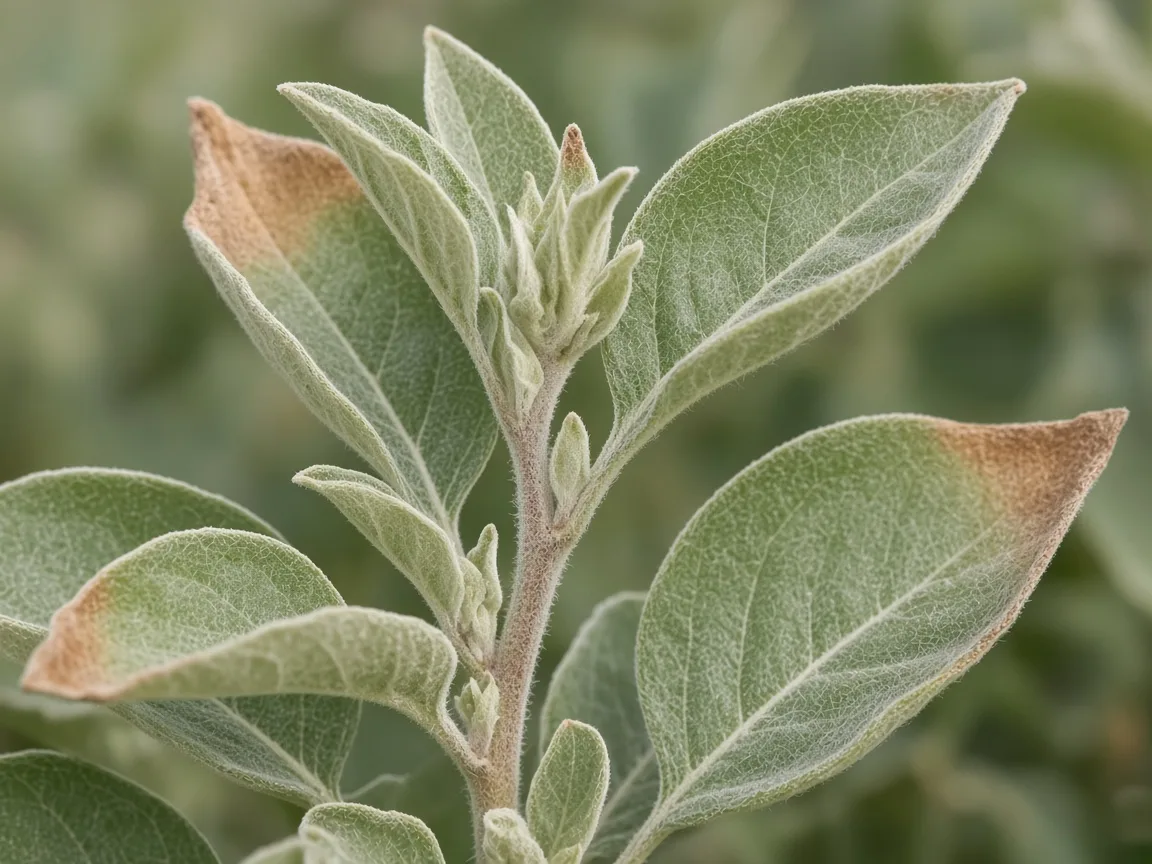
Pale smaller new leaves with wide internode gaps on silvery Ashwagandha stems—old stretched sections will not shorten; watch the next flush of growth.
- Pale or yellow-green new leaves opening smaller and softer than older sun-grown foliage at branch tips.
- Long internodes — visible gaps between leaf pairs as shoots race toward the brightest source; see leggy growth when stretch is extreme.
- One-sided lean — the pot and crown tilt permanently toward a window, balcony opening, or corridor light.
- Stalled flowering and fruit — pale green flowers and orange winter-cherry berries fail to form on a shrub that otherwise looks alive.
- Soil that stays wet — the top 3–4 cm feels cool and damp for many days even though you watered lightly; weak light slows transpiration on hairy leaves.
- Lower leaf yellowing on heavy mix — not always a nutrient problem; shade plus wet feet is a common terrace mistake.
These signs differ from sun scorch, which shows tan crispy patches on leaves that were recently moved from shade into harsh afternoon sun. They also differ from cool-season dormancy, when slower growth on a firm stem in a dry pot is normal after you bring containers indoors before frost.
The shadow test on silvery Ashwagandha leaves
This check is specific to a gray-hairy sun shrub, not a dark-leaved tropical foliage plant. On a clear day, hold your hand between the plant and the light source at the height of the top leaves:
- Sharp, dark shadow on the foliage for much of the day — you are closer to the six or more hours of direct sun NC State lists for full sun culture.
- Soft faint shadow or no shadow — the room may look bright to your eyes, but the leaves are in shade culture. It cannot grow in the shade.
Count hours when sunbeams actually hit the leaves, not when the wall behind the pot looks lit. Deep verandahs, north balconies, and interior tables more than a metre from glass usually fail the test even in sunny climates.
Pair the shadow test with pot weight. A light, warm pot that dries at the top 3–4 cm within a few days after a deep soak usually means the plant is using water—often because sun is adequate. A cool, heavy pot that stays damp while stems look pale points to weak light slowing dry-down.
Why Ashwagandha gets not enough light
Withania somnifera evolved in open and disturbed dry regions across South Asia, Africa, and similar climates—not under forest canopy. Plants For A Future repeats the same rule: it cannot grow in the shade and wants a warm sheltered position in full sun with well-drained, often dry stony ground.
Marketing vs biology
Ashwagandha is often sold as an easy “medicinal houseplant” for any warm room. Botany is stricter. Washington College CES notes it grows best in a dry sunny area in roughly 70–95°F (21–35°C) once seedlings establish—conditions that match a terrace, not a dim living room.
The hidden wet-soil trap
Weak light slows photosynthesis and transpiration. Peaty mix that would dry in six hours on a roof may stay damp for a week indoors. Roots in waterlogged soil lose oxygen and decay, which pushes yellow lower leaves and soft stems at the crown. Growers blame watering first; the real fix is often more sun before more water.
Common placement mistakes
- North-facing balcony or deep verandah — reflected sky light keeps the shrub alive but stretched.
- “Bright” living room away from glass — human vision adapts; etiolated stems reach toward the nearest window while internodes lengthen.
- Winter indoors without a plan — frost protection is valid, but months in weak window light produce a lanky plant that will not rebuild roots like terrace culture.
- Under a dense tree canopy — outdoor shade is still shade; NC State’s warning applies equally to pots parked under mango or neem branches.
Root-crop metabolism: why light matters beyond leaf color
Ashwagandha is grown for deep, healthy roots, not decorative soft foliage. That goal changes how you read low light:
- Stocky stems and short internodes in full sun mean the plant is partitioning energy toward roots and woody structure.
- Pale stretched shoots in shade may keep a few leaves green for months while underground growth stalls—survival mode, not harvest-ready vigor.
- Flowering and orange berries often appear in the first year from seed under full sun and good drainage; dim culture delays or skips that cycle entirely.
If you are growing for roots, weak light is not a cosmetic problem—it is a failed crop setup. Fix placement before you redesign soil or fertilizer.
How to confirm the cause
Work through these checks in order:
- Shadow test at leaf height for at least one clear day — fewer than six direct hours during warm active growth supports low-light diagnosis.
- Newest leaves at stem tips — smaller, paler, and farther apart than older leaves below.
- Pot weight and probe depth — damp top 3–4 cm for many days on a pale plant suggests slow transpiration from weak light, not generosity with the watering can.
- Stem base firmness — firm crown plus pale stretch = light first. Spongy base on wet mix = escalate to root rot protocol before moving pots.
- Recent changes — brought indoors for frost? Moved under a new awning? Neighbor construction shading the terrace? Timing matters.
Confirmed low light means brighter placement, not more nitrogen.
The first fix to try
Move the pot to the sunniest open exposure you can offer—terrace, roof edge, or south- or west-facing balcony with unobstructed sky—and leave everything else alone for ten days.
Acclimate if the plant lived in deep shade:
- Days 1–3: Morning sun only, or one hour of direct rays.
- Days 4–7: Extend direct exposure by an hour daily.
- Days 8–10: Full target placement unless leaves show bleached scorch; then pause and resume more slowly.
Do not repot, prune hard, or fertilize on the same day you change light. Let the plant show you the next flush of growth.
If outdoor sun is impossible, place the container flush against the brightest south- or west-facing glass and add a full-spectrum horticultural LED 30–45 cm above the canopy for 12–14 hours daily. If stems still stretch with long lamp hours, raise intensity—not just duration. Details live on the Ashwagandha light guide.
Recovery timeline
- 1–2 weeks after stronger sun: New leaves at tips should open slightly darker and closer together; leaning may slow.
- 3–4 weeks: Pot weight should fall on a more predictable schedule after watering if sun is adequate.
- 6+ weeks: Flowering may resume on mature stocky plants in warm weather; root-focused growers should see firmer overall structure.
Old stretched internodes never shorten. Recovery is judged by new growth, not by remodeling existing wands. Trim lanky shoots only after two clean flushes prove the plant is happy—see leggy growth for timing.
Lookalike symptoms
| Pattern | Likely cause | Next step |
|---|---|---|
| Pale stretch, damp soil, firm stem base | Not enough light | This page — move to sun, reduce water |
| Pale stretch, dry light pot, midday wilt | Underwatering | Underwatering |
| Yellow lower leaves, wet heavy mix | Overwatering / rot risk | Overwatering |
| Fine stippling on hairy leaf undersides | Spider mites | Spider mites |
| Tan crispy sun-facing patches after a move | Sun scorch | Acclimate; see brown leaves |
| No growth, cool dry pot in winter | Dormancy | Reduce water; return outdoors when warm |
Mistakes to avoid
- Watering more because the plant looks “thirsty” in shade — pale stretch plus wet mix worsens rot risk on a shrub that dislikes wet feet.
- Fertilizing pale stretched tissue — without adequate light, nitrogen pushes soft weak shoots, not roots.
- Keeping Ashwagandha as a permanent indoor foliage plant — survival in a dim room is not the same as medicinal-garden vigor.
- Jumping from deep shade to blazing west-roof sun in one afternoon — full sun is required, but acclimation prevents scorch on soft leaves.
- Pruning hard before light improves — you remove photosynthetic surface area while the plant still cannot fuel new compact growth.
How to prevent it next time
- Default placement: Sunniest open terrace or balcony with six or more hours of direct sun on the leaves during the warm season.
- Match watering to dry-down: Probe the top 3–4 cm; only water when dry per the watering guide.
- Use fast-draining mix: Sandy, slightly alkaline soil per the soil guide—heavy peaty mixes fail faster in shade.
- Plan winter honestly: Bring pots indoors before frost, but return them outdoors when nights stay warm or supplement with grow lights.
- Rotate the container every two to three weeks if one-sided lean appears early.
Related Ashwagandha guides
- Ashwagandha hub — whole-plant context and safety notes
- Problems hub — browse all symptom guides
- Light guide — placement, orientation, and grow-light backup
- Leggy growth — when stretch is already extreme
- Slow growth — when the shrub is firm but stalled despite decent sun