Leggy Growth on Ashwagandha: Light & Pruning Fixes
Quick answer
Leggy Ashwagandha shows long gaps between silvery leaves, pale thin shoots leaning toward the brightest window, and a pot that stays wet too long—classic etiolation on a full-sun shrub. First step: move the plant to at least six hours of direct sun with gradual acclimation and rotate the pot weekly before pruning or feeding.
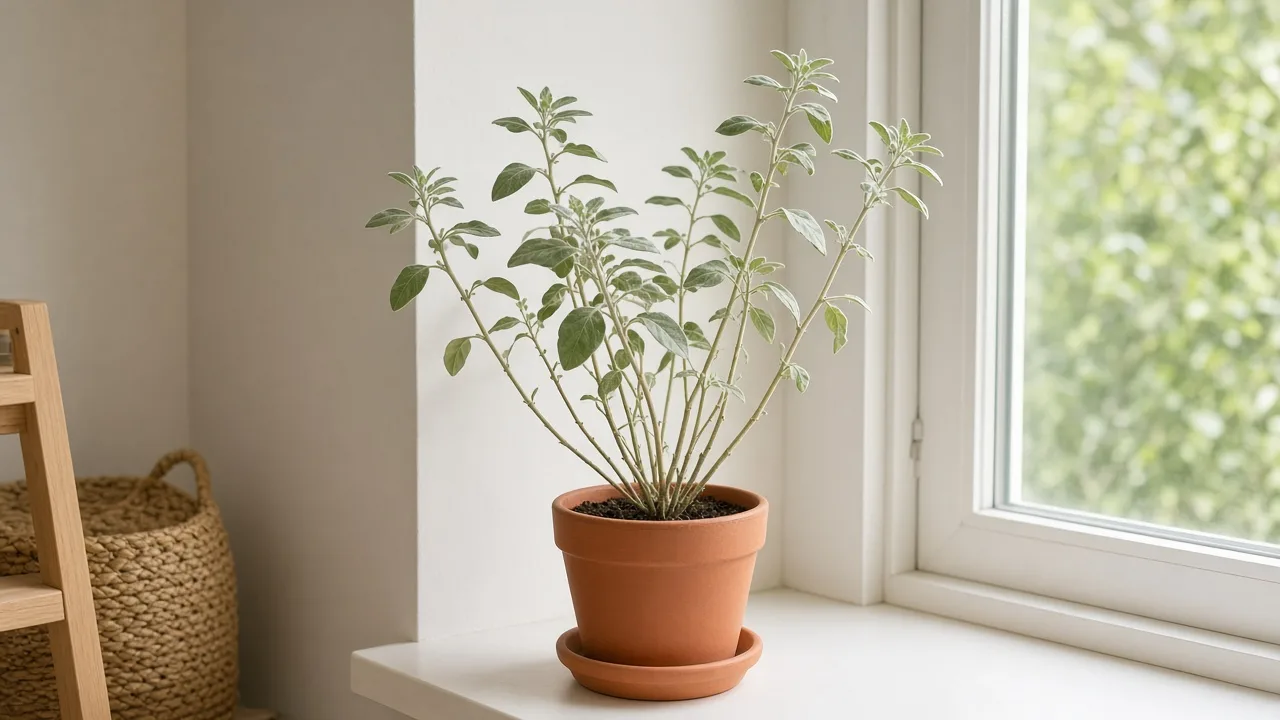
Leggy Growth on Ashwagandha: Causes, Checks & Fixes
This guide covers leggy growth on Ashwagandha. See also the general Leggy Growth guide, watering, and light pages for this plant.
Leggy Growth on Ashwagandha: Causes, Checks & Fixes
Quick answer
Leggy growth on Withania somnifera is etiolation on a full-sun medicinal shrub, not healthy fast growth. The plant stretches its erect hairy stems toward light, leaving long gaps between small silvery ovate leaves while the whole pot leans toward the brightest wall.
For how low light causes stretch in general, see our leggy growth hub. On Ashwagandha, the telltales are pale thin shoots, wide internodes on firm stems, delayed flowering, and soil that stays wet for days because weak light slowed water use.
First step: move the plant to at least six hours of direct sun with gradual acclimation, then rotate the pot a quarter turn every week—before tip pinching, repotting, or feeding.
When to use this page vs other Ashwagandha guides
This page is the structure-and-stretch entry when stems are long, sparse, and leaning—not when color alone fades or roots fail.
| Pattern | Read next |
|---|---|
| Dim room but stretch not advanced yet | Not enough light |
| Firm shrub, just slow in cool weather | Slow growth |
| Washed-out or yellow lower leaves on wet mix | Yellow leaves or overwatering |
| Soft crown, sour soil, mushy base | Root rot |
| Ready to shorten stems after light is fixed | Pruning guide |
| Window placement and acclimation | Light guide |
What leggy growth looks like on Ashwagandha
Healthy Ashwagandha builds short erect stems with silvery-green ovate leaves spaced evenly along hairy branches. NC State Extension describes simple ovate leaves with a gray sheen from dense hairs on the underside, borne on a small shrub grown for roots and fruit in warm climates. Leggy etiolation breaks that silhouette:
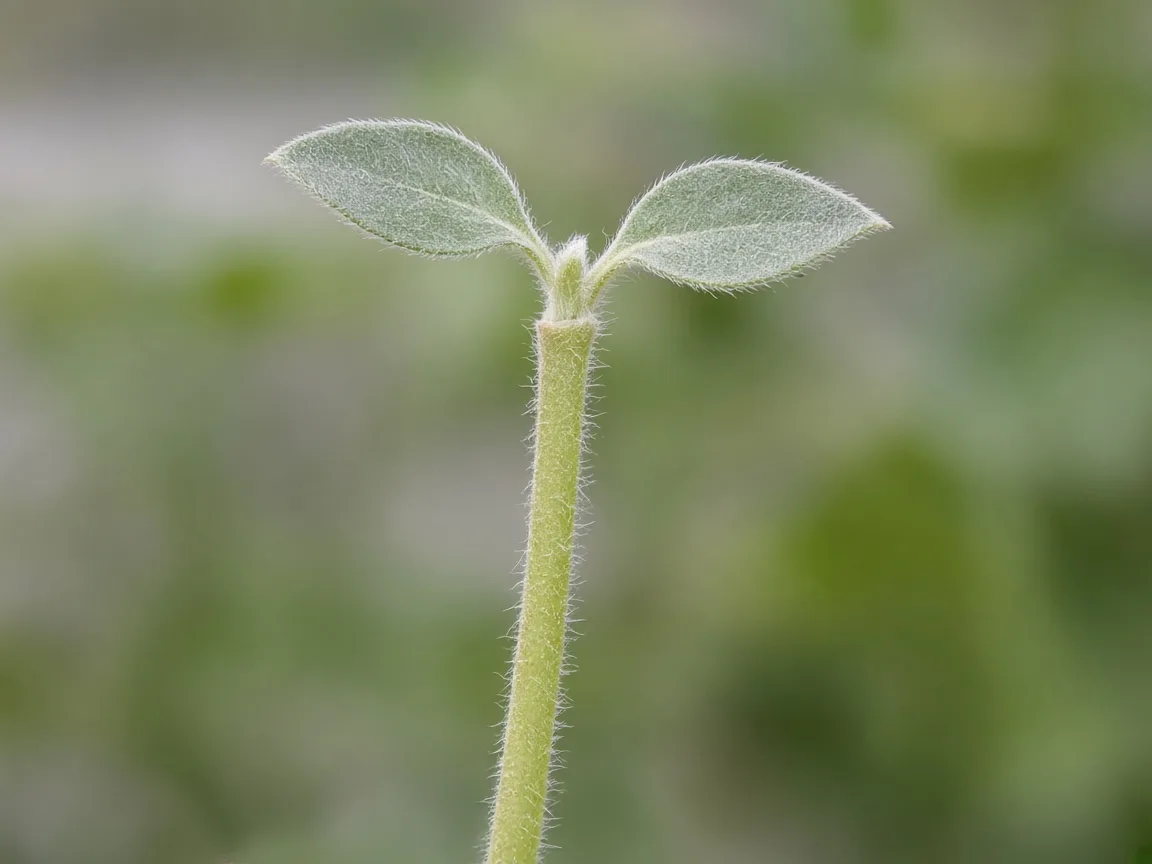
Wide gap between silvery leaves on a stretched stem—compare the long internode with tighter spacing on older firm growth below.
- Long bare gaps between leaves — Internodes widen; newest leaves stay small because the plant is reaching, not maturing
- Pale, soft upper shoots — Stretch weakens tissue; new growth looks lighter than older silvery foliage
- Hard lean toward one window or terrace edge — Whole shrub angles toward the brightest side
- Top-heavy pot that tips — Rapid vertical growth in dim light outpaces a small root ball
- Delayed or sparse flowering — Pale green buds at nodes arrive late or abort when the plant is starved for photons
- Mix stays wet too long — Weak light slows transpiration; the same watering rhythm that worked in full sun now keeps roots damp
A firm, dry stem with some lower leaf drop is different from a soft, wet base with yellowing—see overwatering when the crown fails a squeeze test at the soil line.
Internode spacing vs root-crop goals: a plant-only check
Ashwagandha is grown for a deep taproot, not a leafy hedge. That changes how you read stretch:
- Long internodes plus window lean on firm stems — Etiolation; light is the primary fix before any harvest-minded pruning.
- Soft tips with firm base but pale color — Often early shade stress; cross-check hours of direct sun against the light guide.
- Stretch only on the shaded side of a branched plant — Directional shade on a balcony; rotate the pot and improve exposure on the weak side.
- Long soft shoots plus heavy wet pot — Dim light slowed dry-down; check watering before assuming hunger or disease.
This root-crop framing does not apply to leafy philodendrons or shade-tolerant ferns—you are managing a full-sun shrub that cannot grow in the shade.
Why Ashwagandha gets leggy growth
Ashwagandha is an open-habitat Solanaceae shrub that wants full sun and fast-draining soil. Plants For A Future places it in open places and stony undershrub habitats and repeats that it cannot grow in the shade. When photons are short, the plant lengthens stems toward the source—classic etiolation—while keeping leaves small and sparse because energy goes to height, not the root mass this species is valued for.
Plant-specific triggers:
- Dim living room or north balcony — NC State lists full sun (6+ hours of direct light daily) and states flatly that the plant cannot grow in the shade. Bright reflected rooms still produce weak, leggy plants before leaves fully yellow.
- One-sided window or wall shade — Stems on the shaded side stretch longer; the pot leans as weight shifts toward glass.
- Winter short days indoors — Cool rooms plus low light widen internodes; stretch from autumn often shows by late winter on frost-brought containers.
- Soft, over-fed shoots — Excess nitrogen during long warm days produces succulent tips that stretch faster in marginal light. Match feeding to the fertilizer guide instead of pushing growth while the plant is already reaching.
- Crowded herb shelves — Neighbouring pots block side light; terrace rows need spacing so each shrub gets open sky, not reflected shade from taller plants.
How to confirm the cause
Work through checks in order so you do not prune or feed while the crown is rotting from wet soil:
- Hand-shadow test — On a clear day, hold your hand beside the foliage. A sharp, dark shadow for much of the day means you are closer to what Ashwagandha wants than a soft indoor shadow that looks bright to human eyes.
- Internode comparison — Measure gaps between leaves on the newest stem versus a lower section from when the plant had better light. Widening gaps confirm stretch.
- Lean direction — Strong tilt toward one window or terrace edge points to directional etiolation.
- Stem-base press — Firm erect stems with damage only on upper shoots point to light stress. Soft or mushy tissue at the crown on damp mix means rot risk first.
- Dry-down cross-check — Finger-test the top 3–4 cm per the watering guide; chronic wet mix in a dim spot often pairs with stretch because the plant is not using water quickly.
Symptom lookalike comparison
| What you see | Likely cause | Key check |
|---|---|---|
| Long internodes, window lean, firm base | Leggy growth / low light | Shadow test; compare stem sections |
| Dim room, pale leaves, no long stretch yet | Not enough light | Hours of direct sun still borderline |
| Firm plant, cool season, little new growth | Slow growth | Warm weather resumes growth; no strong lean |
| Yellow lower leaves on heavy wet pot | Overwatering | Sour odor; soft crown; no window lean required |
| Pale new leaves, tight spacing, good sun | Nitrogen deficiency | Older leaves stay green; no extreme lean |
Confirmed diagnosis — Widening internodes plus lean toward the brightest side with firm lower stems. Suspected — Pale soft tips without obvious lean may need a week of rotation and light logging before pinching.
First fix: improve light before you cut or feed
Move the pot to the sunniest location you can offer—south- or west-facing balcony, terrace edge, or brightest south/west glass—with gradual acclimation if it came from deep shade. Jumping straight from a dim room to harsh midday roof sun can bleach soft hairy leaves even though adult Ashwagandha is a sun lover.
Acclimation steps for hairy nightshade foliage
- Days 1–3: Morning sun or bright indirect beside the target spot; watch for bleached patches on upper leaves.
- Days 4–7: Add late-morning direct sun; keep the top of the mix drying on schedule per the soil and watering guides.
- Week 2 onward: Full target exposure—aim for six or more hours of direct sun as NC State recommends—with the pot rotated a quarter turn weekly so all sides build evenly.
Do not repot, heavily prune, or fertilize the same week you fix light. One variable at a time lets you read the response on the next flush of silvery growth.
When to add tip pinching
After two to three weeks of better light, if old stretched leaders still flop, pinch soft tips just above a healthy leaf node during warm active growth—details in the pruning guide. Clemson HGIC advises removing dead or diseased tissue first, then heading back to a healthy bud when shortening shoots. Limit live canopy removal to about one-third per session on container plants.
If you grow Ashwagandha mainly for roots, use light early pinches to build a sturdy framework, then ease off hard top cuts as flowers and fruit form—heavy late pruning redirects energy into new shoots when you want root mass instead.
Recovery timeline and what old tissue can do
Existing stretched internodes do not shrink. Expect tighter leaf spacing on new growth within three to five weeks during warm active season once light is adequate. Old bare stem sections remain; judge success by the next flush, not by old gaps filling in.
Signs you are winning: upright top growth, deeper silvery-green on new leaves, shorter gaps between ovate leaves, and a pot that dries on a predictable schedule after deep watering. Signs to escalate: creased bending stems, soft base on soggy mix, or collapse despite bright light—root checks before more pruning.
Mistakes to avoid
- Pruning hard before fixing light — New shoots will stretch again from the same dim spot.
- Feeding a stretched plant — Soft nitrogen-rich growth in marginal light worsens etiolation; confirm sun first.
- Watering on calendar autopilot — Dim plants use less water; wet feet plus weak light invite stem rot.
- Leaving a top-heavy pot unweighted — Stake or shift to a heavier container before stems snap.
- Ignoring pet safety after handling — All Ashwagandha parts are poisonous if eaten; wear gloves when pinching and keep trimmed material out of reach.
How to prevent leggy growth next time
Match the Ashwagandha overview routine: full direct sun, sandy fast-draining mix, and dry-down watering. Scout stem tips monthly when days shorten in autumn. Use light tip pinches in spring if seedlings race toward a window—see the pruning guide. Quarantine new plants in bright holding spots, not dim corners, while you learn each pot’s dry-down speed.
Related Ashwagandha guides
- Ashwagandha overview
- Ashwagandha light
- Ashwagandha watering
- Not enough light on Ashwagandha
- Slow growth on Ashwagandha
- Ashwagandha pruning
- Yellow leaves on Ashwagandha
- Ashwagandha problems
Conclusion
Leggy Ashwagandha is almost always a light-and-rotation problem expressed as long internodes, pale soft shoots, and a shrub leaning toward the brightest side. Move to full sun first, acclimate hairy leaves gradually, rotate weekly, then pinch to nodes in warm weather if old stretch cannot be reversed. Firm stems and tighter new silvery leaves tell you the shrub is recovering; soft wet bases need water and drainage correction before any renovation cut.