Ashwagandha Watering: How Often & Soil Checks
Ashwagandha Watering: How Often & Soil Checks
Ashwagandha Watering: How Often & Soil Checks
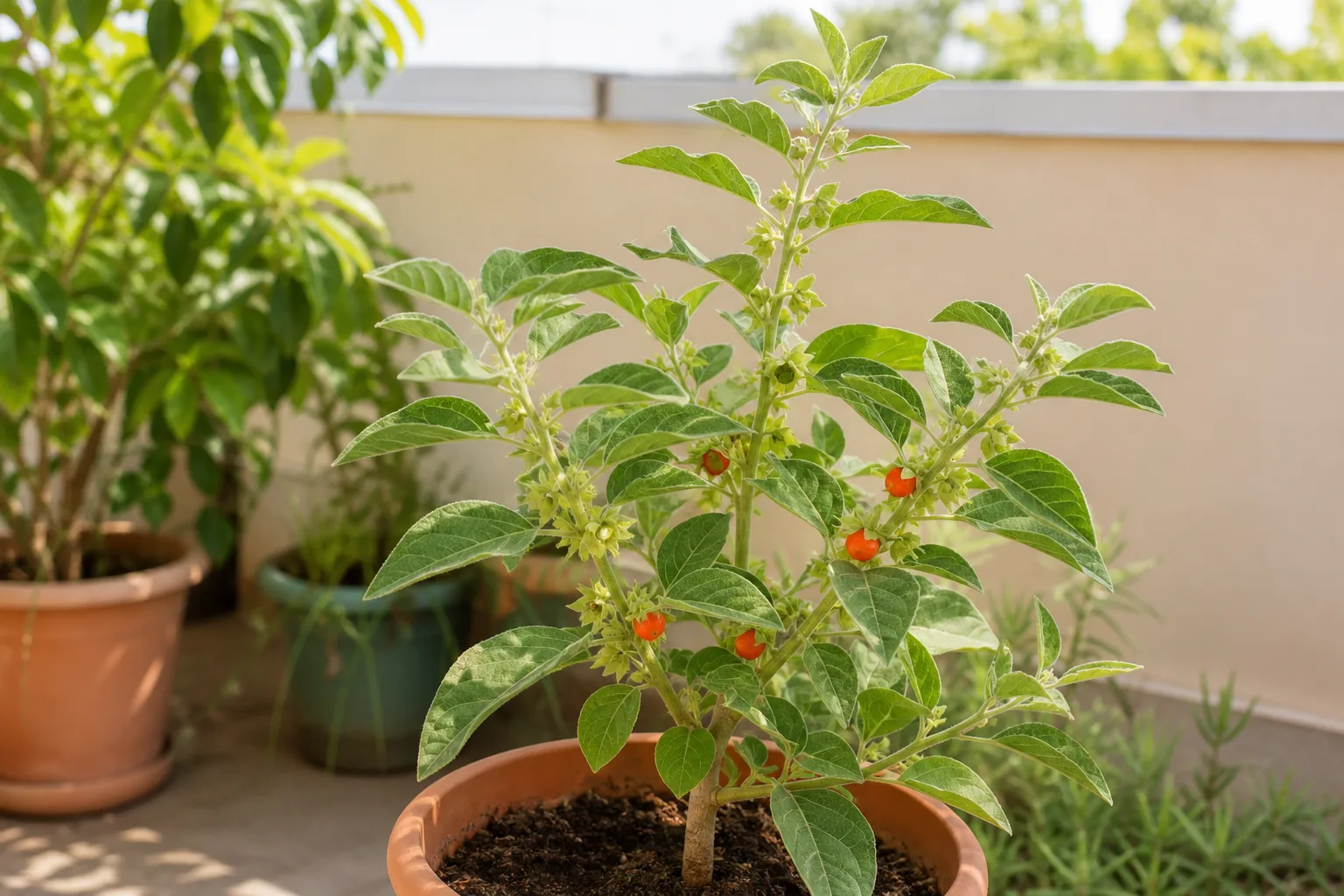
Ashwagandha watering is a dry-down habit, not a daily sip. Withania somnifera — also called Indian Ginseng, Winter Cherry, or Asgandh — is a short Solanaceae shrub grown for a deep, healthy root system. The NIH Office of Dietary Supplements notes it is cultivated in tropical and subtropical areas of Asia, Africa, and Europe. NC State Extension is blunt about irrigation: place it in full sun with good-draining, slightly alkaline sandy soil, and water only when the soil dries out because the plant does not like wet feet. (NC State Extension Plant Toolbox) Plants For A Future reinforces the same cultural picture: well-drained ground, often a preference for dry stony soil, a warm sheltered spot in full sun, and no shade. (Plants For A Future)
That biology flips tropical-houseplant advice. Keeping the pot constantly moist is the fastest way to invite the stem and root rot NC State lists as a known problem for this species. Water deeply when the top 3–4 cm of mix are dry, let excess drain, then wait until the upper soil dries again. In peak Indian summer heat that often means every 4–7 days; in cooler months closer to 10–14 days. Seedlings need steadier early moisture while roots establish; mature shrubs tolerate short dry spells far better than soggy crowns.
This guide covers how often to water, how to check dryness, overwatering and underwatering signs, monsoon and winter adjustments, and what to do first when leaves yellow after a drink. Pair it with the Ashwagandha care hub and the Ashwagandha soil guide — drainage and mix decide how forgiving your watering rhythm feels.
Why Ashwagandha Prefers Dry-Down Between Drinks
Ashwagandha evolved for open, disturbed, seasonally dry habitats across dry regions of India, Sri Lanka, and wider South Asia, not for constantly wet peat. NC State describes native habitats as open and disturbed areas and cultural needs as good drainage with only occasional dryness tolerance — never a permanently soggy pot. (NC State Extension Plant Toolbox) When roots sit in oxygen-starved wet mix, they cannot take up water or nutrients even though the pot feels heavy. Missouri Botanical Garden explains the mechanism clearly: roots in waterlogged soil die from lack of oxygen, decay, and leave the plant unable to move water upward, so growers often misread the wilt as thirst. (Missouri Botanical Garden — Overwatering)
So the goal for container Ashwagandha is a soak-and-dry cycle, not perpetual dampness. Dry-down returns air to the root zone. The next deep soak then rehydrates the full root ball. Daily light sprinkles keep the surface wet, encourage shallow roots, and leave the lower pot anaerobic — exactly the pattern that ends in soft stems and foul-smelling mix.
If you are choosing between slightly too dry and slightly too wet for an established plant, slightly too dry wins. That bias matches both NC State’s “water when dry” rule and PFAF’s dry, stony preference.
How Often to Water Ashwagandha in Containers
There is no universal calendar that works for every balcony. Pot size, mix texture, sun hours, wind, and season all change how fast water leaves the container. Use intervals only as a starting map, then let dryness decide.
In hot, dry summer weather with full sun, many patio Ashwagandha plants need a thorough watering about every 4–7 days once the top 3–4 cm are dry. In milder weather or cooler months, the same plant may stretch to 10–14 days between soaks. A small terracotta pot on a blazing terrace dries faster than a large plastic pot in a humid courtyard. Track two full dry-down cycles and you will know your home’s rhythm better than any fixed reminder.
Never water because an app or habit says “today” while the pot is still heavy and cool at depth. An Ashwagandha that waits three extra dry days usually recovers. An Ashwagandha whose roots sit wet for three extra days may not — especially if light is weak. Confirm placement with the Ashwagandha light guide before blaming the watering can; NC State notes the plant cannot grow in the shade, and shaded pots stay wet longer. (NC State Extension Plant Toolbox)
Finger, Weight, and Season Checks
Surface color alone lies. Peaty mixes can look pale on top while staying damp near the drainage holes. Before every watering, use at least one of these checks:
Finger test: Push a finger 3–4 cm into the mix. If it feels cool or soil clings, wait. Bone-dry at that depth is your cue to soak.
Pot weight: Lift the container after a full watering and again each day until it feels clearly lighter. Weight reflects the whole column, not just the top crust.
Chopstick or skewer: Push dry wood toward the bottom, then pull it out. Dark, sticky wood means moisture remains; clean dry wood means the root zone has dried enough for Ashwagandha.
Season changes the same checks. In monsoon humidity or North India winter chill, the pot stays heavy longer — so the same finger test that said “water” in May may say “wait” in December. Always re-check rather than copying last month’s interval. Missouri Botanical Garden also warns that a dry surface is not always a sign of need; probe deeper before you irrigate. (Missouri Botanical Garden — Overwatering)
The Soak-and-Dry Method That Protects Roots
When dryness checks pass, water slowly and thoroughly until runoff exits the drainage holes. That confirms the entire root ball is wet, not just the rim. Empty the saucer within 15–30 minutes. Leaving Ashwagandha standing in runoff recreates the wet-feet conditions NC State warns against.
Avoid frequent shallow cups of water. Partial watering trains roots toward the surface and leaves dry pockets deeper in the pot where feeder roots should explore. One deep soak followed by a real dry-down matches how rain behaves on sandy, free-draining ground.
If water sheets off hydrophobic mix without soaking in, set the pot in a tray of water for 10–20 minutes so the root ball can rehydrate from below, then drain fully and return to the dry-down cycle. Do not leave it soaking overnight.
Overwatering Signs and Stem or Root Rot
Overwatering is the main container risk for Ashwagandha. Watch for yellowing lower leaves, soft stems at the base, wilting despite wet soil, a sour or rotten smell from the mix, and soil that stays dark and heavy for many days. NC State specifically flags stem and root rot as problems that can affect this plant when conditions favor pathogens. (NC State Extension Plant Toolbox) MOBOT notes that waterlogged roots lose vigor, yellow, and become abnormally susceptible to fungal pathogens such as Phytophthora in periodically waterlogged soils. (Missouri Botanical Garden — Overwatering)
If several signs appear together, stop watering. Tip the plant carefully from the pot if you can: healthy roots feel firm; rotting roots are brown or black, mushy, and foul-smelling. Early cases often recover after you dry the root zone, improve drainage, and move the plant into stronger sun so the mix can dry. Late cases with a soft stem base may need a soil refresh — see the Ashwagandha repotting guide once the plant is stable enough to handle disturbance.
Do not “perk it up” with another drink when leaves wilt over wet soil. That mistake finishes the roots.
Why Cool or Shaded Pots Stay Dangerous
Ashwagandha is a heat-loving, frost-tender shrub. NC State lists hardiness roughly USDA zones 8–12, notes it is grown as an annual in colder zones, and says cooler-climate plants must be brought indoors. (NC State Extension Plant Toolbox) In cool weather, growth slows and water use drops, but the same dense pot still holds moisture. Wet feet plus chill — or wet feet plus shade — is the combination that produces sudden yellowing and soft crowns after watering.
In North India winters, water less often, keep the plant as warm and bright as your space allows, and never soak a cold, shaded pot on a fixed schedule. If the mix stays wet longer than expected, fix light and drainage before you add more water.
Underwatering Signs Ashwagandha Actually Shows
Ashwagandha is drought-smart relative to soft tropical foliage plants, but container plants still need periodic deep soaks. Prolonged underwatering shows as midday wilting in heat, leaf drop during dry spells, stalled new growth despite warm weather, and a pot that feels extremely light with mix pulling from the walls.
A single dry episode rarely kills an established plant. Rehydrate with one thorough soak, drain completely, and resume dry-down checks. Do not compensate with daily sips for a week — that swings the plant into overwatering territory.
If leaves are limp and the mix is wet, diagnose overwatering, not drought. The fixes are opposite.
Seedlings vs Established Plants
Young Ashwagandha behaves differently from a woody patio shrub. NC State notes seed can be sown 2 cm deep once air temperatures stay above about 21°C (70°F) and that plants grown from seed flower and fruit in the first year. (NC State Extension Plant Toolbox) While seedlings establish, keep the mix evenly moist but never swampy — lightly damp between waterings, not bone-dry for a week and not dripping wet.
Once roots fill the pot and stems feel firm, shift toward the adult dry-down rhythm: water deeply only after the top 3–4 cm dry. Established in-ground plants in sandy beds often need less supplemental water outside extreme droughts. Container plants never match that reserve, so do not copy field-crop neglect for a 20 cm pot.
Ground Beds in Indian and Similar Climates
In open ground with sandy, free-draining, slightly alkaline soil, Ashwagandha’s preference for dry-down is easier to meet. NC State lists soil textures from sand through loam and clay when drainage is good, and notes slightly alkaline preference in the care narrative. (NC State Extension Plant Toolbox) PFAF likewise prefers well-drained, often dry stony sites. (Plants For A Future)
For new plantings, water regularly through the first dry stretch so roots establish. After that, deep occasional irrigation during prolonged drought is usually enough; frequent shallow watering is unnecessary and can encourage weak surface roots. Avoid basins that hold standing water after monsoon storms. If your site stays wet for days after rain, improve drainage or plant on a raised mound — Ashwagandha will not thank you for a soggy depression.
How Pot, Mix, and Light Change Water Needs
Watering advice fails when the container setup fights the plant. Use a pot with open drainage holes and a sandy, lean, well-draining mix. Dense garden soil or peat-heavy indoor mix holds water too long for a species that dislikes wet feet. Details live in the Ashwagandha soil guide; the short version is sharp drainage first, compost second.
Light drives water use. Full sun (6+ hours) increases evaporation and growth demand; dim corners leave mix wet for days. If you water on a sunny-terrace schedule while the plant sits in shade, overwatering is almost guaranteed. Confirm placement with the Ashwagandha light guide.
Pot size matters too. An oversized pot holds a reservoir of unused wet mix around a small root ball. Prefer a snug step-up when repotting Ashwagandha, not a giant decorative cachepot without drainage.
Summer Heat, Monsoon, and Winter Cuts
Summer heat: Expect faster dry-down. Check every few days; water deeply when the top 3–4 cm are dry. Hot winds on a terrace can empty a small pot in under a week.
Monsoon: Rain and humidity can keep pots wet for long stretches. Move containers where excess water drains freely, tip saucers after storms, and skip irrigation whenever the mix is already moist. Fungal stem issues rise when crowns stay wet in stagnant air — water the soil, not the canopy, when you do irrigate.
Winter / cool season: Cut frequency hard. Many containers shift toward every 10–14 days or longer. Protect from frost; wet soil plus cold is more dangerous than a dry spell for this frost-tender species. Bring pots indoors before cool-season frost if you garden outside NC State’s warm-zone range.
Fertilizer does not replace correct watering. Feed only during active growth after roots are healthy — see the Ashwagandha fertilizer guide — and never fertilize a plant sitting in soggy mix.
When to Use This Page vs Other Ashwagandha Guides
Use this watering page when you need timing, dryness checks, seasonal adjustments, or help reading wet vs dry leaf symptoms. Switch topics when the real bottleneck is elsewhere:
- Start with the Ashwagandha care hub for growth habit, size, toxicity notes, and a full care snapshot.
- Use Ashwagandha light if the pot never dries or growth looks weak in shade.
- Use Ashwagandha soil if water sits on the surface or the mix smells sour after every soak.
- Use Ashwagandha fertilizer only after watering and drainage are stable.
- Use Ashwagandha repotting when roots circle the pot or soil stays wet for days.
- Use Ashwagandha propagation when you are raising seedlings that need steadier early moisture.
- Use Ashwagandha pruning when you need to shape stems after watering and light are stable.
- Use the Ashwagandha overview when you want the full care map before specializing.
Common Watering Mistakes
The most expensive mistakes are predictable. Watering every day “because herbs need water” ignores dry-habitat biology. Using a decorative pot without drainage traps runoff against the roots. Copying monsoon outdoor rainfall for a covered balcony plant keeps mix permanently wet. Treating drought wilt with more water when the soil is already saturated finishes the roots. Changing water, pot size, and placement all at once makes it impossible to see which stress caused the crash.
Fix one variable at a time. Confirm dryness, soak deeply, drain fully, then wait. That sequence is more reliable than any rigid weekly chart.
First Actions When You Are Unsure
If you do not know whether to water today, do this in order. Feel the top 3–4 cm and lift the pot. If either check says moisture remains, wait 24–48 hours and reassess. If the plant looks wilted over wet soil, stop watering, improve light and airflow, and inspect roots if the smell is sour. If the pot is bone-dry and light, give one deep soak and drain. Only after the plant stabilizes should you consider repotting into freer-draining mix or adjusting fertilizer.
When you are torn between slightly too dry and slightly too wet for established container Ashwagandha, choose slightly too dry. That is the bias this species evolved for.
Related Ashwagandha Guides
Continue with the Ashwagandha care hub for toxicity notes and grower context, then deepen placement with light, the root environment with soil and repotting, feeding with fertilizer, and multiplication with propagation. Watering works best as part of that cluster, not as a standalone calendar.
Conclusion
Ashwagandha watering succeeds when you treat Withania somnifera as a dry-down root crop in a limited pot, not as a thirsty indoor herb. Water deeply after the top 3–4 cm dry, drain completely, and stretch intervals in cool or humid weather. Protect seedlings with steadier early moisture, then graduate to dry cycles as roots establish. Prevent wet feet first — that single habit saves more Ashwagandha plants than any fertilizer or spray.