Ashwagandha Repotting: When, Pot Size & Soil
Ashwagandha Repotting: When, Pot Size & Soil
Ashwagandha Repotting: When, Pot Size & Soil
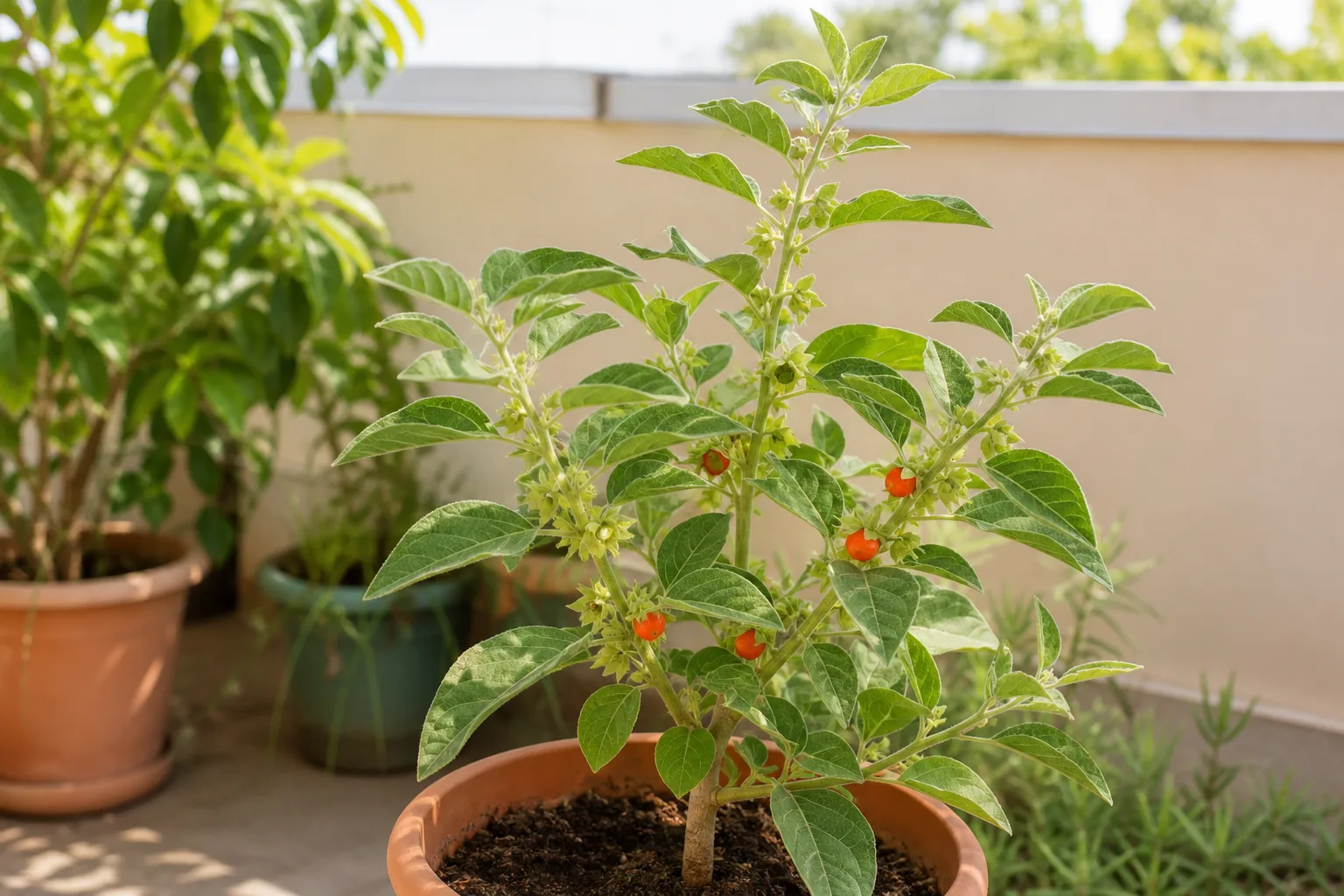
Ashwagandha (Withania somnifera) is grown for a deep, healthy root system, not a soft canopy of leaves. That changes every repotting decision. If you treat it like a tropical foliage houseplant—jumping into a huge decorative pot, packing peat-heavy mix, and watering on a calendar—you invite the one problem NC State Extension flags clearly: stem and root rot from wet feet.
This guide covers when to move Ashwagandha (also called Indian Ginseng, Winter Cherry, or Asgandh), how big the next pot should be, which sandy mix protects roots, and how to settle the plant after the transplant. Pair it with the Ashwagandha watering guide and Ashwagandha soil guide once the plant is back in place.
Why Ashwagandha Repotting Is About Roots, Not Foliage
Withania somnifera is a short Solanaceae shrub native to dry, open habitats across India, Sri Lanka, and related warm regions. NC State Extension notes it does well in pots when given full sun, good-draining, slightly alkaline sandy soil, and water only when the soil dries. It cannot grow in shade, and it does not tolerate constantly wet roots.
In containers, that biology means two things. First, the plant needs enough root volume to develop the woody, aromatic roots growers harvest—but not so much unused wet mix that oxygen disappears. Second, compacted or peat-locked soil that stays heavy for days is more dangerous than a slightly snug pot that dries on schedule. Repotting is successful when it restores air and drainage around those roots, not when it simply “gives the plant more room.”
Judge success by firm stems, steady new growth in warm weather, and a pot that feels light again between drinks—not by lush, soft foliage alone.
How Often to Repot Ashwagandha in Containers
For most balcony and patio growers, every 1–2 years is enough, or sooner when the plant clearly outgrows its pot. That matches how quickly a vigorous shrub can fill a 15–20 cm starter container in full Indian summer sun, while slower plants in cooler rooms may wait closer to two seasons.
Do not repot on a fixed calendar date if the mix still drains well and new growth is steady. A same-size soil refresh—same pot, fresh sandy mix, light root tease—often helps more than upsizing when soil has slumped but roots are not yet circling hard. RHS guidance on container plants stresses that compost breaks down over time, reducing air spaces and drainage even when the plant is not fully pot-bound.
Skip day-one repotting for a newly purchased plant unless the nursery mix is failing, pests are obvious, or water sits for days. Quarantine, learn how fast the pot dries in your light, and change one variable at a time.
Signs Your Ashwagandha Needs a New Pot
Lift the plant and look for patterns, not a single yellow leaf. Clear signals include:
- Roots circling the inside of the pot or poking through drainage holes
- Soil staying wet for days after watering even in strong sun
- A top-heavy plant that tips easily when the mix dries
- Water racing down the sides while the center stays dense or sour-smelling
- Stalled growth in warm, bright weather despite correct Ashwagandha light and restrained watering
Penn State Extension lists similar pot-bound cues for houseplants: mix that dries unusually fast, roots at the drainage holes, and slowed top growth. For Ashwagandha, add the opposite failure mode—mix that never dries—because this species is more sensitive to waterlogging than many foliage plants.
Any one strong signal justifies a check. Two or more means you should plan a spring move or an emergency refresh if rot is active.
Best Season to Repot Ashwagandha
Why early spring works best
Early spring, before strong active growth resumes, is the default window. Roots can colonize fresh mix as days warm and sun returns. In much of India that means late winter into early spring on balconies—roughly when nights stay mild and you see the first push of new shoots. In temperate homes, wait until the plant leaves cool-season slowdown and your indoor temperatures stay in the comfortable 20–35°C range.
Penn State Extension recommends spring because roots grow into new mix while the plant pushes foliage. RHS similarly prefers spring as plants start into growth, and warns that autumn or winter moves leave fresh compost sitting too wet when growth is slow.
When winter or monsoon repotting is unavoidable
Override the calendar for active root or stem rot, a cracked pot that exposes roots, or soil that smells sour and will not dry. Waiting for spring can cost the plant. Move into fresh, lightly moist sandy mix, trim soft brown roots, and accept slower recovery if light and warmth are limited.
Routine winter upsizing for convenience is a mistake. Disturbed roots plus cool, short days plus wet fresh mix is how Ashwagandha loses firm tissue at the crown. During heavy monsoon weeks outdoors, prefer a same-size refresh under cover rather than a much larger pot that holds rainwater.
Choosing Pot Size, Depth, and Material
The one-size-up rule
Move up only one pot size—about 2.5–5 cm (1–2 inches) wider in diameter than the current container. RHS advises that for pots under about 25 cm, the next container should be roughly that much deeper and wider; anything larger risks overpotting, where unused mix stays saturated around a small root ball.
Ashwagandha’s dislike of wet feet makes overpotting especially costly. A 15 cm plant dropped into a 30 cm bowl looks generous and often rots within weeks if you keep watering as before.
Depth matters for a root-focused shrub
Because growers value the root system, choose a pot that is moderately deep with a reliable drainage hole—not a shallow dish. Aim for enough depth for roots to run downward without creating a deep, unused wet column. Terracotta suits growers who overwater because it breathes and dries faster; plastic holds moisture longer and suits hot, windy balconies where pots bake dry in hours. Glazed ceramic works only with a real drainage hole and a habit of emptying the saucer.
Never plant directly into a cachepot without holes—Penn State Extension stresses that containers need drainage so mix does not stay waterlogged. Use a nursery pot inside, then empty standing water after every soak.
Soil Mix to Use When You Repot
Match the species, not a generic “indoor plant” bag. NC State calls for good-draining, slightly alkaline sandy soil. A practical container blend is:
- 50% sandy loam or quality potting mix
- 30% coarse sand or perlite
- 20% compost or vermicompost
Target roughly pH 6.5–8.0. The finished mix should feel crumbly, drain within a minute or two of watering, and never stay heavy and cold for days in full sun. Avoid pure garden clay, dense peat-only media, and “moisture control” mixes that hold water against this plant’s drought-leaning habit. See the full Ashwagandha soil page for mix variations and warning signs of the wrong substrate.
Do not rely on a gravel layer at the bottom for drainage—that often creates a perched water table. Drainage comes from mix texture plus a real hole.
Step-by-Step: How to Repot Ashwagandha
- Water lightly the day before if the mix is bone dry and stuck; slightly moist soil slides out cleaner than rock-hard dust or mud.
- Prep the new pot: clean it, cover the hole with a scrap of mesh if needed, and add a base layer of moist sandy mix so the root crown will sit about 1–2 cm below the rim.
- Tip the plant out by supporting the stem base and easing the pot away. Do not yank by soft tips.
- Inspect roots. Firm, pale-to-tan roots are fine. Soft, black, or foul-smelling roots should be trimmed with clean shears back to healthy tissue. Tease circling roots gently so they can explore new mix.
- Set the plant at the same depth it grew before. Burying the crown deeper invites stem rot.
- Backfill with the sandy blend, firm lightly—never pack like concrete—and leave headspace for watering.
- Water once until excess exits the hole, then empty the saucer. Return the plant to its brightest safe spot.
Wear gloves if you prefer; all parts are listed as poisonous if eaten by NC State (medium severity), and berries are especially risky around pets and children. This is a handling note for repotting mess, not medical advice.
Aftercare: First Two Weeks After Repotting
Keep care boring. Place Ashwagandha back in full sun as soon as it is stable—shade slows drying and raises rot risk. Water only when the top 3–4 cm of mix are dry, following the same restraint as the Ashwagandha watering guide. Mild leaf droop or a short pause in growth for several days is normal transplant stress; soft stems at the base are not.
Skip fertilizer for 3–4 weeks. Fresh mix plus root wounds do not need salts yet. Resume light feeding only after you see new growth and the plant is drinking on a predictable cycle—details live on the Ashwagandha fertilizer page.
Missouri Botanical Garden overwatering guidance explains why wet roots fail: roots need oxygen, and waterlogged soil kills them before the top growth always shows it. If the pot stays heavy, improve light and airflow before you add more water.
When Not to Repot Ashwagandha
Do not repot if the plant is newly home and still adjusting, if it is flowering heavily and you only want a cosmetic pot upgrade, or if the only complaint is a single older leaf dropping in otherwise firm growth. Do not upsize during cool dormancy “to get ahead of spring.” Do not repot, fertilize, and hard-prune on the same day—stacking stressors makes recovery harder.
If the plant is lean but draining well in a slightly snug pot under strong sun, leave it. Slightly root-firm Ashwagandha often grows better than an overpotted one.
Common Mistakes That Cause Root Rot or Shock
Oversizing the pot is the most common failure. Peat-heavy mix that stays wet is a close second. Other frequent errors: watering on a fixed schedule after the move, burying the stem deeper than before, blocking drainage holes, leaving the pot in a saucer of water, and repotting into shade “to rest.” NC State is blunt that the plant does not like wet feet and cannot grow in shade—both matter more after transplant than before.
If yellowing and soft crowns appear after a move, unpot and check roots rather than adding more water or fertilizer.
When to use this page vs other Ashwagandha guides
Use this page when the question is timing, pot size, soil refresh, or transplant technique. Use the Ashwagandha overview for identity, placement, and full-care summary. Use watering when the mix dry-down rhythm is the issue. Use soil when you need mix recipes and drainage diagnostics without a full pot change. Use light when pale, stretched growth points to shade. Use propagation when you are starting seed or cuttings rather than moving an established shrub. Use fertilizer only after roots have recovered.
Related Ashwagandha guides
- Ashwagandha care overview — hub for placement, toxicity notes, and cluster navigation
- Ashwagandha watering — dry-down checks that prevent post-repot rot
- Ashwagandha soil — sandy mix ratios and wrong-soil signs
- Ashwagandha light — full-sun placement that helps pots dry on time
- Ashwagandha fertilizer — when to resume feeding after a move
- Ashwagandha propagation — seed and cutting starts that may need their own pot-ups
Conclusion
Repot Ashwagandha when roots circle, the mix fails to drain, or the plant outgrows a snug pot—ideally in early spring, one size up, into sandy, fast-draining mix. Protect the root zone from wet feet, return the plant to full sun, and water only after the top few centimeters dry. Do that, and the transplant supports the deep roots this shrub is grown for instead of drowning them in unused soil.