Slow Growth on Ashwagandha: Taproot & Season Checks
Quick answer
Slow growth on Ashwagandha is often cool-season rest on a firm woody shrub—or a wet heavy pot in weak light—not a hungry plant that needs fertilizer. First step: on a warm day when the top 3–4 cm of mix is dry, mark the tallest stem tip and check whether new silvery ovate leaves opened in the past two weeks while the base stays firm.
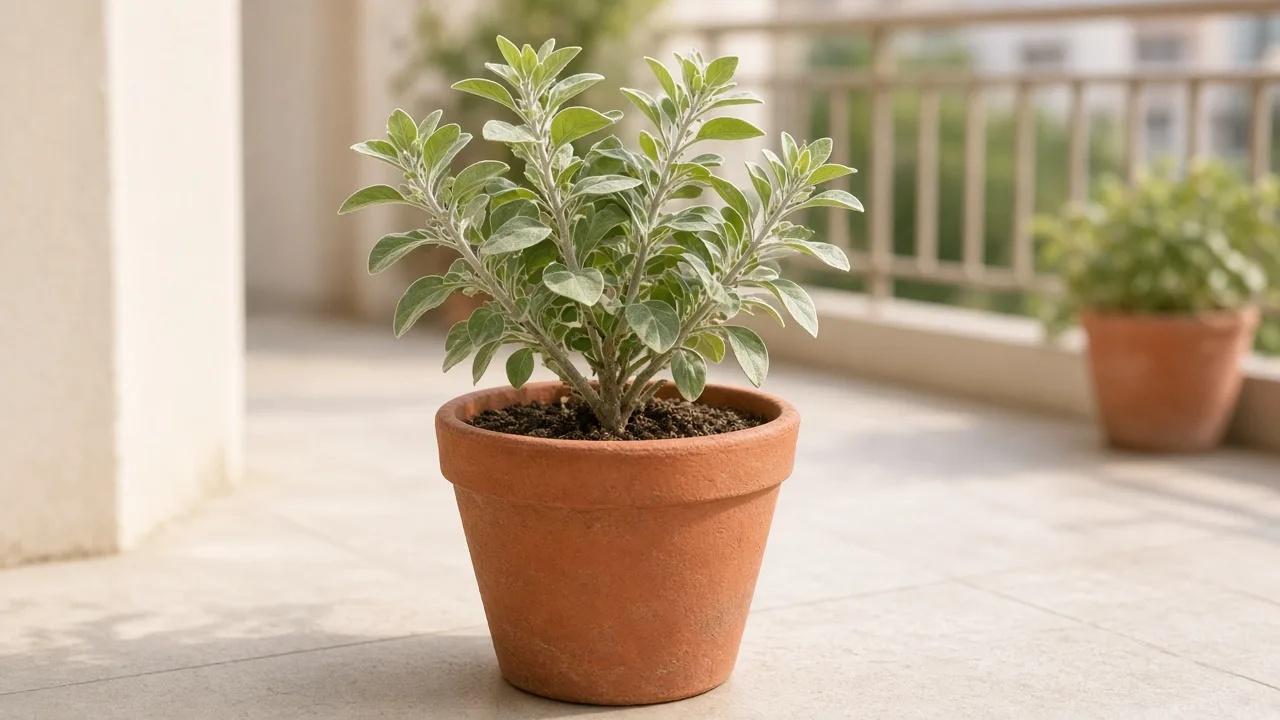
Slow Growth on Ashwagandha: Causes, Checks & Fixes
This guide covers slow growth on Ashwagandha. See also the general Slow Growth guide, watering, and light pages for this plant.
Slow Growth on Ashwagandha: Causes, Checks & Fixes
Quick answer
Slow growth on Withania somnifera is not always a crisis. Ashwagandha is a rapid grower in warm full sun that can flower and fruit in its first year from seed—yet it often pauses new silvery leaves when nights cool, days shorten, or an indoor shelter keeps the root zone cool and damp too long.
For how chronic stagnation works across plants in general, see our slow growth hub. On Ashwagandha, the decisive check is whether erect hairy stems pushed new ovate leaves and pale green flower buds while the woody base stayed firm—not whether the whole shrub still looks green from across the room.
First step: on a warm day when the top 3–4 cm of mix is dry, mark the tallest stem tip and check whether new silvery leaves opened in the past two weeks. Firm stems with no flush in cool short-day months usually mean seasonal rest; firm stems with no flush through warm months on a heavy wet pot need dry-down correction before fertilizer.
When to use this page vs other Ashwagandha guides
This page is the stall-without-collapse entry—firm shrub, little new height, no obvious stretch—when you are unsure whether to wait or intervene.
| Pattern | Read next |
|---|---|
| Long bare internodes, hard lean toward window | Leggy growth or not enough light |
| Pale soft new leaves in a dim room | Not enough light |
| Heavy wet pot, yellow lower leaves | Overwatering or yellow leaves |
| Light dry pot, midday wilt in heat | Underwatering |
| Uniform pale oldest lower leaves on adequate sun | Nitrogen deficiency |
| Soft crown, sour soil | Root rot |
| Window placement and acclimation | Light guide |
| Full problem index | Ashwagandha problems |
What slow growth looks like on Ashwagandha
Healthy Ashwagandha in active growth extends short erect stems with silvery-green ovate leaves spaced evenly along hairy branches. NC State describes simple ovate leaves with a gray sheen from dense hairs, borne on a small shrub that flowers and fruits in its first year when grown from seed. Slow growth is about the rhythm of new nodes, flowers, and berries stopping while the woody skeleton stays intact:
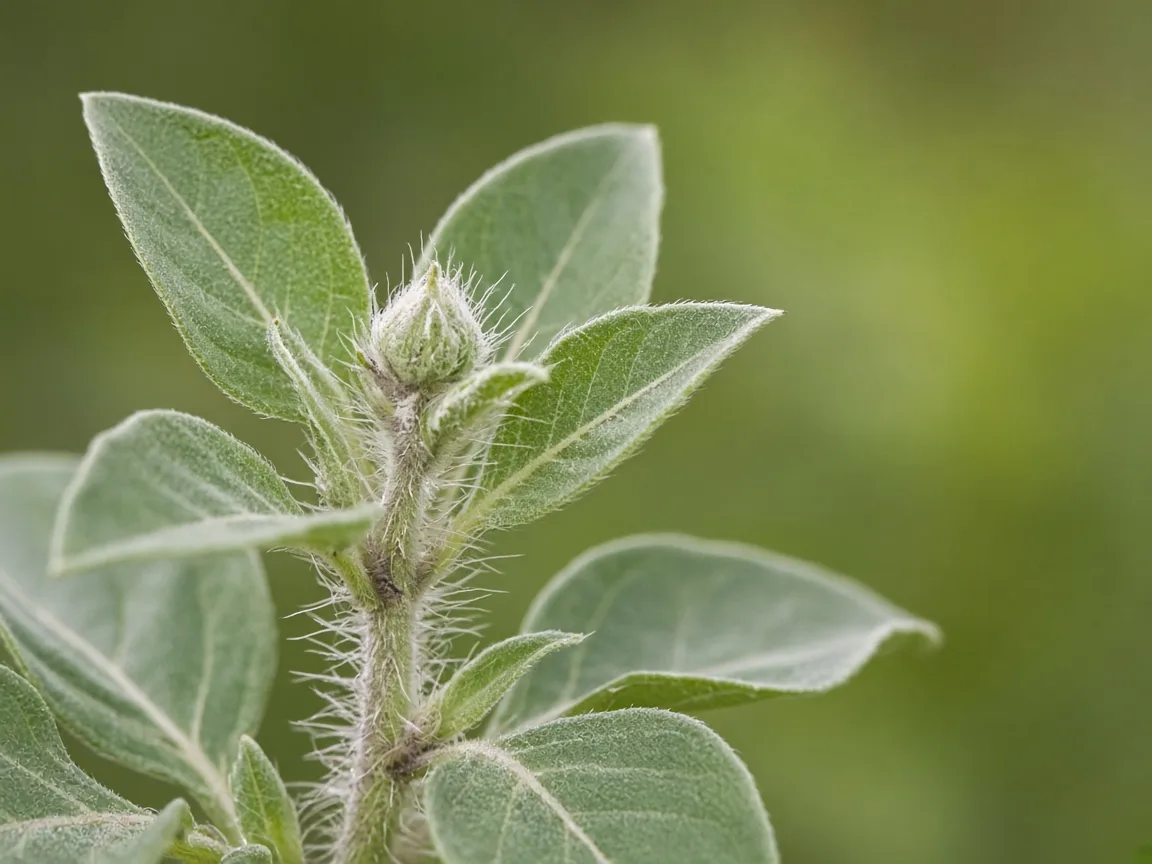
Stalled stem tip: firm hairy branch with older silvery leaves but no new flush at the node—compare with a warm-season section that recently added paired ovate leaves and pale green buds.
- No measurable height gain on marked stems for three to six weeks despite firm green branches
- Stem tips idle — no fresh silvery ovate leaves at nodes while lower foliage may still look healthy
- Missing flower-and-berry milestones — pale green flowers and orange winter-cherry fruit fail to form by late warm season on an otherwise alive shrub
- Pot weight stays high long after you expected a dry-down cycle in a cool room or dim corner
- Same compact silhouette month to month — stems neither stretch dramatically nor add new side shoots
- Winter quiet — growth flatlines after you bring containers indoors before frost while stems remain firm and dry at the base
- Warm-season flatline — no new tissue June through August despite terrace sun and regular watering (different problem)
This differs from leggy growth, where long internodes and window lean appear quickly, and from not enough light, where pale soft shoots keep elongating even as overall vigor looks weak. Overwatering stalls growth with yellow dropping lower leaves and a soft dull crown on wet mix—not a firm shrub on properly dried soil.
Taproot focus: when slow top growth is normal
Ashwagandha is grown for a deep taproot, not a leafy hedge. That changes how you read a stall:
- Firm stems, dry gritty mix, late warm season — Energy may shift underground before harvest; roots are lifted when flowers and fruits form and leaves start to dry out. Top growth slowing during a deliberate dry finish is expected, not failure.
- Small shallow pot on a mature shrub — A confined taproot bottlenecks shoot flushes even with good sun; see repotting notes in the soil guide.
- Warm sun but no berries by month five — Missing reproductive milestones on an otherwise firm plant often means light, water, or nutrition—not patience alone.
This root-crop framing does not apply to leafy philodendrons or shade ferns—you are managing an open-habitat sun shrub that cannot grow in the shade.
Cool-season shelter stall vs warm-season problem
Ashwagandha is frost tender and often lives on a terrace all summer, then moves indoors or under cover when nights dip. Washington College CES places active culture in a dry sunny area around 70–95°F (21–35°C). Below that band, metabolism drops:
| Signal | Likely seasonal rest | Likely care bottleneck |
|---|---|---|
| Firm woody base, dry light pot, short days | Normal cool pause | — |
| Firm base, heavy wet pot, dim room | — | Wet feet plus weak light |
| No new leaves through warm terrace month | — | Sun, water, or roots |
| Pale green buds aborting at nodes | — | Light or chronic wet mix |
| Soft crown on sour soil | — | Root rot — urgent |
Log night temperatures beside stem marks. A firm shrub in a dry pot at 12–18°C (54–64°F) through winter often wakes within weeks of warm nights returning outdoors—without repotting.
Why Ashwagandha grows slowly
Withania somnifera evolved in open and disturbed dry regions across South Asia and similar climates—not under forest canopy. When heat, sun, or drainage slip, a rapid grower becomes a compact statue.
Plant-specific triggers:
- Cool rooms after frost shelter — Growth pauses when nights stay cool even beside bright glass; metabolism lags before leaves yellow.
- Marginal light without stretch — Early shade stress can stall flushes before internodes lengthen dramatically; it cannot grow in the shade.
- Heavy wet mix in dim corners — Weak light slows transpiration on hairy leaves; the same watering rhythm that worked on the terrace keeps roots cool and damp indoors. TruLeaf notes established plants want to run dry and that overwatering invites root problems.
- Root-bound taproot — A shrub that dries in hours but never adds height may have filled a shallow pot; roots need depth more than width.
- Rich water-holding mix — Ashwagandha prefers sandy, slightly alkaline, fast-draining soil per NC State; heavy compost-heavy blends stall both roots and shoots.
- Feeding at the wrong season — Pushing nitrogen during cool rest or on wet roots produces soft tissue without sustained vigor; match the fertilizer guide.
How to confirm the cause
Work through checks in order so you do not repot or feed while the crown is rotting:
- Stem-tip mark — Tape the highest node on two branches. Measure weekly. No new leaf pairs in warm weather on a firm plant signals a bottleneck, not rest.
- Shadow test — On a clear day, a sharp dark shadow on foliage for much of the day means you are closer to full sun culture. Soft shadow beside a “bright” room usually fails.
- Dry-down timing — Finger-test the top 3–4 cm per the watering guide. A cool heavy pot that stays damp for ten or more days indoors points to light or mix issues.
- Flower-and-berry check — By late warm season, healthy stock should show pale green flowers and orange fruit in papery calyxes. Total absence on a firm shrub suggests chronic stress, not winter rest.
- Crown squeeze — Firm erect stems with idle tips point to environment. Soft tissue at the soil line on wet mix means rot risk first.
Symptom lookalike comparison
| What you see | Likely cause | Key check |
|---|---|---|
| Firm shrub, cool dry pot, short days | Seasonal slow growth | Warm nights resume flushes |
| No new leaves, heavy wet pot, dim room | Overwatering plus low light | Dry-down; shadow test |
| Long internodes, window lean | Leggy growth | Internode comparison |
| Pale new leaves, no extreme lean | Not enough light | Direct sun hours |
| Oldest leaves yellow, firm base | Nitrogen deficiency | Lower-leaf pattern |
| Midday wilt, light pot in heat | Underwatering | Weight after soak |
Confirmed diagnosis — Firm woody base, appropriate seasonal pause, dry pot on reduced winter watering. Suspected — Warm-month flatline with heavy wet mix or missing flowers despite terrace culture needs one correction at a time.
First fix: log growth before you change care
Mark the tallest stem tip and record pot weight on a dry-soil day before repotting, feeding, or moving pots. Ashwagandha responds poorly when you stack variables on a stressed shrub.
If the stall matches cool-season rest
- Keep the top 3–4 cm drying fully between drinks; reduce frequency when growth is flat and nights are cool.
- Hold fertilizer until new silvery leaves appear in warm weather per the fertilizer guide.
- Return outdoors to full sun when nights stay consistently warm—acclimate hairy leaves gradually per the light guide.
If the stall matches warm-season bottleneck
- Heavy wet pot in marginal light: Improve sun first, then lengthen dry-down—do not add water to “wake” a firm plant.
- Light dry pot in heat: Deep soak once, then resume the dry-down rhythm from the watering guide.
- Root-bound after one warm season: Repot into a deeper gritty mix only when stems are firm and mix dries fast—details in the soil guide.
Do not heavily prune, repot, and fertilize the same week. One variable at a time lets you read the next flush of silvery growth.
Recovery timeline and what old tissue can do
Existing woody stem sections do not shrink. Expect new leaf pairs and flower buds on fresh nodes within two to four weeks during warm active season once light, temperature, and dry-down align. Old bare nodes remain; judge success by the next flush, not by past gaps filling in.
Signs you are winning: upright firm stems, deeper silvery-green on new leaves, predictable pot dry-down after watering, and pale green buds forming at nodes. Signs to escalate: soft base on soggy mix, widespread yellowing on a heavy pot, or collapse despite bright terrace sun—root checks before more feeding.
Mistakes to avoid
- Fertilizing a firm paused plant — Nutrients do not replace sun or dry roots; confirm warm active growth first.
- Watering on calendar autopilot through winter — Cool metabolism plus wet mix invites stem and root rot.
- Treating harvest-season dry finish as disease — Top growth slowing while berries ripen can be normal root-crop timing.
- Repotting into rich moisture-holding mix — Ashwagandha wants sharp drainage, not peat-heavy houseplant blends.
- Ignoring pet safety after handling — All parts are poisonous if eaten; keep trimmed material out of reach.
How to prevent slow growth stalls next time
Match the Ashwagandha overview routine: full direct sun, sandy fast-draining mix, and dry-down watering. Mark stem tips each spring so you recognize winter pause. Scout for spider mites on leaf undersides during hot dry terrace spells—see spider mites if stippling appears. Use light tip pinches only in warm active growth per the pruning guide, not during cool rest.
Related Ashwagandha guides
- Ashwagandha overview
- Ashwagandha light
- Ashwagandha watering
- Ashwagandha soil
- Not enough light on Ashwagandha
- Leggy growth on Ashwagandha
- Overwatering on Ashwagandha
- Ashwagandha problems
Conclusion
Slow Ashwagandha is often seasonal rest or a light-and-water mismatch on a firm sun shrub—not a call for heavy feeding. Mark stem tips, separate cool dry pause from warm wet stall, and watch for flower-and-berry milestones before repotting. New silvery leaves on erect stems tell you the shrub is moving again; soft wet bases need drainage correction before any renovation.